
2026-08-05
Complete Guide to Open Die Forgings and Applications

Open die forgings are metal parts shaped by compressing heated metal between flat or simple dies that do not fully enclose the workpiece, allowing it to flow freely. This process, also called smith forging or hand forging, produces exceptionally strong, grain-refined parts with superior mechanical properties. It is the preferred method for large, custom, or low-volume components used in power generation, oil and gas, aerospace, and heavy industry.
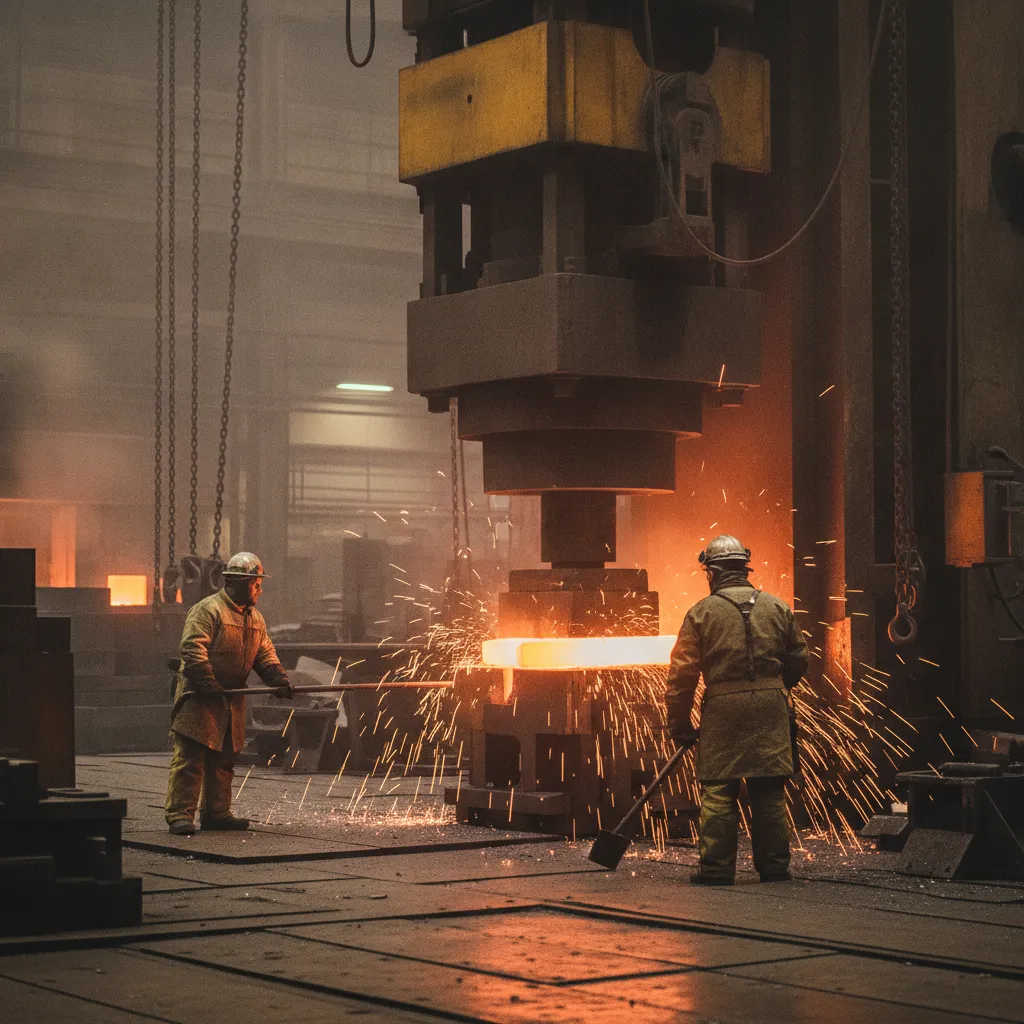
What Are Open Die Forgings and How Does the Process Work?
Open die forging shapes heated metal by compressing it between dies that never fully enclose the workpiece, letting the material flow outward freely.
The process begins with a billet or ingot heated to forging temperature, typically between 1,900°F and 2,400°F for steel, depending on the alloy. A press or hammer applies force in incremental strikes. Between each strike, the operator rotates or repositions the workpiece so force reaches every section of the material. The part reaches its final geometry through multiple passes, not a single squeeze.
Each strike does more than change shape. The compressive force closes internal voids and gas pockets that form during casting, and it refines the metal’s grain structure along the part’s stress lines. The result is higher tensile strength and better fatigue resistance than equivalent parts cut from bar stock or produced by casting. According to the Forging Industry Association, forged components consistently outperform cast or machined equivalents in fatigue life and impact resistance across a wide range of alloys.
“The grain refinement achieved through open die forging is simply not replicable by any other forming process at large scale. It is the foundation of why these components perform reliably in the most demanding service environments.” — Dr. Taylan Altan, Professor Emeritus, Center for Precision Forming, The Ohio State University
What Is Another Name for Open Die Forging?
The process goes by several names depending on the industry and context. Smith forging and hand forging are the oldest terms, rooted in traditional blacksmithing practice. Flat die forging describes the most common die geometry used. Free forging is the term most often used in European and heavy-industry contexts. All four names refer to the same fundamental method: compression between dies that leave the metal free to move laterally.
Real-World Examples of Open Die Forged Parts
These forgings cover an enormous size range, from shafts and discs weighing a few pounds to finished cylinders, rings, and sleeves exceeding 150 tons. Power generation equipment relies on large forged rotors and spindles. Oil and gas applications use thick-walled cylinders and pressure vessel blanks. Aerospace programs specify open die forged discs and hubs where weight-to-strength ratios are critical.
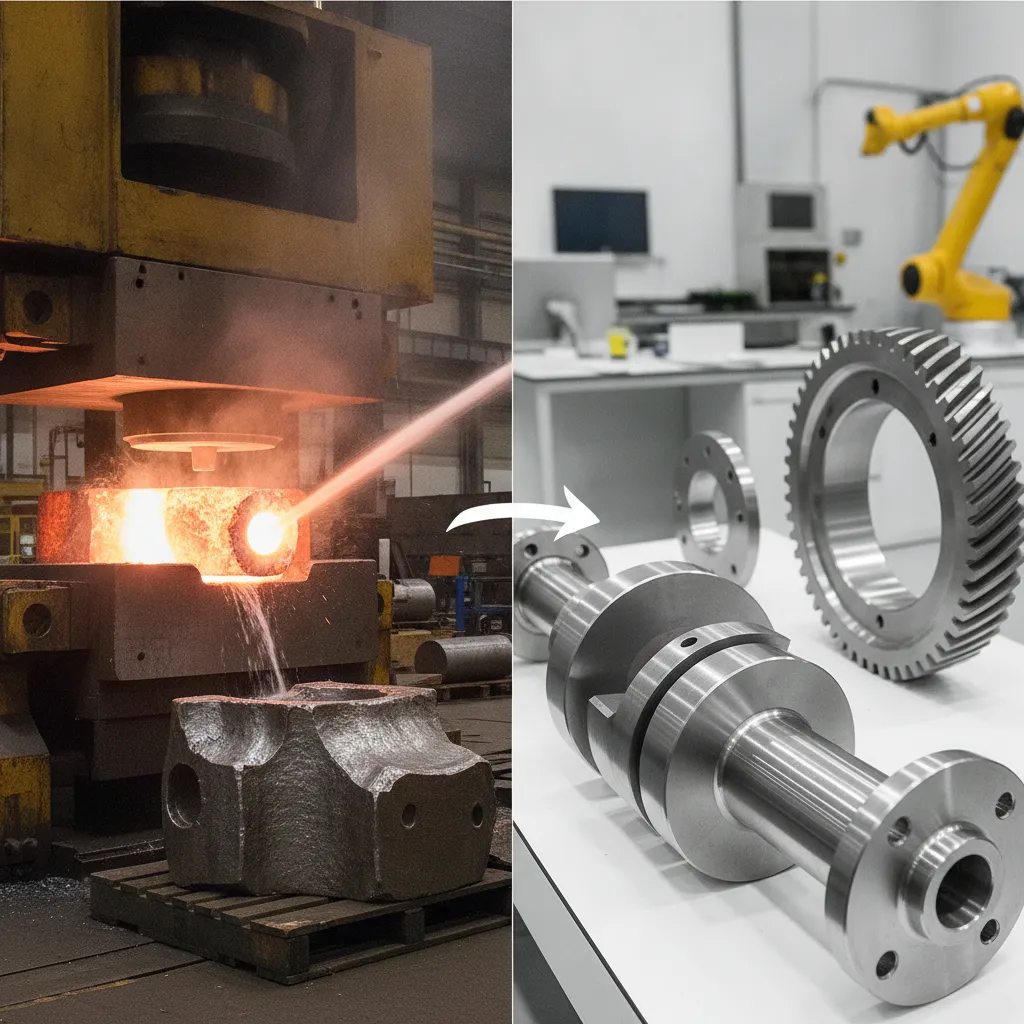
A common starting form for many of these parts is a forging block, a rough-shaped billet that gets further worked into final geometry. The open die process suits these forms well because the dies can accommodate irregular stock without custom tooling.
Common part types produced through this method include:
- Turbine shafts and rotor discs for power generation
- Drill collars and pressure vessel flanges for oil and gas
- Landing gear components and structural bulkheads for aerospace
- Axle shafts, crankshafts, and kingpins for automotive and heavy equipment
- Large rings, cylinders, and sleeves for marine and industrial applications
Open Die Forging vs. Closed Die Forging: Key Differences
Open die forging uses simple, non-enclosing dies for large or custom parts; closed die uses matched impression dies for high-volume, near-net-shape production. According to Canton Drop Forge, each process carries distinct advantages depending on part geometry, volume, and budget.
Tooling cost separates the two processes immediately. Open die uses flat, semi-round, or V-shaped dies that don’t fully enclose the workpiece, keeping tooling costs low. Closed die requires matched impression dies machined to the exact part geometry—a single die set typically costs $10,000 to $100,000 or more, depending on complexity.
Part size is where this forging method has a clear advantage. The process handles components weighing 150+ tons, making it the standard choice for large shafts, rings, and custom structural parts. Closed die is optimized for smaller, high-volume components where the die investment gets spread across thousands of identical parts.
Dimensional tolerances tell a similar story. Closed die achieves ±0.5mm or tighter on finished parts, often requiring little post-forge work. Open die parts typically need additional machining to reach final dimensions because the metal flows freely and isn’t constrained by a cavity.
Production volume determines which process makes economic sense. Open die is cost-effective for one-off or low-volume runs where paying for expensive tooling isn’t justified. Closed die generally breaks even at around 500 parts or more, once die amortization is factored into unit cost. For a detailed side-by-side comparison, Scot Forge’s process guide provides an authoritative breakdown of when each method delivers the best value.
“Choosing between open and closed die forging is fundamentally an economic decision driven by volume, but engineers must also weigh the mechanical property requirements that only the open die process can reliably achieve at large cross-sections.” — Michael Gehringer, Senior Applications Engineer, Scot Forge
Equipment and Tonnage Requirements for Open Die Forging
Open die presses range from 500 tons for smaller work up to 50,000+ tons for the largest aerospace and energy components. Hydraulic presses dominate open die operations because they deliver controlled, sustained force throughout the stroke—critical for working large billets uniformly. Hammers handle smaller open die work where impact force is sufficient and cycle time matters more than precision control. For more information, see Open Mercato.
The key differences between open and closed die forging can be summarized as follows:
- Tooling cost: Open die — $500–$5,000; Closed die — $10,000–$100,000+
- Part size range: Open die — up to 150+ tons; Closed die — typically under 25 tons
- Dimensional tolerance: Open die — ±1.6mm or wider; Closed die — ±0.5mm or tighter
- Post-forge machining: Open die — usually required; Closed die — often minimal
- Optimal production volume: Open die — under 200 parts; Closed die — 500+ parts
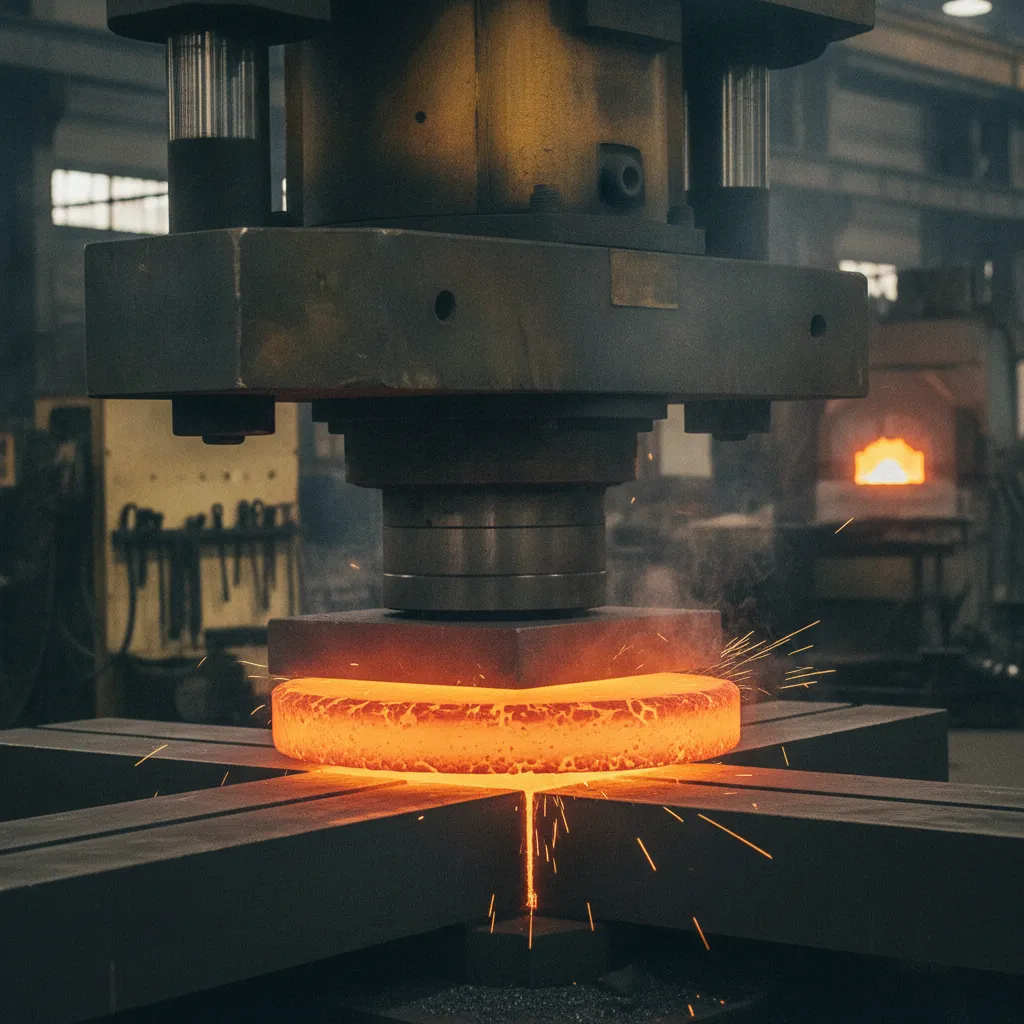
Industries and Applications That Rely on Open Die Forgings
These forged components serve power generation, oil and gas, automotive, aerospace, and defense — industries where mechanical failure is not an option.
How Open Die Forging Serves Automotive, Oil and Gas, and Power Generation
Power generation depends on large forged components for turbine shafts, rotor discs, and generator shafts — parts that endure cyclic fatigue and operating temperatures exceeding 1,000°F. These parts must maintain dimensional integrity across millions of load cycles, which is why the refined grain structure produced by open die forging is specified by design engineers. For a closer look at specific components, see our Power Generation Forged Parts article.
Oil and gas applications push material performance to its limits. Drill collars, pressure vessel flanges, valve bodies, and wellhead components must meet high-pressure service ratings, often ASME or API standards, while resisting corrosion in sour-gas and subsea environments. Forgings in this sector are frequently produced from alloy steels or nickel-based superalloys to hit those requirements.
Automotive and heavy equipment manufacturers rely on forged shafts, crankshafts, kingpins, and large structural blanks used in trucks and off-highway machinery. The process handles the oversized cross-sections these parts demand without the tooling costs that closed die forging would require at low volumes.
Aerospace and defense specify open die forgings for landing gear components, bulkheads, and primary structural members where weight-to-strength ratio determines design feasibility. Titanium and high-strength aluminum forgings are common in this segment. You can see the open die forging process in action for large aerospace components in this open die forging process video on YouTube.
Production timelines vary by complexity. Prototype or single-piece open die forgings typically ship in 2–6 weeks. Larger parts requiring post-forge machining, heat treatment, rough turning, or finish grinding, can run 8–16 weeks depending on material grade and cross-sectional size.
Best Materials for Open Die Forging and Their Limitations
Carbon steels, alloy steels, stainless steels, nickel superalloys, titanium, and aluminum alloys are all viable for this process, but each carries trade-offs.
Which Metals Are Most Suitable for Open Die Forging?
Carbon steels like 1045, 4140, and 4340 dominate open die forging volume. Their forging temperature range of 2,100–2,400°F produces predictable grain flow, and their response to post-forge heat treatment — annealing, normalizing, or quench and temper — is well-documented across decades of production data.
Alloy steels and tool steels follow closely. Stainless steels including 304, 316, and 17-4 PH are achievable but demand tighter temperature control and higher press tonnage than carbon grades — a detail worth confirming with your forge shop before finalizing the design. For guidance specific to stainless grades, see our forging stainless steel page.
Nickel-based superalloys like Inconel 718 and titanium alloys (Ti-6Al-4V is the most common) are regularly specified for aerospace and defense forgings. Aluminum alloys, particularly 6061 and 7075, work well where weight reduction matters.
Every material has hard limits in this process. Open die is a poor fit for very thin sections, complex internal geometries, or parts that need near-net-shape output without significant downstream machining. Minimum wall thickness and draft angles must be respected at the design stage, not corrected after the fact.
Heat treatment requirements vary sharply by alloy — specify annealing, normalizing, or quench-and-temper needs before the forging program starts, not during final inspection. The American Society of Mechanical Engineers (ASME) publishes widely referenced standards for post-forge heat treatment requirements across common alloy families.
“Material selection for open die forgings is not just about meeting tensile requirements — it’s about understanding how each alloy responds to the thermal cycling inherent in the forging process and the heat treatment that follows.” — Dr. Srinivasan Chandrasekar, Professor of Industrial Engineering, Purdue University
Open Die Forging Costs, Lead Times, and When It Makes Financial Sense
Open die forgings cost less to tool up than closed die alternatives, but require more post-forge machining — so the right choice depends on volume, weight, and geometry.
Tooling for open die is straightforward: simple flat, semi-round, or V-shaped dies run $500–$5,000. Closed die tooling, which machines a full cavity to net shape, costs $10,000–$100,000+ depending on complexity. That gap makes open die the clear economic winner for prototypes, one-off components, and production runs under roughly 200 parts.
The trade-off appears at higher volumes. Open die parts require 20–40% more CNC machining time than closed die net-shape parts to reach final dimensions — turning, boring, and grinding operations that add cost per piece. At scale, that labor and machine time compounds fast.
What Factors Influence Pricing and Lead Times for Open Die Forgings?
Six variables drive the final price: material grade and billet weight, part complexity, required tolerances, post-forge heat treatment, surface finish requirements, and order quantity. Heavier alloy billets and tight tolerances push costs up; simple geometries and standard carbon steel keep them down.
Standard open die forgings typically run 4–10 weeks from order to finished forging. Add 1–4 weeks for downstream CNC operations such as boring or hole drilling to hit final print dimensions.
Open die makes financial sense in four specific situations:
- The part weighs more than 500 lbs and exceeds the practical size range of closed die tooling.
- Annual volume stays under 500 pieces, making die amortization for closed die economically unjustifiable.
- The geometry is simple — shafts, discs, or rings — and does not require the cavity precision of closed die.
- The application demands maximum grain integrity over tight dimensional tolerances, such as pressure vessel blanks or rotating power generation components.
Outside those conditions, closed die or near-net-shape processes usually deliver a lower total cost per finished part.
Frequently Asked Questions
What is the difference between open die forging and casting?
Forging shapes solid metal under compressive force; casting pours molten metal into a mold. That difference matters mechanically: forging preserves and refines the metal’s grain structure, producing higher tensile strength and fatigue resistance than cast parts of the same alloy. Cast components can contain porosity and shrinkage defects that forged parts avoid entirely. For structural applications under cyclic load — shafts, pressure vessels, tooling — forged parts consistently outperform castings on impact toughness and yield strength.
What tolerances can be achieved with open die forging?
Open die forging typically holds dimensional tolerances of ±1/16 inch (±1.6 mm) or wider, depending on part size and geometry. Because the dies do not fully enclose the workpiece, the process is less dimensionally precise than closed die forging. Most open die forgings require secondary machining — CNC turning or milling — to reach tighter tolerances for mating surfaces, bores, or threaded features.
How large can an open die forging be?
Open die forgings can reach several hundred tons in weight and over 30 feet in length for large industrial components such as ship shafts and pressure vessel cylinders. This size range is the primary reason the process is chosen over closed die forging for custom, oversized parts. Practical upper limits depend on the press capacity and handling equipment at a given forge shop.
Does open die forging require heat treatment after forging?
Most open die forgings do require post-forge heat treatment to relieve internal stresses and optimize mechanical properties. Common treatments include annealing, normalizing, and quench-and-temper cycles, selected based on the alloy and the end-use mechanical requirements. Skipping heat treatment on large forgings risks residual stress concentrations that can cause distortion or cracking during subsequent machining or in service.
What quality standards apply to open die forgings?
Open die forgings produced for critical applications are typically governed by standards from ASTM International, ASME, and API, depending on the end-use industry. Common specifications include ASTM A668 for carbon and alloy steel forgings, ASME Section VIII for pressure vessel components, and API 6A for wellhead and Christmas tree equipment. Aerospace forgings often require compliance with AMS (Aerospace Material Specifications) standards and customer-specific quality plans including ultrasonic testing and material traceability documentation.
Conclusion
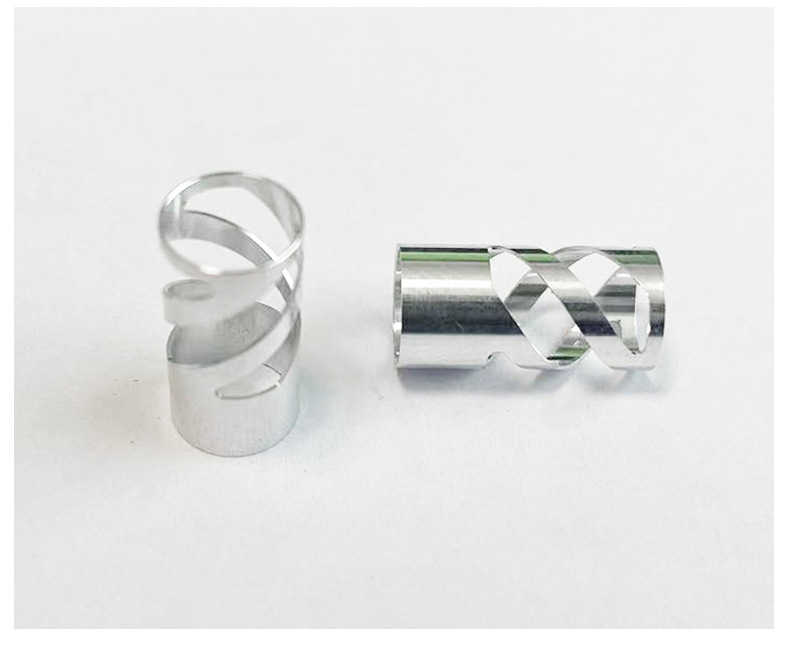
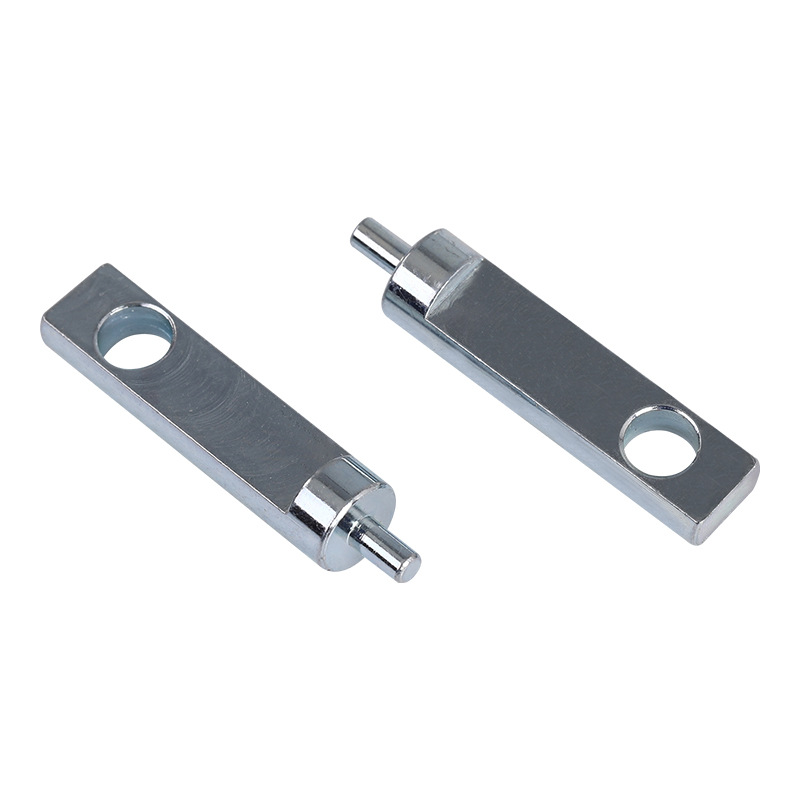
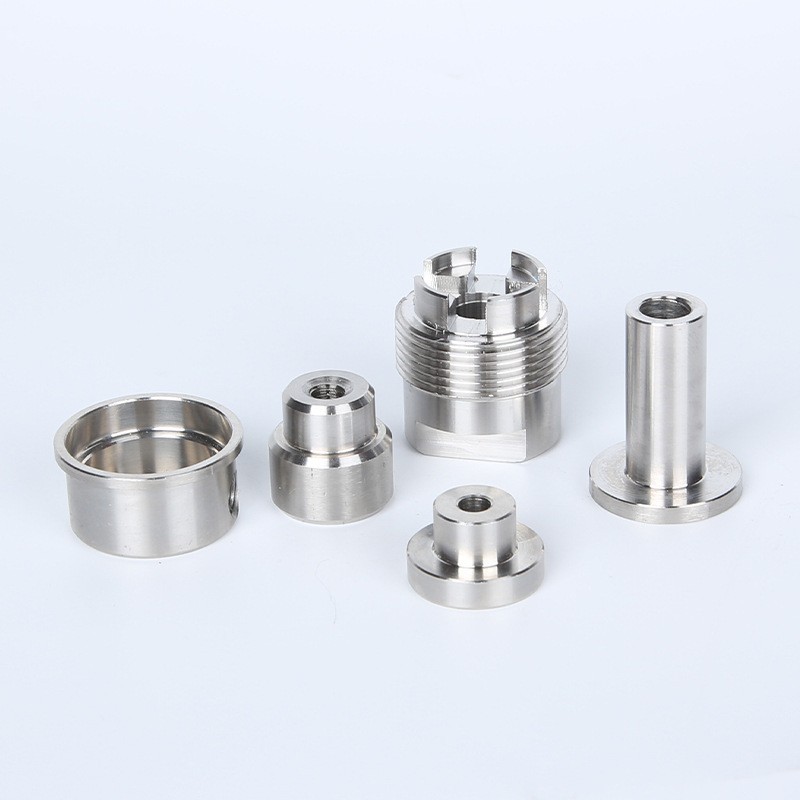
Open die forging delivers grain-refined, high-strength components that casting and machining from bar stock cannot match for large or structurally demanding parts. Three things to act on: first, confirm whether your part geometry and volume actually justify open die tooling costs — low-volume, oversized, or custom profiles are the sweet spot. Second, plan for secondary machining from the start; open die tolerances rarely meet final drawing requirements without it. Third, if your parts are under 38mm diameter and require tight tolerances, a precision machining route — such as CNC turning or Swiss lathe production at MFG SOLUTION, with quotes returned within 8 hours — is likely faster and more cost-effective than forging plus finish machining combined.
Recommended Articles
Explore more from our content library: