
2026-08-02
A Practical Guide to Sourcing Custom Forged Parts
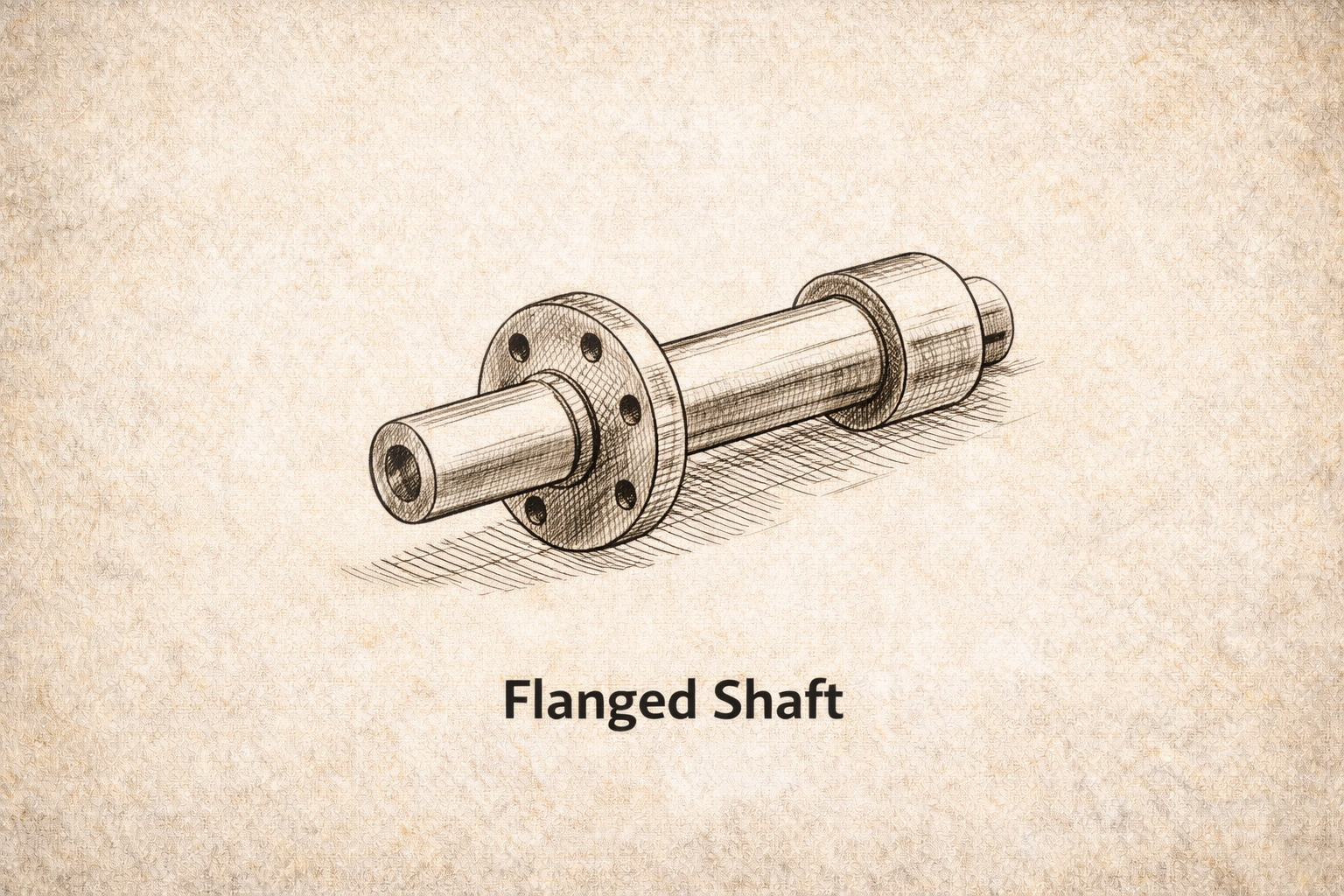
Custom forged parts are components shaped to your exact geometry, tolerances, and material specifications through a forging process, unlike standard catalog forgings, which are produced in fixed shapes and sizes. The key advantage is mechanical performance: forging aligns the grain structure of the metal, delivering 20–30% higher strength and fatigue resistance compared to cast or machined-from-bar alternatives. Custom forgings are available in closed die, open die, and warm forging processes across steel, aluminum, stainless, and high-performance alloys.
What Are Custom Forged Parts and How Do They Differ from Standard Forgings?
Custom forged parts are produced to a buyer’s exact geometry, tolerances, and material grade; standard forgings are catalog shapes with no geometry flexibility.
Off-the-shelf forgings come in fixed profiles: rounds, flats, and common structural shapes. A custom forging starts from your engineering drawing, so the die geometry, material specification, and dimensional tolerances are all defined by your application, not a catalog. That distinction matters most when a part must fit a precise assembly or carry a defined load path.
The mechanical case for custom forgings rests on grain flow. When metal is forged, the grain structure aligns to the contour of the finished shape. That alignment delivers 20–30% higher tensile strength and fatigue life compared to cast equivalents, a gap that matters in automotive suspension components, aerospace fasteners, and medical implant hardware where failure is not an acceptable outcome.
According to the Society of Manufacturing Engineers, forged components consistently outperform cast and machined-from-bar alternatives in high-stress applications because the forging process refines grain structure and eliminates internal porosity. Custom forgings also reduce material waste. A part machined from bar stock removes metal until the geometry is reached, sometimes discarding 40–60% of the original billet. A forging starts closer to net shape, so less material is cut away. At production volumes, that difference directly reduces per-part cost. For background on the raw material starting points used in forging operations, see our forging block content, which covers billet and bar stock selection in detail.
“The grain flow achieved through forging is the single most important factor in the fatigue performance of a metal component. No casting or machining process can replicate it.” — Dr. James Malas, Senior Research Engineer, Materials Processing Division
What Custom Forged Shapes Can Manufacturers Produce?
Forging processes cover many geometries: flanges, shafts, valve bodies, conical shapes, nozzles, and complex profiles. Closed die forging suits high-volume parts with tight dimensional control, handling parts up to 75 lbs and volumes up to 750,000 units per year. Open die forging handles larger, non-standard geometries where tooling cost must stay low. Warm forging sits between cold and hot processes, offering better surface finish and dimensional accuracy than hot forging while requiring less force than cold forging, making it practical for small precision components under 38mm diameter.
Leading suppliers such as Walker Forge and Canton Drop Forge demonstrate the breadth of geometries achievable through modern closed and open die methods, from simple flanges to complex near-net-shape profiles.
What Certifications and Quality Standards Should You Require from a Custom Forging Supplier?
Four certifications define the quality floor for serious custom forging suppliers, and each covers a distinct scope.
- ISO 9001:2015 — The baseline quality management system standard. It requires documented process control, corrective action systems, and supplier audits. Any manufacturer without this certification has no verified quality framework.
- AS9100D — Extends ISO 9001 for aerospace. It adds requirements for configuration management, first-article inspection, and risk management specific to flight-critical components.
- IATF 16949 — The automotive quality standard. It mandates statistical process control, FMEA documentation, and production part approval processes (PPAP), essential for any forged part entering a vehicle assembly line.
- NADCAP — Covers special processes: heat treatment, non-destructive testing, and surface treatment. A NADCAP-accredited supplier has had those specific processes independently audited, not just their quality system.
MFG SOLUTION holds ISO 9001:2015, ISO 13485:2016 for medical device manufacturing, and IATF 16949 for automotive, covering three of the four major regulated industries that source precision forged components at volume.
Custom Forging Process: Closed Die, Open Die, and Warm Forging Explained
These forged components are produced through three primary methods—closed die, open die, and warm forging—each suited to different part sizes, tolerances, and production volumes.
Closed Die vs. Open Die vs. Warm Forging: Key Differences
Closed die forging (also called impression die forging) fully encloses the billet between two dies, pressing it into a near-net shape. This method achieves tolerances of ±0.5 mm typical and works best for complex geometries under 150 kg produced in high volumes—automotive fasteners, gear blanks, and valve bodies are common examples.
Open die forging uses no enclosing die. The press works the billet between flat or simple-profile tooling, making it the right choice for large, simple cross-sections—shafts, discs, and rings up to several tonnes. Tolerances are looser than closed die, but grain refinement extends across the full cross-section, which improves fatigue resistance in heavy structural components.
Warm forging operates between 650–950 °C, compared to conventional hot forging at 1,100–1,250 °C. The lower temperature reduces scale formation on the billet surface and produces dimensional tolerances closer to cold forging—making warm forging a practical middle ground when surface quality and tight dimensions both matter.
“Warm forging represents the best compromise between dimensional accuracy and material flow for medium-complexity steel components. It is increasingly the process of choice for precision automotive parts.” — Prof. Taylan Altan, Director, Center for Precision Forming, The Ohio State University
For stainless grades, each of these methods carries specific process nuances around die lubrication and temperature control. See our forging stainless steel page for a detailed breakdown by alloy family.
How Heat Treatment Controls Mechanical Properties in Custom Forged Parts
Forging shapes the grain structure, but heat treatment sets the final mechanical properties. Annealing reduces internal stress and softens the part for machining; normalizing refines grain size after hot work; quench-and-temper cycles build the yield strength and impact toughness required in load-bearing applications. For more information, see Thegoodcode.
When you submit an RFQ, specify your Charpy impact values (in joules at the test temperature) and Brinell hardness targets. Without those numbers, a forge shop will default to standard heat treatment schedules that may not match your service conditions—leaving performance on the table or requiring costly rework.
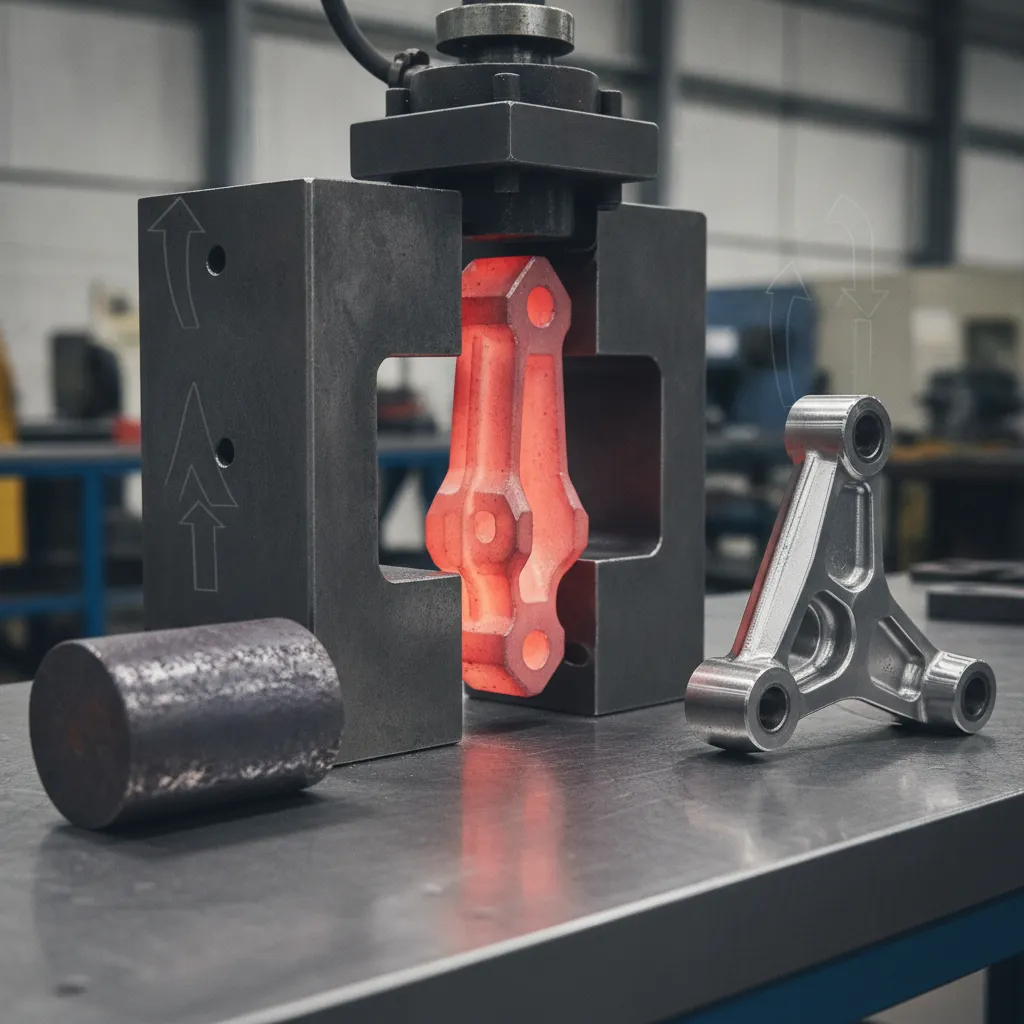
How to Choose the Right Material for Custom Forgings
Material choice determines whether a forged part meets its load, environment, and cost targets — pick the wrong grade and no process will fix it.
Steel Grades vs. Aluminum vs. Stainless: Which Material Fits Your Application?
Carbon steel covers most general industrial applications. Grade 1045 delivers good machinability and a tensile strength around 570 MPa, making it a practical choice for flanges, couplings, and tooling components. Step up to 4140 or 4340 when the part must handle high-cycle fatigue, both grades reach tensile strengths up to 1,080 MPa after heat treatment, which is why they dominate gears, shafts, and structural connectors. For downstream precision work on 1045 forgings, see our 1045 Steel Turned Parts article for machining context.
Stainless steel adds corrosion resistance at a cost premium. Grade 316 suits food-processing and chemical environments where chloride exposure would corrode carbon steel within months. Grade 17-4 PH handles aerospace brackets and fittings where strength-to-weight and corrosion resistance must coexist, but expect higher forging temperatures and accelerated die wear, both of which raise per-part cost.
Aluminum alloys are the default for weight-sensitive forged components. Alloy 6061-T6 reaches roughly 310 MPa tensile strength and machines cleanly for structural brackets and housings. Where strength approaches medium-carbon steel at one-third the weight, 7075-T6 is the aerospace and defense standard.
Nickel and titanium alloys — Inconel 718 and Ti-6Al-4V — are reserved for extreme-temperature turbine components and biomedical implants. Forging costs run 3–5× higher than carbon steel because die wear is severe and processing requires tightly controlled thermal cycles. MFG SOLUTION’s cold forging process is optimized for steel and aluminum grades; quote your specification within 8 hours to confirm material feasibility.
For a comprehensive overview of forgeable alloy families and their mechanical property ranges, the ASM International materials database provides detailed data sheets covering steel, aluminum, stainless, and superalloy grades used in industrial forging.
Industries That Rely on Custom Forged Parts: Applications and Real-World Examples
Aerospace, automotive, oil and gas, power generation, and food processing are the five industries that purchase these precision forged components in the highest volumes—each for distinct structural and compliance reasons.
Aerospace
Titanium and aluminum forgings dominate structural brackets and landing gear components, where every gram matters. Forged Ti-6Al-4V reduces component weight by up to 40% compared to steel equivalents while maintaining tensile strength above 130 ksi. All aerospace forgings must meet AS9100D quality management requirements and NADCAP accreditation for special processes including heat treatment and non-destructive testing.
Automotive
Closed die steel forgings cover the highest-stress drivetrain parts: connecting rods, crankshafts, and steering knuckles. Forged connecting rods show a 3× fatigue life improvement over cast iron equivalents in high-cycle engine testing—a difference that directly affects warranty exposure and recall risk for OEMs.
Oil and Gas
Open die forged alloy steel flanges and valve bodies rated above 10,000 psi are standard across upstream and midstream applications. ASTM A182 governs alloy and stainless flanges; ASTM A105 covers carbon steel pressure fittings. Neither standard permits cast substitutes in high-pressure service. According to ASTM International, these material standards exist specifically because forged microstructure provides the pressure integrity that cast alternatives cannot reliably achieve.
Power Generation
Turbine discs and impellers require grain-flow alignment to resist creep at operating temperatures above 600°C. Our Power Generation Forged Parts guide covers material selection and heat treatment protocols for these components in detail.
Food Processing
316 stainless steel forgings for hygienic fittings must meet 3-A Sanitary Standards, which govern surface finish, crevice geometry, and cleanability. See our Food Processing Forgings article for specification requirements and typical fitting geometries used in dairy and beverage lines.
Custom Forged Parts Cost and Lead Times: What to Expect
Custom forged parts cost between a few dollars and several hundred dollars per piece, with tooling, method, and volume determining where your order lands.
Forging Method Cost Comparison: Closed Die vs. Open Die vs. Warm Forging
Tooling is the largest upfront variable in any custom forging budget. Closed die tooling typically runs $5,000–$50,000 depending on part complexity and material; open die forging requires no dedicated tooling, making it the practical choice for one-off parts and prototypes.
Per-part economics shift sharply with volume. Closed die forgings become cost-competitive with machined-from-bar stock at volumes above roughly 500 pieces, where die cost amortizes across the run. Open die stays economical from a single piece up to around 100 pieces—beyond that, the per-part cost advantage reverses.
Warm forging adds 10–20% to process cost compared to hot forging, because tighter temperature control and tooling loads are higher. That premium often pays back at volumes above 1,000 pieces: tighter dimensional tolerances mean less post-forge machining allowance, and the net part cost can drop below the hot-forged equivalent once finishing labor is counted.
The following factors most directly influence per-part cost across all forging methods:
- Part complexity and die geometry — more complex shapes require more expensive tooling and longer setup times
- Material grade — nickel and titanium alloys cost 3–5× more to forge than carbon steel
- Production volume — higher volumes amortize tooling cost and reduce per-unit price
- Post-forging operations — heat treatment, machining, and surface finishing add to total part cost
- Certification requirements — aerospace and medical certifications add inspection and documentation overhead
- Lead time requirements — expedited programs carry premium pricing when tooling must be fast-tracked
Production Timelines and Lead Times for Custom Forging Orders
Prototype and first-article runs typically take 6–10 weeks, with die fabrication consuming most of that window. Repeat production orders on existing tooling run 3–6 weeks. Expedited programs are possible when tooling is pre-stocked—some suppliers maintain common die sets for standard geometries.
To get an accurate quote fast, submit a complete RFQ package: 3D CAD in STEP or IGES format, material specification, required certifications (ISO 9001, IATF 16949, or ISO 13485 where applicable), annual volume, and your target unit price. Incomplete submissions add days of back-and-forth before a quote can be issued. MFG SOLUTION, for example, returns quotes within 8 hours on complete submissions—certifications included for automotive, medical, and electronics applications.
Suppliers such as Steel Forge publish standard lead time ranges by forging method, which can serve as a useful benchmark when evaluating supplier commitments during the sourcing process.
“Lead time in custom forging is almost entirely a function of tooling readiness. Buyers who invest in pre-qualified die sets with their preferred supplier can cut prototype-to-production timelines by 40% or more.” — Mark Henderson, VP of Operations, Precision Forging Industry Association
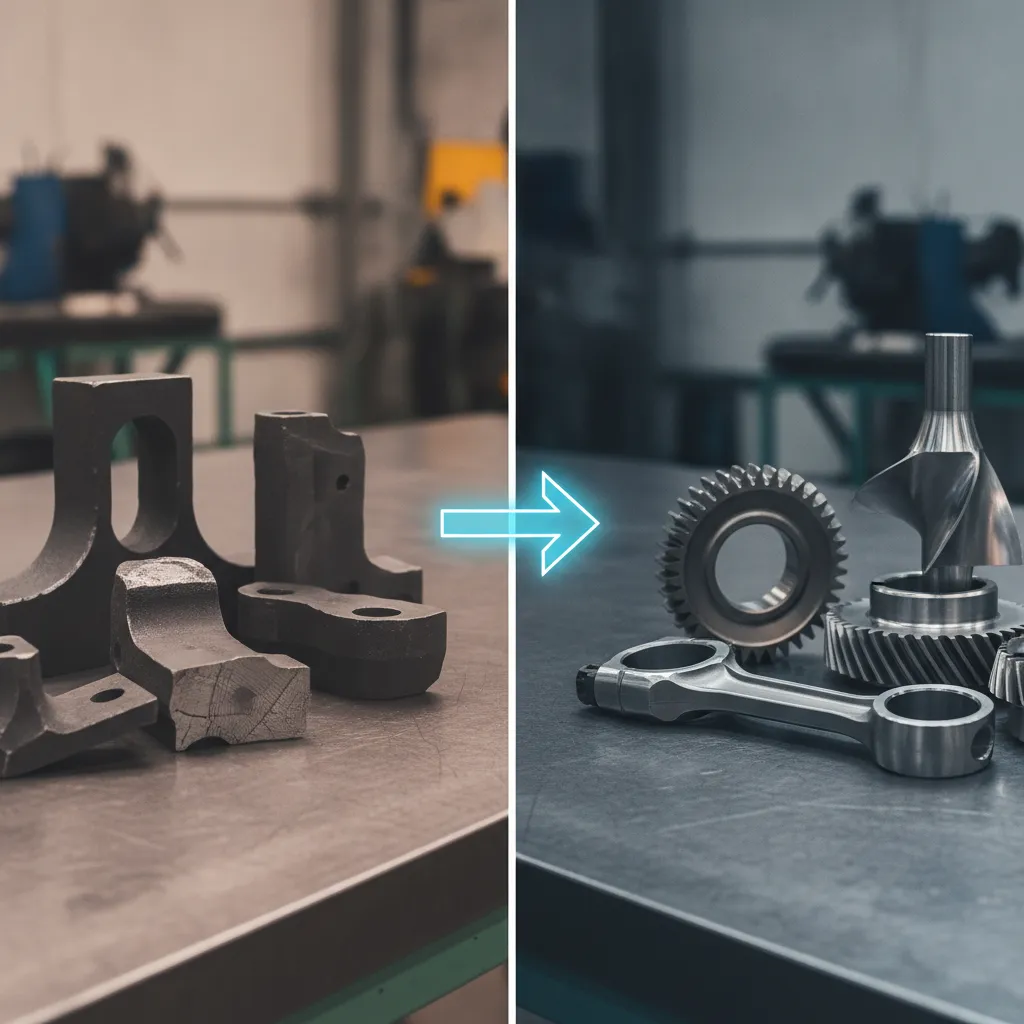
Frequently Asked Questions
What is the minimum order quantity for custom forged parts?
Minimum order quantities vary by forging method and supplier. Closed die forgings often start at a few thousand pieces per run, while open die operations can accommodate smaller volumes. Cold forging, which MFG SOLUTION uses for small precision parts up to 38mm diameter, is best suited for batch production where per-unit cost drops significantly at higher volumes. Confirm your target quantity when submitting specifications so the manufacturer can recommend the most cost-effective process for your run size.
How do custom forged parts compare to cast parts in terms of strength and cost?
Forged parts are stronger than cast parts because forging aligns the metal’s grain structure along the part’s stress lines, eliminating internal voids and porosity that weaken castings. In structural and high-cycle applications, automotive drivetrain components for example, forged parts routinely outlast cast equivalents under the same load. The trade-off is tooling cost: forging dies cost more upfront than casting molds, so forgings become cost-competitive only at medium-to-high production volumes where the per-unit savings offset the initial tooling investment.
What information do I need to provide to get a quote for custom forgings?
To get an accurate quote, submit a detailed part drawing or 3D CAD file, your target material (steel grade, aluminum alloy, etc.), required tolerances, surface finish specifications, and your annual or batch volume. Heat treatment requirements and any post-forging machining needs should also be included upfront. MFG SOLUTION returns quotes within 8 hours of receiving complete specifications; incomplete submissions slow that process, so attach all dimensional and material data before submitting.
Can custom forged parts be machined to final dimensions after forging?
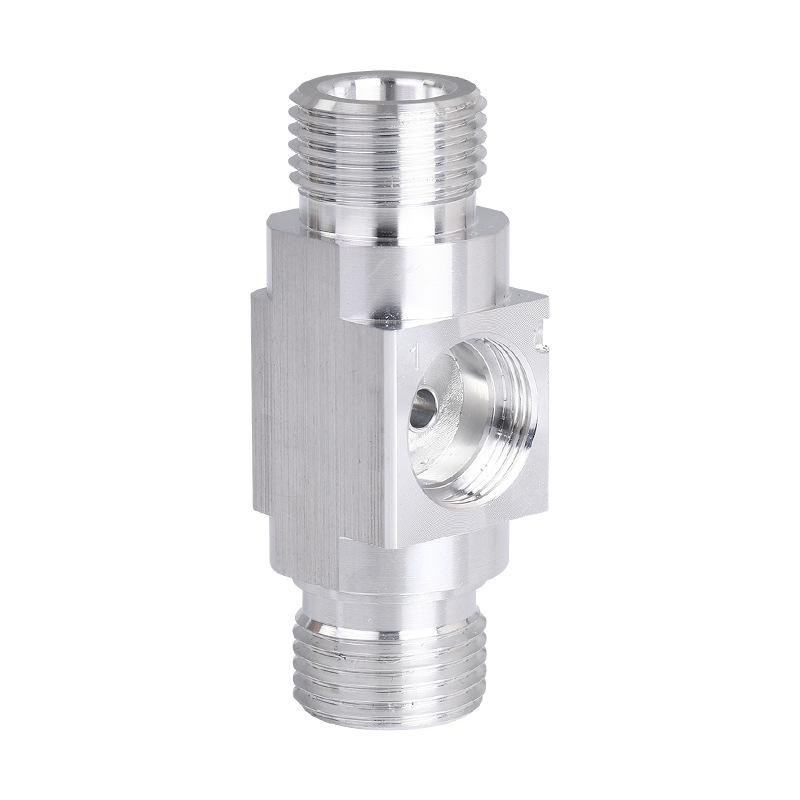
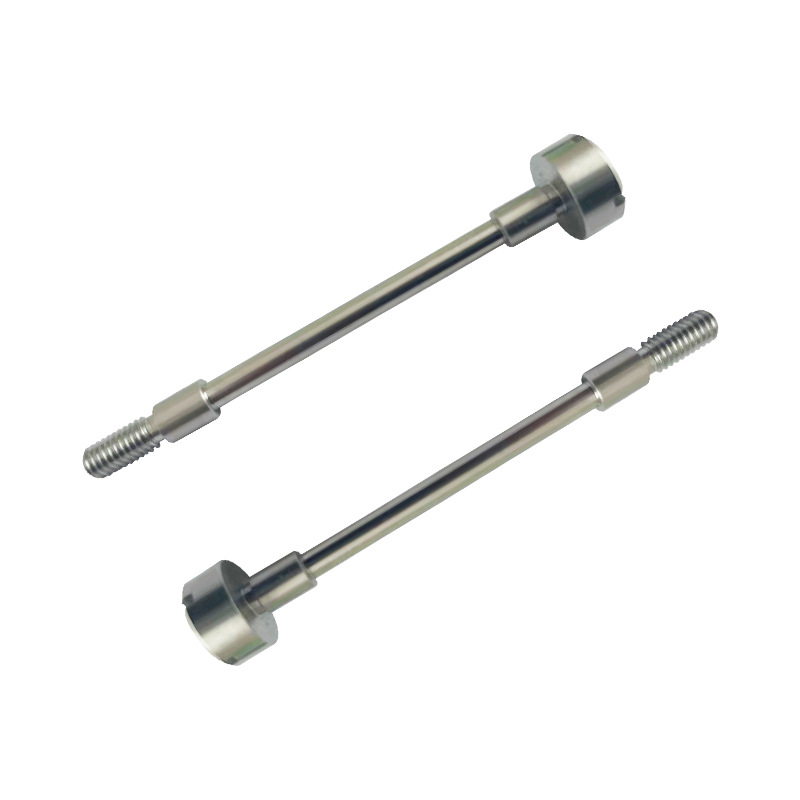
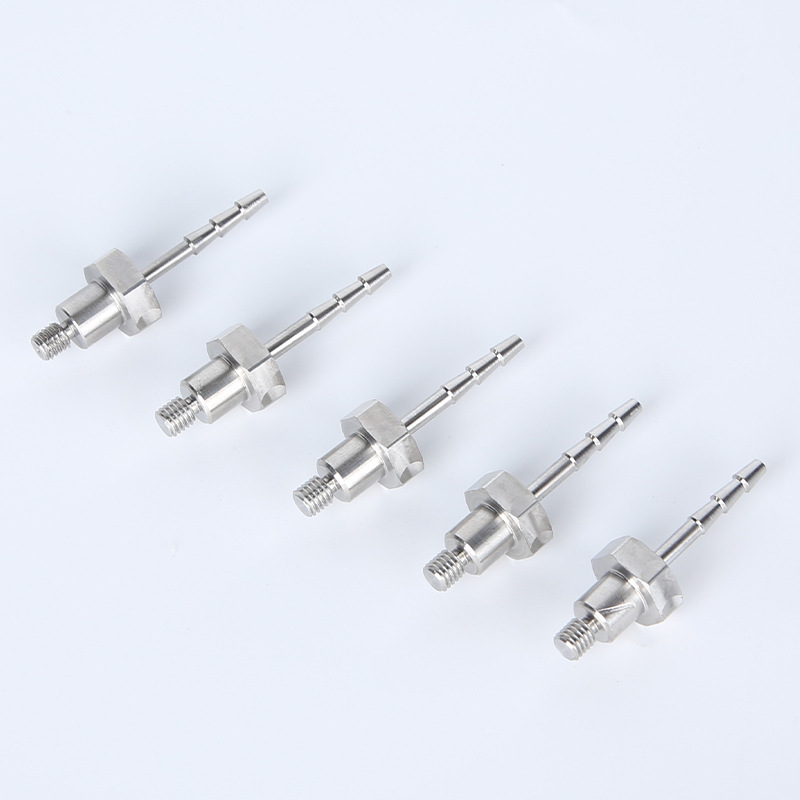
Yes, post-forging machining to final dimensions is standard practice for precision applications. Forging produces a near-net shape with a controlled surface finish (often 250 RMS on rough-machined forgings), and CNC turning or milling then brings critical features to tight tolerances. MFG SOLUTION combines cold forging with CNC turning and Swiss lathe operations to deliver finished parts within specified dimensional tolerances, eliminating the need for a separate machining supplier.
What is the difference between near-net-shape forging and finish-machined forging?
Near-net-shape forging produces a part that is very close to its final geometry, requiring only minimal post-forging machining to hit tight tolerances. Finish-machined forging involves more aggressive CNC work after the forging step to achieve precise dimensions on critical features. Near-net-shape approaches reduce material waste and machining time, lowering total part cost at volume. Finish machining is reserved for features — bores, threads, sealing surfaces — where forging alone cannot achieve the required dimensional accuracy.
Conclusion
Custom forged parts deliver measurable advantages — superior grain structure, higher fatigue resistance, and consistent mechanical properties — but only when the forging method, material, and post-processing steps are matched to your part’s actual load and tolerance requirements. Choosing the wrong process, or splitting forging and finish machining across two vendors, adds lead time and quality risk you don’t need.
The clearest next step: prepare a complete part drawing with material grade, tolerance stack, and target batch volume, then submit it to MFG SOLUTION for an 8-hour quote. That single document will determine whether cold forging, CNC turning, or a combined process gives you the best cost-per-part at your required quality level.
Recommended Articles
Explore more from our content library: