
2026-11-04
CNC Machining for Industrial Mining Equipment Components: Pump Housings, Wear-Resistant Bushings, Heavy-Duty Shafts and Precision Mounting Parts
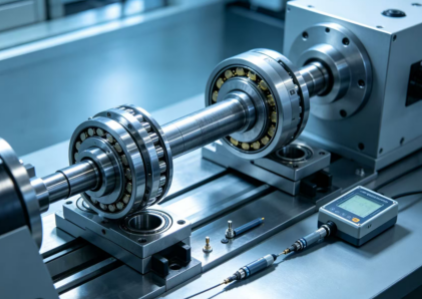
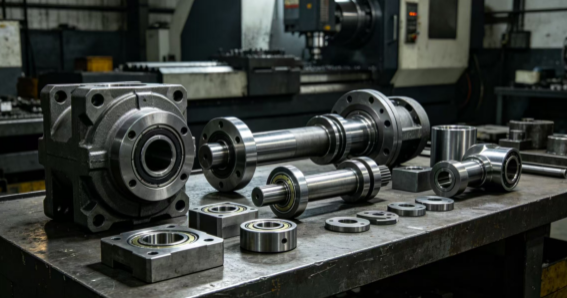
Mining equipment operates in some of the most demanding industrial environments. Crushing, drilling, grinding, conveying, mineral processing, and slurry transportation expose machinery to heavy mechanical loads, continuous vibration, abrasive particles, moisture, and sometimes corrosive chemicals. Components used in these systems must maintain their structural integrity, dimensional accuracy, and functional performance under challenging operating conditions.
A single component failure can affect an entire production process. A worn pump shaft may cause leakage or vibration. An incorrectly machined bearing housing can create alignment problems. A damaged bushing may increase clearance in a moving joint. A poorly finished sealing interface can lead to fluid leakage and additional maintenance.
For mining equipment manufacturers, maintenance contractors, and industrial procurement teams, reliable precision machining is therefore an important part of equipment performance and lifecycle cost management.
CNC machining provides a flexible manufacturing solution for producing custom mining equipment components from steel, stainless steel, aluminum, bronze, and engineering plastics. Depending on part geometry and production requirements, CNC milling, CNC turning, multi-axis machining, drilling, boring, and secondary finishing can be combined to produce components with controlled dimensions and repeatable quality.
MFG SOLUTION supports custom manufacturing projects through CNC machining services, CNC turning, and 5-axis CNC machining.
This article examines common mining equipment components, material selection, machining methods, dimensional requirements, wear protection, inspection, and cost-control strategies.
1. Why Precision Machining Matters in Mining Equipment
Mining machinery is exposed to operating conditions that can accelerate component degradation. Unlike equipment used in controlled factory environments, mining machines frequently operate around loose rock, mineral dust, water, mud, and abrasive slurry.
Several factors make component manufacturing particularly demanding.
Abrasive wear: Mineral particles can damage exposed surfaces, bushings, sleeves, pump components, and moving interfaces. Material hardness, surface condition, and lubrication arrangements influence wear behavior.
Heavy mechanical loads: Crushers, conveyors, drilling systems, and haulage equipment contain components that transfer substantial forces. Shafts, hubs, brackets, and bearing supports must be designed and manufactured for their intended loads.
Continuous vibration: Rotating machinery and material-handling systems can operate for extended periods. Poor alignment, inconsistent fits, or unbalanced rotating parts may contribute to vibration and premature wear.
Moisture and chemical exposure: Mining operations may involve water, slurry, mineral-processing chemicals, and corrosive environments. Material and surface-treatment decisions should reflect actual exposure.
Maintenance and downtime: Equipment failures can interrupt production and create significant maintenance costs. Replacement parts often need to match existing assemblies accurately, including equipment with older or modified designs.
Precision machining helps control the interfaces that determine how components fit and operate. These include bearing seats, shaft diameters, sealing surfaces, threaded ports, mounting holes, and alignment features.
For a practical overview of dimensional planning, see machining tolerances explained. Understanding the relationship between tolerance requirements and production expense is also important; refer to why CNC machining tolerance drives your part price.
2. Common CNC Machined Components Used in Mining Equipment
Mining operations involve drilling, crushing, grinding, conveying, pumping, and material separation. Each system contains components with different functional and manufacturing requirements.
Pump Housings and Fluid-Handling Components
Industrial pumps are widely used for water transfer, slurry handling, drainage, cooling, and mineral-processing operations.
Pump housings support internal components and establish the geometry of fluid passages, bearing interfaces, and sealing arrangements. Depending on the design, a machined housing may include:
- Bearing bores and shaft openings
- Mounting faces and bolt patterns
- Inlet and outlet connections
- Seal grooves and locating shoulders
- Internal pockets and fluid passages
Machining accuracy is particularly important at the interfaces between the housing, shaft, bearings, and sealing components.
The choice of material depends on the pumped medium, pressure, temperature, corrosion exposure, and abrasive particle content. A material suitable for clean water may not be appropriate for highly abrasive slurry.
Heavy-Duty Shafts and Axles
Shafts are used in crushers, conveyors, pumps, grinding systems, gearboxes, and other rotating machinery.
Typical features include bearing journals, shoulders, keyways, grooves, threads, and coupling interfaces.
Critical manufacturing requirements may include:
- Diameter accuracy
- Concentricity between functional diameters
- Straightness and runout
- Shoulder position
- Keyway dimensions
- Surface finish at bearing and sealing locations
Long or large-diameter shafts require stable workholding and suitable support during machining. Cutting forces and vibration can influence dimensional consistency and surface quality.
CNC turning is suitable for many shaft geometries, while milling operations can produce keyways, flats, and cross-features. For further process information, see Swiss turning for small precision parts.
Wear-Resistant Bushings and Sleeves
Bushings and sleeves are used in rotating, sliding, and pivoting assemblies. They help control friction, support moving components, and protect more expensive machine structures from direct wear.
Mining equipment may use these components in drilling mechanisms, excavator linkages, conveyor systems, pump assemblies, and other heavy-duty applications.
Important requirements include:
- Internal and external diameter accuracy
- Wall thickness consistency
- Roundness and cylindricity
- Surface roughness
- Material hardness or bearing characteristics
- Lubrication grooves and retaining features
Material selection should consider the mating surface and lubrication conditions. A harder material is not automatically better in every sliding interface. The material pair should be evaluated as a system.
Bearing Housings and Support Blocks
Bearing housings maintain the position of rotating shafts and transfer loads into the machine structure.
They may be used in crushers, conveyors, pumps, mills, and gearbox assemblies. Typical machining features include precision bores, mounting faces, bolt holes, locating shoulders, and sealing grooves.
Bore alignment and mounting-surface relationships are particularly important. If the bearing seats are not correctly positioned, the assembly may experience unwanted loads and vibration.
Couplings, Hubs, and Spacers
Couplings and hubs connect rotating components and transfer torque. Spacers and sleeves establish the correct distance between assembled parts.
Their performance depends on several coordinated features, including bore size, keyway geometry, concentricity, bolt patterns, and mating-face condition.
For high-speed or high-inertia rotating assemblies, runout and balance requirements should be clearly specified in the engineering documentation.
Crusher and Conveyor Support Components
Crushing and conveying systems use shafts, bearing blocks, mounting brackets, tensioning components, flanges, and structural interfaces.
Some parts may be machined from solid material, while others are more economical to produce from castings or forgings followed by CNC finishing.
The correct manufacturing route depends on component size, geometry, expected volume, and the accuracy required at functional surfaces.
3. Material Selection for Mining Equipment Components
Material selection directly influences strength, wear resistance, machinability, corrosion resistance, and component cost. The correct material depends on the specific operating environment and failure risks.
Carbon and Alloy Steel
Carbon steel is commonly used for shafts, spacers, brackets, and other general mechanical components.
Alloy steel may be appropriate for applications requiring higher strength, toughness, fatigue resistance, or heat-treatment capability.
For heavily loaded shafts and pins, material grade and condition should be confirmed before production. Heat treatment may be required, and the machining sequence should account for potential dimensional changes.
MFG SOLUTION provides additional information about 1045 steel turned parts.
Stainless Steel
Stainless steel can be considered for components exposed to moisture, selected chemicals, and corrosive processing environments.
Applications may include pump parts, fittings, sleeves, and fluid-handling components. However, stainless steel grades have different mechanical properties and corrosion resistance, so selection should be based on actual operating conditions.
Machining stainless steel requires attention to tool wear, cutting conditions, heat generation, and burr formation.
For more information, review stainless steel block types, uses, and machining.
Aluminum Alloys
Aluminum alloys may be suitable for covers, mounting brackets, enclosures, and selected lightweight components.
They offer advantages in weight and machinability, but their suitability for high-load or abrasive-contact applications must be evaluated carefully.
The alloy, temper, and surface treatment should be selected according to the intended mechanical function.
Explore aluminum machining and the broader material options available through MFG SOLUTION.
Bronze and Copper Alloys
Bronze may be suitable for certain bushings, wear interfaces, and sliding components. Depending on the alloy and application, it can provide useful bearing characteristics and resistance to specific operating environments.
Material pairing, lubrication, contact pressure, and operating temperature should all be considered before selecting a bronze grade.
Engineering Plastics
Engineering plastics such as POM, nylon, and PEEK may be used for selected guides, spacers, wear pads, insulating components, and low-friction interfaces.
Their performance depends on load, temperature, moisture absorption, chemical exposure, and creep behavior.
For demanding plastic components, see CNC machining of PEEK: process challenges and industrial applications.
4. Selecting the Right CNC Machining Process
A suitable manufacturing route should balance part geometry, material, tolerance, batch size, and production efficiency.
CNC Milling for Housings and Mounting Parts
CNC milling is commonly used for pump housings, bearing supports, manifold blocks, mounting brackets, and structural interfaces.
It can produce flat faces, pockets, slots, threaded holes, counterbores, and complex profiles.
For parts with features on several sides, fixture planning and datum selection are important. A well-designed machining sequence can reduce repositioning and help maintain the relationship between critical features.
CNC Turning for Shafts, Sleeves, and Bushings
CNC turning is suitable for cylindrical components such as shafts, pins, sleeves, bushings, spacers, and rotating adapters.
It can produce external and internal diameters, shoulders, grooves, and threads. Components with additional milled features may benefit from combined turning and milling operations.
The process should also consider the length-to-diameter ratio, workpiece rigidity, and the possibility of deflection during machining.
5-Axis Machining for Complex Components
Some mining equipment parts contain angled ports, complex pockets, multiple mounting faces, and features that are difficult to access using conventional setups.
Five-axis machining can reduce repositioning operations and improve access to complex geometries. However, it should not be selected automatically for every component.
Simpler 3-axis or 4-axis machining may be more economical when features are accessible and production requirements are straightforward.
Drilling, Reaming, and Boring
Mining equipment housings and support components may contain holes with different dimensional and geometric requirements.
Drilling is suitable for many standard holes. Reaming may be appropriate when a more controlled hole diameter is required, while boring can provide greater control over selected larger bores.
For additional guidance, review CNC hole tolerance: when drilling is enough and when to use reaming or boring.
5. Tolerance Requirements for Heavy-Duty Mining Components
Mining equipment components often operate as part of larger mechanical assemblies. Their dimensions must coordinate with bearings, seals, couplings, shafts, fasteners, and supporting structures.
Bearing interfaces: Bore diameter, roundness, and alignment affect bearing installation and operating performance.
Shaft interfaces: Diameter, runout, concentricity, and shoulder position influence rotational accuracy and load distribution.
Bushing interfaces: Internal diameter, external diameter, clearance, and surface condition affect movement and wear.
Sealing interfaces: Surface finish, groove geometry, and dimensional accuracy influence sealing performance.
Mounting interfaces: Hole position, flatness, and perpendicularity help ensure correct installation.
Threaded connections: Thread type, pitch, depth, and engagement should be defined clearly in the drawing.
For more information about thread requirements, see achieving precision thread tolerance in CNC machining.
A useful tolerance plan identifies the functional datums and critical features before production. Tight tolerances should be applied where they influence fit, sealing, alignment, or mechanical performance.
Applying unnecessarily tight tolerances to every dimension can increase production time, inspection effort, and cost without providing a measurable improvement.
6. Surface Finish and Wear Protection
Mining components often operate in contact with abrasive materials or within systems containing water, slurry, and contaminants. Surface condition can therefore influence friction, sealing, wear, and corrosion resistance.
Surface Roughness at Functional Interfaces
Bearing seats, shaft journals, sliding surfaces, and sealing faces may require specific roughness values.
The required finish depends on the mating component, lubrication method, operating speed, and application.
A surface should not automatically be specified as extremely smooth. The correct finish is the one that supports the intended function.
Refer to the CNC machining surface finish guide for additional guidance.
Deburring and Edge Control
Burrs can interfere with assembly, damage seals, obstruct fluid passages, or become loose contaminants.
This is particularly important for pump housings, hydraulic components, and parts containing intersecting drilled holes.
Critical edges and internal passages should be identified in the drawing or agreed during engineering review.
Surface Treatment and Corrosion Protection
Depending on the material and application, surface treatments may include anodizing, plating, passivation, powder coating, or other protective processes.
Treatment selection should consider corrosion exposure, abrasion, dimensional changes, and compatibility with mating parts.
For an overview of available finishing considerations, see surface finishing in CNC machining.
If a coating changes the diameter of a shaft, bore, or mounting interface, the machining allowance and final inspection plan should account for the coating thickness.
7. Workholding and Manufacturing Process Stability
Workholding is important when machining heavy or irregularly shaped mining components.
A stable fixture should locate the workpiece from reliable reference surfaces, resist cutting forces, provide tool access, and avoid unnecessary deformation.
Long shafts may require suitable support to reduce deflection and vibration. Large housings need secure clamping without damaging precision-machined surfaces. Components with multiple bores or mounting faces require a datum strategy that maintains their geometric relationships.
Fixture planning should take place during the design and process review stages.
MFG SOLUTION’s guide to CNC workholding fixtures provides additional information about fixture selection.
Design optimization can also reduce unnecessary operations. Review CNC part geometry optimization and design for manufacturing when preparing a new component for production.
8. Quality Inspection for Mining Equipment Parts
Quality inspection should focus on the dimensions and characteristics that influence component fit, function, and reliability.
Typical inspection requirements may include:
- Critical diameters, lengths, and depths
- Bore size and alignment
- Shaft runout and concentricity
- Hole positions and center distances
- Thread dimensions
- Surface roughness
- Hardness or material condition when specified
- Visual inspection for burrs and machining defects
- Material and finishing documentation when required
Coordinate measuring machines can be useful for complex parts with multiple geometric relationships. Calibrated gauges and dedicated measuring tools may be more efficient for straightforward production dimensions.
First-article inspection is valuable when a new part, fixture, material, or machining route is introduced. It provides an opportunity to verify the process before repeat production.
For additional quality planning guidance, see quality assurance standards for CNC machining parts and the ISO 9001 precision machining guide.
9. Controlling CNC Machining Costs for Mining Components
Mining equipment manufacturers and maintenance teams need reliable parts while controlling procurement and maintenance costs.
The lowest initial machining price does not always result in the lowest total cost. Incorrect fits, premature wear, rework, and unexpected replacement can increase the overall expense.
Several decisions can improve cost efficiency.
Select materials according to actual service conditions. Evaluate load, wear, corrosion, machinability, and availability before choosing a material.
Apply functional tolerances. Focus tighter requirements on critical bearing seats, sealing surfaces, and alignment features.
Simplify unnecessary geometry. Deep pockets, inaccessible corners, and complex features can increase machining time and tooling requirements.
Select the appropriate manufacturing route. Some large components may be more economical to machine from cast or forged blanks than from solid stock.
Consider finishing requirements early. Heat treatment and coating can influence dimensions and may require additional finishing operations.
Provide complete technical information. Drawings, CAD files, quantities, material specifications, and inspection requirements help reduce quotation uncertainty.
For a detailed discussion, review CNC machining cost analysis.
Customers can also review MFG SOLUTION’s manufacturing capabilities before submitting a project.
10. Preparing an RFQ for Custom Mining Equipment Components
A complete request for quotation helps the manufacturing team evaluate feasibility, material requirements, process selection, inspection, and delivery expectations.
When requesting a quotation, provide:
- A 2D engineering drawing with dimensions and tolerances.
- A 3D CAD file, preferably in STEP format, when available.
- Material grade and required material condition.
- Heat-treatment and hardness specifications, if applicable.
- Surface finish and treatment requirements.
- Prototype quantity, batch quantity, and estimated annual demand.
- Critical dimensions and assembly interfaces.
- Inspection reports or material certificates required.
- Delivery schedule and packaging requirements.
- Reference samples or existing components for replacement projects.
For replacement components, actual mating dimensions should be checked carefully. A worn sample may no longer represent the original design dimensions, so copying its worn surfaces without engineering review can reproduce the original problem.
If some requirements are not finalized, identify them clearly in the RFQ. This allows the manufacturer to discuss practical alternatives before production.
MFG SOLUTION supports custom manufacturing projects involving CNC milling, turning, multi-axis machining, material selection, surface finishing, and inspection.
Customers can submit technical information through the online quotation page or contact the team through the MFG SOLUTION contact page.
Frequently Asked Questions
1. What mining equipment components can be CNC machined?
Common examples include pump housings, shafts, bushings, sleeves, bearing supports, couplings, hubs, spacers, hydraulic components, and mounting brackets. The manufacturing process depends on component geometry, material, tolerance, and production quantity.
2. Which materials are commonly used for mining equipment parts?
Carbon steel, alloy steel, stainless steel, bronze, aluminum alloys, and engineering plastics may all be suitable for specific applications. Selection should consider load, wear, corrosion, temperature, and the component’s mechanical function.
3. Can CNC machining produce replacement mining equipment parts?
Yes. Custom CNC machining can support replacement parts using engineering drawings, CAD files, or verified physical samples. Actual mating dimensions and the original design requirements should be reviewed before production.
4. How are wear-resistant bushings manufactured?
Bushings may be produced through CNC turning, boring, and other machining operations. Material selection, hardness, internal and external diameter, surface finish, lubrication, and clearance should be considered together.
5. What tolerances are important for mining equipment shafts?
Important characteristics may include bearing-seat diameters, concentricity, straightness, runout, shoulder positions, keyway dimensions, and thread accuracy. Requirements should reflect the shaft’s operating speed, load, and assembly design.
6. Which surface treatments are suitable for mining components?
Depending on material and application, options may include plating, passivation, anodizing, powder coating, and other protective treatments. The selected treatment should account for corrosion, wear, and dimensional requirements.
7. How can machining costs be reduced for mining equipment parts?
Cost can be controlled through practical tolerance selection, suitable material grades, simplified geometry, efficient workholding, and appropriate process selection. Complete technical drawings also help reduce uncertainty during quotation.
8. What information should be included in a mining equipment CNC machining RFQ?
Provide 2D drawings, 3D CAD files, material specifications, quantities, tolerances, surface treatment requirements, inspection expectations, and delivery information. Reference samples can be useful for replacement components.
Request a Quote for Custom Mining Equipment Components
Mining equipment depends on components that can withstand heavy loads, abrasive environments, vibration, and continuous operation. Pump housings, heavy-duty shafts, wear-resistant bushings, bearing supports, and mounting interfaces all require manufacturing processes suited to their intended functions.
MFG SOLUTION provides custom manufacturing support through CNC milling, CNC turning, 5-axis machining, material selection, surface finishing, and quality inspection.
Share your drawings, CAD files, material requirements, and estimated quantities for an engineering review.
Request a quotation: https://mfg-solution.com/online-quote/
Contact MFG SOLUTION: https://mfg-solution.com/contact-mfg-solution/