
2026-05-02
ISO 9001 Precision Machining: A Complete Quality Guide

| Key Insight | Explanation |
|---|---|
| ISO 9001 defines quality management, not just inspection | The standard governs every process from quoting to final shipment, not just end-of-line checks. |
| ISO 9001:2015 is the current version (as of 2026) | A revision is progressing through the FDIS phase and may publish by late 2026 or 2027. |
| Certification reduces supplier risk for buyers | Certified shops provide auditable documentation, reducing the need for costly incoming inspection. |
| Sector-specific add-ons extend the standard | IATF 16949 (automotive) and ISO 13485 (medical) build on ISO 9001 for regulated industries. |
| Small shops can and should pursue certification | ISO 9001 scales to any shop size; the NIST MEP network has helped hundreds of small manufacturers certify. |
| Process control is the core deliverable | Full process control means every step is tracked, documented, and auditable — eliminating hidden variation. |
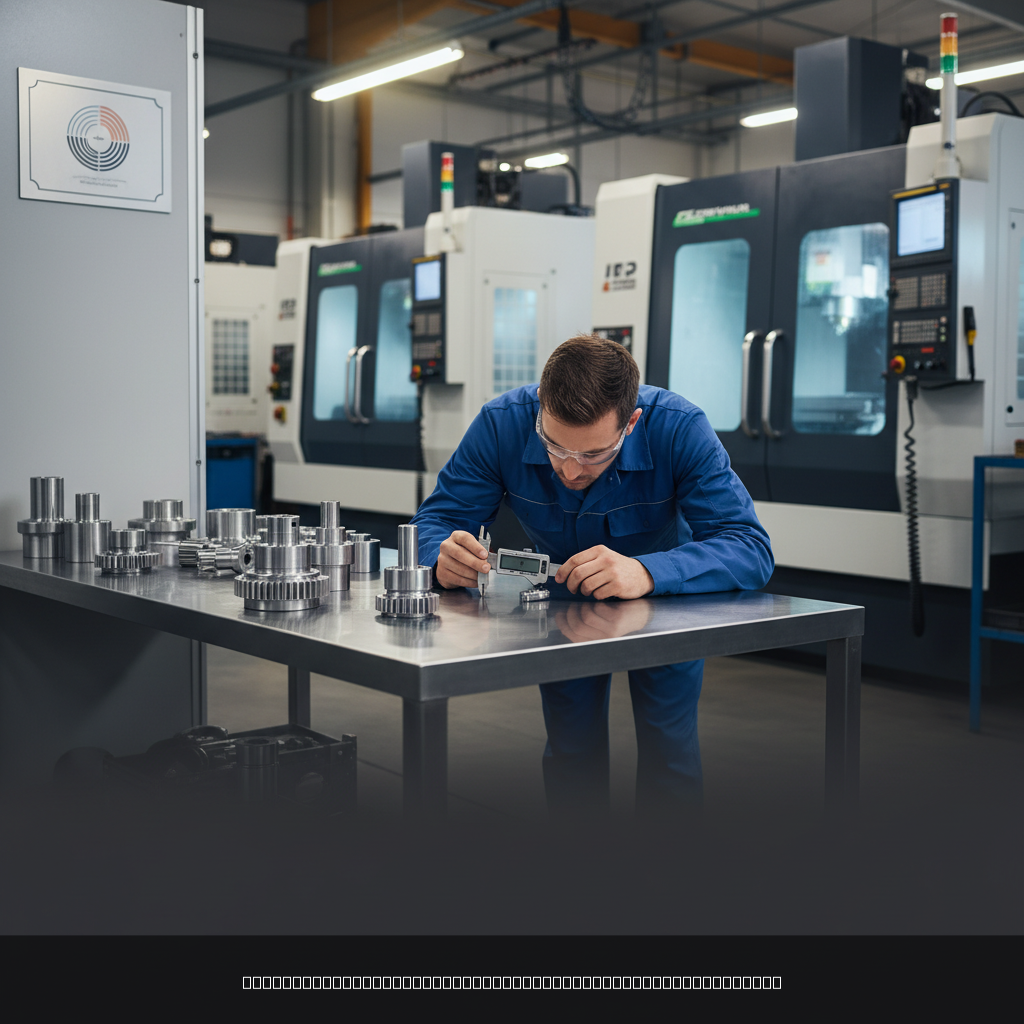
You need 50,000 stainless steel connectors, ±0.01 mm tolerance, delivered in five days. Your current supplier just failed an audit. The first question your procurement director asks is: “Are they ISO 9001 certified?” ISO 9001 precision machining is the practice of manufacturing tight-tolerance components under a formally certified Quality Management System (QMS) that documents, monitors, and continuously improves every step of production. It’s the global benchmark that separates accountable suppliers from ones that just hope the parts come out right. This guide explains exactly how the standard works in a machine shop context, why it matters for medical, automotive, and electronics buyers, and what to look for when choosing a certified machining partner in 2026.
What Is ISO 9001 Precision Machining?
ISO 9001 precision machining is a manufacturing approach where CNC and lathe operations are conducted under the ISO 9001:2015 Quality Management System standard, ensuring every part is produced to documented specifications with full traceability from raw material to shipment.
Defining the Standard
ISO 9001 is published by the International Organization for Standardization. As of 2026, the current version is ISO 9001:2015, which replaced ISO 9001:2008. The standard is built on seven quality management principles: customer focus, leadership, engagement of people, process approach, improvement, evidence-based decision making, and relationship management.
In a machining context, “certified” doesn’t just mean the shop passed a one-time inspection. It means a third-party registrar audits the entire QMS at least annually, verifying that processes are defined, followed, and improved over time [1]. According to the Illinois Manufacturing Excellence Center (IMEC), the standard adapts to any shop size, from a two-person job shop to a facility with hundreds of machines [2].
Why Precision Machining Specifically Needs It
Precision machining produces parts where dimensional variation is measured in microns. A single out-of-spec batch can ground an aircraft, fail a medical device, or halt an automotive assembly line. The stakes are unusually high compared to general manufacturing.
ISO 9001 precision machining addresses this by requiring:
- Documented control plans for every part number
- Calibrated measurement equipment with traceable records
- Defined corrective action procedures when nonconformances occur
- Supplier qualification processes to control incoming material quality
- Management review cycles to catch systemic problems early
The Precision Machined Products Association (PMPA) consistently identifies ISO 9001:2015 as the baseline quality framework for contract machining suppliers [3]. Industry analysts at Frigate note that “ISO 9001 and AS9100 are globally recognized certifications that signal a manufacturer’s commitment to stringent quality management in CNC machining” [4].
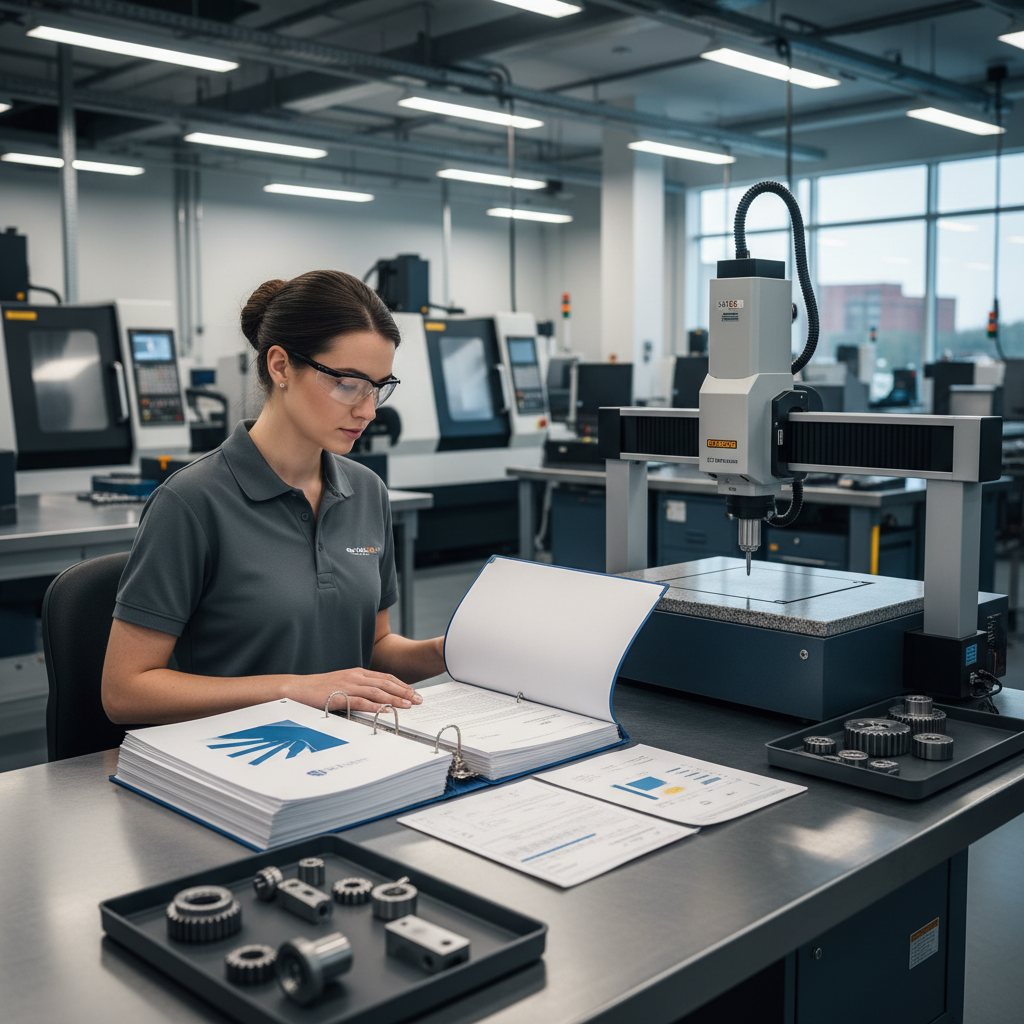
Pro Tip: When vetting a machining supplier, ask for their ISO 9001 certificate number and verify it directly with the issuing registrar. Certificates can be forged or lapsed. A legitimate certificate will have an expiry date and a scope statement describing exactly which processes are covered.
How ISO 9001 Precision Machining Works
ISO 9001 precision machining works by embedding structured quality controls at every production stage, from order intake through final inspection, so that defects are prevented rather than simply detected after the fact.
The Plan-Do-Check-Act Cycle in a Machine Shop
The PDCA cycle (Plan-Do-Check-Act), also called the Deming Cycle, is the operational backbone of ISO 9001. In a machine shop, it runs continuously at multiple levels simultaneously.
- Plan: Engineers review part drawings, assign tolerances to process parameters, select tooling, and write a control plan before the first chip is cut.
- Do: Machinists execute the process according to documented work instructions, using calibrated tooling and fixturing.
- Check: In-process and final inspections use calibrated gauges, CMMs (coordinate measuring machines), or optical comparators to verify dimensions against the control plan.
- Act: Any nonconformance triggers a documented corrective action. Root cause is identified, the fix is implemented, and the process is updated to prevent recurrence.
This cycle isn’t bureaucratic overhead. It’s the mechanism that turns a skilled machinist’s intuition into a repeatable, auditable process that a new operator can follow consistently [5].
Key Process Controls in CNC Machining
Under ISO 9001 precision machining, shops typically implement these specific controls:
| Control Area | What It Covers | ISO 9001 Clause |
|---|---|---|
| Document Control | Work instructions, drawings, and specs are version-controlled | 7.5 |
| Measurement Equipment | All gauges calibrated on a defined schedule with records | 7.1.5 |
| Nonconforming Product | Out-of-spec parts are identified, segregated, and dispositioned | 8.7 |
| Corrective Action | Root cause analysis and documented fixes for failures | 10.2 |
| Supplier Control | Approved vendor lists and incoming material verification | 8.4 |
| Internal Audit | Scheduled self-assessments before external registrar audits | 9.2 |
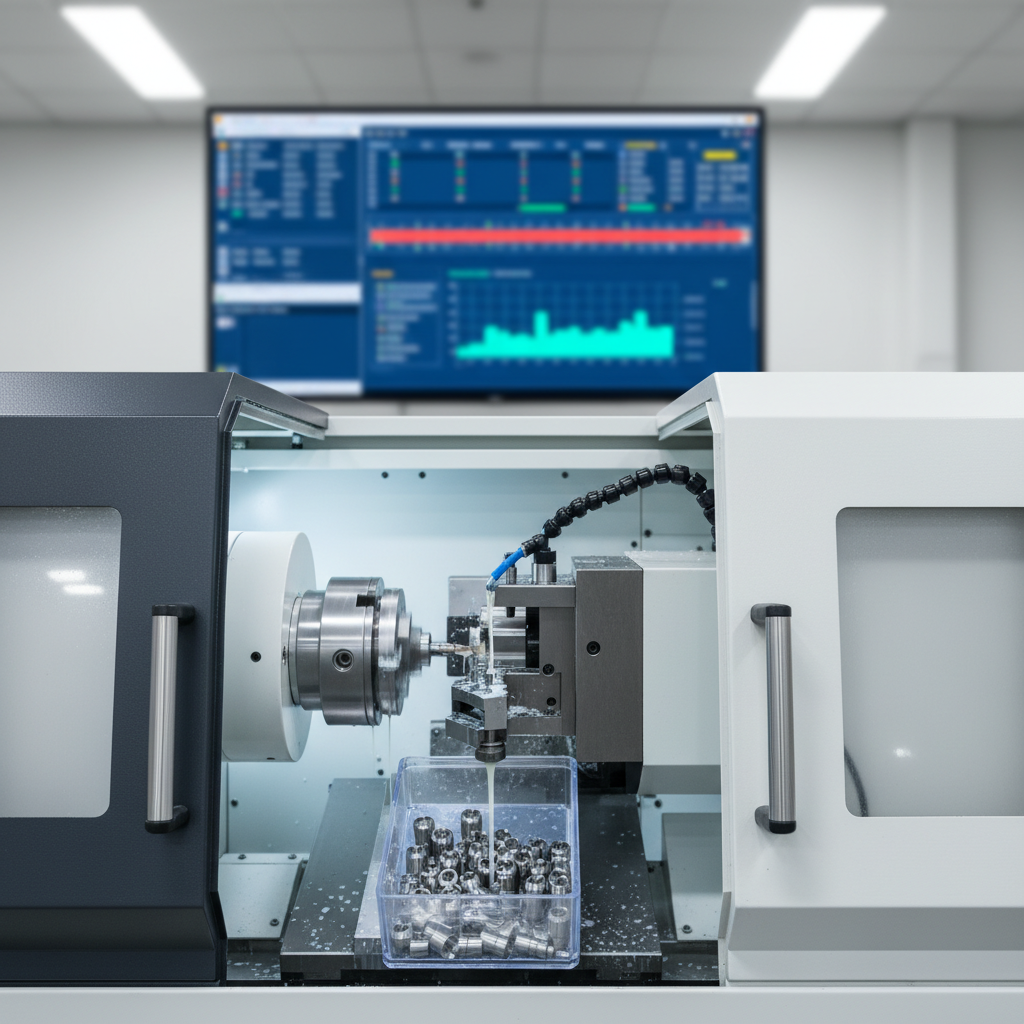
A practical example: a precision machining client recently faced a tolerance drift issue on a batch of titanium aerospace fasteners. Because the shop operated under ISO 9001 precision machining protocols, the control plan flagged the drift during in-process inspection at part 200 of a 5,000-piece run. The corrective action was logged, the root cause traced to tool wear, and the process adjusted before a single nonconforming part shipped. Without the documented control plan, the drift would likely have gone undetected until final inspection, or worse, until the customer found it.
Key Benefits of ISO 9001 Precision Machining
ISO 9001 precision machining delivers measurable advantages including reduced defect rates, faster supplier qualification, and lower total cost of quality for buyers across automotive, medical, and electronics industries.
Benefits for Buyers and Procurement Teams
Procurement managers at mid-market manufacturers face a consistent problem: they can’t afford to inspect every incoming part, but one bad batch can halt production. Sourcing from an ISO 9001 certified machining supplier shifts that risk significantly.
- Reduced incoming inspection costs: Certified suppliers provide certificates of conformance backed by documented process controls, allowing many buyers to reduce or skip incoming inspection.
- Auditable supply chain: Every step is tracked and documented, making supplier audits faster and less expensive.
- Consistent part quality across batches: Process controls prevent batch-to-batch variation, which is the most common complaint about uncertified offshore suppliers.
- Regulatory compliance support: For medical and automotive applications, ISO 9001 is often a baseline requirement. Sector-specific standards like ISO 13485:2016 and IATF 16949 build directly on it.
- Faster problem resolution: When a nonconformance occurs, documented corrective action processes mean faster root cause identification and resolution.
According to research cited by Cemaz Manufacturing, certified manufacturers consistently demonstrate greater efficiency and product consistency compared to non-certified peers, with documented quality processes reducing scrap and rework rates significantly [6].
Benefits for the Machine Shop
Certification isn’t just a marketing badge. In practice, ISO 9001 precision machining disciplines the shop’s own operations in ways that improve profitability.
- Reduced scrap rates through early defect detection
- Lower rework costs because problems are caught in-process, not at final inspection
- Clearer onboarding for new machinists because work instructions are documented
- Access to customers who require certified suppliers, expanding the addressable market
- A structured framework for continuous improvement that compounds over time
The NIST Manufacturing Extension Partnership (MEP) documented a case where a small machining company, FasTech, achieved ISO 9001 certification through GENEDGE assistance and immediately opened doors to new customer segments that had previously been inaccessible [7]. The investment in certification paid back through new contract wins within the first year.
Pro Tip: If you’re evaluating a machining supplier for a regulated industry application, don’t stop at ISO 9001. Ask whether they also hold IATF 16949 (automotive) or ISO 13485 (medical devices). These sector-specific certifications layer additional controls on top of the ISO 9001 foundation and signal genuine depth of quality commitment.
Common Challenges and Mistakes
The most common failure in this strategy isn’t a technical problem; it’s treating the standard as a documentation exercise rather than a genuine operational framework.
Pitfalls That Undermine Certification Value
From experience working with precision machining operations, a few mistakes come up repeatedly:
- Paper QMS vs. live QMS: Some shops create documentation to pass the audit, then ignore it on the shop floor. Operators follow tribal knowledge instead of work instructions. The result is a certificate that means nothing to actual part quality.
- Calibration records without actual calibration: Maintaining calibration logs is required, but some shops log calibrations without actually performing them on schedule. This is both a nonconformance and a liability risk.
- Corrective action that doesn’t address root cause: Writing “operator retrained” as a corrective action for every defect is a red flag. ISO 9001 requires genuine root cause analysis using structured methods like the 5-Why technique or Ishikawa (fishbone) diagrams.
- Scope creep in the certificate: A certificate with a vague scope like “metal parts manufacturing” may not actually cover the specific processes you’re buying. Always check that the certificate scope matches the work being performed.
- Neglecting management review: ISO 9001 Clause 9.3 requires formal management review of QMS performance. Shops that skip or rubber-stamp this process lose the strategic oversight that drives real improvement.
Misconceptions Buyers Should Watch For
A common misconception is that ISO 9001 certification guarantees zero defects. It doesn’t. The standard governs the quality management system, not the output directly. A certified shop can still produce nonconforming parts; what the certification ensures is that those parts are detected, documented, and addressed systematically.
Another misconception is that all certifications are equal. The rigor of the registrar matters. Accredited registrars operating under ANAB (ANSI National Accreditation Board) or UKAS (United Kingdom Accreditation Service) standards provide more credible certification than unaccredited bodies. As the Salco Global analysis notes, the certification is only as strong as the registrar’s independence and audit rigor [8].
One pitfall to watch for: suppliers who claim “ISO 9001 compliance” without certification. Compliance means they’ve read the standard. Certification means an independent third party has verified their system against it. These are not the same thing.
Best Practices for ISO 9001 Precision Machining in 2026
The most effective this approach operations in 2026 combine digital process monitoring with the standard’s documentation requirements, creating quality systems that are both auditable and genuinely predictive of output quality.
Integrating Digital Tools with QMS Requirements
The 2026 landscape for precision machining quality has shifted toward real-time data. Shops that integrate their QMS with digital tools gain a significant advantage over those still running paper-based systems.
- Statistical Process Control (SPC) software: Real-time charting of key dimensions against control limits catches drift before parts go out of tolerance. This directly satisfies ISO 9001 Clause 8.5 (production and service provision controls).
- Digital calibration management: Automated reminders and electronic logs for gauge calibration reduce the risk of missed calibration cycles.
- ERP integration: Linking quality records to production orders creates automatic traceability from raw material lot to finished part shipment.
- First Article Inspection (FAI) documentation: Structured FAI processes, documented digitally, provide buyers with dimensional reports for the first production run before full batches are released.
At MFG SOLUTION, we’ve found that combining ISO 9001:2015 process controls with real-time SPC monitoring on our 5-axis CNC machines and 20 automatic lathes allows our 60+ engineering professionals to catch dimensional drift within the first 20 parts of a run, not at final inspection. This is how we maintain the 3-day ship window without sacrificing quality on parts down to ±0.005 mm tolerance.
Preparing for the Upcoming ISO 9001 Revision
As of 2026, ISO 9001 is progressing through a revision cycle. The updated standard is expected to address climate-related risks, digital transformation, and supply chain resilience with greater specificity than the 2015 version. The Final Draft International Standard (FDIS) phase is underway, with publication anticipated by late 2026 or 2027.
Shops should take these preparatory steps now:
- Review current QMS documentation for gaps in climate and sustainability risk assessment
- Audit digital process controls to ensure they meet documentation requirements
- Engage your registrar for a pre-revision gap analysis
- Participate in PMPA or industry association updates to track the revision timeline [9]
The NC State University Industry Extension Services has documented how proactive gap analysis before major ISO revisions significantly reduces transition costs for small and mid-sized machining companies [10].
Pro Tip: Don’t wait for the new ISO 9001 version to publish before starting your gap analysis. Registrars typically allow a 3-year transition period after publication, but shops that start early avoid the certification backlog that always forms in the final 12 months of a transition window.
Sources & References
- IMEC, “Debunking the ISO Myth: Why ISO 9001 Isn’t Just for Large Manufacturers,” 2024
- IMEC, “ISO 9001 Scales to Any Shop Size,” 2024
- Precision Machined Products Association (PMPA), “ISO 9001:2015 Resources,” 2026
- Frigate.ai, “Understanding ISO 9001 & AS9100 Certifications in Machining,” 2024
- Wisense Machining, “What is ISO 9001 in CNC Machining? A Guide to Quality and Trust,” 2024
- Cemaz Manufacturing, “Why ISO 9001 Certification Matters for Precision Manufacturing,” 2024
- NIST MEP, “GENEDGE Helps FasTech Achieve ISO 9001 Certification,” 2025
- Salco Global, “ISO 9001:2015 – Why It’s So Important in CNC Machining,” 2024
- PMPA, “ISO 9001:2015 Industry Updates,” 2026
- NC State University IES, “Forging Quality: ISO 9001 Implementation Services for Mechanical Speciality, Inc.,” 2024
- Armes Precision, “Quality Management Systems in Contract Manufacturing,” 2024
- Precision CNC Solutions, “ISO 9001:2015 Impact on CNC Machined Part Quality Standards,” 2024
Frequently Asked Questions
1. Is ISO 9001 changing in 2026?
Yes, ISO 9001 is undergoing a formal revision as of 2026. The updated standard has progressed to the Final Draft International Standard (FDIS) phase, with publication expected by late 2026 or into 2027. The revision is expected to introduce stronger requirements around climate-related risks, digital transformation, and supply chain resilience. Existing certified organizations will have a transition period (typically three years from publication) to update their Quality Management Systems. Shops engaged in this should begin gap assessments now rather than waiting for the final text.
2. What is the difference between ISO 45000 and ISO 45001?
ISO 45001 is the specific published standard for Occupational Health and Safety (OHS) Management Systems, establishing requirements for reducing workplace injuries and illnesses. ISO 45000 refers to the broader family of OHS-related standards under which ISO 45001 sits as the flagship document, alongside supporting guidance documents. In practical terms for a machining operation, you certify to ISO 45001, not to “ISO 45000” as a whole. ISO 45001 is also structurally aligned with ISO 9001 using the same High Level Structure (HLS), making integrated management systems easier to implement.
3. Does ISO 9001 certification guarantee zero defects in machined parts?
No. ISO 9001 certification governs the quality management system, not the physical output directly. A certified shop has documented processes for detecting, isolating, and correcting nonconforming parts, but the standard doesn’t eliminate human error or machine variation entirely. What it does guarantee is that when defects occur, they’re caught systematically, documented, and addressed with a verifiable corrective action. For zero-defect requirements, buyers should combine it sourcing with First Article Inspection (FAI), SPC monitoring, and clear acceptance criteria in the purchase order.
4. What is the difference between ISO 9001 and IATF 16949 for machined parts?
ISO 9001 is the general quality management standard applicable to any industry. IATF 16949 is the automotive-specific quality standard developed by the International Automotive Task Force; it includes all of ISO 9001’s requirements plus additional controls specific to automotive supply chains, such as APQP (Advanced Product Quality Planning), PPAP (Production Part Approval Process), and MSA (Measurement System Analysis). If you’re sourcing machined parts for automotive applications, IATF 16949 certification is typically required by OEMs and Tier-1 suppliers. this method certification alone is generally insufficient for automotive production parts.
5. How long does it take a machine shop to get ISO 9001 certified?
For a small-to-mid-sized machine shop starting from scratch, the typical timeline is 6 to 18 months, depending on the shop’s existing process documentation and management commitment. The process involves a gap analysis, QMS documentation development, implementation, internal audits, and a Stage 1 (document review) followed by Stage 2 (on-site) audit by a third-party registrar. The NIST MEP program has helped numerous small manufacturers compress this timeline with structured templates and gap analysis support. Ongoing maintenance requires annual surveillance audits and a full recertification audit every three years.
6. Can a small machine shop realistically maintain ISO 9001 certification?
Absolutely. ISO 9001 is explicitly designed to scale to any organization size. A two-person shop and a 500-person facility are both held to the same principles, but the documentation depth and audit complexity scale proportionally. According to IMEC, the most common barrier for small shops isn’t capability; it’s the misconception that certification requires a dedicated quality department. In practice, a committed owner-operator with good process discipline can maintain a compliant QMS with the right templates and registrar support.
Conclusion
this strategy isn’t a checkbox. It’s the operational discipline that separates suppliers you can trust from ones you have to inspect. For procurement managers sourcing small precision parts for medical devices, automotive assemblies, or electronics, the certification signals something concrete: every step of production is documented, monitored, and continuously improved.
The standard’s upcoming revision in 2026 will raise the bar further, adding requirements around digital processes and supply chain risk. Shops that treat ISO 9001 as a living system rather than a wall certificate will adapt without disruption. Those running paper QMS systems will struggle.
Our team at MFG SOLUTION recommends evaluating suppliers not just on whether they hold ISO 9001:2015 certification, but on how they use it. Ask for their corrective action records. Ask how they handle in-process nonconformances. Ask whether their certificate scope covers the specific processes producing your parts. These questions separate genuine quality systems from certification theater.
MFG SOLUTION holds ISO 9001:2015, ISO 13485:2016, and IATF 16949 certifications, with full process control across CNC Turning, Swiss Lathe, Cold Forging, Automatic Lathe, and CNC Mill & Turn services. We quote within 8 hours and ship within 3 days, for parts up to 38mm diameter, backed by 60+ engineering professionals and real-time process monitoring. That’s what this approach looks like in practice.
About the Author
Written by the Manufacturing – Precision Machining & CNC Services experts at MFG SOLUTION. Our team brings years of hands-on experience helping businesses with Manufacturing – Precision Machining & CNC Services, delivering practical guidance grounded in real-world results.
Recommended Articles
Explore more from our content library: