
2026-11-03
CNC Machining for Industrial Construction Equipment Components: Hydraulic Valve Blocks, Track Rollers, Pivot Pins and Structural Mounting Parts
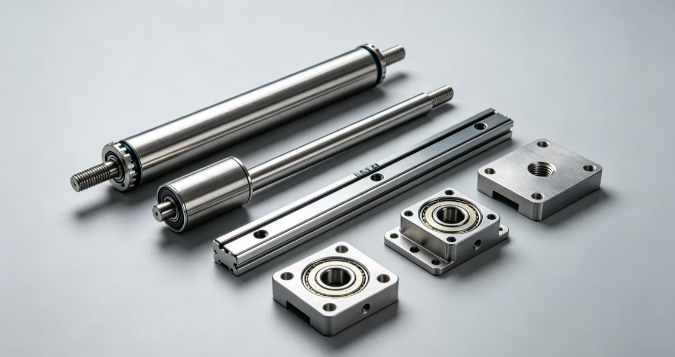
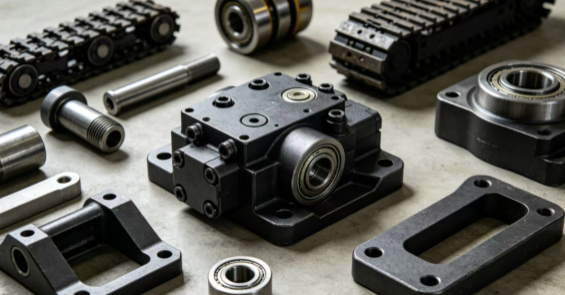
Construction equipment operates under demanding mechanical and environmental conditions. Excavators, loaders, bulldozers, road rollers, cranes, and other heavy machines must withstand impact, vibration, abrasive dust, moisture, changing temperatures, and repeated high-load operation. Their reliability depends on the performance of complete mechanical systems as well as the accuracy and durability of individual components.
Behind every hydraulic movement, rotating assembly, and structural connection are parts that must fit and function consistently. Hydraulic valve blocks control fluid distribution. Pivot pins and bushings support articulated movement. Bearing housings maintain rotating alignment. Mounting blocks and brackets connect components to machine structures. Track and roller-related parts experience repeated contact, load, and wear.
For construction equipment OEMs and component suppliers, selecting the right manufacturing process is essential. A component that is poorly machined may create assembly difficulties, accelerate wear, increase vibration, or affect the performance of the complete machine. At the same time, applying unnecessarily tight tolerances or expensive finishing processes can increase manufacturing cost without delivering a meaningful functional improvement.
CNC machining offers a flexible method for producing custom metal and engineering-plastic components. CNC milling, turning, multi-axis machining, drilling, boring, and secondary finishing can be combined according to part geometry, material, batch size, and functional requirements.
MFG SOLUTION supports custom manufacturing projects through CNC machining services, CNC turning, and 5-axis CNC machining. This guide explains how construction equipment components should be designed, machined, finished, and inspected for demanding industrial applications.
1. Why Precision Machining Matters in Construction Equipment
Construction machinery is frequently exposed to operating conditions that create high mechanical stress. Unlike components used in controlled indoor environments, heavy equipment parts may operate in mud, sand, gravel, rain, and areas where maintenance access is limited.
Several factors influence component performance.
High mechanical loads: Pins, shafts, bearing supports, and mounting interfaces may carry substantial static and dynamic loads. Their dimensions and material properties must match the intended application.
Repeated impact and vibration: Excavation, lifting, loading, and ground movement create repeated forces. Poor fits or insufficient structural strength can contribute to premature wear and loosened connections.
Abrasive contamination: Dust, sand, and soil can enter exposed joints and rotating assemblies. Surface condition, lubrication arrangements, sealing, and material selection all influence service life.
Corrosion and moisture: Outdoor equipment may be exposed to rain, standing water, road salt, chemicals, and other corrosive substances.
Maintenance requirements: Replacement parts often need to match existing assemblies. Dimensional compatibility is important when manufacturing discontinued or customized components.
Precision machining helps control the interfaces that connect these components. Critical dimensions may include pin diameters, bearing bores, shaft seats, mounting-hole positions, sealing faces, thread dimensions, and reference surfaces.
A practical tolerance strategy should focus on functional features instead of applying the same precision level to every dimension. For additional guidance, review machining tolerances explained and why CNC machining tolerance drives part price.
2. Common CNC Machined Components in Construction Equipment
Construction machinery includes hydraulic, mechanical, structural, and motion-control assemblies. Each group has different manufacturing requirements.
Hydraulic Valve Blocks and Manifold Components
Hydraulic systems control functions such as boom movement, bucket operation, steering, lifting, and auxiliary attachments. Valve blocks and manifolds contain multiple passages, threaded ports, mounting features, and precision bores.
Typical machining requirements include:
- Accurate port and hole positioning
- Controlled bore diameter and geometry
- Correct thread type, pitch, and depth
- Flat sealing surfaces
- Proper relationships between mounting faces and internal passages
- Complete removal of burrs from intersecting holes
CNC milling and drilling are commonly used to produce external geometry and fluid passages. Selected bores may require boring or reaming to achieve the specified dimensions. The manufacturing plan must also consider how internal passages will be cleaned and inspected.
For hole-making decisions, see CNC hole tolerance: when drilling is enough and when to use reaming or boring.
Pivot Pins and Bushings
Pivot pins and bushings are used in articulated joints, boom connections, linkage assemblies, and attachment mechanisms. They support movement while transferring mechanical loads between connected structures.
Important characteristics may include:
- Pin diameter and roundness
- Straightness over the working length
- Surface finish at sliding contact areas
- Groove and retaining-feature dimensions
- Hardness and wear resistance
- Compatibility with the mating bushing
CNC turning is suitable for cylindrical pin geometry, while milling may be required for flats, slots, cross-holes, and other features. Depending on the material and design, heat treatment or additional surface finishing may be necessary.
The clearance between a pin and bushing should be determined by the load, lubrication, movement, operating temperature, and expected contamination. An excessively tight fit can restrict movement, while excessive clearance may contribute to impact and accelerated wear.
Track Roller and Undercarriage-Related Parts
Track systems are exposed to repeated contact with abrasive ground materials. Roller-related components, shafts, spacers, sleeves, and mounting interfaces must be designed for their mechanical and environmental conditions.
Machined features may include bearing seats, shaft diameters, mounting faces, retaining grooves, and threaded connections. The manufacturing route should account for material condition and any required heat treatment.
Not every track roller is best manufactured entirely through CNC machining. Depending on its size, geometry, and volume, a forged, cast, or formed blank followed by precision machining may be more economical. CNC machining is particularly important for the functional interfaces that require controlled dimensions.
Bearing Housings and Support Blocks
Bearing housings support rotating shafts and transfer loads into the machine structure. They may be used in pumps, drive assemblies, auxiliary equipment, and other rotating mechanisms.
Critical features often include bore diameter, bore alignment, mounting-face flatness, hole position, and the relationship between multiple bearing locations.
If two bearing seats are not correctly aligned, assembly may become difficult and the rotating system may experience unwanted loads. A suitable datum strategy and inspection plan should therefore be established before machining.
Structural Brackets and Mounting Interfaces
Mounting brackets, adapter plates, support blocks, and structural interfaces connect hydraulic, mechanical, and auxiliary assemblies.
These parts may require pockets, slots, threaded holes, counterbores, milled faces, and accurately positioned mounting patterns. Their design should balance stiffness, weight, machining accessibility, and assembly requirements.
CNC machining can produce custom interfaces for prototype equipment, specialized attachments, and replacement components without requiring dedicated production tooling for every design change.
3. Material Selection for Heavy-Duty Components
Material selection influences strength, toughness, wear behavior, corrosion resistance, machinability, and cost. Construction equipment parts do not all need the same material. The correct choice depends on the actual loading conditions and the component’s function.
Carbon Steel
Carbon steel is commonly considered for pins, shafts, brackets, spacers, and other mechanical parts. Its machinability and availability make it useful for many custom manufacturing projects.
The selected grade should reflect the required strength, toughness, and heat-treatment condition. For parts exposed to impact or repeated loading, material condition and design geometry should be evaluated together.
Alloy Steel
Alloy steel may be suitable for components requiring higher strength, fatigue resistance, or improved hardenability. It can be considered for selected shafts, pins, and load-bearing interfaces.
Heat treatment can change hardness and dimensional stability. If a component requires hardening, the machining sequence should define which features are produced before treatment and which dimensions require finishing afterward.
MFG SOLUTION’s resource on 1045 steel turned parts provides a reference for one common steel option.
Stainless Steel
Stainless steel may be used for components exposed to moisture, chemicals, or corrosive environments. Its suitability depends on the specific grade and service conditions.
Machining stainless steel requires attention to tool condition, cutting parameters, heat generation, and burr formation. The selected grade should also be evaluated for strength and wear requirements rather than chosen solely for corrosion resistance.
For more information, review stainless steel block types, uses, and machining.
Aluminum Alloys
Aluminum alloys can reduce component weight and may be suitable for covers, housings, mounting plates, and selected structural accessories.
The alloy and temper should be selected according to stiffness, load, temperature, corrosion exposure, and finishing requirements. Aluminum should not automatically replace steel in highly loaded interfaces without an engineering review.
Explore aluminum machining options and the broader MFG SOLUTION material range.
Engineering Plastics
Engineering plastics may be appropriate for selected guides, wear pads, spacers, protective elements, and low-friction components. POM, nylon, and PEEK can be considered depending on load, temperature, moisture, and chemical exposure.
Plastic components require attention to thermal expansion, moisture absorption, creep, and clamping deformation. The material should be selected according to the actual application rather than assuming that all engineering plastics provide similar wear performance.
The guide to CNC machining of PEEK explains relevant machining considerations for a high-performance engineering plastic.
4. Choosing the Right CNC Machining Process
The manufacturing route should be selected according to geometry, material, tolerance, production quantity, and inspection requirements.
CNC Milling for Blocks and Structural Interfaces
CNC milling is suitable for hydraulic blocks, bearing supports, mounting plates, brackets, and other prismatic components.
It can produce flat faces, pockets, slots, counterbores, threaded holes, and complex profiles. A well-planned setup helps maintain the relationship between mounting surfaces and precision features.
For parts with features on multiple sides, the engineering team should evaluate whether additional axes or dedicated fixtures can reduce repositioning and improve consistency.
CNC Turning for Pins, Shafts, and Sleeves
CNC turning is commonly used for pivot pins, shafts, bushings, spacers, sleeves, and other rotational components.
It can produce diameters, shoulders, grooves, threads, and end faces. When a component also requires cross-holes, keyways, or milled flats, combined turning and milling may reduce handling and help maintain feature relationships.
For small, slender, or feature-dense components, Swiss turning may be worth evaluating.
5-Axis Machining for Complex Parts
Some hydraulic housings and structural components have angled passages, compound surfaces, or features located on several faces. Five-axis machining can provide access to multiple orientations with fewer manual repositioning operations.
However, 5-axis machining is not automatically the lowest-cost option. Simpler parts may be produced more economically using 3-axis or 4-axis machining. The decision should be based on feature access, datum control, fixture requirements, and expected production volume.
Boring, Reaming, and Precision Hole-Making
Bearing housings, hydraulic blocks, and pivot assemblies may contain holes with different functional requirements.
Drilling may be sufficient for general clearance holes. Reaming can be appropriate for selected holes requiring improved diameter consistency, while boring can provide control over larger or more demanding bores.
The correct process depends on the drawing, material, geometry, and inspection method. Avoid specifying a precision hole process without defining the actual tolerance and functional requirement.
5. Tolerance Planning for Heavy Loads and Moving Interfaces
Construction equipment components often operate as part of connected assemblies. Their dimensions must be coordinated with bearings, bushings, shafts, seals, fasteners, and structural mating parts.
Pin and bushing fits: Clearance affects movement, lubrication, wear, and impact behavior. The required fit should be based on the joint design and service conditions.
Bearing seats: Bore size, roundness, and alignment influence bearing installation and operating performance. Multiple bearing locations may require coordinated machining and geometric inspection.
Hydraulic interfaces: Port positions, thread dimensions, sealing faces, and bore geometry should match the specified hydraulic connection design.
Mounting surfaces: Flatness, perpendicularity, and hole positions may influence the alignment of attached assemblies.
Threaded features: Thread type, pitch, depth, engagement, and any insert requirements should be clearly identified. See precision thread tolerance in CNC machining.
Tolerance accumulation should also be considered when several parts form one assembly. A component can meet its individual drawing dimensions and still contribute to an assembly problem if the overall dimensional chain has not been reviewed.
A practical approach is to identify functional datums, define critical dimensions, and assign tolerances according to their effect on assembly and operation.
6. Heat Treatment, Surface Finish, and Wear Protection
Heavy-duty components may require more than dimensional machining. Heat treatment and surface finishing can influence hardness, wear behavior, corrosion resistance, and dimensional stability.
Heat Treatment
Selected pins, shafts, and load-bearing parts may require a specified heat-treatment condition. The process should be determined by the material grade and engineering requirements.
Machining before heat treatment can establish basic geometry, while subsequent finishing operations may be needed to restore critical dimensions. The drawing should identify hardness requirements and the areas that must remain dimensionally controlled.
Surface Finish
Surface roughness matters at bearing seats, sliding interfaces, sealing faces, and other functional contact areas. The required finish should be based on the mating component, lubrication method, and operating conditions.
A very smooth finish is not always necessary or beneficial for every surface. The target should be selected according to the part’s function.
Review the CNC machining surface finish guide for additional information.
Protective Treatments
Depending on the material and application, surface treatments may include anodizing, plating, passivation, polishing, or powder coating. Treatment selection should consider corrosion exposure, wear, dimensional impact, and compatibility with mating parts.
If a coating changes a critical diameter or interface, the manufacturing plan must account for its thickness. Masking requirements should also be clearly specified for threads, bearing seats, and sealing surfaces.
For a broader comparison, see surface finishing in CNC machining.
7. Workholding and Process Stability
Workholding is especially important for heavy-duty components with irregular shapes, large cutting forces, or multiple precision features.
A suitable fixture should locate the workpiece from reliable datums, resist cutting forces, provide tool access, and avoid distorting thin or unsupported sections.
Long pins and shafts may require suitable support to control deflection and vibration. Large housings may need stable clamping arrangements that avoid damaging machined faces. Components with multiple mounting surfaces may need a setup strategy that preserves their positional relationships.
Fixture planning should be considered during design review rather than after the machining process has been selected.
The guide to CNC workholding fixtures explains fixture selection and repeatability. Engineers can also reduce unnecessary machining operations through CNC part geometry optimization.
8. Quality Inspection for Construction Equipment Components
Inspection should focus on the dimensions and characteristics that affect safety, fit, function, and durability. The appropriate method depends on the component’s complexity and drawing requirements.
Typical checks include:
- Critical diameters, lengths, and depths
- Bore size, roundness, and alignment
- Hole positions and center distances
- Flatness and perpendicularity
- Thread dimensions and engagement
- Surface roughness where specified
- Hardness or material documentation when required
- Visual inspection for burrs, scratches, and machining defects
Coordinate measuring machines may be useful for complex components with multiple geometric relationships. Calibrated gauges and dedicated measuring tools may be more efficient for straightforward production features.
First-article inspection is useful when introducing a new part, fixture, material, or process. It allows the customer and manufacturer to review the initial result before repeat production.
Inspection criteria should be agreed before production begins. MFG SOLUTION’s quality assurance standards for CNC machining parts and ISO 9001 precision machining guide provide further information about quality planning.
9. How to Control Cost Without Compromising Performance
Construction equipment manufacturers need durable components, but cost remains an important factor in both OEM production and replacement-part sourcing.
Several engineering decisions can help control manufacturing cost.
Apply tolerances selectively. Tight tolerances should be reserved for critical fits, bearing seats, sealing surfaces, and alignment features.
Choose materials according to function. Compare strength, toughness, corrosion resistance, machinability, and availability instead of selecting a premium material without a clear reason.
Simplify unnecessary geometry. Deep pockets, difficult internal corners, and inaccessible features may increase machining time and tooling requirements.
Select the correct production process. Turning, milling, 5-axis machining, forging, and other processes each have different advantages. Some parts may benefit from machining a near-net-shape blank rather than removing all material from solid stock.
Consider finishing before finalizing dimensions. Heat treatment and coating processes may affect final dimensions and require additional machining or inspection.
Provide complete RFQ information. Drawings, CAD models, material grades, quantities, finishing requirements, and inspection criteria reduce uncertainty during quotation.
For a more detailed explanation, review CNC machining cost analysis. MFG SOLUTION’s manufacturing capabilities cover machining and complementary production processes.
10. Preparing an RFQ for Custom Construction Equipment Parts
A complete RFQ helps the manufacturing team evaluate the component, identify critical features, select a suitable process, and prepare a more accurate quotation.
Customers should provide:
- A 2D engineering drawing with dimensions and tolerances.
- A 3D CAD file, preferably in STEP format, when available.
- Material grade and required material condition.
- Heat-treatment and hardness requirements, if applicable.
- Surface treatment and roughness specifications.
- Prototype quantity, batch quantity, and estimated annual demand.
- Critical interfaces and assembly requirements.
- Inspection reports or material documentation required.
- Delivery schedule and packaging requirements.
- Reference samples or existing components for replacement projects, when available.
For replacement parts, it is important to confirm actual mating dimensions and operating requirements. An old drawing may not reflect modifications made during the equipment’s service life.
If certain specifications are not finalized, identify them clearly. The manufacturing team can then review the design and discuss practical options before production.
MFG SOLUTION supports custom manufacturing projects involving machining, turning, material selection, finishing, and inspection. Customers can submit project information through the online quotation page or contact the team through the MFG SOLUTION contact page.
Frequently Asked Questions
1. What construction equipment components can be CNC machined?
Common examples include hydraulic valve blocks, manifold components, pivot pins, bushings, shafts, bearing housings, mounting brackets, spacers, and precision structural interfaces. The manufacturing route depends on geometry, material, tolerance, and quantity.
2. Which materials are suitable for heavy-duty construction equipment parts?
Carbon steel, alloy steel, stainless steel, aluminum alloys, and selected engineering plastics may be suitable. The choice depends on load, impact, wear, corrosion exposure, temperature, and the component’s function.
3. Can CNC machining produce hydraulic valve blocks?
Yes. CNC milling, drilling, boring, and other hole-making processes can produce valve blocks with ports, passages, threaded features, and mounting surfaces. Burr removal and inspection of critical passages are important.
4. How should pivot pin and bushing tolerances be selected?
The fit should be based on load, movement, lubrication, operating temperature, material pairing, and expected contamination. Both pin dimensions and bushing characteristics should be considered as part of the complete joint.
5. Do construction equipment components require heat treatment?
Not every component requires heat treatment. It may be specified for parts that need particular hardness, strength, or wear characteristics. The requirement should be based on material and application, with dimensional effects considered in the process plan.
6. Which surface treatments can improve corrosion protection?
Depending on the base material and operating environment, options may include plating, passivation, anodizing, or powder coating. The selected finish must be compatible with critical dimensions and mating surfaces.
7. Can CNC machining be used for replacement parts?
Yes. Custom machining can support replacement parts when drawings, CAD models, or verified physical samples are available. Actual mating dimensions should be confirmed, particularly for older equipment.
8. What information is needed to request a CNC machining quotation?
Provide drawings, 3D files, material specifications, quantities, tolerances, surface treatment requirements, inspection expectations, and delivery information. Reference samples can help clarify replacement-part requirements.
Request a Quote for Custom Construction Equipment Components
Construction machinery depends on components that can withstand demanding loads and operating environments. Hydraulic valve blocks, pivot pins, bushings, shafts, bearing supports, and mounting interfaces all require manufacturing processes suited to their specific functions.
MFG SOLUTION provides custom manufacturing support through CNC milling, CNC turning, 5-axis machining, material selection, surface finishing, and quality inspection. Share your drawings, CAD files, material requirements, and estimated quantities for an engineering review.
Request a quotation: https://mfg-solution.com/online-quote/
Contact MFG SOLUTION: https://mfg-solution.com/contact-mfg-solution/