
2026-10-06
Know 4 Brass Alloys Before Buying Brass Machining Services
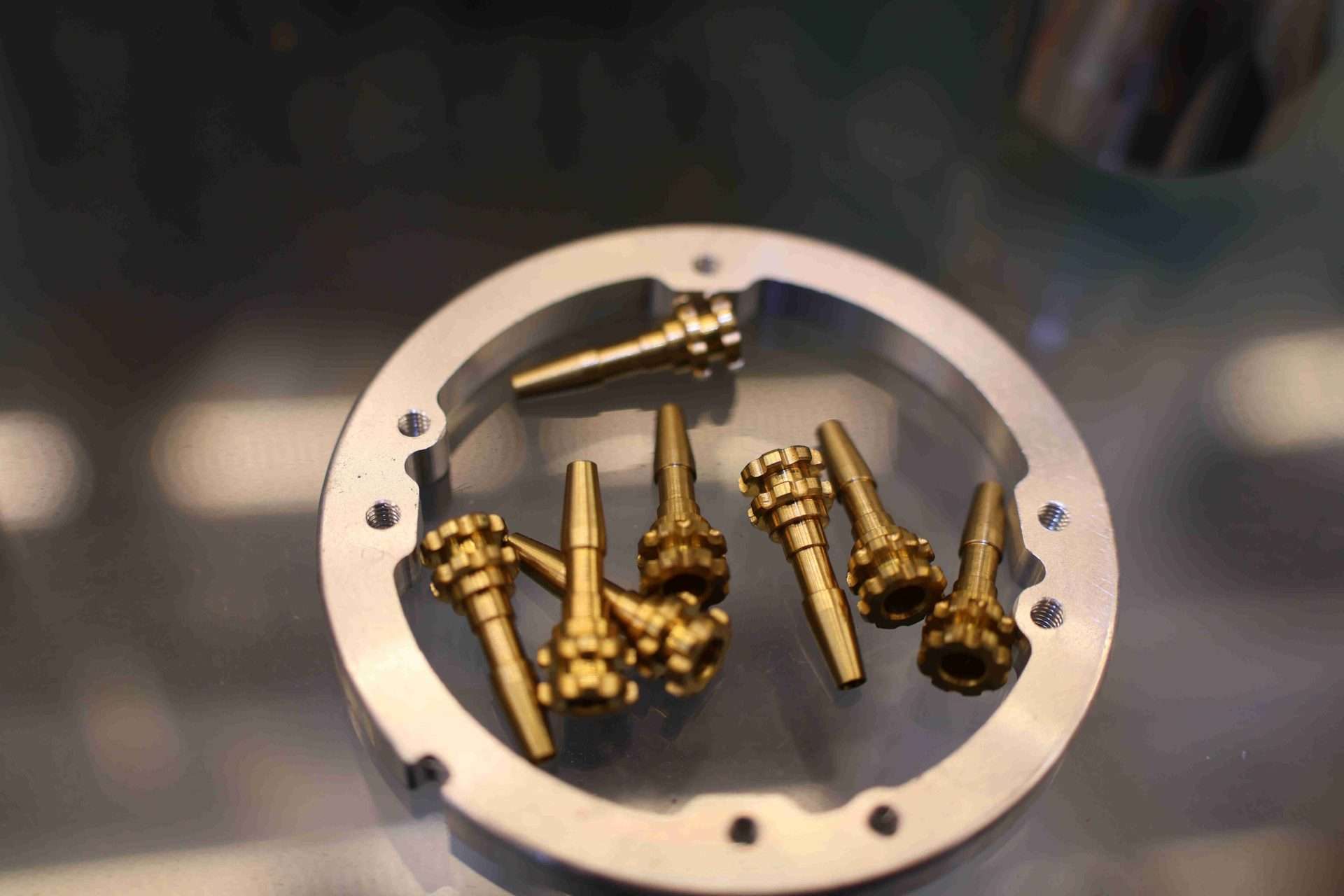
Understanding brass machining services is essential. For most custom machined parts, choose C360 free-cutting brass when machinability and cost matter most, and C260 cartridge brass when the part needs more ductility, strength, or cold-forming after machining. C360 contains a small amount of lead that drastically improves chip-breaking and tool life, making it the lowest-cost, fastest-to-machine option for fittings, valves, and connectors. C260 trades some machinability for better mechanical properties, suiting deep-drawn or stressed components. Two other alloys—C464 naval brass and C932 bearing bronze—cover corrosion-resistant and high-wear applications respectively. The right pick balances your tolerance needs, mechanical loads, and budget tier. This guide walks through all four alloys so you can brief your supplier with confidence before requesting a quote for brass machining services.

1. C360 Free-Cutting Brass
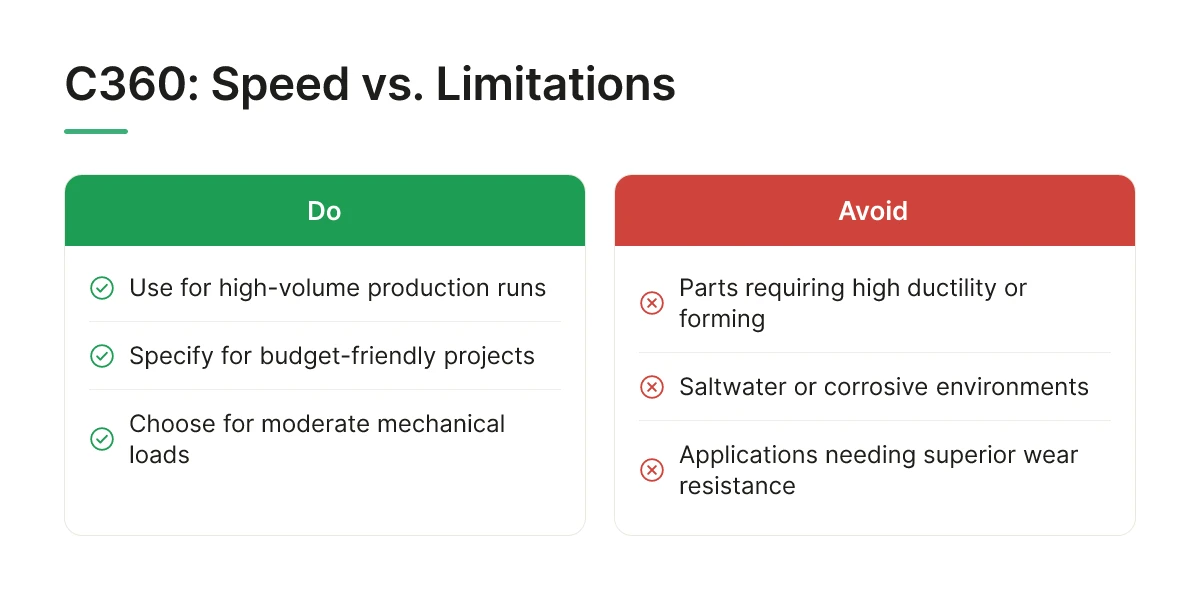
C360 earns its default status in brass machining services because its lead content breaks chips cleanly, cutting tool wear and cycle time compared to unleaded alloys.
The mechanism is straightforward: lead particles disperse through the copper-zinc matrix and act as internal chip-breakers. Instead of long, stringy chips that tangle around tooling and force slower feeds, C360 shears into small, manageable fragments. That translates directly into less machine time per part, which is why C360 sits in the budget-friendly tier for high-volume production, fewer seconds per cycle compounds fast across a batch run.
This alloy fits parts where mechanical load stays moderate: compression fittings, valve bodies, electrical connectors, and decorative hardware. It’s considered the machinability benchmark other metals get measured against, and most shops can hold tolerances in the thousandths of an inch with a smooth, bright surface finish straight off the tool, often skipping secondary finishing entirely. For a closer look at why C360’s machinability rating sets the industry baseline, see this breakdown of brass CNC machining suitability.
One thing the top search results tend to skip: leaded brass faces growing regulatory restriction in plumbing and potable-water applications under low-lead and lead-free statutes. If your part touches drinking water, confirm compliance requirements before specifying C360, a lead-free alloy or C260 may be the safer call. MFG SOLUTION’s engineering team flags this during quote review, since full process control means catching compliance mismatches before they reach production.
Typical parts suited to C360 include:
- Compression fittings and quick-connect couplings
- Valve bodies and stems for low-to-moderate pressure systems
- Electrical connectors, terminals, and plug pins
- Decorative hardware, hinges, and knobs
- Instrument housings and small precision spacers
2. C260 Cartridge Brass
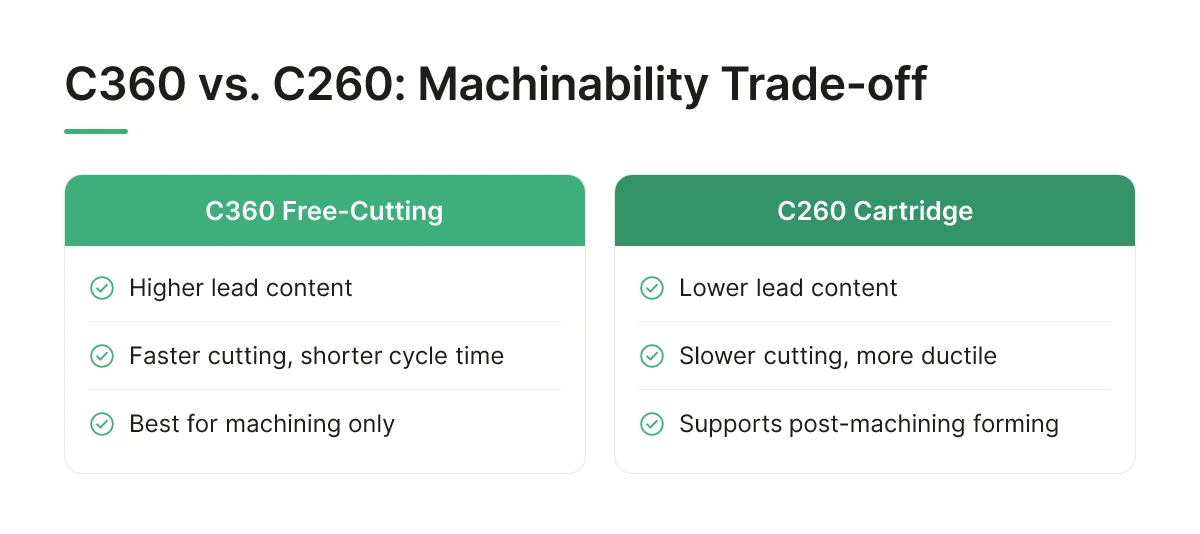
C260 cartridge brass trades some machinability for ductility, making it the better choice when a part must be machined and then formed, bent, or drawn without cracking.
C260 contains less lead than C360, and that single compositional difference drives its whole performance profile. Lead acts as a chip-breaker during cutting, it lets material shear cleanly instead of stretching, which is why C360 machines so fast. Strip most of that lead out, as C260 does, and the alloy becomes tougher and more elastic, able to withstand cold forming, deep drawing, or bending operations after the machining step is done. That ductility is the entire reason to specify it. For more on how alloy composition shapes these trade-offs, see this guide on choosing the right brass alloy for your application.
How Do the Mechanical Properties of C260 and C360 Affect Durability?
C260 holds up better under repeated flexing, while C360 holds up better under straight compressive or static load. For springs, terminals, and connectors that see cyclic stress, contacts that get mated and unmated thousands of times, or clips that flex with every use, C260’s fatigue resistance matters more than raw cutting speed. C360 is harder and more brittle by comparison, which is fine for a static fitting but risky for a part that bends in service.
The trade-off shows up on the shop floor. C260 runs slower through the spindle and wears tooling faster than C360, since there’s less lead to lubricate the cut and chips tend to be longer and more prone to tangling. Any shop offering brass machining services will quote C260 jobs with longer cycle times and tighter tool-wear monitoring built in. That pushes C260 into a mid-range cost tier, pricier than C360, but still well below nickel alloys or stainless for comparable geometries. It’s also the practical default when a lead-free specification is required, which is increasingly common in electronics and medical components. MFG SOLUTION’s engineering team evaluates alloy choice against part geometry and post-machining operations before quoting, so the trade-off between speed and formability gets resolved before production starts, not after.
In short, the decision between C360 and C260 usually comes down to three questions:
- Will the part be formed, bent, or drawn after machining?
- Does the application involve repeated flexing or cyclic load?
- Is a lead-free specification required by regulation or customer standard?
Answering “yes” to any of these generally points toward C260 rather than C360, even though it costs more to machine.
3. C464 Naval Brass
Specify C464 naval brass when parts face saltwater, humidity, or wash-down cycles and corrosion resistance matters more than cutting speed. Adding roughly 0.75% tin to a copper-zinc base improves resistance to dezincification and seawater attack compared to standard brasses like C360 or C260, which is why naval architects and marine OEMs default to it for wetted components.
The best applications are marine hardware, propeller shafts, valve stems, and fasteners that sit in or near water for extended periods. Brass’s natural corrosion resistance already outperforms many metals in these conditions, and the tin addition pushes that margin further for assemblies that can’t tolerate pitting or zinc leaching over time.
Machinability sits in the moderate range, closer to C260 than free-cutting C360, so budget for a mid-range to premium cost tier and slower cycle times when requesting brass machining services for naval-grade stock.
One detail competitors rarely flag: naval brass is frequently specified alongside bronze fittings in the same assembly specifically to avoid galvanic corrosion mismatches between dissimilar metals. Marine equipment makers and outdoor or industrial hardware manufacturers should raise this during part review, not after assembly testing. For a deeper comparison of how these two copper alloy families perform side by side, see this overview of brass versus bronze CNC machining.
4. C932 Bearing Bronze (High-Leaded Tin Bronze)
C932 is a bronze, not a brass, specify it when a part slides under continuous load and true brass would gall or wear out fast.
The tin and higher lead content in C932 form a self-lubricating surface inside the material itself. As the part wears, lead migrates to the bearing surface and reduces metal-to-metal contact under sliding friction, which is why this alloy resists galling where straight brass would seize or score. That makes it the right call for bushings, sleeve bearings, and wear plates in machinery running under constant friction, pump shafts, conveyor rollers, and gearbox bushings are typical candidates.
Machinability sits between the two material families. The lead content makes C932 easier to cut than many bronzes without that addition, producing short, manageable chips similar to free-machining brass. But it’s denser and heavier than true brasses, so part weight and material cost both run higher.
Supplier catalogs frequently lump C932 under “brass” headings, which causes mix-ups when ordering. Confirm the alloy designation on spec sheets before placing an order, a mislabeled bushing in bearing bronze versus brass changes wear life significantly. Given the copper and tin content, treat C932 as a premium-tier spec reserved for load-bearing applications, not a general substitute when sourcing brass machining services for standard fittings or connectors. Before placing an order, it’s worth reviewing how to evaluate brass metal quality before you buy, since supplier labeling inconsistencies can be caught early with the right checks.
How to Choose the Right Brass Alloy for Your Machining Services Order
Work through environment first, then mechanical load, then cost, in that order, not reversed, to land on the alloy that fits your part and your budget.
Start with where the part lives. Dry, indoor, low-corrosion environments open the door to free-machining alloys like C360, which cuts fast and holds tight tolerances with minimal tool wear. Wet, outdoor, or chemically exposed applications push you toward alloys with better corrosion resistance, even at a machinability cost. Next, assess mechanical demand: static fittings and connectors tolerate softer, easier-cutting alloys, while parts under cyclic load or structural stress need higher-strength compositions, sometimes stepping outside brass into bronze territory. Cost sensitivity comes last, once environment and load rule out unsuitable alloys, pick the most machinable option remaining. When the application doesn’t clearly favor one alloy, weigh it as a tradeoff: higher machinability lowers cycle time and tooling cost, while higher mechanical performance adds material and processing cost. Neither choice is wrong, it depends on whether your priority is unit cost or long-term durability. For a technical rundown of precision tolerances achievable across these alloys, see this resource on precision brass machining.
A quick reference for narrowing down alloy choice by priority:
- Lowest cost, highest machinability: C360 free-cutting brass
- Needs post-machining forming or flexing: C260 cartridge brass
- Saltwater, humidity, or wash-down exposure: C464 naval brass
- Continuous sliding load or wear surface: C932 bearing bronze
- Lead-free requirement for electronics or medical use: C260 or a certified lead-free alloy
What Industries Rely Most on Precision Brass Machining?
Fluid handling, electrical connectors, HVAC components, and plumbing fittings account for the bulk of demand, prized for brass’s conductivity, corrosion resistance, and machinability. Electronics and precision hardware manufacturers also specify brass for small connectors and spacers where tight tolerances and consistent finish matter.
What Quality Certifications Should You Expect from a Machining Partner?
ISO 9001:2015 or AS9100 certification means material traceability, documented inspection at each step, and process control an auditor can verify after the fact. Require it for aerospace or medical parts, where a defect can’t be traced back to raw stock without that paper trail. For plating, passivation, polishing, or bead blasting, each interacts differently with alloy choice, plating adds corrosion protection on softer alloys, polishing suits visible hardware, bead blasting hides tool marks on structural parts.
Minimum order quantities and setup fees shift the math too: small-batch prototype runs favor budget-friendly, highly machinable alloys that minimize setup waste, while production-volume orders can justify premium alloys since tooling cost amortizes across more parts. MFG SOLUTION’s brass machining services deliver quotes within 8 hours and ship within 3 days, backed by ISO 9001:2015, ISO 13485:2016, and IATF 16949 certification, request a quote to confirm alloy fit before committing to a production run.

Frequently Asked Questions
Is brass easier to machine than aluminum?
Brass generally cuts faster and produces cleaner chips than aluminum, especially free-machining grades like C360. Brass’s machinability rating is often used as the industry benchmark against which other metals, including aluminum, are measured. Aluminum can gum up or smear at high speeds depending on alloy, while brass chips break cleanly, which reduces tool wear and supports tighter tolerances with less post-processing.
What is the hardest metal to machine, and how does brass compare?
Titanium and hardened tool steels rank among the hardest metals to machine, requiring slower speeds and specialized tooling. Brass sits at the opposite end of the spectrum, its soft, low-friction structure and clean chip formation make it one of the easiest metals to cut, with minimal tool wear and quick turnaround on batch runs.
Why is CNC machining commonly used for brass parts?
CNC machining suits brass because the material’s machinability allows tight tolerances and consistent repeatability across high-volume runs. Computer-controlled cutting handles brass’s soft, low-friction composition without excess tool wear, enabling precise drilling and shaping for connectors, fittings, and fluid-handling components with minimal rework.
What factors drive pricing variation on a brass machining quote?
Alloy choice, part geometry, tolerance requirements, and finishing all move the price on a brass machining quote. Lead-containing grades like C360 cost less to machine than lead-free alternatives, while tight tolerances or secondary operations (plating, polishing) add time and cost. Order volume matters too, batch runs spread setup costs across more parts. MFG SOLUTION addresses this by selecting among five manufacturing methods, CNC turning, Swiss lathe, cold forging, automatic lathe, and CNC mill & turn, to match the most economical process to each part’s specs, with quotes delivered within 8 hours.
How do finishing processes affect corrosion resistance on machined brass parts?
Finishing processes like plating or passivation add a protective barrier that improves brass’s already strong natural corrosion resistance. Brass resists corrosion well on its own thanks to its copper-zinc composition, but environments with high moisture or chemical exposure benefit from additional coatings to prevent tarnishing or dezincification over the part’s service life.
Conclusion
Choosing the right brass alloy comes down to matching composition to the job: free-machining grades like C360 for cost-sensitive, high-volume parts, and lead-free alternatives where compliance demands it. Factor in tolerance requirements and finishing needs before requesting quotes, since those variables swing both cost and lead time more than the base material does. Whichever alloy you land on, the goal of any brass machining services engagement is the same: match material to function first, then optimize for cost and turnaround.
Next step: pull your part’s tolerance drawing and target volume, then submit both alongside your alloy preference when requesting quotes. MFG SOLUTION turns that specification into a quote within 8 hours and can ship approved orders within 3 days, manufactured to ISO 9001:2015, ISO 13485:2016, and IATF 16949 standards.
Recommended Articles
Explore more from our content library: