
2026-05-17
How to Cut CNC Machining Costs Without Losing Quality

| Key Insight | Explanation |
|---|---|
| Design drives cost | Up to 70% of a part’s final machining cost is locked in at the design stage, before a single chip is cut. |
| Material selection matters | Choosing a more machinable alloy (e.g., 6061 aluminum vs. titanium) can reduce cycle time by 50% or more. |
| Tolerances cost money | Specifying tighter tolerances than required is one of the most common and costly mistakes engineers make. |
| Process selection is strategic | Matching the right process (Swiss lathe, CNC turning, cold forging) to the part geometry can cut unit cost significantly. |
| Volume unlocks savings | Setup costs are fixed; spreading them across larger batch runs dramatically lowers per-part cost. |
| Supplier choice is critical | A certified, multi-process supplier can optimize across methods and reduce hidden costs like rework and delays. |
CNC machining cost optimization is the systematic process of reducing the total cost of producing machined parts by improving design, material selection, process planning, and supplier strategy, without compromising dimensional accuracy or functional quality. It spans every decision from the first CAD sketch to the final shipment. For procurement managers and engineers sourcing small precision parts, getting this right can mean the difference between a profitable product launch and a margin-destroying rework cycle.
The global CNC machining market was valued at approximately $68.7 billion in 2023 and is projected to reach $116.7 billion by 2032 [1]. With that kind of scale, even modest cost reductions per part compound into significant savings across production runs. This article walks you through the main cost drivers, proven design tactics, process selection strategies, and supplier best practices that actually move the needle.
What Is CNC Machining Cost Optimization?
CNC machining cost optimization is the structured approach of identifying and eliminating unnecessary cost at every stage of the machining process, from design and material choice through setup, cycle time, and quality inspection, to achieve the lowest total cost per acceptable part.
CNC (Computer Numerical Control) machining is a subtractive manufacturing process where programmed machine tools remove material from a workpiece to produce a finished part. Processes include CNC turning, CNC milling, Swiss lathe machining, and multi-axis mill-turn operations. Each process carries its own cost profile based on equipment complexity, cycle time, and setup requirements.
Why Cost Optimization Is More Than Just Price Shopping
A lot of buyers treat cost optimization as simply finding the cheapest quote. That’s a mistake. The real levers are upstream: part geometry, tolerance specifications, material grade, and batch size. Research published in the IOP Conference Series: Materials Science and Engineering confirms that cost optimization models for machining must account for machine and operator costs, setup time, tool wear, and scrap rates simultaneously [2].
In practice, a part that costs $4.00 each from a low-price shop but generates a 5% scrap rate ends up costing more than a $4.50 part with a 0.2% scrap rate. Total cost of ownership, not unit price, is the right metric.
Who Needs to Think About This
- Design engineers who control geometry and tolerance callouts
- Procurement managers selecting suppliers and negotiating batch sizes
- Supply chain directors consolidating vendor relationships to reduce overhead
- Startups and OEMs balancing prototype costs against production ramp economics
Understanding cost optimization is relevant at every stage of the product lifecycle, not just during high-volume production.
Key Cost Drivers in CNC Machining
The main cost drivers in CNC machining are machining time, material cost, setup complexity, tolerance requirements, and post-processing operations. Reducing any one of these meaningfully reduces total part cost.
According to a detailed analysis by Hubs, the largest single driver is machining time, which is directly influenced by part geometry, material machinability, and programmed tool paths [3]. This is why Design for Manufacturing (DFM), the practice of designing parts to be easier and cheaper to produce, is the single highest-leverage activity in cost reduction.
Cost Driver Breakdown
| Cost Driver | Typical Impact | Optimization Lever |
|---|---|---|
| Machining time | 30-50% of total cost | Simplify geometry, optimize tool paths |
| Material cost | 15-40% of total cost | Choose machinable alloys, reduce waste |
| Setup & fixturing | 10-25% of total cost | Minimize setups, increase batch size |
| Tolerances & inspection | 5-20% of total cost | Specify only where functionally required |
| Post-processing | 5-15% of total cost | Combine operations, use standard finishes |
| Scrap & rework | Variable, up to 15% | Certified QMS, process control |
Material machinability, specifically how easily a material can be cut without excessive tool wear, is a critical but often overlooked factor. Aluminum 6061 machines roughly 3-5 times faster than stainless steel 316, meaning the same part geometry costs dramatically more in stainless. Switching material grade where the application allows it is one of the fastest wins available [4].
Pro Tip: Before finalizing your material spec, ask your machining supplier to run a quick machinability comparison. In many cases, a slightly different alloy grade delivers equivalent mechanical properties at 20-40% lower machining cost.
Design Strategies for CNC Machining Cost Optimization
Effective design strategies for CNC machining cost optimization can reduce part cost by 20-40% before a single machine is programmed. The core principle is DFM: design the part to minimize machining time, setups, and inspection burden.
A thesis published through Portland State University’s open-access repository demonstrates that optimizing machining parameters and part geometry in a multi-tool milling scenario produces measurable reductions in both time and cost [5]. The findings reinforce what experienced machinists already know: design decisions made in CAD have a direct, quantifiable impact on shop floor economics.
Geometry and Feature Design Rules
- Add radii to internal vertical edges. Sharp internal corners require slow, specialized tooling. A standard radius (typically 1/3 of the cavity depth) allows faster, cheaper end mills.
- Limit cavity depth. Deep pockets require long tools with lower rigidity, slower feed rates, and more passes. Keep depth-to-width ratios below 4:1 where possible.
- Increase thin wall thickness. Walls thinner than 0.8mm (metal) flex during cutting, causing chatter, poor surface finish, and scrap. Thicker walls machine faster and more reliably.
- Use standard hole sizes. Non-standard diameters require custom tooling or multiple passes. Standard drill sizes cost less and machine faster [3].
- Limit thread length. Threads only need to engage 1.5-2x the bolt diameter to achieve full strength. Longer threads mean more machining time with no functional benefit.
- Avoid high-aspect-ratio features. Thin, tall features (pins, ribs) are difficult to machine and prone to breakage. Redesign to reduce aspect ratio wherever possible.
Tolerance and Surface Finish Discipline
Specifying tighter tolerances than the application requires is one of the most expensive habits in engineering. A general machining tolerance of ±0.125mm is achievable on standard CNC equipment at low cost. Tightening to ±0.025mm or beyond typically requires slower feeds, additional inspection steps, and sometimes dedicated fixturing [3].
Apply tight tolerances only to mating or functional surfaces. Leave everything else at standard. Similarly, a Ra 3.2 µm (125 µin) surface finish is adequate for most non-sealing surfaces. Specifying Ra 0.8 µm or better everywhere adds significant polishing or grinding time.
Pro Tip: Review every tolerance callout on your drawing and ask: “What breaks if this is 20% looser?” If the answer is “nothing,” loosen it. This single habit consistently reduces machining cost by 10-15% on complex parts.
Process and Supplier Strategies That Cut Costs
Choosing the right manufacturing process for your part geometry and volume is as important as good design. Mismatched process selection is a hidden cost that most buyers don’t see until they compare quotes across suppliers.
Industry analysts note that multi-process suppliers, those capable of CNC turning, Swiss lathe, cold forging, and mill-turn operations, can route each part to its most economical process rather than forcing every job through the same machine [6]. That flexibility is a real structural advantage over single-process shops.
Matching Process to Part Geometry
- CNC Turning: Best for cylindrical or rotationally symmetric parts. Fast cycle times, low setup cost for medium-to-high volumes.
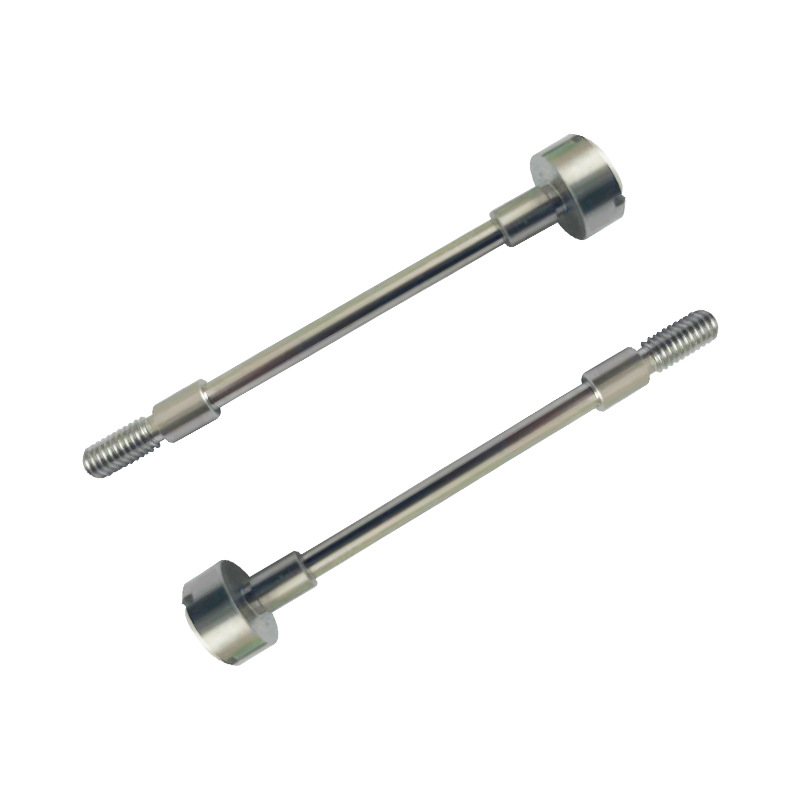
- Swiss Lathe Machining: Ideal for long, slender parts (high length-to-diameter ratio) up to 38mm diameter. Produces extremely tight tolerances in a single setup, eliminating secondary operations.
- Cold Forging: Suited for high-volume, simple-to-moderate geometry parts where near-net-shape production minimizes material waste and machining time. Unit cost drops sharply at volume.
- Automatic Lathe: High-speed production for simple turned parts at large volumes. Very low per-part cost once tooling is set.
- CNC Mill & Turn: Best for complex parts requiring both milling and turning features in one setup, reducing fixturing cost and improving positional accuracy.
A procurement manager at an automotive Tier-1 supplier recently faced a situation common in this industry: their existing vendor was running a complex connector pin through a 3-axis CNC mill in three separate setups. Switching to a Swiss lathe at a multi-process supplier reduced setups to one, cut cycle time by 40%, and improved dimensional consistency. The per-part cost dropped by over 25%.
Batch Size and Supplier Consolidation
Setup costs are largely fixed regardless of batch size. Spreading that cost across more parts directly reduces per-unit cost. According to MakerVerse, producing larger quantities is consistently one of the most effective levers for reducing CNC machining costs [7].
Supplier consolidation adds another layer of savings. Managing five vendors for five part families means five sets of setup fees, five quality audits, and five shipping costs. Consolidating to a single certified supplier with multi-process capability eliminates that overhead and often unlocks volume pricing across the combined spend.
At MFG SOLUTION, we’ve found that clients who consolidate three or more part families under one roof typically see 15-25% total cost reductions, even before any design changes, simply from eliminating redundant setup and logistics costs.
Best Practices for CNC Machining Cost Optimization in 2026
The most effective CNC machining cost optimization strategies in 2026 combine early supplier involvement, DFM review, process matching, and quality system discipline to eliminate waste at every stage of the production cycle.
Research from Oak Ridge National Laboratory highlights that advanced toolpath optimization technologies, such as the MillMax system, allow manufacturers to optimize cutting performance in minutes rather than hours, directly reducing machining time and tool wear costs [8]. As of 2026, AI-assisted toolpath generation and predictive maintenance are becoming standard practice at leading suppliers, not premium add-ons.
A Practical Cost Optimization Framework
- Start with a DFM review. Engage your machining supplier before finalizing drawings. Early feedback on geometry, tolerances, and material catches expensive problems before they’re locked in.
- Audit every tolerance callout. Apply tight tolerances only to functional surfaces. Default to standard tolerances everywhere else.
- Select the right process for the geometry. Don’t default to 3-axis milling. Evaluate turning, Swiss lathe, or cold forging based on part shape and volume.
- Optimize batch size. Calculate the break-even point between setup cost and inventory carrying cost. Most small parts hit optimal economics somewhere between 500 and 5,000 units per run.
- Consolidate suppliers. Fewer suppliers means lower overhead, better relationships, and more leverage for volume pricing.
- Verify quality certifications. ISO 9001:2015 ensures process control. ISO 13485:2016 adds medical device rigor. IATF 16949 covers automotive quality requirements. Certified suppliers reduce your inspection burden and scrap risk.
- Request 8-hour quotes. Fast quoting isn’t just convenient; it signals that the supplier has standardized processes and can accurately price your part without lengthy back-and-forth.
Using Technology to Drive Down Cost
As of 2026, the most competitive machining suppliers use 5-axis CNC machines to complete complex parts in fewer setups, reducing both cycle time and fixturing cost. Predictive maintenance software reduces unplanned downtime, which otherwise gets priced into your quote as risk margin. Suppliers who invest in automation and process control pass those savings to customers through lower unit costs and faster turnaround.
Our team at MFG SOLUTION recommends asking any prospective supplier directly: “What percentage of your capacity runs on automated or multi-axis equipment?” The answer tells you a lot about their cost structure and their ability to hold tolerances consistently at volume.
Pro Tip: When comparing supplier quotes, ask each one to break out setup cost, per-part machining cost, and inspection cost separately. This breakdown reveals where the real cost differences lie and gives you specific levers to negotiate or redesign around.
Common Mistakes and How to Avoid Them
The most common mistakes in CNC machining cost management are over-tolerancing, late supplier engagement, choosing the wrong process, and optimizing for unit price instead of total cost. Each one is avoidable with the right process.
A common mistake is treating the machining supplier as a passive vendor rather than a technical partner. Engineers who share early-stage designs with their machining supplier consistently produce more cost-effective parts than those who send finalized drawings and expect a quote. The Alamo Inventors CNC Cost Reduction Checklist, derived from Hubs’ engineering guide, identifies early DFM engagement as the single highest-impact cost reduction activity [9].
Mistakes That Add Cost Without Adding Value
- Over-specifying surface finish. Requiring Ra 0.4 µm across the entire part when only one bore needs it adds polishing cost to every surface.
- Ignoring material machinability. Specifying 17-4 PH stainless when 303 stainless delivers equivalent corrosion resistance at a fraction of the machining time.
- Minimizing batch size to reduce inventory risk. Running 50 parts per month instead of 500 per quarter multiplies setup costs by 6x annually.
- Using multiple suppliers for similar parts. Five suppliers for five similar turned parts means five setup fees, five quality relationships to manage, and five shipping invoices.
- Skipping DFM review to save time. A 2-hour DFM review that catches one unnecessary setup saves far more than the time it costs.
The Rework Trap
One pitfall to watch for is the rework trap: accepting a low quoted price from an uncertified supplier, then absorbing inspection failures, rework costs, and production delays that exceed the original savings. Bestinparts.com notes that design tweaks alone, without any supplier change, can reduce CNC turning costs by up to 30% [10]. But those savings evaporate quickly if the supplier lacks process control and generates a 3-5% scrap rate.
Certified quality management systems, specifically ISO 9001:2015 with full process control documentation, are the structural safeguard against this trap. Every step is tracked, documented, and auditable, so problems are caught in-process rather than at final inspection or, worse, at your facility.
Sources & References
- Technology.org, “CNC Machining Cost, Lead Times, and Quality Standards,” 2026
- IOP Science, “Increase Productivity and Cost Optimization in CNC Manufacturing,” 2016
- Hubs, “14 Proven Design Tips to Reduce the Cost of CNC Machining,” 2024
- Exact Machine Service, “CNC Machining Cost Calculation: Factors and Tips You Must Know,” 2024
- Portland State University, “Design Optimization for a CNC Machine” by Alin Resiga, 2017
- LinkedIn, “How CNC Cost Optimization Can Improve Bottom Line Profits,” Sahil Gill, 2024
- MakerVerse, “7 Ways to Reduce CNC Machining Costs,” 2024
- Oak Ridge National Laboratory, “Technology Reduces Time, Costs for Machinists Nationwide,” 2024
- Alamo Inventors / Hubs, “CNC Cost Reduction Checklist,” 2023
- BestInParts, “Why CNC Machining Is So Expensive (And How to Cut Costs by 30%),” 2024
Frequently Asked Questions
1. How to reduce CNC machining cost?
Reducing CNC machining cost requires action at multiple levels simultaneously. Start with DFM: add radii to internal corners, limit cavity depth, increase thin wall thickness, use standard hole sizes, and apply tight tolerances only where functionally required. Then optimize at the process level by selecting the right machining method for your part geometry, increasing batch size to spread setup costs, and consolidating suppliers. Combining design improvements with process optimization consistently delivers 20-30% cost reductions without sacrificing quality [3][9].
2. How to estimate CNC machining cost?
CNC machining cost is estimated by calculating machine hourly rate, setup time, cycle time per part, material cost, and inspection cost, then summing them across the batch. Machine hourly rates vary widely: 3-axis CNC mills typically run $20-$50/hour, 5-axis machines $75-$150/hour, and Swiss lathes $60-$120/hour depending on location and equipment age [4]. Setup costs are fixed per run, so per-part setup cost drops as batch size increases. The most accurate estimates come from sending a 3D CAD file and full drawing package to a qualified supplier for a detailed quote, which at MFG SOLUTION takes 8 hours or less.
3. What is the hourly rate for a CNC machine operator?
CNC machine operator hourly rates vary significantly by geography and skill level. In the United States, as of 2026, CNC machinists typically earn $20-$35/hour, with experienced multi-axis operators reaching $40-$55/hour in high-cost regions. In China, operator costs are considerably lower, which is why offshore suppliers can offer substantially lower machine-hour rates while maintaining quality through certified process control systems. The operator rate is one component of the total machine hourly rate; equipment depreciation, tooling, and overhead are the others.
4. What is the most effective single change to reduce CNC machining cost?
From experience working with hundreds of precision part designs, the single highest-impact change is conducting a DFM (Design for Manufacturing) review before finalizing drawings. Eliminating one unnecessary machine setup, loosening one over-tight tolerance, or switching to a more machinable material grade each independently reduces cost by 10-20%. Done together as part of a structured DFM review, these changes routinely deliver 25-40% cost reductions on complex parts, with no loss of functional performance.
5. How does batch size affect CNC machining cost per part?
Batch size has a direct and often dramatic effect on per-part cost because setup costs are fixed regardless of quantity. If a setup costs $200 and you run 50 parts, setup adds $4.00 per part. Run 500 parts and setup adds $0.40 per part. For most small precision parts, the optimal batch size that balances setup cost against inventory carrying cost falls between 500 and 5,000 units per run. Increasing from a 100-unit to a 1,000-unit run can reduce per-part cost by 15-30% on setup alone [7].
6. Does choosing a certified supplier really affect cost?
Yes, and the effect runs in both directions. Certified suppliers (ISO 9001:2015, IATF 16949, ISO 13485:2016) have documented process control, which reduces scrap rates, rework, and inspection failures. Those savings offset any price premium. Uncertified suppliers may quote lower but generate hidden costs through inconsistent quality, delayed shipments, and incoming inspection burden on your end. For medical device and automotive applications, certification isn’t optional; it’s a compliance requirement that eliminates entire categories of supply chain risk.
Getting CNC machining cost optimization right isn’t a one-time project. It’s a discipline that compounds over time as designs improve, processes mature, and supplier relationships deepen. The buyers who do it best treat their machining partner as a technical collaborator, not just a vendor.
MFG SOLUTION brings together 60+ engineering professionals, 5-axis CNC machines, Swiss lathe capability, cold forging, and automatic lathe production under ISO 9001:2015, ISO 13485:2016, and IATF 16949 certification. For small precision parts up to 38mm diameter, we quote within 8 hours and ship within 3 days. If you’re serious about CNC machining cost optimization, the conversation starts with a detailed quote and a DFM review from a team that machines these parts every day.
About the Author
Written by the Manufacturing – Precision Machining & CNC Services experts at MFG SOLUTION. Our team brings years of hands-on experience helping businesses with Manufacturing – Precision Machining & CNC Services, delivering practical guidance grounded in real-world results.
Recommended Articles
Explore more from our content library: