
2026-09-25
When to Add Precision Grinding Services After CNC Machining

Understanding precision grinding services is essential. Send CNC-machined parts to a precision grinding service when your tolerance calls for a few ten-thousandths of an inch, a mirror or controlled surface finish, or a hardened material that milling and turning tools can’t cut cleanly after heat treatment. In-house CNC processes typically hold general tolerances well but struggle once specs tighten beyond roughly ±0.0005 in or require flatness, roundness, or finish that only abrasive wheel removal can produce. The decision point is usually the print’s tolerance and finish callout, not part volume or budget alone.
When Should You Send CNC Parts to a Precision Grinding Service Instead of Finishing In-House?
The trigger is almost always the print, not the process: once a tolerance or finish callout exceeds what your mill or lathe can repeatably hold, you need a secondary operation to close the gap. This is particularly relevant for precision grinding services.
CNC turning and milling remove material with a rotating cutting edge, and that edge leaves behind measurable tool marks, chatter, and dimensional drift as cuts get lighter and tighter. Under normal shop conditions, CNC turning and milling reliably hold tolerances in the ±0.02 to ±0.05mm range. Push past that, and variables you can’t fully control, tool wear, thermal expansion in the spindle and workpiece, machine rigidity, start showing up in your parts. Hardened or heat-treated stock makes this worse: cutting tools dull faster against material above roughly 45 HRC, and the heat-treat process itself can warp a part that was dimensionally correct before hardening.
What Capabilities Do Precision Grinding Services Offer That In-House CNC Equipment Cannot?
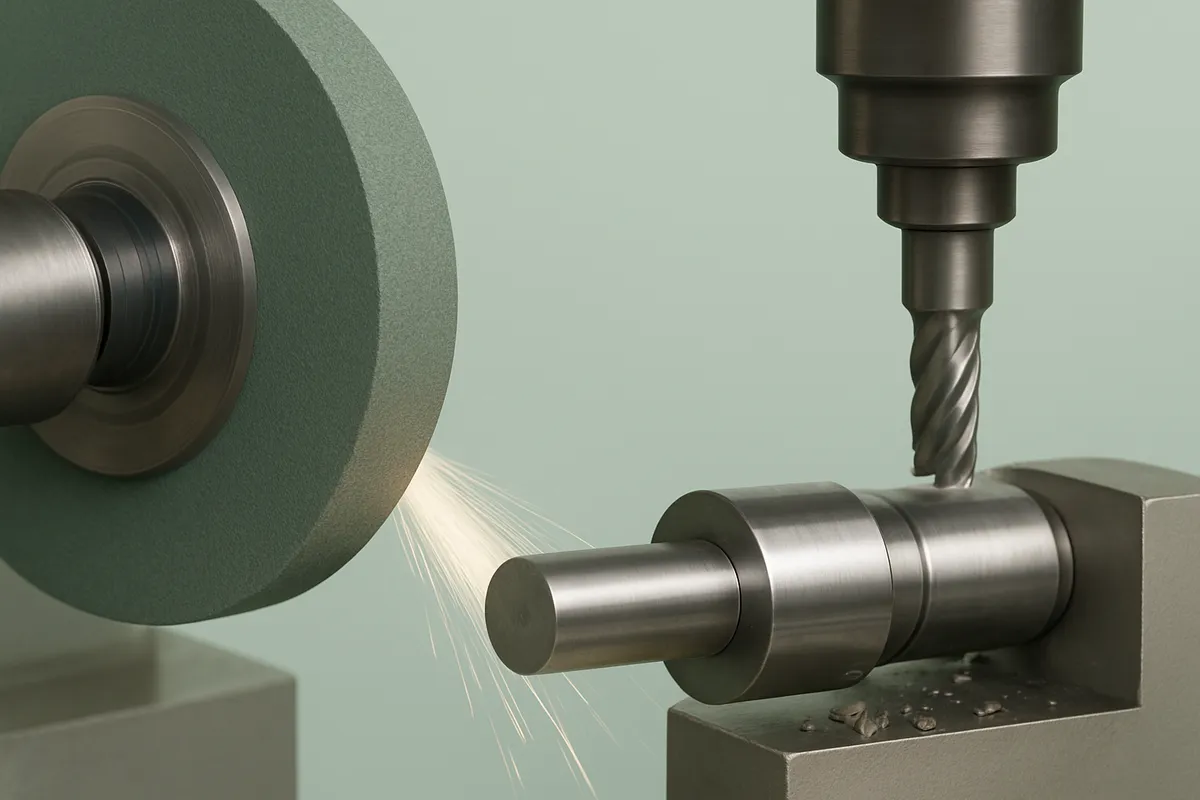
Grinding uses an abrasive wheel instead of a single-point cutting edge, which gives it a different set of strengths entirely. It removes stock in extremely fine, controlled increments on hardened parts that would chip or dull a milling cutter. It corrects flatness and parallelism that heat treatment distorted, restoring geometry a CNC pass can’t touch after the fact. And it produces mirror-level or near-mirror surface finishes on bearing seats, seal surfaces, and mating faces where roughness translates directly into wear, leakage, or noise. Precision grinding services also help on contour work, angles, tapers, radii, and shutoffs, where digital wheel control gives consistent, repeatable results across a production run.
How Do You Know If Your Tolerances Are Too Tight for Your Current Machining Process?
Check the print against two thresholds: tolerance tighter than ±0.02mm, and surface finish specified better than Ra 0.8. If either appears, standard CNC machining alone is unlikely to hold spec consistently across a batch. Add a bearing seat, seal surface, or hardened callout above 45 HRC, and grinding stops being optional. This is a spec-driven decision, it shows up the same way whether you’re running a batch of 50 or 5,000, and it applies regardless of per-part cost targets. A part that doesn’t carry any of these callouts usually doesn’t need grinding at all, and adding it anyway just adds cost and lead time without functional benefit.
How Does Grinding Differ from Milling and Other Finishing Methods?
Grinding removes material with thousands of abrasive grains cutting microscopic chips, while milling removes it with single- or multi-point cutting edges that take much larger bites per pass. That mechanical difference is why the two processes exist side by side rather than competing for the same job.
A milling cutter shears metal in a continuous edge engagement, which works well for shaping geometry quickly but generates concentrated cutting forces and heat at the tool-part contact point. An abrasive wheel, by contrast, spreads the cutting action across a wide contact area made up of many tiny grains, each removing a sliver of material too small to see without magnification. This is why grinding produces less heat distortion per pass and holds tolerance on parts that would warp under a mill’s cutting forces. It also explains why grinding is the standard choice for hardened materials above 45 HRC, a mill cutter dulls or chips against hardened steel, but an abrasive wheel keeps cutting cleanly. When considering precision grinding services, this point stands out.
When Is Grinding the Right Choice Versus Other Secondary Finishing Operations?
Choose grinding when the part has already been heat-treated, needs flatness measured in millionths of an inch, or requires a specific surface texture that milling cannot reliably produce. Tolerances tighter than plus or minus 0.02mm, surface finishes better than Ra 0.8, and bearing or seal surfaces all point toward grinding rather than an as-milled finish.
Polishing, lapping, and honing serve different goals. Polishing addresses cosmetic appearance rather than dimensional accuracy. Lapping fine-tunes flatness on already-precise surfaces using loose abrasive, and honing is bore-specific work aimed at cylinder walls and internal diameters. If your defect is functional, a part that won’t seat correctly or wears prematurely, grinding is usually the fix; if it’s cosmetic, look at polishing instead.
How Does Surface Grinding Differ from Cylindrical or Centerless Grinding for Your Part Types?
The grinding method follows part geometry. Surface grinding uses a reciprocating or rotating table to flatten planar faces, making it the right call for mounting surfaces, gauge blocks, and flat mating features. Cylindrical grinding rotates the workpiece between centers while a wheel shapes the outside diameter, suited to shafts and pins with tight roundness requirements. Centerless grinding supports the part on a work rest blade instead of centers, which makes it efficient for high-volume round parts without center-drilled ends.
Sourcing precision grinding services as a secondary step after CNC turning or milling lets you match the right grinding geometry to each feature instead of forcing one process to do work it wasn’t built for.
What Tolerances and Surface Finishes Can Precision Grinding Actually Achieve?
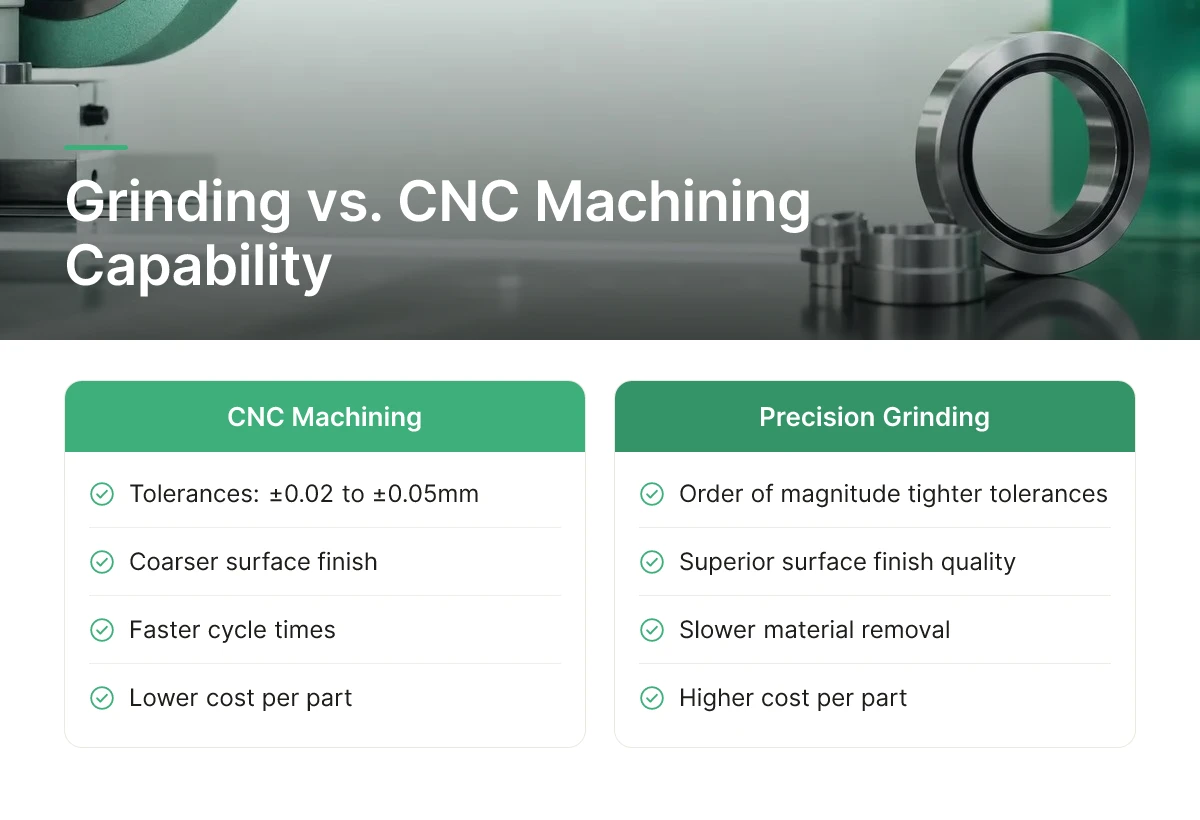
Grinding routinely holds tolerances an order of magnitude tighter than standard CNC turning or milling, and it delivers surface finishes that machining alone cannot reach. Standard CNC machining reliably holds plus or minus 0.02 to 0.05mm under normal shop conditions. Below that band, tool wear, thermal expansion, and machine rigidity start to work against you, which is exactly where a secondary grinding step earns its cost. For those exploring precision grinding services, this matters.
Surface finish is measured in Ra, the average roughness of a surface profile expressed in micrometers or microinches. Milled or turned surfaces typically land in a coarser range because a single-point or multi-flute cutting tool leaves periodic tool marks behind. Grinding uses thousands of abrasive grains removing material in tiny increments, which produces a finer and far more consistent finish across the part, important when the surface itself is functional, such as a seal land or bearing seat. If your print calls for a finish better than roughly Ra 0.8, grinding is usually the only practical way to get there.
Hardened materials add another wrinkle. Once a part is heat-treated above roughly 45 HRC, cutting tools degrade fast and dimensional control suffers, so grinding becomes the standard finishing method rather than an optional upgrade.
What Quality Certifications and Standards Should You Verify (ISO 9001, AS9100, NADCAP)?
Certifications don’t grind metal, but they tell you whether a supplier’s process is documented, repeatable, and auditable. ISO 9001:2015 confirms a quality management system with defined process control and corrective-action procedures. AS9100 builds on that baseline for aerospace-grade traceability, and NADCAP accreditation specifically audits special processes, including grinding, against documented procedural controls. For medical or automotive parts, ask instead about ISO 13485:2016 and IATF 16949, which cover the same principle of full process control, every step tracked, documented, and auditable, applied to those industries’ regulatory requirements.
Don’t stop at the certificate. Request the supplier’s control plan for the specific grind operation, calibration records for the grinding equipment, and a sample dimensional report from a comparable part. This directly impacts precision grinding services outcomes.
The most reliable way to judge whether a shop offering precision grinding services can meet your print is to ask for proof on your actual geometry, not on their marketing page. A first-article inspection report, tied to the exact revision of your drawing, shows measured results against every toleranced feature. A short sample run before full production reveals whether the process holds up across multiple parts, not just one lucky piece. Any provider that hesitates to produce first-article data before committing to volume is a provider worth questioning.
How Do You Choose the Right Grinding Service for Your Materials and Part Geometry?
Match the grinding process to your material’s hardness and your part’s shape first, then screen providers on equipment, metrology, and sample-run flexibility, not price alone.
Which Grinding Methods Work Best for the Materials You Machine (Steel, Aluminum, Exotic Alloys)?
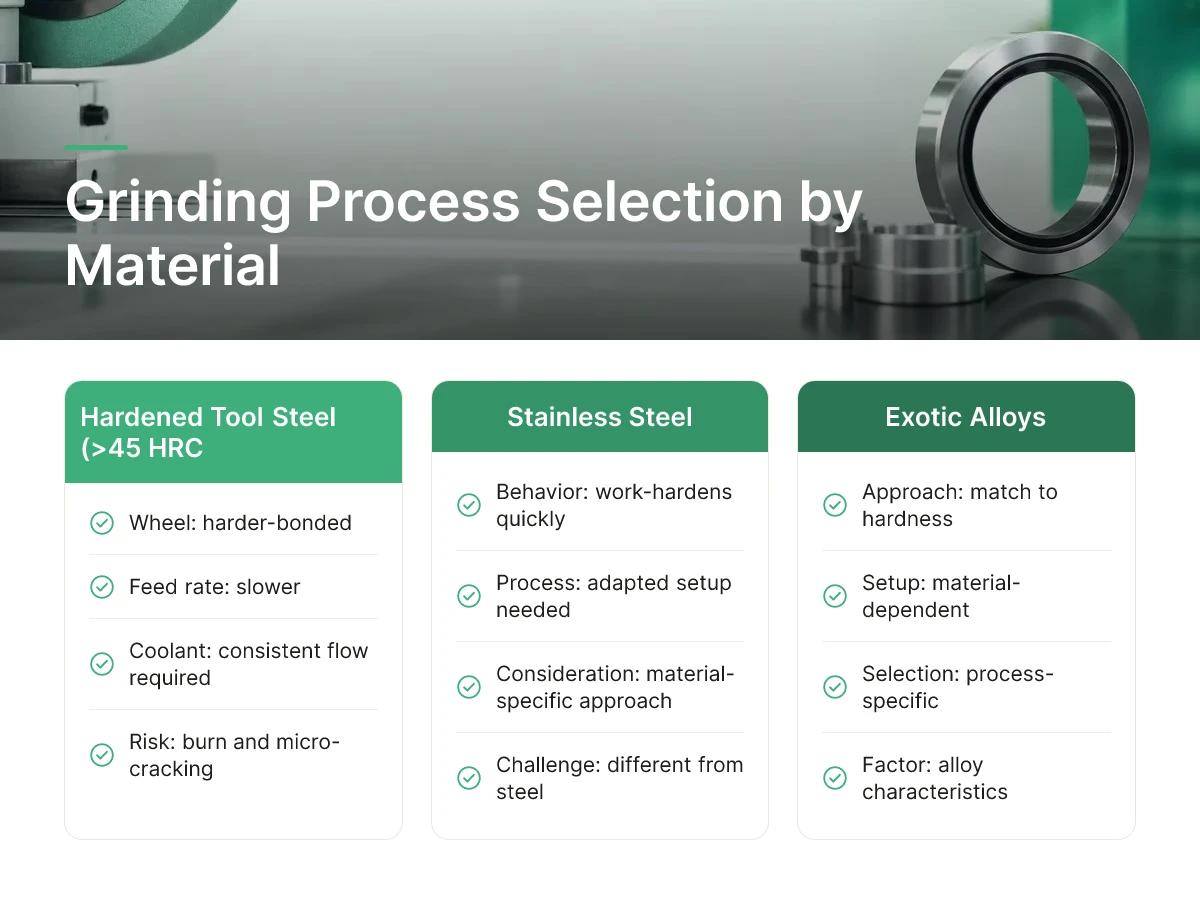
Material behavior under the wheel determines the entire setup, not just the abrasive grade. Hardened tool steels above 45 HRC need harder-bonded wheels, slower feed rates, and consistent coolant flow to prevent burn and micro-cracking at the surface. Stainless steel behaves differently again, it work-hardens quickly, which pushes shops toward open-structure wheels and steady coolant delivery to avoid glazing.
Aluminum and other soft, ductile metals introduce a different problem: wheel loading. Soft material smears into the abrasive grains instead of shearing cleanly, which dulls cutting action and can scorch the part if the wheel isn’t dressed frequently or matched with a coarser, more open grit. Exotic alloys, nickel-based materials, titanium, and similar high-performance metals, combine high heat sensitivity with abrasion resistance, so a provider needs documented experience with those specific alloys, not just general grinding capability. Ask any candidate for precision grinding services what wheel specs and coolant strategy they use for your exact alloy, not a generic answer.
What Role Do Your Part Dimensions and Geometry Play in Selecting a Grinding Service?
Geometry dictates which grinding method applies before material even enters the conversation. Flat faces, shoulders, and slots call for surface grinding, where the part sits on a table and a wheel passes over the plane. Round shafts, pins, and other cylindrical parts are better suited to cylindrical or centerless grinding, which holds diameter tolerance and roundness across the full length of the part. Bores and internal diameters need ID grinding, a slower and more specialized operation because the wheel and spindle have to work inside a confined space.
Complex geometries, contours, tapers, radii, or angled shutoffs, often require CNC grinding machines rather than manual or conventional setups, since repeatable multi-axis motion is difficult to hold by hand across a production run. This is particularly relevant for precision grinding services.
What Should You Check Beyond Price When Evaluating a Grinding Provider?
Price comparisons mean little if the shop can’t hold your tolerance on the second piece the way it did on the first. Check what’s actually on the floor: CNC grinding centers for complex or high-volume work, conventional ID/OD/surface grinders for lower-quantity jobs with multiple features. Ask about in-house metrology, CMM, optical comparators, or gauge capability that verifies the grind spec before the part ships, rather than relying on your incoming inspection to catch problems.
Material experience matters as much as machine count; a shop that mostly grinds mild steel may struggle with a nickel alloy. Finally, insist on a sample part before committing full volume, a provider unwilling to run one is signaling risk, not confidence.
Batch size shapes the right fit too. A job shop handling varied conventional grinding work suits low-quantity, multi-feature parts, while a dedicated grinding specialist with CNC equipment is built for recurring, high-repeatability runs where every piece must match the last. Match the provider type to your volume, not just your part drawing.
What Should You Expect to Pay, and How Long Will Turnaround Take?
Expect precision grinding services to cost more per part than standard CNC finishing and add days to your lead time, with both driven mainly by tolerance and volume rather than part size.
Grinding sits in a higher cost tier for reasons rooted in the process itself, not vendor markup. Grinding wheels remove material far more slowly than a turning or milling tool, so cycle times stretch even on small parts. Wheels also need periodic dressing to maintain their cutting geometry, which adds non-productive machine time that a shop has to fold into the price. On top of that, parts destined for tolerances below plus or minus 0.02mm or hardened surfaces typically require more inspection, often dimensional checks beyond a standard sampling plan. That combination of slow removal, dressing overhead, and stricter inspection is what separates grinding pricing from routine CNC finishing.
How Do Grinding Costs Compare Across Different Service Types?
Tolerance and surface finish requirements move the price far more than the physical size of the part. A small pin ground to a tight bearing-seat tolerance can cost more to finish than a larger bracket held to looser specs, because the grinding operation is billed on precision achieved, not on stock volume removed. Vendors selecting between conventional ID, OD, or surface grinding versus CNC-controlled grinding make that call based on the accuracy and repeatability the job demands. Contour grinding, tapers, and radii add setup complexity that shows up directly in quoted cost, independent of whether the part is 5mm or 35mm across.
What Lead Times Are Typical, and How Does Volume Affect Pricing and Delivery?
Volume changes both price per part and turnaround. A one-off prototype sent out for grinding usually absorbs the full setup and dressing cost on a single unit, making it disproportionately expensive and slow compared to a production run where that overhead spreads across hundreds of parts. If you’re validating a design, batching a small sample quantity into your production order, rather than requesting a separate prototype grind, often shortens overall lead time because the grinder only sets up once. When considering precision grinding services, this point stands out.
Before committing, get a written quote and a firm lead time from any secondary grinding vendor, then weigh that against your in-house finishing cost and how a multi-day handoff affects your schedule. MFG SOLUTION quotes CNC-machined parts up to 38mm within 8 hours and ships within 3 days under ISO 9001:2015, ISO 13485:2016, and IATF 16949 process control, which gives you a documented baseline to compare against any added grinding step before deciding whether outsourcing pays off.
Frequently Asked Questions
Can you show before-and-after examples of parts that went through grinding to meet critical tolerances?
Specific case examples depend on the part and industry, but the pattern is consistent: a CNC-turned shaft holding plus or minus 0.02mm gets ground down to plus or minus 0.005mm or better on a bearing seat, with surface finish improving from a machined Ra 1.6 to a ground Ra 0.4 or finer. Ask your supplier for sample inspection reports rather than marketing photos.
Do all CNC-machined parts eventually need a secondary grinding step?
No, most parts never need grinding. Grinding only becomes necessary when tolerance requirements fall tighter than plus or minus 0.02mm, surface finish must beat Ra 0.8, the material is hardened above 45 HRC, or the surface is a bearing seat or seal face.
What happens if a part is ground but the base CNC dimensions were already out of tolerance?
Grinding cannot fix a part that started too far out of tolerance, it removes a thin stock layer, not gross error. If the CNC blank lacks sufficient grind stock or the geometry is already skewed, the ground result will still fail inspection, and the part is scrapped rather than salvaged. For those exploring precision grinding services, this matters.
Should grinding be planned before or after heat treatment in the process sequence?
Grinding should almost always come after heat treatment, since hardening changes dimensions and grinding is the standard method for correcting that shift. Machining is done first to rough shape with extra stock left on critical surfaces, then heat treatment hardens the part, and grinding finishes it to final tolerance and finish.
Conclusion
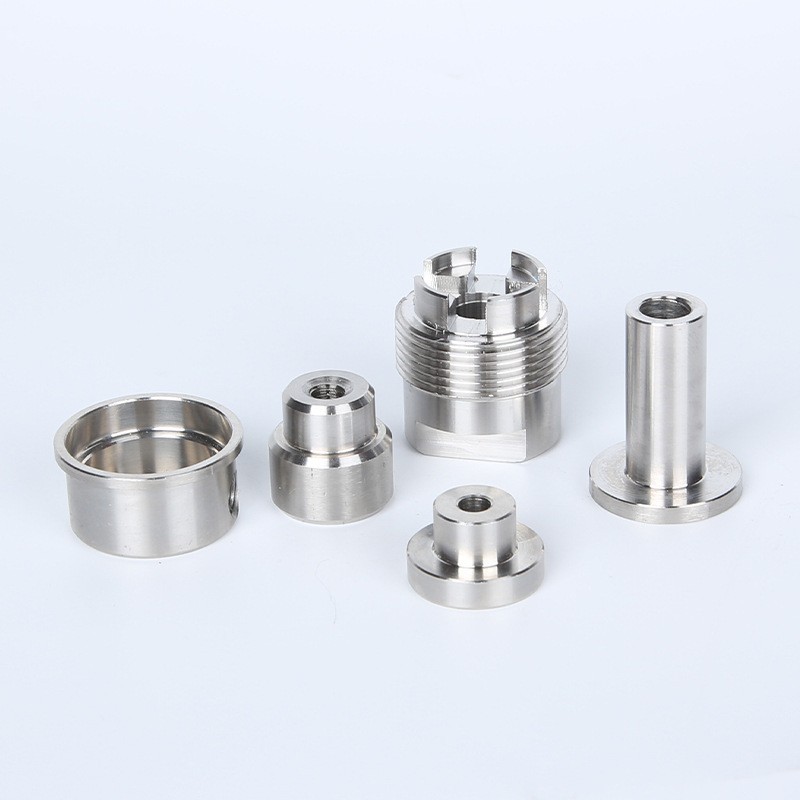
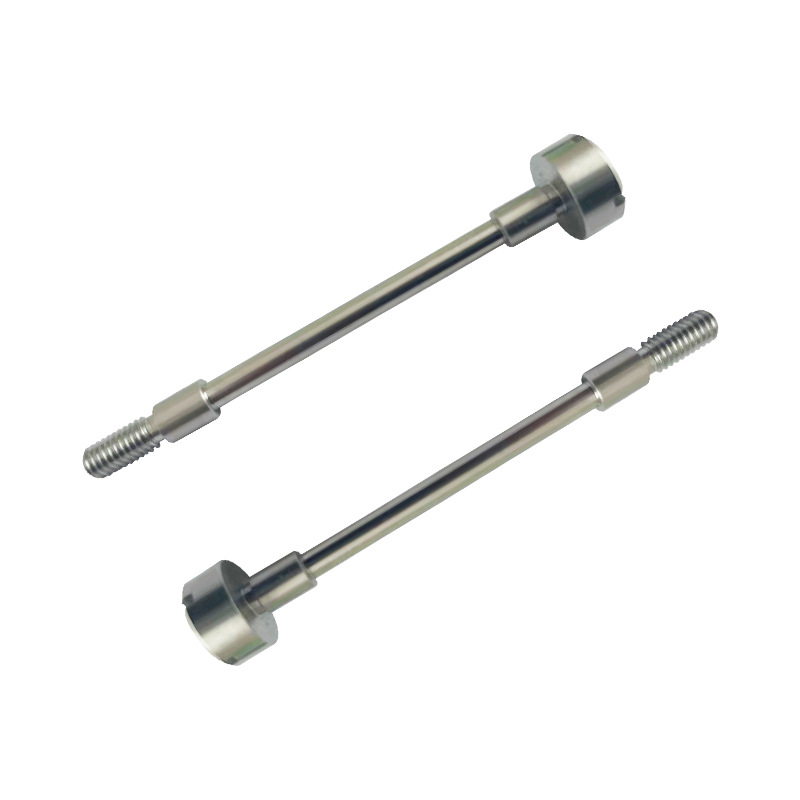
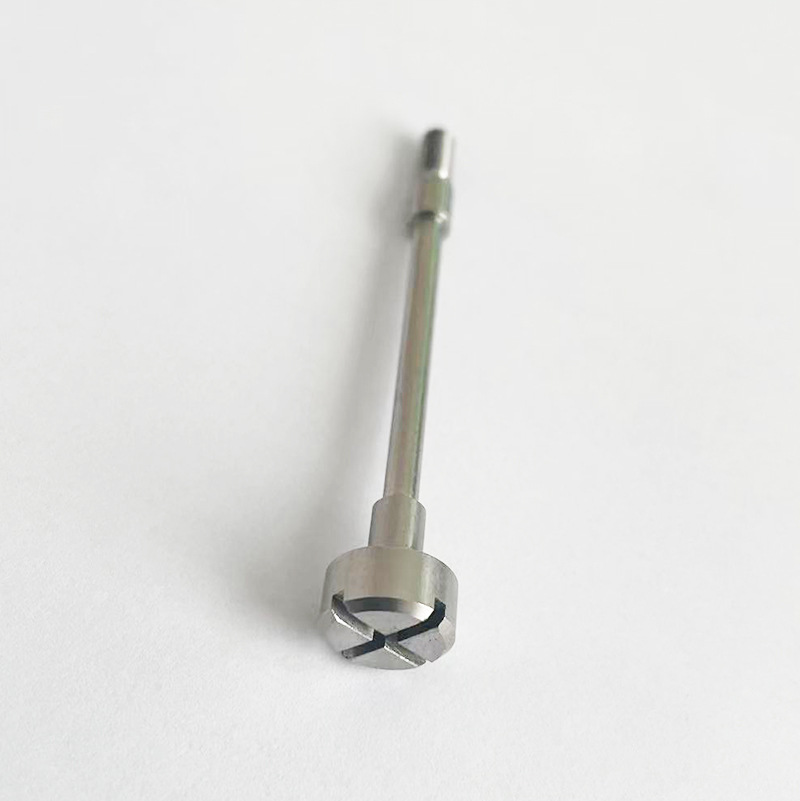
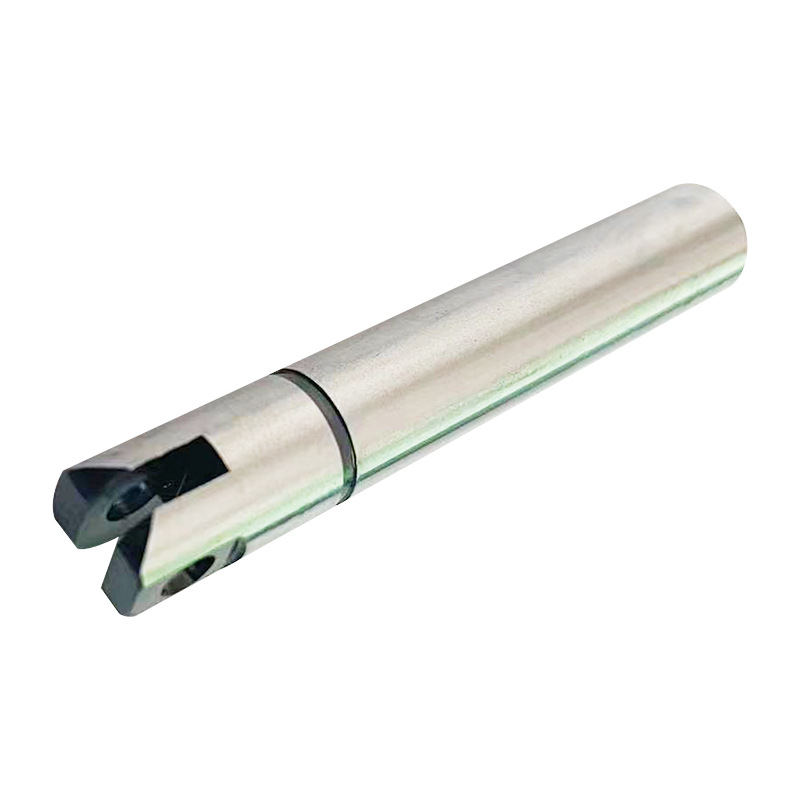
Grinding earns its cost only when tolerance drops below plus or minus 0.02mm, finish must beat Ra 0.8, the material is hardened, or the surface is a critical bearing or seal face. Outside those four conditions, CNC machining alone holds spec and grinding just adds lead time you don’t need. Before specifying a secondary grind, check whether your CNC supplier’s in-house tolerance and finish capability already covers the part.
MFG SOLUTION quotes CNC turning, Swiss lathe, and mill-turn parts up to 38mm within 8 hours, so you can confirm achievable tolerances before committing to an added grinding operation. Submit your print and find out where machining alone gets you.
Recommended Articles
Explore more from our content library: