
2026-10-22
What Drives Manufacturing Cost Per Unit on Machined Parts
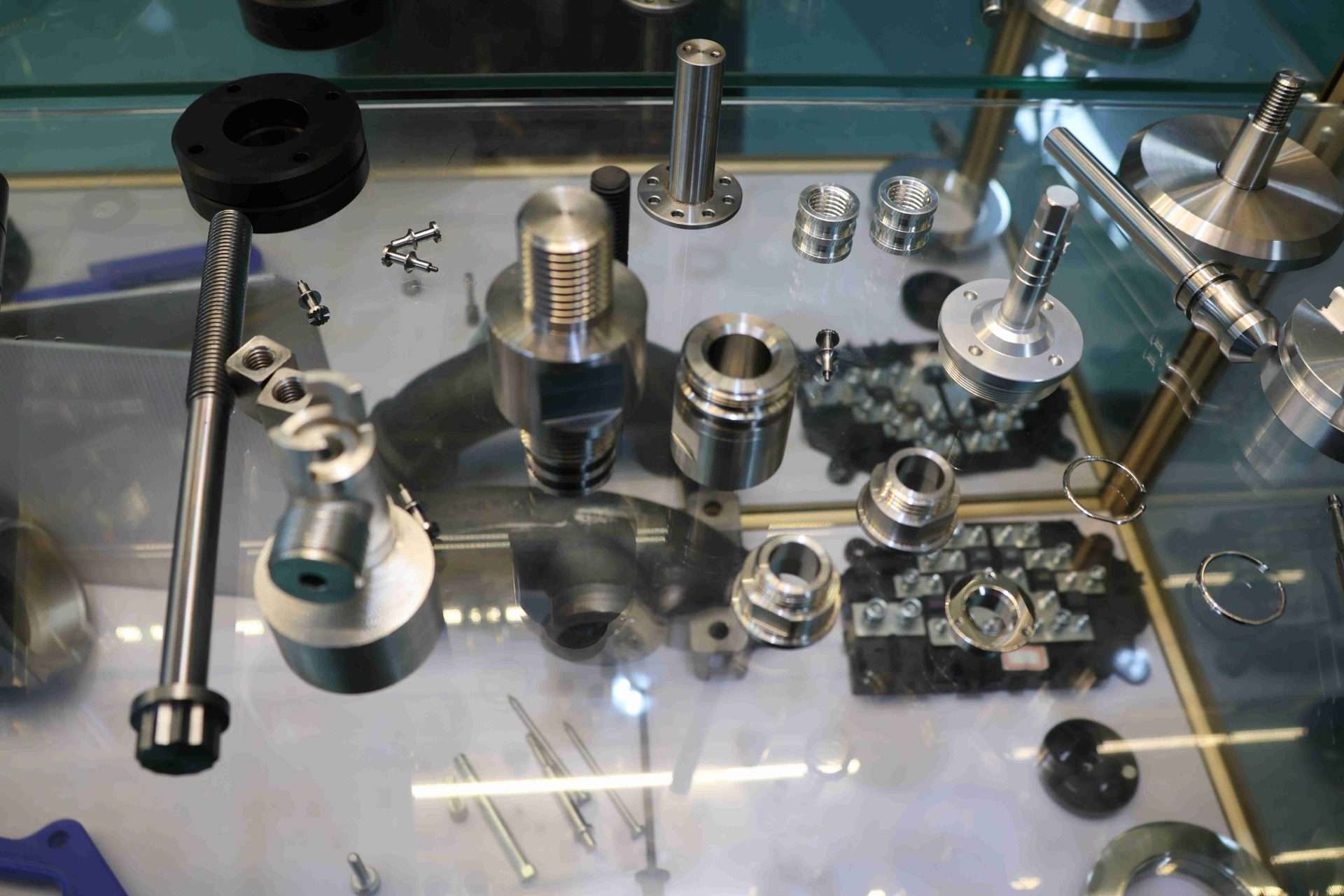
Manufacturing cost per unit is the total cost to produce one part, calculated as (total direct materials + direct labor + manufacturing overhead) ÷ total units produced. For precision-machined parts, this figure shifts with material grade, cycle time, tolerance requirements, setup complexity, and production volume. Shops that track material waste, machine downtime, and labor hours separately can pinpoint exactly which variable is inflating cost, then target that factor rather than cutting corners on quality or tolerance.
How Do You Calculate Manufacturing Cost Per Unit?
The formula is straightforward: add direct materials, direct labor, and manufacturing overhead, then divide by the number of units produced. The complexity isn’t in the math, it’s in deciding what counts as overhead and which costing method you apply to the result.
What’s the Difference Between Total Manufacturing Cost and Cost Per Unit?
Total manufacturing cost is the aggregate figure, every dollar spent on materials, labor, and overhead across an entire production run or accounting period. Manufacturing cost per unit takes that same total and normalizes it down to a single part, which is the number that actually matters when you’re quoting an individual job.
A shop can know its total manufacturing cost for the month down to the cent and still underprice a job if it doesn’t know the per-unit figure for that specific part. Batch size, cycle time, and setup requirements all vary job to job, so the per-unit number has to be recalculated for each quote rather than pulled from a company-wide average.
How Do Absorption Costing and Variable Costing Change the Calculation?
Absorption costing spreads fixed overhead, rent, equipment depreciation, supervisory salaries, across every unit produced, while variable costing counts only costs that scale directly with output (materials, direct labor, machine time) and treats fixed overhead as a separate period expense. The same batch of parts can show two different cost-per-unit figures depending on which method is used, because absorption costing bakes fixed costs into each part and variable costing doesn’t.
Absorption costing is typically required for external financial reporting and tax purposes. Variable costing is often more useful internally, because it isolates the costs that actually change when volume changes, which is what matters when you’re deciding whether to accept a smaller order or negotiate a price.
Consider a batch of machined parts where direct materials, direct labor, and variable overhead (tooling, energy, scrap) total a known sum, and fixed overhead (building costs, equipment depreciation) is a separate known sum. Under absorption costing, you divide materials, labor, variable overhead, and fixed overhead together by the batch quantity. Under variable costing, you divide only materials, labor, and variable overhead by that same quantity, and list fixed overhead as a lump expense for the period. The variable-costing number will always come in lower per part, but it won’t tell you whether the job covered its share of the building and equipment that made it possible.
What Factors Drive Manufacturing Cost Per Unit in Precision Machining?
Precision machining adds cost drivers that generic manufacturing cost models miss: tolerance stack-up, tool wear curves, and the number of setups a part geometry requires. Material, labor, and overhead still form the base of manufacturing cost per unit, but tolerance and geometry decide how expensive each bucket becomes.
How Do Material Costs, Labor, and Overhead Break Down in Your Cost Per Unit?
Material cost depends on grade, form, and how much ends up as scrap rather than finished part.
A medical-grade titanium bar costs more than free-machining steel, and buying bar stock versus billet changes how much material gets cut away and discarded. Swiss lathe work on small-diameter parts typically produces less waste than mill-turn operations removing material from a larger billet, which is one reason manufacturers match process to part size rather than defaulting to one machine type.
Labor cost is not just an hourly rate. Operator skill level determines how fast a machine gets set up correctly, how often a job needs rework, and how much time goes into in-process inspection versus production. A skilled Swiss lathe operator who sets up a job in 30 minutes instead of two hours changes the labor allocation for every part in that batch.
Overhead covers tooling wear, facility costs, and the quality system itself, audits, calibration, and documentation all carry a cost that gets spread across units produced.
How Does Tolerance Tightness Multiply Machining Cost?
Tighter tolerances slow down cycle times, force more frequent tool changes, and add inspection steps that generic cost models do not capture.
Holding ±0.0002 inch instead of ±0.005 inch means slower feed rates, more frequent tool offsets, and often a coordinate measuring machine (CMM) check instead of a caliper reading. Each of those steps adds machine time or inspection time without adding material to the part. Part geometry compounds this: a simple turned part on a Swiss lathe needs one setup, while a part requiring milled flats, cross-drilled holes, and a secondary deburring operation needs multiple setups across different machines. Every additional setup adds changeover time that gets charged against that batch, which is why mill-turn centers that combine operations in one cycle often win on cost despite higher machine rates.
What Impact Do Equipment Downtime and Maintenance Have on Per-Unit Cost?
Downtime raises per-unit cost by reducing the machine hours available to absorb fixed costs, forcing those same costs onto fewer finished parts.
A CNC machine down for scheduled maintenance or an unplanned tool failure does not stop rent, equipment depreciation, or salaried staff costs from accruing. Those costs still land somewhere, and they land harder on the parts that do get finished. For regulated industries, overhead also includes the paperwork: ISO 9001:2015, IATF 16949, and ISO 13485:2016 certification maintenance, material traceability records, and audit preparation all add documented overhead that unregulated shops skip entirely. MFG SOLUTION holds all three certifications and runs under full process control, which is a cost built into every quote rather than an afterthought added when a customer asks for a compliance report.
How Does Production Volume Affect Cost Per Unit?
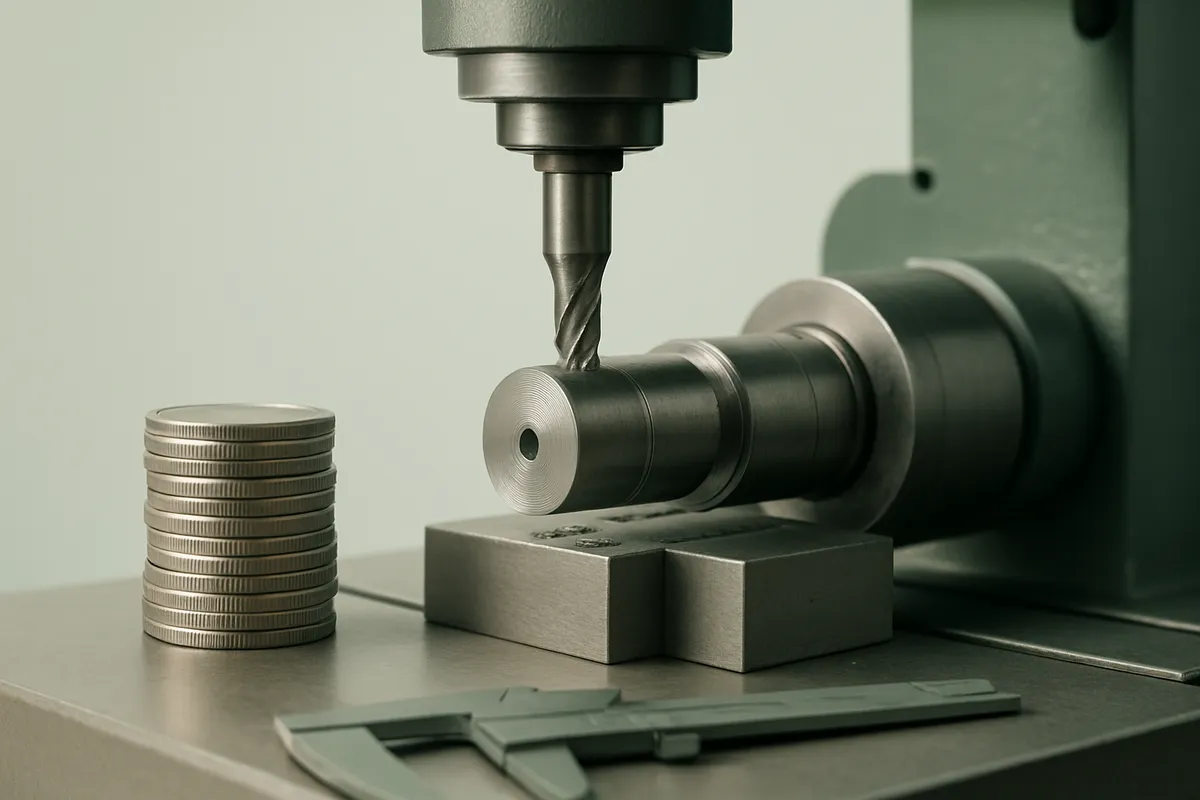
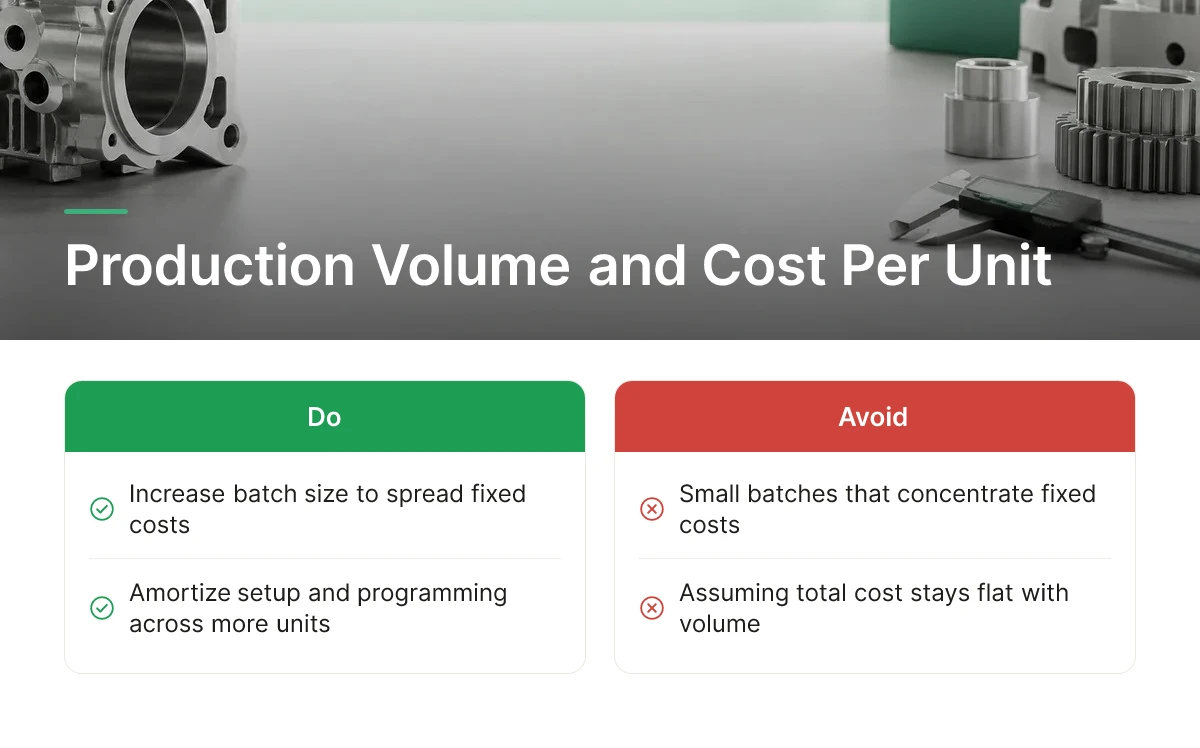
Production volume drives manufacturing cost per unit because fixed costs—setup, programming, and tooling amortization—get divided across more parts as batch size grows.
Total manufacturing cost still rises with volume since you’re buying more material and running more machine hours. But the fixed slice of that cost, the part that doesn’t change whether you make 50 units or 5,000, shrinks on a per-part basis. A programming job that takes four hours costs the same whether it’s spread over one part or one thousand. Spread it thin and its weight on each unit barely registers.
At What Production Volumes Do Economies of Scale Kick In for Precision-Machined Parts?
The answer depends on the ratio between setup time and run time, not on a fixed unit count. A job with a long, complex setup and fast cycle times hits diminishing returns on cost reduction much later than a job with a quick setup and long per-part cycle times. Low-volume, high-mix shops—running many different parts in small batches—rarely recover setup costs efficiently, because they’re constantly reconfiguring machines before the fixed-cost spread has a chance to work in their favor. Dedicated high-volume runs amortize setup almost immediately and then compete purely on cycle time and material efficiency.
This is why machining method selection matters as much as volume itself. Swiss lathe and automatic lathe production favor high-volume runs of small-diameter parts: these machines run continuously with minimal operator intervention once set up, so the fixed cost per part keeps dropping as batches grow. Five-axis CNC mill-turn, by contrast, suits lower-volume parts with complex geometries, where the value is precision and flexibility rather than raw throughput. MFG SOLUTION applies this logic directly, selecting among CNC turning, Swiss lathe, cold forging, automatic lathe, and mill-turn processes based on which method lowers the per-unit cost for a given part’s size and complexity, rather than defaulting to one process for every job.
How Do Cost Per Unit Benchmarks Compare Across Manufacturing Sectors?
Benchmarks differ by sector because tolerance requirements, inspection intensity, and compliance documentation vary widely. Aerospace and medical device parts carry tighter tolerances, more rigorous material certification, and heavier audit trails than general industrial components, which raises the fixed cost embedded in each unit regardless of volume. A shop certified to ISO 13485:2016 for medical devices or IATF 16949 for automotive work builds documentation and traceability into every batch, and that cost doesn’t disappear just because volume increases.
Higher volume doesn’t guarantee a lower manufacturing cost per unit if tolerance or inspection requirements scale up alongside quantity. A larger order with tighter specs can cost more per part than a smaller order with looser tolerances, even though volume theoretically favors the larger batch.
What Strategies Actually Reduce Manufacturing Cost Per Unit?
Four levers move manufacturing cost per unit in practice: design changes, material sourcing, process discipline, and scenario modeling before committing capital to a change.
Design-for-Manufacturability Comes First
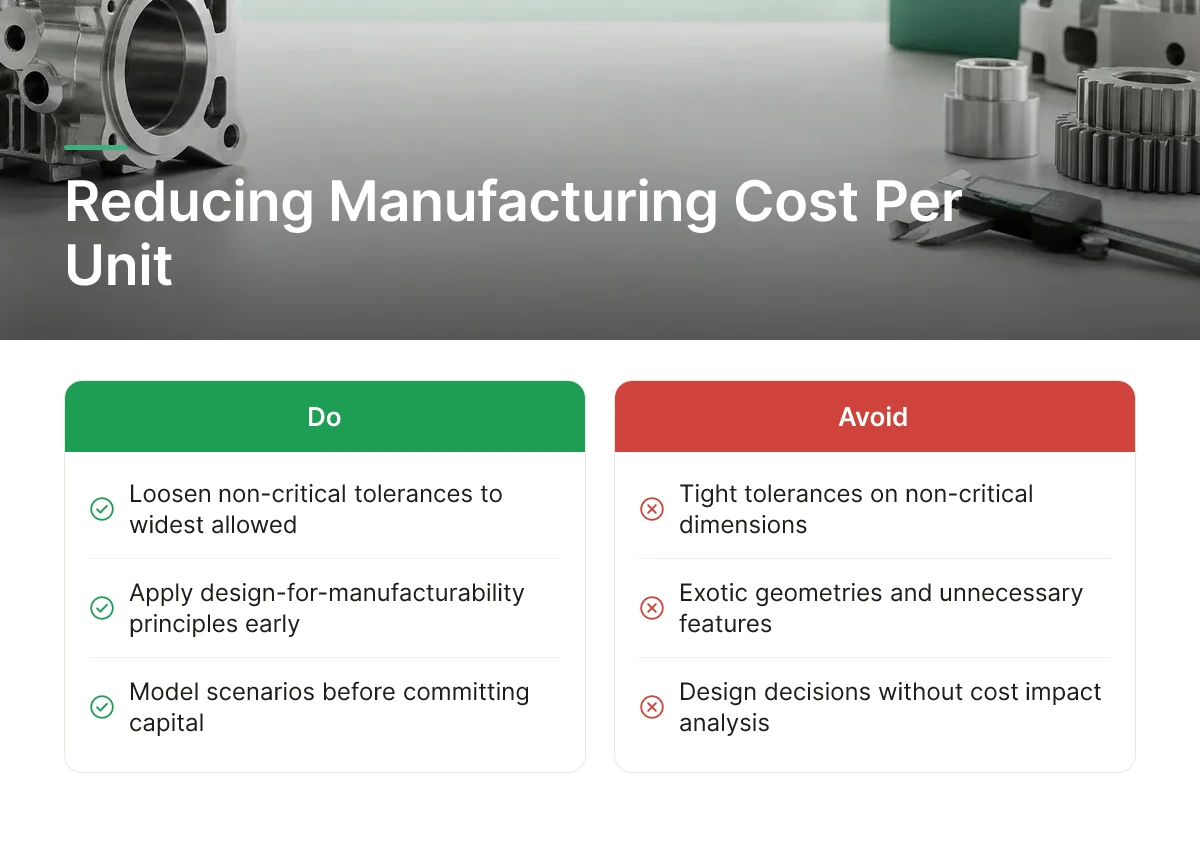
Design decisions set the ceiling on cost before a part ever touches a machine. A part’s design is the single most impactful cost driver, tighter tolerances, exotic geometries, and extra features all add machining time and setups. Loosening non-critical tolerances to the widest value the application allows cuts cycle time directly, because tight tolerances demand slower feeds, more passes, and more in-process inspection. Standardizing hole sizes and thread callouts across a part family lets a shop reuse tooling instead of swapping drills and taps between runs. Cutting unnecessary secondary operations, a bead blast step that doesn’t affect function, a deburr pass that could be combined with another step, removes labor hours that add no value to the finished part.
Material Sourcing and Scrap Reduction
Material is typically one of the largest line items in the cost stack, which makes sourcing strategy a direct profit lever. Buying bar stock in bulk lowers per-unit material cost through volume pricing and fewer setup changeovers tied to stock swaps. Selecting a more machinable alloy grade, when the spec allows it, reduces tool wear and cycle time even if the raw material costs slightly more per pound. Nesting and cutting optimization, planning how parts are laid out on stock to minimize offcuts, reduces scrap, and scrap is a cost that’s easy to underestimate until it’s tracked against the production run.
Process-Level Efficiency
Changeover time and unplanned downtime are often the biggest hidden contributors to cost per unit, because fixed costs get spread over fewer good parts when a machine sits idle. Standardized fixturing lets operators move between jobs without rebuilding a setup from scratch. Batching similar jobs together reduces the number of changeovers per shift. Preventive maintenance schedules catch wear before it causes an unplanned stoppage, which protects both uptime and tolerance consistency.
What Real-World Cost Reductions Have Manufacturers Achieved, and What Methods Did They Use?
Shops lower cost per unit most reliably by consolidating operations onto fewer machines and automating inspection rather than cutting corners on tolerance or material. Running mill-turn operations on a single machine instead of moving a part between a lathe and a separate mill eliminates handling time, fixturing time, and the risk of operator error between setups. Automated in-process inspection catches defects earlier in the cycle, which reduces scrap and rework instead of discovering a bad batch after it’s finished.
How Can You Model Cost Per Unit Scenarios Before Making Production Changes?
Shops and buyers model changes before committing by building a cost structure, materials, labor, overhead, scrap, energy, and testing how each input shifts under different volumes, tolerances, or material choices. Running the numbers on a volume increase shows whether fixed costs spread thin enough to justify new tooling. Testing a tolerance change shows the cycle-time savings before the drawing is revised. At MFG SOLUTION, this kind of trade-off gets resolved during the 8-hour quoting process, where five methods, CNC turning, Swiss lathe, cold forging, automatic lathe, and CNC mill & turn, are compared to select the most cost-effective route for each part’s spec.
How Should You Track and Optimize Cost Per Unit With Software Tools?
ERP and MES systems track manufacturing cost per unit by tying material consumption, machine hours, labor hours, and scrap rates back to individual work orders, so every job shows its real cost instead of a plant-wide average. That work-order-level detail is what separates a usable cost report from a rough estimate, it tells you which part number, which shift, or which machine is dragging the number up.
A system built for this purpose pulls from the shop floor in real time: time clocked against a job, material pulled from inventory, scrap logged at inspection. Total manufacturing costs calculated this way include materials, labor, and overhead for the period, and the resulting per-unit figure can be compared job to job instead of guessed at.
Which ERP Systems and Cost Tracking Tools Work Best for Precision Machining Shops?
The right tool depends on shop size and order complexity, not ambition. A small job shop running a handful of part numbers can get real visibility from a disciplined spreadsheet that logs material cost, labor hours, and scrap per batch, budget-friendly, but manual and prone to drift once order volume climbs. A mid-size shop juggling dozens of active work orders typically needs a job-costing module that automates the material-and-labor rollup per job and flags outliers without a full system overhaul. A high-mix, high-volume operation, especially one running medical or automotive parts under ISO 13485 or IATF 16949 documentation requirements, generally needs full ERP/MES integration, where cost data, traceability records, and quality sign-offs live in one system. MFG SOLUTION’s production runs, machined across CNC turning, Swiss lathe, cold forging, automatic lathe, and CNC mill & turn processes, are tracked this way so quotes issued within 8 hours reflect real cost data rather than rough averages.
How Can Automation and Digital Manufacturing Improve Cost Per Unit Management?
Automation lowers cost per unit mainly by cutting the labor-hours and error-correction work buried in a job, not just by running the spindle faster. Bar feeders eliminate manual reloading between parts, robotic loading removes idle operator time between cycles, and automated inspection catches out-of-tolerance parts before they become scrap further downstream, each one shrinks a cost component that spreadsheets often miss entirely.
Real-time machine monitoring and OEE tracking add a second layer: they surface downtime and changeover delays that otherwise get absorbed into overhead and never traced to a specific cause. A machine sitting idle between jobs still spreads its fixed cost across fewer parts, quietly raising cost per unit even when nothing looks wrong on paper.
Cost-per-unit reports are most useful reviewed against production runs, not just at quarter-end. Checking the numbers after each batch, rather than waiting for a monthly or quarterly close, catches a drifting scrap rate or a slipping cycle time while it is still a small problem.

Frequently Asked Questions
What’s the difference between cost per unit and price per unit?
Cost per unit is what it costs you to make one part; price per unit is what the customer pays for it. The gap between the two is your margin. Confusing the two leads to underpricing, since freight, warranty, and sales overhead sit outside manufacturing cost but still need covering in the final price.
Why does manufacturing cost per unit matter for pricing decisions?
It sets the floor below which every sale loses money, so you can’t price intelligently without knowing it. It also shows where margin leaks, a part priced competitively on paper can still erode profit if scrap, downtime, or rework quietly push the real cost above what you assumed.
How does equipment downtime specifically raise cost per unit?
Downtime spreads your fixed costs, rent, equipment depreciation, salaried labor, across fewer finished parts, raising the cost of each one. A machine down for repairs still accrues overhead whether or not it’s cutting metal. Tracking utilization alongside cost per unit helps isolate downtime as the driver rather than material or labor pricing.
What is a reasonable profit margin target when pricing machined parts above cost per unit?
There’s no universal number, margin targets depend on part complexity, certification requirements, and volume commitments, so treat any fixed percentage as a starting point, not a rule. Medical and automotive parts carrying ISO 13485 or IATF 16949 documentation typically justify higher margins than uncertified commodity turning work, since compliance overhead is real and ongoing.
Can tightening tolerances reduce cost per unit over time?
Rarely, tighter tolerances almost always raise cost per unit, not lower it, by adding machining time, tooling wear, and inspection steps. The exception is when over-tight tolerances were causing rework or field failures; loosening them to the functional requirement, not tightening them further, is usually the actual cost lever.

Conclusion
Manufacturing cost per unit comes down to a handful of levers: material selection, labor efficiency, overhead absorption, scrap rate, and machine utilization. Chasing the cheapest quote on paper often backfires once rework, late shipments, or failed inspections enter the picture. The more durable strategy is matching part design and tolerances to the right process, CNC turning, Swiss lathe, cold forging, or mill-turn, rather than forcing one method to do everything.
Start by pulling your last 10 part drawings and checking which tolerances are tighter than the application actually requires. Send those specs to MFG SOLUTION for an 8-hour quote and compare the cost-per-unit impact of process selection against what you’re paying now.
Recommended Articles
Explore more from our content library: