
2026-10-18
6 Ways Low Volume Manufacturing Beats Mass Production
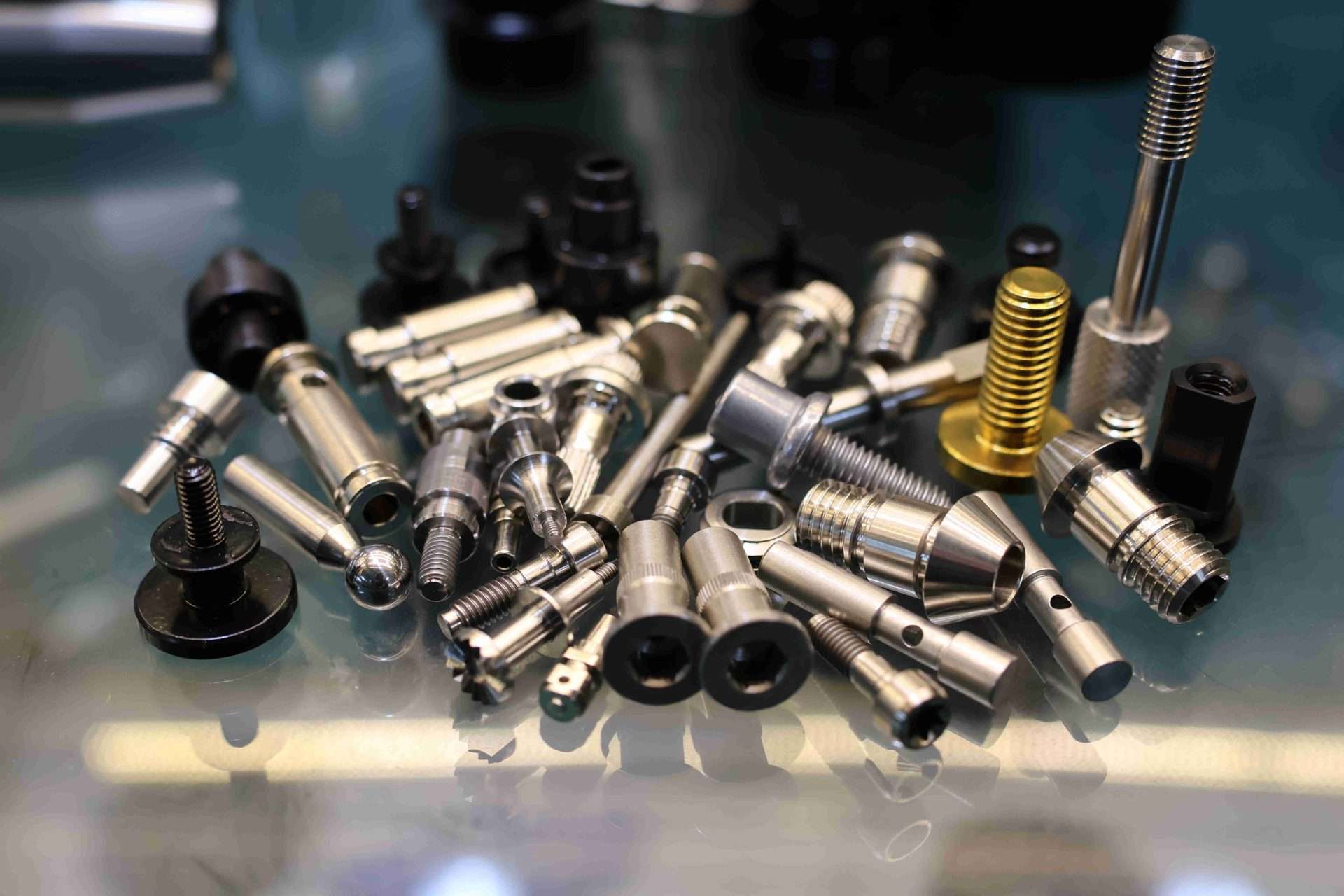
Low volume manufacturing beats mass production on six fronts: lower upfront investment, faster turnaround, easier design changes, less wasted inventory, access to premium materials, and better quality control per part. Mass production needs expensive tooling and huge order minimums to pay off, which locks you into a design and a quantity before you’ve validated either. Low volume methods like CNC machining skip that tooling step entirely, so you get functional, precision parts in days rather than months, and you can revise the design between runs without eating a sunk cost.

1. Lower Upfront Investment with Low Volume Manufacturing
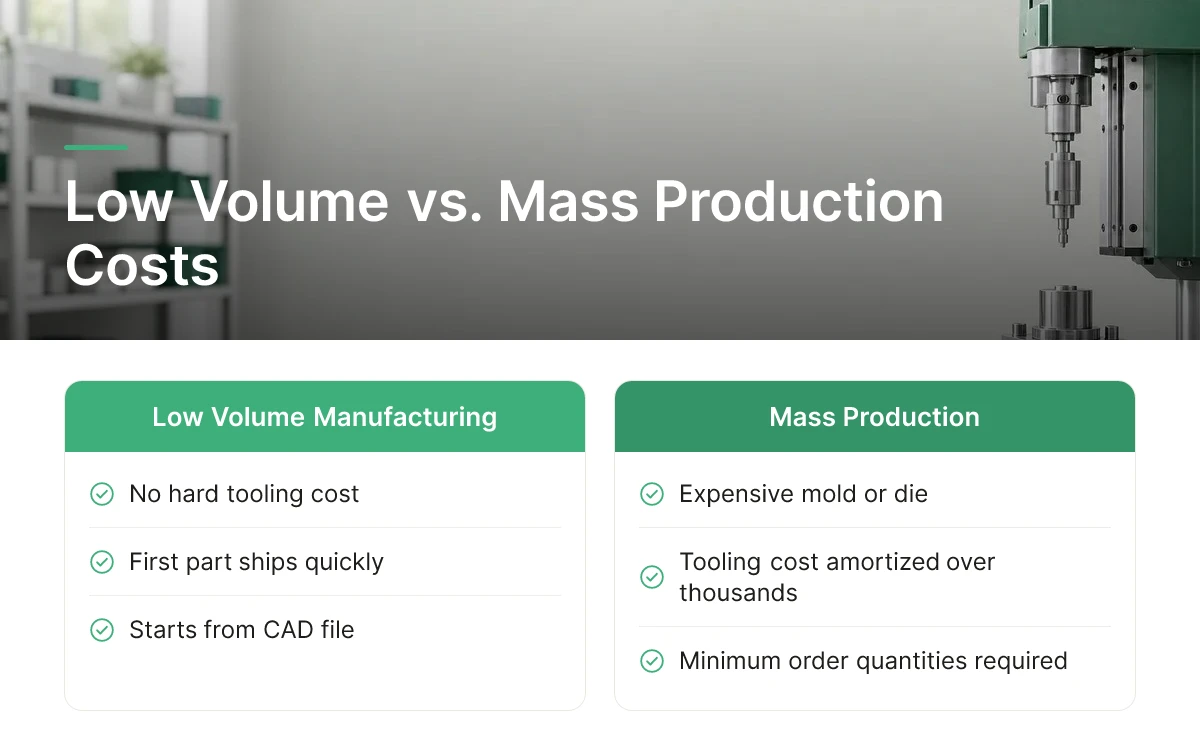
Low volume manufacturing removes the biggest cost barrier in production: hard tooling. Without a mold or die to pay off, the first part can ship at a fraction of the committed capital mass production demands.
Mass production runs on injection molds or stamping dies that cost a premium price to build and must be amortized over thousands of units. That math is exactly why minimum order quantities exist, a supplier can’t justify cutting a mold for 50 parts. CNC machining works differently: the process starts from a digital CAD file, so there’s no tooling cost sitting between the design and the first finished part.
This path suits startups validating a product before a funding round, R&D teams iterating on form factor, and companies that need proof of manufacturability before committing budget to scale.
The differentiator most mold-focused suppliers don’t advertise: the same CNC setup that cuts a single prototype can produce a 500-unit run with no new tooling in between. A buyer moves from budget-friendly prototyping to a mid-range production batch on the same machine program, while tooling-heavy paths stay locked into premium upfront spend regardless of order size.
2. Faster Turnaround from Quote to Delivery
Cutting tooling out of the process means production can start almost as soon as a design is approved, not weeks after.
Mass production timelines are dominated by tooling fabrication, mold cutting, injection trial shots, die adjustments, all of which happen before a single usable part exists. CNC programming skips that entirely. The CAD file goes straight to the machine, and setup time is measured in hours, not weeks.
This matters most for urgent prototypes, bridge production between design freeze and full-scale manufacturing, and buyers facing a supply chain gap who can’t wait on an offshore mass-production queue.
The differentiator is that speed starts before the machine even runs. MFG SOLUTION returns quotes within 8 hours and ships completed orders within 3 days of approval, which shortens the decision window on top of the shorter production window. A fast quote response compounds with fast machining, the two together cut sourcing cycles from weeks to days, not just the cutting step.
3. Design Flexibility Without Resetting Tooling
CNC-based low volume manufacturing lets engineers revise a design between batches without rebuilding or retooling anything physical.
Changing a mold or die mid-run is slow and expensive, it often means scrapping the existing tool and starting over. Changing a CNC program is a file update and a new machine setup, nothing more. That difference changes how teams treat design risk.
This approach fits products still in active revision: medical devices awaiting regulatory feedback, aerospace brackets undergoing stress testing, custom automotive components tied to a vehicle program still in development. Because changes don’t require a capital write-off, teams avoid locking in a flawed design just to justify a tooling investment already made.
The differentiator here is equipment capability: multi-axis CNC mill-turn setups can absorb geometry changes, a new boss, a relocated hole, a revised wall thickness, that would force an entirely new mold in injection molding.
4. Reduced Inventory Risk and Waste
Ordering only what current demand requires avoids the overstock that mass production minimums force onto buyers.
Mass production minimum order quantities often push buyers to order far more volume than near-term demand justifies, simply to make the tooling investment pay off. Those excess units sit in a warehouse, tying up capital and warehouse space until demand catches up, or doesn’t. Low volume manufacturing lets a buyer size each order to actual demand or a rolling forecast instead.
This fits companies with seasonal demand swings, multiple product variants running in parallel, or frequent engineering revisions, where excess stock becomes scrap the moment a spec changes.
The differentiator is resilience against the unplanned: when a design recall or spec change hits, a company producing in smaller batches adjusts its next order instead of writing off thousands of now-obsolete units already sitting on a shelf.

5. Access to a Wider Range of Materials and Precision Tolerances
Low volume CNC machining supports exotic alloys and tight tolerances that high-volume molding can’t justify changing mid-program.
Injection molding locks in a material choice at the mold design stage, switching resins later usually means a new mold. CNC machining has no such constraint; stock material can change between jobs because there’s no mold to match it to. Tolerances behave differently too: a mold gradually wears over a long run, degrading part consistency, while a CNC-cut part holds the same tolerance on unit one and unit one thousand because each part is cut fresh from the program.
This matters most for medical, aerospace, and defense parts that require certified alloys and tight tolerance stackups where a few microns of drift isn’t acceptable.
MFG SOLUTION’s differentiator is keeping certified stainless grades, titanium, and engineering plastics on hand and ready for small-batch cutting, not one resin matched to a single mold. Parts up to 38mm in diameter run under ISO 9001:2015, ISO 13485:2016, and IATF 16949 process control, so material certification and tolerance data are documented, not assumed. For teams managing compounded tolerances across mating parts, a tolerance stackup analysis guide is worth reviewing before finalizing a spec.
6. Tighter Quality Control on Every Part
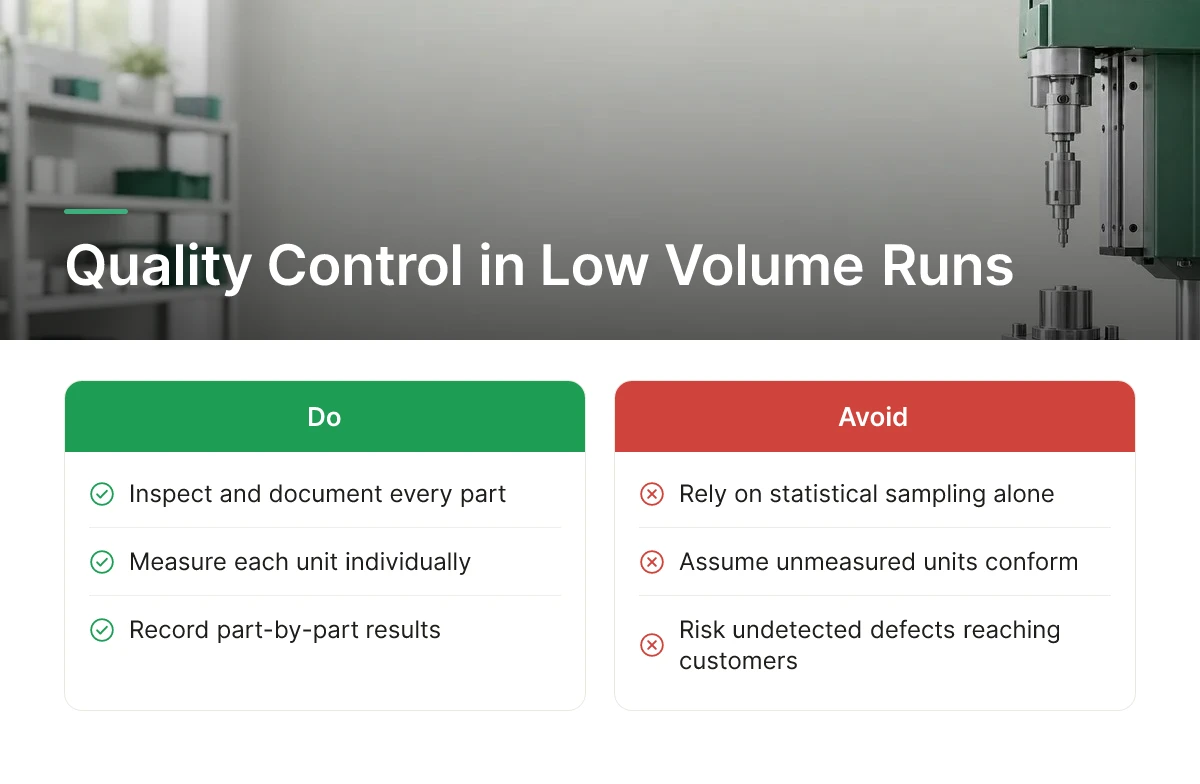
Small batches let you inspect and document every part instead of sampling a fraction of a lot, cutting the risk of undetected defects reaching customers.
Mass production relies on statistical sampling because checking every unit on a high-speed line would stop the line. A plant running thousands of parts per hour typically measures a sample set and assumes the rest conform. That math breaks down the moment a defect clusters outside the sampled units.
Low volume manufacturing flips that logic. When a run totals a few hundred or a few thousand units, each part, or each small batch, can be measured and recorded individually. That gives you part-by-part traceability instead of lot-level assumptions, which matters most in regulated industries where a single nonconforming part has to be traced back to its material lot and inspection record.
Certifications formalize this discipline rather than leaving it to individual operators. ISO 9001:2015 sets the quality management framework, while IATF 16949 adds automotive-specific controls over process capability and corrective action. MFG SOLUTION manufactures to both standards, plus ISO 13485:2016 for medical devices, with material certs, inspection reports, and first-article inspection documentation tied to each batch rather than a sampled lot.
This approach fits medical device, aerospace, and automotive safety components, where full traceability is a compliance requirement, not a nice-to-have.
7. Shorter Path from Prototype to Production Part
Prototyping and producing with the same subtractive process avoids the redesign work that happens when a prototype method doesn’t match the production method.
The common failure mode starts with a 3D-printed prototype that looks right on the bench but can’t translate directly to injection molding. Wall thickness, draft angles, and material behavior all change between additive and molded production, so engineers end up redesigning the part before tooling starts, adding weeks and engineering hours that weren’t in the original plan.
CNC-machined prototypes sidestep that gap. They use the same subtractive process, and often the same metal or engineering plastic, as the eventual production part. A part validated on a CNC machine during prototyping needs little or no redesign to run in low volume manufacturing on that same equipment.
This matters most for companies moving fast from concept to market without a dedicated handoff team managing the transition from prototype shop to production vendor. A single supplier running both the prototype and the low-volume batches keeps one set of process knowledge in one place, instead of two vendors each re-learning the part from scratch.
How to Choose the Right Low Volume Manufacturing Approach
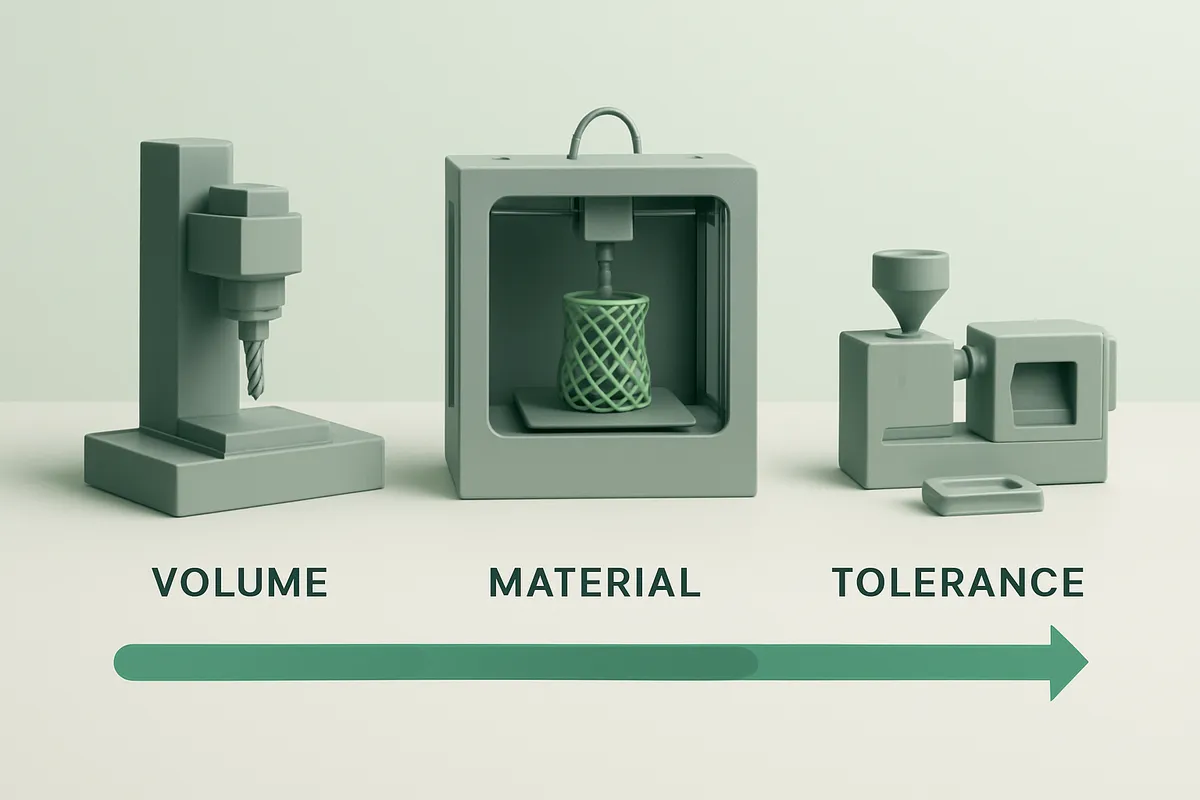
Match method to batch size, tolerance, material, and deadline, CNC machining, 3D printing, and short-run molding each win under different conditions.
Start with batch size. One-off parts and runs under a few hundred units typically favor CNC machining or 3D printing, since neither requires tooling investment. As batch size grows into the thousands with a simple, stable geometry, short-run injection molding starts to make sense because per-part cost drops once tooling is amortized.
Tolerance and material requirements narrow the choice further. Tight dimensional tolerances and certified metals, stainless steel, titanium, aluminum alloys, point toward CNC machining, since additive processes generally can’t match machined tolerance or certified material traceability.
Timeline pressure matters too. CNC machining removes the most lead-time steps when a deadline is tight, because it skips mold design and tooling fabrication entirely. That’s the gap MFG SOLUTION’s 8-hour quote and 3-day shipment window is built to close for customers under schedule pressure.
When Should You Scale from Low Volume to Mass Production?
Move to tooled mass production once the design is stable, demand is confirmed at volume, and specs are validated through real production runs rather than prototypes. Switching too early risks re-tooling against a design that still changes.
Should You Build In-House Capability or Outsource to a Contract Manufacturer?
In-house low volume capability shortens iteration loops for companies with constant, ongoing design changes. Outsourcing to a contract manufacturer suits sporadic or one-time production needs, where building and maintaining equipment and staff in-house costs more than the part volume justifies.
Frequently Asked Questions
What counts as a low volume manufacturing batch size?
Most manufacturers define low volume as anywhere from a single prototype up to several thousand units, depending on part complexity and method. CNC machining and Swiss lathe work typically cover the range from a few dozen to a few thousand pieces efficiently, while injection molding only becomes economical at higher counts. The exact cutoff depends on tooling cost, part geometry, and how quickly you need delivery.
What are the limitations of CNC machining, 3D printing, and short-run injection molding for small batches?
Each method trades speed or cost for a specific weakness: CNC machining faces per-part cost increases with very complex geometries, 3D printing struggles with material strength and surface finish for functional end-use parts, and short-run injection molding still requires tooling investment that only pays off above certain volumes. Matching the method to part geometry, material, and volume avoids overpaying or waiting on unnecessary tooling.
Which industries rely most on low volume manufacturing?
Aerospace, automotive, medical devices, and consumer electronics depend heavily on low volume manufacturing because they need frequent design changes and tight tolerances. These sectors often require certified, documented production, automotive under IATF 16949 and medical devices under ISO 13485, rather than just fast, uncontrolled prototyping runs.
How does quality control differ between low volume runs and mass production lines?
Low volume runs require more manual inspection per part since there’s less statistical data to rely on, while mass production uses automated, high-frequency sampling. Low volume shops still need documented process control, full traceability per batch, especially when supplying regulated industries like medical or automotive, where every part must meet certification standards regardless of batch size.
What’s the fastest low volume manufacturing method for an urgent order?
CNC machining and Swiss lathe production are typically fastest for urgent small-batch metal parts because they skip tooling lead time entirely. MFG SOLUTION quotes orders within 8 hours and ships within 3 days for parts up to 38mm in diameter, which compresses sourcing cycles that otherwise take weeks with mold-based methods.
Conclusion
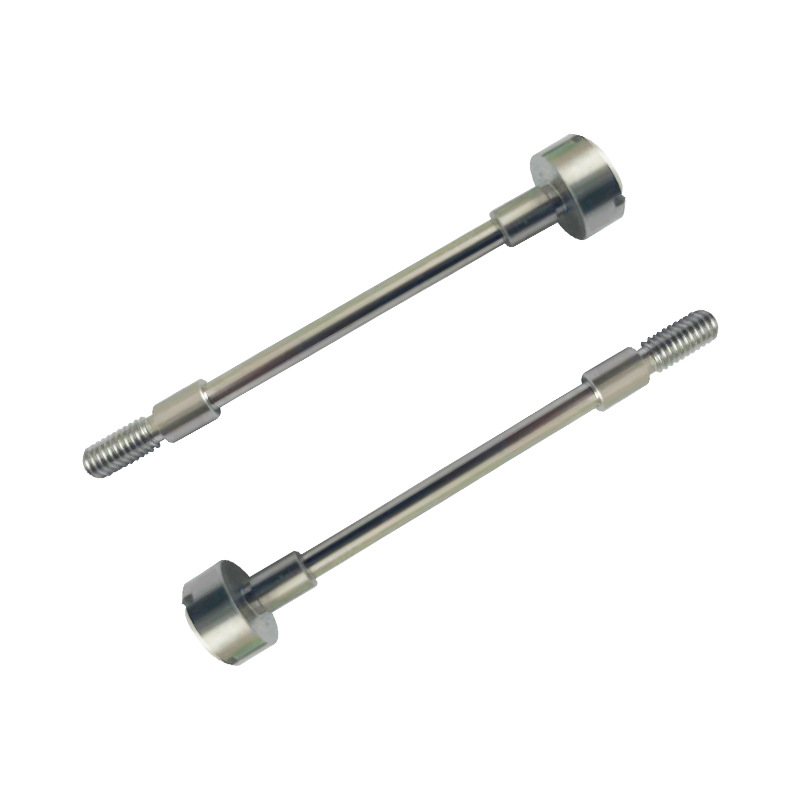
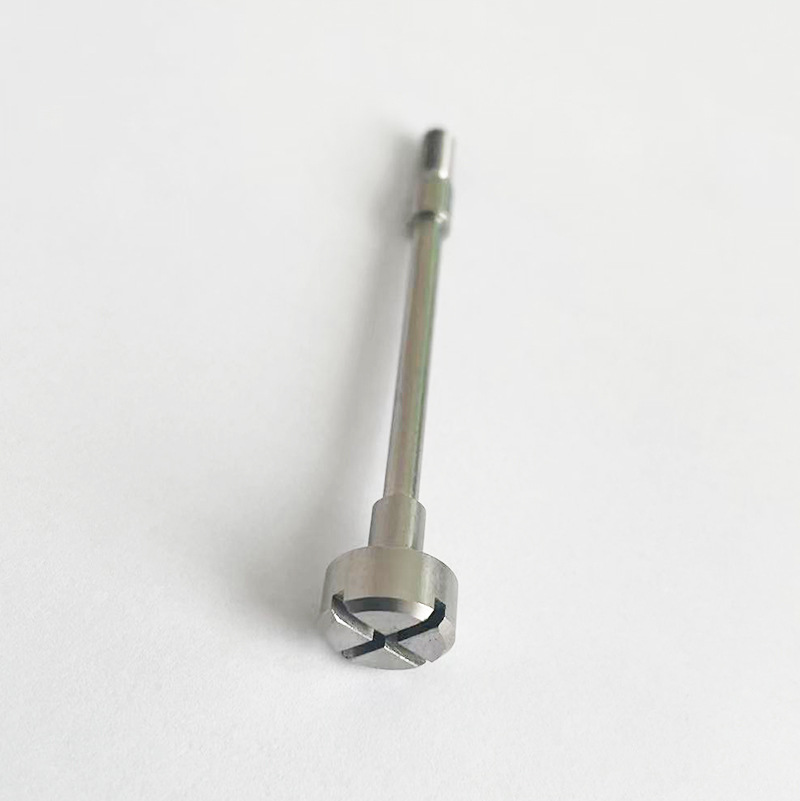
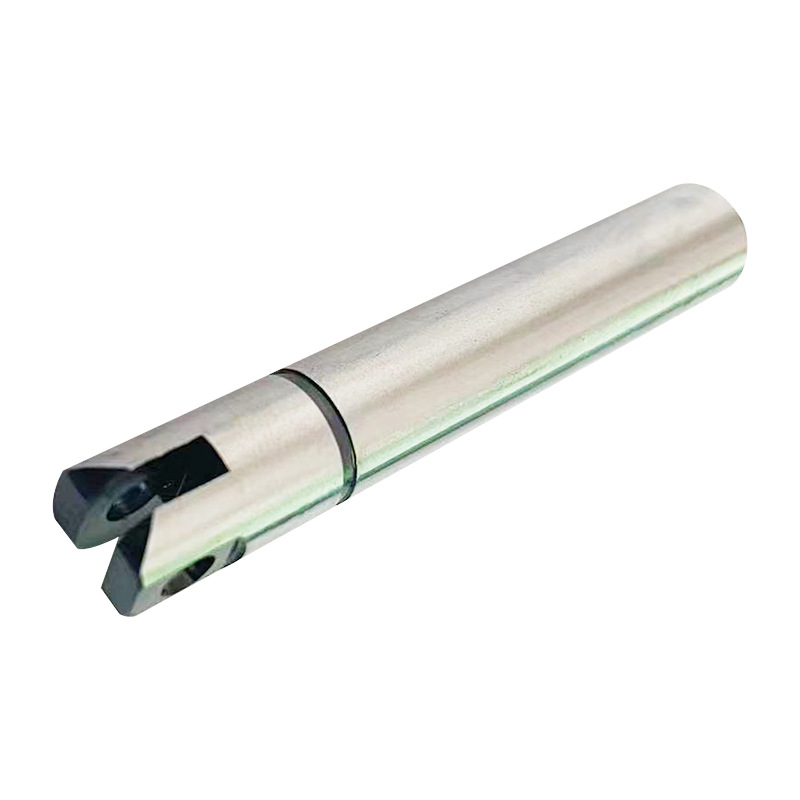
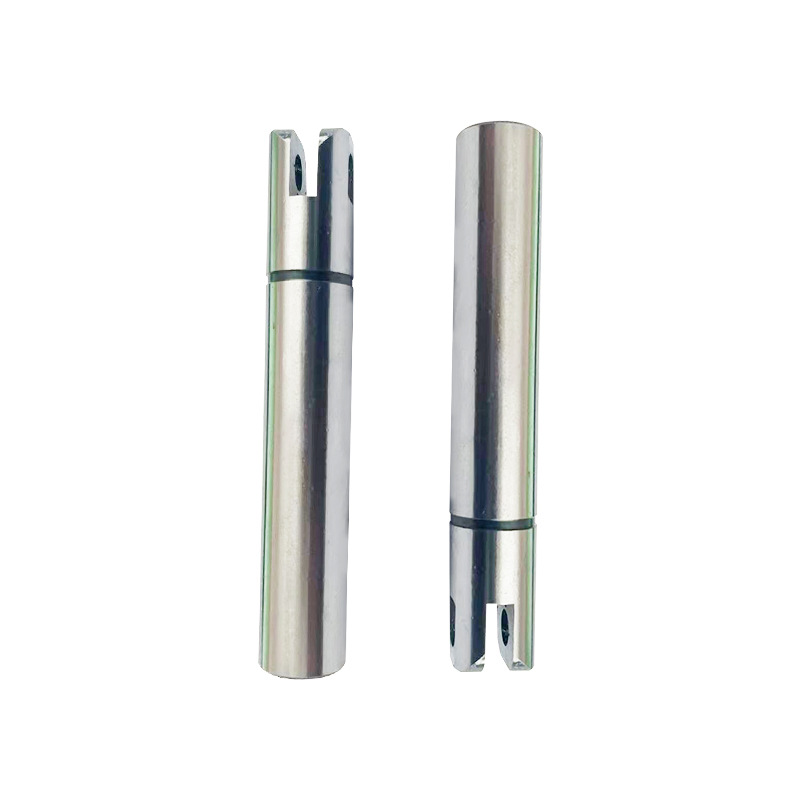
Low volume manufacturing works when you match the method to the part, CNC turning and Swiss lathe for tight-tolerance metal components, cold forging for strength-critical geometries, and mill-turn for complex features in one setup. Skip methods that force tooling costs onto runs too small to absorb them, and prioritize suppliers who document process control from the first unit, not just at scale.
If your current supplier’s lead time runs four to six weeks, request a quote from MFG SOLUTION on your next small-batch part under 38mm diameter and compare the 8-hour quote turnaround against your existing RFQ process directly.
Recommended Articles
Explore more from our content library: