
2026-10-23
How to Reduce Manufacturing Costs Through Smarter Sourcing

Understanding how to reduce manufacturing costs is essential. Sourcing strategy and supplier relationships directly set your per-unit cost of precision-machined parts because every quote, lead time, and scrap rate traces back to who makes the part and how that relationship is structured. Consolidating volume with fewer, better-vetted suppliers lowers per-unit price through economies of scale, reduces quality-driven rework costs, and cuts the hidden procurement overhead of managing many vendors. Treating suppliers as long-term partners rather than transactional vendors also enables better payment terms, faster quoting, and more stable lead times, all of which compound into lower landed cost per part.

Assess How Your Sourcing Strategy Is Driving Up Per-Unit Costs
Before changing suppliers or renegotiating contracts, map where your current sourcing model is quietly inflating the price you pay per part. Most procurement teams discover the real cost drivers are structural, not just tied to a single vendor’s quote.
Start with supplier count. Every additional vendor in your approved supplier list means another quoting cycle, another set of tooling costs to amortize, and a smaller order volume spread across each shop. That fragmentation weakens your negotiating position, a supplier producing 2,000 units a month for you will quote differently than one producing 20,000, because fixed setup costs and machine changeovers get divided across fewer parts . Figuring out how to reduce manufacturing costs usually starts here, with an honest count of how many vendors you’re actually splitting volume across and why.
Inconsistent quality compounds the problem. A supplier quoting 8% below your current vendor can still cost more once scrap rates, rework labor, and missed tolerances are factored in. Total cost of ownership, not unit price, is the metric that actually predicts supplier cost performance, since expediting fees, additional inspections, and production delays often outweigh the savings on paper.
Why Supplier Consolidation and Long-Term Partnerships Lower Per-Unit Costs
Consolidating volume with fewer, vetted suppliers creates the order density needed for real price breaks, because suppliers can plan tooling, material buys, and machine time around predictable demand rather than one-off jobs. Reactive sourcing, switching vendors purely on the lowest quote for each job, defeats this. It scatters volume thin across many shops, so none of them ever reach the batch size where per-unit cost actually drops.
How Vendor Performance Data Exposes Hidden Material and Procurement Costs
Without tracking data on defect rates, on-time delivery, and rework frequency by supplier, it’s difficult to know which vendor is genuinely cheapest once hidden costs are included. Advanced analytics and supply chain visibility tools let procurement teams spot these patterns and make sourcing decisions based on delivered cost, not quoted cost. Cost reduction in procurement works best as a sustained practice built on spend analysis and benchmarking, not a one-time negotiation. MFG SOLUTION addresses this transparency gap directly: quotes arrive within 8 hours and production runs under ISO 9001:2015, ISO 13485:2016, and IATF 16949 process controls, giving procurement teams documented, auditable performance data instead of guesswork on quality and timing.
How to Reduce Manufacturing Costs by Restructuring Supplier Relationships
Consolidating recurring work with a smaller, vetted group of suppliers is one of the fastest ways to reduce manufacturing costs on precision parts without touching your specs or your lead time. Fewer suppliers carrying more volume each gives you real use, on price, on scheduling priority, and on how quickly quotes come back.
A procurement strategy built only around chasing the lowest unit price on every order tends to backfire. It fragments volume across too many vendors, and the savings disappear into expediting fees, rework, and the internal time spent managing suppliers who underperform on quality or delivery. Total cost of ownership, not the line-item price per part, is what should drive the sourcing decision. When you route repeat work to a short list of qualified partners, each supplier has more reason to protect the account: better pricing tiers, faster turnaround on urgent runs, and more attention when something needs troubleshooting.
Strong supplier relationships also surface problems before they become line-stoppers. A supplier that knows your production schedule and quality history will flag a tooling issue or material delay early, rather than let it show up as a missed ship date.
How to Negotiate Volume Discounts and Payment Terms Without Straining the Relationship
The negotiating tactics that work long-term trade predictability for price, not just pressure for a lower number. Three approaches consistently hold up:
- Blanket orders across multiple part numbers. Bundling several recurring parts into one annual or quarterly order gives the supplier a stable production block to plan around, which justifies a better rate than one-off purchase orders.
- Tiered volume discounts tied to forecast commitments. Committing to a realistic annual volume, even as a range, lets a supplier price more aggressively at the top tier, because they can plan machine time and raw material buys in advance.
- Extended payment terms in exchange for forecast accuracy. Suppliers often prefer predictable cash flow timing over an instant payment; trading net-60 or net-90 terms for a committed, accurate forecast is often negotiable without cutting price further.
None of these require squeezing margin out of a supplier to the point where quality or responsiveness suffers, which is usually when problems start.
What Role Supplier Diversification Plays in Cost and Risk Management
Diversification is the counterbalance to consolidation: enough alternate qualified sources to avoid single-supplier use, without spreading volume so thin that you lose pricing power. The right number is usually two to three qualified suppliers per critical part family, enough that a quality failure, capacity constraint, or geopolitical disruption at one supplier doesn’t stop production, but not so many that no single supplier has enough volume to offer a meaningful discount. Building this resilience deliberately, rather than reacting after a disruption, is what separates supply chains that hold up under stress from ones that don’t.
Sharing production forecasts and full specifications earlier in the process also cuts cost indirectly. A supplier working from a vague or incomplete spec quotes conservatively, then re-quotes once requirements firm up, which adds days to lead time and often adds cost. Clear tolerances and quality requirements up front, material certs, surface finish, critical dimensions, reduce rework and the back-and-forth re-quoting cycles that quietly inflate per-unit cost. MFG SOLUTION applies this directly: quotes return within 8 hours and orders ship within 3 days because specs are captured completely at intake, under ISO 9001:2015, ISO 13485:2016, and IATF 16949 process controls, so there is no ambiguity for engineering to resolve mid-run.

Prioritize Which Sourcing Changes to Tackle First
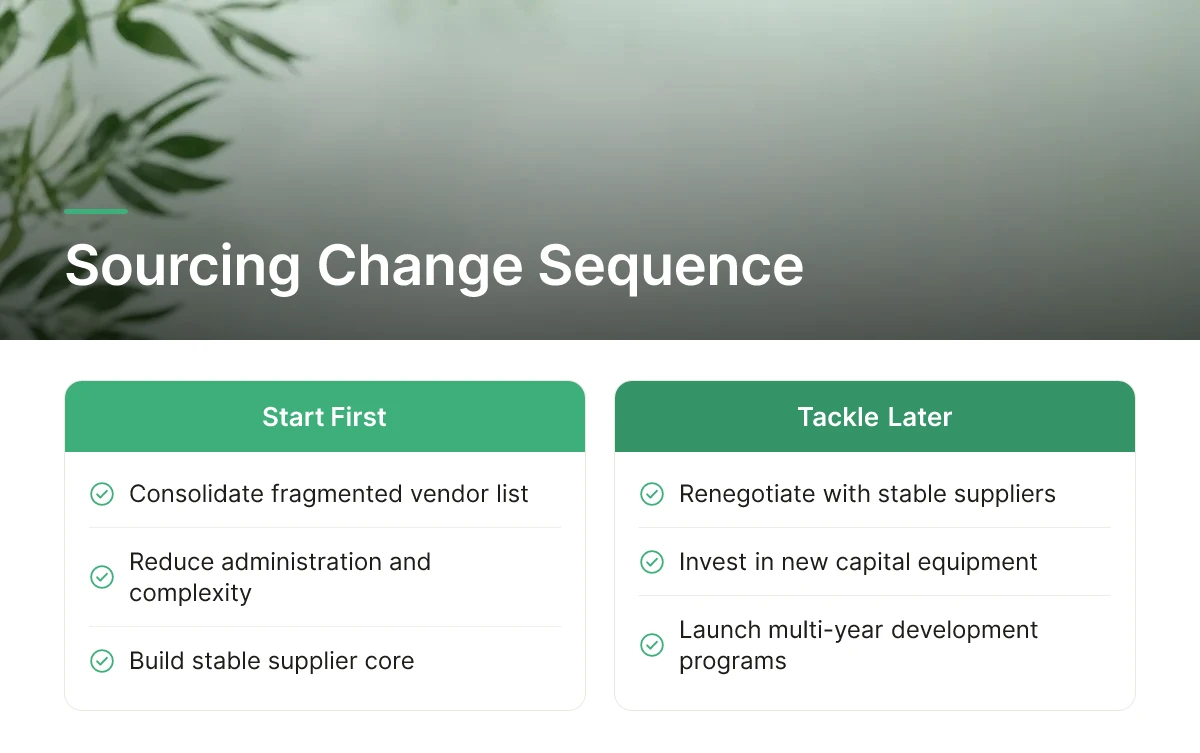
Sequence sourcing changes by supplier base maturity first: consolidate a fragmented vendor list before renegotiating, and renegotiate a stable core before investing in new capital equipment.
Most procurement teams asking how to reduce manufacturing costs jump straight to the hardest project on the list, a new ERP module, a robotic work cell, a multi-year supplier development program. That’s usually the wrong starting point. A simple maturity check tells you where to begin. If your supplier base is a long, ad-hoc list built up over years of one-off purchase orders, consolidation comes first: fewer, better-vetted suppliers reduce the administrative overhead of managing dozens of relationships and give you volume use you don’t currently have. If you already run a stable core of qualified suppliers, the next move is renegotiation and tighter data-sharing, sharing forecasts, defect data, and lead-time requirements so suppliers can plan production rather than react to it.
Which Sourcing Changes Deliver the Fastest Returns for Smaller Operations
Supplier consolidation and renegotiation pay back faster than capital projects because they change contractual terms, not physical infrastructure. A renegotiated contract or a consolidated supplier list can show results within a quarter; a new machine or automation line typically takes months to install, qualify, and ramp before it affects unit cost. For smaller precision-machining buyers, this matters because internal resources are limited, a procurement manager can renegotiate terms with three suppliers in the time it takes to spec and approve a single capital purchase. Total cost of ownership, not just unit price, should guide which suppliers stay on the consolidated list, since the cheapest quote often carries hidden costs in rework, expediting, or delayed launches.
How to Decide Between Supplier Optimization, Inventory, or Process Efficiency First
Trace your per-unit cost back to where it actually leaks before choosing a lever. If scrap and rework from inconsistent supplier quality dominate, fix sourcing first. If excess safety stock or stockouts are tying up cash, inventory accuracy is the bigger lever. If internal changeover time or labor inefficiency is the main drag, process work takes priority. Spend analysis and benchmarking against comparable operations help confirm where the leak sits before committing resources.
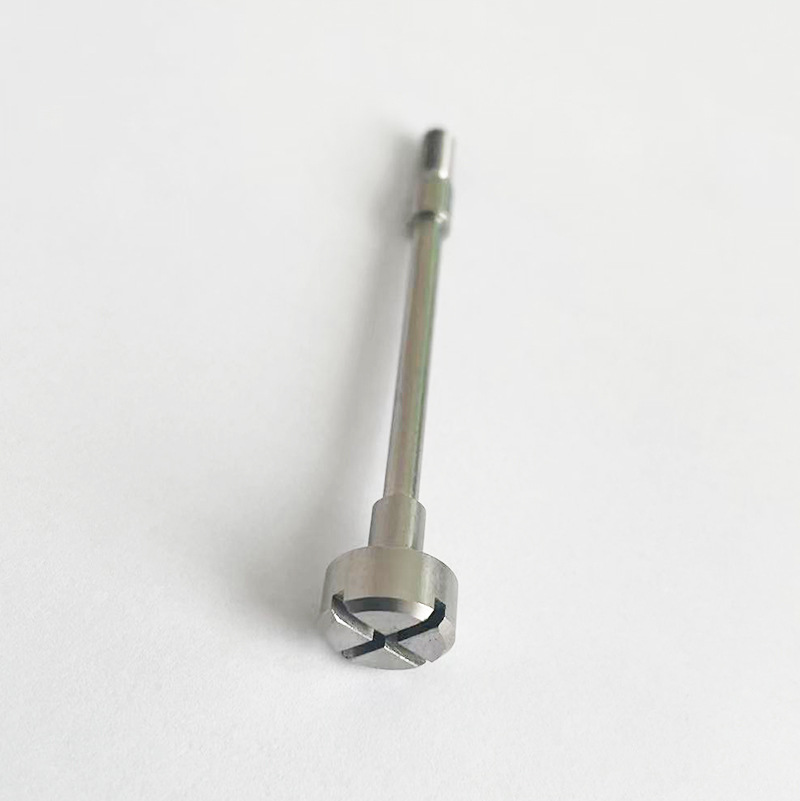
Weigh effort against disruption before committing. Renegotiating or consolidating suppliers carries relationship risk and staff time but little operational disruption. Automation or new equipment can cut costs further but risks production downtime during installation. A partner like MFG SOLUTION, which quotes within 8 hours and ships within 3 days under ISO 9001:2015, ISO 13485:2016, and IATF 16949 certification, lets smaller operations consolidate toward one certified source for parts up to 38mm without the disruption of a capital project.
Track Supplier-Driven Savings with the Right Metrics and Tools
You confirm sourcing changes are working by comparing per-unit landed cost, lead time, and defect rate before and after the switch, not by trusting a lower quoted price alone. A cheaper unit price that triggers rework or late shipments is not a saving; it is a deferred cost.
Four metrics matter most when evaluating whether a new supplier or consolidated sourcing strategy is actually working how to reduce manufacturing costs for your part families:
- Per-unit landed cost, unit price plus freight, duties, inspection, and rework, tracked over time rather than at a single purchase order
- Supplier lead time variance, the gap between quoted and actual delivery dates, which predicts how much buffer inventory you need to carry
- Defect or rework rate by supplier, quality failures traced back to a specific vendor, not averaged across your whole supply base
- Number of active suppliers per part family, a rising count usually signals fragmented sourcing and duplicated qualification effort
A procurement strategy built only around unit price tends to mask these costs until they show up as expediting fees or production downtime. Tracking the four metrics above closes that blind spot.
What ERP and Procurement Software Features Matter Most for Supplier Cost Management
ERP and procurement platforms matter here because they turn scattered purchase history into comparable supplier performance data. Three features do most of the work: supplier scorecards that rate on-time delivery and defect rates side by side, purchase order history that shows price movement per part number over multiple cycles, and spend-by-supplier reporting that reveals concentration risk before it becomes a single point of failure.
Advanced analytics built into these systems help identify supply chain risks and sourcing opportunities that are not visible from a spreadsheet of invoices. The goal is not software for its own sake, it is visibility into which suppliers are actually earning their place in your part families.
How Data Analytics and KPIs Reveal Cost-Saving Opportunities
Basic analytics, spend concentration by supplier, price trend over the last four to eight quarters, and on-time delivery rate, sorts your supplier base into two groups fast. Suppliers with stable pricing, consistent delivery, and low rework belong on your consolidation list. Suppliers with rising prices, volatile lead times, or recurring defects are replacement candidates, regardless of how competitive their original quote looked.
Investment in these tools scales with company size. A smaller supplier base can track these four metrics in a shared spreadsheet or a budget-friendly procurement add-on. Mid-market manufacturers typically need a dedicated procurement module inside their ERP. Enterprise operations managing dozens of part families and suppliers across regions usually require premium-tier spend-analytics platforms with dedicated supplier-scorecard dashboards. MFG SOLUTION supports this kind of tracking directly, full process control under ISO 9001:2015, ISO 13485:2016, and IATF 16949 means every production step is documented and auditable, giving procurement teams real defect and delivery data instead of estimates.
Common Mistakes to Avoid When Optimizing Suppliers for Cost
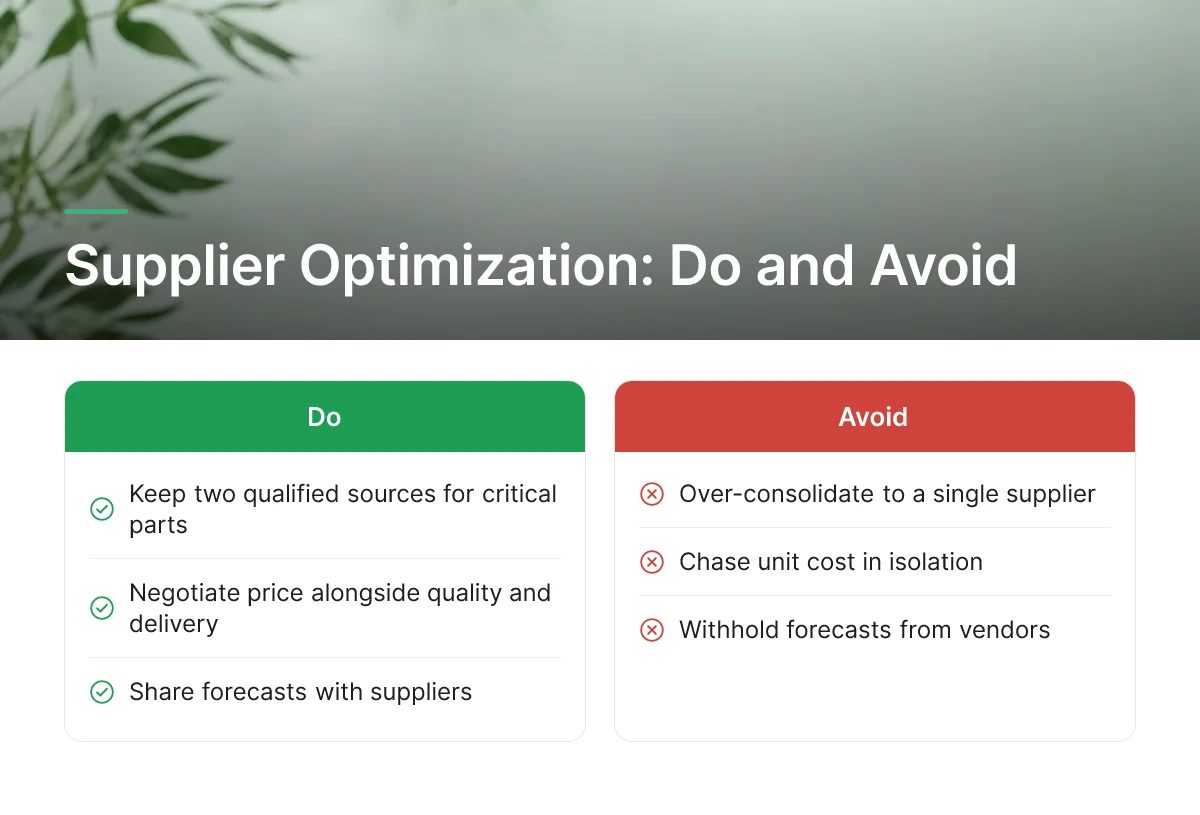
Most failures in how to reduce manufacturing costs trace back to four decisions: over-consolidating suppliers, negotiating price in isolation, chasing unit cost, and withholding forecasts.
Consolidating too far, too fast
Moving every part to a single supplier for a better quoted rate feels efficient, but it recreates the exact concentration risk that a diversified supply base is meant to prevent. If that one supplier has a quality escape, equipment failure, or capacity crunch, your entire production line stops, not just one product line. A sounder approach keeps two qualified sources for critical parts even when one offers a marginally lower price.
Negotiating price without locking in specs and lead time
A lower quote means little if it isn’t tied to firm quality specifications and delivery commitments in writing. Suppliers under price pressure often cut corners elsewhere, looser tolerances, slower response on nonconformance, or deprioritized lead times when their capacity gets tight. The savings on paper disappear into rework, scrap, and expediting fees once parts start failing incoming inspection.
Chasing the lowest quoted unit price
Switching suppliers based on unit price alone ignores total landed cost: freight, customs, inspection labor, rework, and the cost of expediting when a new, unproven supplier misses a date. A part that’s 8% cheaper on the quote sheet can cost more once a shipment arrives late or fails a batch inspection. Total cost of ownership, not line-item price, should decide the switch.
Withholding forecasts and volume plans
Suppliers price defensively when they can’t see what’s coming. Sharing a 12-month volume forecast lets a precision machining partner plan tooling, batch runs, and material buys efficiently, which shows up as better pricing and firmer lead times on your end. MFG SOLUTION’s 8-hour quoting and 3-day shipment windows work best for customers who share realistic forecasts up front, since that visibility lets the shop sequence batch production across its automatic lathes and CNC mill-turn cells instead of reacting order by order.
Frequently Asked Questions
How does supply chain transparency affect material and procurement costs?
Transparency lets buyers see true cost drivers instead of negotiating on unit price alone, which exposes hidden costs like rework and expediting fees. When a supplier documents every process step, you can spot waste in the specification or production method before it turns into a surcharge. This is why total cost of ownership, not quoted price, should guide sourcing decisions.
What before-and-after metrics show whether supplier optimization is working?
Track defect rate, on-time delivery percentage, lead time, and cost per unit before and after a supplier change to measure real impact. A sourcing strategy is working if defect rates drop toward the sub-1% range manufacturers in electronics and medical devices typically require, lead times shorten, and expediting or rework costs fall. Supplier performance factors that predict these outcomes should be measured on an ongoing basis, not just at onboarding.
How does investing in supplier relationships compare to automation in payback time?
Supplier relationship investment often pays back faster because it prevents cost overruns already baked into your supply chain, while automation requires capital outlay before savings appear. Building relationships that surface problems early reduces expediting fees, rework, and downtime almost immediately. Automation and analytics tools deliver bigger long-term gains but take longer to implement and tune, so many procurement teams pursue both in parallel rather than choosing one over the other.
Can supplier diversification lower costs as well as reduce risk?
Yes, diversification lowers costs indirectly by preventing the production stoppages and expediting fees that come from relying on a single, unreliable source. A deliberately built, resilient supply chain with qualified backup suppliers avoids the premium pricing that comes with emergency sourcing. The risk reduction and the cost reduction are the same mechanism, not separate benefits.
Conclusion
Reducing the per-unit cost of precision-machined parts comes down to three decisions: evaluate suppliers on total cost of ownership rather than quoted price, qualify partners on documented process capability rather than capacity alone, and track defect rate and lead time as closely as price. Each of these shifts the conversation from “who’s cheapest” to “who prevents the hidden costs that erode margin.” Parts up to 38mm diameter machined under ISO 9001:2015, ISO 13485:2016, and IATF 16949 process control reduce the quality-related rework that quietly inflates procurement budgets. Your next step: pull your last four supplier quotes and recalculate them using total cost of ownership, then submit your highest-risk part specification for a quote to compare against your current baseline.
Recommended Articles
Explore more from our content library: