
2026-10-15
How Stainless Steel Parts Manufacturing Resists Corrosion

Understanding stainless steel parts manufacturing is essential. Stainless steel resists corrosion because its chromium content forms a thin, self-healing oxide layer on the surface that blocks oxygen and moisture from reaching the iron underneath. For manufacturing, this means the corrosion resistance is built into the alloy itself, CNC machining doesn’t add it, but poor machining practices (excess heat, contaminated tooling, rough surface finishes) can damage that oxide layer and create weak points. Choosing the right grade (304, 316, or 17-4) and controlling machining parameters are what preserve corrosion resistance in the finished part, especially for electronics, automotive, and medical applications exposed to moisture, chemicals, or sterilization cycles.
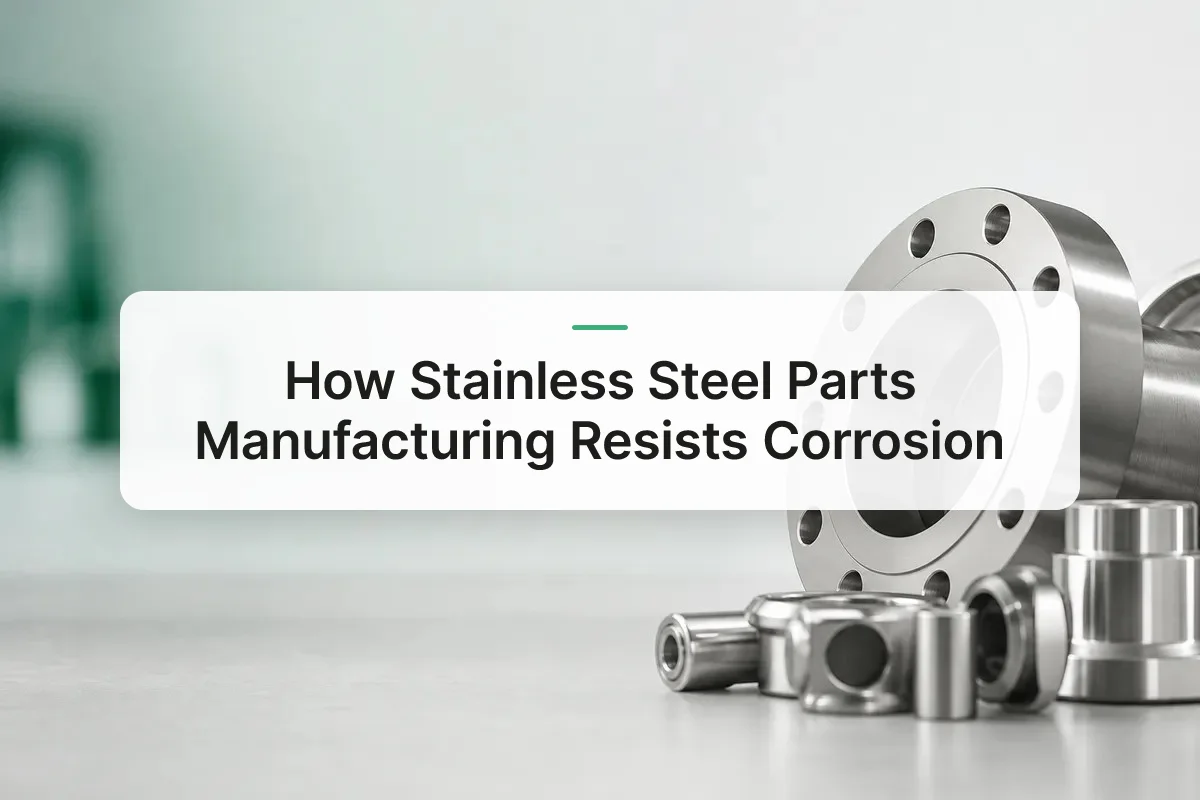
What Makes Stainless Steel the Right Material Choice for Precision Machined Parts?
Stainless steel earns its place in precision applications because chromium reacts with oxygen to form a passive chromium oxide film only a few nanometers thick, and that film rebuilds itself within hours whenever it’s cut, scratched, or machined. This self-healing behavior is what separates stainless steel parts manufacturing from work with plain carbon steel, which rusts the moment a protective coating fails. The mechanism matters more at the machining stage than most buyers realize, because every tool pass physically removes material and exposes fresh metal that must re-passivate correctly.
What are the key properties of stainless steel that prevent corrosion in demanding environments?
The passive layer only works if it forms uniformly, and that depends on alloy family as much as on chromium content alone. Austenitic grades like 304 and 316 resist corrosion well in general atmospheric and mild chemical exposure, while martensitic grades trade some corrosion resistance for higher hardness and wear resistance, and precipitation-hardened grades like 17-4 PH balance strength with moderate corrosion performance through heat-treatable copper and niobium additions. Treating “stainless steel” as one uniform material is a common mistake, corrosion resistance, strength, and formability all shift depending on which alloy family a part comes from. Surface finishing techniques such as passivation or electropolishing can further strengthen the natural oxide layer, which matters most in marine, medical, and food-processing environments where the base alloy alone may not hold up long-term.
How do different stainless steel alloys compare in strength, machinability, and cost?
Grade selection is a tradeoff exercise, not a default choice. 304 stainless costs less and machines more predictably, making it a reasonable default for enclosures, brackets, and fasteners that face routine humidity but not aggressive chemical exposure. 316 adds molybdenum, which raises material and machining cost but delivers meaningfully better resistance to chloride pitting, the kind of corrosion triggered by road salt, saline, or cleaning agents. 17-4 PH sacrifices some corrosion resistance for significantly higher strength, suiting load-bearing components where mechanical performance outweighs pure corrosion concerns.
End-use environment should drive the decision. Electronics housings sit in variable humidity and benefit from 304’s baseline resistance; automotive components exposed to road salt and underhood chemicals often justify 316’s added cost; medical devices facing repeated sterilization cycles and bodily fluid contact typically require 316L for its lower carbon content and superior resistance to intergranular corrosion. MFG SOLUTION machines parts up to 38mm in these grades across CNC turning, Swiss lathe, and CNC mill & turn processes, matching alloy choice to the part’s actual service conditions rather than defaulting to one grade for every job.
How Does CNC Machining Shape Stainless Steel Into Tight-Tolerance Parts Without Compromising Corrosion Resistance?
CNC machining cuts stainless steel to tight tolerances by pairing rigid tooling setups and slower, controlled cutting parameters with in-process measurement that catches deviations before they leave the spindle.
The passive chromium oxide layer that makes stainless steel corrosion-resistant is only a few nanometers thick. It forms naturally when chromium in the alloy reacts with oxygen, and it reforms quickly after a clean cut. The risk in stainless steel parts manufacturing isn’t removing that layer, it’s damaging the surface or embedding contaminants badly enough that the layer can’t reform evenly.
What CNC machining techniques hold tolerances under 0.01mm on parts up to 38mm?
Three processes dominate small-part stainless steel work: CNC turning, Swiss lathe machining, and CNC mill & turn.
CNC turning handles symmetric geometries with rigid workholding that minimizes deflection during the cut. Swiss lathe machining goes further for slender or small-diameter parts, the material feeds through a guide bushing that supports it right at the cutting point, which is why Swiss-type machines are the standard choice for parts with high length-to-diameter ratios. CNC mill & turn combines both motions in a single setup, cutting features that would otherwise need a second fixturing and reintroducing error.
Holding tolerances under 0.01mm on parts up to 38mm in diameter depends on more than the machine. It requires in-process gauging, temperature-stable shop environments, and tooling programs that account for tool deflection and wear across a production run, not just the first part off the line.
Why is stainless steel harder to machine than aluminum, and how does that affect your timeline?
Stainless steel work-hardens as it’s cut, the surface layer becomes harder and more abrasive the moment a tool passes over it, which is why a dull or slow-moving edge creates more resistance rather than less. It also conducts heat far less efficiently than aluminum, so heat concentrates at the cutting edge instead of dissipating through the part. That combination demands slower spindle speeds, sharper carbide or coated tooling, and a deliberate coolant strategy to carry heat away before it damages the surface finish or accelerates tool wear.
Excess heat or contaminated tooling creates a corrosion risk specific to stainless steel. If a tool previously cut carbon steel and carries residue, or if heat buildup embeds free iron particles into the stainless surface, those particles can rust even though the surrounding stainless steel doesn’t. The result is localized rust spotting on a part that should be corrosion-resistant, a quality failure that often doesn’t show up until after shipment.
These constraints extend cycle times compared to aluminum equivalents and require closer tool-wear monitoring throughout a production run. MFG SOLUTION builds that monitoring into its process control under ISO 9001:2015, tracking tool condition and cutting parameters across batches so a 38mm stainless part machined on day one matches the tolerance and surface finish of the same part machined on day ten.
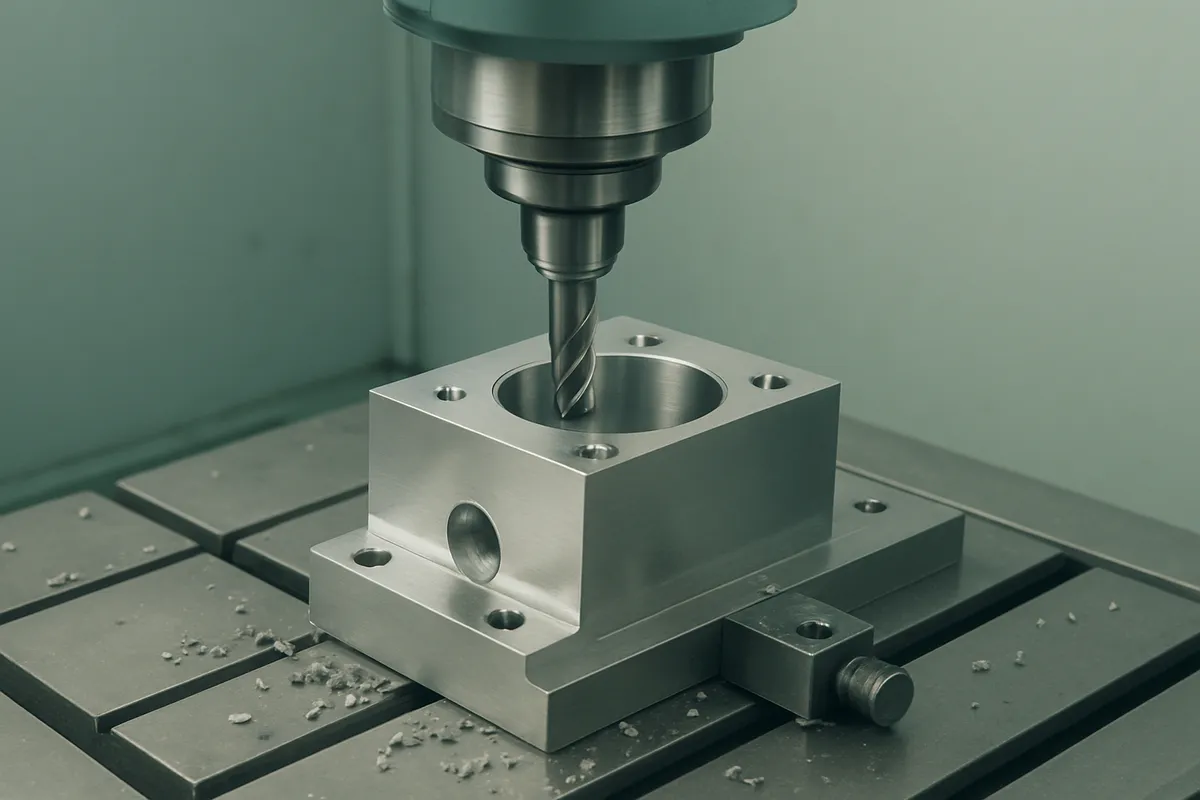
CNC Machining, Sheet Metal, or Casting: Which Process Fits Your Stainless Steel Part?
Match the process to part geometry, tolerance, and volume: CNC machining suits tight-tolerance small parts, sheet metal fits thin enclosures, and casting wins at high volume.
Stainless steel parts manufacturing rarely comes down to a single “best” process. Each route trades precision, tooling cost, and lead time differently, and the right answer depends on what you’re building and how many you need.
When should you choose CNC machining over sheet metal fabrication or casting for stainless steel parts?
CNC machining wins when a part demands tight tolerances, intricate geometry, or repeatable precision across a low-to-mid volume run. Austenitic grades like 304 and 316 machine predictably once tooling and feed rates are tuned for their work-hardening tendency, which is why they’re common choices for machined components.
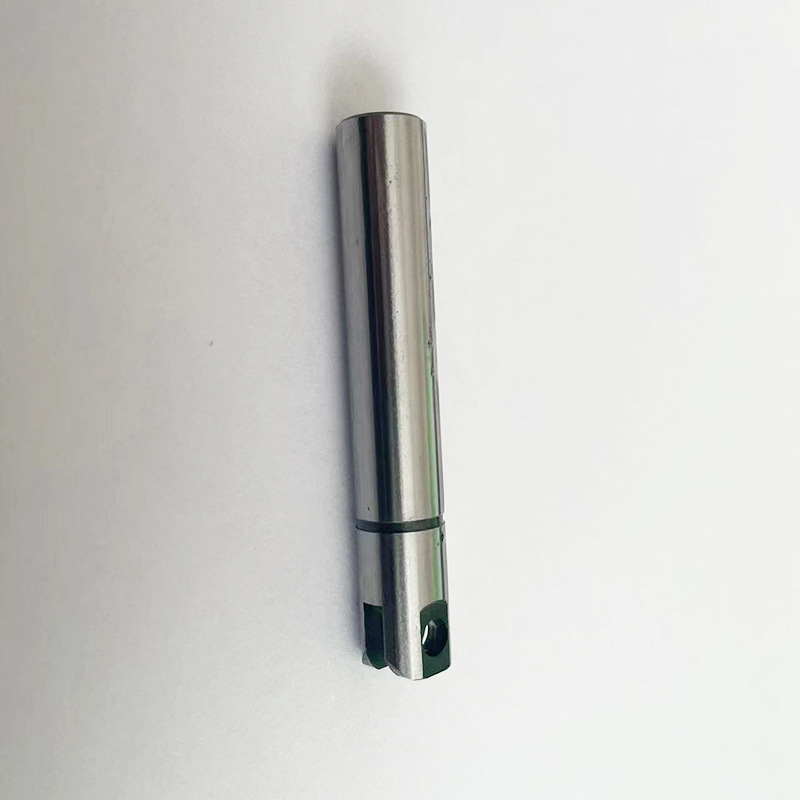
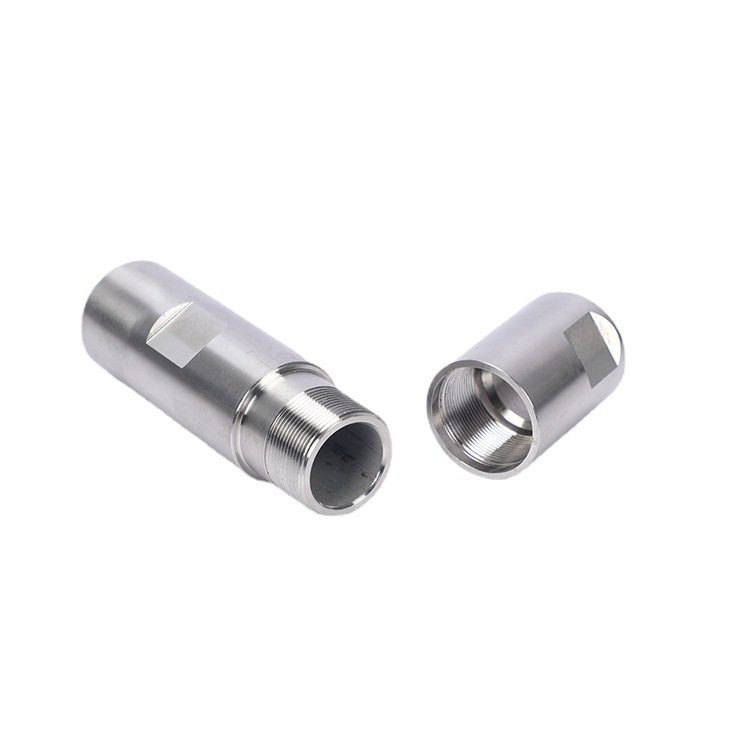
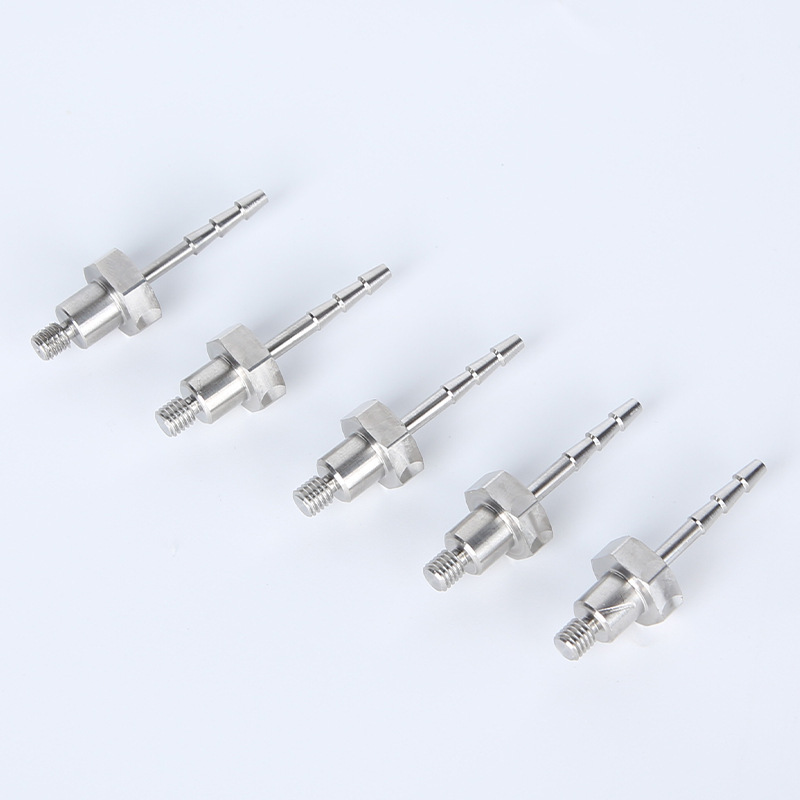
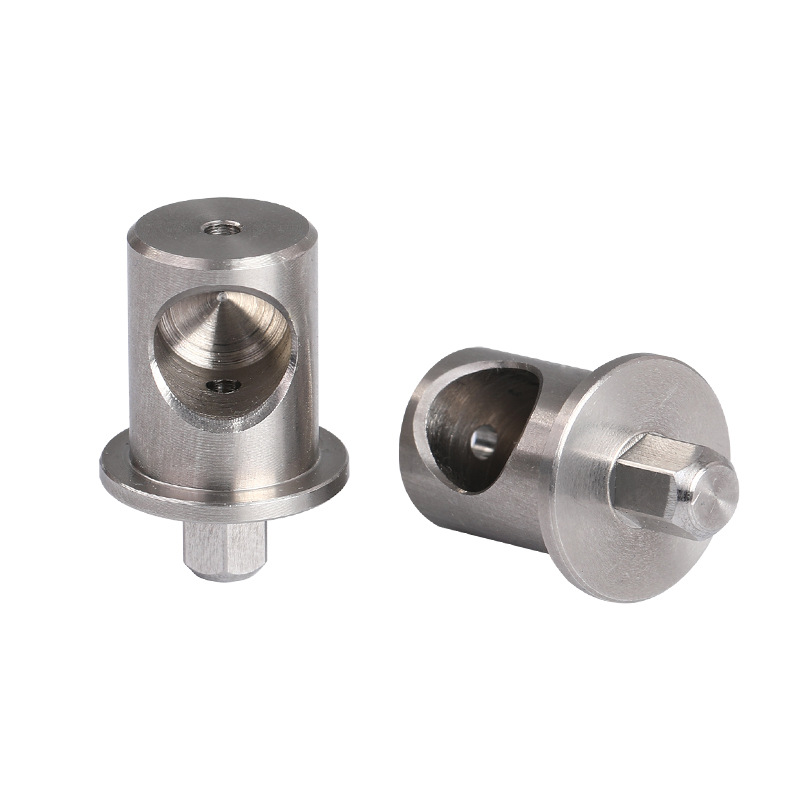
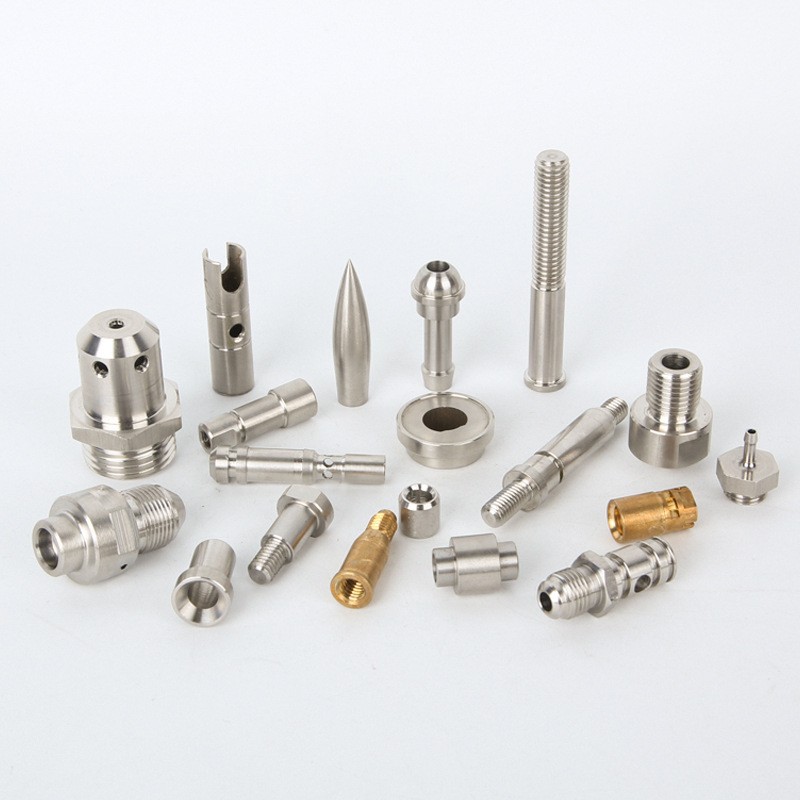
Small precision parts, shafts, connectors, fittings, fasteners under roughly 38mm, are a natural fit because CNC turning and Swiss lathe methods hold dimensional consistency part after part without hard tooling. There’s no mold to cut and no die to amortize, so a design change between batches costs engineering time, not a new tool. That flexibility matters most for electronics, automotive, and medical device programs where specs shift between prototype and production.
Where does sheet metal fabrication fit better, and when does casting make sense?
Sheet metal fabrication fits thin-walled enclosures, brackets, chassis, and large flat or bent parts where tolerances are looser and aesthetics matter more than micron-level fit. Shops working in 304/304L and 316L stainless typically turn these parts in days rather than weeks, covering prototype through moderate production volumes. If your part is mostly flat stock, formed and welded rather than cut from solid, sheet metal is usually the cheaper, faster route.
Casting makes sense once volume climbs high enough to justify tooling investment and the geometry is simple enough to tolerate the dimensional variation casting introduces. Per-unit cost drops as volume rises, but tolerances are looser than machining delivers, and lead time stretches because mold creation happens before the first part ships.
What are the cost and lead-time tradeoffs between CNC machining, casting, and 3D printing?
CNC machining carries no tooling cost and short lead times, casting requires upfront mold investment that only pays off at volume, and 3D printing offers the fastest path to a single prototype but can’t yet match CNC on tolerance or surface finish. Metal additive manufacturing is useful for validating complex geometries before committing to machining or tooling, but it remains a prototyping aid rather than a production substitute for stainless steel parts manufacturing at the tolerances medical and automotive customers require.
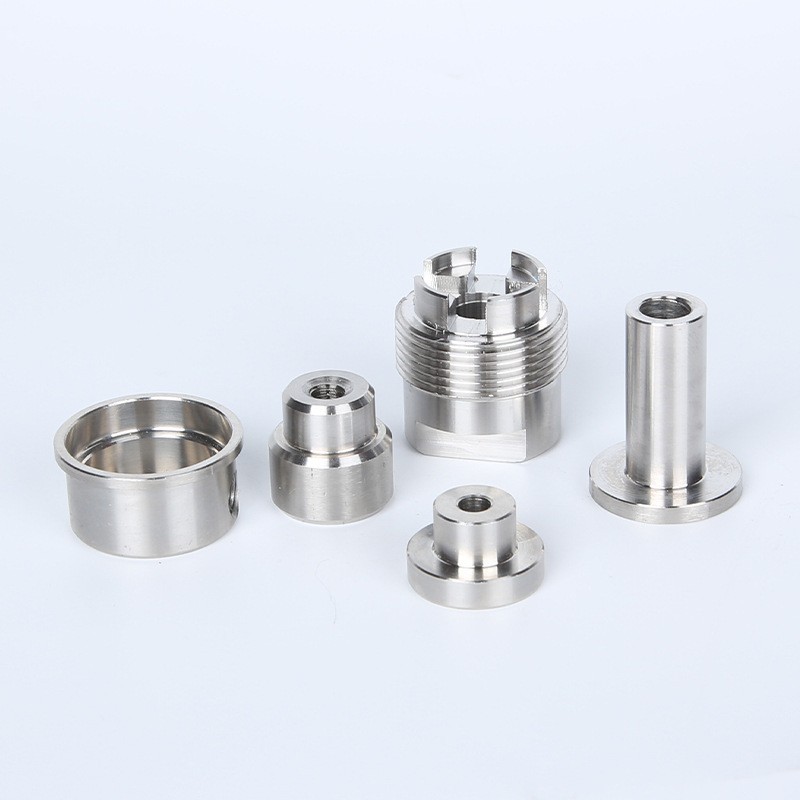
For small, tight-tolerance stainless parts without the volume to justify a mold, CNC machining stays the pragmatic default, which is the segment MFG SOLUTION focuses on, running CNC turning, Swiss lathe, cold forging, automatic lathe, and CNC mill & turn across parts up to 38mm in diameter.
Which Stainless Steel Grades Work Best for Electronics, Automotive, and Medical Applications?
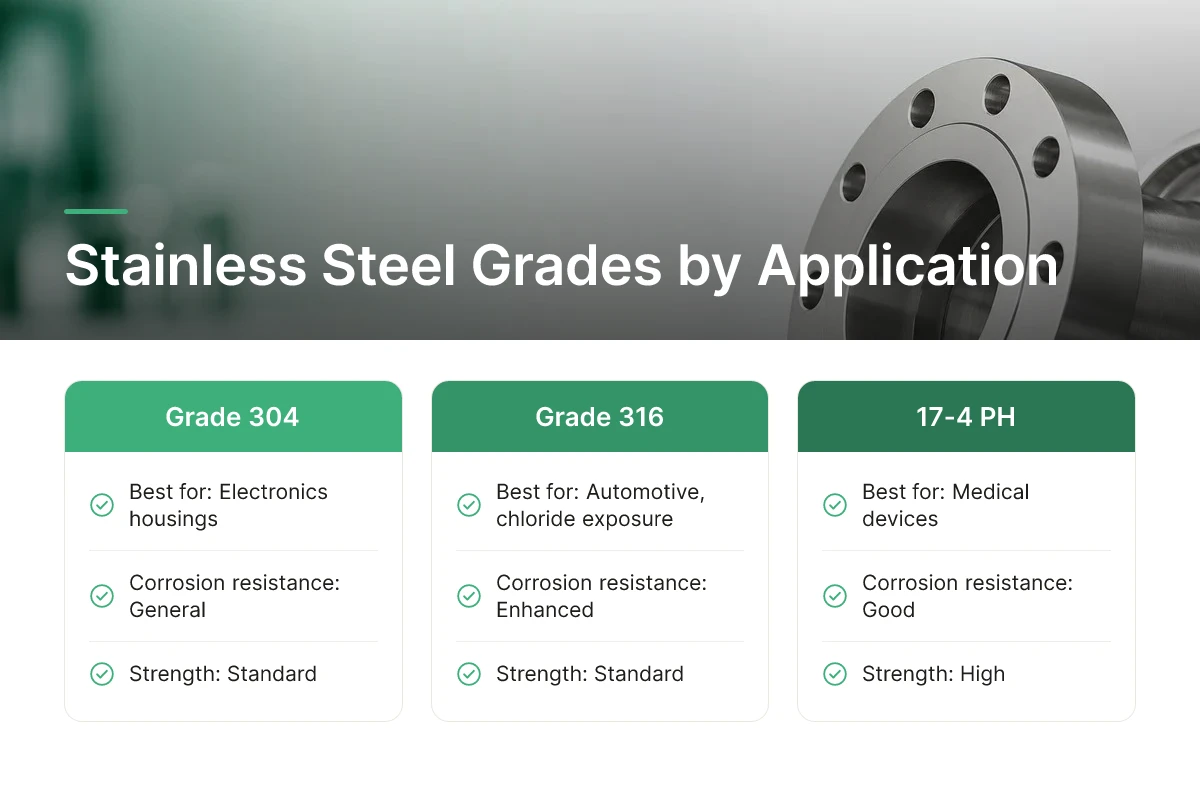
Grade 304 fits general electronics housings, 316 handles automotive and chloride exposure, and 17-4 PH delivers the strength medical devices need, matching grade to application drives most stainless steel parts manufacturing decisions.
Picking the wrong grade doesn’t usually show up on day one. It shows up eighteen months later as pitting corrosion, a failed audit, or a part that deforms under load it was never spec’d to handle. Grade selection has to happen before the first cut, not after a field failure.
What certifications and material testing standards apply to stainless steel parts for medical devices and automotive?
Medical device programs require ISO 13485:2016 manufacturing controls, automotive programs require IATF 16949, and both demand full material traceability back to the mill.
ISO 13485 governs the quality management system for medical device components, covering everything from incoming material inspection to final part release documentation. IATF 16949 applies the same rigor to automotive suppliers, with added emphasis on process control and defect prevention across high-volume production runs. A supplier working under either standard tracks each lot of stainless steel from raw bar stock through finished part, so if an issue surfaces downstream, the root cause can be traced to a specific heat of material.
Material test reports (MTRs) back this up with hard data. An MTR documents the chemical composition and mechanical properties, tensile strength, hardness, elongation, of the specific material lot used to make a part, verified against the mill’s own testing. For a medical device auditor or automotive quality engineer, the MTR is the paper trail that proves a 316 part is actually 316, not a substitute alloy with similar appearance but different corrosion performance.
How do you select between 304, 316, and specialty stainless steel alloys for your industry?
Match the grade to the environment first, then to mechanical demands, 304 for general use, 316 for chloride exposure, 17-4 PH for strength-critical parts.
Grade 304 is the austenitic workhorse: non-magnetic, highly formable, and resistant to everyday corrosion, which makes it a cost-effective default for electronics enclosures, connector housings, and brackets that won’t see harsh chemical exposure. It machines cleanly and holds tight tolerances without the added alloy cost that higher-performance grades carry.
Grade 316 adds molybdenum, which significantly improves resistance to chlorides and salts, the reason it shows up in automotive components near road salt exposure, marine-adjacent hardware, and fluid-handling parts. Grade 17-4 PH is a precipitation-hardening stainless that combines corrosion resistance with mechanical strength well above 304 or 316, making it the choice for medical instruments and surgical components that need both biocompatibility and durability under repeated stress.
MFG SOLUTION machines parts across these grades using CNC turning, Swiss lathe, and CNC mill & turn processes, manufacturing to ISO 9001:2015, ISO 13485:2016, and IATF 16949 standards with documented process control for parts up to 38mm in diameter.
How Do You Balance Cost, Lead Time, and Quality When Manufacturing Stainless Steel Parts?
Balancing cost, lead time, and quality in stainless steel parts manufacturing means trading off three variables at once: how complex the part is, how tight the tolerances are, and how many units you need.
Each factor pulls in its own direction. A simple shaft with loose tolerances runs fast and cheap on a Swiss lathe. Add a tight tolerance band, a multi-axis feature, or a small batch size, and setup time, tool wear, and inspection load all climb, independent of each other. Order volume compounds this further: a 50-unit prototype run and a 50,000-unit production order hit different cost structures even if the part geometry is identical, because fixed costs like programming and first-article inspection get spread across fewer or more parts.
What are typical lead times and minimum order quantities for precision stainless steel parts?
Lead times and minimum order quantities depend heavily on which process makes the part, CNC machining tends to support low-volume runs, while casting needs volume to justify tooling cost.
CNC turning, Swiss lathe machining, and CNC mill-turn operations cut parts directly from barstock, so there’s no tooling investment to amortize. That makes them viable for runs as small as a few dozen pieces, which is why most stainless steel parts manufacturing for electronics, automotive, and medical programs leans on machining rather than casting for parts up to roughly 38mm in diameter. Cold forging and casting, by contrast, require dies or molds; those processes only make financial sense once volume climbs high enough to spread that upfront cost across many units.
Quote speed matters as much as the production method itself. A shop that takes a week to return a quote adds that week to every design iteration, every supplier comparison, and every budget approval cycle, costs that rarely show up on an invoice but show up in missed launch dates. MFG SOLUTION returns quotes within 8 hours and ships approved orders within 3 days, which compresses a sourcing cycle that typically runs four to six weeks at slower vendors down to days, without changing the underlying part cost.
How do quality certifications like ISO 9001 and IATF 16949 impact your manufacturing choice?
Certifications like ISO 9001, IATF 16949, and ISO 13485 add paperwork and inspection steps up front, but they cut the rework and recall risk that costs far more later.
ISO 9001:2015 establishes a documented quality management system, every step tracked, measured, and traceable. IATF 16949 layers on automotive-specific process controls, while ISO 13485:2016 governs medical device manufacturing requirements where a dimensional miss can mean a failed implant or recalled instrument. Working with a certified partner means paying for that documentation overhead on every order, but it also means tighter control over variation before parts ship, not after a customer complaint.
Pricing for stainless steel parts settles into rough tiers rather than a single number: budget-friendly work covers looser tolerances and mill-finish surfaces with no certification requirement; mid-range covers standard tolerances with ISO 9001 documentation; premium covers tight tolerances, passivation or electropolishing, and sector certifications like IATF 16949 or ISO 13485. Matching the tier to the actual application, not over-specifying, is where most procurement teams find real savings.
Frequently Asked Questions
Can stainless steel rust after CNC machining?
Yes, machined stainless steel can rust if the passive chromium oxide layer gets disrupted or contaminated during processing. Tool contact, embedded carbon steel particles from shared equipment, and heat buildup during cutting can all compromise corrosion resistance. Passivation after machining restores the protective layer and is standard practice for parts going into medical or marine environments.
Is 316 stainless steel always better than 304 for corrosion resistance?
No, 316 isn’t automatically better—it adds molybdenum for resistance to chlorides and saltwater, but 304 performs well in most general applications. Choosing 316 for a part that never contacts chlorides adds cost without benefit. Match the grade to the actual chemical exposure the part will face.
What surface finishes improve corrosion resistance on machined stainless steel parts?
Passivation and electropolishing are the two most common treatments for boosting corrosion resistance beyond stainless steel’s natural properties. Passivation removes free iron from the surface using an acid bath, while electropolishing smooths the surface at a microscopic level and removes a thin layer of material. Both reduce sites where corrosion can start, and electropolishing also improves cleanability for medical parts.
Do small precision parts need different machining approaches than large stainless steel components?
Yes, parts under 38mm typically call for Swiss lathe or automatic lathe production rather than the sheet fabrication or large-format machining used for bigger components. Small parts demand tighter tolerance control relative to size, and high-volume batches benefit from processes built for continuous, repeatable small-part output rather than one-off large fabrication.
What documentation should you request to verify stainless steel part quality?
Ask for material certifications, dimensional inspection reports, and proof of quality system certification like ISO 9001:2015 or ISO 13485:2016 for medical parts. First-article inspection reports and process traceability records matter too—they confirm every production step was tracked and auditable, not just the final part measured at shipment.
Conclusion
Corrosion resistance in stainless steel parts comes down to three decisions: picking the right grade for the actual chemical exposure, protecting the passive layer during machining, and verifying the result with real documentation rather than assumptions. Skipping any one of these creates risk that shows up months later as field failures, not line-stoppage defects you catch at receiving.
If you’re sourcing small stainless steel parts under 38mm, start by sending your print and material spec to MFG SOLUTION for an 8-hour quote—you’ll see which of the five machining methods fits your tolerance and volume before committing to a production run.
Recommended Articles
Explore more from our content library: