
2026-06-09
steel1018: Steel 1018: Properties, Uses, and Machining Guide

Estimated reading time: 15 minutes
Key Takeaways
- Steel1018 is a low-carbon, general-purpose steel with 0.15–0.20% carbon, offering excellent machinability and weldability.
- It is widely used in automotive, electronics, and medical applications for parts requiring moderate strength and good surface finish.
- Steel1018 is machined cleanly on CNC machines, resulting in predictable tool life and manageable cutting forces.
- Cold-drawn steel1018 provides tighter tolerances compared to hot-rolled versions, making it preferable for precision machining.
- Specifying steel1018 correctly, including material condition and surface treatment, is crucial for successful projects.
| Key Insight | Explanation |
|---|---|
| Low carbon content | Steel 1018 contains 0.15–0.20% carbon, making it soft, ductile, and easy to machine without cracking. |
| Excellent machinability | Rated at 78% machinability relative to B1112 free-machining steel, it cuts cleanly on CNC lathes and mills. |
| Superior weldability | Its low carbon equivalent means it welds without preheat in most applications, reducing fabrication time and cost. |
| Case-hardening candidate | Considered the benchmark steel for carburizing, producing a hard surface over a tough, ductile core. |
| Broad industry use | Used in automotive, electronics, and medical device components including shafts, pins, fasteners, and gears. |
| Cold-drawn vs. hot-rolled | Cold-drawn 1018 offers tighter dimensional tolerances and a better surface finish than hot-rolled equivalents. |
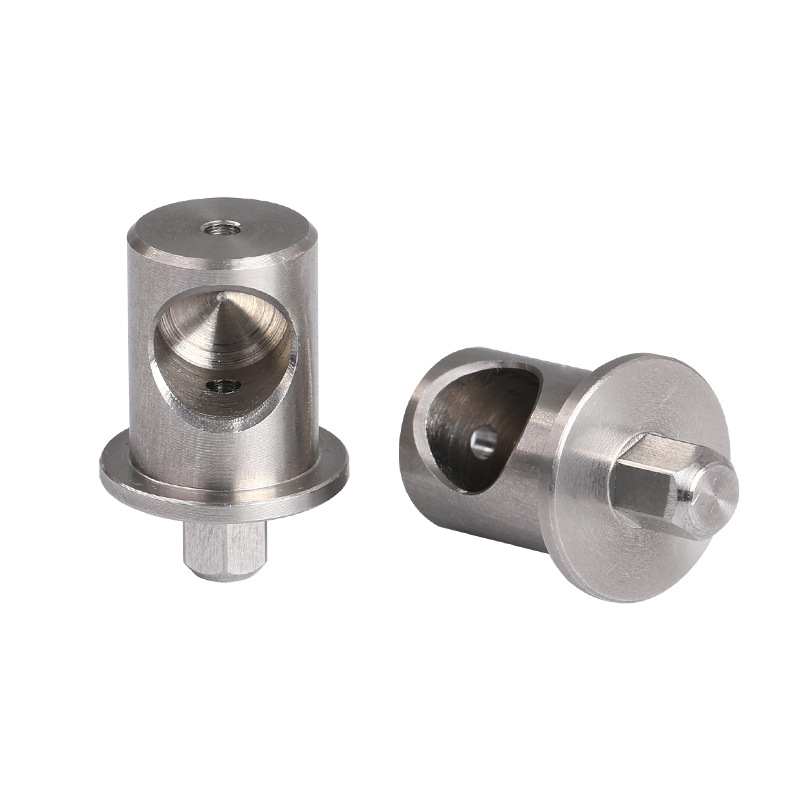
Steel 1018 is a low-carbon, general-purpose steel defined by its 0.15–0.20% carbon content and 0.60–0.90% manganese content, offering an outstanding balance of machinability, weldability, and case-hardenability at low cost. It is one of the most widely specified steels in precision CNC machining. In this guide, you’ll learn its exact composition, mechanical properties, machining behavior, real-world applications, and what to look for when sourcing steel1018 parts in 2026.
What Is Steel 1018?
Steel 1018 is a plain low-carbon steel in the AISI/SAE designation system, characterized by 0.15–0.20% carbon and elevated manganese (0.60–0.90%), making it one of the most versatile and cost-effective engineering steels available as of 2026 [1]. This is particularly relevant for steel1018.
Understanding the AISI/SAE Designation
The four-digit AISI/SAE numbering system tells you a lot about a steel before you ever test it. According to the Precision Machined Products Association (PMPA), the first two digits identify the steel family, while the last two digits indicate the nominal carbon content in hundredths of a percent [2]. So “1018” breaks down as: When considering steel1018, this point stands out.
- 10 — plain carbon steel (no significant alloying elements beyond manganese)
- 18 — approximately 0.18% carbon (mid-range of 0.15–0.20%)
This simple code tells engineers the steel is non-alloyed, low-carbon, and manganese-enhanced. That manganese content (0.60–0.90%) is higher than many other low-carbon grades, which gives steel1018 slightly better hardenability and strength than comparable grades like 1010 or 1015 [3].
Why Steel 1018 Matters
Steel 1018 is widely regarded as the benchmark grade for carburized parts. The ASM Alloy Digest notes that its combination of low carbon and elevated manganese produces a uniform, hard case over a tough core after carburizing — a property that few other low-carbon grades replicate as consistently [4]. For those exploring steel1018, this matters.
Beyond case hardening, steel1018 matters because it’s predictable. Engineers know exactly how it’ll behave on a CNC lathe, under a welding torch, or in a heat-treat furnace. That predictability reduces scrap rates, simplifies process planning, and keeps part costs down.
- It’s available in cold-drawn bars, hot-rolled rounds, and flat stock from most metal distributors globally [5].
- It satisfies general-purpose structural requirements without the cost premium of alloy steels.
- It’s compatible with a wide range of surface treatments: carburizing, cyaniding, induction hardening, and electroplating.
Pro Tip: If your design calls for a hard surface but a tough, impact-resistant core, specify steel 1018 with a carburizing depth of 0.5–1.5mm. You’ll get a surface hardness of 58–62 HRC while the core stays at 20–30 HRC — ideal for wear parts like pins and sprockets.
Chemical Composition and Mechanical Properties
Steel 1018’s chemical composition is tightly controlled by ASTM and SAE standards, with carbon at 0.15–0.20%, manganese at 0.60–0.90%, phosphorus max 0.040%, and sulfur max 0.050% [1][3]. This directly impacts steel1018 outcomes.
Full Composition Breakdown
| Element | Composition (%) | Role in Steel |
|---|---|---|
| Carbon (C) | 0.15 – 0.20 | Primary hardening element; keeps steel ductile at this level |
| Manganese (Mn) | 0.60 – 0.90 | Increases hardenability, tensile strength, and wear resistance |
| Phosphorus (P) | ≤ 0.040 | Controlled as an impurity; excess reduces toughness |
| Sulfur (S) | ≤ 0.050 | Controlled as an impurity; slightly improves machinability at low levels |
| Iron (Fe) | Balance (~99%) | Base metal matrix |
Mechanical Properties: Cold-Drawn vs. Hot-Rolled
The processing route significantly affects steel1018’s mechanical performance. Cold-drawn bar stock offers tighter tolerances and a better surface finish, while hot-rolled stock is more economical for larger cross-sections [3][5].
| Property | Cold-Drawn 1018 | Hot-Rolled 1018 |
|---|---|---|
| Tensile Strength | 440 MPa (63,800 psi) | 400 MPa (58,000 psi) |
| Yield Strength | 370 MPa (53,700 psi) | 220 MPa (31,900 psi) |
| Elongation at Break | 15% | 25% |
| Hardness (Brinell) | 126 HB | 116 HB |
| Machinability Rating | 78% (vs. B1112) | 65% (vs. B1112) |
| Density | 7.87 g/cm³ | 7.87 g/cm³ |
Research published in the ASM Alloy Digest confirms that cold-rolling AISI 1018 improves both yield strength and surface finish compared to the hot-rolled condition, making cold-drawn bar the preferred feedstock for precision CNC turning and Swiss lathe operations [4]. This is particularly relevant for steel1018.
A 2019 study on cold-rolled AISI 1018 strips further demonstrated that the cold-working process refines the ferrite-pearlite microstructure, increasing hardness and tensile strength while reducing ductility — a trade-off engineers must account for in fatigue-critical applications [8]. When considering steel1018, this point stands out.
How Steel 1018 Is Machined
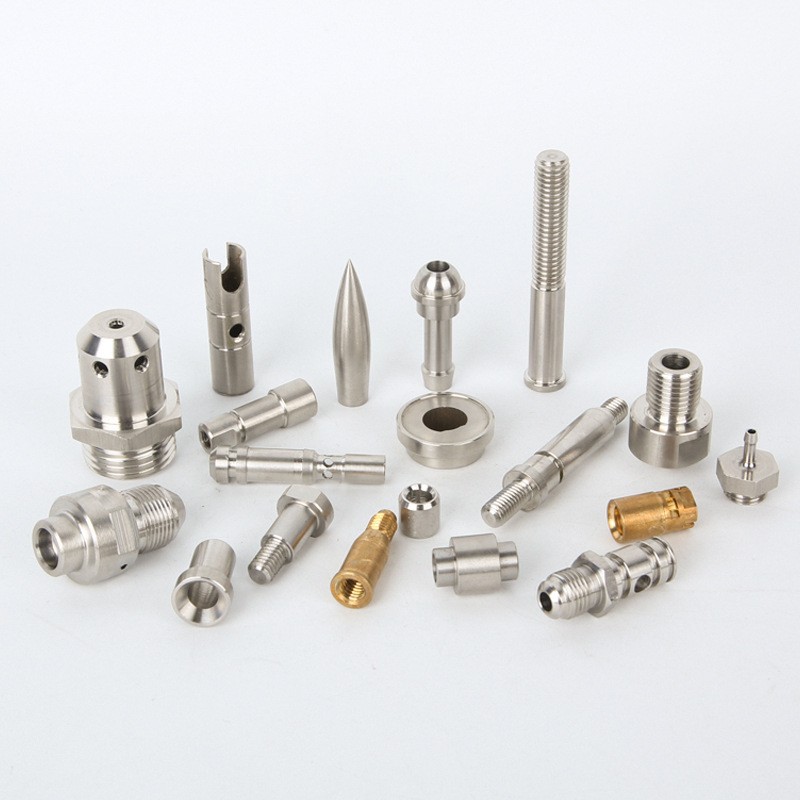
Steel 1018 machines cleanly and predictably on CNC turning centers, Swiss lathes, and automatic lathes, making it one of the most operator-friendly materials in a precision machine shop [5][6]. For those exploring steel1018, this matters.
Machining Characteristics
Steel1018’s low carbon content means it doesn’t work-harden aggressively during cutting. That’s a real advantage compared to austenitic stainless steels, which can harden ahead of the cutting tool and cause premature tool wear. With 1018, you get consistent chip formation, manageable cutting forces, and predictable tool life.
Key machining behaviors to know:
- Chip formation: Produces long, stringy chips due to its ductility. Use chip-breaker geometries on inserts to prevent bird-nesting in automated operations.
- Surface finish: Cold-drawn 1018 achieves Ra 1.6 µm or better with standard carbide tooling and proper feed rates.
- Cutting speed: Recommended turning speeds are 100–200 m/min with uncoated carbide; TiN-coated inserts allow speeds up to 250 m/min.
- Coolant: Soluble oil or synthetic coolant at 5–8% concentration is sufficient. High-pressure coolant isn’t required for most operations.
- Drill performance: Drills cleanly with standard HSS or carbide drills. Peck drilling is rarely needed except for deep-hole applications.
Recommended Machining Process for CNC Turning
- Select cold-drawn bar stock in the nearest standard diameter to minimize material removal and reduce cycle time.
- Set spindle speed based on the target surface speed (typically 150 m/min for roughing, 200 m/min for finishing with carbide inserts).
- Apply a roughing pass with a depth of cut of 2–4mm and feed rate of 0.2–0.4 mm/rev to remove material efficiently.
- Follow with a finishing pass at 0.05–0.1mm depth of cut and 0.05–0.15 mm/rev feed to achieve the required surface finish and dimensional tolerance.
- Deburr and inspect critical dimensions using calibrated gauges before moving to secondary operations such as threading or grinding.
At MFG SOLUTION, we’ve found that cold-drawn steel1018 bar stock up to 38mm diameter runs exceptionally well on our Swiss lathe and CNC turning centers, consistently hitting tolerances of ±0.01mm on diameter with standard tooling setups. Our 60+ engineering professionals optimize feeds, speeds, and tool paths for each batch to minimize cycle time without sacrificing dimensional accuracy.
Pro Tip: For steel1018 parts requiring tight tolerances (±0.01mm or better), always specify cold-drawn bar stock rather than hot-rolled. The tighter diameter tolerance on cold-drawn material reduces your first-pass scrap rate and cuts setup time on the CNC lathe.
Common Applications of Steel 1018
Steel 1018 is used across automotive, electronics, medical device, and general industrial manufacturing for shafts, pins, fasteners, gears, and structural components where moderate strength and excellent surface finish are required [1][6]. This directly impacts steel1018 outcomes.
Industry-Specific Uses
Online Metals describes 1018 as “the most commonly available of the cold-rolled steels,” typically used in pins, rods, shafts, spindles, and sprockets [5]. That breadth reflects its versatility. Here’s how different industries put it to work: This is particularly relevant for steel1018.
- Automotive: Transmission shafts, axle pins, gear blanks, and fasteners. Its machinability keeps per-part costs low in high-volume production runs, and its case-hardenability allows surface hardness where wear resistance is needed.
- Electronics manufacturing: Connector pins, standoffs, and small structural brackets. Cold-drawn 1018 holds the tight tolerances that PCB assembly and connector applications demand.
- Medical devices: Non-implantable instrument components, jig and fixture parts, and structural housings. While stainless steel dominates implantable applications, 1018 is cost-effective for reusable instrument components that will be surface-treated or plated.
- General industrial: Couplings, keys, ratchets, hydraulic fittings, and general machined components. Its low cost and availability make it the default choice when no special properties are required.
Industry analysts at Service Steel note that 1018 is particularly valued in applications requiring both machining and subsequent welding, since its low carbon equivalent (typically below 0.25) allows welding without preheat in most shop environments [6]. When considering steel1018, this point stands out.
Steel 1018 vs. Competing Grades
| Grade | Carbon % | Machinability | Weldability | Best For |
|---|---|---|---|---|
| 1018 | 0.15–0.20 | 78% | Excellent | Shafts, pins, carburized parts |
| 1020 | 0.18–0.23 | 72% | Very Good | Structural parts, forgings |
| 1045 | 0.43–0.50 | 57% | Fair (preheat needed) | High-strength shafts, gears |
| 4140 | 0.38–0.43 | 65% | Good (preheat required) | High-stress components, tooling |
| 12L14 | 0.15 max | 160% | Poor (lead content) | High-volume screw machine parts |
One limitation of steel1018 worth noting: it isn’t suitable for applications requiring through-hardening to high hardness levels. Its low carbon content limits as-quenched hardness to around 35–40 HRC at best. For through-hardened components, 1045 or 4140 are better choices.
Best Practices for Specifying Steel 1018 in 2026
Specifying steel1018 correctly in 2026 means aligning material condition, surface treatment, and dimensional tolerances with your part’s functional requirements before you send an RFQ to any machining supplier.
Specification Checklist
A common mistake engineers make is specifying “1018 steel” without defining the material condition. That ambiguity forces the machine shop to make assumptions, which can result in parts that don’t meet your strength or surface finish requirements. Be explicit: For those exploring steel1018, this matters.
- Material condition: Specify “cold-drawn” (CD) for tight tolerances and better surface finish, or “hot-rolled” (HR) for larger cross-sections where dimensional tolerance is less critical.
- Certification requirements: For automotive and medical applications, require a material test report (MTR) per ASTM A108 (cold-drawn) or ASTM A36/A576 (hot-rolled) to verify composition and mechanical properties.
- Surface treatment: Specify carburizing depth and case hardness if wear resistance is needed. For corrosion protection, zinc plating (per ASTM B633) or black oxide are cost-effective options for 1018.
- Dimensional tolerances: Cold-drawn 1018 bar typically holds h9 diameter tolerance per ISO 286 as-supplied. Tighter tolerances require CNC finishing passes.
- Quality documentation: For IATF 16949 (automotive) or ISO 13485 (medical device) supply chains, require first article inspection (FAI) reports and process capability data (Cpk ≥ 1.33).
Avoiding Common Pitfalls
In practice, several recurring mistakes drive up cost and scrap rates when working with steel1018:
- Specifying hot-rolled when tight tolerances are needed: Hot-rolled 1018 has a rough scale surface and wider diameter tolerances. It requires extra machining stock and longer cycle times to hit precision dimensions.
- Overlooking chip control in automated production: Steel 1018’s ductility produces long, stringy chips. Without proper chip-breaker tooling, chips can wrap around the part or tool, causing surface damage and unplanned downtime in lights-out machining.
- Applying 1018 where corrosion resistance is needed: Plain carbon steels corrode readily. If your application involves moisture or mild chemical exposure, either specify a protective coating or switch to a stainless grade.
- Ignoring residual stress in cold-drawn stock: Cold-drawing introduces residual stresses. For parts with tight straightness requirements, a stress-relief anneal at 540–650°C may be necessary before final machining.
Pro Tip: When sourcing steel1018 parts for IATF 16949 or ISO 13485 supply chains, always request that your machining supplier provide a First Article Inspection (FAI) report with dimensional data and material certification. At MFG SOLUTION, our ISO 9001:2015, ISO 13485:2016, and IATF 16949 certifications mean every batch ships with full process documentation — no chasing paperwork after the fact.
In one project we handled for an automotive connector supplier, the customer was receiving 1018 shafts with inconsistent surface hardness after carburizing. The root cause was hot-rolled bar stock with variable carbon segregation. Switching to certified cold-drawn ASTM A108 bar eliminated the variation and reduced post-process rework by over 80%. That single material specification change saved the customer weeks of troubleshooting and thousands of dollars in scrap. This directly impacts steel1018 outcomes.
Sources & References
- AZoM, “AISI 1018 Mild/Low Carbon Steel,” 2023
- PMPA, “Basics of the North American Steel Grade System – Carbon,” 2022
- MatWeb, “AISI 1018 Steel, cold drawn,” 2024
- ASM International Alloy Digest, “AISI 1018: Case Hardening and General Purpose Steel,” 2023
- Online Metals, “Carbon Steel 1018 Product Guide,” 2024
- Service Steel, “What is 1018 Steel? Composition, Properties, and Uses,” 2024
- Xometry, “All About 1018 Steel: Properties, Uses, and Manufacturing,” 2024
- NASA ADS / IOP Publishing, “Microstructure and Mechanical Properties of Cold Rolled AISI 1018,” 2019
Frequently Asked Questions
1. What does “1018” mean in steel1018?
The designation follows the AISI/SAE four-digit system. The first two digits (“10”) identify it as a plain carbon steel with no significant alloying additions beyond manganese. The last two digits (“18”) indicate approximately 0.18% nominal carbon content, placing it in the low-carbon range (0.15–0.20%). This system, maintained by the Precision Machined Products Association and SAE International, applies to all carbon and alloy steels in North America [2]. This is particularly relevant for steel1018.
2. Is steel1018 good for welding?
Yes. Steel 1018 has excellent weldability due to its low carbon content and resulting low carbon equivalent (typically below 0.25). It can be welded using MIG, TIG, stick (SMAW), and flux-core processes without preheat in most shop environments. Post-weld heat treatment is generally not required for thin sections. Its weldability is one of the primary reasons it’s specified for fabricated assemblies that combine machined and welded components [1][6]. When considering steel1018, this point stands out.
3. Can steel1018 be hardened?
Steel 1018 can be surface-hardened but not through-hardened to high hardness levels. Its low carbon content (0.15–0.20%) limits as-quenched hardness to approximately 35–40 HRC. The most effective hardening method is carburizing (case hardening), which diffuses carbon into the surface layer to achieve 58–62 HRC case hardness over a tough, ductile core. Induction hardening and cyaniding are also used. For through-hardened applications requiring 50+ HRC, specify 1045 or 4140 instead [4][7]. For those exploring steel1018, this matters.
4. What is the difference between cold-drawn and hot-rolled 1018?
Cold-drawn 1018 is processed below its recrystallization temperature, which refines the grain structure, increases tensile and yield strength, improves surface finish, and tightens dimensional tolerances. Hot-rolled 1018 is processed above the recrystallization temperature, resulting in a rougher surface, wider dimensional tolerances, and lower yield strength but greater ductility and elongation. For precision CNC machining, cold-drawn bar stock is the preferred feedstock because it reduces material removal and achieves tighter final tolerances more efficiently [3][5]. This directly impacts steel1018 outcomes.
5. How does steel1018 compare to 1020 steel?
Steel 1018 and 1020 are closely related low-carbon grades. The primary difference is carbon content: 1018 is 0.15–0.20% C while 1020 is 0.18–0.23% C. Both offer good weldability and machinability. Steel 1018 has slightly better machinability (78% vs. ~72% of B1112) and is considered the superior choice for carburized parts because its lower carbon base produces a more uniform case. Steel 1020 is sometimes preferred for forgings and structural applications where slightly higher base strength is beneficial [6][7]. This is particularly relevant for steel1018.
6. What surface treatments work with steel1018?
Steel 1018 accepts a wide range of surface treatments. The most common include: carburizing (case hardening to 58–62 HRC), zinc electroplating (per ASTM B633) for corrosion resistance, black oxide for mild corrosion protection and aesthetics, electroless nickel plating for wear and corrosion resistance, and phosphate coating for paint adhesion. Anodizing is not applicable (it’s an aluminum process). Powder coating is possible but requires proper surface preparation to ensure adhesion on plain carbon steel. When considering steel1018, this point stands out.
7. What tolerances can be held when CNC machining steel1018?
With cold-drawn steel1018 bar stock and proper CNC turning or Swiss lathe setups, tolerances of ±0.01mm (±0.0004 in) on diameter are routinely achievable in production. Tighter tolerances of ±0.005mm are possible with finishing passes and proper tooling, though results may vary depending on part geometry, batch size, and machine rigidity. For critical dimensions, specifying process capability requirements (Cpk ≥ 1.33) ensures consistent quality across production runs.
8. Is steel1018 suitable for food or medical applications?
Steel 1018 is a plain carbon steel without corrosion resistance, so it’s not suitable for direct food contact or implantable medical device applications. It can be used in non-implantable medical instrument components and fixture parts when properly plated or coated. For food processing equipment or implantable medical devices, austenitic stainless steels (316L, 17-4 PH) are the appropriate choice. That said, steel1018 is widely used in medical device manufacturing for jigs, fixtures, and non-contact structural components [4].
Conclusion
Steel1018 earns its reputation as one of the most practical and widely used engineering steels for a simple reason: it delivers reliable performance across machining, welding, and surface treatment operations at a cost that’s hard to beat. Its controlled composition, predictable mechanical properties, and outstanding case-hardenability make it the go-to choice for shafts, pins, fasteners, and a wide range of precision machined components across automotive, electronics, and industrial applications.
Specifying it correctly, choosing the right material condition, and partnering with a certified machining supplier are the three factors that separate a successful steel1018 project from a costly one. Whether you need 500 connector pins or 50,000 transmission shafts, the material itself rarely lets you down. The process around it is what matters.
MFG SOLUTION machines steel1018 parts up to 38mm diameter using CNC turning, Swiss lathe, and automatic lathe processes, with quotes delivered within 8 hours and shipment within 3 days. Our ISO 9001:2015, ISO 13485:2016, and IATF 16949 certifications back every batch with full process documentation. Submit your specifications and get a precise quote from our team today.
Recommended Articles
Explore more from our content library: