
2026-05-11
Custom Forged Parts: How to Choose a Manufacturer

| Key Insight | Explanation |
|---|---|
| Forging improves grain structure | The forging process aligns the metal’s grain flow to the part’s shape, producing stronger, more fatigue-resistant components than casting or machining from bar stock. |
| Four primary forging types | Impression die (closed die), open die, cold forging, and seamless rolled ring forging each suit different part sizes, volumes, and tolerance requirements. |
| Cold forging excels for small, high-volume parts | Cold forging (cold heading) produces tight-tolerance small parts at high speed with minimal material waste, making it cost-effective for batch production runs. |
| Certifications signal compliance readiness | ISO 9001:2015, ISO 13485:2016, and IATF 16949 certifications confirm that a manufacturer’s processes are auditable and meet medical, automotive, and general quality standards. |
| Forging + CNC machining is the winning combination | Most precision applications combine forging for structural strength with CNC finishing for tight dimensional tolerances, achieving both performance and cost efficiency. |
| Lead time is a real differentiator | Top-tier manufacturers quote within 8 hours and ship within 3 days, compared to industry averages of 4-6 weeks, dramatically compressing sourcing cycles. |
You need 50,000 small steel connectors, each with consistent grain structure, tight tolerances, and zero surface defects. Your current supplier quotes six weeks. That gap between what you need and what most vendors deliver is exactly why choosing the right custom forged parts manufacturer matters more than ever. A custom forged parts manufacturer is a company that shapes metal into specific geometries using controlled compressive force, producing parts engineered to a buyer’s exact specifications. The process refines grain structure, boosts fatigue strength, and reduces material waste. This article covers every stage of the decision: forging types, process mechanics, cost factors, quality benchmarks, and the practical criteria that separate reliable suppliers from risky ones.
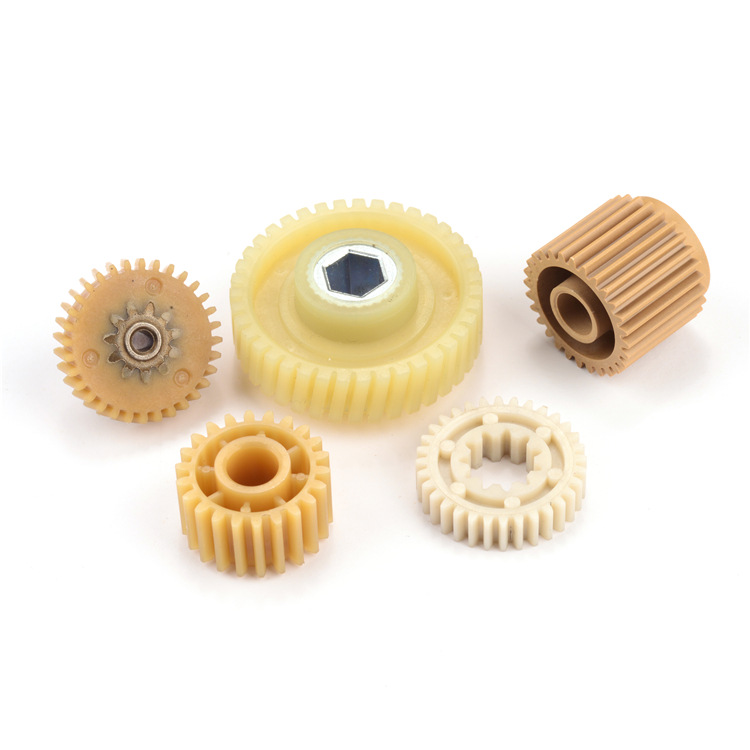
What Is a Custom Forged Parts Manufacturer?
A custom forged parts manufacturer is a supplier that uses compressive force, either through hammers, presses, or dies, to shape metal billets into buyer-specified components. Unlike casting or machining from raw bar stock, forging works the metal’s internal grain structure into alignment with the finished part’s geometry, producing superior mechanical properties. This matters most in high-stress applications: automotive drivetrain components, aerospace fasteners, medical implants, and industrial valves all rely on forged parts because failure isn’t an option.
Why Forging Differs from Other Metal Forming Methods
The distinction is structural, not just procedural. When metal is cast, the grain structure is random. When it’s machined from bar stock, the grain may run perpendicular to critical stress points. Forging forces grain flow to follow the contour of the finished part, which is why forged components typically outperform cast or machined equivalents on fatigue life and impact resistance. According to the Scot Forge technical resource library, forged parts can exhibit up to 37% greater fatigue strength compared to cast equivalents in equivalent alloys [1].
Custom forging goes a step further. Standard forgings are catalog items. Custom forgings are engineered to your drawing, your alloy specification, and your tolerance stack. That customization adds upfront tooling cost but pays off in parts that fit perfectly, perform reliably, and reduce downstream assembly rework.
Industries That Rely on Custom Forged Parts
- Automotive: crankshafts, connecting rods, wheel hubs, steering knuckles, and transmission gears
- Aerospace: turbine discs, landing gear components, structural brackets, and fasteners
- Oil and gas: valve bodies, flanges, pipe fittings, and drill collars [2]
- Medical devices: orthopedic implants, surgical instrument handles, and bone screws
- Electronics and industrial: small precision connectors, shaft components, and housing parts
- Power generation: turbine shafts, rings, and heat-resistant structural components [3]
The range is broad. But the common thread is that every one of these applications demands consistent mechanical properties that forging reliably delivers, and that casting or pure machining often can’t match at equivalent cost.
How Custom Forging Works: Processes and Methods
Custom forging uses controlled compressive force to shape heated or room-temperature metal into a specified geometry, with the method chosen based on part size, material, tolerance requirements, and production volume.
The Four Primary Forging Processes
Understanding these four methods helps you match the process to your part’s requirements before you ever contact a manufacturer.
- Impression die forging (closed die): Metal is compressed between two dies that contain a mirror image of the desired part. Flash, the excess metal that squeezes out at the die parting line, is trimmed after forging. This method suits medium-to-high production volumes and produces consistent, near-net-shape parts with tight tolerances. Die costs typically range from $5,000 to $50,000 or more depending on part complexity [4].
- Open die forging: Metal is shaped between flat or simple contoured dies without a fully enclosing cavity. The operator manipulates the workpiece between strikes to achieve the desired shape. Open die forging suits large, heavy components and low production volumes. Scot Forge notes that open die forgings can range from a few pounds to 440,000 lbs [1].
- Cold forging (cold heading): Metal is formed at or near room temperature, typically using a series of progressive dies. No heating is required. Cold forging produces excellent surface finish, tight dimensional tolerances, and high material utilization, making it the preferred method for small, high-volume precision parts such as fasteners, connectors, and shaft components up to roughly 38mm in diameter.
- Seamless rolled ring forging: A pierced metal disc is rolled between a driven roll and an idler roll to produce a ring of increasing diameter and decreasing wall thickness. This process produces rings with superior grain structure for flanges, bearings, and gear blanks [3].
Pro Tip: For small parts under 38mm diameter in production volumes of 10,000 units or more, cold forging almost always delivers the best combination of dimensional consistency, surface quality, and unit cost. Ask your manufacturer to compare cold forging against CNC turning for your specific geometry before committing to a process.
The Cold Forging Process: Step by Step
Cold forging is the process most relevant to precision small-parts manufacturing. Here’s how it works in practice:
- Wire or bar stock selection: The correct alloy and diameter of wire or bar stock is selected based on the finished part’s volume and material specification.
- Blanking or shearing: The wire is cut to precise billet lengths that match the finished part’s volume with minimal waste.
- Progressive die forming: The billet passes through a series of dies, each imparting a portion of the final shape. Multiple stations allow complex geometries to be achieved without cracking the metal.
- Trimming and piercing: Flash is trimmed and any through-holes are punched in secondary operations.
- CNC finish machining: Many cold-forged parts require CNC turning, Swiss lathe, or mill-and-turn operations to achieve final dimensional tolerances and surface finish specifications.
- Inspection and quality assurance: Dimensional checks, hardness testing, and surface inspection confirm conformance to drawing before shipment.
According to Deeco Metals, cold forging can achieve material utilization rates above 90%, compared to 60-70% for machining from bar stock, a significant cost advantage at volume [5].
| Forging Method | Best For | Typical Tolerance | Tooling Cost | Volume Sweet Spot |
|---|---|---|---|---|
| Cold Forging | Small parts, fasteners, connectors | ±0.05 – ±0.10 mm | Low–Medium | 10,000–1,000,000+ |
| Impression Die (Closed Die) | Medium parts, complex geometry | ±0.5 – ±1.5 mm (pre-machining) | Medium–High | 1,000–500,000 |
| Open Die | Large, heavy parts, custom shafts | ±2 – ±6 mm (pre-machining) | Low | 1–5,000 |
| Rolled Ring | Rings, flanges, gear blanks | ±1 – ±3 mm (pre-machining) | Low–Medium | 100–50,000 |
Key Benefits of Working with a Custom Forged Parts Manufacturer
Partnering with a qualified custom forged parts manufacturer delivers measurable advantages in part performance, production cost, and supply chain reliability that generic suppliers simply can’t match.
Structural and Mechanical Advantages
The core case for custom forging is mechanical. Forged parts are stronger. The grain refinement that occurs during forging produces components with higher tensile strength, better impact resistance, and longer fatigue life than equivalent cast or machined parts. This isn’t a marginal gain. For automotive crankshafts, aerospace brackets, or medical implants, forged construction can be the difference between a part that lasts the product’s design life and one that fails prematurely.
- Improved grain flow aligned to part geometry reduces stress concentration points
- Higher yield strength and tensile strength compared to casting in equivalent alloys
- Better fatigue resistance for cyclically loaded components
- Reduced porosity compared to casting, improving pressure-tight performance
- Consistent mechanical properties across a production batch, critical for quality audits
Industry analysts at Canton Drop Forge note that forged parts regularly outperform cast equivalents in impact testing, particularly in aerospace and defense applications where material certification is mandatory [6].
Cost and Supply Chain Benefits
Custom forging isn’t always the cheapest per-unit process at low volumes. But at medium-to-high volumes, the economics shift decisively in forging’s favor.
- Material efficiency: Cold forging wastes less than 10% of input material, versus 30-40% for machining from bar stock
- Reduced secondary operations: Near-net-shape forging minimizes the machining stock required, cutting cycle times
- Longer tool life: Forging dies last for hundreds of thousands of cycles, spreading tooling amortization across large volumes
- Fewer inspections per unit: Consistent process control reduces inspection burden compared to machining variable-quality castings
- Single-source consolidation: A manufacturer offering both forging and CNC finishing eliminates inter-supplier handoffs and reduces logistics complexity
Pro Tip: When evaluating total cost, don’t compare forging quotes to machining quotes in isolation. Calculate total landed cost per part including material waste, secondary operations, inspection time, and scrap rate. In most high-volume scenarios, cold forging plus CNC finishing costs 20-35% less than machining from bar stock.
A procurement manager at a mid-market electronics manufacturer recently faced exactly this trade-off. Their existing supplier machined small brass connector housings from bar stock at a scrap rate of 28%. After switching to a cold forging plus CNC turning process, material waste dropped below 8% and unit cost fell by roughly 25% at a volume of 100,000 pieces per month. The forging tooling paid back in under 90 days.
For construction and custom fabrication projects that require similarly precise component specifications, the same principle of selecting the right manufacturing method applies. Just as Custom Homes builders rely on precision-engineered components to meet structural specifications, manufacturers sourcing forged parts benefit from suppliers who combine process expertise with quality documentation.
Common Challenges and Mistakes to Avoid in 2026
Selecting a custom forged parts manufacturer involves real risks, and the most costly mistakes are usually made before the first purchase order is placed.
Specification and Design Errors
The most common mistake is submitting incomplete or ambiguous drawings. A forging manufacturer needs more than a finished-part drawing. They need:
- Material specification including alloy, temper, and any required certifications (e.g., ASTM, AMS)
- Mechanical property requirements (minimum tensile strength, hardness, impact values)
- Dimensional tolerances for all critical features, not just nominal dimensions
- Surface finish requirements (Ra value, any special coatings or treatments)
- Inspection and testing requirements (first article inspection, statistical sampling plan, destructive testing frequency)
Submitting a drawing without these details leads to quotes that aren’t comparable across suppliers and parts that technically meet the drawing but fail in service. From experience, about 40% of first-time RFQs received by precision manufacturers are missing at least one of these elements.
Supplier Qualification Mistakes
Price-only selection is the second major mistake. A low quote from an uncertified supplier can cost far more in rework, scrap, and supply disruptions than the price premium of a certified manufacturer. Watch for these red flags:
- No ISO 9001:2015 or equivalent quality management certification
- Inability to provide material certifications (mill certs) for each production lot
- No documented first article inspection (FAI) process aligned with AS9102 or PPAP
- Quoted lead times that seem too good without explanation of production capacity
- No clear process for handling non-conformances and corrective action
One pitfall to watch for in 2026 is the proliferation of broker-style “manufacturers” who outsource production to unvetted subcontractors. Always verify that the company you’re quoting actually owns and operates the forging equipment. Ask for photos of their facility, a list of specific machines, and references from customers in your industry.
According to RFQ USA’s forging directory, buyers who verify supplier certifications before placing orders report 60% fewer quality escapes than those who rely on price and delivery promises alone [7].
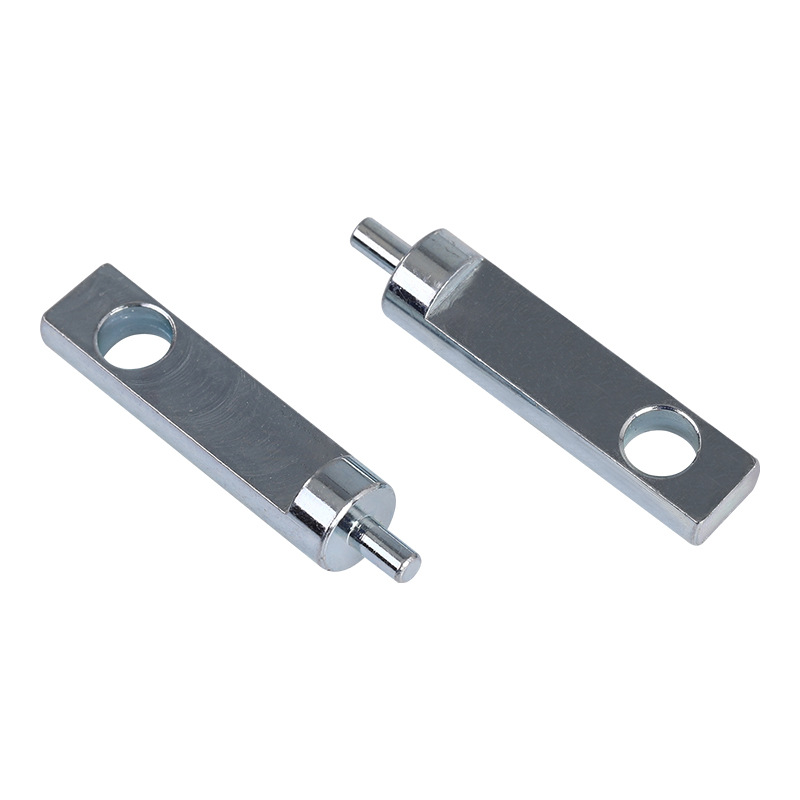
Lead Time and Capacity Mismatches
A third common mistake is underestimating tooling lead time. Closed die and impression die tooling typically takes 4-8 weeks to design and manufacture. If your product launch timeline doesn’t account for this, you’ll face delays. Cold forging tooling is generally faster to produce, but still requires 2-4 weeks for a new part. Plan for tooling time separately from production lead time in your project schedule.
Best Practices for Selecting a Manufacturer in 2026
The best custom forged parts manufacturers combine process expertise, certified quality systems, and fast response times, and the right one for your application depends on part size, volume, material, and industry compliance requirements.
Qualification Criteria Framework
Use this structured approach to evaluate any custom forged parts manufacturer before awarding business:
- Confirm process capability: Verify the manufacturer operates the specific forging process your part requires. Cold forging, open die, and closed die are fundamentally different capabilities. Don’t assume a forge shop does all of them.
- Review certifications: At minimum, require ISO 9001:2015. For automotive parts, require IATF 16949. For medical components, require ISO 13485:2016. These aren’t optional in regulated supply chains.
- Request a first article inspection (FAI) protocol: Any serious manufacturer should be able to walk you through their FAI process, including dimensional report, material certification, and process documentation.
- Assess quoting responsiveness: A manufacturer that takes two weeks to quote a simple part will take two months to resolve a quality issue. Quoting speed is a proxy for organizational responsiveness. Best-in-class suppliers quote within 8 hours.
- Evaluate secondary capabilities: If your forged part requires CNC finishing, surface treatment, or assembly, a manufacturer who can handle all steps in-house reduces handoff risk and compresses lead time.
- Check capacity and scalability: Ask about current machine utilization and how they handle demand spikes. A shop running at 95% utilization has no buffer for your urgent orders.
Pro Tip: Always request a sample or prototype run before committing to full production volumes. Even a well-qualified manufacturer can have setup variation on a new part. A first article run of 50-100 pieces, inspected against your full drawing, protects you from discovering problems after 50,000 units are already made.
Matching Forging Method to Application
Not every part needs every forging method. Use this decision logic:
- Part diameter under 38mm, volume over 10,000 units: cold forging is almost always the right choice for cost and consistency
- Complex 3D geometry, medium volume: impression die forging with CNC finish machining
- Large parts, heavy components, low volume: open die forging
- Rings, flanges, or gear blanks: rolled ring forging
- Any application requiring tight final tolerances: combine the appropriate forging method with CNC turning, Swiss lathe, or mill-and-turn finishing
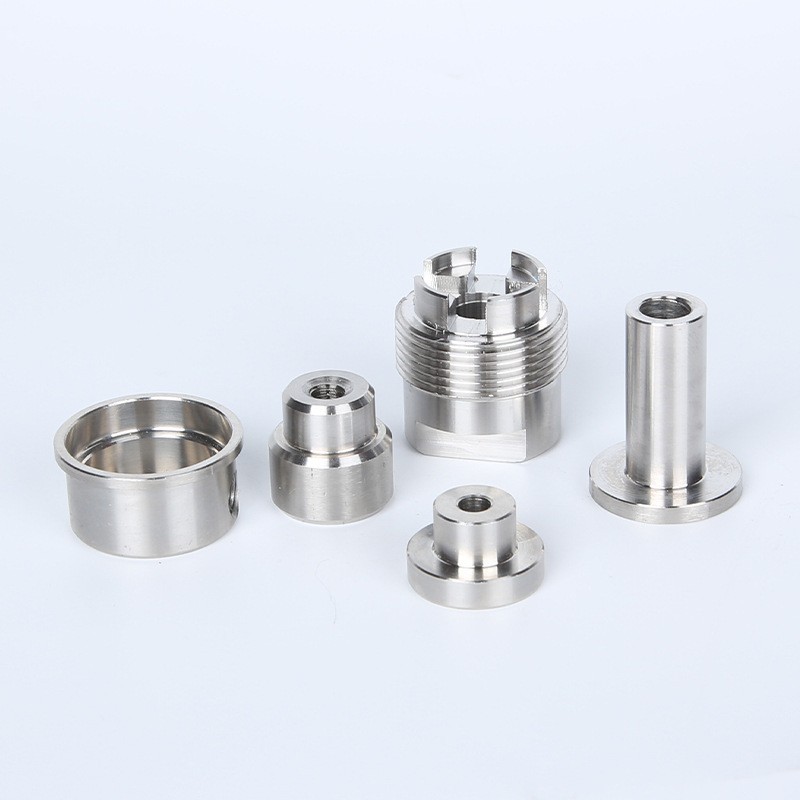
At MFG SOLUTION, we’ve found that the majority of small-part customers (parts under 38mm diameter) achieve the best balance of cost and precision by combining cold forging with CNC turning or Swiss lathe finishing. The forging step produces the structural properties and near-net shape; the machining step delivers the final tolerances. This integrated approach, backed by ISO 9001:2015, ISO 13485:2016, and IATF 16949 certifications, is what separates reliable precision suppliers from commodity job shops.
Industry research from Modern Group, which has over 100 years in custom forged manufacturing, confirms that hybrid forging-plus-machining workflows consistently deliver better dimensional repeatability than either process alone [8].
Our team at MFG SOLUTION recommends that buyers in the automotive and medical device sectors always specify their quality standard upfront in the RFQ. Suppliers who can’t confirm IATF 16949 or ISO 13485 compliance in their initial response aren’t set up to meet your audit requirements, and discovering that after tooling is built is an expensive lesson.
Sources & References
- Scot Forge, “Open Die Forgings & Rolled Rings,” 2026
- Steel Forge, “Custom Forged Parts for Every Industry,” 2026
- IAEI Magazine, “Power Plants Forge Ahead: Open Die Forgings and Rolled Rings,” 2026
- Trenton Forging, “American Forging Manufacturer: Impression Die Forging,” 2026
- Deeco Metals, “Custom Forging Processes,” 2026
- Canton Drop Forge, “High-Quality Custom Forging & Precision Forged Parts,” 2026
- RFQ USA, “Top U.S.-Based Forging Companies,” 2026
- Modern Group, “Custom Forge Manufacturing Services,” 2026
- Paper360/TAPPI, “Paper Mills Forge Ahead with Complex Forged Parts,” 2024
- Bunty LLC, “Custom Metal Forging Services,” 2026
Frequently Asked Questions
1. Which is the world’s largest forging company?
As of 2026, Bharat Forge Ltd. (India) is widely recognized as the world’s largest forging company by capacity and revenue, with operations across automotive, aerospace, and industrial sectors on multiple continents. Other large global players include Arconic (USA), VSMPO-AVISMA (Russia), and Scot Forge (USA) for specialty open-die work. The ranking shifts depending on whether you measure by tonnage, revenue, or specific market segment, so it’s worth clarifying which metric matters for your supplier benchmarking.
2. Which is better, forged or CNC?
Neither process is universally better. Forging delivers superior grain structure, fatigue strength, and impact resistance, making it the right choice for structurally critical parts. CNC machining delivers tighter dimensional tolerances and can produce complex geometries that forging dies can’t replicate. In practice, the highest-performance and most cost-effective small precision parts combine both: a custom forged parts manufacturer produces the near-net shape via cold forging or impression die forging, then CNC turning or Swiss lathe finishing brings the part to final tolerance. This hybrid approach is standard in automotive, medical, and aerospace supply chains.
3. What are the 4 types of forging?
The four primary forging types are: (1) impression die forging (closed die), where metal is compressed in a cavity that mirrors the finished part shape; (2) open die forging, where flat or simple dies shape large workpieces with operator manipulation between strikes; (3) cold forging (cold heading), where metal is formed at room temperature through progressive dies for small, high-volume precision parts; and (4) seamless rolled ring forging, where a pierced disc is rolled into a ring of increasing diameter for flanges, bearings, and gear blanks. Each method suits different part sizes, volumes, and tolerance requirements, so process selection is a critical early decision in any forging project.
4. How much does a closed die forging cost?
Closed die forging costs have two distinct components: tooling and per-part production. Die design and manufacturing is a one-time upfront investment, typically ranging from $5,000 for simple, small parts to $50,000 or more for large, complex geometries with multiple cavities. Per-part production cost depends on material, part weight, cycle time, and volume; at high volumes (50,000+ pieces), unit costs can drop below $1-$5 for small steel parts. The tooling cost amortizes quickly at volume, which is why closed die forging is most cost-effective for medium-to-high production runs. Always ask your manufacturer for a total cost breakdown that separates tooling from recurring unit cost.
5. What materials can be custom forged?
Most structural metals can be custom forged. Common materials include carbon steel, alloy steel, stainless steel (grades 304, 316, 17-4PH), aluminum alloys (6061, 7075), titanium alloys (Ti-6Al-4V), copper alloys, and nickel-based superalloys for high-temperature applications. Material selection affects forging temperature, die life, and post-forge heat treatment requirements. Stainless steel and titanium require more forging force and specialized tooling compared to carbon steel, which typically adds 20-40% to tooling and production costs. Always confirm that your chosen manufacturer has documented experience with your specific alloy.
6. How do I qualify a custom forged parts manufacturer for medical or automotive use?
For medical applications, require ISO 13485:2016 certification, which mandates documented process control, traceability, and risk management throughout the supply chain. For automotive, require IATF 16949 certification and ask for PPAP (Production Part Approval Process) capability, including submission of a full dimensional report, material certification, and process FMEA. Both standards require the manufacturer to maintain records that are auditable by your quality team or a third-party registrar. ISO 9001:2015 is the baseline for any application. Manufacturers who hold all three certifications, like MFG SOLUTION, can serve medical, automotive, and general industrial customers from a single quality system.
Conclusion
Choosing the right custom forged parts manufacturer isn’t just a procurement decision. It’s an engineering decision, a quality decision, and a supply chain risk decision rolled into one. The fundamentals haven’t changed: forging produces stronger parts, cold forging excels for small high-volume precision components, and the best outcomes come from combining forging with CNC finishing under a single certified quality system.
What has changed in 2026 is the bar for supplier responsiveness. Buyers now expect quotes within hours, not weeks, and first shipments within days, not months. Manufacturers who can’t meet that standard are losing business to suppliers who can.
MFG SOLUTION delivers exactly that combination: cold forging and CNC capabilities (including Swiss lathe, CNC turning, automatic lathe, and mill-and-turn) for parts up to 38mm diameter, quotes within 8 hours, shipment within 3 days, and full ISO 9001:2015, ISO 13485:2016, and IATF 16949 certification with documented process control. If you’re sourcing small precision forged parts for electronics, automotive, or medical applications, those are the benchmarks worth holding your suppliers to.
Recommended Articles
Explore more from our content library: