
2026-06-26
Mining Forgings: A Complete Guide for 2026

| Key Insight | Explanation |
|---|---|
| Forging outperforms casting in mining | Forged mining components have aligned grain flow, fewer internal defects, and significantly higher fatigue resistance than cast equivalents. |
| Steel dominates, but alloys matter | Carbon steel, alloy steel, and stainless steel are most common; titanium and aluminum alloys serve specialized high-performance applications. |
| Three primary forging methods | Open-die, closed-die, and rolled ring forging each serve different mining component geometries and production volumes. |
| Post-forging machining is essential | CNC machining operations bring forged blanks to final dimensional tolerances, often requiring tight precision tolerance stackup management. |
| ISO standards govern quality | ISO 9001:2015 quality management systems and material traceability requirements are standard expectations in certified forging supply chains. |
| Secondary machining adds precision | Forged blanks typically require CNC turning, milling, drilling, and threading to achieve the tight tolerances mining OEMs demand. |
Mining forgings are metal components shaped under high compressive force to produce parts with superior grain structure, strength, and fatigue resistance for use in mining equipment and machinery. The forging process aligns the metal’s internal grain flow with the part geometry, dramatically improving durability compared to casting or machining from bar stock. For engineers and procurement teams specifying components for drills, crushers, conveyors, and excavators, understanding mining forgings is essential to reducing downtime and total cost of ownership.
This guide covers everything you need to know: the forging processes used, the metals involved, the most common mining applications, quality standards, and the critical role of post-forging CNC machining in delivering finished parts to specification. Whether you’re sourcing forged blanks or fully machined components, you’ll find practical guidance here.
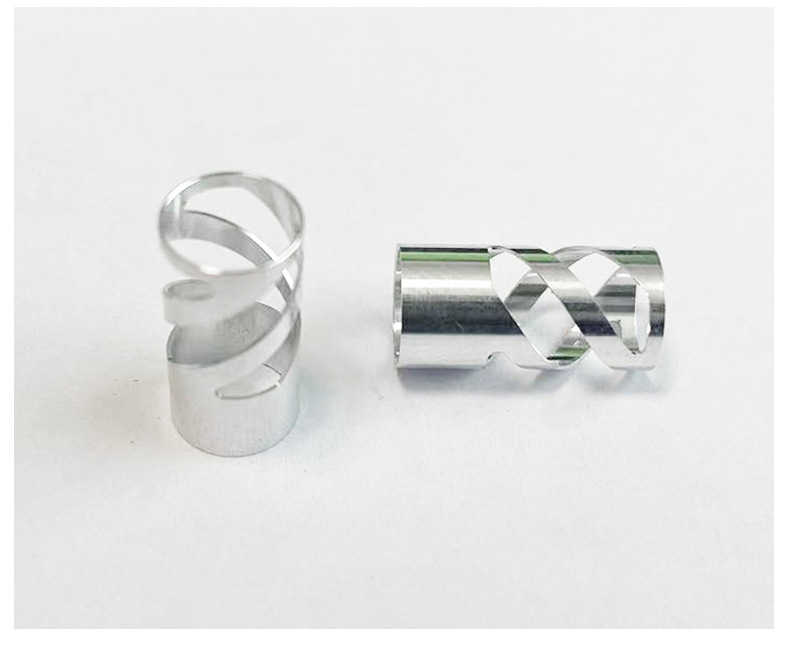
What Are Mining Forgings?
Mining forgings are metal parts produced by applying localized compressive forces to a heated or cold metal workpiece, creating components with exceptional mechanical properties suited to the extreme demands of mining environments.
The core definition is straightforward. Forging is a manufacturing process where metal is shaped by pressing, hammering, or rolling rather than being cast in a mold or cut from solid stock. In mining applications, this matters enormously because equipment operates under constant impact, abrasion, vibration, and load cycling that would quickly destroy weaker components.
Why Mining Demands Forged Components
Mining is one of the most mechanically punishing industries on earth. Drill bits penetrate rock at high speed. Crusher jaws compress ore under thousands of tons of force. Conveyor shafts run continuously under heavy load. Standard cast or machined parts simply don’t hold up in these conditions.
Industry analysts consistently note that forged components offer a fatigue life advantage of 20-30% or more over equivalent cast parts in high-cycle mining applications. The Forging Industry Association confirms that strength, toughness, and machinability are the primary reasons forgings dominate in mining and heavy construction equipment.
- Grain flow alignment: Forging shapes metal so the grain structure follows the part’s contours, maximizing strength where stress concentrates.
- Fewer internal defects: Unlike castings, forgings have no porosity, shrinkage voids, or inclusions that create stress risers.
- Smaller average grain size: Finer grain structure makes it harder for cracks to propagate through the material.
- Higher surface density: Forging compresses the outer surface, improving wear resistance in abrasive mining environments.
Scope of the Mining Forgings Market
As of 2026, mining forgings serve a broad range of equipment categories, from surface mining excavators and haul trucks to underground drilling rigs and mineral processing machinery. The components range from small precision-forged fasteners and connectors to massive open-die forged shafts weighing thousands of pounds. Both ends of that spectrum require tight dimensional control and documented material traceability.
Pro Tip: When evaluating a forging supplier for mining applications, always ask for material certifications and heat treatment records. Grain flow documentation and hardness test results should be standard deliverables, not optional add-ons.
How Mining Forgings Are Made
Mining forgings are produced using three primary methods: open-die forging, closed-die forging, and rolled ring forging, each selected based on part geometry, size, and required mechanical properties.
The choice of forging method directly affects cost, dimensional accuracy, and the amount of post-forging machining required. Understanding each process helps engineers specify the right approach for each component.
The Three Core Forging Processes
Open-die forging (also called free forging) uses flat or simple-shaped dies that don’t fully enclose the workpiece. The operator repositions the part between hammer blows to shape it progressively. This method suits large, heavy components like shafts, cylinders, and ingots where die tooling costs would be prohibitive.
Closed-die forging (also called impression-die forging) uses matched dies that fully enclose the workpiece. Metal flows into the die cavity under high pressure, producing near-net-shape parts with tighter dimensional tolerances. This method is ideal for smaller, complex mining components produced in higher volumes.
Rolled ring forging starts with a donut-shaped preform that is rolled and compressed between rotating dies to produce seamless rings of precise diameter and cross-section. Mining applications include bearing races, flanges, and gear rings.
- Material selection and billet preparation: Steel or alloy billet is cut to precise weight for the target part.
- Heating: Billets are heated to forging temperature (typically 1,100–1,250°C for carbon steel) in controlled furnaces.
- Forging: The heated billet is shaped using the selected die method under hydraulic press or hammer.
- Trimming: Flash (excess material at parting lines) is removed by trimming dies.
- Heat treatment: Normalizing, annealing, quenching, and tempering are applied to achieve target hardness and toughness.
- Inspection: Dimensional checks, ultrasonic testing (UT), and hardness testing verify the forging meets specification.
- Post-forging machining: CNC turning, milling, drilling, and threading bring the forged blank to final dimensions.
The Role of Post-Forging CNC Machining
Forged blanks rarely arrive at final dimensions. They include machining stock that must be removed by CNC operations to hit the tolerances mining OEMs require. This is where precision machining becomes critical. Operations like CNC threading, CNC hole drilling, and CNC turning transform a near-net-shape forging into a finished, installable component.
Managing precision tolerance stackup across multiple machining operations is a real challenge on complex forged parts. Each operation introduces small dimensional variations that can accumulate if not carefully controlled. Proper fixturing, toolpath planning, and in-process inspection are non-negotiable on critical mining components.
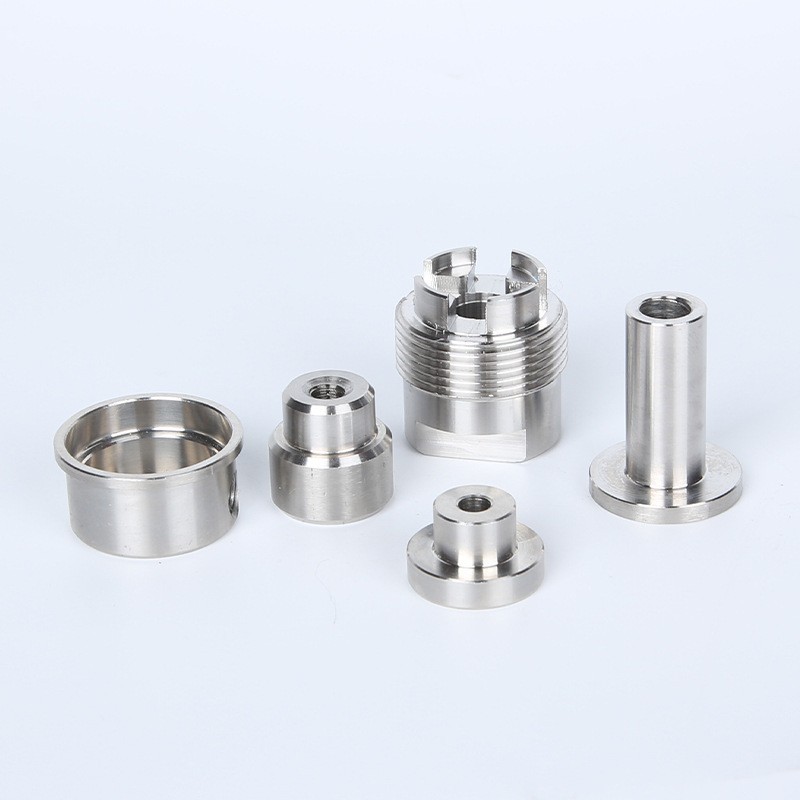
Key Applications of Mining Forgings in 2026
Mining forgings are used across drilling, crushing, conveying, and excavation equipment, with forged steel components appearing in virtually every load-bearing or impact-absorbing assembly in modern mining machinery.
The range of applications is wide. Some components are massive structural forgings; others are small precision parts that must be machined to tight tolerances after forging. Both categories are equally critical to equipment reliability.
Common Forged Components in Mining Equipment
| Component | Forging Method | Primary Material | Key Requirement |
|---|---|---|---|
| Drill bits & cutting teeth | Closed-die | Alloy steel | Impact resistance, hardness |
| Shafts & axles | Open-die | Carbon/alloy steel | Torsional strength, fatigue life |
| Crusher jaws & liners | Open-die / closed-die | Manganese steel | Wear resistance, toughness |
| Gear blanks & pinions | Closed-die / rolled ring | Alloy steel | Dimensional accuracy, surface finish |
| Flanges & couplings | Rolled ring / closed-die | Carbon/stainless steel | Pressure rating, sealing surfaces |
| Axle hubs & wheel spindles | Closed-die | Alloy steel | Load capacity, fatigue resistance |
| Hydraulic cylinder bodies | Open-die | Carbon/alloy steel | Internal bore integrity, pressure resistance |
Small Precision Forged Parts in Mining
Not every mining forging is a massive shaft. A significant portion of mining equipment relies on small forged components: fasteners, connectors, valve bodies, sensor housings, and hydraulic fittings. These parts are typically under 50mm in diameter and require post-forging CNC machining to hit tolerances of ±0.01mm or tighter.
In practice, these smaller components are often where supply chain bottlenecks occur. Lead times from large forging houses can stretch to 8–12 weeks for small-batch precision parts. That’s where a capable CNC machining partner who can handle forged blanks and machine them to final spec becomes a real operational advantage.
Pro Tip: For small forged mining components under 38mm diameter, consider specifying the forging and CNC machining as a combined scope with a single supplier. It eliminates handoff risk, reduces tolerance stackup errors, and typically cuts lead time by 30–40%.
Benefits of Mining Forgings Over Other Manufacturing Methods
Mining forgings deliver superior mechanical performance compared to castings or machined bar stock because the forging process produces a continuous, defect-free grain structure that maximizes strength, toughness, and fatigue resistance.
This isn’t a marginal difference. In high-stress mining applications, the performance gap between forged and cast components is measurable in equipment uptime, maintenance intervals, and total cost of ownership.
Forging vs. Casting vs. Machined Bar: A Direct Comparison
| Property | Forging | Casting | Machined Bar Stock |
|---|---|---|---|
| Grain structure | Aligned, continuous | Random, coarse | Uninterrupted but not shaped |
| Internal defects | Minimal | Porosity, voids common | Low (depends on bar quality) |
| Fatigue resistance | Highest | Lowest | Medium |
| Impact resistance | Excellent | Poor to moderate | Good |
| Tooling cost | Medium to high | Medium | Low |
| Material utilization | High (near-net-shape) | High | Low (significant waste) |
| Best for | High-stress, high-cycle parts | Complex shapes, low stress | Simple geometries, low volume |
Research from the Forging Industry Association consistently shows that forged parts outperform cast equivalents in strength and toughness for off-highway and mining equipment. The additional upfront cost of forging tooling is typically recovered within the first production run through reduced scrap rates and longer service life.
- Longer service intervals: Forged components in crusher and drill applications typically last 2–3x longer than cast replacements.
- Reduced unplanned downtime: Fewer defects mean fewer unexpected failures in the field.
- Better machinability: Consistent grain structure makes post-forging CNC machining more predictable and repeatable.
- Weight optimization: Near-net-shape forging reduces machining stock, lowering finished part weight without sacrificing strength.
Common Challenges With Mining Forgings
The most common challenges with mining forgings include die design errors, incorrect heat treatment, tolerance stackup in post-machining, and supplier qualification gaps that lead to inconsistent material properties across production batches.
From experience, many procurement teams underestimate the complexity of the forging-to-finished-part supply chain. A forging that passes dimensional inspection at the forge shop can still fail at the CNC machining stage if machining stock, datum references, or heat treatment specifications aren’t coordinated upfront.
Design and Process Pitfalls
- Insufficient draft angles: Parts designed without adequate draft angles can’t be ejected from closed dies cleanly, causing surface defects and die wear.
- Incorrect parting line placement: Poorly positioned parting lines create flash in critical surfaces that require additional machining.
- Underestimating machining stock: Too little stock leaves insufficient material for CNC operations; too much wastes material and machine time.
- Heat treatment specification errors: Specifying the wrong hardness range for the application is a common mistake, particularly on drill components where hardness and toughness must be balanced.
- Ignoring machining tolerances: Forging tolerances are inherently looser than machining tolerances. Failing to account for this in the design phase creates rework and scrap downstream.
Supplier and Quality Control Gaps
A common mistake is treating forging suppliers and CNC machining suppliers as completely separate qualification tracks. In practice, the two processes are tightly coupled. If the forging supplier changes a heat treatment parameter without notifying the machining supplier, tool life and surface finish can degrade significantly.
One pitfall to watch for is material traceability gaps. Mining equipment OEMs increasingly require full heat-number traceability from raw billet to finished component. Suppliers who can’t provide this documentation create compliance risk, particularly for equipment used in regulated mining environments. ISO 9001:2015 compliance is a baseline expectation, not a differentiator, in this market as of 2026.
The selection of appropriate CNC coolants and lubricants during post-forging machining also affects surface integrity on hardened steel components. Using the wrong coolant chemistry on heat-treated alloy steel can cause micro-cracking or residual stress that isn’t visible on standard dimensional inspection.
Best Practices for Specifying and Sourcing Mining Forgings in 2026
The most effective approach to sourcing mining forgings in 2026 combines early supplier engagement, design-for-forgeability reviews, integrated machining scope, and rigorous incoming inspection protocols aligned with ISO 9001:2015 requirements.
Industry analysts note that supply chain consolidation is a dominant trend in 2026 mining equipment procurement. OEMs are reducing their approved vendor lists and demanding suppliers who can handle forging, heat treatment, and CNC machining under one quality system. That shift rewards suppliers with broad process capability and documented process control.
Specification and Design Best Practices
- Engage your forging supplier at the design stage. Design-for-forgeability (DFF) reviews catch draft angle, parting line, and fillet radius issues before tooling is cut. Changes at this stage cost almost nothing; changes after tooling is made are expensive.
- Define the complete material specification. Specify alloy grade, heat treatment condition, hardness range (Brinell or Rockwell), and Charpy impact requirements. Vague specs produce variable parts.
- Specify machining stock explicitly. Don’t leave machining allowances to the forging supplier’s discretion. Define minimum and maximum stock on all machined surfaces.
- Require first article inspection (FAI). Every new forging die should produce a first article that is fully dimensionally inspected and approved before production begins.
- Mandate material traceability. Require heat number, mill certificate, and heat treatment records for every production lot. This is standard under ISO 9001:2015 and IATF 16949.
- Align forging and machining tolerances. Review precision tolerance stackup across all post-forging operations before finalizing the drawing package.
Sourcing and Supplier Qualification Best Practices
- Require ISO 9001:2015 certification as a minimum. For mining equipment used in safety-critical applications, consider suppliers who also hold IATF 16949.
- Evaluate post-forging machining capability. A supplier who can forge and machine in-house under one quality system reduces handoff risk and simplifies traceability.
- Request process capability data (Cpk). For critical dimensions, ask for Cpk values from previous production runs. A Cpk of 1.33 or higher is the standard expectation in automotive and mining supply chains.
- Test small batches before committing to volume. Even with a qualified supplier, run a pilot batch of 50–100 pieces through your full inspection protocol before releasing production orders.
- Plan for rapid turnaround on replacement parts. Mining equipment downtime is expensive. Your forging and machining supplier should be able to expedite replacement components. Suppliers offering quotes within 8 hours and shipment within 3 days provide a real operational advantage when equipment is down.
Pro Tip: At MFG SOLUTION, we’ve found that the biggest source of rework on forged mining components isn’t the forging itself — it’s misaligned datum references between the forging drawing and the machining drawing. Standardize your datum scheme across both documents before releasing to production.
Frequently Asked Questions
1. What metals are commonly forged for mining applications?
Carbon steel, alloy steel, and stainless steel account for the majority of mining forgings due to their combination of strength, toughness, and machinability. Alloy steels with chromium, molybdenum, and nickel additions are preferred for high-stress components like drill shafts and crusher parts. Aluminum alloys appear in lighter structural components, titanium in specialized high-performance applications, and copper alloys in bearing and bushing applications. The right material depends on the specific load type, temperature, and corrosion environment the component will face.
2. What is the difference between open-die and closed-die forging for mining parts?
Open-die forging uses simple flat or contoured dies that don’t enclose the workpiece, making it suited for large, heavy components like shafts and cylinders where custom die tooling would be prohibitively expensive. Closed-die forging uses matched cavity dies that fully shape the part, producing tighter dimensional tolerances and more complex geometries at higher production volumes. Most small precision mining components use closed-die forging, while large structural parts use open-die.
3. Why are mining forgings stronger than cast mining parts?
The forging process compresses and shapes metal while it’s hot, aligning the internal grain structure with the part’s geometry. This produces a continuous, defect-free grain flow that maximizes tensile strength, impact resistance, and fatigue life. Cast parts, by contrast, solidify from liquid metal and develop random, coarse grain structures with potential porosity and shrinkage voids that act as crack initiation sites under cyclic loading. Mining forgings have fewer defects and smaller average grain size, making crack propagation significantly harder.
4. What CNC machining operations are typically required after forging?
Post-forging CNC machining typically includes turning to final diameter, face milling of seating surfaces, hole drilling for fastener and lubrication passages, CNC threading for threaded interfaces, and grinding for bearing and sealing surfaces. The extent of machining depends on the part’s dimensional tolerances and surface finish requirements. Complex parts may require 5-axis CNC milling to access all surfaces in a single setup.
5. What quality standards apply to mining forgings?
ISO 9001:2015 is the baseline quality management standard for forging suppliers. ASTM material standards (such as ASTM A668 for carbon and alloy steel forgings) govern material properties and testing requirements. For mining equipment used in automotive-adjacent applications, IATF 16949 may apply. Non-destructive testing (NDT) standards such as ASTM E428 for ultrasonic testing are commonly specified for critical components. Full material traceability from raw billet to finished component is a standard expectation in certified supply chains as of 2026.
6. How do mining forgings compare in cost to castings?
Mining forgings typically carry higher upfront tooling costs than castings, particularly for closed-die tooling. However, the total cost of ownership is often lower because forged components last significantly longer, require fewer replacements, and generate less unplanned downtime. For high-volume production of small precision parts, the per-unit cost of forging is competitive with casting once tooling is amortized. For very complex geometries or low production volumes, casting may be more economical — results vary by part geometry and volume.
7. Can small precision mining components be forged and machined by the same supplier?
Yes, and in practice this is the preferred approach for small precision components under 50mm diameter. A supplier who handles both forging (or cold forging) and CNC machining under one ISO 9001:2015 quality system eliminates handoff risk, simplifies material traceability, and typically reduces lead time significantly. Our team at MFG SOLUTION recommends consolidating forging and post-machining scope wherever possible for small mining components to reduce tolerance stackup risk and improve delivery predictability.
Conclusion
Mining forgings are the backbone of reliable, long-life mining equipment. The superior grain structure, impact resistance, and fatigue life of forged components make them the right choice for any application where failure means costly downtime or safety risk. Getting the specification right, from material grade and heat treatment through to post-forging CNC machining tolerances, is what separates a component that lasts years from one that fails in months.
The supply chain for mining forgings is evolving in 2026. OEMs are consolidating suppliers and demanding integrated forging-plus-machining capability under certified quality systems. That’s a shift that rewards precision machining partners who understand both the forging process and the downstream CNC operations that turn a forged blank into a finished, installable part.
MFG SOLUTION specializes in the CNC machining of precision components, including post-forging operations on small parts up to 38mm diameter. With ISO 9001:2015, ISO 13485:2016, and IATF 16949 certifications, 60+ engineering professionals, and a 3-day ship window, we’re equipped to support mining equipment manufacturers who need precision-machined forged components without the long lead times. Submit your specifications and get a quote within 8 hours.
Recommended Articles
Explore more from our content library: