
2026-06-24
What Is SS 304 Material? Properties, Uses & Grades Explained

| Key Insight | Explanation |
|---|---|
| What SS 304 is | An austenitic stainless steel alloy containing 18% chromium and 8% nickel, making it the world’s most widely used stainless grade. |
| Corrosion resistance | The chromium content forms a passive oxide layer that resists oxidation and most atmospheric corrosion, though it can corrode in high-chloride environments. |
| Machinability | SS 304 is machinable but work-hardens quickly; sharp tooling, appropriate feeds, and proper CNC coolant management are essential for precision parts. |
| 304 vs. 316 | 316 adds molybdenum for superior chloride resistance; 304 is preferred where cost matters and marine or acidic exposure is not a factor. |
| Industry certifications | SS 304 parts for medical and automotive applications must be produced under ISO 13485:2016 and IATF 16949 quality management frameworks. |
| Common applications | Food processing equipment, medical instruments, automotive fasteners, electronics enclosures, and precision-turned components are typical end uses. |
What Is SS 304 Material?
Understanding what is ss 304 material is essential. SS 304 material is an austenitic stainless steel alloy composed primarily of iron, 18% chromium, and 8% nickel. It is the most widely produced stainless steel grade in the world, accounting for roughly half of all global stainless output. Its combination of corrosion resistance, formability, and cost-effectiveness makes it the default choice across dozens of industries. For a comprehensive technical overview, the SAE 304 stainless steel Wikipedia entry provides a useful reference on its history and standardization.
If you’ve ever asked what is ss 304 material and wanted a single-sentence answer: it’s the 18/8 stainless steel that shows up in everything from kitchen sinks to surgical instruments to precision-turned fasteners. Understanding it fully requires looking at both its chemistry and its real-world behavior under machining and service conditions.
The “18/8” Designation Explained
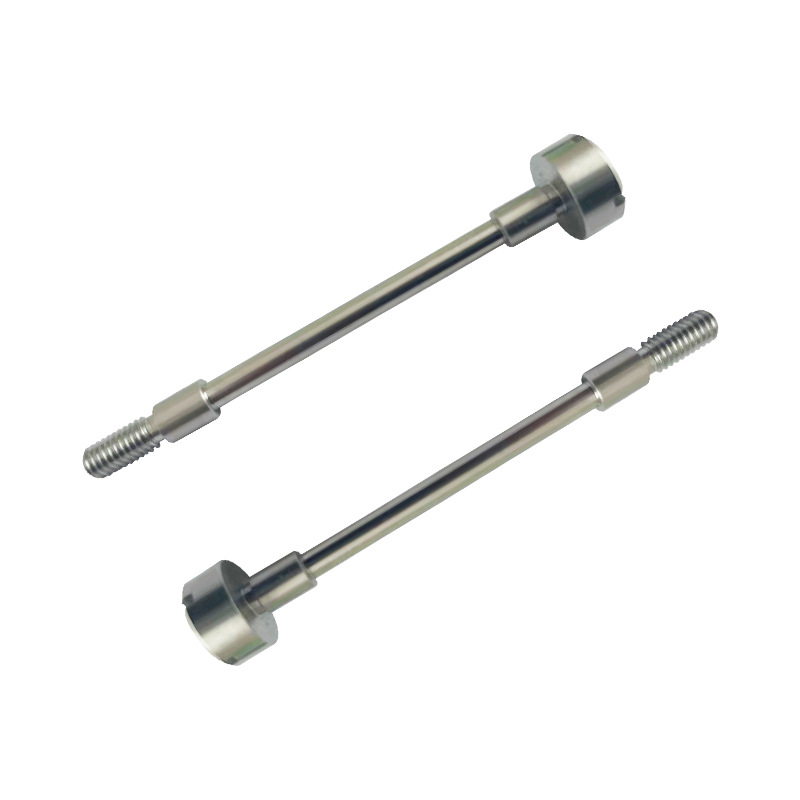
The shorthand “18/8” refers directly to the alloy’s nominal chromium and nickel percentages. Chromium is the element responsible for the self-healing passive oxide layer that gives stainless steel its corrosion resistance. Nickel stabilizes the austenitic microstructure (a face-centered cubic crystal structure) and improves toughness and ductility at both high and low temperatures. This is particularly relevant for what is ss 304 material.
The AISI (American Iron and Steel Institute) designates this grade as Type 304. The European equivalent is EN 1.4301, and the UNS (Unified Numbering System) designation is S30400. These are all the same material, just named under different standards frameworks. Detailed mechanical data for this grade is available in the AISI Type 304 Stainless Steel ASM Material Data Sheet.
Why SS 304 Dominates the Market
SS 304 strikes a practical balance that few other alloys match. It’s strong enough for structural components, ductile enough for deep drawing and forming, and resistant enough for most non-chloride environments. As of 2026, it remains the benchmark against which other stainless grades are compared, particularly in the precision parts sector.
- Non-magnetic in annealed condition (though it can become slightly magnetic after cold working)
- Weldable without post-weld heat treatment in most applications
- Compliant with FDA and EU food-contact regulations
- Available in a wide range of stock forms: bar, sheet, tube, and wire
- Cost-effective relative to higher-alloy grades like 316 or 317
Pro Tip: Always verify the mill certificate (also called a material test report or MTR) when sourcing SS 304 bar stock for precision parts. Counterfeit or mislabeled stainless is a real problem in the supply chain. A certified supplier will provide full chemical composition traceability per ASTM A276 or equivalent standards.
Chemical Composition and Mechanical Properties
SS 304 has a tightly defined chemical composition governed by ASTM A240 and AISI standards, with mechanical properties that make it suitable for both structural and precision component applications. Researchers studying the corrosion behavior of sensitized AISI 304 stainless steel have documented how composition variations affect real-world performance, particularly in aggressive environments.
Chemical Composition
The table below shows the nominal chemical composition of SS 304 per ASTM A240 specifications. These ranges are what you’ll find on a typical mill certificate.
| Element | Composition (wt%) | Role in the Alloy |
|---|---|---|
| Chromium (Cr) | 18.0 – 20.0% | Forms passive oxide layer; primary corrosion resistance |
| Nickel (Ni) | 8.0 – 10.5% | Stabilizes austenite; improves toughness and ductility |
| Carbon (C) | 0.08% max | Kept low to reduce sensitization risk during welding |
| Manganese (Mn) | 2.0% max | Austenite stabilizer; improves hot workability |
| Silicon (Si) | 0.75% max | Deoxidizer during steelmaking |
| Phosphorus (P) | 0.045% max | Controlled to limit embrittlement |
| Sulfur (S) | 0.03% max | Low sulfur preserves corrosion resistance |
| Iron (Fe) | Balance | Base metal |
Mechanical Properties
SS 304’s mechanical profile is well-suited for precision machined components. Its tensile strength is high enough for structural loads, while its elongation at break (around 40–45%) means it deforms rather than fractures under impact, an important safety characteristic in medical and automotive parts. Reference technical data for the 302–305 stainless steel family, including SS 304, is available in this technical data sheet from Princeton Plasma Physics Laboratory.
- Tensile strength: 515 MPa (74,700 psi) minimum
- Yield strength (0.2% offset): 205 MPa (29,700 psi) minimum
- Elongation at break: 40% minimum
- Hardness (Brinell): 201 HB maximum
- Density: 7.93 g/cm³
- Melting range: 1,400–1,455°C (2,552–2,651°F)
- Thermal conductivity: 16.2 W/m·K at 100°C
One limitation worth noting: SS 304 is not heat-treatable for hardness (unlike tool steels). Its strength can only be increased through cold working, which is relevant when specifying parts that require higher surface hardness.
How SS 304 Is Machined: CNC Processes and Challenges
SS 304 can be machined using standard CNC turning, milling, and drilling processes, but its tendency to work-harden means it demands more careful process planning than carbon steels. For a broader overview of SS 304 applications and machining considerations, AZoM’s detailed guide on the uses of 304 stainless steel is a useful industry reference.
Work Hardening: The Key Challenge
Austenitic stainless steels like SS 304 work-harden rapidly when deformed. In practice, this means that if a cutting tool dwells or rubs without cutting aggressively, the material hardens ahead of the tool tip, causing accelerated tool wear and poor surface finish. The solution is consistent, chip-clearing cuts with no hesitation. When considering what is ss 304 material, this point stands out.
Industry analysts suggest that SS 304’s work-hardening rate is approximately 2–3 times higher than that of mild steel, which directly affects tool life and cycle time calculations in CNC production environments.
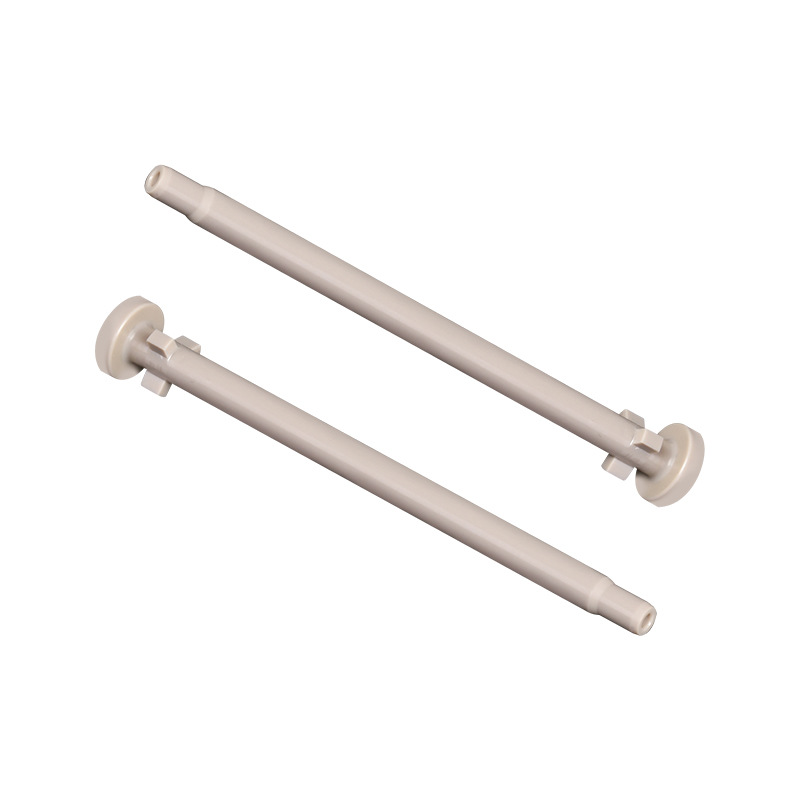
For precision small parts (under 38mm diameter), the Swiss lathe process handles SS 304 particularly well. The guide bushing provides support very close to the cutting zone, minimizing deflection even in long, slender geometries. This is exactly the kind of application our team at MFG SOLUTION handles daily across automotive, medical, and electronics sectors. For more information, see What Is Automation With Zapier And Ai.
Recommended Machining Parameters and Practices
- Use sharp, coated carbide tooling. TiAlN or TiCN coatings reduce friction and heat buildup at the cutting edge.
- Maintain aggressive feed rates. Light cuts that rub rather than shear accelerate work hardening. Keep depth of cut at least 0.1mm to stay below the hardened surface layer.
- Apply flood coolant consistently. Proper CNC coolant management is critical for SS 304 to control heat and flush chips. Inadequate coolant causes built-up edge (BUE) on the tool. For more on this topic, our guide on CNC coolants and lubricants covers the right fluid selection for stainless grades.
- Control tolerances carefully. SS 304’s thermal expansion coefficient (17.2 µm/m·°C) means temperature changes during machining can shift dimensions. This ties directly into machining tolerances planning for tight-spec parts.
- Use CNC threading services for internal and external threads. Thread milling or single-point threading is preferred over tapping in SS 304 to avoid tap breakage from work hardening. Our CNC threading services page covers thread forms and tolerances in detail.
For hole-making operations, peck drilling with proper chip evacuation is essential. SS 304 chips are stringy and can pack into drill flutes quickly. Our article on CNC hole drilling technology addresses drill geometry selection for stainless materials specifically.
Pro Tip: When machining SS 304 on automatic lathes or Swiss-type machines, program tool paths that minimize dwell time. Even a brief pause with the tool in contact can initiate work hardening and leave a smeared surface that affects both dimensional accuracy and corrosion resistance at that point.
Managing precision tolerance stackup is also more demanding in SS 304 than in free-machining steels. The material’s springback and thermal behavior mean engineers need to account for cumulative dimensional variation across multi-step machining sequences.
For context on how workflow automation is changing quoting and production scheduling in CNC shops, the concept of What Is Automation With Zapier And Ai is increasingly relevant for manufacturers managing complex order pipelines.
Key Benefits and Applications of SS 304
SS 304 offers a combination of corrosion resistance, mechanical strength, and manufacturability that makes it the default stainless choice across a broad range of industries. A comprehensive academic overview of 304 stainless steel properties and uses is available through ScienceDirect’s materials science topic page on 304 stainless steel.
Primary Advantages
- Corrosion resistance: Resists oxidation, most organic acids, and atmospheric corrosion in non-chloride environments. The passive chromium oxide layer is self-repairing when scratched.
- Hygienic surface: Non-porous, easy to clean, and compliant with FDA 21 CFR and EU food-contact regulations. Essential for food processing and medical applications.
- High ductility: Elongation of 40%+ allows deep drawing, bending, and forming without cracking. Ideal for complex geometries.
- Temperature performance: Maintains useful properties from cryogenic temperatures up to approximately 870°C (1,600°F) in intermittent service.
- Weldability: Easily welded by all common methods (TIG, MIG, spot, resistance) without post-weld heat treatment in most cases.
- Aesthetic finish: Takes a high-quality surface finish, from matte to mirror polish, relevant for consumer-facing products.
- Cost-effectiveness: Significantly cheaper than 316, 317, or duplex grades while covering the vast majority of corrosion-resistance requirements.
Industry Applications
SS 304 appears across virtually every manufacturing sector. Below are the most common application categories relevant to precision machined parts:
| Industry | Typical SS 304 Components | Key Requirement |
|---|---|---|
| Medical devices | Surgical instrument shafts, implant screws, connector pins | Biocompatibility, ISO 13485 traceability |
| Automotive | Fasteners, exhaust fittings, sensor housings | IATF 16949 compliance, dimensional consistency |
| Electronics | Enclosure hardware, standoffs, precision shafts | Tight tolerances, surface finish |
| Food processing | Valves, fittings, conveyor components | FDA compliance, cleanability |
| Aerospace (non-critical) | Brackets, clamps, fluid fittings | Weight, corrosion resistance |
For medical device applications specifically, SS 304’s biocompatibility record is well-established. Our detailed guide on CNC machining for medical devices covers the additional quality controls required when machining stainless components for implantable or patient-contact applications. For those exploring what is ss 304 material, this matters.
SS 304 vs. 316 Stainless Steel: Which Should You Choose?
SS 304 and 316 are the two most common austenitic stainless grades. The right choice depends on your service environment, cost constraints, and regulatory requirements. For a detailed side-by-side breakdown, Metal Supermarkets’ comparison of 304 and 316 stainless steel is an authoritative industry resource.
The Molybdenum Difference
The fundamental distinction is that 316 contains 2–3% molybdenum (Mo), which 304 does not. Molybdenum significantly improves resistance to pitting and crevice corrosion in chloride-containing environments, such as seawater, salt spray, and many chemical processing media.
In practice, if your parts will be exposed to marine environments, swimming pools, de-icing salts, or aggressive cleaning chemicals containing chlorides, 316 is the correct choice. For most other applications, 304 performs equivalently at a lower material cost (typically 20–30% less than 316 as of 2026). Research on the corrosion of 304 stainless steel in static liquid lithium environments further illustrates the boundaries of 304’s corrosion resistance under extreme conditions.
Side-by-Side Comparison
| Property | SS 304 | SS 316 |
|---|---|---|
| Chromium content | 18–20% | 16–18% |
| Nickel content | 8–10.5% | 10–14% |
| Molybdenum | None | 2–3% |
| Chloride resistance | Moderate | High |
| Tensile strength | 515 MPa min | 515 MPa min |
| Relative material cost | Lower (baseline) | 20–30% higher |
| Machinability | Slightly easier | Slightly harder |
| Best for | General industrial, food, medical, electronics | Marine, chemical, pharmaceutical environments |
One common misconception: both 304 and 316 can corrode under sufficiently aggressive chloride conditions. Neither grade is immune. The difference is the threshold at which pitting begins, not an absolute immunity.
Pro Tip: If you’re specifying a stainless steel grade and you’re unsure whether the environment is “chloride-heavy enough to justify 316,” request a corrosion assessment from your materials engineer. Defaulting to 316 for all applications adds cost without always adding protection. For the majority of indoor, food-contact, and general industrial parts, 304 is the right call.
Best Practices for Specifying and Machining SS 304 in 2026
Specifying SS 304 correctly from the outset prevents costly rework, material substitutions, and quality failures downstream. Here’s what experienced engineers and procurement teams do differently. For additional grade-specific guidance, thyssenkrupp’s Stainless Steel 304 1.4301 product page offers useful specification and application data from a major materials supplier.
Material Specification and Sourcing
- Specify the standard explicitly. Reference ASTM A276 (bar), ASTM A240 (sheet/plate), or ASTM A312 (tube) on your drawings. “SS 304” alone is ambiguous about form and heat treatment condition.
- Request mill test reports (MTRs). Every batch of SS 304 bar stock should come with a certified MTR showing chemical analysis and mechanical test results. This is non-negotiable for medical and automotive parts.
- Consider 304L for welded assemblies. The “L” variant (low carbon, max 0.03% C vs. 0.08% for standard 304) reduces the risk of sensitization (chromium carbide precipitation at grain boundaries) during welding, which can create corrosion-susceptible zones.
- Confirm surface finish requirements upfront. Ra values (roughness average) should be stated on drawings. SS 304 can achieve Ra 0.4 µm or better with proper finishing, but this affects cycle time and cost.
Quality Assurance for Certified Production
For precision SS 304 parts destined for medical or automotive use, quality management framework compliance is mandatory. As of 2026, the relevant standards are:
- ISO 9001:2015 for general quality management system requirements
- ISO 13485:2016 for medical device manufacturing, covering design controls, traceability, and risk management
- IATF 16949 for automotive supply chain quality, requiring process FMEA, control plans, and measurement system analysis
At MFG SOLUTION, we’ve found that customers who provide complete drawing packages (including GD&T callouts, surface finish specs, and material certifications) get faster quotes and fewer revision cycles. Our 60+ engineering professionals review each specification before quoting, which is how we maintain the 8-hour quote turnaround even for complex SS 304 components.
A client in the medical device sector recently faced a situation where their previous supplier had been substituting lower-grade material without documentation. After switching to a certified production partner with full MTR traceability, their incoming inspection rejection rate dropped from 3.2% to under 0.5% within two production cycles. That’s the practical value of proper quality management. This directly impacts what is ss 304 material outcomes.
Frequently Asked Questions
1. What are the disadvantages of using SS 304?
SS 304’s primary disadvantage is its susceptibility to pitting and crevice corrosion in chloride-rich environments such as seawater, salt spray, or concentrated chloride cleaning solutions. It also work-hardens rapidly during machining, which increases tool wear and requires more careful process control than free-machining steels. Additionally, it cannot be hardened by heat treatment, limiting its use in applications requiring high surface hardness. Results vary depending on specific service conditions and exposure concentrations.
2. What is better, 304 or 316 stainless steel?
Neither is universally “better.” SS 316 outperforms 304 in chloride-containing environments because its 2–3% molybdenum content raises the threshold for pitting corrosion significantly. However, 304 is the better choice for most general industrial, food-contact, medical, and electronics applications because it offers equivalent mechanical properties and corrosion resistance in non-chloride environments at 20–30% lower material cost. The right grade depends entirely on your service environment and budget.
3. Does 304 stainless steel ever rust?
Yes, SS 304 can rust under certain conditions, though it’s far more resistant than carbon steel. Chloride ions (from seawater, de-icing salt, or chlorine-based cleaners) can break down the passive chromium oxide layer and initiate pitting corrosion, which looks like rust spots. “Tea staining,” a surface discoloration from iron contamination or surface deposits, is also possible. Proper cleaning, avoiding iron contamination, and using appropriate grades for the environment all prevent this. In standard indoor and food-processing conditions, 304 performs excellently without visible corrosion.
4. What is the material equivalent to SS 304?
SS 304 has several international equivalents that refer to the same or near-identical alloy composition. The European designation is EN 1.4301 (per EN 10088). The UNS designation is S30400. The Japanese standard equivalent is SUS 304 (per JIS G4303). The German DIN equivalent is X5CrNi18-10. All of these are essentially the same 18/8 austenitic stainless steel and are interchangeable for most engineering applications, though you should verify the specific standard’s composition limits for critical applications.
5. Is SS 304 suitable for CNC machining of small precision parts?
Yes, SS 304 is widely used for CNC-machined precision parts, particularly in Swiss lathe and CNC turning operations for components under 38mm diameter. The key requirements are sharp carbide tooling, aggressive and consistent feed rates to prevent work hardening, and effective flood coolant application. With proper process control, SS 304 parts can achieve tolerances of ±0.01mm or tighter and surface finishes of Ra 0.4 µm or better, meeting the demands of medical, automotive, and electronics applications.
6. What is the difference between SS 304 and SS 304L?
SS 304L is a low-carbon variant of 304, with a maximum carbon content of 0.03% versus 0.08% for standard 304. The lower carbon content reduces the risk of sensitization during welding, a process where chromium carbides precipitate at grain boundaries and create corrosion-susceptible zones. For machined parts that don’t involve welding, 304 and 304L are functionally equivalent. 304L is the preferred choice for welded assemblies or parts that will be exposed to corrosive environments after welding.
Conclusion
Understanding what is ss 304 material comes down to a few core facts: it’s an 18/8 austenitic stainless steel with outstanding corrosion resistance, excellent formability, and broad industry applicability. It’s the most widely used stainless grade in the world for good reason. It balances performance and cost better than almost any alternative for general industrial, medical, food-contact, and electronics applications.
For precision machined components, SS 304 demands respect. Its work-hardening behavior, thermal expansion, and surface finish requirements mean the difference between a good part and a rejected one often comes down to process discipline, tooling choices, and proper coolant management. Getting those details right is what separates a reliable manufacturing partner from a generic job shop.
MFG SOLUTION machines SS 304 components daily across CNC turning, Swiss lathe, and automatic lathe platforms, producing parts up to 38mm diameter to ISO 9001:2015, ISO 13485:2016, and IATF 16949 standards. Whether you need 500 pieces or 50,000, you’ll have a quote within 8 hours and parts shipping within 3 days. That’s the standard we hold ourselves to, every order.
Recommended Articles
Explore more from our content library: