
2026-06-21
Mining Forged Parts: Strength, Process & Applications
| Key Insight | Explanation |
|---|---|
| Forging creates superior grain structure | The forging process aligns metal grain flow to match part geometry, producing components that are significantly stronger than cast or machined equivalents. |
| Multiple forging methods apply to mining | Open-die, closed-die (impression), and drop forging are the three dominant methods used for mining components, each suited to different part sizes and geometries. |
| Steel and alloy steel dominate mining forgings | Carbon steel, alloy steel, and stainless steel account for the majority of mining forged parts due to their high tensile strength and impact resistance. |
| CNC machining follows forging for precision | Most mining forged parts require secondary CNC machining operations to achieve tight dimensional tolerances and surface finish specifications. |
| Quality standards are non-negotiable | ISO 9001:2015 and IATF 16949 compliance, along with non-destructive testing (NDT), are baseline requirements for mining-grade forged components. |
| Rapid sourcing is now achievable | Certified precision manufacturers like MFG SOLUTION can quote within 8 hours and ship within 3 days, drastically reducing supply chain lead times for smaller forged components. |
Mining forged parts are load-bearing metal components manufactured through a controlled forging process that uses compressive force to shape heated metal billets into high-strength parts used in drilling, crushing, lifting, and material transport equipment. They are stronger than cast equivalents because forging aligns the metal’s internal grain structure to match the part’s geometry. In mining, where equipment failure can halt operations and endanger workers, that strength advantage isn’t optional.
This article covers everything you need to know about mining forged parts: what they are, how they’re made, which materials are used, where they’re applied, and how to source them efficiently in 2026. You’ll also find a breakdown of common procurement mistakes and actionable best practices from real manufacturing experience.
What Are Mining Forged Parts?
Mining forged parts are structural and mechanical components produced by applying high compressive forces to metal at elevated temperatures, then finished through machining to achieve precise dimensions for use in mining equipment and infrastructure.
The term “forging” refers to a specific manufacturing process, not just a material property. A forged part starts as a solid metal billet or bar. That billet is heated to a specific temperature range, then shaped under pressure using dies, hammers, or presses. The result is a component with a refined grain structure, minimal internal voids, and mechanical properties that consistently outperform cast or machined-from-bar alternatives.
Why Mining Demands Forged Components
Mining environments are among the most mechanically punishing on earth. Equipment operates under continuous shock loads, abrasive wear, extreme temperatures, and corrosive conditions. A shaft that fractures underground, a bucket pin that shears under load, or a crusher roll that cracks mid-cycle doesn’t just cost money. It creates serious safety hazards.
Industry analysts consistently note that the continuous grain flow produced by forging is the single most important structural characteristic for mining components. This grain flow follows the contours of the part, which means stress concentrations at critical cross-sections are minimized. Cast components, by contrast, have a random grain structure and are more prone to porosity and internal defects.
- Forged parts typically exhibit 20-30% higher tensile strength than cast equivalents in the same alloy
- Impact resistance is significantly higher, critical for drill bits and crusher components
- Fatigue life is longer under cyclic loading, which is the norm in mining machinery
- Dimensional consistency is easier to achieve when combined with CNC machining post-forging
According to the Forging Industry Association, typical forged configurations used across heavy industries include bars, blanks, blocks, cylinders, discs, rings, shafts, and sleeves — all of which appear regularly in mining equipment assemblies.
Scope of Mining Forged Parts
The range of components classified as mining forged parts is broad. Small parts like bucket pins, gear nuts, and spindles sit at one end of the spectrum. At the other end, open-die forged hoist shafts can reach 120 inches in length and weigh thousands of pounds. The forging method, material, and post-processing requirements differ significantly across this range.
How Mining Forged Parts Are Made
Mining forged parts are produced through a multi-stage manufacturing process that begins with material selection and ends with dimensional inspection, with forging and CNC machining as the two core production steps.
Understanding the process helps procurement teams write better specifications and avoid costly revision cycles. Here’s how a typical mining forged part moves from raw material to finished component.
The Core Forging Process
- Billet preparation: A metal billet or bar stock is cut to the correct volume for the finished part, accounting for flash and material loss during forging.
- Heating: The billet is heated in a furnace to the forging temperature range specific to the alloy. For carbon steel, this is typically 1,100°C to 1,250°C. Temperature control at this stage directly affects grain structure.
- Forging: The heated billet is placed in a die or under a hammer and shaped using one of three primary methods: open-die forging, closed-die (impression die) forging, or drop forging. The method chosen depends on part geometry, volume, and dimensional requirements.
- Trimming and cooling: Excess flash is trimmed from closed-die forgings. The part is then cooled under controlled conditions to prevent stress cracking.
- Heat treatment: Most mining forged parts undergo annealing, normalizing, quenching, or tempering to achieve the specified hardness and toughness profile.
- CNC machining: The forged blank is machined to final dimensions. This is where tight tolerances, threaded features, bores, and surface finishes are achieved. CNC turning, milling, and Swiss lathe operations are all used depending on part geometry.
- Inspection and testing: Non-destructive testing (NDT) methods including ultrasonic testing (UT), magnetic particle inspection (MPI), and dimensional CMM inspection verify internal integrity and dimensional compliance.
Pro Tip: Always specify the heat treatment condition (e.g., “quenched and tempered to 280-320 HB”) on your drawing, not just the material grade. Two parts made from the same steel grade but heat-treated differently can have dramatically different performance characteristics in service.
Forging Methods Compared
| Method | Best For | Typical Part Size | Dimensional Precision |
|---|---|---|---|
| Open-Die Forging | Large shafts, cylinders, hubs | Up to 4,000+ lbs | Lower (requires more machining) |
| Closed-Die Forging | Medium parts, gear blanks, flanges | 0.5 lbs to 500 lbs | High (near-net shape) |
| Drop Forging | Small to medium parts, picks, pins | Under 50 lbs | High repeatability |
| Cold Forging / Cold Heading | Small fasteners, pins, connectors | Under 38mm diameter | Very high, near-net shape |
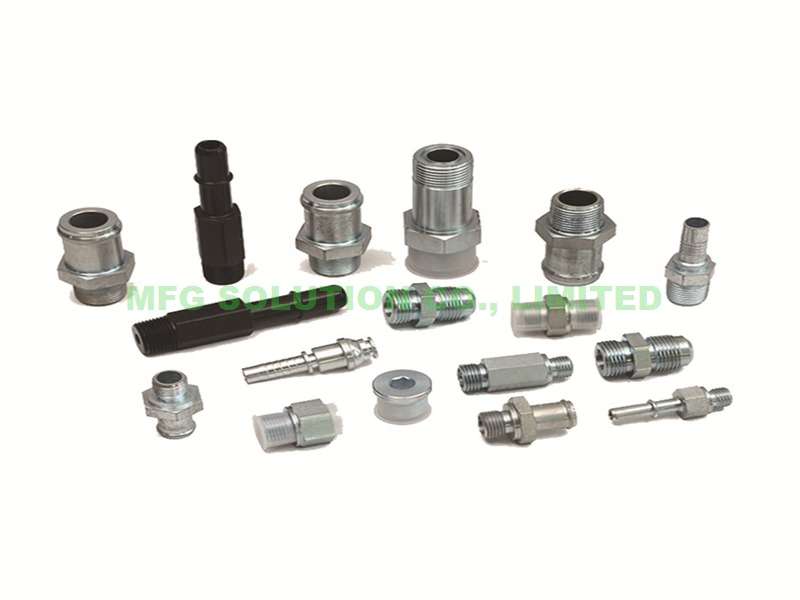
Cold forging, also called cold heading, is particularly relevant for smaller mining hardware components. At MFG SOLUTION, we’ve found that cold forging produces small parts with excellent surface finish and tight dimensional control without the thermal distortion risks associated with hot forging processes.
Key Benefits of Mining Forged Parts
Mining forged parts deliver measurably superior mechanical performance compared to cast or fabricated alternatives, making them the default choice for critical load-bearing components in mining equipment worldwide.
The performance advantages aren’t theoretical. They translate directly into longer service intervals, reduced unplanned downtime, and lower total cost of ownership over the equipment’s lifecycle. Here’s a breakdown of the core benefits.
Mechanical Performance Advantages
- Higher tensile and yield strength: The compressive forging process eliminates internal voids and refines grain structure, producing parts that consistently meet or exceed the mechanical property minimums specified in ASTM and ISO material standards.
- Superior impact resistance: Mining equipment absorbs continuous shock loads. Forged steel components absorb impact energy without brittle fracture, a critical property for drill bits, crusher jaws, and bucket pins.
- Improved fatigue life: Cyclic loading is constant in mining machinery. The aligned grain structure of a forged part resists fatigue crack initiation and propagation far more effectively than cast equivalents.
- Consistent material properties: Unlike casting, forging doesn’t produce hot spots or shrinkage voids that create localized weak points. Every part from a production run has consistent mechanical properties.
- Better surface integrity: The forging process produces a work-hardened surface layer that resists wear and abrasion, both of which are constant factors in mining environments.
Operational and Economic Benefits
- Reduced downtime: Longer-lasting components mean fewer replacement cycles and less unplanned maintenance shutdowns.
- Lower total cost of ownership: The higher unit cost of a forged part is typically offset by its longer service life and reduced failure rate.
- Design flexibility: Forging can produce complex geometries that would be difficult or impossible to machine from solid bar stock, especially for large components.
- Material efficiency: Closed-die and cold forging produce near-net-shape parts, reducing the volume of material removed during CNC machining and lowering overall material costs.
Pro Tip: When evaluating total cost, compare forged vs. cast parts on a cost-per-service-hour basis, not just unit price. A forged bucket pin that lasts 3x longer at 2x the price is the economically superior choice every time.
Industry analysts note that as of 2026, the demand for forged components in mining continues to grow, driven by deeper mine operations, harder ore bodies, and stricter equipment reliability standards imposed by mine operators. The shift toward automated and remote mining equipment has also raised the bar for component reliability, since manual intervention is harder in autonomous operations.
Common Applications of Mining Forged Parts in 2026
the practice appear in virtually every major equipment category used in surface and underground mining, from drilling and blasting through to ore processing and material transport.
The specific parts vary by mining type (hard rock, coal, oil sands, aggregate) and equipment type, but the underlying requirement is consistent: high strength, reliable dimensional accuracy, and resistance to the specific failure mode relevant to that application.
Equipment Categories and Specific Parts
The following categories represent the primary application areas for this practice as of 2026:
- Drilling equipment: Drill bits, drill collars, spindles, shafts, and ball joints. These components face the highest combined shock, torsion, and abrasion loads in mining.
- Crushing and grinding equipment: Crusher rolls, pinion racks, drive gears, bevel gears, gear blanks, and crusher jaws. Forged steel is standard here due to the extreme compressive and impact forces involved.
- Lifting and hoisting: Hoist shafts, sheave pins, hook assemblies, and connecting links. Open-die forging is common for large hoist shafts. Smaller hardware like shackles and links are typically drop-forged.
- Conveyor and transport systems: Sprockets, drive gears, flanges, bucket pins, side plates, straps, flights, and connectors. These parts run continuously and must resist fatigue failure under cyclic loading.
- Hydraulic systems: Pistons, cylinders, valve bodies, and manifold blocks. Forged hydraulic components handle high internal pressures without the porosity risk associated with castings.
- Ground support and structural: Rock bolt hardware, anchor plates, and structural connectors used in tunnel support systems.
Connecting Forging to CNC Precision Machining
Most this method don’t leave the forge in a usable condition. They need secondary CNC machining to achieve the bore diameters, thread profiles, surface finishes, and dimensional tolerances required by equipment OEM specifications. This is where precision machining services become critical to the supply chain.
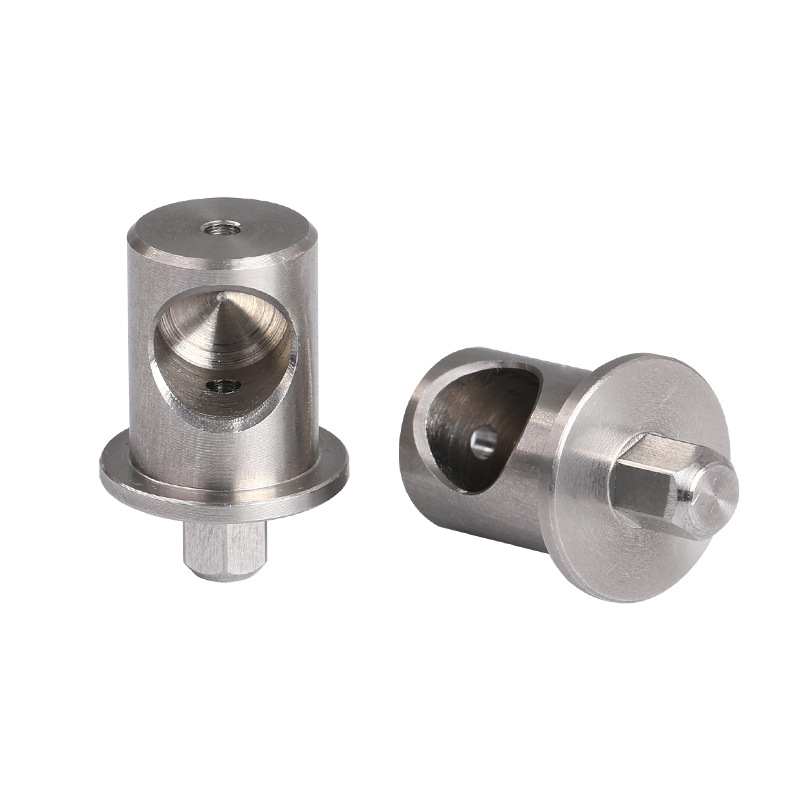
For smaller forged components, Swiss lathe machining and CNC turning are the most efficient finishing methods. For parts with complex multi-axis features, 5-axis CNC milling delivers the geometric accuracy needed. A one-stop supplier that handles both forging and precision CNC finishing significantly reduces lead time and eliminates the coordination overhead of managing two separate vendors.
For those interested in the intersection of precision metalwork and forged craftsmanship at a smaller scale, the Us Army 1st Armored Division Old Ironsides Freedom Forged Trailer Hitch Cover is a compelling example of how forged components can combine structural integrity with detailed craftsmanship in demanding applications.
Common Challenges and Mistakes in Sourcing Forged Mining Components
Sourcing this strategy involves several technical and logistical pitfalls that can result in non-conforming components, delayed deliveries, or costly field failures if not addressed during the specification and supplier qualification stages.
From experience working with procurement teams across electronics, automotive, and industrial sectors, the same categories of mistakes appear repeatedly. Mining is no exception.
Specification and Design Mistakes
- Incomplete material specifications: Specifying only a material grade (e.g., “4140 steel”) without defining the heat treatment condition, hardness range, and mechanical property minimums leaves too much room for supplier interpretation. A common mistake is assuming the supplier will default to the correct condition.
- Missing NDT requirements: Not specifying non-destructive testing requirements on the drawing means the supplier isn’t contractually obligated to perform them. Ultrasonic testing (UT) for internal defects and magnetic particle inspection (MPI) for surface cracks should be called out explicitly for critical mining components.
- Ignoring grain flow direction: For parts with directional loading (shafts, connecting rods, pins), the forging die design should orient grain flow parallel to the primary stress direction. Buyers who don’t specify this requirement may receive parts where grain flow is perpendicular to the load, significantly reducing fatigue life.
- Over-specifying tolerances: Applying unnecessarily tight tolerances to non-critical features drives up machining cost without improving part performance. One pitfall to watch for is copy-pasting tolerances from a different part drawing without reviewing which features actually require precision.
Supplier Qualification Mistakes
- Not verifying certifications: ISO 9001:2015 compliance is a baseline requirement for any mining component supplier. Skipping supplier qualification audits or accepting self-declared compliance without documentation is a significant risk.
- Choosing on unit price alone: A lower unit price from an uncertified supplier often reflects corners cut in material quality, heat treatment, or inspection. In mining, those shortcuts show up as premature field failures.
- Long lead time acceptance: Accepting 6-8 week lead times as standard when certified suppliers can deliver in days is a supply chain inefficiency that compounds during equipment downtime events.
- Single-source dependency: Relying on one supplier for critical forged components without a qualified backup creates vulnerability to supply disruption.
Pro Tip: Request a first article inspection (FAI) report with dimensional data, material certifications, and NDT results for every new forged part number before committing to production quantities. This single step catches most specification mismatches before they become expensive problems.
Best Practices for Specifying and Sourcing Mining Forged Parts in 2026
Effective procurement of this approach in 2026 requires a structured approach that covers material specification, supplier qualification, quality documentation, and lead time management simultaneously.
The following practices reflect what works in real-world manufacturing environments, not just textbook theory.
Specification Best Practices
- Define the complete material condition: Include alloy grade, heat treatment condition, hardness range (Brinell or Rockwell), and minimum mechanical properties (UTS, yield strength, elongation, Charpy impact) on every drawing.
- Specify the forging method: State whether open-die, closed-die, or cold forging is required. If grain flow direction matters (it usually does for shafts and pins), note it explicitly.
- Call out NDT requirements: Specify the NDT method, acceptance criteria, and the applicable standard (e.g., ASTM E428 for UT, ASTM E1444 for MPI) directly on the drawing or in the purchase order quality requirements.
- Define surface finish and coating requirements: Specify Ra values for machined surfaces and any corrosion protection requirements (phosphating, zinc plating, black oxide) needed for the service environment.
- Include traceability requirements: For mining-critical parts, require material heat number traceability and a certificate of conformance (CoC) with every shipment.
Supplier Selection Framework
- Verify ISO 9001:2015 certification as a minimum. For components going into equipment sold to automotive-adjacent mining OEMs, IATF 16949 compliance is increasingly required.
- Confirm the supplier has in-house CNC machining capability. Forged blanks that go to a separate machining subcontractor add lead time and introduce dimensional handoff risk.
- Evaluate quoting responsiveness. A supplier that takes two weeks to return a quote will take six weeks to ship parts. Quoting speed is a reliable proxy for operational efficiency.
- Request sample inspection reports from previous production runs to verify that their documented quality process matches their actual output.
- Assess capacity and scalability. A supplier with 60+ engineering professionals and advanced equipment including 5-axis CNC machines can handle both prototype quantities and production volumes without quality degradation.
Our team at MFG SOLUTION recommends treating supplier qualification as a one-time investment that pays dividends across every subsequent order. A qualified, certified supplier with rapid turnaround capability reduces your total procurement cost even if their unit prices are slightly higher than unqualified alternatives.
| Evaluation Criterion | Minimum Standard | Best-in-Class Standard |
|---|---|---|
| Quality certification | ISO 9001:2015 | ISO 9001:2015 + IATF 16949 |
| Quote turnaround | 3-5 business days | Within 8 hours |
| Production lead time | 2-4 weeks | 3 days for small components |
| In-house CNC capability | 3-axis CNC turning/milling | 5-axis CNC + Swiss lathe |
| NDT capability | Dimensional inspection only | CMM + UT + MPI in-house |
Frequently Asked Questions
1. What is a forged metal part?
A forged metal part is a component manufactured by applying controlled compressive force to a heated metal billet using dies, hammers, or presses, reshaping it into the desired geometry. The process refines the metal’s internal grain structure by aligning it to follow the part’s contours, producing a component with higher tensile strength, better impact resistance, and superior fatigue life compared to cast or machined-from-bar equivalents. Forging is the preferred manufacturing method for any component that must withstand high stress, shock loading, or cyclic fatigue in service.
2. What metals are commonly forged for mining applications?
The most commonly forged metals for mining applications are carbon steel, alloy steel (such as 4140 and 4340), stainless steel, and tool steel. Alloy steels dominate because they offer the best combination of strength, toughness, and hardenability needed for mining components. Aluminum forgings are used in lighter equipment structures where weight reduction matters. Copper alloys appear in specialized electrical and bearing applications. Titanium forgings are used in niche high-performance applications where weight and corrosion resistance are critical, though cost limits their broader use in mining.
3. What is the difference between open-die and closed-die forging for mining parts?
Open-die forging shapes the metal between flat or simple-profile dies, allowing the material to flow freely in the non-constrained directions. It’s used for large, simple shapes like hoist shafts and cylinders where the part is too large for a closed die. Closed-die (impression die) forging confines the metal within a machined die cavity that matches the part’s final shape, producing near-net-shape parts with tighter dimensional consistency. Closed-die forging is preferred for medium-sized mining components produced in volume, such as gear blanks, flanges, and bucket pins, where dimensional repeatability reduces downstream machining cost.
4. Do mining forged parts require CNC machining after forging?
Yes, in almost all cases. Forging produces a blank with the correct grain structure and approximate geometry, but the dimensional tolerances achievable by forging alone are insufficient for precision fits, threaded features, and mating surfaces. CNC turning, milling, Swiss lathe machining, and grinding operations are applied after forging to achieve the final dimensions, surface finish, and geometric tolerances specified on the engineering drawing. For small mining hardware components, CNC turning and Swiss lathe operations are particularly efficient for achieving tight tolerances on cylindrical features. For more information, see Us Army 1st Armored Division Old Ironsides Freedom Forged Trailer Hitch Cover.
5. What quality standards apply to mining forged parts?
ISO 9001:2015 is the baseline quality management system standard applicable to any supplier producing the practice. ASTM standards govern material specifications and testing methods (e.g., ASTM A668 for steel forgings, ASTM E428 for ultrasonic testing). For mining equipment components that also serve automotive-adjacent markets, IATF 16949 compliance is increasingly required by OEM customers. Non-destructive testing acceptance criteria are typically defined by the end-use OEM’s internal standards or referenced ASTM/EN standards called out on the engineering drawing.
6. How are mining forged parts tested for internal defects?
The two primary non-destructive testing methods for this practice are ultrasonic testing (UT) and magnetic particle inspection (MPI). Ultrasonic testing uses high-frequency sound waves to detect internal voids, cracks, and inclusions within the forged material. MPI uses magnetic fields and ferrous particles to reveal surface and near-surface cracks. For critical applications, both methods are applied. Dimensional verification is performed using coordinate measuring machines (CMM) to confirm that all machined features meet drawing tolerances. Material certifications with heat number traceability accompany conforming shipments.
7. Can small mining forged parts be sourced with rapid turnaround?
Yes. For smaller this method, particularly those under 38mm diameter, certified precision manufacturers can provide quotes within 8 hours and ship completed parts within 3 days of order approval. This is especially true for parts produced using cold forging and CNC finishing processes, where setup times are short and production cycles are fast. Larger open-die forgings for heavy mining equipment have longer lead times due to die setup, heat treatment cycles, and the physical size of the components involved. Results depend on part complexity, material availability, and batch size.
Conclusion
this strategy are the backbone of reliable mining equipment. Their superior strength, impact resistance, and fatigue life make them the only practical choice for critical load-bearing components in drilling, crushing, lifting, and transport applications. Getting them right requires precise specifications, qualified suppliers, and a clear understanding of the forging and CNC machining processes that produce them.
As of 2026, the standard for supplier performance has shifted. Mine operators and equipment OEMs expect shorter lead times, full quality documentation, and certified process control as baseline requirements, not premium options. Accepting 6-week lead times and incomplete material certifications is no longer a viable procurement strategy.
MFG SOLUTION specializes in precision small machined parts up to 38mm diameter, combining cold forging, CNC turning, Swiss lathe, and 5-axis CNC mill-and-turn capabilities under one ISO 9001:2015, ISO 13485:2016, and IATF 16949 certified roof. We quote within 8 hours and ship within 3 days. If you need this approach finished to tight tolerances with full quality documentation, our team of 60+ engineering professionals is ready to support your next project.
Recommended Articles
Explore more from our content library: