
2026-06-22
Food Processing Forgings: A Complete Industry Guide
| Key Insight | Explanation |
|---|---|
| Definition | Food processing forgings are metal components shaped under high pressure for use in food manufacturing equipment, offering superior strength and hygiene compared to cast or machined alternatives. |
| Common Materials | Stainless steel (grades 304 and 316L), aluminum alloys, and titanium are the most widely used materials due to their corrosion resistance and food-safe properties. |
| Key Components | Typical forged parts include sugar mill rolls, crusher shafts, mixer blocks, flanges, gear rings, pump housings, valve bodies, and conveyor components. |
| Strength Advantage | Forging aligns the metal’s grain structure, producing parts that are significantly stronger and more fatigue-resistant than equivalent cast or bar-stock machined parts. |
| Regulatory Context | Food processing equipment must comply with FDA, USDA, and 3-A Sanitary Standards, which drive material selection and surface finish requirements for forged components. |
| Precision Machining Role | Most forgings require post-forging CNC machining to achieve final dimensional tolerances, surface finishes, and features like bores, threads, and keyways. |
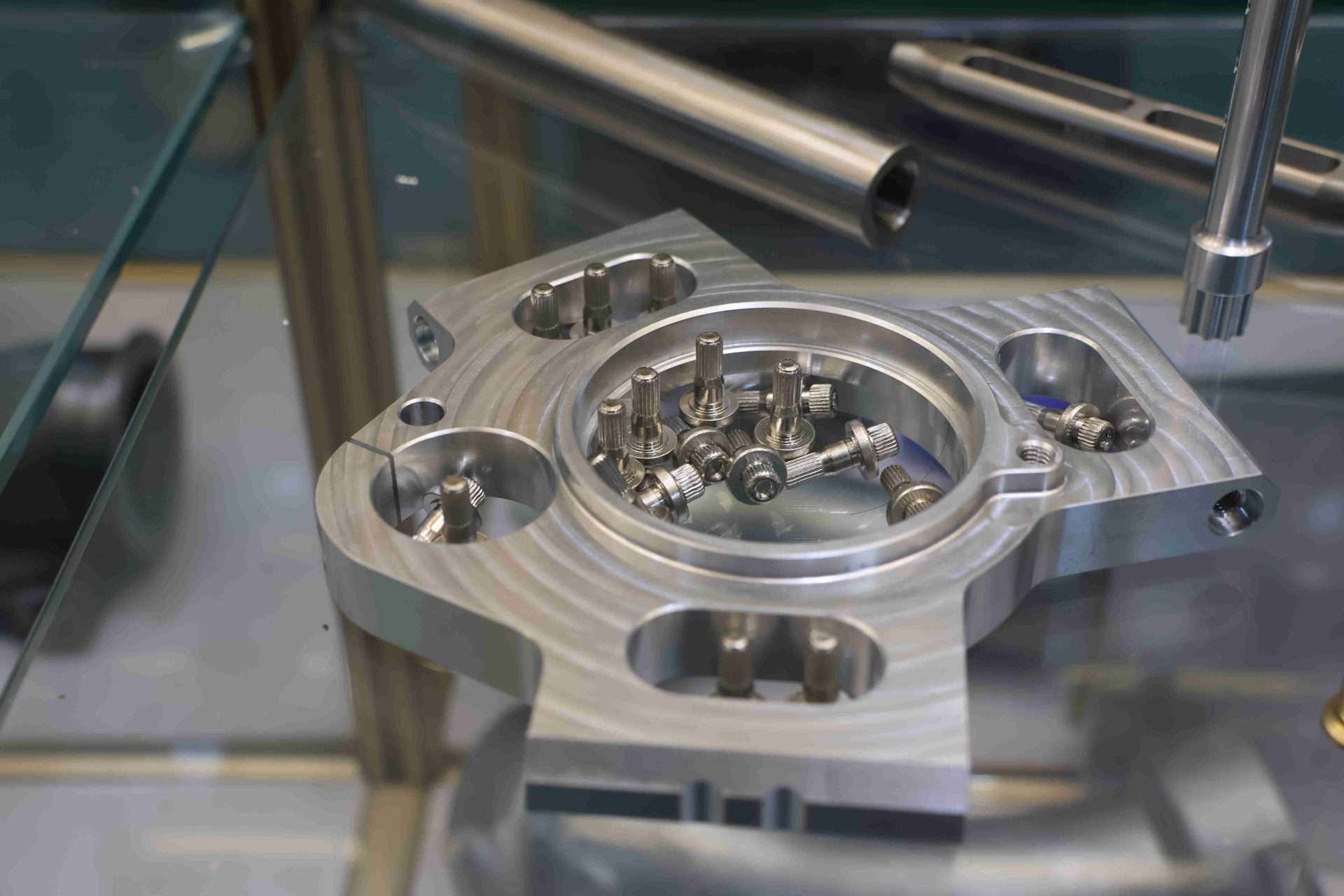
Food processing forgings are metal components produced by shaping heated or cold metal under high compressive force, specifically designed for use in food manufacturing and processing equipment. They deliver superior mechanical strength, corrosion resistance, and hygienic surface characteristics compared to cast or fabricated alternatives. In an industry where equipment failure means contamination risk, production downtime, and regulatory consequences, forged components are the preferred choice for critical applications.
The range of food processing forgings is broad. It includes sugar mill rolls, crusher shafts, mixer blocks, mill rolls, flanges, gear rings, pump housings, valve bodies, and conveyor drive components. Each part must meet strict sanitary standards while withstanding the mechanical stress of continuous industrial operation.
This guide covers how food processing forgings are made, which materials perform best, what benefits they deliver over alternatives, and how to specify and source them correctly as of 2026.
What Are Food Processing Forgings?
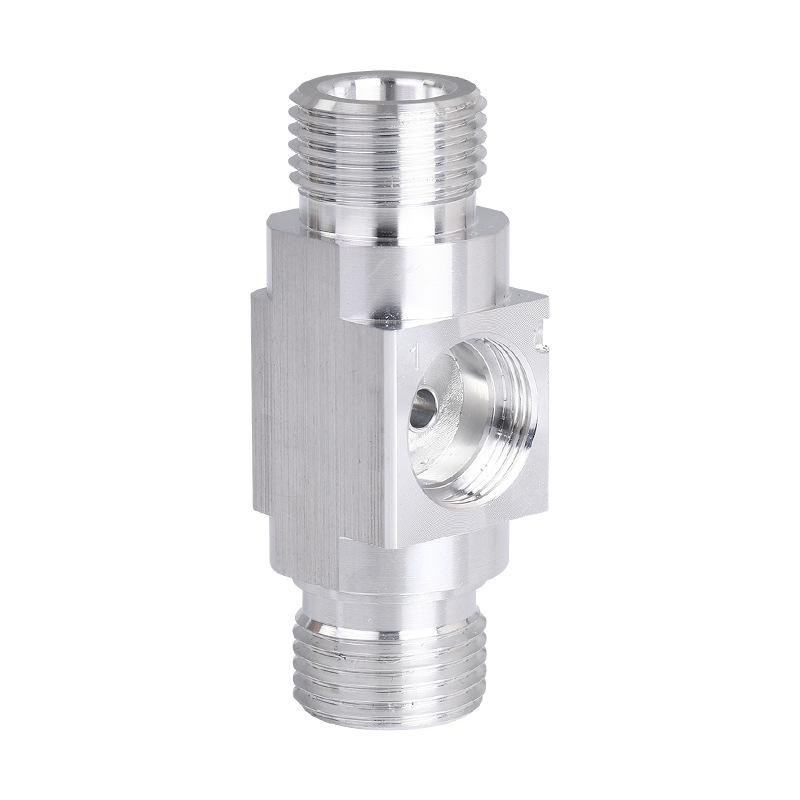
Food processing forgings are metal parts shaped under high compressive pressure for use in food industry equipment, combining mechanical durability with the hygienic material properties required by food safety regulations.
Forging is one of the oldest metalworking processes, but its application in food manufacturing is highly specialized. The food processing environment imposes demands that most industrial settings don’t: repeated washdowns with caustic cleaning agents, exposure to acidic or saline food products, strict surface finish requirements to prevent bacterial harboring, and continuous mechanical load cycles that would fatigue weaker components quickly.
What Counts as a Food Processing Forging?
The term covers any forged metal component that is part of food processing machinery or directly contacts food during production. Common examples include:
- Sugar mill rolls — large cylindrical forgings that crush sugarcane to extract juice
- Crusher shafts — high-torque shafts used in grain, nut, and vegetable processing
- Mixer blocks and agitator components — forged bodies for industrial mixing equipment
- Mill rolls — used in flour milling and cereal processing
- Flanges and fittings — connecting forged parts in sanitary piping systems
- Gear rings and drive components — power transmission parts in processing lines
- Pump housings and valve bodies — fluid control components in liquid food processing
- Conveyor drive hubs — structural components in automated food handling lines
Industry analysts note that the food and beverage equipment market continues to prioritize forged components over cast alternatives, particularly for high-load and sanitary-critical applications, because forging produces a denser, more uniform grain structure with fewer internal voids or porosity defects.
Why Forgings vs. Castings or Machined Bar Stock?
The distinction matters practically. Cast components can harbor micro-porosity, which creates pathways for bacterial ingress in food-contact surfaces. Bar-stock machined parts sever the metal’s natural grain flow, reducing fatigue strength. Forgings preserve and align the grain structure, producing parts that are stronger, tougher, and more predictable under load. For food processing equipment running 24/7 in harsh chemical environments, that difference is significant.
How Food Processing Forgings Are Made
Food processing forgings are produced through a sequence of controlled metalworking steps: material selection, heating (for hot forging) or preparation (for cold forging), die pressing or hammering, trimming, heat treatment, and final precision machining to achieve food-safe tolerances and surface finishes.
The Core Forging Process Steps
Understanding the process helps buyers specify parts correctly and evaluate supplier capabilities. The typical production sequence for a food processing forging follows these steps:
- Material selection and billet preparation — Stainless steel, aluminum, or titanium billets are cut to precise weight and volume for the target part geometry.
- Heating (hot forging) or lubrication (cold forging) — Hot forging heats the billet to above its recrystallization temperature (typically 1,000–1,250°C for stainless steel) to make it malleable. Cold forging works at room temperature with higher press forces.
- Die pressing or hammer forging — The heated billet is placed in a closed die set and compressed by a hydraulic press or mechanical hammer. The metal flows to fill the die cavity, taking the part’s near-net shape.
- Trimming and flash removal — Excess material (flash) squeezed from the die parting line is trimmed off.
- Heat treatment — Solution annealing, quenching, or aging processes optimize the mechanical properties of the forged part.
- Inspection and non-destructive testing (NDT) — Ultrasonic testing, dye penetrant inspection, or magnetic particle inspection verifies internal integrity.
- Precision CNC machining — The forging is finish-machined to final dimensional tolerances, surface finish (Ra values), bores, threads, and keyways. This step is critical for food-contact surfaces.
- Surface treatment — Electropolishing, passivation, or shot blasting achieves the required surface roughness and corrosion resistance.
Pro Tip: Specify the required surface roughness (Ra) in your engineering drawings before sourcing. Food-contact surfaces typically require Ra ≤ 0.8 µm (32 µin) per 3-A Sanitary Standards. Stating this upfront prevents costly re-work after the forging is complete.
Cold forging, in particular, is well-suited for smaller food processing components (under 38mm diameter) that require tight dimensional tolerances and excellent surface finish without the scale and distortion risks of hot forging. The process produces near-net-shape parts with minimal material waste and excellent grain flow characteristics.
What Is an Example of a Forging Process in Food Equipment?
A practical example: a stainless steel pump impeller for a dairy processing line starts as a round 316L billet. It’s hot-forged in a closed die to create the near-net disk shape, then solution-annealed to restore corrosion resistance. CNC mill and turn operations machine the vane profiles, bore, and keyway to tolerance. Finally, electropolishing achieves the Ra ≤ 0.8 µm surface required for dairy contact. The result is a component that outperforms a cast equivalent in fatigue life by a factor of two or more under continuous pump cycling.
Materials Used in Food Processing Forgings
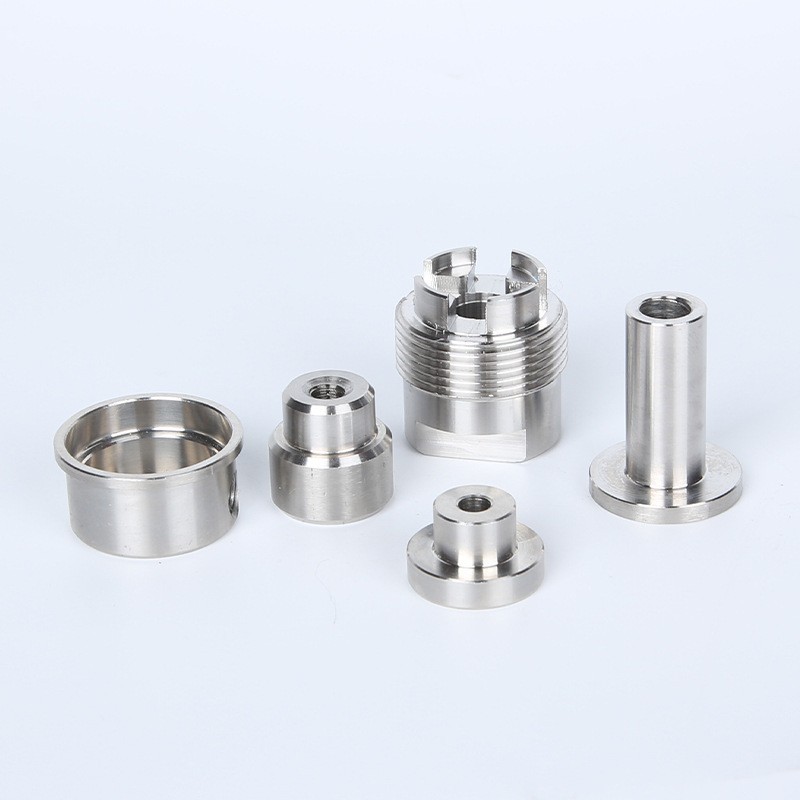
The most common materials for food processing forgings are austenitic stainless steels (grades 304 and 316L), aluminum alloys (6061 and 7075), and titanium, each chosen for specific combinations of corrosion resistance, strength, and food safety compliance.
Material Comparison for Food Processing Applications
| Material | Key Properties | Typical Applications | Limitation |
|---|---|---|---|
| 316L Stainless Steel | Excellent corrosion resistance, FDA-compliant, weldable | Pump housings, valve bodies, flanges, dairy equipment | Higher cost than 304; heavier than aluminum |
| 304 Stainless Steel | Good corrosion resistance, cost-effective, widely available | Conveyor parts, mixer components, non-chloride environments | Susceptible to pitting in chloride-rich environments |
| Aluminum 6061 | Lightweight, good machinability, corrosion resistant | Packaging machinery, conveyor hubs, beverage equipment | Lower strength than steel; not suitable for high-load crushing |
| Aluminum 7075 | High strength-to-weight ratio, good fatigue resistance | High-speed rotating components, aerospace-grade food machinery | Lower corrosion resistance without anodizing |
| Titanium (Grade 2/5) | Exceptional corrosion resistance, biocompatible, lightweight | Pharmaceutical food processing, highly acidic environments | High material and machining cost |
| Alloy Steel (4140/4340) | Very high strength, good toughness, heat-treatable | Mill rolls, crusher shafts, gear rings (non-food-contact) | Requires coating for food-contact use; susceptible to corrosion |
Regulatory Compliance and Material Selection
Material choice isn’t just an engineering decision. It’s a regulatory one. As of 2026, food processing equipment in the United States must comply with:
- FDA 21 CFR — regulations governing materials that contact food
- USDA guidelines — particularly for meat and poultry processing facilities
- 3-A Sanitary Standards — the benchmark for hygienic equipment design in dairy and beverage processing
- NSF/ANSI 51 — food equipment material safety standards
316L stainless steel is the default choice for food-contact forgings precisely because it satisfies all of these frameworks without additional coatings or treatments. Industry analysts consistently recommend it for any application involving acidic foods, saline brines, or frequent CIP (clean-in-place) washdown cycles.
Key Benefits of Food Processing Forgings
Food processing forgings deliver superior fatigue strength, hygienic surface integrity, dimensional consistency, and long service life compared to cast or fabricated alternatives, making them the preferred choice for critical food equipment components.
Mechanical and Hygienic Advantages
The benefits of forging over casting or machined bar stock are well-documented across the manufacturing industry. For food processing specifically, the advantages are even more pronounced:
- Superior grain structure — Forging aligns the metal’s crystalline grain flow along the part’s stress lines, increasing tensile strength by 20–30% compared to equivalent cast parts.
- No internal porosity — Cast components frequently contain micro-voids that harbor bacteria. Forged parts are dense and void-free, a critical advantage for food safety.
- Better fatigue resistance — Food processing equipment runs continuously. Forged components handle cyclic loading far better than castings, reducing premature failure rates.
- Consistent mechanical properties — Every forged part from a given die and process has predictable, repeatable properties. This consistency supports quality management systems like ISO 9001:2015.
- Cleanability — Forged surfaces, when finish-machined to the correct Ra value, are smooth and non-porous, supporting effective CIP cleaning without residue buildup.
- Longer service life — In practice, forged components in sugar mills and grain processing facilities routinely outlast cast equivalents by 2x to 3x, reducing maintenance downtime and total cost of ownership.
Pro Tip: When evaluating total cost of ownership, factor in replacement frequency, not just unit price. A forged flange that costs 40% more than a cast equivalent but lasts three times longer is significantly cheaper over a five-year production cycle.
Real-World Performance Example
A food processing equipment supplier recently faced repeated failures with cast stainless flanges on a high-pressure juice pasteurization line. The flanges were cracking at the bolt holes after 8–10 months of service. Switching to closed-die forged 316L flanges with the same nominal dimensions extended service life beyond 36 months, eliminating two unplanned shutdowns per year. The forged parts cost more per unit but saved substantially more in downtime and maintenance labor.
At MFG SOLUTION, we’ve found that customers in the food and beverage equipment sector consistently underestimate the fatigue loading their components experience during continuous production. Specifying forgings with appropriate post-forging CNC machining to final tolerances is the most reliable way to avoid premature field failures.
Common Challenges and Mistakes in 2026
The most frequent mistakes in sourcing food processing forgings include incorrect material specification, insufficient surface finish requirements, inadequate supplier quality verification, and failing to account for post-forging machining in cost and lead time planning.
Specification and Sourcing Pitfalls
From experience, these are the errors that cause the most problems for procurement teams and equipment manufacturers:
- Specifying 304 instead of 316L for chloride environments — This is a common and costly mistake. Chloride-based sanitizers (common in meat processing) will pit 304 stainless rapidly. Always specify 316L for washdown environments.
- Omitting surface finish requirements — Drawings that specify only dimensional tolerances without Ra values leave the supplier to interpret finish requirements. Food-contact surfaces need explicit Ra ≤ 0.8 µm callouts.
- Treating forgings as drop-in replacements for castings — Forgings and castings have different draft angles, parting line locations, and near-net geometries. Attempting to substitute one for the other without design review often results in non-conforming parts.
- Ignoring supplier quality certifications — Food processing equipment manufacturers need traceable, documented quality systems. Sourcing from uncertified suppliers creates audit exposure. Verify ISO 9001:2015 certification at minimum.
- Underestimating post-forging machining requirements — A forging is rarely a finished part. Budget and lead time must account for CNC turning, milling, drilling, and surface treatment after the forging operation.
- Single-sourcing without qualification — Supply chain disruptions remain a real risk as of 2026. Qualifying at least two suppliers for critical forged components is standard risk management practice.
Quality Verification Mistakes
One pitfall to watch for: accepting material certifications (mill certs) without verifying that the chemical composition meets the specific grade requirements for food contact. A certificate that says “stainless steel” without specifying the UNS designation (e.g., UNS S31603 for 316L) is insufficient for compliance purposes.
Non-destructive testing (NDT) is another area where buyers cut corners. Ultrasonic testing to detect internal voids or cracks should be specified for any forging used in a pressure-bearing or high-cycle fatigue application. Skipping NDT to save cost is a false economy in food processing environments where a field failure can trigger a recall.
Best Practices for Specifying Food Processing Forgings
Effective specification of this method requires clear engineering drawings with material grade, surface finish, dimensional tolerances, heat treatment requirements, and NDT criteria defined before supplier engagement.
A Practical Specification Framework
Use this framework when creating or reviewing specifications for this strategy:
- Define the material by UNS designation — Not just “316 stainless” but “UNS S31603 (316L) per ASTM A182.” Precision in material specification prevents substitution.
- Specify forging method — Closed-die forging for tight dimensional control; open-die for large components where near-net shape is less critical.
- Call out heat treatment — For stainless steels, specify solution annealing and passivation per ASTM A967 to restore corrosion resistance after forging.
- Define dimensional tolerances explicitly — State the tolerance class (e.g., ISO 2768-m) or provide individual feature tolerances on the drawing.
- Specify surface finish for food-contact surfaces — Ra ≤ 0.8 µm (32 µin) for most 3-A Sanitary Standards applications; Ra ≤ 0.4 µm for pharmaceutical-grade food processing.
- Include NDT requirements — Specify ultrasonic testing per ASTM A388 for critical structural forgings.
- Require material traceability — Full material certification (mill cert) with heat number traceability should accompany every shipment.
- Verify supplier certifications — ISO 9001:2015 is the baseline; ISO 13485:2016 for pharmaceutical food processing; IATF 16949 for equipment used in automotive food packaging lines.
Pro Tip: Request a First Article Inspection (FAI) report for new forged components before committing to production quantities. An FAI verifies that the supplier’s process produces parts that fully conform to your drawing, catching issues before they appear in thousands of pieces.
Integrating Post-Forging Machining Effectively
Most this approach require significant CNC machining after the forging operation. Choosing a supplier that integrates both forging and precision machining under one quality system simplifies traceability and reduces lead time. For smaller components (under 38mm diameter), cold forging combined with CNC turning or Swiss lathe machining is often the most cost-effective process combination, delivering tight tolerances and excellent surface finish in a single supplier relationship.
Our team at MFG SOLUTION recommends that buyers evaluate suppliers not just on forging capability but on their downstream CNC machining capacity. A supplier with 5-axis CNC machines, automatic lathes, and mill-turn capability can take a forging from near-net shape to finished, inspection-ready part with full dimensional traceability, which is exactly what food equipment manufacturers need for compliance documentation.
Frequently Asked Questions
1. What is an example of a forging process used in food processing?
A clear example is the production of a stainless steel pump impeller for a dairy processing line. A 316L billet is hot-forged in a closed die to create the near-net disk shape, solution-annealed to restore corrosion resistance, then CNC machined to final vane geometry, bore, and surface finish (Ra ≤ 0.8 µm). The result is a component with superior fatigue life compared to a cast equivalent, compliant with 3-A Sanitary Standards for food contact. Other common examples include closed-die forging of flanges, valve bodies, and mixer shafts used across beverage, meat, and grain processing facilities.
2. What materials are used in food processing forgings?
The primary materials are austenitic stainless steels, particularly 316L (UNS S31603) for food-contact and washdown environments, and 304 for less aggressive conditions. Aluminum alloys (6061, 7075) are used in packaging and beverage machinery where weight matters. Titanium is specified for pharmaceutical-grade food processing where maximum corrosion resistance is required. Alloy steels like 4140 and 4340 are used for high-load non-food-contact components such as mill rolls and crusher shafts, typically with protective coatings.
3. Why are forgings preferred over castings for food processing equipment?
Forgings are preferred because they produce a denser, void-free grain structure that eliminates the micro-porosity found in castings. In food processing, micro-pores are bacteria harboring sites that resist cleaning and sanitizing. Forged components also have 20–30% higher tensile strength and significantly better fatigue resistance than cast equivalents, which translates to longer service life in continuous-operation food manufacturing environments. The combination of mechanical superiority and hygienic surface capability makes the practice the standard choice for critical equipment components.
4. What surface finish is required for food-contact forgings?
For most food processing applications, 3-A Sanitary Standards require a surface roughness of Ra ≤ 0.8 µm (32 µin) on food-contact surfaces. Pharmaceutical-grade food processing often requires Ra ≤ 0.4 µm. These finishes are achieved through post-forging CNC machining and surface treatments such as electropolishing or passivation. Specifying the Ra value explicitly on engineering drawings is essential, as a forging in the as-forged condition typically has Ra values of 3.2–6.3 µm, which is not acceptable for direct food contact.
5. What quality certifications should a food processing forgings supplier have?
At minimum, suppliers should hold ISO 9001:2015 certification, which establishes a documented quality management system with full process control and traceability. For pharmaceutical food processing applications, ISO 13485:2016 (the medical device quality standard) is increasingly required because of its stricter documentation and validation requirements. Suppliers serving food equipment manufacturers in the automotive packaging sector should also hold IATF 16949 certification. Beyond certifications, verify that the supplier performs material traceability, first article inspection, and NDT for critical components.
6. What is cold forging and when is it used for food processing parts?
Cold forging is a process where metal is shaped at or near room temperature using high compressive force, without the heating step required in hot forging. It’s particularly effective for smaller this practice (typically under 38mm diameter) that require tight dimensional tolerances, excellent surface finish, and minimal material waste. Cold forging produces near-net-shape parts with work-hardened surfaces that are dimensionally consistent batch to batch. It’s commonly used for small flanges, fittings, valve components, and drive pins in food processing machinery where precision and volume efficiency are both priorities.
7. How long do food processing forgings typically last compared to cast parts?
In practice, forged components in demanding food processing applications typically outlast cast equivalents by 2x to 3x under comparable operating conditions. For example, forged stainless flanges on high-pressure pasteurization lines have demonstrated service lives exceeding 36 months where cast equivalents failed within 8–12 months. The actual service life depends on material grade, operating pressure and temperature, cleaning chemical exposure, and maintenance practices. Results vary by application, but the fatigue and corrosion resistance advantages of forgings consistently translate to longer intervals between replacements and fewer unplanned shutdowns.
Conclusion
this method are a foundational element of reliable, hygienic, and durable food manufacturing equipment. From sugar mill rolls and crusher shafts to pump housings and sanitary flanges, forged components deliver the mechanical strength, void-free structure, and cleanable surface characteristics that food processing environments demand. Getting the material specification, surface finish requirements, and supplier quality verification right from the start is what separates a 36-month service life from an 8-month failure.
For smaller this strategy (under 38mm diameter), the combination of cold forging and precision CNC machining is the most cost-effective and dimensionally consistent production approach available as of 2026. It’s a process combination that delivers near-net-shape efficiency with finished-part precision.
MFG SOLUTION provides cold forging, CNC turning, Swiss lathe, and CNC mill and turn services for precision components up to 38mm diameter, backed by ISO 9001:2015, ISO 13485:2016, and IATF 16949 certifications. Our team of 60+ engineering professionals can quote your this approach within 8 hours and ship within 3 days, with full material traceability and documented process control at every step.
Recommended Articles
Explore more from our content library: