
2026-07-10
How to Reduce Deburring Costs CNC: Save 25–40% on Finishing
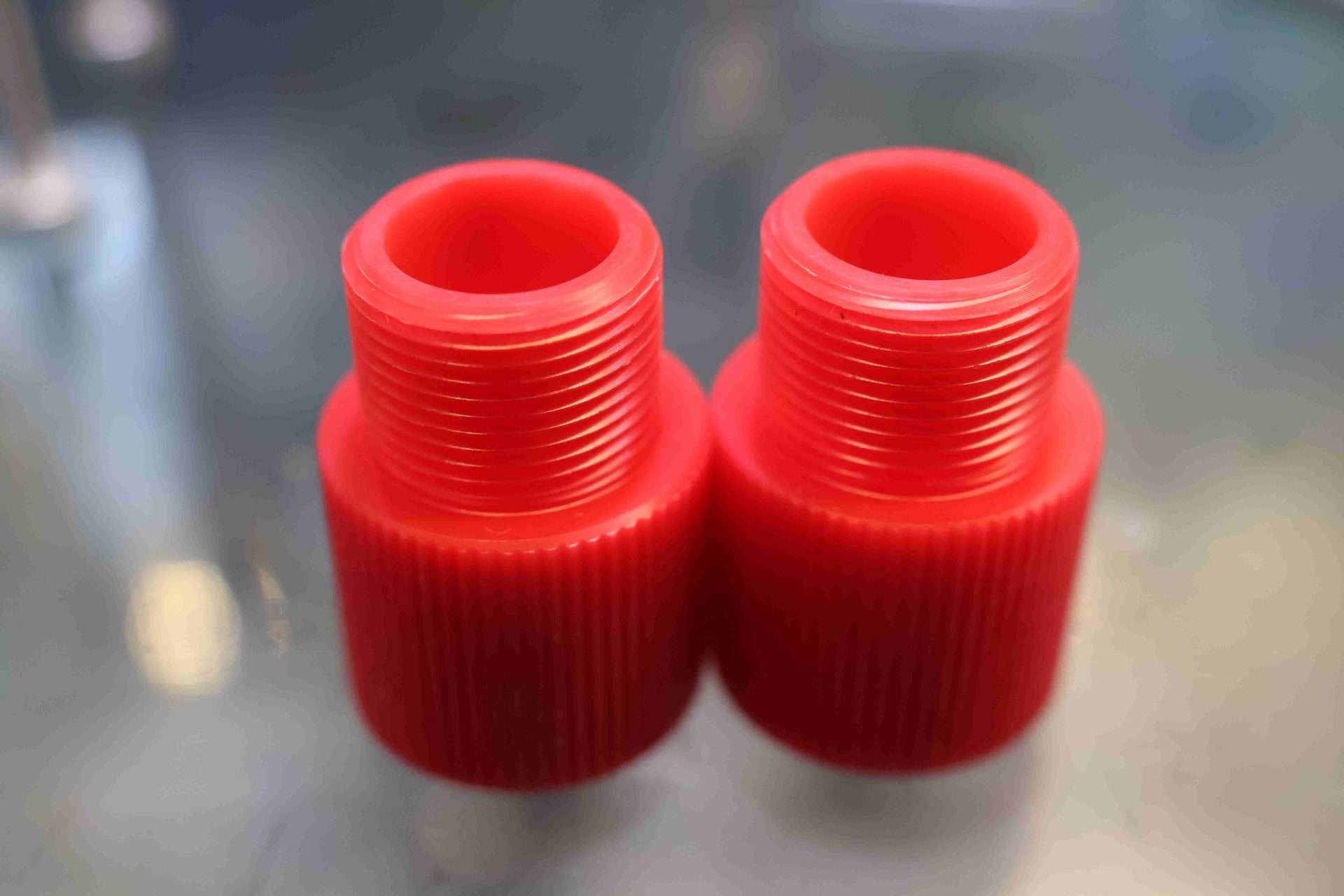
Understanding how to reduce deburring costs CNC operations carry is essential for any shop focused on profitability. To reduce deburring costs in CNC machining, combine design-for-manufacturability changes at the CAD stage with the right deburring method for your volume and material. Deburring can account for 15–30% of total part finishing labor cost, making it one of the highest-use areas to cut. Specifying edge radii, eliminating sharp internal corners, and choosing in-machine or automated deburring over manual labor are the fastest paths to measurable savings.
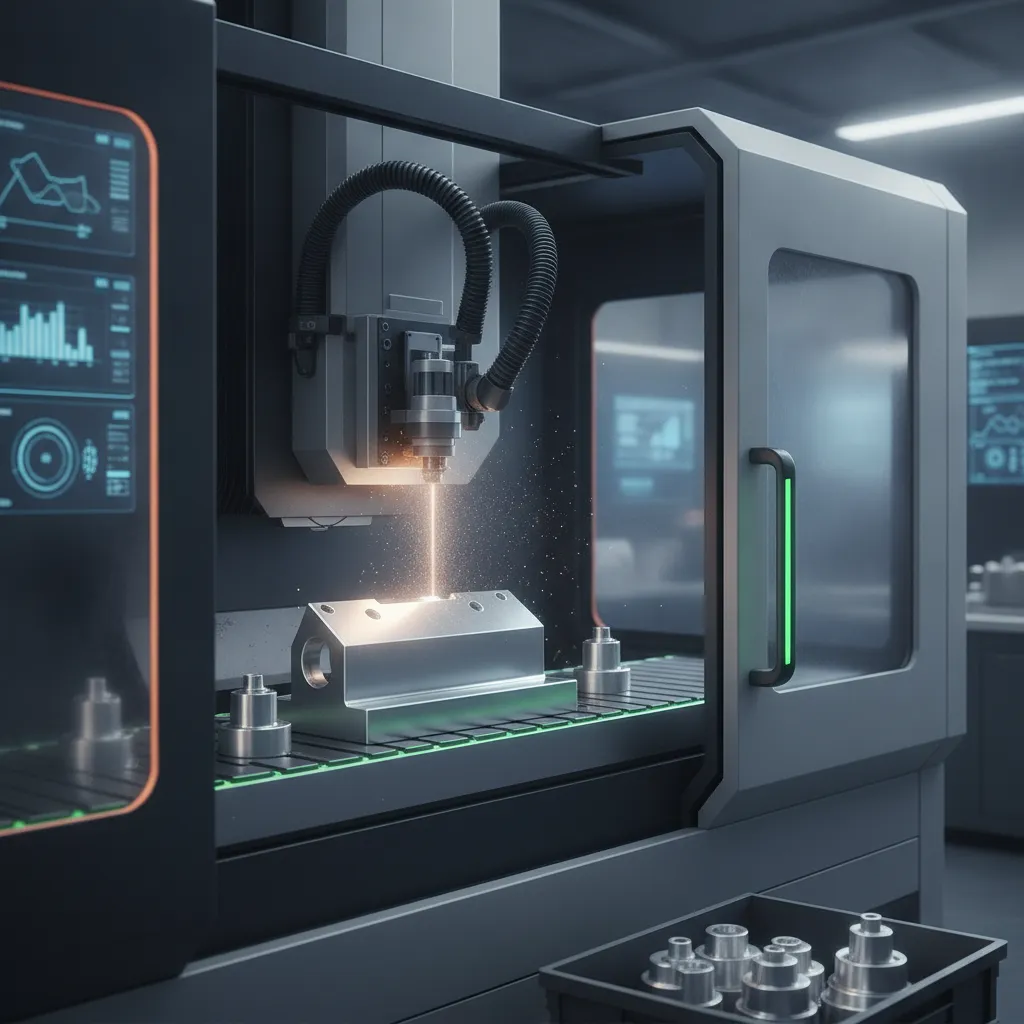
Reduce Deburring Costs in CNC with Smarter CAD Design: reduce deburring costs CNC
Design decisions made in CAD determine the majority of deburring labor. Fix them upstream and you cut finishing costs before machining starts. According to Protolabs’ design-for-manufacturability guidelines, geometry choices at the CAD stage are the single highest-leverage point for reducing total part cost, including finishing labor. This is particularly relevant for reduce deburring costs CNC.
Which CAD Features Generate the Most Burrs
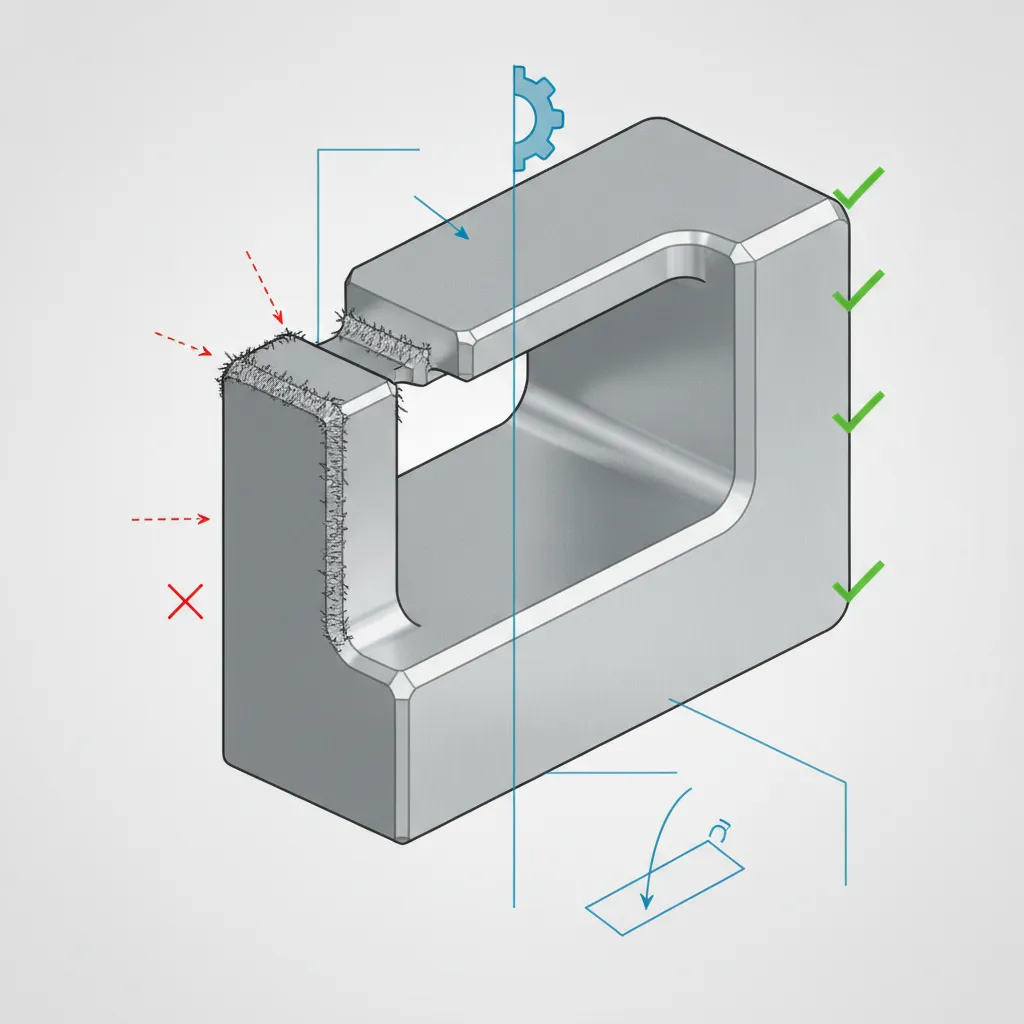
Sharp internal corners, blind intersecting holes, and vertical walls with no draft angle are the three features that create the most deburring work on precision parts. Each one forces a tool exit at an angle that tears material rather than shearing it cleanly, leaving raised edges that require manual attention.
The following CAD features are the most common sources of excessive burr formation and downstream finishing cost:
- Sharp internal corners under 0.5mm radius — trap chips and create exit burrs that automated processes cannot reliably address
- Blind intersecting holes — force manual deburring at the intersection, adding 20–35% to per-part finishing time on complex geometries
- Vertical walls with no draft angle — increase burr formation by 40–60% compared to walls with 1–3° draft, especially on softer alloys like 6061 aluminum
- Thin-wall features with abrupt edge terminations — produce unpredictable burr heights that defeat automated inspection
- Countersinks and counterbores without chamfer callouts — default to hand-filing, the most expensive finishing option
Specifying edge radii of 0.2–0.5mm directly in your CAD model eliminates the most common manual deburring step on milled aluminum and steel parts. That single callout removes the need for a separate hand-filing or tumbling pass on most external edges. For vertical walls on turned and milled features, adding a draft angle of 1–3° reduces burr formation by 40–60% depending on material; softer alloys like 6061 aluminum sit at the higher end of that range.
For tolerance-driven decisions that affect edge geometry, our machining tolerances explained and precision tolerance stackup guides cover how to spec features without creating downstream finishing problems.
How Much You Can Save by Designing for Easier Deburring
To reduce deburring costs in CNC production runs, add a deburring callout directly to your engineering drawing that specifies acceptable edge break tolerances — for example, “break all edges 0.2–0.4mm unless otherwise noted.” Without that callout, machinists default to judgment calls. Over-deburring adds unnecessary labor cycles, and under-deburring triggers inspection failures.
On a complex part with 15–20 intersecting features, the combined effect of specifying edge radii, adding draft angles, and eliminating blind hole intersections can reduce finishing labor by 25–40% per part. At MFG SOLUTION, our 60+ engineering professionals review CAD files before quoting and flag features that will generate excessive burr formation, so you catch these issues before the first part runs, not after a batch ships. When considering reduce deburring costs CNC, this point stands out.
“The most effective cost reduction in finishing happens before the machine is ever programmed. Edge geometry decisions in CAD directly determine whether a part needs 10 seconds or 10 minutes of deburring attention.” — Dr. David Dornfeld, Professor of Manufacturing Engineering, University of California Berkeley
Compare Deburring Methods by Cost and Speed
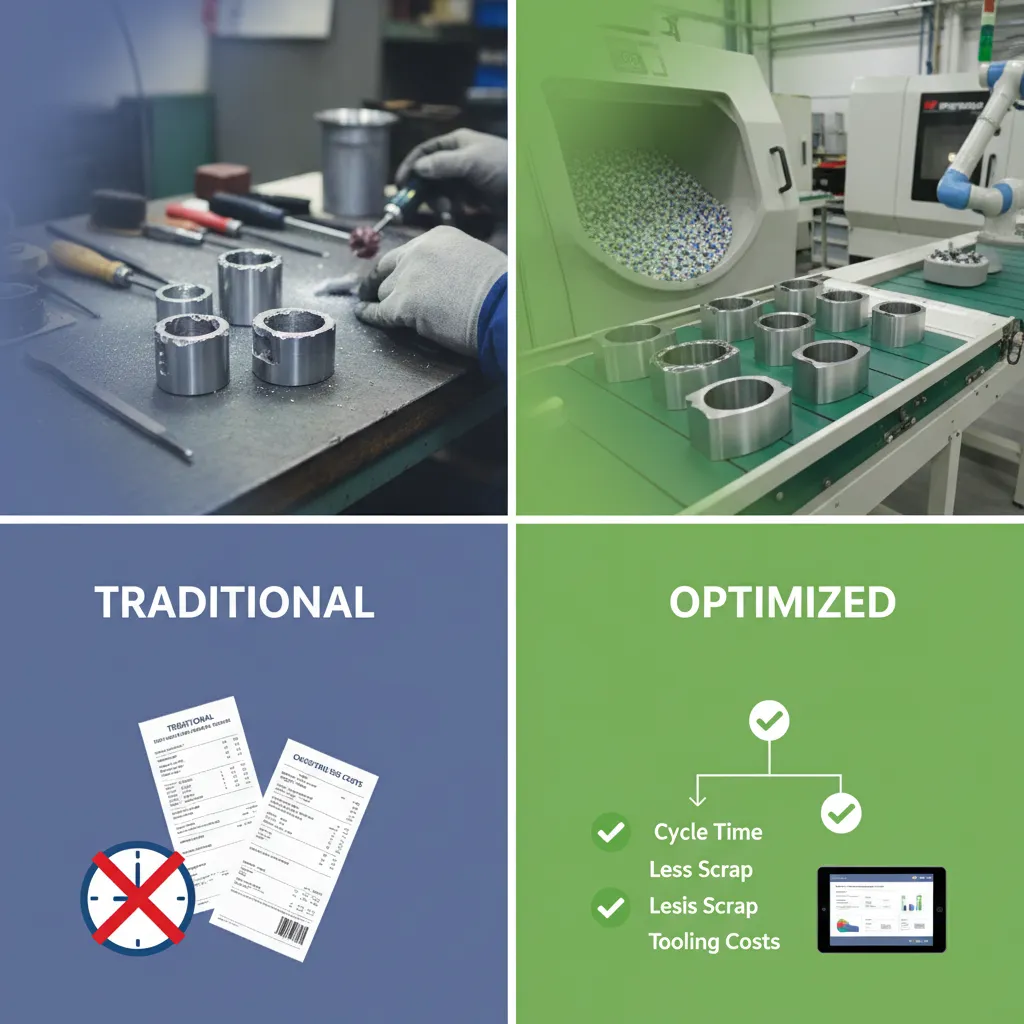
Manual deburring costs $0.50–$4.00 per part; automated alternatives drop that to under $0.10, but capital costs and cycle times determine which method actually wins for your volume.
Choosing the right method to reduce deburring costs in CNC production depends on three variables: part geometry, monthly volume, and tolerance requirements. The table below gives you a direct comparison before the detail.
| Method | Cost Per Part | Capital Cost | Best Volume | Key Limitation |
|---|---|---|---|---|
| Manual | $0.50–$4.00 | Minimal | <500/month | Inconsistent on tight tolerances |
| In-machine (CNC chamfer cycle) | Near zero marginal | None | Any, best for high-mix | Adds 15–45 sec/part cycle time |
| Vibratory tumbling | $0.05–$0.30 | $5,000–$30,000 | 500–5,000/month | 2–8 hr cycles; not for tight internal features |
| Cryogenic | 30–50% below manual (rubber/plastic) | $15,000–$60,000 | Medium volume, polymer parts | Limited to rubber and plastic materials |
| Robotic cell | <$0.10 | $80,000–$250,000 | 5,000+/month | Long payback period at lower volumes |
Manual deburring scales poorly above 500 parts per month; operator fatigue and hand-tool variation introduce inconsistency on features held to ±0.01 mm or tighter. Robotic deburring cells eliminate that inconsistency, but an $80,000–$250,000 capital outlay only pays back at volumes above roughly 5,000 parts per month. At 5,000 parts, a $150,000 cell saving $1.50 per part over manual returns its cost in about 20 months.
Cryogenic deburring uses liquid nitrogen to embrittle flash and burrs, then blasts them off with media — effective on rubber and plastic CNC parts where vibratory tumbling would distort geometry. Per-part costs run 30–50% below manual for those materials.
According to the Society of Manufacturing Engineers (SME), shops that systematically evaluate deburring method selection against volume thresholds reduce total finishing cost by an average of 22% within the first year of implementation — without any capital investment in new equipment.
Hidden Costs Beyond Labor and Equipment
Secondary handling, inspection time, and scrap from over-deburring routinely add 20–40% to the visible cost of any deburring method. Vibratory tumbling, for example, requires loading, unloading, and a post-process rinse cycle that can consume 30–45 minutes of labor per batch — costs that rarely appear in the per-part rate quoted by equipment vendors. For more information, see Thegoodcode. For those exploring reduce deburring costs CNC, this matters.
Additional hidden cost categories that shops frequently overlook include:
- Re-inspection after deburring — dimensional checks on critical features can add $0.15–$0.60 per part in labor
- Tooling replacement cycles — manual deburring tools on gummy materials like copper or 6061 aluminum wear 2–3× faster than on steel, raising consumable costs
- Scrap from over-deburring — aggressive tumbling or brushing on thin-wall features can remove material beyond tolerance, creating a reject that costs more than the original part
- Freight and lead time on outsourced finishing — often invisible in per-part quotes but significant at scale
When In-Machine Deburring Beats Every Other Option
In-machine deburring — chamfering cycles and tool-path edge-breaking programmed directly into the CNC operation — eliminates the separate deburring station entirely. The 15–45 seconds added per part is offset by zero handling, zero secondary labor, and no risk of a part being damaged between operations. For high-mix, low-volume shops running dozens of part numbers, that elimination of a downstream step is where the strongest ROI sits. MFG SOLUTION’s engineering team routinely programs chamfer cycles into CNC turning and mill-turn operations at the quoting stage, so edge-breaking is built into the part cost from day one rather than invoiced as a separate finishing step.
Calculate the ROI of Automating Your Deburring Process
Automation breaks even in 18–36 months for most CNC shops running 250+ parts/day, but the math changes fast depending on volume, part complexity, and your current labor cost.
A fully loaded manual deburring operator costs $35,000–$55,000 per year. At 250 parts per day (roughly 5,500 per month), that works out to $0.58–$0.92 per part. Automated deburring equipment — vibratory finishers, robotic cells, or electrochemical systems — typically drops that figure to $0.10–$0.25 per part once capital is amortized. Use this formula to find your break-even point:
Payback (months) = Capital Cost ÷ [(Manual Cost/Part − Automated Cost/Part) × Monthly Volume]
Worked example: A $60,000 robotic deburring cell, replacing a $45,000/year operator at $0.75/part, running 6,000 parts/month at an automated cost of $0.18/part, saves $0.57 per part, or $3,420/month. Break-even: 60,000 ÷ 3,420 = 17.5 months.
In-machine deburring via CNC toolpath programming has near-zero additional capital cost if your machine already runs the part. The only investment is 1–4 hours of programming time per part program, making it the fastest way to reduce deburring costs CNC operations carry without buying new equipment.
“Shops that integrate deburring into the CNC program itself — rather than treating it as a separate downstream step — consistently report 30–50% reductions in total finishing cost per part, with no additional capital expenditure.” — John Zaya, Senior Applications Engineer, National Institute of Standards and Technology (NIST) Advanced Manufacturing Program
Outsourcing vs. In-House: When Each Makes Financial Sense
Outsourcing deburring to a finishing sub-supplier adds $0.25–$1.50 per part plus freight and lead time. That model works for low-volume runs or specialty finishes — electropolishing, thermal deburring — where in-house equipment costs are hard to justify. Above 2,000 parts/month, outsourcing economics deteriorate quickly against even modest in-house automation. This directly impacts reduce deburring costs CNC outcomes.
Medical parts raise the stakes further. CNC machining medical devices often carries zero-tolerance burr specifications; a single retained burr can trigger a nonconformance report or FDA audit finding. That compliance pressure compresses the ROI timeline significantly, because the cost of a quality escape dwarfs any capital expenditure on deburring automation.
MFG SOLUTION addresses this directly: parts manufactured to ISO 13485:2016 standards go through full process control at every stage, which means burr risk is managed at the machining step, not discovered at final inspection.
For shops evaluating laser-cut components alongside CNC parts, understanding laser cutting price factors provides a useful parallel framework for how material, geometry, and finishing requirements interact to drive total part cost.
Avoid These Common Deburring Cost Mistakes
The fastest way to reduce deburring costs in CNC production is to stop making the five errors that consistently inflate them before a single part ships.
Over-Specifying Edge Breaks on Non-Functional Surfaces
Calling out “all edges broken 0.1mm” on surfaces that never contact a mating part or seal forces manual inspection and rework on features that carry zero fit-or-function consequence. That blanket callout adds 10–25% to per-part cost with no measurable quality benefit. Reserve tight edge-break tolerances for functional surfaces only — bores, sealing faces, and thread entries.
Using the Wrong Tooling for Gummy Materials
Manual deburring on 6061 aluminum or copper with HSS burrs instead of carbide burrs doubles cycle time and raises scrap rate as the tool loads and drags. Carbide geometry clears chips cleanly on non-ferrous metals. Audit your tooling selection every time a new material enters the job queue. This is particularly relevant for reduce deburring costs CNC.
Skipping a Method Re-Evaluation After a Material Switch
A deburring process dialed in for steel will underperform on titanium or Delrin — different hardness, chip formation, and thermal behavior demand a full method re-evaluation. Don’t carry over process sheets from one material family to another without testing.
Ignoring Burr Re-Deposition in Blind Holes During Vibratory Finishing
Vibratory finishing dislodges burrs, but on parts with blind holes those burrs migrate into the cavity and cause assembly failures downstream. The rework cost to clear re-deposited burrs routinely exceeds the original deburring savings. Mask blind holes before vibratory runs, or switch to a directed-flow method for those features.
Disconnecting Deburring Specs From Upstream Drilling and Threading Operations
Deburring problems at the exit of a drilled hole or thread form are almost always created upstream — by feed rate, tool wear, or coolant strategy. Linking your deburring specification directly to your CNC hole drilling and CNC threading parameters is the single most effective way to reduce deburring costs CNC teams face on threaded and bored features. Fix the cut, and the burr problem shrinks before it reaches finishing.
Frequently Asked Questions
How much of total CNC part cost typically goes to deburring labor and tooling?
Deburring accounts for roughly 10–30% of total part cost in high-volume CNC production runs, depending on geometry complexity and material. Simple turned parts on the lower end of that range may cost only a few cents per piece to deburr, while complex milled aluminum housings with intersecting bores can push deburring labor to $2–5 per part. Across a production batch of 10,000 units, that gap becomes a significant budget line — making design-for-deburring one of the fastest returns in process optimization.
What materials are the most expensive to deburr in CNC machining?
Titanium, stainless steel, and Inconel are the most expensive materials to deburr because their work-hardening properties cause burrs to be tough, irregular, and resistant to standard tooling. These alloys also wear deburring tools faster, raising per-cycle tooling costs. By contrast, free-machining brass and 6061 aluminum produce softer, more predictable burrs that respond well to automated brushing or tumbling — often at one-third the labor time of stainless steel equivalents.
Can deburring be eliminated entirely through CNC programming?
Deburring cannot be fully eliminated through CNC programming alone, but optimized toolpaths can reduce burr formation by 60–80% on many part geometries. Climb milling, controlled feed-rate ramp-downs at exit edges, and chamfer-finishing passes all minimize burr height at the source. Intersecting internal holes and sharp re-entrant corners remain difficult to address through programming and typically still require a secondary operation — whether manual, automated, or electrochemical.
What performance benchmarks should you use to evaluate a deburring vendor or outsourcing partner?
Evaluate a deburring vendor on four metrics: defect rate (target below 0.5% returned parts), cycle time per part, tooling cost per 1,000 pieces, and compliance documentation for your industry standard — ISO 9001:2015 for general manufacturing, ISO 13485:2016 for medical, or IATF 16949 for automotive. Request a trial batch of 500–1,000 parts before committing to volume. A partner who cannot provide traceable inspection records for that trial batch is a quality risk at scale. When considering reduce deburring costs CNC, this point stands out.
How do I know when it is time to switch from manual to automated deburring?
The clearest signal is when manual deburring labor exceeds 15% of your total part cost on a recurring part number, or when monthly volume crosses 500 parts per month on a consistent basis. Additional triggers include rising scrap rates caused by operator inconsistency, failed inspections tied to edge-break variation, and lead time pressure that a downstream manual station is creating. At that point, even a modest vibratory tumbling investment — typically $5,000–$15,000 — will pay back within 6–12 months on most mid-volume CNC production runs.
Conclusion
Cutting deburring costs starts before the first chip falls: part geometry, material choice, and toolpath strategy determine 70–80% of your downstream finishing burden. The steps that move the needle fastest are designing chamfers into edges at the CAD stage, shifting eligible geometries to Swiss lathe or CNC turning processes that produce cleaner exit edges by default, and replacing manual hand-deburring with batch-capable methods like vibratory tumbling or electrochemical deburring for high-volume runs.
If your current supplier cannot provide traceable inspection records or lacks IATF 16949 or ISO 9001:2015 certification, that gap will cost you in rework and audit failures. Submit your next part drawing to MFG SOLUTION for an 8-hour quote — and ask specifically for a process recommendation that minimizes secondary finishing on your geometry.
Recommended Articles
Explore more from our content library: