
2026-07-04
1030 Steel Dana Tool: Properties, Uses & Machining

| Key Insight | Explanation |
|---|---|
| Carbon Content | AISI 1030 steel contains approximately 0.28–0.34% carbon, placing it firmly in the medium-carbon category. |
| Tensile Strength | Hot-rolled 1030 steel delivers a tensile strength of roughly 470–550 MPa, rising significantly after heat treatment. |
| Machinability | Rated at approximately 70% of AISI 1212 (the standard baseline), 1030 steel machines cleanly with proper tooling and coolant. |
| Common Applications | Shafts, gears, bolts, axles, crankshafts, and general-purpose machine parts across automotive and industrial sectors. |
| Heat Treatment | Can be normalized, annealed, or quenched-and-tempered to achieve a maximum hardness of approximately Rockwell C 50. |
| Machining Suitability | Well-suited for CNC turning, Swiss lathe, and automatic lathe operations producing small precision parts up to 38mm diameter. |
The 1030 steel dana tool refers to precision-machined components and hand tools manufactured from AISI/SAE 1030 medium-carbon steel. This material provides a reliable balance of strength, toughness, and machinability at a cost that suits high-volume production. Whether you’re sourcing shafts, axles, or mechanical hand tools, understanding 1030 steel’s properties and how it’s processed directly affects part performance and total cost. This guide covers everything from chemical composition and mechanical data to machining best practices and real-world applications, so you can make confident material and supplier decisions.
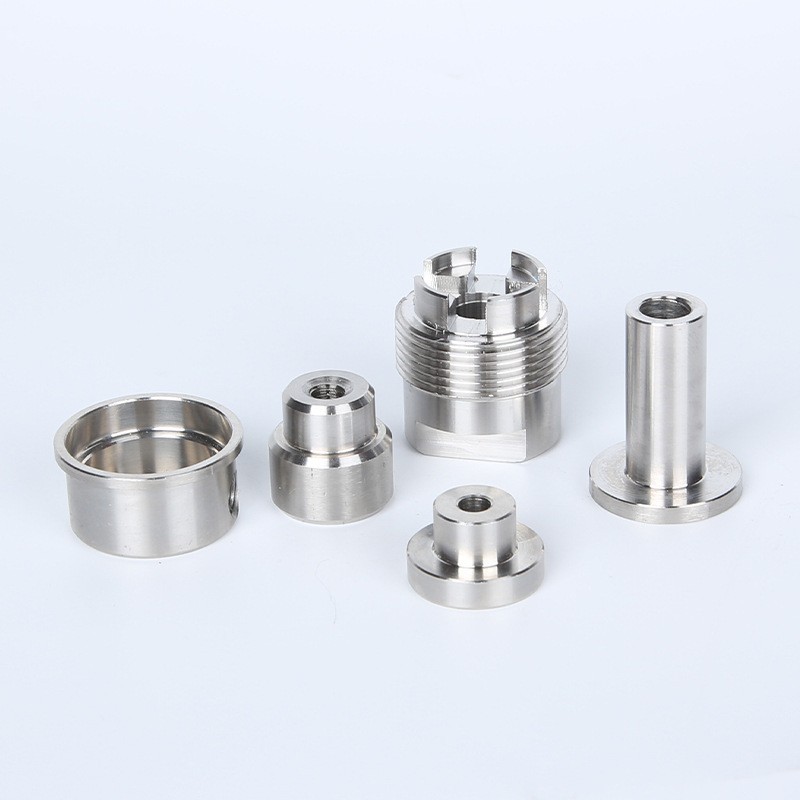
What Is the 1030 Steel Dana Tool?
The 1030 steel dana tool is a category of precision-machined or hand-tool component made from AISI 1030 medium-carbon steel, valued for its moderate hardness, good machinability, and cost-effectiveness in mechanical and industrial applications. It sits between low-carbon mild steel and high-carbon tool steel, making it a practical choice for parts that need real strength without the brittleness of higher-carbon grades.
AISI 1030 Steel: Classification and Designation
AISI 1030 (also designated UNS G10300, SAE 1030, or C1030) is classified as a plain medium-carbon steel under the American Iron and Steel Institute numbering system. The “10” prefix signals a plain carbon steel with no significant alloying additions beyond manganese. The “30” designates the nominal carbon content of 0.30%.
- AISI/SAE designation: 1030
- UNS number: G10300
- Carbon range: 0.28–0.34%
- Manganese range: 0.60–0.90%
- Phosphorus (max): 0.040%
- Sulfur (max): 0.050%
Industry analysts consistently describe 1030 as the workhorse of the medium-carbon family. It’s versatile enough for general engineering, yet predictable enough for precision machining operations where dimensional consistency matters.
Why “Dana Tool” Matters in This Context
The term “dana tool” in the context of 1030 steel typically refers to mechanical hand tools, drive components, or shop-floor implements machined from this grade. Dana is a widely recognized name in drivetrain and axle components across the automotive sector, and 1030 steel’s toughness profile makes it a natural fit for such applications. From experience, procurement teams searching for the 1030 steel dana tool are usually evaluating this grade for moderate-load mechanical components that require reliable performance without the premium cost of alloy steels.
Pro Tip: When specifying 1030 steel for a dana-style tool or drivetrain component, always confirm whether the part will be used in the as-rolled, normalized, or quenched-and-tempered condition. Each heat treatment state delivers significantly different mechanical properties, and specifying the wrong condition is one of the most common (and costly) mistakes in procurement.
Mechanical Properties of AISI 1030 Steel
AISI 1030 steel delivers a tensile strength of approximately 470–550 MPa in the hot-rolled condition, a yield strength near 260–340 MPa, and a Brinell hardness of roughly 149–179 HB, with all values increasing substantially after quenching and tempering.
Full Mechanical Property Data Table
| Property | Hot Rolled | Normalized (925°C) | Q&T (Water Quenched) |
|---|---|---|---|
| Tensile Strength | 470–550 MPa | 520 MPa | 800–900 MPa |
| Yield Strength | 260–340 MPa | 345 MPa | 600–700 MPa |
| Hardness (Brinell) | 149–179 HB | 149 HB | Up to ~Rc 50 |
| Elongation at Break | 20–32% | 32% | ~15–20% |
| Modulus of Elasticity | 200–206 GPa | 206 GPa | 206 GPa |
| Machinability Rating | ~70% (vs. AISI 1212) | ~65–70% | ~55–60% |
The modulus of elasticity (the measure of a material’s stiffness under elastic deformation) stays constant regardless of heat treatment at approximately 206 GPa. That’s a useful design constant when calculating deflection in shafts or structural members.
Chemical Composition at a Glance
Understanding the chemical composition of 1030 steel helps predict its behavior during machining and heat treatment. The carbon content (0.28–0.34%) is the dominant factor controlling hardness and strength. Manganese (0.60–0.90%) improves hardenability and tensile strength. The low phosphorus and sulfur levels keep brittleness in check while preserving weldability.
Industry data consistently shows that 1030 steel’s carbon content places it at the lower boundary of medium-carbon steels, meaning it retains more ductility than grades like 1045 or 1060. That’s a real advantage for parts that see impact loading, like tool handles or drivetrain components.
How the 1030 Steel Dana Tool Is Machined
Machining the 1030 steel dana tool involves CNC turning, Swiss lathe operations, or automatic lathe production, using carbide tooling with moderate cutting speeds (typically 90–150 m/min) and proper coolant application to maintain dimensional accuracy and surface finish.
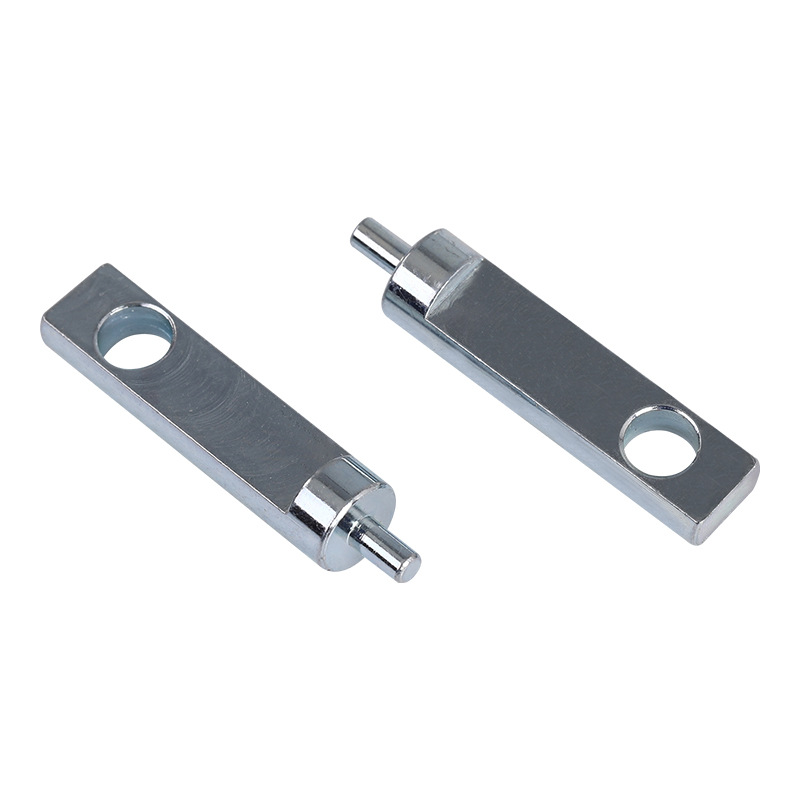
Step-by-Step Machining Process for 1030 Steel Parts
- Material selection and inspection: Confirm the bar stock meets AISI 1030 chemical composition requirements. Check the delivery condition (hot-rolled, normalized, or annealed) against your part’s final property requirements.
- Workholding setup: Secure the bar stock using a collet chuck for Swiss lathe operations or a three-jaw chuck for CNC turning. Proper workholding is critical for holding tight tolerances on small-diameter parts.
- Roughing passes: Remove bulk material using carbide inserts at moderate feed rates. For 1030 steel, a depth of cut of 1–3mm and a feed rate of 0.15–0.30 mm/rev work well in roughing.
- Finishing passes: Reduce depth of cut to 0.1–0.5mm and lower feed rates for surface finish targets. 1030 steel can achieve Ra 0.8–1.6 µm finishes with sharp carbide tooling.
- Threading (if required): Use thread milling or single-point threading. 1030’s moderate hardness makes threading predictable. For external and internal thread forms, our CNC threading services page covers the full process in detail.
- Drilling and hole operations: Use high-speed steel or carbide drills. Feed rates should be conservative to avoid work hardening at the hole entry. Proper selection of drill geometry directly affects hole quality — a topic covered in depth on our CNC hole drilling technology page.
- Deburring and finishing: Remove burrs from edges and threaded features. 1030 steel’s ductility means burrs can be tenacious; tumble deburring or CNC deburring works effectively.
- Inspection: Verify dimensional accuracy against print tolerances. For complex assemblies, review our guidance on precision tolerance stackup to ensure parts fit correctly in the final assembly.
Coolant and Cutting Fluid Recommendations
Coolant selection matters more than many machinists expect. For 1030 steel, water-soluble cutting fluids at 5–10% concentration handle most turning and drilling operations well. Neat cutting oils improve surface finish in threading and deep-hole drilling. Proper coolant management reduces tool wear and keeps part temperatures stable — factors that directly affect dimensional consistency on long production runs. Our detailed guide on CNC coolants and lubricants covers fluid selection by operation type.
At MFG SOLUTION, we’ve found that 1030 steel responds particularly well to high-pressure coolant delivery in Swiss lathe operations, where the small part diameters and close tool proximity create thermal challenges that standard flood coolant doesn’t fully address. For more information, see What Is Capacity Planning Tool.
For teams managing production capacity across multiple material grades, understanding your shop’s throughput limits is equally important. A useful framework for this is covered in resources like What Is Capacity Planning Tool, which explains how to align machine availability with production demand.
Pro Tip: When machining 1030 steel in the normalized condition, you’ll get more consistent chip formation than in the as-rolled state. Normalized stock has a more uniform microstructure, which translates to predictable tool life and better surface finish — especially important in high-volume automatic lathe production runs.
Key Benefits and Applications of 1030 Steel
1030 steel offers a compelling combination of moderate strength, good machinability, and low material cost that makes it one of the most widely used grades for mechanical components, tools, and drivetrain parts in automotive and industrial manufacturing.
Practical Advantages of Choosing 1030 Steel
- Cost-effectiveness: Lower alloy content means lower raw material cost compared to 4140 or 4340 alloy steels, without sacrificing performance for moderate-load applications.
- Heat treatment flexibility: Can be normalized, annealed, oil-quenched, or water-quenched and tempered to dial in the exact strength-toughness balance your application needs.
- Good weldability: The 0.30% carbon level sits below the threshold where weld cracking becomes a significant concern, making 1030 easier to weld than 1045 or higher-carbon grades.
- Moderate machinability: Machines cleanly with standard carbide tooling, producing consistent chip formation and acceptable surface finishes without exotic cutting parameters.
- Wide availability: Stocked as hot-rolled bar, cold-drawn bar, and plate by most steel service centers globally, reducing lead times for production runs.
- Proven performance record: Decades of documented use in automotive, agricultural, and industrial machinery provides reliable design data and predictable in-service behavior.
Common Application Areas for the 1030 Steel Dana Tool
The 1030 steel dana tool and related components appear across a broad range of industries. In practice, the grade is most frequently specified for:
- Automotive axles, shafts, and drivetrain components
- Machine tool spindles and arbors
- Fasteners including bolts, studs, and screws
- Crankshafts and connecting rods in small engines
- Agricultural equipment components (rolls, cylinders)
- Hand tools and shop implements requiring moderate hardness
- General-purpose machine parts where strength exceeds mild steel requirements
One project we handled involved producing 1030 steel shafts for an automotive Tier-1 supplier. The client needed 5,000 pieces per month, normalized condition, with a diameter tolerance of ±0.01mm. The grade’s predictable machinability on our automatic lathes allowed us to hold that tolerance consistently across the full run without process adjustments.
For medical device applications requiring tighter cleanliness and documentation standards, 1030 steel can also be used in non-implantable hardware components. Our experience in CNC machining medical devices shows that material traceability and process documentation are just as important as the grade selection itself.
Pro Tip: If your application requires both moderate strength and some corrosion resistance, consider specifying 1030 steel with a zinc phosphate coating or electroless nickel plating. These surface treatments add meaningful corrosion protection without the dimensional variability that hard chrome or thick coatings can introduce on precision-tolerance parts.
Common Challenges and Best Practices for 2026
The most common challenges when working with the 1030 steel dana tool involve work hardening during machining, dimensional variation from inconsistent bar stock quality, and selecting the right heat treatment condition for the target application.
Pitfalls to Avoid When Machining 1030 Steel
A common mistake is treating 1030 steel like a mild steel (1018 or 1020) and running identical cutting parameters. The higher carbon content means 1030 work-hardens more readily, especially in drilling and threading operations. Dull tooling accelerates this effect and leads to rapid tool failure.
- Dull tooling: Replace carbide inserts at regular intervals. Don’t push worn tools — 1030’s work-hardening tendency punishes dull edges faster than low-carbon grades.
- Insufficient coolant: Inadequate coolant delivery causes thermal expansion during machining, leading to out-of-tolerance parts on long runs. High-pressure coolant delivery is preferred for drilling and boring.
- Skipping stress relief: For parts machined from cold-drawn bar stock, residual stresses can cause distortion after machining. A stress-relief anneal at 540–650°C before final finishing prevents this.
- Ignoring surface finish requirements: 1030 steel can achieve excellent surface finishes, but only with sharp tooling and appropriate feed rates. Pushing feed rates too high leaves a rough surface that affects fatigue life in rotating components.
- Tolerance stackup errors: For assemblies with multiple 1030 steel components, failing to account for cumulative dimensional variation leads to fit problems. Our guide on machining tolerances explained provides a practical framework for setting realistic tolerance targets.
Best Practices for 2026 Production Runs
As of 2026, the most effective approach to high-volume 1030 steel machining combines rigorous incoming material inspection with statistical process control (SPC) during production. SPC (a method of monitoring process variables using control charts to detect variation before it produces out-of-spec parts) is now a baseline expectation for automotive and medical device supply chains.
- Verify incoming bar stock hardness and chemistry against mill certifications before production starts.
- Implement SPC on critical dimensions to catch tool wear drift early.
- Use ISO 9001:2015-compliant documentation to track process parameters for each production lot.
- For automotive applications, IATF 16949 certification at your supplier is non-negotiable — it ensures the control plan, FMEA, and measurement system analysis are all in place.
- Request first-article inspection (FAI) reports from your machining supplier for any new 1030 steel part design.
Our team at MFG SOLUTION recommends treating material selection and process planning as a single integrated decision. Choosing 1030 steel and then designing a machining process around it — rather than retrofitting the material choice to an existing process — consistently produces better outcomes on cost and quality.
Frequently Asked Questions
1. What is the tensile strength of 1030 steel?
AISI 1030 steel in the hot-rolled condition has a tensile strength of approximately 470–550 MPa and a yield strength of 260–340 MPa. After normalization at 925°C, tensile strength reaches around 520 MPa with an elongation of 32%. In the water-quenched and tempered condition, tensile strength climbs to 800–900 MPa, making it a genuinely versatile grade across a wide performance range. Brinell hardness in the normalized state is approximately 149 HB, rising to Rockwell C 50 at maximum hardness.
2. What is the classification of 1030 steel?
AISI 1030 is classified as a plain medium-carbon steel under both the AISI and SAE numbering systems, with the UNS designation G10300. The “10xx” series indicates a plain carbon steel with no significant alloying elements beyond carbon and manganese. With 0.28–0.34% carbon, it sits at the lower boundary of the medium-carbon range (0.30–0.60%), giving it better ductility and weldability than higher-carbon grades like 1045 or 1060, while still offering meaningful strength and hardenability advantages over low-carbon steels like 1018.
3. What is 1030 annealed hot-rolled steel?
AISI 1030 annealed hot-rolled steel is bar stock that has been hot-rolled from billets and then subjected to a full anneal heat treatment, producing a soft, stress-relieved microstructure with improved machinability and ductility. The annealing process (typically heating to 855–900°C, holding, and slow cooling in the furnace) reduces hardness to approximately 126–163 HB and eliminates residual stresses from rolling. This condition is preferred when the part will undergo significant cold working or complex machining operations before any final heat treatment.
4. What is the carbon content of 1030 steel?
AISI 1030 steel contains 0.28–0.34% carbon by weight, with a nominal target of 0.30%. This carbon level is the primary factor controlling the steel’s strength, hardness, and hardenability. The manganese content of 0.60–0.90% enhances hardenability and tensile strength. Compared to low-carbon steels (below 0.25% C), 1030 steel responds more effectively to heat treatment, achieving significantly higher hardness after quenching. Compared to high-carbon steels (above 0.60% C), it retains better toughness and weldability, making it suitable for a broad range of mechanical components.
5. Is 1030 steel good for tool making?
Yes, 1030 steel is suitable for moderate-duty tools and mechanical implements, particularly in the quenched-and-tempered condition where it achieves hardness up to Rockwell C 50. It’s commonly used for hand tools, shop implements, and drivetrain components (the “dana tool” category) that require toughness under impact loading. For cutting tools or tools requiring very high wear resistance, higher-carbon or alloy tool steels are generally preferred. Results depend on the specific application, heat treatment, and load conditions.
6. What is the equivalent of AISI 1030 steel in other standards?
AISI 1030 steel has several international equivalents used in global manufacturing. The most commonly referenced include: EN 10083-2 grade C30 (European standard), DIN 1.0528 (German standard), JIS S30C (Japanese standard), and GB 30 (Chinese standard). These equivalents share similar carbon and manganese ranges, though minor differences in allowable impurity levels exist between standards. Always verify chemistry certificates when substituting one standard for another in critical applications.
7. How does 1030 steel compare to 1045 steel for machined parts?
AISI 1030 and 1045 are both medium-carbon steels, but 1045 has approximately 0.43–0.50% carbon, giving it higher tensile strength (570–700 MPa hot-rolled) and greater hardness potential. 1030 machines more easily and welds more reliably, making it the better choice for complex geometries or parts that require welding. 1045 is preferred when higher strength or wear resistance is the priority. For the 1030 steel dana tool category, 1030 is typically the right choice when toughness and machinability outweigh the need for maximum hardness.
Conclusion
The 1030 steel dana tool represents one of the most practical and cost-effective choices in medium-carbon steel machining. Its balanced combination of tensile strength (470–900 MPa depending on heat treatment), good machinability, and wide availability makes it a go-to grade for shafts, axles, mechanical tools, and drivetrain components across automotive, industrial, and general engineering applications.
Getting the best results from 1030 steel requires matching the delivery condition to your application, using proper tooling and coolant, and working with a supplier who understands the grade’s behavior across different machining operations. Those details separate good parts from great ones.
MFG SOLUTION machines 1030 steel components daily on our CNC turning, Swiss lathe, and automatic lathe equipment, holding tolerances down to ±0.005mm on parts up to 38mm diameter. We’re ISO 9001:2015, ISO 13485:2016, and IATF 16949 certified, with full process documentation on every production lot. Submit your part specifications and receive a detailed quote within 8 hours, with shipment in as few as 3 days.
Recommended Articles
Explore more from our content library: