
2026-07-05
Copper Forging: Process, Benefits & Best Practices
| Key Insight | Explanation |
|---|---|
| Copper is highly forgeable | Copper and its alloys respond well to both hot and cold forging, producing dense, strong parts with excellent surface integrity. |
| Hot forging temperature range | Copper is typically hot-forged between 750°C and 950°C (1380°F–1740°F), depending on alloy composition. |
| Annealing reverses work hardening | Unlike steel, copper softens when heated and quenched — a process called annealing — which is critical for cold forging operations. |
| Forging brass is the most workable alloy | UNS C37700 (forging brass) requires significantly less force than pure copper, making it the preferred alloy for complex die-forged shapes. |
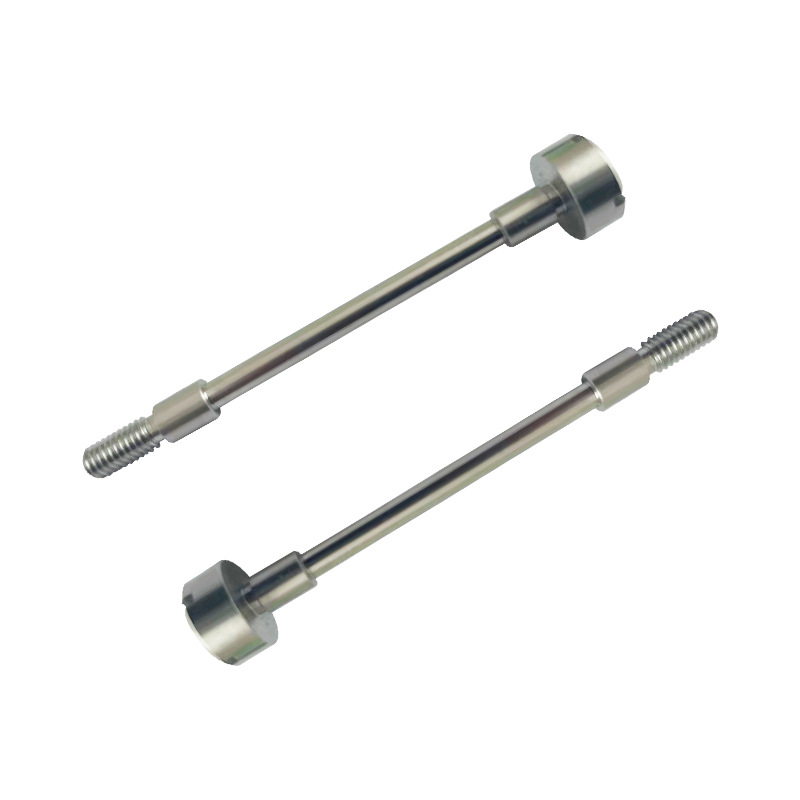
| Post-forging machining adds precision | CNC turning and milling after forging achieves tight tolerances that the forging process alone cannot reliably hold. |
| Standards govern quality | ASTM B283/B283M and IS 6912:2005 define composition, mechanical properties, and dimensional requirements for copper forgings. |
Copper forging is the process of shaping copper or copper alloys using compressive force — either through hammering, pressing, or die-forming — to produce parts with superior mechanical strength, dense grain structure, and excellent electrical conductivity. It’s one of the oldest metalworking methods in industrial manufacturing, and it remains highly relevant in 2026 for producing connectors, valve bodies, fittings, and precision components across automotive, electrical, and plumbing applications.
This article covers how copper forging works, the temperature ranges involved, the alloys best suited for forging, the real limitations you need to plan around, and how post-forging CNC machining bridges the gap between a forged blank and a finished precision part.
What Is Copper Forging?
Copper forging is a metal-forming process that shapes copper billets or slugs under high compressive force, refining the grain structure to produce parts stronger than cast or machined equivalents. The result is a component with improved mechanical properties, minimal porosity, and consistent dimensional integrity.
Definition and Industrial Context
In precision manufacturing, “forging” refers to plastic deformation of metal below or above its recrystallization temperature. For copper, this means either cold forging (at room temperature) or hot forging (above 750°C). Both methods exploit copper’s natural ductility — its ability to deform without fracturing — which is one of the highest among structural metals.
Copper forgings are governed by ASTM B283/B283M, the standard specification for copper and copper-alloy die forgings produced by hot pressing. The Indian standard IS 6912:2005 similarly defines chemical composition, mechanical properties, and dimensional tolerances for copper forging stock and finished forgings. These standards provide the quality baseline that industrial buyers rely on.
Where Copper Forgings Are Used
Copper forgings appear across a wide range of industries and applications:
- Electrical and electronics: Bus bars, terminal lugs, switchgear components, and connectors where conductivity is non-negotiable
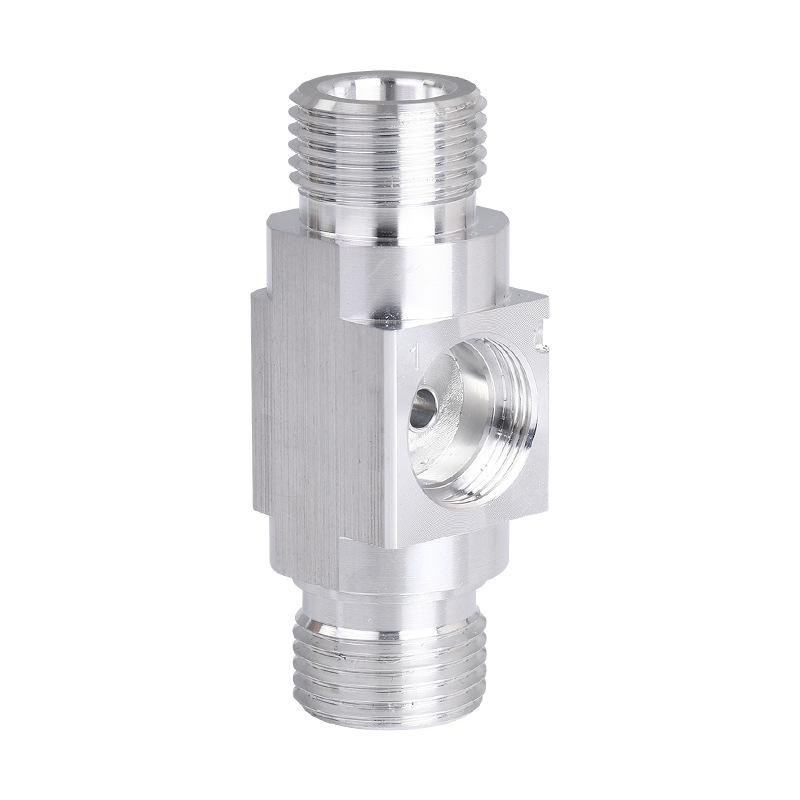
- Plumbing and HVAC: Valve bodies, fittings, flanges, and coupling bodies that must resist corrosion and pressure
- Automotive: Brake system fittings, fuel line connectors, and sensor housings that require tight tolerances and reliable sealing
- Telecommunications: Waveguide components and RF connectors where dimensional accuracy directly affects signal performance
- Industrial machinery: Bearing cages, pump impellers, and hydraulic fittings that face wear and pressure cycling
The combination of electrical conductivity, corrosion resistance, and mechanical strength makes copper forging a practical choice wherever those three properties must coexist in a single part.
How Copper Forging Works
Copper forging works by applying controlled compressive force to a copper billet or slug, deforming it into a target shape while aligning the metal’s grain flow along the part’s stress paths for maximum strength.
Hot Forging vs. Cold Forging Copper
The two primary methods differ significantly in process conditions and output characteristics:
| Parameter | Hot Forging | Cold Forging |
|---|---|---|
| Temperature range | 750°C – 950°C (1380°F – 1740°F) | Room temperature (with periodic annealing) |
| Force required | Lower — metal is more plastic when hot | Higher — work hardening increases resistance |
| Surface finish | Rougher — scale forms at elevated temps | Smoother — no oxidation scale |
| Dimensional tolerance | ±0.5mm to ±1.5mm typical | ±0.05mm to ±0.2mm achievable |
| Best for | Complex shapes, larger cross-sections | Small, high-volume parts with tight tolerances |
| Post-process need | Descaling, machining, heat treatment | Annealing between stages, final machining |
The Copper Forging Process Step by Step
A standard industrial copper forging sequence follows these stages:
- Billet preparation: Cut copper rod or bar stock to the correct slug weight for the target part geometry.
- Heating (hot forging only): Heat the billet in a furnace or induction heater to the target forging temperature, typically 800°C–900°C for pure copper or common alloys.
- Die forging or open-die hammering: Place the heated (or cold) billet into the die cavity and apply force via a hydraulic press, mechanical press, or hammer. Closed-die forging confines the metal to a precise cavity shape.
- Flash removal (trimming): Remove excess material that squeezes out along the die parting line.
- Annealing (cold forging): Heat and quench the part to relieve work hardening before additional forming stages. Unlike steel, heating copper red-hot and quenching it in water softens it — the opposite of steel’s hardening response.
- Inspection and dimensional check: Verify forged blank against drawing tolerances before sending to finish machining.
- CNC finish machining: Turn, mill, or drill the forged blank to final dimensions and surface finish requirements.
Pro Tip: When cold-forging copper, plan your annealing intervals before production starts. Work hardening accumulates quickly — if you push too many forming stages without annealing, you risk cracking the part mid-process. A good rule of thumb: anneal after every 30–40% reduction in cross-section.
Research published in the Journal of Materials Research and Technology confirms that closed-die forging of copper alloy valve bodies produces significantly more uniform grain flow than casting, directly improving pressure resistance and fatigue life in service.
Key Benefits of Copper Forging
Copper forging produces parts with higher strength, better electrical conductivity, and longer service life than cast or machined-from-bar equivalents — making it the preferred process for high-reliability applications.
Mechanical and Physical Advantages
The compressive forming process does more than just shape the metal. It fundamentally improves the material’s internal structure:
- Grain refinement: Forging aligns and refines the copper’s crystalline grain structure along the part’s load-bearing paths, increasing tensile strength and fatigue resistance.
- Elimination of porosity: Unlike casting, forging collapses internal voids and gas pockets, producing a fully dense part with no hidden defects.
- Superior electrical conductivity: Dense, void-free copper forgings maintain near-theoretical electrical conductivity — critical for bus bars, terminals, and high-current connectors.
- Consistent mechanical properties: Forged parts show tighter variation in tensile strength and hardness across a production batch compared to cast equivalents.
- Excellent corrosion resistance: Copper’s natural corrosion resistance is preserved and often enhanced by forging, particularly in alloys like C11000 (electrolytic tough pitch copper) and C10200 (oxygen-free copper).
Economic and Production Benefits
Beyond material performance, copper forging offers real production economics advantages:
- Near-net shape: Closed-die forging produces blanks close to final geometry, reducing machining time and material waste.
- High repeatability: Once a die is proven, forged blanks are highly consistent batch-to-batch — critical for high-volume automotive and electrical components.
- Reduced scrap rates: The absence of casting defects means fewer rejections at inspection, lowering total cost per good part.
- Compatibility with post-forging CNC machining: Forged copper machines cleanly. Its chip-breaking behavior and machinability index (especially for forging brass, UNS C37700) make it efficient to finish on CNC turning and milling equipment.
Industry analysts suggest that for medium-to-high production volumes (typically above 500 parts per run), the per-unit cost of a forged-and-machined copper part is consistently lower than a fully machined part cut from solid bar, once tooling costs are amortized.
Pro Tip: If your copper part has a complex external profile but tight internal bore tolerances, consider forging the outer shape and finishing the bore by CNC turning. This hybrid approach captures the strength benefits of forging while achieving the ±0.01mm bore tolerances that die forging alone can’t reliably hit.
Common Challenges in Copper Forging
Copper forging presents specific technical challenges around temperature control, work hardening, and die wear that manufacturers must actively manage to achieve consistent quality.
Temperature and Oxidation Control
One of the most common mistakes in hot this practice is overheating. Pure copper has a relatively narrow hot-working window. Push the temperature above 950°C and you risk hot shortness — a condition where the metal becomes brittle along grain boundaries, leading to surface cracking during forming. Go too cold and the metal work-hardens rapidly, increasing press loads and the risk of die damage.
Oxidation is a parallel concern. At hot forging temperatures, copper forms a surface oxide scale (cuprous oxide, Cu₂O) that:
- Abrades dies prematurely, increasing tooling cost
- Gets embedded in the part surface if not removed, creating inclusion defects
- Reduces the quality of the forged surface finish, requiring additional machining stock
Controlled-atmosphere furnaces or rapid transfer from furnace to die minimize oxidation in production environments.
Work Hardening and Die Wear
Cold forging copper is efficient for small, simple shapes — but work hardening accumulates with every forming pass. A common mistake is underestimating how quickly copper’s yield strength rises during cold working. Without adequate annealing cycles, parts crack, and presses are overloaded.
Die wear is another real constraint. Copper’s abrasiveness (particularly in alloys containing zinc or silicon) wears die surfaces faster than softer materials. In practice, this means:
- Die materials must be carefully selected (typically H13 or D2 tool steel, hardened and coated)
- Lubrication is non-negotiable — graphite-based or MoS₂ lubricants are standard for hot forging copper
- Die inspection intervals must be shorter than for aluminum forging operations
A precision machining client we worked with on copper valve body blanks encountered consistent flash line cracking early in production. The root cause was insufficient lubrication on the lower die half, causing metal to drag rather than flow cleanly. Switching to a water-based graphite lubricant applied by spray resolved the issue within the same production shift.
Post-Forging Dimensional Variation
Hot-forged copper blanks experience thermal contraction as they cool, which affects dimensional consistency. Tight-tolerance features — bores, threads, sealing faces — cannot be held reliably in the forged state alone. This is why post-forging CNC machining is standard practice for any part requiring tolerances tighter than ±0.3mm. For guidance on achieving precise tolerances after forging, the concept of precision tolerance stackup becomes directly relevant when designing forged-and-machined assemblies.
Best Practices for Copper Forging in 2026
As of 2026, the most effective this method operations combine precise process parameter control, the right alloy selection, and a planned post-forging machining strategy to hit final part specifications reliably.
Alloy Selection and Forgeability
Not all copper alloys forge equally. Choosing the right alloy upfront saves significant cost and rework downstream. According to ASM International’s handbook on forging of copper and copper alloys, forging brass (UNS C37700) requires substantially less forging force than pure copper and fills complex die cavities more completely, making it the most economical choice for high-volume die forging.
| Alloy (UNS) | Common Name | Forgeability | Best Application |
|---|---|---|---|
| C37700 | Forging Brass | Excellent (100 reference) | Valves, fittings, complex die-forged shapes |
| C11000 | Electrolytic Tough Pitch (ETP) | Good | Electrical bus bars, connectors |
| C10200 | Oxygen-Free Copper (OFC) | Good | High-conductivity electrical parts, vacuum applications |
| C63000 | Aluminum Bronze | Moderate | Marine hardware, bearings, high-strength fittings |
| C65500 | High-Silicon Bronze | Moderate | Architectural hardware, marine fasteners |
Process Control and Quality Assurance
At MFG SOLUTION, we’ve found that the biggest quality gap in this strategy programs isn’t the forging step itself — it’s the lack of a documented inspection plan between forging and finish machining. Here’s what a solid process control framework looks like:
- Incoming billet inspection: Verify chemical composition (per ASTM B283 or IS 6912:2005) and dimensional conformance before any forging begins.
- In-process temperature monitoring: Log billet temperature at transfer from furnace to die. Deviations beyond ±15°C from the target should trigger a hold.
- First-article dimensional inspection: Measure the first forged blank from each die cavity against the drawing before running the full batch.
- Post-forging hardness testing: Brinell or Rockwell hardness checks confirm that annealing cycles (where used) achieved the target softness for machining.
- CNC machining tolerances: For features requiring tolerances tighter than ±0.05mm, CNC turning or milling is the only reliable method. Understanding machining tolerances in the context of forged blanks is essential for design engineers.
Pro Tip: Design your copper forged parts with adequate machining stock on all critical surfaces — typically 0.5mm to 1.5mm per side. This gives your CNC machining operation enough material to clean up forging scale, dimensional variation, and surface irregularities without risking undersize conditions on tight-tolerance features.
Our team at MFG SOLUTION recommends treating the forging-to-machining handoff as a formal quality gate, not just a production step. Document the forged blank dimensions, record any deviations, and adjust CNC programs accordingly. This approach is fully aligned with ISO 9001:2015 process control requirements and supports traceability for IATF 16949 automotive customers.
Frequently Asked Questions
1. Is it possible to forge copper?
Yes, copper is absolutely forgeable — and it’s been forged industrially for centuries. Copper can be worked both hot (above 750°C) and cold (at room temperature with periodic annealing to relieve work hardening). Its high ductility and relatively low yield strength make it one of the more cooperative metals to forge, though its narrow hot-working temperature window and tendency to work-harden quickly during cold forging require careful process management.
2. How much would 1 lb of copper be worth?
As of mid-2026, commodity copper trades at approximately $4.00–$4.50 per pound (roughly $8.80–$9.90 per kilogram) on major metals exchanges, though prices fluctuate with global demand, energy costs, and supply chain conditions. For forging-grade copper billet or rod stock, the cost is typically higher than commodity scrap copper — expect to pay a premium for certified alloy grades like C11000 or C10200 that meet ASTM B283 composition requirements. The value of a finished this approach is significantly higher than raw material cost, reflecting tooling amortization, processing, and quality certification.
3. At what temperature can you forge copper?
The standard hot forging temperature range for pure copper and most copper alloys is 750°C to 950°C (1380°F to 1740°F). Forging brass (UNS C37700) is typically worked at the lower end of this range, around 750°C–850°C, while pure copper and oxygen-free grades may be forged closer to 900°C. Exceeding 950°C risks hot shortness and grain boundary cracking. Copper can also be forged cold at room temperature, but annealing (heating to approximately 400°C–600°C and quenching) is required between forming stages to restore ductility.
4. What are the limitations of copper forging?
the practice has several practical limitations to plan around. First, dimensional tolerances from the forging process alone are relatively loose (±0.5mm to ±1.5mm for hot forging), so tight-tolerance features always require post-forging CNC machining. Second, copper’s work hardening during cold forging demands multiple annealing cycles, adding time and cost to complex multi-stage parts. Third, die wear is faster with copper alloys containing zinc or silicon, increasing tooling cost per part. Finally, the narrow hot-working temperature window means tight furnace control is essential — temperature deviations cause either hot shortness (too hot) or excessive press loads (too cold). One limitation worth noting: this practice is generally not cost-effective for very low volumes (under 100 parts), where CNC machining from bar stock is usually more economical.
5. How does cold forging copper differ from hot forging?
Cold forging copper is performed at room temperature and produces better surface finish and tighter dimensional tolerances than hot forging, but it requires significantly more press force and periodic annealing to prevent cracking from work hardening. Hot forging requires less force and handles complex shapes more easily, but produces a rougher surface with oxide scale and looser dimensional tolerances. In practice, many production programs use hot forging for the primary shape and cold finishing operations for critical surfaces — combining the benefits of both methods.
6. What alloy is best for copper forging?
Forging brass (UNS C37700) is widely recognized as the most forgeable copper alloy, requiring less force and filling die cavities more completely than pure copper grades. For applications where electrical conductivity is the primary requirement, C11000 (ETP copper) or C10200 (oxygen-free copper) are preferred despite their higher forging force requirements. For high-strength applications in marine or structural environments, aluminum bronze (C63000) offers excellent mechanical properties, though its forgeability is more moderate.
Conclusion
this method remains one of the most reliable methods for producing high-strength, high-conductivity components for electrical, automotive, and industrial applications. The process delivers grain-refined, void-free parts that outperform castings in mechanical integrity and electrical performance — provided temperature, lubrication, and annealing cycles are properly controlled.
The real precision, though, comes after the forge. Post-forging CNC machining is where tight tolerances, clean surface finishes, and final part geometry are achieved. That’s the step where a forged blank becomes a production-ready component.
MFG SOLUTION’s cold forging capability, combined with CNC turning, Swiss lathe, and mill-turn services, covers the full production sequence from forged blank to finished precision part. With quotes within 8 hours, shipment within 3 days, and ISO 9001:2015, ISO 13485:2016, and IATF 16949 certifications backing every order, we handle this strategy projects with the process control and speed that supply chain teams actually need. If you’re sourcing precision this approach components up to 38mm diameter, we’re ready to quote your next run.
Recommended Articles
Explore more from our content library: