
2026-11-03
How to Quote Manufacturing Jobs Without Losing Margin

Understanding how to quote manufacturing jobs is essential. Quoting a manufacturing job accurately means adding up three cost layers, materials, labor/machine time, and overhead, then applying a markup that covers risk and profit before you quote the customer. Start with true material cost including scrap allowance, calculate labor using actual cycle time plus setup time divided across the run quantity, layer in a fair share of shop overhead, and only then add your margin. Skipping setup time or underestimating scrap is the most common way shops quote a job that loses money once it hits the floor.

What You’ll Need Before You Quote a Manufacturing Job
Four pieces of information have to be on your desk before you start: a part drawing or CAD model, a material specification, tolerance requirements, and the quantity with its delivery timeline.
Missing any one of these turns quoting into guesswork. A drawing without tolerances leaves you choosing between quoting for a standard commercial finish or a tight-tolerance process that needs slower feeds, more inspection, and more scrap allowance, three very different costs for the same-looking part. Quantity and timeline matter just as much: a 50-piece prototype run and a 5,000-piece production order use different machines, different setup amortization, and often different materials sourcing altogether. Anyone learning how to quote manufacturing jobs for the first time usually underestimates how much these four inputs change everything downstream.
The Three Types of Manufacturing Costs
Every accurate quote rests on three cost categories, and leaving one out doesn’t just shrink your number slightly, it distorts the whole quote.
- Direct materials: the raw stock, fasteners, or purchased components that go into the part, plus a realistic scrap allowance for rejects and setup pieces.
- Direct labor and machine time: actual cycle time plus setup time, divided across the batch, not just the fastest-case run rate.
- Overhead and indirect costs: facility costs, tooling wear, quality inspection, programming time, and administrative support that aren’t tied to one job but have to be recovered across all of them.
Shops that quote from memory tend to capture materials and labor reasonably well but shortchange overhead, which is why jobs that look profitable on paper lose money once indirect costs catch up with the shop at the end of the quarter.
How Material Sourcing Affects Your Quote
Material sourcing decisions set your cost floor before a single operation is costed, so get them settled early rather than assuming a number.
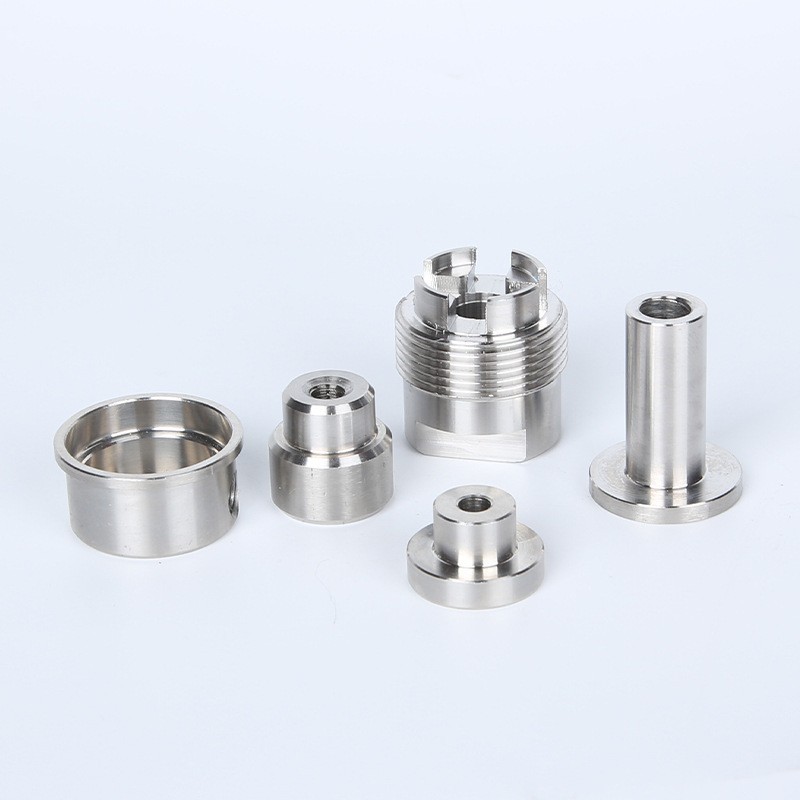
Stock size matters, buying bar stock sized close to the finished part reduces machining time and scrap compared to roughing down from oversized material. Supplier lead time matters too: a certified, traceable alloy for a medical or aerospace part can run weeks longer than commercial-grade stock, which affects both your price and your delivery promise. Certified material with full material test reports also typically costs more than commercial grade, and that premium needs to show up in the quote, not get absorbed later. MFG SOLUTION addresses this by running CNC turning, Swiss lathe, cold forging, automatic lathe, and CNC mill & turn processes side by side, choosing whichever method keeps material and cycle cost lowest for parts up to 38mm in diameter.
Finally, build a standard quote template or spreadsheet with these categories already structured in, rather than rebuilding the math from scratch for every RFQ, consistency here is what keeps your quoting process fast and your margins protected.
How to Quote Manufacturing Jobs: Calculate Material and Labor Costs
Accurate quotes rest on two numbers: real material cost including waste, and labor cost that reflects machine rate plus operator rate, not a flat wage. Get these two inputs right and the rest of the quote falls into place.
Start with material. Stock cost is never just the price per kilogram or per bar, it is the raw stock cost plus a scrap and waste allowance, plus any outside processing. For a turned part cut from bar stock, factor in the chuck end, facing cuts, and cutoff waste, which can run 5-15% of the bar depending on part length and diameter. If the part needs heat treating, plating, or anodizing after machining, add that vendor cost and their turnaround time directly into the quote, these outside steps often get forgotten until the invoice arrives.
Estimating Labor Rates by Machining Process
Labor rate for a machining process is the machine’s hourly rate (depreciation, tooling, power, maintenance) added to the operator’s loaded hourly rate, not the operator’s wage alone. A Swiss lathe running unattended for multiple cycles carries a different effective rate than a CNC mill & turn center that needs closer operator attention during changeovers. Shops that quote using only the operator wage routinely underprice complex multi-axis work, because the machine’s amortized cost disappears from the math. When you work out how to quote manufacturing jobs across different processes, build a separate machine-plus-operator rate for each one rather than applying a single shop-wide number.
Accounting for Setup Time vs. Cycle Time
Setup time is fixed per job, fixturing, tool offsets, first-article inspection, while cycle time is the per-part machining time that multiplies by quantity. Conflating the two is one of the most common ways shops undercharge short runs: a two-hour setup spread over 20 parts adds six minutes of cost per part, but spread over 2,000 parts it adds roughly three-tenths of a cent. Manually calculated quotes often blur this distinction, which is a known driver of quoting delays and pricing errors in job shops.
Divide total setup cost by quantity before adding per-part cycle cost, and the pattern becomes clear: low-volume jobs always carry a higher per-part burden than high-volume runs of the same part. This is also why over-quoting and under-quoting both tend to cluster around small batch sizes, where the fixed-cost math gets skipped or estimated by feel instead of calculated. MFG SOLUTION’s own batch-production model, pricing CNC turning, Swiss lathe, and cold forging jobs up to 38mm diameter, separates these cost lines before a quote goes out within 8 hours, which is what keeps short-run pricing from quietly eating the margin on longer runs. For more information, see Ai Jobs Without Programming.

Apply the Right Markup Without Losing Margin
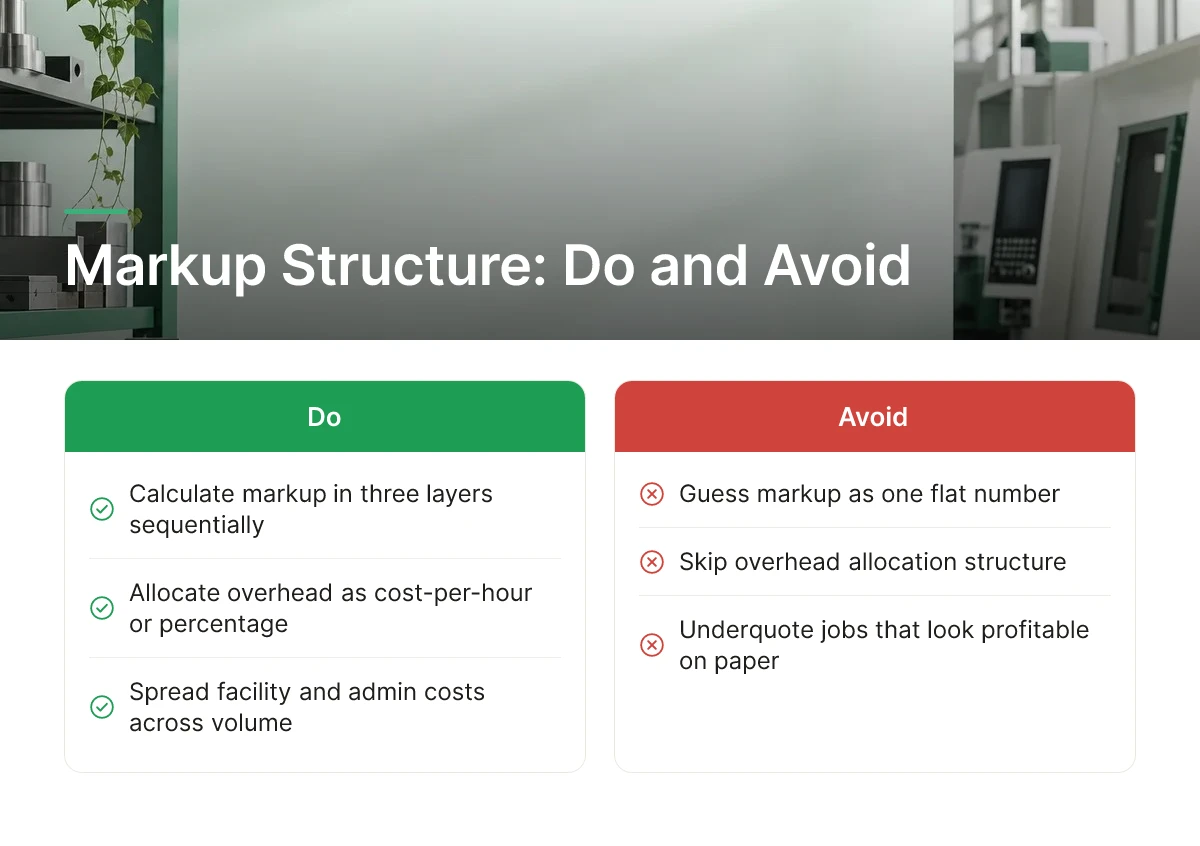
Markup must cover three separate layers, direct cost, overhead, and profit, calculated in sequence, not guessed as one flat number tacked onto materials. Shops that skip this structure routinely underquote jobs that look profitable on paper but lose money once facility and admin costs land.
Start by allocating overhead properly. Facility rent, equipment depreciation, utilities, quality inspection, and administrative salaries don’t disappear just because they’re hard to trace to a single job, they have to be spread across your total production volume as a cost-per-hour or percentage-of-labor figure, then applied to every quote. A common mistake in learning how to quote manufacturing jobs is pricing only the visible material and machine time while treating overhead as a vague afterthought. That gap is exactly where margin leaks out undetected.
Once overhead is allocated, add it as its own line in the calculation: material cost, plus direct labor, plus allocated overhead, plus your target margin on top. Treating this as a single multiplier, “just double the material cost”, ignores how overhead ratios shift between a five-minute turned part and a multi-operation mill-turn job with tight tolerances. A layered calculation keeps your pricing accurate on both ends and defensible when a customer asks you to justify the number.
Typical Markup Ranges for Precision Machining
Markup varies by process complexity, batch size, and material risk rather than following one industry-wide rate. Swiss lathe runs with stable, high-volume output generally carry tighter margins than low-volume cold forging or mill-turn work with more setup variability, because overhead per part shrinks as batch size grows. Rather than copying a competitor’s percentage, build your range from your own overhead allocation and adjust it against job complexity and material risk.
Protecting Margin While Staying Competitive
Hold firm on scope once a quote is issued, unapproved design changes, added tolerances, or last-minute spec revisions should trigger a formal re-quote, not a quiet absorption of cost. Charge separately for rush turnaround instead of folding it into a “relationship discount,” and never waive or reduce setup charges to win volume; setup cost is real regardless of order size. If you need to compete on price, cut the actual cost driver, batch similar setups together, negotiate better material terms, or reduce changeover time, instead of shaving the quoted number itself.
Use Templates and Tools to Speed Up Your Quoting Process
A repeatable template or dedicated software platform turns quoting from a one-off calculation into a structured process that produces consistent, defensible numbers every time. Learning how to quote manufacturing jobs quickly without sacrificing accuracy depends less on raw speed and more on having the same cost inputs captured the same way, every single time.
Choosing Quoting Software or a Spreadsheet Template
Shops at every size can choose between three realistic tiers: a manual spreadsheet template, mid-range estimating software, or enterprise quoting platforms tied into an ERP system. A spreadsheet template is budget-friendly and works well for low volume shops, but it depends on whoever built it remembering to update machine rates and material costs. Dedicated estimating software sits in the mid-range tier and automates calculations across part features, materials, tolerances, and machine hour rates, cutting quote turnaround from days to hours. Enterprise platforms add quote history, approval workflows, and integration with production scheduling, useful once quoting volume outgrows what one estimator can track manually.
Whichever tier you pick, the template itself needs to capture six line items without exception: the material line, the setup line, the per-part labor line, the overhead line, the margin line, and the lead time. Skipping any one of these is how shops drift into underquoting, guessing at a number instead of calculating it.
Example Quote Breakdown Line by Line
Consider a small-batch machined aluminum bracket, a few hundred units, turned and milled on a single setup. The material line covers raw stock cost plus scrap allowance for the bar length consumed per part. The setup line spreads programming, fixturing, and first-article inspection time across the batch, so a 50-unit run absorbs that fixed cost far less efficiently than a 500-unit run. The per-part labor line reflects actual cycle time on the machine, multiplied by the shop’s loaded labor rate. The overhead line adds a percentage to cover facility costs, tooling depreciation, and quality system upkeep, the administrative cost of running an ISO 9001:2015 or IATF 16949 process, not just making the part. The margin line is added last, as a deliberate markup rather than whatever is left over. Lead time is quoted as a range tied to current shop load, not a guess.
Stacked together, these six lines turn a single part price into something a customer can audit line by line, which builds trust faster than a lump-sum number ever does.
Speed matters here too. MFG SOLUTION returns quotes within 8 hours of a spec submission because the underlying process, material, setup, labor, overhead, and margin, is templated, not recalculated from scratch each time. For procurement teams comparing vendors, a same-day quote with full line-item visibility is itself a competitive advantage, often deciding who gets the RFQ before price negotiations even start.
Common Mistakes to Avoid When Quoting Rush Jobs and Variable Costs
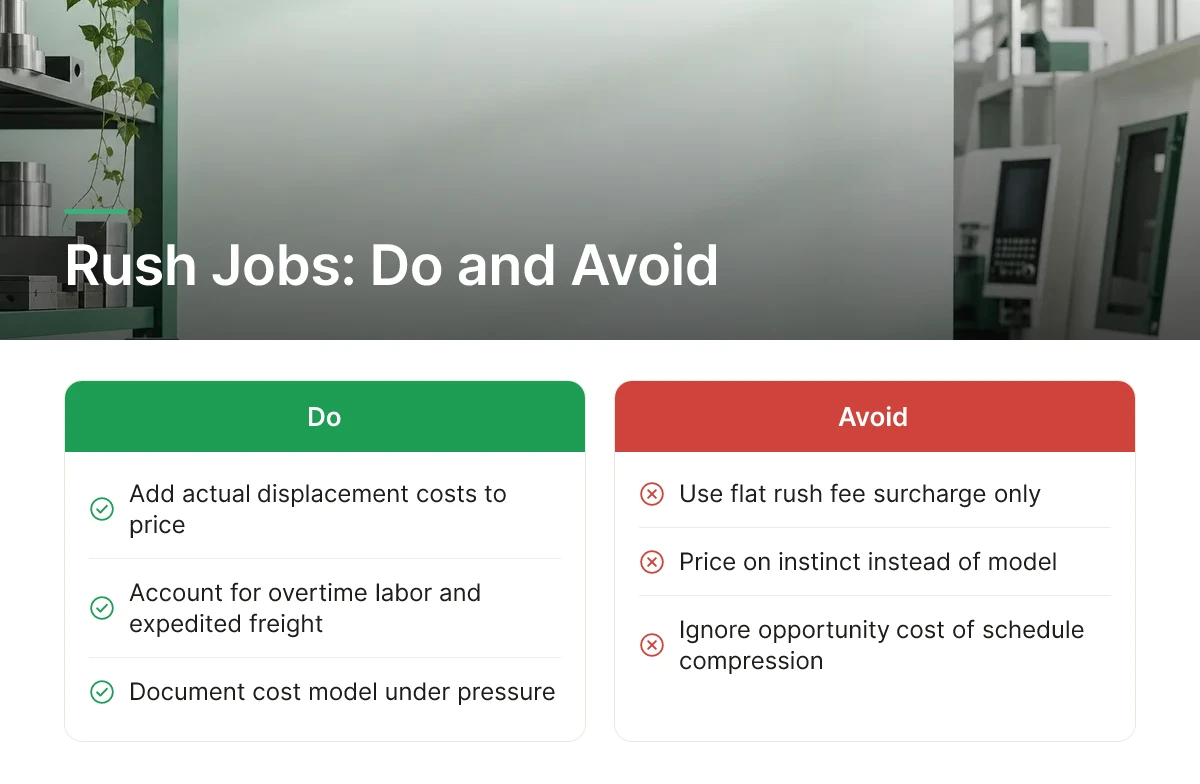
Rush orders and volatile material costs erode margin fastest because they get priced on instinct instead of a documented cost model. Learning how to quote manufacturing jobs under pressure means treating volatility as a line item, not an afterthought.
A flat rush fee, say, a blanket 15% surcharge, rarely covers the real cost of compressing a schedule. Price rush work by adding up what it actually displaces: overtime labor, expedited freight on raw stock, and the opportunity cost of bumping another customer’s job down the queue. If a rush order forces a second shift or pulls a machine off a running job, that disruption has a dollar value, and it belongs in the quote, not buried in a vague markup.
Material and labor availability can shift between the day you quote and the day you cut metal, especially on jobs with multi-week lead times. Build in a buffer, a percentage held in reserve for price swings, or attach a re-quote clause that lets you revisit pricing if a material index moves past a set threshold or a supplier’s lead time stretches. Spelling this out in the quote itself protects you without surprising the customer later.
Adjusting Quotes When Costs Change Mid-Project
When conditions change after work has started, communicate the shift immediately, document it as a formal change order, and reprice only the affected cost layer, not the whole job.
If a specification change adds a tighter tolerance or a different alloy, isolate that cost impact and show the customer exactly what changed and why the number moved. Repricing the entire quote from scratch looks arbitrary and invites pushback; repricing one layer, with the original quote as reference, reads as controlled and fair. A connected process, where cost inputs are captured once and reused, makes this kind of partial repricing far faster than rebuilding a quote by hand.
Recurring Errors That Quietly Eat Margin
- Forgetting setup time on repeat orders. Teams assume a repeat job skips setup because “we’ve made this before,” but tooling wear, fixture changes, or a new material lot can reintroduce setup time that never gets quoted.
- Quoting from memory instead of a template. Estimators under time pressure often skip the standard cost breakdown and guess based on a similar past job, a habit that shops relying on manual calculation are especially prone to, since quoting quality depends on whoever is available that day.
- Failing to re-quote after a spec change. A revised drawing that reaches the shop floor without reaching the quote first means the price on file no longer matches the part being made.
- Ignoring scrap rate on difficult materials. Titanium, hardened steel, and thin-wall parts produce more scrap than easy-to-machine stock, and a quote that uses a generic scrap allowance will underprice the job.
Underquoting on any of these points means doing the work without making a profit, while overquoting from excess caution costs you the order entirely. MFG SOLUTION addresses this volatility by returning quotes within 8 hours against a documented process, backed by ISO 9001:2015 and IATF 16949 controls, so rush and standard orders alike are priced against the same cost structure rather than a rough estimate.
Frequently Asked Questions
What’s the biggest reason shops lose money on manufacturing quotes?
Underquoting on setup time and material waste is the most common cause of lost margin. Shops often price off memory or a rushed estimate instead of a repeatable cost model, which hides real labor hours, tooling wear, and scrap rates until the job is already running. Without recorded assumptions to check against actual production data, the same mistake repeats on every similar job.
Should setup time be charged separately from per-part cost?
Yes, separating setup time from per-part cost gives you a more accurate and defensible quote. Setup is fixed regardless of batch size, while per-part cost scales with volume; blending the two distorts pricing on both small prototype runs and large production batches, making it harder to compare quotes across jobs.
How do you quote a job when the customer wants a fast turnaround?
Quote fast jobs using the same cost inputs as any other job, then add a clearly labeled rush premium rather than guessing a number. Structure, not shortcuts, is what lets you respond quickly without eroding margin. MFG SOLUTION applies this approach directly, returning detailed quotes within 8 hours and shipping approved orders in 3 days without skipping cost verification.
Do you need special software to quote manufacturing jobs accurately?
No, but quoting software reduces errors and speeds up the process significantly compared to manual spreadsheets. Estimating tools analyze part features, materials, and machine rates automatically, cutting quote turnaround from days to hours while reducing dependence on one experienced estimator.
How often should you revisit your markup percentage?
Review markup at least quarterly, or whenever material costs, labor rates, or machine utilization shift noticeably. A static markup set years ago rarely reflects current overhead, and small drifts in cost inputs compound quickly across high-volume production runs.
Conclusion
Accurate quoting comes down to three habits: separate setup cost from per-part cost, build a repeatable model instead of estimating from memory, and revisit your markup before it drifts away from real overhead. Shops that skip these steps either lose bids on price or lose margin on the jobs they win.
If your current process depends on one estimator’s judgment, start by documenting the cost inputs for your last five quotes and compare them against what the jobs actually cost to run. That gap tells you exactly where your pricing model needs fixing first.
Recommended Articles
Explore more from our content library: