
2026-07-24
How a Forging Factory Works: Processes & Standards
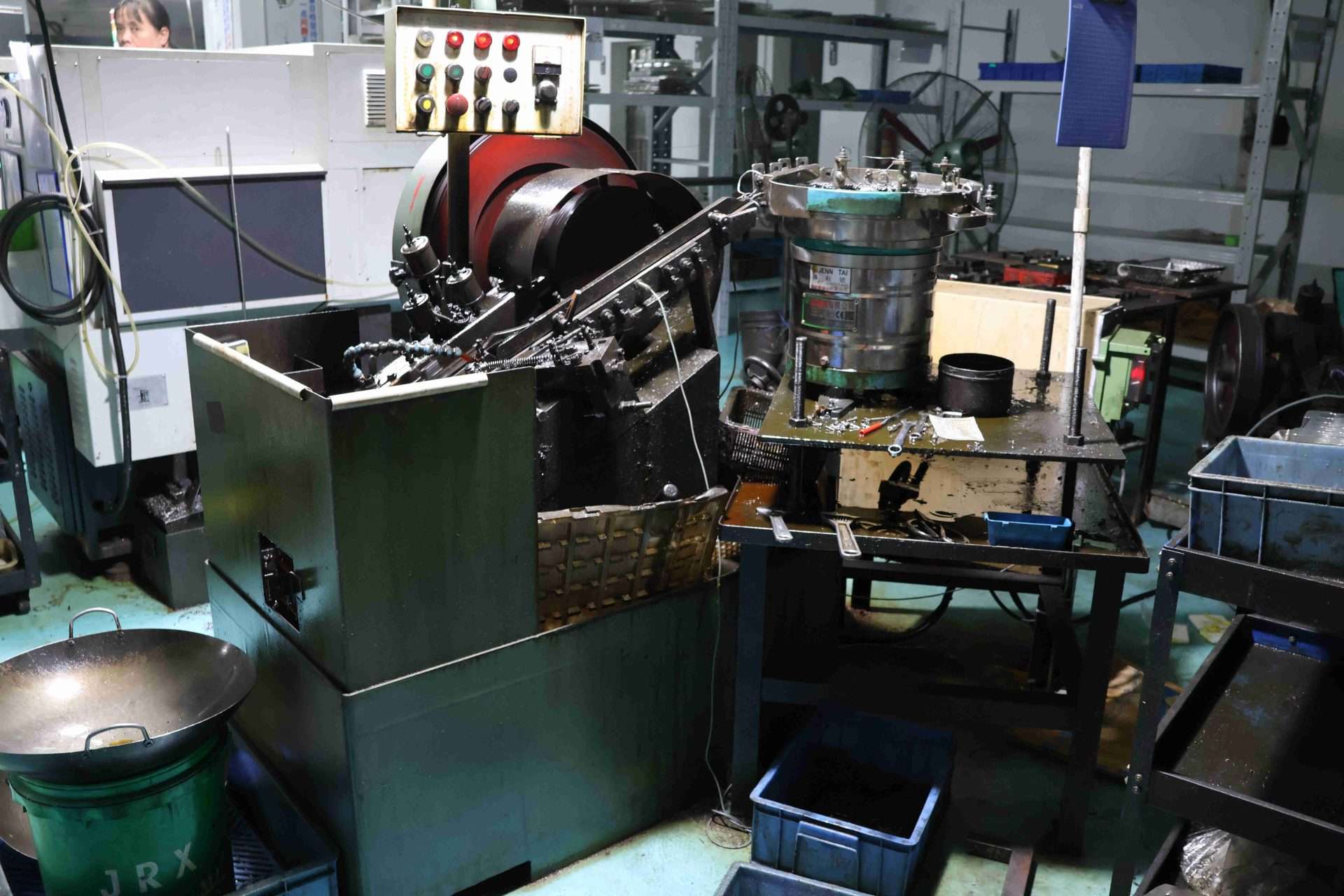
A forging factory is a manufacturing facility that shapes metal under high compressive force, using hammers, presses, or rolls, to produce parts with superior grain structure, strength, and fatigue resistance compared to cast or machined alternatives. Most factories specialize in one or more processes: open-die, closed-die, or roll forging. The resulting components serve aerospace, automotive, oil and gas, and medical industries where structural integrity is non-negotiable. According to Wikipedia’s overview of forging, the process dates back thousands of years and remains one of the most reliable methods for producing high-strength metal components.
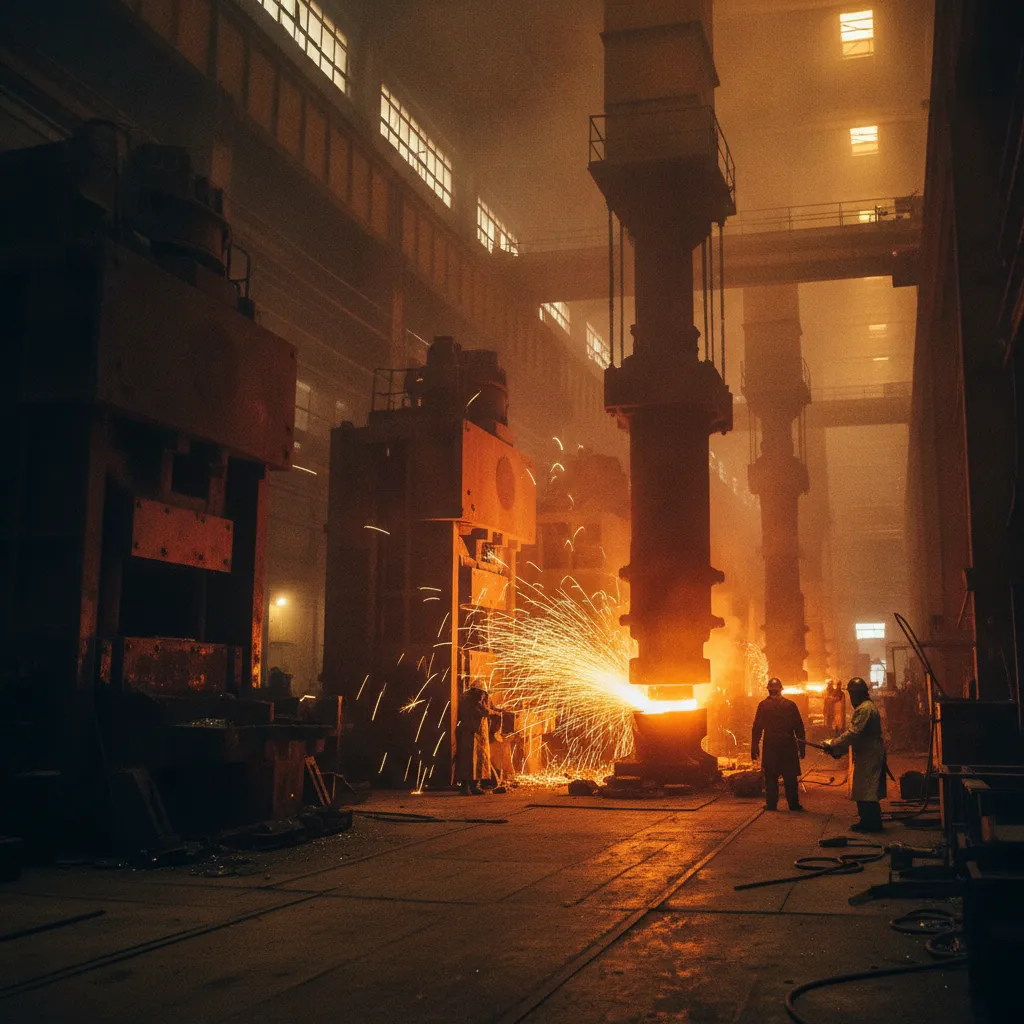
What a Forging Factory Does and How the Process Works
A forging factory shapes metal through compressive force, deforming a solid billet into a finished geometry without melting it or cutting material away.
The standard production workflow runs through several controlled stages:
- Billet selection — choosing the correct alloy grade and size for the finished part
- Heating — bringing the billet to the target forging temperature for the material
- Die setup — installing and aligning tooling to the press or hammer
- Forging — applying compressive force to deform the billet into the die cavity
- Trimming — removing flash and excess material from the forged blank
- Heat treatment — refining grain structure and achieving target mechanical properties
- Inspection — dimensional checks, hardness testing, and non-destructive evaluation before shipment
Each step is controlled to specification. Heat treatment after forging refines grain structure further, and inspection — dimensional checks, hardness testing, ultrasonic or dye-penetrant testing — confirms the part meets drawing tolerances before it ships.
“Forging is unique among metalworking processes because it works with the metal’s grain structure rather than against it. The result is a part that is fundamentally stronger at the microstructural level.” — Dr. Taylan Altan, Professor Emeritus, Center for Precision Forming, The Ohio State University
How Forging Compares to Casting and CNC Machining
Casting pours liquid metal into a mold; machining removes material from a solid block. Forging does neither — it plastically deforms a solid billet under pressure, which is the key mechanical difference. That deformation aligns the metal’s internal grain structure along the part’s stress contours rather than cutting across them. For a comprehensive technical explanation, see the forging process overview on Wikipedia.
The result is measurable: forged parts typically show 20–30% higher tensile strength and fatigue resistance than cast equivalents of the same alloy. Cast parts carry porosity and random grain orientation; machined parts sever grain lines at the surface. Forging avoids both failure modes, which is why aerospace fasteners, automotive connecting rods, and surgical instrument bodies are forged rather than cast or machined from billet.
For a detailed breakdown of how grain flow affects component design decisions, see our guide to Forging Components: A Complete Guide for 2026.
What Materials Can Be Forged in a Factory Setting
Most forging factories process carbon steel, alloy steel, stainless steel, aluminum, titanium, and nickel superalloys. Material selection drives temperature range and die wear rates — aluminum forges at roughly 400–480 °C, while nickel superalloys require 1,000 °C or above and specialized tooling.
Stainless steel is one of the more demanding materials to forge because its work-hardening rate is high, requiring precise temperature control and heavier press tonnage. MFG SOLUTION’s cold forging capability handles steel and aluminum components up to 38mm in diameter, a process that skips the heating stage entirely and produces near-net-shape parts with tight dimensional tolerances and excellent surface finish straight off the die.
Main Types of Forging Processes Used in Factories
A forging factory typically runs three core processes: hammer forging, press forging, and cross roll forging, each suited to different part geometries, volumes, and budgets.
Hammer forging splits into two methods. Open-die hammer forging shapes large, simple parts — shafts, discs, and blanks weighing up to several tons — by striking heated metal between flat or simple dies. Closed-die hammer forging presses metal into a shaped cavity to produce near-net-shape parts with tighter tolerances. Tooling for closed-die work runs $5,000–$50,000 depending on part complexity and die material.
Press forging applies slow, controlled force rather than impact. Hydraulic presses reach up to 50,000 tons of force, giving manufacturers better dimensional accuracy and repeatability than hammer methods. Aerospace structural brackets and automotive suspension arms are typical candidates — parts where consistent cross-section and tight tolerances matter more than cycle time. For a visual demonstration of industrial press forging in action, see this forging process video on YouTube.
Cross roll forging uses rotating dies to form axisymmetric parts like axles, bearing rings, and drive shafts. It runs at high volume with low per-unit cost, but the dedicated tooling required makes it impractical for short runs or irregular geometries.
Cost Differences Between Hammer, Press, and Roll Forging
Hammer forging carries the lowest tooling entry cost but demands more labor per part, which raises per-unit cost at scale. Press forging requires higher upfront tooling and equipment investment, but per-part cost drops sharply at volume. Cross roll forging delivers the lowest per-part cost at scale, provided annual volumes justify the dedicated tooling spend.
The table below summarizes the key trade-offs engineers and procurement teams should weigh when selecting a forging process: For more information, see Thegoodcode.
- Open-die hammer forging: Low tooling cost, high labor per part, best for large low-volume blanks
- Closed-die hammer forging: Moderate tooling cost, near-net-shape output, suited to medium complexity parts
- Hydraulic press forging: High equipment investment, excellent dimensional repeatability, preferred for aerospace and automotive structural parts
- Cross roll forging: Lowest per-part cost at volume, limited to axisymmetric geometries, requires dedicated tooling
- Cold forging: High tooling precision required, no heating stage, produces tight tolerances and smooth surfaces for small high-volume parts
Which Forging Process Fits Your Component Type
Match the process to the geometry and volume. Thin-walled or complex shapes go to closed-die press forging. Large, low-volume blanks suit open-die hammer forging. High-volume round profiles — axles, rings, pins — belong in cross roll production.
For small precision components under 38mm diameter, cold forging (a subset of closed-die press forging) adds another option. MFG SOLUTION runs cold forging alongside CNC turning and Swiss lathe operations, letting engineers choose the most cost-effective method for each part geometry without switching suppliers. Custom forging service providers like Modern Group’s custom metal forging division illustrate how full-service forging factories integrate multiple process types under one roof to serve diverse industry requirements.
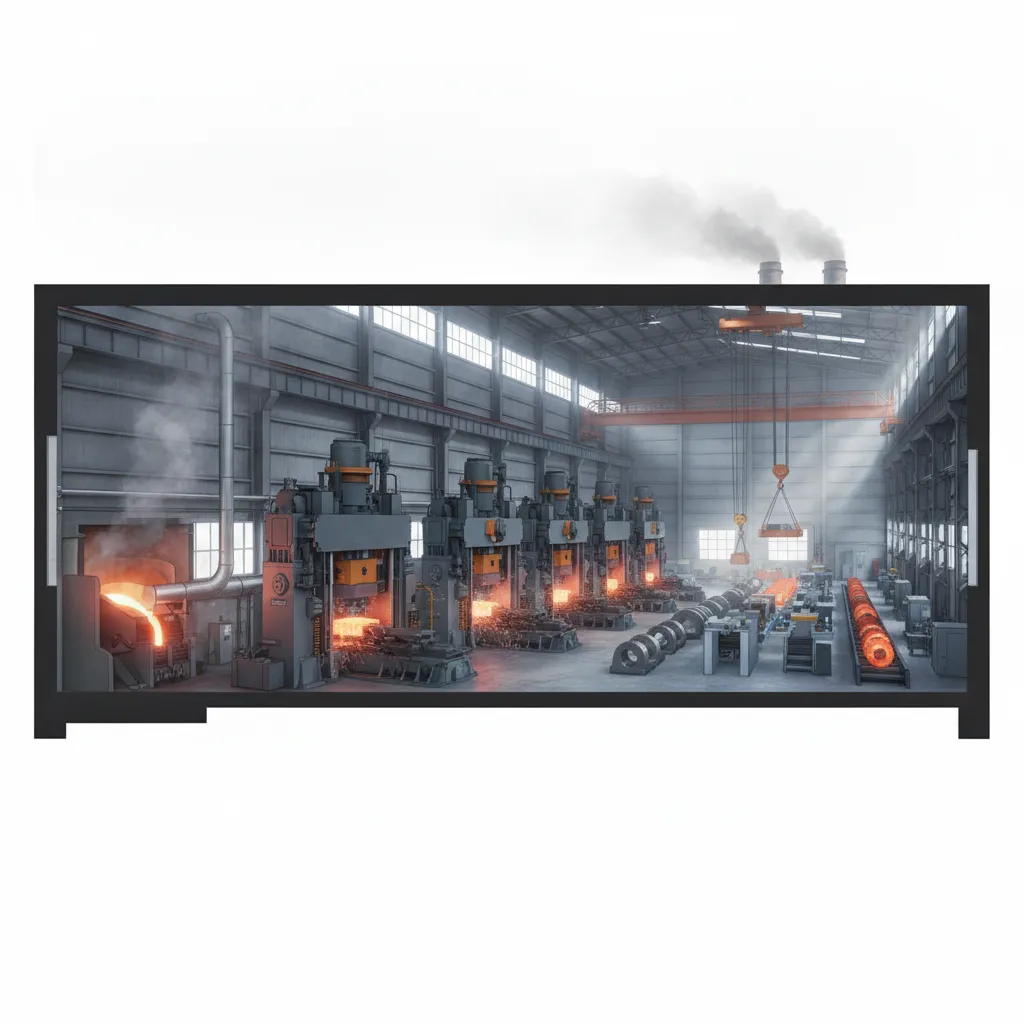
How to Choose the Right Forging Factory for Your Project
The right forging factory matches your specific process, holds current quality certifications, and gives you documented lead times before you commit to tooling costs.
“When evaluating a forging supplier, the first question isn’t price — it’s whether their press tonnage and die design capability actually match your part’s material and geometry requirements. Mismatches at that stage create quality problems no inspection system can fully catch downstream.” — James Kowalski, Senior Manufacturing Engineer, Aerospace Components Division
Vendor Evaluation Criteria for Forging Suppliers
Start with a capability checklist. Confirm the supplier runs the exact process your part requires — open-die, closed-die, or roll forging — and verify their press tonnage or hammer capacity handles your part weight and material grade. A factory quoting closed-die work without the right press tonnage will compromise grain flow and dimensional accuracy.
Certifications are non-negotiable. Require ISO 9001:2015 as a baseline for any order. Add IATF 16949 for automotive components, AS9100 for aerospace, and ISO 13485 for medical device parts. Ask for current certificates with expiry dates, not verbal claims. MFG SOLUTION, for example, holds ISO 9001:2015, ISO 13485:2016, and IATF 16949 across its production operations, which makes certificate verification straightforward for procurement teams.
Watch for these red flags before signing: no in-house tooling design capability, no material traceability documentation, and an inability to produce PPAP or first-article inspection reports. Any one of these gaps can stall your production line. Post-forging dimensional verification also matters — understanding precision tolerance stackup and reviewing machining tolerances explained will help you set realistic acceptance criteria when reviewing first-article reports.
Lead Times and Production Timelines for Custom Forging
Prototype and first-article forging typically runs 4–8 weeks, including tooling design and fabrication. Production runs drop to 3–6 weeks after tooling approval, once the die set is proven. Budget for a 15–30% cost premium if you need expedited scheduling — most factories can compress timelines, but they price the capacity accordingly.
Get lead time commitments in writing, tied to specific milestones: tooling design freeze, first-article submission, and production release. Vague promises of “fast turnaround” without milestone dates are a supplier communication red flag as significant as missing certifications.
Industries That Rely on Forged Components and Why
Automotive, aerospace, oil and gas, medical, and defense manufacturers all depend on forging factories because no other process matches the fatigue strength and structural integrity forging delivers.
Forged Parts in Automotive, Aerospace, and Oil and Gas Applications
Automotive powertrains demand forged steel crankshafts and connecting rods because forged steel crankshafts withstand roughly 10 times more fatigue cycles than cast iron equivalents under engine load. Steering knuckles carry the same requirement — cyclic stress from road impact rules out casting entirely for safety-critical suspension parts.
Aerospace applications push the material envelope further. Turbine discs, landing gear struts, and structural brackets require AS9100-certified forging processes, with titanium and nickel superalloy forgings used in jet engines that operate above 1,000°C. Those temperatures and mechanical loads eliminate aluminum or cast alternatives outright.
Oil and gas components face pressure extremes instead of thermal ones. Drill collars, valve bodies, and flanges must meet ASTM A694 and API 6A standards; forged flanges are rated to 15,000 psi working pressure, a specification cast fittings cannot reliably hold across service cycles.
Medical and defense applications add traceability requirements on top of mechanical performance. Orthopedic implants machined from forged titanium Ti-6Al-4V alloy require ISO 13485 compliance and full material traceability from billet to finished part. The post-forging precision machining steps for implants — bore tolerances, surface finish, thread forms — are as demanding as the forging itself; see our CNC machining medical devices page for how MFG SOLUTION handles that final stage. Weapon components and armor plate carry parallel traceability demands, where a missing material certificate can disqualify an entire production lot.
Quality Certifications and Standards a Forging Factory Must Meet
A qualified forging factory must hold at minimum ISO 9001:2015, and IATF 16949 or AS9100 if supplying automotive or aerospace buyers.
ISO 9001:2015 sets the baseline. It requires documented procedures, corrective action systems, and full audit trails, so every process step is recorded and traceable. Most industrial buyers list it as a minimum supplier requirement before issuing a purchase order.
IATF 16949 goes further for automotive supply chains. It adds Advanced Product Quality Planning (APQP), Production Part Approval Process (PPAP), and control plan requirements on top of the ISO 9001 framework. Tier 1 and Tier 2 automotive suppliers treat this certification as non-negotiable — without it, a forging factory cannot enter most automotive qualification programs.
“Certification to IATF 16949 is not just a badge — it represents a complete quality management infrastructure. Factories that hold it have demonstrated the process discipline to consistently deliver parts that meet automotive-grade dimensional and mechanical requirements.” — Maria Chen, Quality Systems Director, Automotive Supplier Association
MFG SOLUTION holds ISO 9001:2015, ISO 13485:2016, and IATF 16949 certifications, with every step tracked, documented, and auditable for compliance across medical, automotive, and electronics production runs.
Material Testing Procedures for Forged Components
Certifications alone don’t guarantee part integrity — the testing behind them does. Buyers should verify that a factory performs ultrasonic testing (UT) to detect internal voids or inclusions, and magnetic particle inspection (MPI) to identify surface and near-surface cracks. Tensile strength and Charpy impact testing per ASTM or EN standards confirm the mechanical properties of each heat lot.
Traceability is equally critical. Each shipment should include a heat number linking the raw billet to the finished forging, plus a Certificate of Conformance (CoC) and Material Test Report (MTR). Without these documents, you cannot verify what material you actually received.
How Quality Certifications Impact Part Reliability
Factories certified to IATF 16949 or AS9100 carry mandatory process controls — statistical process control, measurement system analysis, and defined reaction plans — that directly reduce defect escape rates. This is a cost-of-quality argument: catching a defective forging at the supplier costs a fraction of a field failure or a production line stoppage. Treating certification as a compliance checkbox misses that financial logic entirely.
Frequently Asked Questions
What is the minimum order quantity for a custom forging factory project?
Minimum order quantities vary by factory and process, but most forging operations require at least 500–1,000 pieces per run to justify die tooling costs. Open-die forging can accommodate smaller batches because it uses general-purpose tooling, while closed-die forging spreads fixed die costs across higher volumes. Cold forging operations — like those MFG SOLUTION runs for small precision parts up to 38mm — can be cost-effective at batch production scales when tooling is amortized across repeat orders.
Can a forging factory produce near-net-shape parts that reduce downstream machining?
Yes — closed-die and cold forging processes regularly produce near-net-shape parts that require minimal secondary machining. Cold forging in particular achieves tight dimensional tolerances and smooth surfaces in a single operation, cutting material waste and machining time. The trade-off is higher upfront tooling investment. For small, high-volume components, the per-part savings on machining time typically offset that tooling cost within a few production runs.
How do forging factories handle material traceability and documentation for regulated industries?
Certified forging factories assign heat numbers and material certifications to every batch, creating a documented chain from raw material to finished part. For automotive and medical applications, this means compliance with IATF 16949 and ISO 13485:2016 requirements — every step tracked, documented, and auditable. MFG SOLUTION operates under all three major certifications (ISO 9001:2015, ISO 13485:2016, and IATF 16949), so material records and process control documentation are available for supplier audits on request.
What surface finish can you expect directly from a forging factory before secondary operations?
Hot forged parts typically leave the die with a rough, scaled surface in the Ra 12.5–25 µm range due to oxide formation at elevated temperatures. Cold forged parts finish considerably smoother — often Ra 1.6–3.2 µm — because no oxidation occurs and the die surface transfers directly to the part. Secondary operations like machining, grinding, or shot blasting bring either process to final specification.
How does forging factory location and regional capability affect sourcing decisions?
Geography affects lead times, shipping costs, and compliance with regional trade regulations. Domestic forging factories typically offer faster tooling iterations and easier audit access, while offshore suppliers may reduce per-part cost at high volumes. For regulated industries — aerospace, medical, defense — proximity also simplifies on-site audits and first-article review. Evaluate total landed cost, including freight, duties, and quality risk, rather than unit price alone when comparing forging factory options across regions.
Conclusion
Choosing the right forging factory comes down to three decisions: process type (hot, warm, or cold), material compatibility, and whether the factory holds the certifications your industry requires. Cold forging stands out for small, high-volume precision parts — it delivers near-net-shape geometry, tight tolerances, and material grain strength in a single operation.
If your parts fall under 38mm in diameter and your supply chain can’t absorb 4–6 week lead times, submit your specifications to MFG SOLUTION for a quote within 8 hours. Bring your drawing, target material grade, and annual volume estimate — those three inputs are enough to get a detailed, certified response by end of business.
Recommended Articles
Explore more from our content library: