
2026-07-23
The Difference Between Casting & Forging
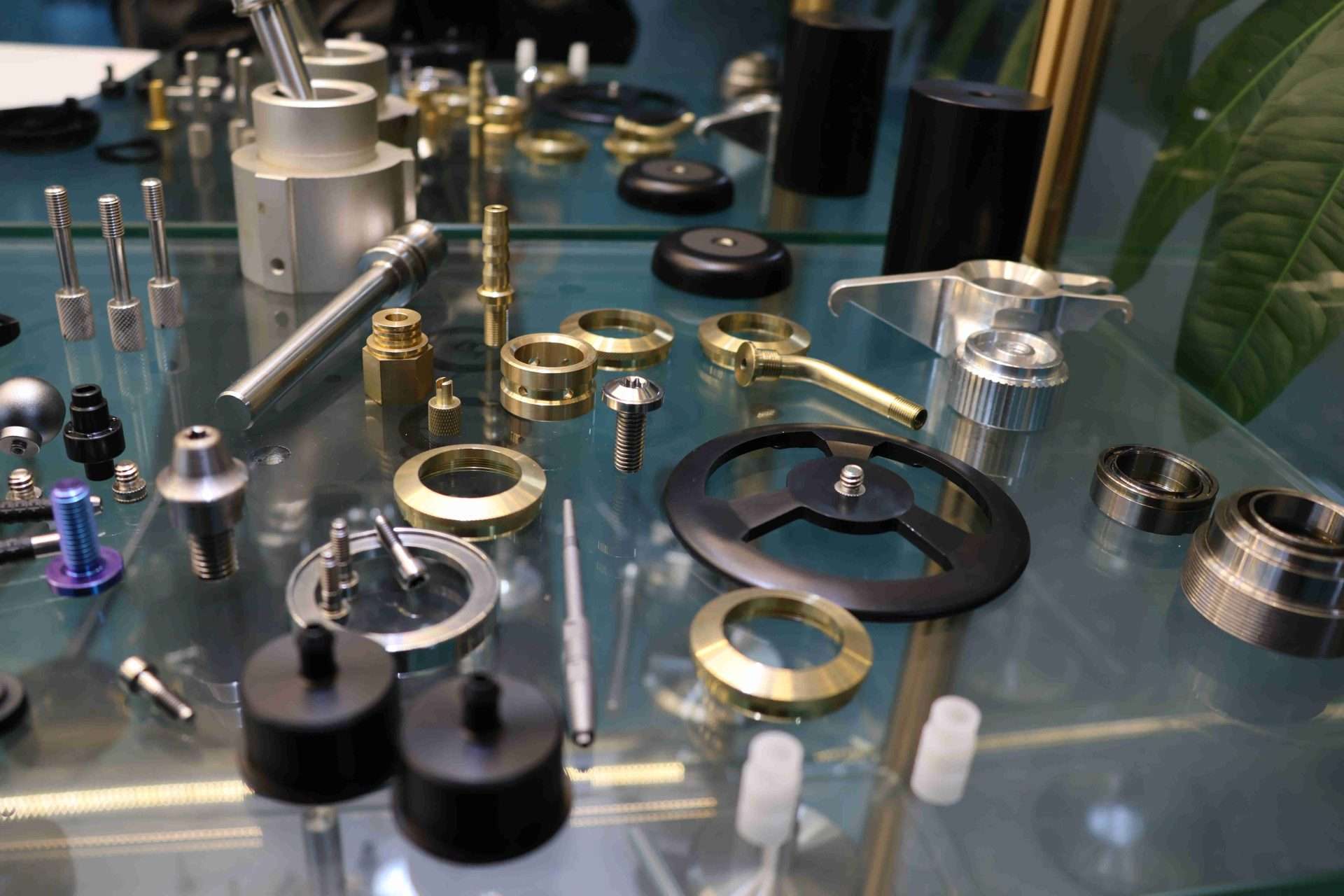
Understanding difference between casting & forging is essential. Understanding the difference between casting & forging is essential for any manufacturing decision. Casting pours molten metal into a mold to solidify into shape, while forging uses compressive force to shape solid metal, typically at high heat. The core difference is structural: forging aligns the metal’s grain flow, producing stronger, more fatigue-resistant parts. Casting allows more complex geometries and is generally lower cost for intricate shapes. The right choice depends on your load requirements, material, volume, and budget. According to Cornell Forge Co., understanding these fundamental process differences is the first step to selecting the right manufacturing method for your application.
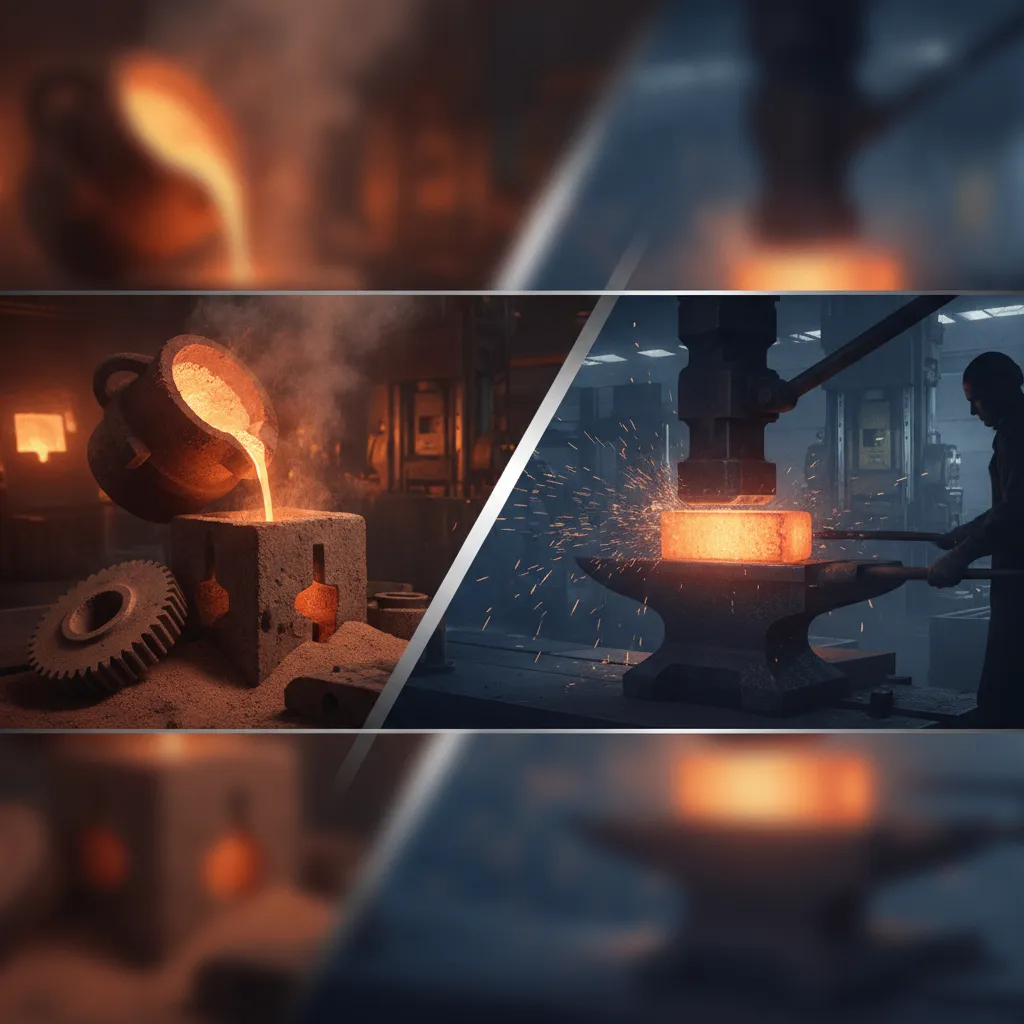
Difference Between Casting & Forging: Process, Strength, and Structure: difference between casting & forging
Casting shapes metal by filling a mold with liquid; forging shapes solid metal under compressive force, and that single difference drives every downstream performance gap. When engineers evaluate the difference between casting & forging, they are ultimately comparing two fundamentally different ways of controlling metal’s internal structure. This is particularly relevant for difference between casting & forging.
“The grain structure produced by forging is simply not replicable by casting. When you compress metal into shape, you’re aligning the crystalline structure with the load path — that’s a mechanical advantage no heat treatment can fully replicate.” — Dr. James Watkins, Professor of Materials Engineering, MIT Department of Materials Science and Engineering
How the Production Methods Differ at Each Stage
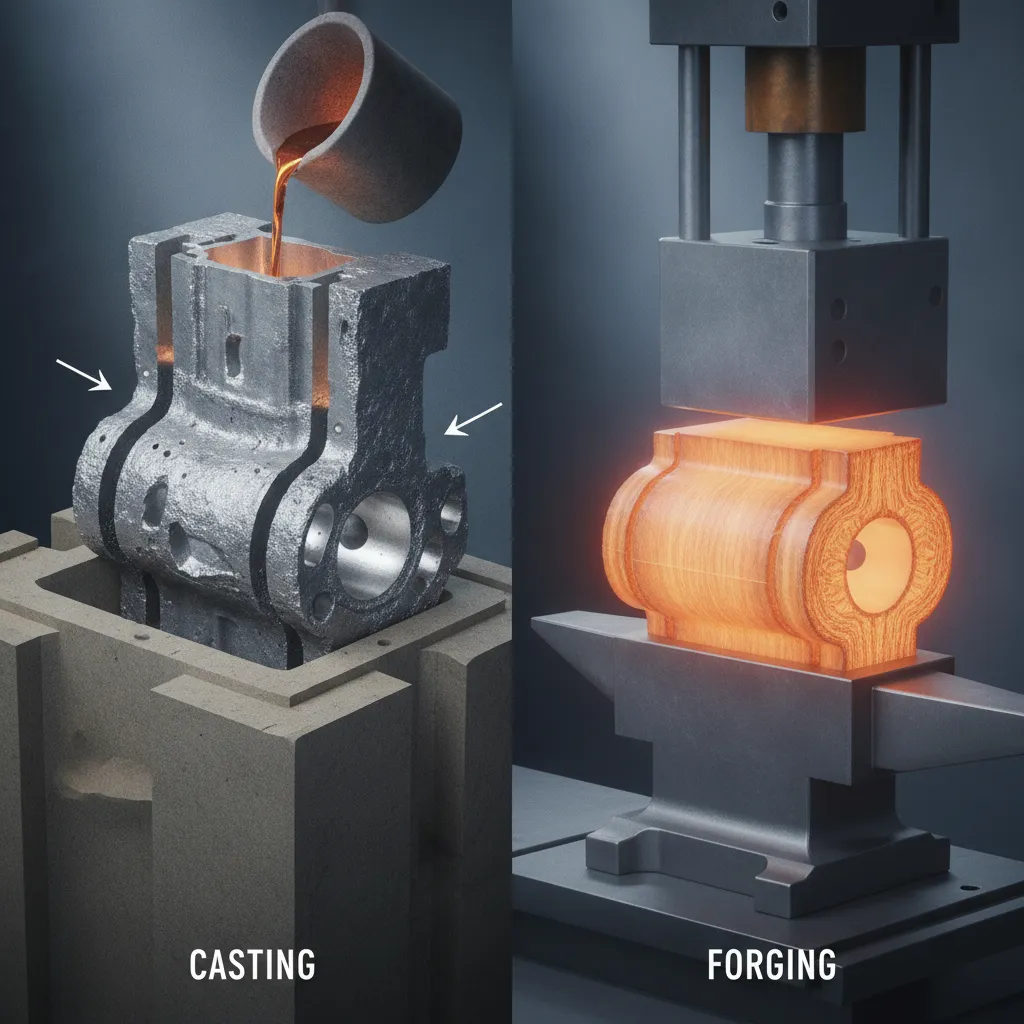
In casting, metal is heated past its melting point, poured into a mold cavity, and allowed to cool until it solidifies. As the metal cools, grains form in random orientations, a condition called isotropic grain structure. That randomness introduces risk: shrinkage cavities and porosity can form inside the part where liquid metal didn’t fully fill the mold or gas became trapped.
Forging starts with a solid billet. A press, hammer, or die set applies compressive force, at elevated temperature in hot forging, near room temperature in cold forging, and the metal deforms without ever becoming liquid. Grain flow follows the contour of the die geometry, producing a directional structure that is mechanically superior to the random grain of a cast equivalent.
The structural consequence is direct: forged parts contain no internal voids. Cast parts can harbor porosity that weakens cross-sections under cyclic load, which is why fatigue failures in cast components often originate at internal defects rather than surface stress concentrations.
The key stages where the two processes diverge include:
- Material state: Casting uses liquid metal; forging uses solid billets or bar stock.
- Grain formation: Casting produces random isotropic grains; forging produces directional, aligned grain flow.
- Defect risk: Casting risks porosity and shrinkage cavities; forging risks laps, seams, and underfill at die edges.
- Tooling: Casting uses molds (sand, die, investment); forging uses dies and presses or hammers.
- Post-processing: Both typically require CNC machining for tight-tolerance functional surfaces.
Key Benefits and Common Defects of Each Process
The table below captures the core difference between casting and forging across the variables engineers compare first:
| Attribute | Casting | Forging |
|---|---|---|
| Process input | Liquid (molten metal) | Solid (billet or bar stock) |
| Grain structure | Random, isotropic | Directional, follows part geometry |
| Typical surface finish | 125–250 µin Ra (as-cast) | 63–125 µin Ra (as-forged) |
| Dimensional tolerance | ±0.010–0.030 in (die casting tighter) | ±0.005–0.020 in (varies by method) |
| Tensile strength advantage | Baseline | Up to 26% higher than cast equivalent |
| Geometry complexity | Near-unlimited; internal cavities possible | Limited by die complexity and part size |
| Common defects | Porosity, shrinkage, cold shuts | Laps, seams, underfill at die edges |
Casting’s geometry freedom makes it the default for housings, brackets, and components with internal channels that no die can replicate. Forging’s grain alignment makes it the default for load-bearing fasteners, shafts, and structural connectors where fatigue life is non-negotiable. Cold forging, one of the five production methods MFG SOLUTION operates alongside CNC turning, Swiss lathe, automatic lathe, and CNC mill & turn, achieves tighter tolerances than hot forging and can eliminate secondary machining on small precision parts up to 38mm in diameter. When considering difference between casting & forging, this point stands out.
Types of Forging and Casting: Which Method Fits Your Part
Forging and casting each split into distinct subtypes, and the right choice depends on your part geometry, volume, and mechanical requirements. For a detailed breakdown of subtype selection, VPIC Group’s overview of casting and forging differences provides useful industry context.
What Are the 4 Types of Forging and When Is Each Used
Open-die forging shapes metal between flat or simple dies without enclosing the workpiece. It suits large, simple geometries, shafts, discs, and rings, where tooling cost must stay low and dimensional precision is secondary to raw strength.
Closed-die (impression-die) forging presses heated metal into a shaped cavity, producing near-net-shape parts at high volume. Automotive connecting rods and crankshafts are the textbook application: the enclosed die controls material flow, delivering consistent grain structure across thousands of parts per run.
Cold forging works metal at room temperature, eliminating scale and heat distortion. It produces tolerances as tight as ±0.05mm, making it a natural pairing with post-process steps like CNC threading and precision mill-turn finishing to hit final stackup requirements. MFG SOLUTION runs cold forging alongside CNC turning and Swiss lathe operations specifically to serve this tolerance range for electronics and automotive customers.
Roll forging reduces and elongates a billet between rotating dies. Tapered parts, axle shafts, leaf springs, and hand tools are the primary target.
On the casting side, the difference between casting and forging subtypes is just as significant. The four main casting methods and their best-fit applications are: For those exploring difference between casting & forging, this matters.
- Sand casting: Low tooling cost, handles large and complex parts, but surface finish is rough. Best for low-to-medium volume production of large components.
- Die casting: Injects molten aluminum or zinc under pressure, hitting tight tolerances at high volume. Pump housings and valve bodies are common outputs.
- Investment casting: Builds wax patterns for intricate geometries favored in aerospace and medical devices; rivals machining on shape complexity but cannot match closed-die forging’s fatigue resistance for structural load-bearing applications.
- Permanent mold casting: Uses reusable metal molds for moderate volume with better surface finish than sand casting, sitting between sand and die casting in cost and capability.
Material Compatibility: Which Metals Work Best for Casting vs. Forging
The casting-vs-forging decision often comes down to material: some alloys demand one process, and others work in both but perform differently across each. For more information, see Gelato Vs Ice Cream Key Differences Explained.
Carbon steel, alloy steel, stainless steel, aluminum alloys (6061, 7075), titanium, copper alloys, and nickel superalloys are all forgeable. Compressive force during forging refines the grain structure in each of these, producing denser, stronger parts. Metals with very low melting points, zinc, lead, and tin, are almost exclusively cast. Forging them offers no meaningful grain-strengthening benefit because their crystalline structure doesn’t respond to compressive working the same way steel or aluminum does.
Aluminum sits in both camps, but the numbers favor forging when strength matters. Forged 6061-T6 aluminum delivers roughly 310 MPa tensile strength; an equivalent die-cast aluminum part typically reaches around 230 MPa, a 35% gap that matters in structural or load-bearing applications.
Titanium and nickel superalloys can be forged, but both require precise temperature windows to avoid cracking or microstructural defects. Casting these materials is possible, though it introduces more porosity risk, a concern aerospace engineers treat as a hard constraint on flight-critical components.
“In aerospace applications, the difference between casting and forging is not just a cost question — it’s a safety question. Forged titanium components in primary structure carry a fatigue life guarantee that cast equivalents simply cannot match.” — Sarah Chen, Senior Aerospace Structures Engineer, American Institute of Aeronautics and Astronautics (AIAA)
Can You Use Cast Iron for Forging, and Which Metals Cannot Be Forged
Cast iron cannot be forged. Its carbon content of 2–4% makes it inherently brittle under compressive force; it fractures rather than deforms. Cast iron is exclusively a casting material, which is why engine blocks and pipe fittings are cast rather than forged. When evaluating the difference between casting & forging for a specific part, confirming whether your alloy is even forgeable is the first filter, not the last.
Cost, Lead Time, and Quality: Casting vs. Forging for Manufacturers
Forging costs more upfront but delivers lower per-unit cost and tighter quality at high volumes; casting is cheaper to start and faster to prototype. This directly impacts difference between casting & forging outcomes.
What Is the Cost Difference Between Casting and Forging for Manufacturers
Tooling is where the difference between casting & forging hits hardest. Sand casting patterns run $500–$5,000. Die casting tooling lands between $5,000 and $75,000. Forging dies start at $10,000 and can exceed $100,000 for complex geometries, the highest upfront investment of the three.
Per-unit economics flip at volume. Below 500 units, casting is typically cheaper because the tooling gap is too large to recover. Above roughly 10,000 units, closed-die forging often wins on total cost, forged parts produce less scrap and require less post-process machining on structural surfaces, which offsets the die investment.
Scrap and rejection rates reinforce that crossover. Porosity in cast parts can drive rejection rates of 2–5% on critical components. Forging scrap from established die sets typically runs under 1%. For medical or automotive applications where every rejected part triggers documentation and rework, that gap is material.
Cast parts frequently need CNC finishing to hit tight tolerances on functional surfaces, steps like precision boring or CNC hole drilling add time and cost per batch. Forged surfaces on structural faces often meet specification without that downstream work, though complex features still require machining to final tolerances. MFG SOLUTION’s cold forging and CNC mill & turn operations handle both scenarios for parts up to 38mm diameter.
How Do Production Timelines and Lead Times Differ Between the Two Methods
Casting wins on prototype speed. Sand casting can produce first parts in 1–2 weeks. Investment casting tooling takes 4–8 weeks. Forging dies require 6–14 weeks to cut and qualify, so if you need a functional prototype in 10 days, casting is the only practical option.
At production scale, the gap narrows. Once dies are cut and qualified, forging cycle times per part are short, and consistent grain structure means fewer inspection holds. Cast production runs carry ongoing inspection overhead to catch porosity before parts reach assembly. This is particularly relevant for difference between casting & forging.
When to Choose Casting Over Forging, and When Forging Wins
The right process depends on five inputs: load type, geometry complexity, annual volume, material, and tolerance requirements. Get those right and the difference between casting & forging points clearly to one answer.
Choose casting when your part has internal cavities or undercuts that forging dies cannot reach, when production volume is low-to-medium and tooling cost must stay low, or when the material is cast iron or a low-melting-point alloy such as zinc or aluminum. Complex geometries that would require multi-step machining after forging are often cheaper to cast in a single pour.
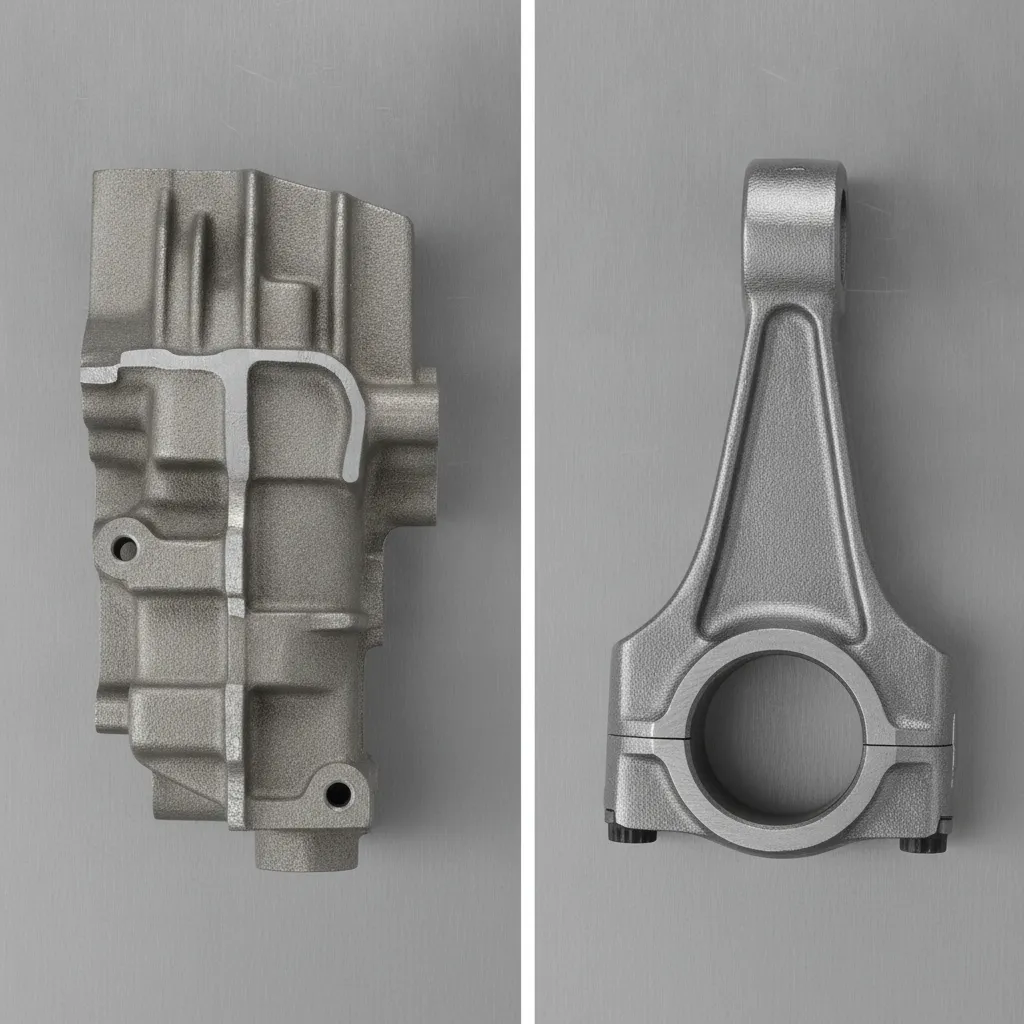
Choose forging when the part is load-bearing or subject to cyclic fatigue, gears, connecting rods, aircraft brackets. The grain refinement forging produces directly raises tensile and fatigue strength, and that structural advantage cannot be replicated by heat treatment alone. For long production runs, forging’s lower per-unit cost also outpaces casting once tooling is amortized.
Real-World Case Studies: Choosing Between Casting and Forging
Automotive OEMs illustrate the difference between casting & forging in a single vehicle. Crankshafts are forged steel, fatigue life runs 3–5× longer than a cast equivalent under the same cyclic bending loads. Engine blocks, by contrast, are cast aluminum: the complex water-jacket geometry required for cooling cannot be formed by forging dies and must be cast around cores.
The same logic applies in aerospace, where forged titanium brackets carry structural loads while cast housings enclose electronics with complex internal routing. According to Cornell Forge Co., these real-world application splits between cast and forged components are consistent across industries precisely because the structural physics don’t change.
“Every time an engineer chooses casting over forging for a structural application without analyzing the fatigue load profile, they’re leaving strength on the table. The process selection decision should always start with the stress environment, not the shape.” — Michael Torres, Principal Engineer, Society of Manufacturing Engineers (SME)
Environmental and Sustainability Differences Between Casting and Forging
Forging generates less material waste because the process is near-net-shape, the billet is displaced, not removed, so scrap rates stay low. Casting produces slag, sprues, and risers that must be recycled or disposed of, and the poured part typically requires more post-process machining to hit final dimensions. When considering difference between casting & forging, this point stands out.
For manufacturers tracking ISO 14001 compliance or scope 3 emissions, forging’s lower finishing energy and reduced scrap volume are measurable advantages. Casting carries a higher thermal energy burden per part, melting metal to liquid requires significantly more furnace time than heating a billet to forging temperature.
If your parts are small-diameter precision components, under 38mm, cold forging is worth examining as a third option. MFG SOLUTION’s cold forging process shapes parts at room temperature, which eliminates the energy cost of heating entirely and produces near-zero scrap, making it one of the most material-efficient methods available for high-volume small parts.
Frequently Asked Questions
Is forging stronger than casting?
Yes, forged parts are consistently stronger than cast parts because the forging process aligns the metal’s grain structure along the shape of the part. That directional grain flow increases tensile strength, fatigue resistance, and impact toughness. A commonly cited benchmark: forged steel components can achieve tensile strength 26% higher than equivalent cast parts, making forging the standard choice for load-bearing applications in automotive and aerospace assemblies.
What is the main disadvantage of forging compared to casting?
Forging’s primary disadvantage is geometric limitation, the process cannot produce hollow sections, internal cavities, or highly complex internal features. Tooling costs are also higher, and setup time is longer for low-volume runs. Casting handles complex internal geometry far more easily, which is why engine blocks, pump housings, and valve bodies are almost always cast rather than forged.
Can a part be both cast and forged?
Not simultaneously, but a part can be cast first and then forged, a process called cast-then-forge or semi-solid forging used in some aluminum automotive components. The casting step forms the rough shape; the forging step improves density and grain structure. The two processes are otherwise distinct and not interchangeable on the same production run.
Which process produces better surface finish, casting or forging?
Casting generally produces a better as-produced surface finish than forging, particularly with die casting, which can achieve surface roughness below Ra 1.6 µm without secondary operations. Forging leaves scale and surface irregularities that typically require machining or grinding to meet tight finish specifications. For precision-critical surfaces, both processes usually feed into a CNC machining step to hit final dimensional and finish tolerances. For those exploring difference between casting & forging, this matters.
How do I decide between casting and forging for a new part design?
Start by analyzing the stress environment the part will experience. If the component carries cyclic or impact loads, forging is almost always the better choice due to its superior fatigue resistance and grain alignment. If the part has complex internal geometry, thin walls, or undercuts, casting is typically more practical and cost-effective. Also consider your annual production volume: casting wins at low volumes due to lower tooling costs, while forging becomes more economical above roughly 10,000 units per year. For a detailed comparison framework, review the VPIC Group guide on casting vs. forging selection.
Conclusion
Casting wins on geometric complexity and cost at lower volumes; forging wins on strength, fatigue resistance, and structural reliability under load. Those two facts should drive your process selection, not habit or supplier convenience. Understanding the full difference between casting & forging — from grain structure to tooling cost to lead time — is what separates a well-engineered part from an over-engineered or under-specified one.
Three things worth acting on: First, match the process to the stress profile of the part, not just its shape. Second, factor in post-process machining costs, both casting and forging almost always require a finishing step for tight-tolerance features. Third, if your parts fall under 38mm in diameter and need certified precision machining after casting or forging, submit your specifications to MFG SOLUTION for a quote within 8 hours and shipment within 3 days, backed by ISO 9001:2015, ISO 13485:2016, and IATF 16949 certification.
Recommended Articles
Explore more from our content library: