
2026-09-10
How to Select Forging Block Materials for Industrial Use
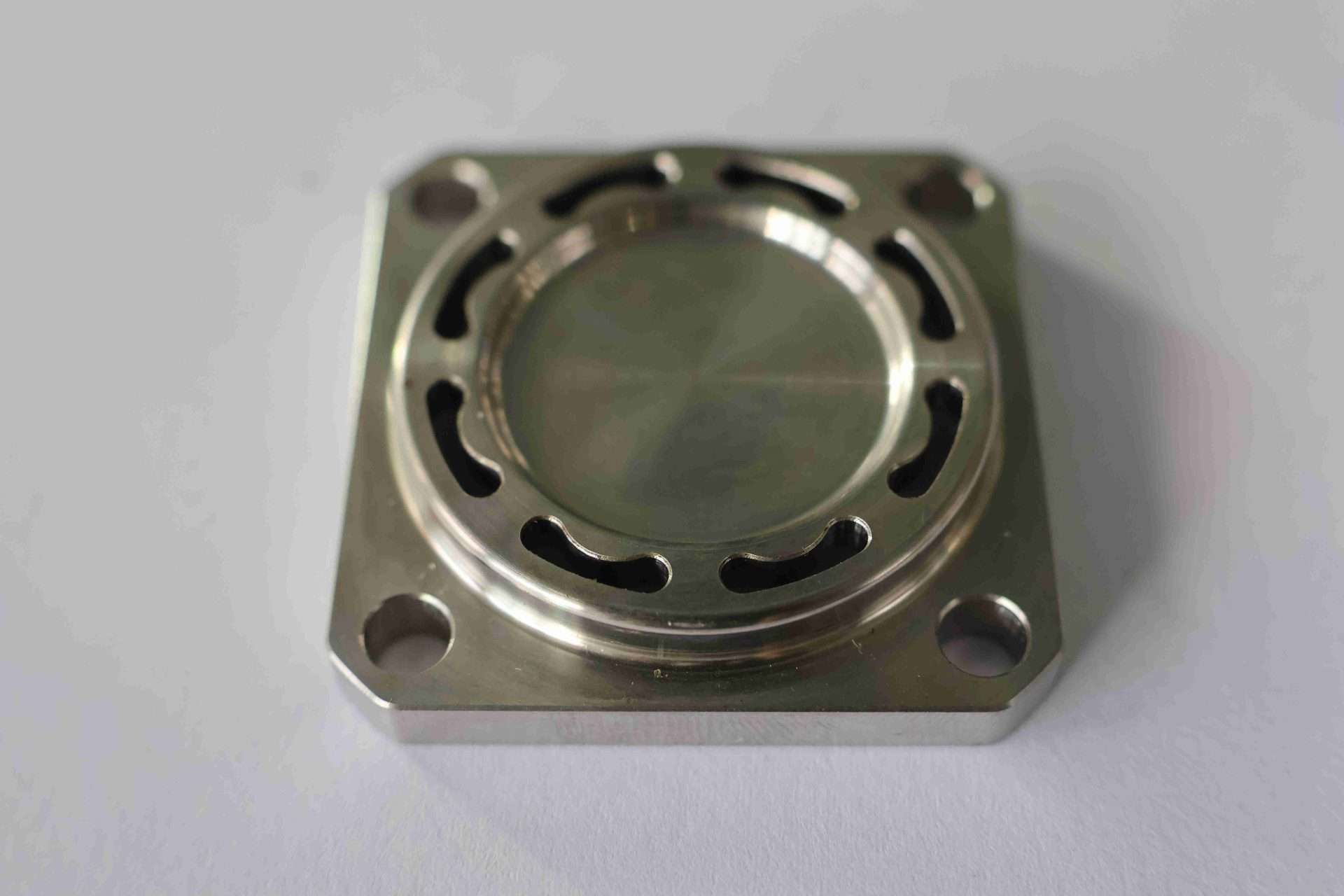
Understanding forging block materials is essential. The best forging block material for precision machining in small-batch production depends on balancing three factors: how easily the material machines to tight tolerances, how fast a supplier can deliver it, and what the application demands for strength or corrosion resistance. Carbon steel (like 1045) suits general-purpose parts needing fast turnaround at lower cost. Stainless steel (like 17-4 or 15-5) fits corrosion-resistant or medical/aerospace applications but costs more and machines slower. Specialty alloys serve high-temperature or high-strength needs but carry longer lead times and higher minimums. Matching grain structure and certification requirements to your tolerance and volume needs, not just picking the strongest material, determines cost and quality outcomes.

Which Forging Block Materials Work Best for Precision Machining in Small-Batch Production?
Forging block materials suited to precision machining share three traits: continuous grain flow, low porosity, and consistent hardness across the block. These traits matter more in small-batch work than in high-volume runs, where fixture optimization and process averaging can absorb material inconsistency.
What Makes a Forging Block Material Suitable for CNC Machining and Tight Tolerances?
A forging block is suitable when its internal grain structure follows the contour of the part rather than being cut across it. During forging, the metal deforms and its grain flow bends around the shape being formed, unlike bar stock, where grain runs in one direction regardless of the final geometry. This alignment gives the material more consistent strength and dimensional stability as a CNC tool removes layers across multiple passes, since stress relief and material response stay predictable from surface to core.
Forged blocks also close up internal voids and reduce porosity during the deformation process. Cast stock, by contrast, can trap gas pockets or shrinkage voids that only surface once a tool cuts into them, a costly discovery mid-run on a tight-tolerance feature. Fewer voids mean fewer dimensional surprises when holding tolerances in the thousandths.
Why Do Precision Machinists Choose Forged Blocks Over Other Stock Forms?
Small-batch shops need machinability they can predict from the first part to the last. Forged blocks with consistent hardness and minimal work-hardening behavior let a machinist set feeds and speeds once and trust them, instead of adjusting mid-run to compensate for hard spots or inclusions that accelerate tool wear.
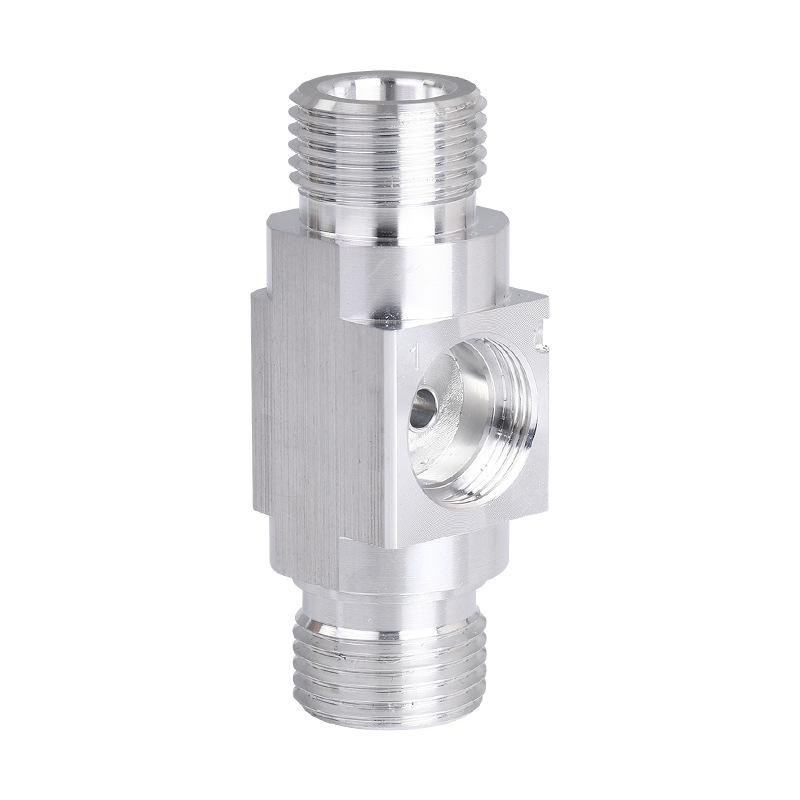
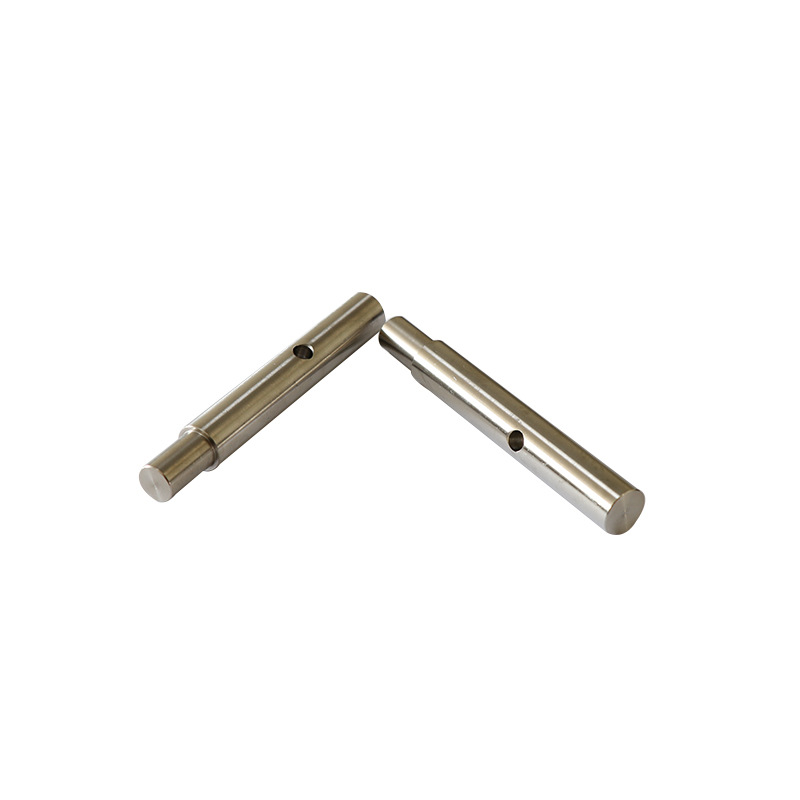
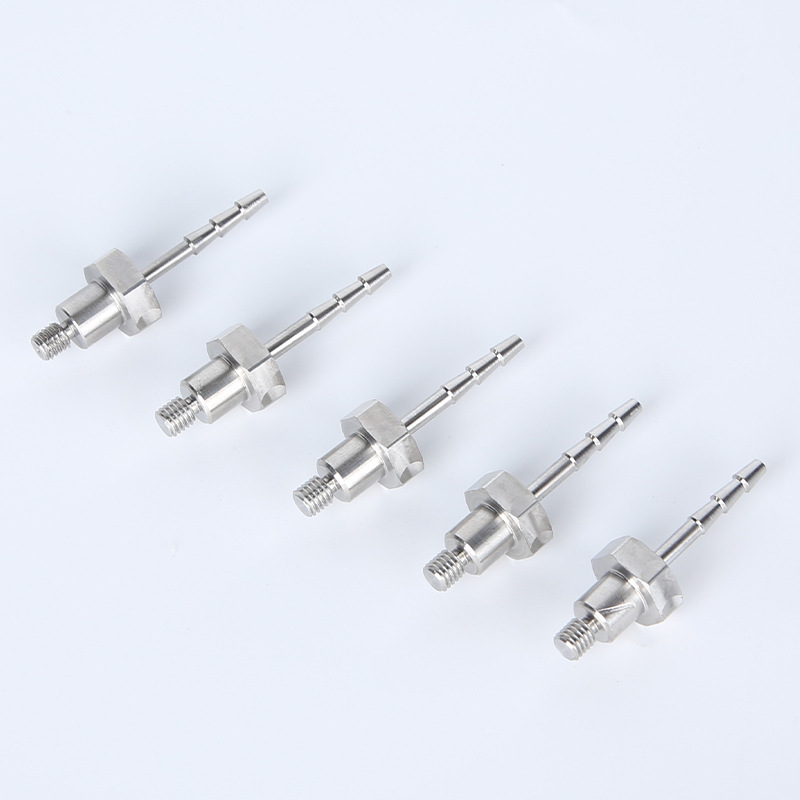
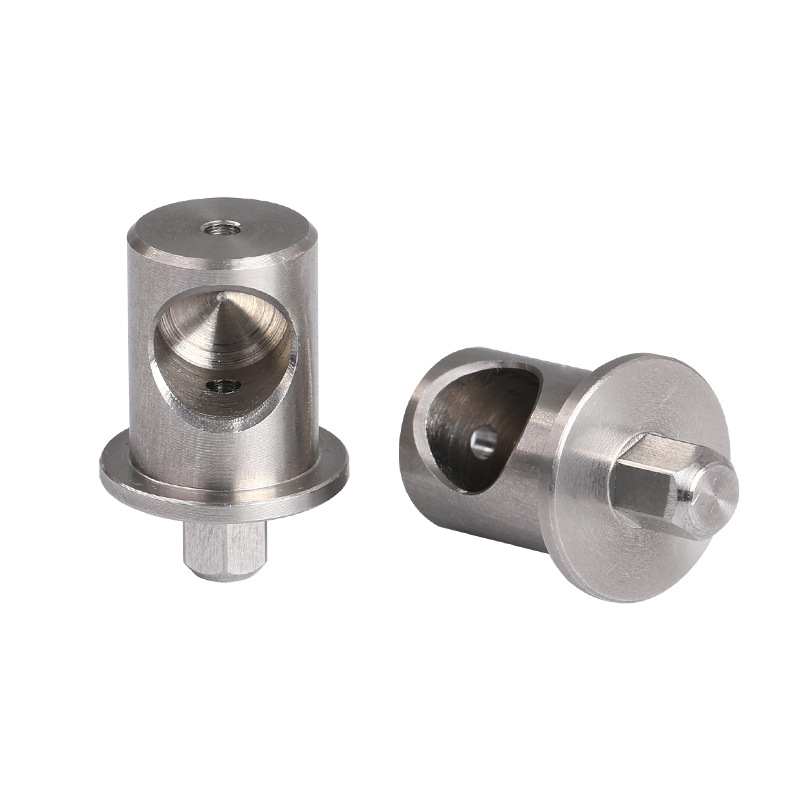
Forged material also offers directional strength and fewer inclusions than plate or bar stock, which lowers scrap risk on precision features like thin walls or fine threads. Buyers running small batches should also favor suppliers who can forge closer to net shape, this cuts both machining time and material waste, which matters more per part when volumes are low. Suppliers such as Runchi Forging’s custom block forging service illustrate how forged stock can be tailored to different grades and shapes before it ever reaches a machine. MFG SOLUTION applies cold forging alongside CNC turning and Swiss lathe methods so each part up to 38mm gets the process best matched to its geometry and tolerance needs.
In practice, the traits that separate a good forging block from a problematic one for precision work include:
- Continuous grain flow that follows the part’s contour rather than running straight through it
- Low porosity, with no trapped gas pockets or shrinkage voids from the deformation process
- Consistent hardness across the cross-section, from surface to core
- Minimal work-hardening behavior so feeds and speeds stay predictable across a run
- Near-net shape availability, which reduces machining time and scrap on small batches
How Do Carbon Steel, Stainless Steel, and Specialty Alloys Compare for Cost, Lead Time, and Quality?
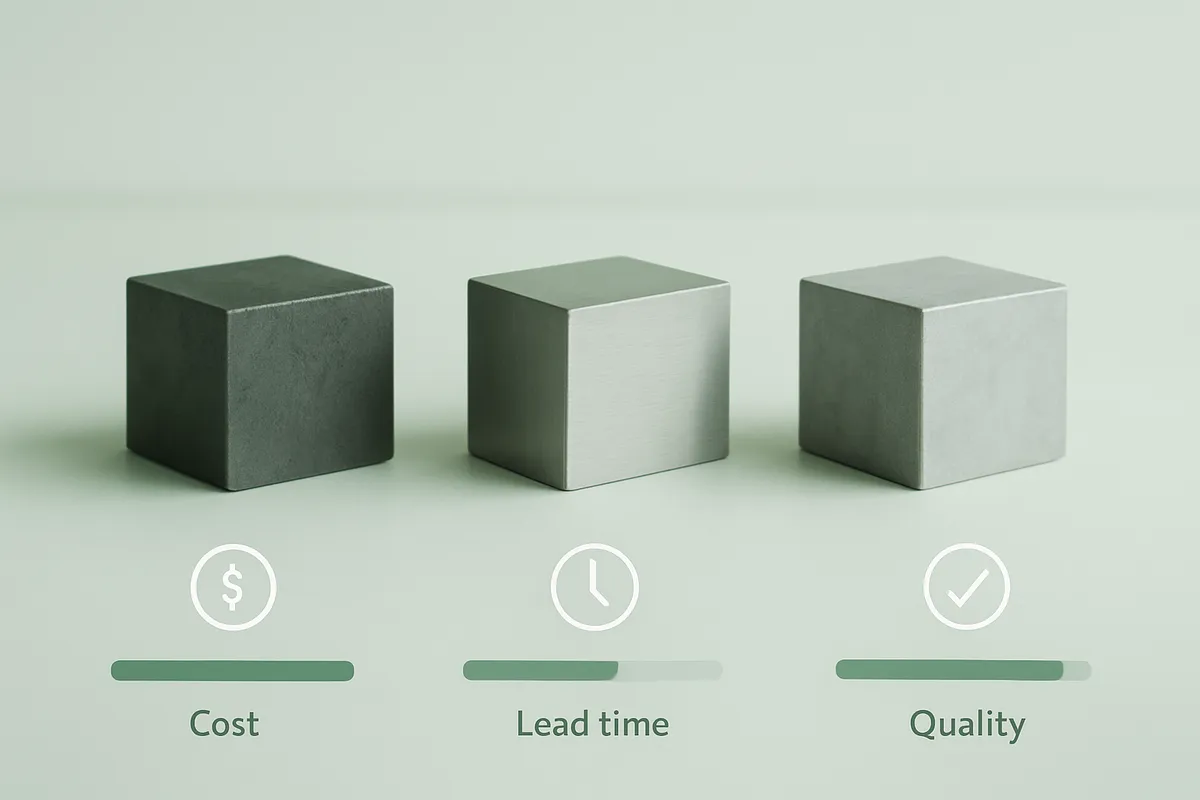
Carbon steel sits at the budget tier with the shortest lead times, stainless steel occupies mid-to-premium territory for corrosion resistance, and specialty alloys command premium pricing with the longest waits. Choosing among forging block materials comes down to matching the alloy family to the part’s mechanical demands without overpaying for properties the application doesn’t need.
What’s the Cost Difference Between Carbon Steel, Stainless Steel, and Specialty Alloy Forging Blocks?
Carbon steel grades like 1045 are the default choice for general structural brackets, tooling components, and shafts that don’t face corrosive environments. Mills stock this alloy in high volume, and the metallurgy is straightforward, no complex heat treatment sequence required, which keeps it the fastest and cheapest option to source.
Stainless grades such as 17-4 PH and 15-5 PH move into mid-to-premium pricing. Buyers pick these when a part needs corrosion resistance or has to meet medical or aerospace material specs, and the added cost reflects both the alloy content and the precipitation-hardening heat treatment these grades require.
Specialty alloys, nickel-based superalloys, tool steels, and high-temperature grades, sit at the top of the cost ladder. These materials serve applications with extreme thermal or wear demands, and premium pricing reflects both raw material cost and the narrower supplier base that produces them. Vendors offering open-die forged steel blocks often carry the broader alloy range needed for these higher-demand applications.
At a glance, the three material tiers break down as follows:
- Carbon steel (e.g., 1045): budget-friendly, fastest to source, best for general structural and tooling components
- Stainless steel (e.g., 17-4 PH, 15-5 PH): mid-to-premium tier, needed for corrosion resistance and medical/aerospace specs
- Specialty alloys (nickel-based, tool steels, high-temperature grades): premium tier, reserved for extreme thermal or wear demands
How Do Lead Times and Minimum Order Quantities Vary Across Different Forging Block Materials?
Lead time differences trace back to the mill, not the forge shop. Alloy availability, required heat treatment cycles, and mill-imposed minimum order quantities all sit upstream of any individual supplier’s production schedule.
Stainless steel adds time for solution treatment and aging cycles plus certification paperwork tied to traceability requirements. Specialty alloys stretch furthest because fewer mills produce them and forging volumes stay low, so buyers often wait on batch scheduling.
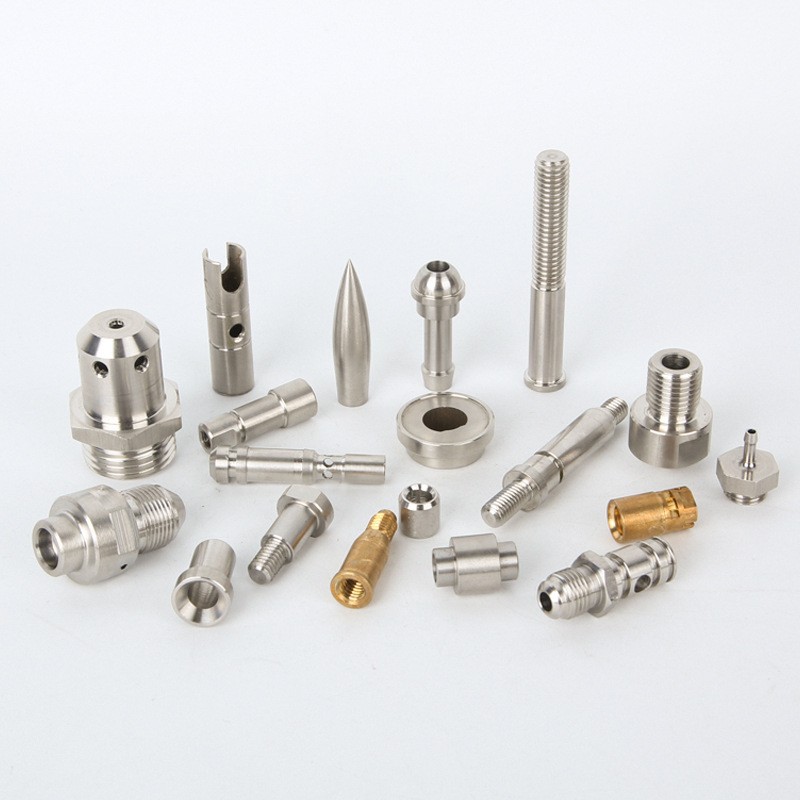
Minimum order quantities compound this for small-batch buyers. Specialty alloys frequently carry higher MOQs than carbon or stainless steel, which pushes procurement teams toward stocked or semi-finished blocks rather than custom mill runs. Suppliers offering multiple machining methods, MFG SOLUTION runs CNC turning, Swiss lathe, cold forging, and automatic lathe production, for example, can sometimes absorb a smaller batch by matching it to whichever process fits the material and volume most economically.
What Technical Specifications Should You Check When Selecting a Forging Block Material?
Verify tensile strength, yield strength, hardness rating, and temperature tolerance before ordering forging block materials, these four specs determine machinability and part performance.
What Tensile Strength, Hardness, and Temperature Tolerance Ratings Do Common Forging Block Materials Offer?
Ask your supplier for the tensile strength and yield strength values in the mill certification, not just a grade name. A “4140 alloy steel” label tells you little without the actual numbers, since heat treatment shifts both properties within a wide band.
Hardness matters just as much, and it’s usually reported as Rockwell C (HRC) for harder alloys or Brinell (HB) for softer steels. Request the tested hardness range, not a nominal spec, because forged blocks can vary across a cross-section depending on cooling rate.
Temperature tolerance is often overlooked until the part fails in service. If your component runs hot, engine mounts, exhaust brackets, industrial valve bodies, confirm the material retains yield strength at operating temperature, not just at room temperature.
Hardness has a direct, practical consequence for machining: harder blocks demand slower feed rates, more conservative depths of cut, and more frequent tool changes. That combination stretches cycle time and, on a batch order, extends your lead time. A material rated at 35 HRC machines noticeably faster than one at 50 HRC, and that difference compounds across a production run of thousands of parts.
Before placing an order, confirm your supplier can provide documentation covering:
- Tensile strength and yield strength values from the actual mill certification
- Tested hardness range (HRC or HB) rather than a nominal figure
- Temperature tolerance data relevant to your part’s operating environment
- Grain flow orientation relative to the finished part geometry
- Heat treatment history and any resulting property shifts
How Do Material Certifications and Quality Standards Affect Your Forging Block Selection?
Certifications turn a supplier’s claims into documented, auditable fact. A mill test report (MTR) confirms chemical composition and mechanical test results for the specific heat lot your blocks came from, not a generic average for that alloy family.
For regulated industries, that traceability isn’t optional. Medical device and automotive programs typically require full lot traceability back to raw material, so if a defect surfaces downstream, you can isolate which batch and which supplier heat lot caused it.
Quality system certifications add another layer of proof. MFG SOLUTION operates under ISO 9001:2015, ISO 13485:2016, and IATF 16949, meaning every step of material sourcing and processing is tracked, documented, and available for audit rather than taken on faith.
Before committing to a supplier, cross-check their certification scope against your industry’s actual requirements, aerospace and medical work often demand tighter documentation than general industrial parts, and not every certified shop covers every scope.
How Do You Find and Evaluate Forging Block Suppliers for Precision Machining Needs?
Evaluate suppliers on process control and capability match, not just unit price, forging block materials mean little if the vendor can’t turn them into finished parts on schedule.
What Should You Look for When Comparing Forging Block Manufacturers and Vendors?
Start with three concrete criteria: in-house forging capacity, machining capability under the same roof, and a certification portfolio that matches your industry. A supplier that only forges and then ships blanks to a separate machine shop adds a handoff, and every handoff adds days and a chance for a specification to get lost in translation.
Certifications matter as a filter, not a checkbox. ISO 9001:2015 signals documented process control across the operation; IATF 16949 matters specifically if you supply automotive; ISO 13485:2016 is non-negotiable for medical device components. A vendor holding all three has generally invested in traceability systems that smaller shops skip.
Also check equipment breadth. A supplier running cold heading equipment alongside 5-axis CNC and multiple automatic lathes can match the process to the part geometry instead of forcing every job through one method.
How Do You Assess Supplier Reliability, Quality Assurance, and Turnaround Capability?
Watch how fast and how specifically a supplier quotes. A vendor that returns a detailed quote within a business day, with a real ship date, not a range, is usually telling you their internal scheduling and process control are tight enough to commit. Vague timelines (“4 to 6 weeks, depending”) often mean the shop is queuing your job behind larger orders.
Ask for documented proof, not claims: inspection reports, material traceability records, and first-article data from a comparable part. Any shop can say “we do quality control”, few can hand you the paperwork on request.
For small batches specifically, confirm the supplier is actually set up for low-volume runs. Some forging operations are tuned for large open-die jobs and treat small batches as a scheduling afterthought. MFG SOLUTION, for example, quotes within 8 hours and ships within 3 days for parts up to 38mm, with cold forging, CNC turning, and Swiss lathe capability under one roof, a single point of contact from forging through finished part, which removes the coordination overhead that small-batch buyers otherwise absorb across separate vendors.
What Is the Right Forging Block Material for Your Specific Industrial Application?
The right choice depends on service environment and load, not on picking the strongest or most corrosion-resistant alloy available by default.
Carbon steel and carbon-manganese steel fit general industrial tooling, fixtures, and structural components where cost and speed matter more than corrosion resistance. These grades machine predictably, forge well into blocks and flats, and keep unit costs down for parts that stay dry or coated in service. Stainless grades like 17-4 PH and 15-5 PH belong in medical device components, food-processing equipment, and aerospace parts that need corrosion resistance combined with high strength after heat treatment. Specialty alloys, nickel-based and high-temperature steels, earn their premium in energy sector components, heavy equipment parts, and anything running under sustained thermal or mechanical stress that would fatigue a standard alloy steel.
How Have Other Manufacturers Chosen Forging Block Materials for Similar Precision Machining Projects?
Most manufacturers follow a similar sequence rather than jumping straight to a spec sheet. They define the service environment first, temperature range, load type, exposure to moisture or chemicals, then narrow the field to two or three candidate grades that meet those baseline requirements. Only after that do they weigh cost and lead time against each other, since a stainless or specialty alloy that meets every mechanical requirement can still be the wrong choice if a carbon steel alternative meets the same load and environment specs for less money and shorter lead time.
Which Industries Benefit Most From Custom Forged Blocks, and Why?
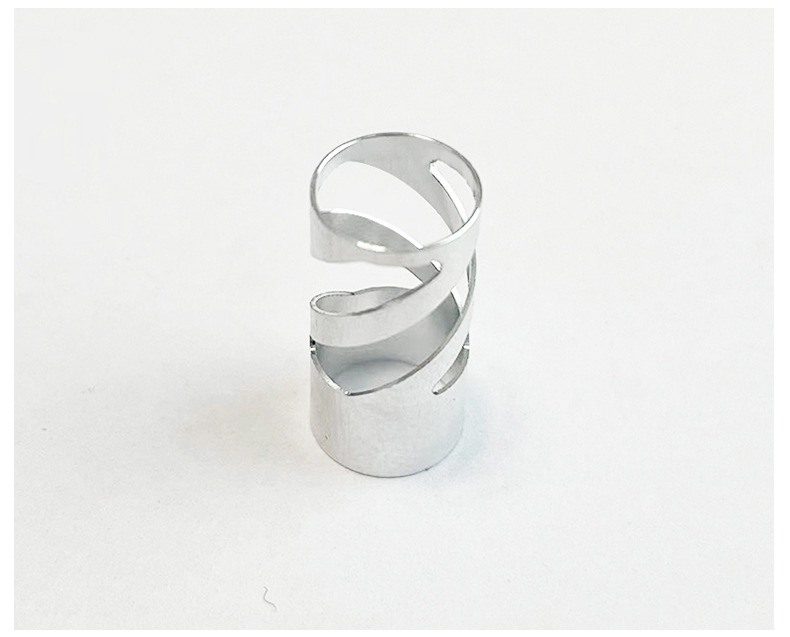
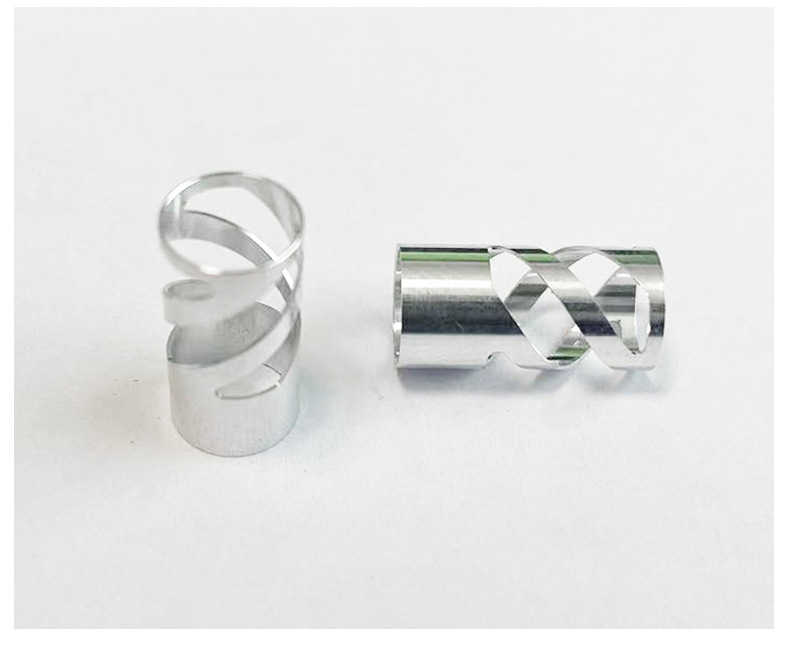
Automotive, medical device, and electronics manufacturers benefit most because each sector pairs tight tolerance requirements with certification demands that generic stock can’t satisfy. MFG SOLUTION works across these constraints directly, machining forging block materials into parts up to 38mm in diameter under ISO 9001:2015, ISO 13485:2016, and IATF 16949 process control, with quotes returned within 8 hours and shipment within 3 days once a spec is approved. Matching material to actual application constraints, not defaulting upward, is what keeps both cost and quality in line.

Frequently Asked Questions
Can forging block materials be machined directly, or do they need additional heat treatment first?
Most forging blocks need heat treatment before final machining, not after. As-forged blocks carry residual stress and uneven grain structure that cause distortion once you start removing material. Normalizing, annealing, or quench-and-temper cycles stabilize the microstructure so dimensions hold through the cutting process. Skipping this step risks warping mid-run, especially on tighter tolerances.
What’s the difference between an open-die forged block and a closed-die forged block for machining stock?
Open-die blocks are hammered or pressed between flat or simple dies, giving a rough, oversized shape with more machining stock to remove. Closed-die blocks are formed in a shaped cavity, arriving closer to net shape with tighter starting tolerances. For small precision parts under 38mm, closed-die or pre-machined bar stock usually cuts cycle time more than open-die blocks do.
How much extra machining time should you budget for stainless steel versus carbon steel forging blocks?
Plan for meaningfully longer cycle times on stainless steel, it work-hardens faster and generates more heat at the cutting edge than carbon steel. Tool wear also runs higher, which means more frequent inserts changes. Carbon steel grades typically machine faster and support higher feed rates for equivalent tolerances.
Do small-batch orders typically cost more per unit for forging block materials?
Yes, small batches usually carry a higher per-unit cost because setup and material minimums get spread across fewer parts. Suppliers with automatic lathes and standardized quoting processes can narrow that gap. Providers with fast quote turnaround, like MFG SOLUTION’s 8-hour quoting, help you compare true per-unit costs before committing to a run size.
What documentation should you request when ordering forging block materials for a regulated industry?
Ask for a mill test report showing chemical composition and mechanical properties for the actual heat lot, plus full lot traceability back to raw material. For medical or automotive programs, also request certificates confirming the supplier’s quality system scope, such as ISO 13485:2016 or IATF 16949, since generic certification alone doesn’t guarantee coverage for your specific part category.
Conclusion
Choosing the right forging block material comes down to matching microstructure and machining stock to your part’s tolerance and volume requirements, not just picking a familiar alloy. Verify heat treatment status before quoting cycle time, and weigh closed-die versus open-die stock based on how much material removal your budget can absorb. For batches of small precision parts up to 38mm, pair your material choice with a manufacturing partner who can quote fast and confirm machinability before you commit tooling. Start by sending your part drawing and target alloy to MFG SOLUTION for an 8-hour quote that flags any machining risk before production begins.
Recommended Articles
Explore more from our content library: