
2026-07-03
Custom Stainless Steel Forging: Complete Guide 2026
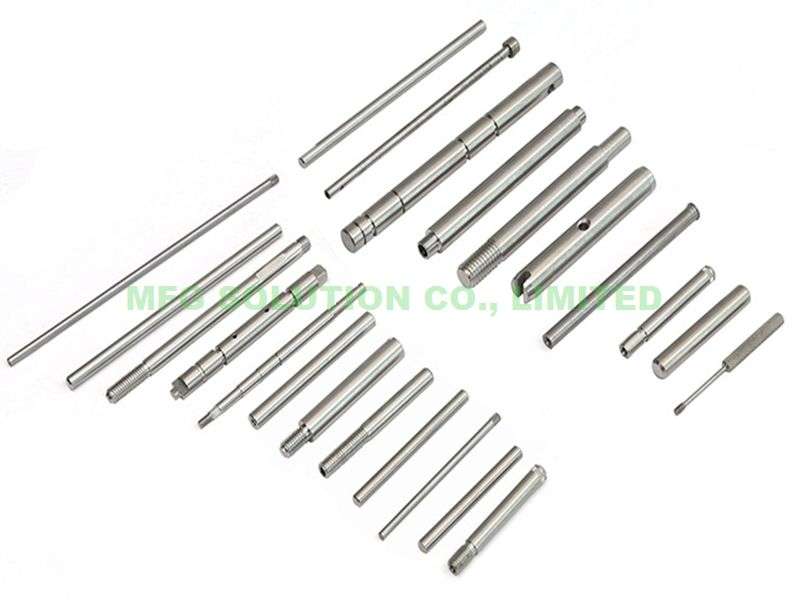
| Key Insight | Explanation |
|---|---|
| Forging improves mechanical properties | Compressive force aligns the grain structure, producing parts stronger than castings or machined bar stock of the same alloy. |
| Stainless steel has a narrow forging window | Most grades must stay within a specific temperature range (typically 1650°F–2300°F) to avoid cracking or loss of corrosion resistance. |
| Grade selection drives performance | 304, 316, 17-4 PH, and 410 each suit different service environments; the wrong grade choice leads to premature failure or unnecessary cost. |
| Post-forging machining is almost always required | CNC turning, milling, and drilling bring forged blanks to final dimensional tolerances that forging alone cannot achieve. |
| Certifications matter for regulated industries | Medical, automotive, and aerospace buyers require ISO 9001, ISO 13485, or IATF 16949 compliance throughout the supply chain. |
| Cold forging is a viable alternative for small parts | For components under 38mm, cold forging (room-temperature compressive forming) delivers tight tolerances with minimal material waste. |
Custom stainless steel forging is the process of shaping stainless steel billets or bars under high compressive force to produce near-net-shape components with superior mechanical properties, tight tolerances, and excellent corrosion resistance. The result is a part whose grain structure follows its contour, making it inherently stronger than a comparable casting or machined blank. For engineers and procurement teams sourcing precision components for medical, automotive, or industrial applications, understanding how this process works, which grades to specify, and where the common pitfalls lie is essential to making the right supplier decision.
This guide covers everything you need to know: process mechanics, grade selection, real-world benefits, typical challenges, and what to look for when qualifying a forging supplier in 2026.
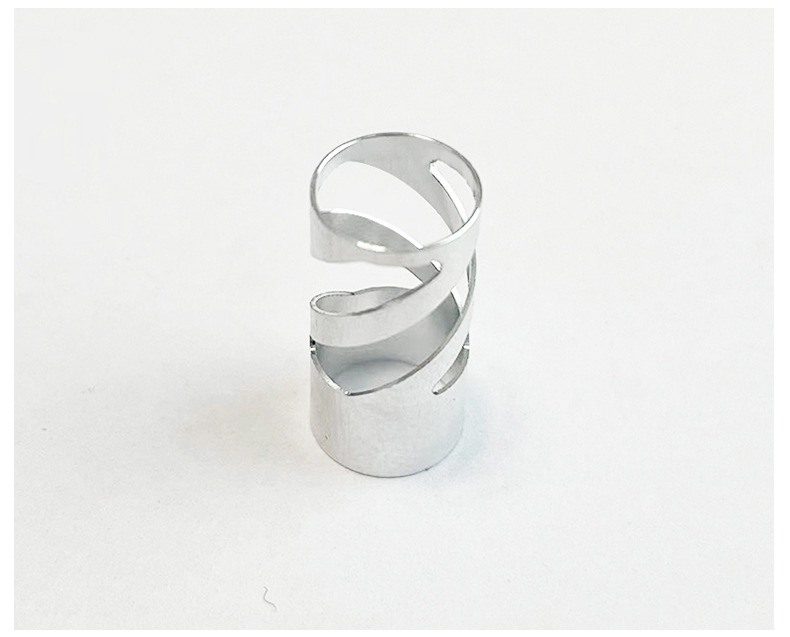
What Is Custom Stainless Steel Forging?
Custom stainless steel forging is a metal-forming process where stainless steel stock is pressed, hammered, or rolled under controlled force to achieve a specific shape, with the geometry, alloy grade, and dimensional tolerances defined by the customer’s engineering drawing.
Definition and Core Concepts
Forging differs fundamentally from casting (pouring molten metal into a mold) and machining (cutting material away from bar stock). Instead of removing or melting material, forging displaces it. The compressive force refines the grain structure and eliminates internal porosity, producing a denser, tougher part.
Stainless steel (any iron-based alloy containing at least 10.5% chromium) presents unique challenges in forging. The chromium and nickel content that makes it corrosion-resistant also increases its work-hardening rate and narrows the temperature window in which it can be safely deformed. Industry analysts note that stainless grades require more press tonnage per unit area than plain carbon steel, which drives tooling and energy costs higher.
Where Custom Stainless Steel Forgings Are Used
The “custom” designation means the part is produced to a buyer’s specific geometry rather than a standard catalog shape. Custom forgings appear across a wide range of demanding applications:
- Medical devices: Surgical instrument handles, implant components, and valve bodies requiring biocompatibility and sterilization resistance
- Automotive: Fuel system fittings, exhaust flanges, and sensor housings that must withstand high temperature and vibration
- Oil and gas: Valve bodies, flanges, and fittings exposed to corrosive media and high pressure
- Aerospace: Structural brackets and fasteners where weight-to-strength ratio and fatigue life are critical
- Food and beverage equipment: Hygienic fittings and pump components requiring FDA-compliant surface finishes
- Electronics manufacturing: Precision housings and connectors demanding dimensional stability under thermal cycling
The common thread across all these applications is a requirement for parts that cannot afford to fail, where the mechanical properties of a forged component justify the additional process cost over a casting or machined blank.
Pro Tip: If your part will see cyclic loading, high stress concentrations, or aggressive chemical environments, specify forging over casting from the start. Retrofitting a casting design for forging late in the development cycle is expensive; building forgeability into the design from day one saves significant tooling rework.
How Custom Stainless Steel Forging Works
Custom stainless steel forging follows a defined sequence of steps, from billet preparation through post-forging heat treatment, with each stage directly affecting the final part’s dimensional accuracy and mechanical properties.
The Forging Process Step by Step
- Material selection and billet preparation: The correct stainless grade is sourced as round bar, billet, or bloom. The billet is cut to a calculated weight that accounts for flash (excess material squeezed out during closed-die forging) and post-forging machining stock.
- Heating: For hot forging, billets are heated in a furnace to the forging temperature range. For austenitic grades like 304 and 316, this is typically 1700°F–2200°F (927°C–1204°C). Precision temperature control is critical; overheating causes grain growth and loss of corrosion resistance, while underheating increases cracking risk.
- Die forging: The heated billet is placed in a closed die set mounted on a hydraulic press or hammer. The press applies force, causing the steel to flow and fill the die cavity. Multiple blows or press strokes may be needed for complex geometries.
- Flash trimming: Excess material squeezed to the die parting line is trimmed in a separate trim die operation.
- Heat treatment: Most stainless forgings undergo solution annealing or age hardening (for precipitation-hardening grades like 17-4 PH) to restore or develop the desired microstructure and mechanical properties.
- Inspection: Dimensional checks, surface inspection, and mechanical testing (tensile, hardness, impact) confirm the forging meets specification before it moves to machining.
- Post-forging machining: CNC turning, milling, drilling, and threading bring the forged blank to final dimensional tolerances. This is where tight tolerances, thread forms, and surface finishes are achieved. For small parts, Swiss lathe machining and CNC turning are common finishing operations.
Hot Forging vs. Cold Forging for Stainless Steel
Not all stainless steel forging is done at elevated temperature. For small components, cold forging (room-temperature compressive forming) is increasingly common and worth understanding.
| Parameter | Hot Forging | Cold Forging |
|---|---|---|
| Temperature | 1650°F–2300°F (900°C–1260°C) | Room temperature |
| Dimensional tolerance | ±0.5mm–±1.5mm (as-forged) | ±0.05mm–±0.2mm |
| Surface finish | Ra 3.2–12.5 µm (as-forged) | Ra 0.8–3.2 µm |
| Material waste | Moderate (flash + scale) | Minimal (near-net shape) |
| Part size suitability | Small to large | Best for small parts (under 50mm) |
| Tooling cost | High (heated die sets) | Moderate to high (precision tooling) |
Cold forging is particularly well-suited to high-volume production of small stainless steel parts. It produces excellent surface finish, near-net shape, and strong work-hardened properties without the energy cost of furnace heating. At MFG SOLUTION, we’ve found that for parts up to 38mm diameter, cold forging paired with CNC finishing delivers the best combination of dimensional accuracy and per-unit cost at volume.
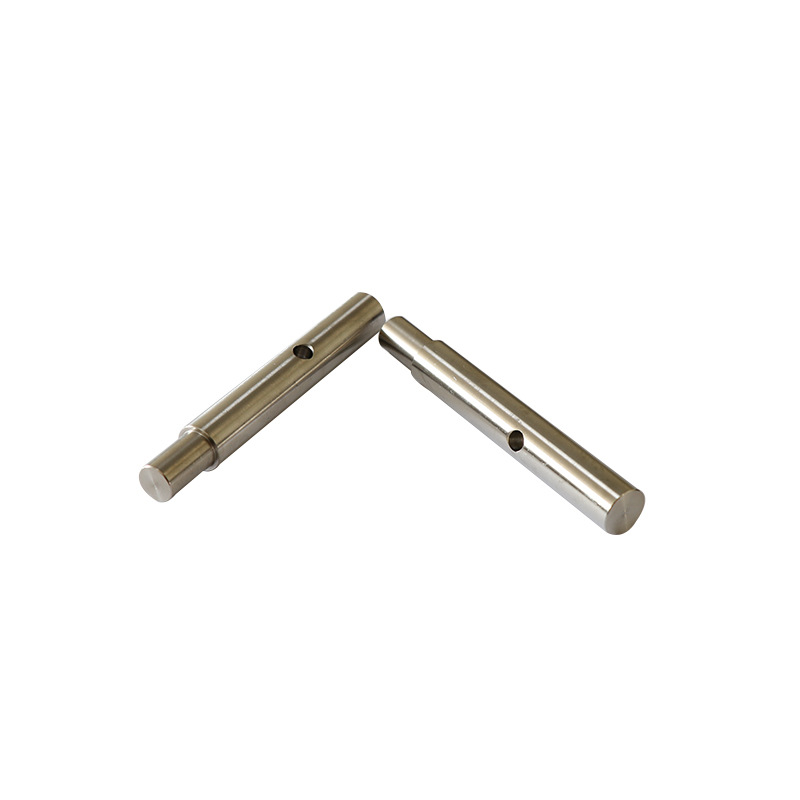
Stainless Steel Grades for Forging: Choosing the Right Alloy
The stainless steel grade you specify determines forgeability, corrosion resistance, mechanical strength, and post-forging heat treatment requirements. Selecting the wrong grade is one of the most costly mistakes a design engineer can make.
Common Grades and Their Forging Characteristics
Stainless steels are grouped into five families, each with distinct forging behavior. The four most relevant to custom precision forgings are austenitic, martensitic, ferritic, and precipitation-hardening (PH) grades.
- Grade 304 (austenitic): The most widely forged stainless grade. Good corrosion resistance, non-magnetic, and reasonably forgeability. Forging range: 1700°F–2200°F. Suitable for food equipment, architectural hardware, and general industrial parts.
- Grade 316 (austenitic): Adds molybdenum for enhanced resistance to chloride pitting. Slightly more difficult to forge than 304 due to higher alloy content. Preferred for marine, pharmaceutical, and medical applications.
- Grade 410 (martensitic): Hardenable by heat treatment; offers higher strength than austenitic grades but lower corrosion resistance. Common in valve components, pump shafts, and cutlery hardware.
- Grade 17-4 PH (precipitation-hardening): Combines high strength (up to 200 ksi tensile) with moderate corrosion resistance. Age-hardened after forging. Widely used in aerospace fasteners, medical instruments, and high-stress structural parts. The ASM Alloy Digest documents this grade (also marketed as Carpenter Custom 630) as achieving exceptional hardness and strength through controlled aging cycles.
- Grade 2205 (duplex): Dual austenitic-ferritic microstructure offers roughly twice the yield strength of 316 with superior stress corrosion cracking resistance. Increasingly specified for oil and gas fittings and chemical processing components as of 2026.
Grade Selection Decision Framework
Use this simplified framework when specifying a grade:
- Define the service environment first: Temperature, chemical exposure, mechanical load, and regulatory requirements (e.g., FDA, ASTM, NACE).
- Identify the dominant failure mode: Corrosion, fatigue, wear, or stress relaxation each point to different grade families.
- Check forgeability constraints: Complex geometries with thin sections are harder to fill in high-alloy grades; involve your forging supplier early.
- Factor in post-forging operations: If CNC machining to tight tolerances follows forging, specify a grade with good machinability (free-machining variants like 303 are available but have limited forgeability).
Pro Tip: Don’t over-specify. Grade 316 costs roughly 20–30% more than 304 per kilogram of bar stock. If your application doesn’t involve chloride exposure or elevated temperature, 304 will perform identically at lower cost. Always validate grade selection against actual service data, not worst-case assumptions.
Key Benefits of Custom Stainless Steel Forging
Custom stainless steel forging delivers measurable mechanical, dimensional, and economic advantages over alternative manufacturing routes, particularly for high-stress, high-volume, or safety-critical applications.
Mechanical and Structural Advantages
The primary reason engineers specify forging over casting or machined bar is the improvement in mechanical properties. Forging refines grain size, eliminates internal voids, and orients the grain flow along the part’s stress axis. The practical results are significant:
- Higher tensile and yield strength: Forged stainless components typically show 10–20% higher yield strength than equivalent castings in the same alloy.
- Superior fatigue resistance: Continuous grain flow eliminates the stress-concentration points that initiate fatigue cracks in castings.
- Better impact toughness: Forged parts absorb more energy before fracture, critical for components subject to shock loading.
- Reduced porosity: Internal voids in castings can trap corrosive media; forged parts are essentially void-free.
- Consistent mechanical properties: Forging produces uniform properties throughout the cross-section, unlike castings where surface and core properties can diverge significantly.
Economic and Production Advantages
Beyond mechanical performance, custom stainless steel forging offers practical production benefits that matter to procurement teams:
- Near-net shape reduces machining time: A well-designed forging die leaves minimal stock for post-forging CNC operations, reducing cycle time and tool wear.
- High material utilization: Particularly in cold forging, material waste is minimal compared to machining from solid bar.
- Scalable to high volumes: Once tooling is amortized, per-unit forging costs fall sharply with volume. Industry analysts note that forgings become cost-competitive with castings at production runs above approximately 500–1,000 pieces.
- Long service life reduces replacement costs: The fatigue and corrosion resistance of forged stainless parts translates directly to lower lifecycle maintenance costs in service.
- Regulatory compliance: Forging processes are well-documented and auditable, supporting ASTM, ISO, and industry-specific standards (ASME B16.34 for valves, for example).
In one project we handled involving stainless medical device components, switching from investment casting to cold forging followed by CNC turning reduced per-unit cost by 18% at a 5,000-piece run while simultaneously improving dimensional consistency across the batch.
Common Challenges and Mistakes in 2026
the practice introduces process-specific risks that can compromise part quality, delay delivery, or inflate cost, and most of them are avoidable with proper planning.
Technical Challenges in Stainless Forging
Stainless steel is genuinely more difficult to forge than carbon steel. Here’s what to watch for:
- Narrow forging temperature window: Most stainless grades have a usable forging range roughly 200°F–400°F narrower than plain carbon steel. Temperature monitoring with calibrated pyrometers and controlled furnace cycles is non-negotiable.
- Work hardening during cold forging: Austenitic stainless grades (304, 316) work-harden rapidly. Multi-stage cold forging with intermediate annealing steps may be required for complex shapes.
- Die wear: Stainless steel’s abrasiveness accelerates die wear compared to carbon steel. Higher tooling maintenance costs should be factored into per-part pricing discussions.
- Sensitization risk: Holding austenitic stainless at 800°F–1500°F (427°C–816°C) for extended periods causes chromium carbide precipitation at grain boundaries, reducing corrosion resistance. Rapid cooling after forging is essential.
- Scale and surface contamination: Hot forging generates scale that must be removed before machining to prevent tool damage and surface defects.
Common Procurement and Design Mistakes
From experience working with procurement teams across electronics, automotive, and medical device sectors, these are the mistakes that cause the most rework:
- Specifying forging tolerances as machining tolerances: As-forged dimensions carry ±0.5mm or wider tolerances. Calling out ±0.05mm on a forging drawing without accounting for post-forging machining stock creates an impossible specification.
- Ignoring draft angles: Forgings require draft angles (typically 3°–7°) to release from dies. Designs without adequate draft increase die wear and reject rates.
- Late-stage grade changes: Switching from 304 to 316 after tooling is cut adds cost and delay. Lock in the grade before die design begins.
- Underestimating tooling lead time: Die fabrication for a new custom forging typically takes 4–10 weeks. Procurement teams that treat forging like a standard machining job will miss launch dates.
- Choosing suppliers without relevant certifications: For medical or automotive parts, a supplier lacking ISO 13485:2016 or IATF 16949 creates compliance gaps that can shut down a product launch.
Pro Tip: Request a Design for Manufacturability (DFM) review before finalizing your forging drawing. A qualified supplier will flag draft angle issues, parting line placement, and grade suitability before tooling is cut, saving weeks of rework and thousands in tooling costs.
Best Practices for Sourcing Custom Stainless Steel Forgings
Sourcing this practices successfully requires evaluating suppliers on process capability, quality system maturity, and responsiveness, not just unit price.
Supplier Qualification Criteria
Not all forging shops are equal. Use these criteria to build a qualified supplier shortlist:
- Quality certifications: ISO 9001:2015 is the baseline. For medical parts, require ISO 13485:2016. For automotive components, require IATF 16949. These aren’t just certificates; they represent documented process control, traceability, and corrective action systems.
- Material traceability: Every forging should ship with a material test report (MTR) certifying chemical composition and mechanical properties against the specified ASTM or EN standard.
- In-house machining capability: Suppliers who can forge and finish in one facility reduce handling risk, maintain tighter tolerance control, and simplify your supply chain. Look for CNC turning, milling, and Swiss lathe capability alongside forging.
- Inspection equipment: Coordinate measuring machines (CMMs), hardness testers, and surface profilometers should be standard. For critical applications, ask about non-destructive testing (NDT) capability including dye penetrant and ultrasonic inspection.
- Quoting responsiveness: A supplier who takes two weeks to quote a standard part will take two months to resolve a quality issue. Fast quoting (ideally within 8 hours) signals an organized, capable operation.
The Forging-to-Machining Integration Advantage
The most efficient supply chains for precision stainless components integrate forging and post-forging CNC machining under one roof or one accountable supplier. This matters because:
- Forging stock allowances can be optimized for the specific CNC operations that follow, reducing machining time.
- Quality issues caught at the forging stage don’t get shipped to a separate machining vendor, where they become a dispute rather than a correction.
- Dimensional traceability from billet to finished part is unbroken, which is essential for precision tolerance stackup analysis in assemblies.
- Thread forms, holes, and surface finishes added by CNC threading services and CNC hole drilling technology are documented as part of the same quality record as the forging.
Our team at MFG SOLUTION recommends treating your forging supplier as an engineering partner, not just a vendor. Share your assembly context, load cases, and regulatory requirements upfront. Suppliers with 60+ engineering professionals on staff can optimize your design for both forgeability and post-forging machinability, which is where real cost savings are found.
Frequently Asked Questions
1. Is stainless steel harder to forge?
Yes, stainless steel is harder to forge than carbon steel for two reasons: its narrower working temperature range (typically 1650°F–2200°F depending on grade, vs. a much wider range for carbon steels) and its higher work-hardening rate, which means the metal resists deformation more aggressively as it is worked. Austenitic grades like 304 and 316 are particularly prone to rapid hardening during cold forging, often requiring intermediate annealing steps. The result is that this method demands more press tonnage, more precise temperature control, and more careful die design than equivalent carbon steel forgings.
2. Do blacksmiths work with stainless steel?
Traditional blacksmiths can work with stainless steel, but it’s genuinely more demanding than mild or carbon steel. The narrow forging temperature window means a blacksmith must maintain precise heat and work quickly before the metal cools below the safe forging range. Stainless also requires more force to move under a hammer, and improper temperature control can cause sensitization (chromium carbide precipitation at grain boundaries), degrading corrosion resistance. In industrial precision forging, these challenges are managed with calibrated furnaces, hydraulic presses, and pyrometric temperature monitoring rather than hand tools.
3. What is the difference between closed-die and open-die forging for stainless steel?
Closed-die (impression die) forging uses matched die sets that fully enclose the billet, producing near-net-shape parts with consistent geometry across high production volumes. Open-die forging uses flat or simple-shaped dies that don’t fully enclose the workpiece, making it better suited for large, simple shapes and lower quantities. For this strategy of precision components in the small-to-medium size range, closed-die forging is almost always preferred because it delivers tighter dimensional consistency and better grain flow alignment with the part geometry.
4. What tolerances can custom stainless steel forgings achieve?
As-forged tolerances for stainless steel typically range from ±0.5mm to ±1.5mm depending on part complexity, die condition, and material grade. Post-forging CNC machining can bring critical dimensions to ±0.01mm–±0.05mm. For small stainless parts requiring very tight tolerances, the practical approach is to forge close to net shape and then finish-machine the precision features. Understanding machining tolerances and how they interact with forging stock allowances is key to designing a cost-effective process plan.
5. How does cold forging compare to hot forging for small stainless steel parts?
Cold forging at room temperature produces tighter dimensional tolerances and better surface finish than hot forging, and it eliminates scale and oxidation. For small stainless steel parts (under approximately 38–50mm), cold forging is often the more economical choice at high volumes because it minimizes material waste, reduces energy costs, and delivers near-net-shape parts that require less post-forging machining. The trade-off is higher tooling forces and the need for intermediate annealing on complex multi-stage parts. Hot forging remains preferred for larger, more complex geometries where the reduced material flow stress justifies the heating cost.
6. What certifications should a custom stainless steel forging supplier hold?
At minimum, ISO 9001:2015 for general quality management. Medical device component suppliers should additionally hold ISO 13485:2016, which requires documented design controls, traceability, and post-market surveillance integration. Automotive suppliers require IATF 16949, which adds production part approval process (PPAP) requirements and statistical process control. For regulated industries, these certifications aren’t optional; they’re the documented evidence that a supplier’s process is under control and auditable. Always request the actual certificate with scope and expiry date, not just a marketing claim.
Conclusion
this approach delivers a combination of mechanical strength, corrosion resistance, and dimensional consistency that alternative processes simply can’t match for demanding applications. The keys to getting it right are grade selection, process design (hot vs. cold forging), realistic tolerance planning, and supplier qualification. Skipping any of these steps typically shows up as a quality rejection, a tooling rework, or a missed launch date.
For small precision components, the most cost-effective path is almost always cold forging followed by CNC finishing, which is exactly the capability set MFG SOLUTION is built around. With ISO 9001:2015, ISO 13485:2016, and IATF 16949 certifications, 60+ engineering professionals, and a quote turnaround of 8 hours, we handle the full process from forged blank to finished part, with shipment within 3 days. Whether you’re sourcing stainless medical device components, automotive fittings, or industrial hardware, precision and speed don’t have to be a trade-off.
Recommended Articles
Explore more from our content library: