
2026-06-30
1045 Steel Machining: The Complete Guide for 2026

| Key Insight | Explanation |
|---|---|
| Good machinability rating | 1045 steel carries a machinability rating of roughly 57–65% relative to AISI 12L14, making it workable but not free-machining. |
| Optimal cutting speeds | Turning speeds of 300–600 SFM (surface feet per minute) with carbide tooling are typical; milling runs 250–500 SFM depending on depth of cut. |
| Heat treatment compatibility | With 0.43–0.50% carbon content, 1045 responds well to quench-and-temper hardening, reaching 55–60 HRC surface hardness after case hardening. |
| Common applications | Gears, shafts, axles, studs, and structural pins — any part needing moderate strength and good wear resistance at competitive cost. |
| Coolant is critical | Proper coolant application reduces built-up edge (BUE) formation and extends tool life significantly on 1045 medium-carbon steel. |
| Not a free-machining grade | Unlike resulphurized grades such as 12L14, 1045 produces long, stringy chips that require chip-breaking strategies and positive-rake tooling. |
1045 steel machining is the process of cutting, turning, milling, or drilling AISI/SAE 1045 medium-carbon steel to produce precision components. This grade contains 0.43–0.50% carbon and 0.60–0.90% manganese, giving it a practical balance of strength, toughness, and workability that few other low-alloy steels can match at the same price point. It’s one of the most widely specified materials in industrial machining, and understanding how to work it correctly makes the difference between parts that pass inspection and parts that don’t.
This guide covers everything you need to get 1045 right: material properties, cutting parameters, tooling selection, heat treatment considerations, and the mistakes that cost shops time and money. Whether you’re sourcing parts or specifying a material for a new design, what follows gives you a complete, production-ready picture of 1045 steel machining as of 2026.
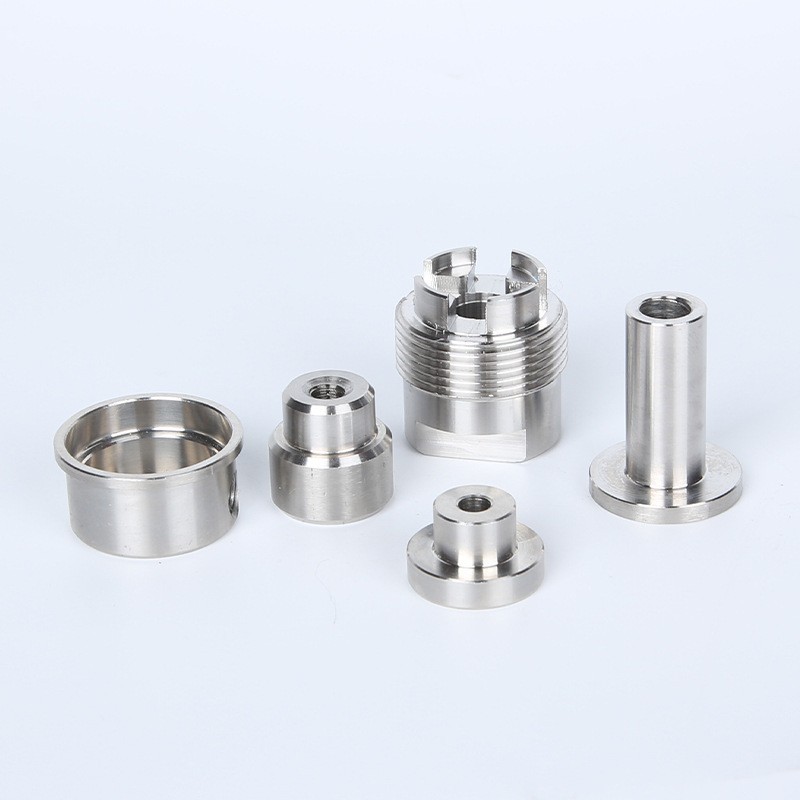
What Is 1045 Steel Machining?
1045 steel machining refers to the CNC or manual cutting operations performed on AISI 1045 medium-carbon steel to produce finished parts. The material’s 0.43–0.50% carbon content places it squarely in the medium-carbon category, delivering tensile strengths of 570–700 MPa in the normalized condition — strong enough for structural and mechanical applications, yet soft enough to cut without specialized tooling.
Material Properties That Drive Machinability
Understanding the base chemistry explains why 1045 behaves the way it does under a cutting tool. The carbon content is high enough to produce moderate hardness but low enough to avoid the excessive tool wear associated with high-carbon grades.
- Carbon content: 0.43–0.50% (medium-carbon classification)
- Manganese: 0.60–0.90% (improves hardenability and strength)
- Tensile strength (normalized): 570–700 MPa
- Yield strength (normalized): ~310 MPa
- Hardness (annealed): 163–179 HB (Brinell)
- Machinability rating: ~57–65% relative to AISI 12L14
- Elongation: ~16% (indicates good ductility)
According to AZoM’s material reference data, AISI 1045 steel has good machinability in a normalized or hot-rolled condition, which is the condition most shops receive it in. That “good” rating doesn’t mean effortless. It means the material is predictable, responds well to carbide tooling, and doesn’t surprise you — as long as you respect its chip-breaking tendencies.
Where 1045 Fits in the Steel Family
Engineers often compare 1045 against nearby grades. Here’s a concise comparison to clarify the trade-offs:
| Grade | Carbon % | Machinability vs. 12L14 | Typical Use |
|---|---|---|---|
| 1018 | 0.15–0.20% | ~78% | Structural, low-stress parts |
| 1045 | 0.43–0.50% | ~57–65% | Shafts, gears, studs |
| 4140 | 0.38–0.43% | ~65% | High-strength mechanical parts |
| 12L14 | 0.15% max | 100% (baseline) | High-volume turned parts, free-machining |
The key takeaway: 1045 gives you significantly more strength than 1018 with only a modest penalty in machinability. Compared to 4140, it’s cheaper and nearly equivalent in machinability, though it won’t match 4140’s alloy-enhanced hardenability for demanding applications.
How 1045 Steel Machining Works: Speeds, Feeds, and Tooling
Successful 1045 steel machining depends on selecting the right cutting parameters, tool geometry, and coolant strategy for each operation. The material’s medium-carbon content creates predictable but demanding chip behavior that rewards proper setup and punishes shortcuts.
Cutting Parameters for Turning and Milling
Turning 1045 on a CNC lathe is the most common operation for round bar stock. Experienced machinists on production floors report finishing at 1,200+ SFM with low-pressure coolant and 2,000+ SFM with high-pressure coolant systems, using feed rates around 0.006 IPR (inches per revolution) with a nose radius of 2. Those are aggressive production numbers. For general-purpose shops or tighter tolerances, the ranges below are more conservative and reliable:
- Turning (carbide inserts): 300–600 SFM, feed 0.004–0.010 IPR
- Milling (carbide end mills): 250–500 SFM, chip load 0.003–0.006 per tooth
- Drilling (HSS): 50–80 SFM; switch to carbide for holes deeper than 3× diameter
- Threading (taps/inserts): 30–60 SFM; use thread-milling for tight-tolerance threads
- Depth of cut (roughing): 0.100–0.200 in. radial; reduce for finishing passes
Pro Tip: For turning operations on 1045, use CVD-coated carbide inserts with a medium-hard substrate (ISO P20–P30 grade). The thick CVD coating handles the abrasive wear from manganese content, while the medium-hard substrate absorbs the interrupted-cut shock common in bar-stock work.
Tooling Selection and Insert Geometry
Tooling choice directly controls surface finish, tool life, and cycle time. The right insert geometry for 1045 is a positive-rake, chip-breaking geometry. Negative-rake inserts work but generate more heat and require more spindle power.
- Insert grade: CVD-coated carbide (TiCN/Al2O3 multilayer) for turning; PVD-coated for milling
- Rake angle: Positive (5–15°) to reduce cutting forces and heat generation
- Chip breaker: Medium-duty chip breaker geometry to control the long, stringy chips 1045 produces
- Nose radius: 0.031–0.062 in. for finishing; larger radii improve surface finish but increase radial force
- Coolant: Soluble oil or semi-synthetic at 5–8% concentration; high-pressure delivery (1,000+ PSI) significantly extends tool life
Research published in PMC examining ceramic tools in hard milling of AISI 1045 steel confirms that cutting speed, feed rate, and milling depth all interact significantly on tool wear and surface roughness. That interaction means you can’t optimize one parameter in isolation. You need to treat speeds, feeds, and depth of cut as a system.
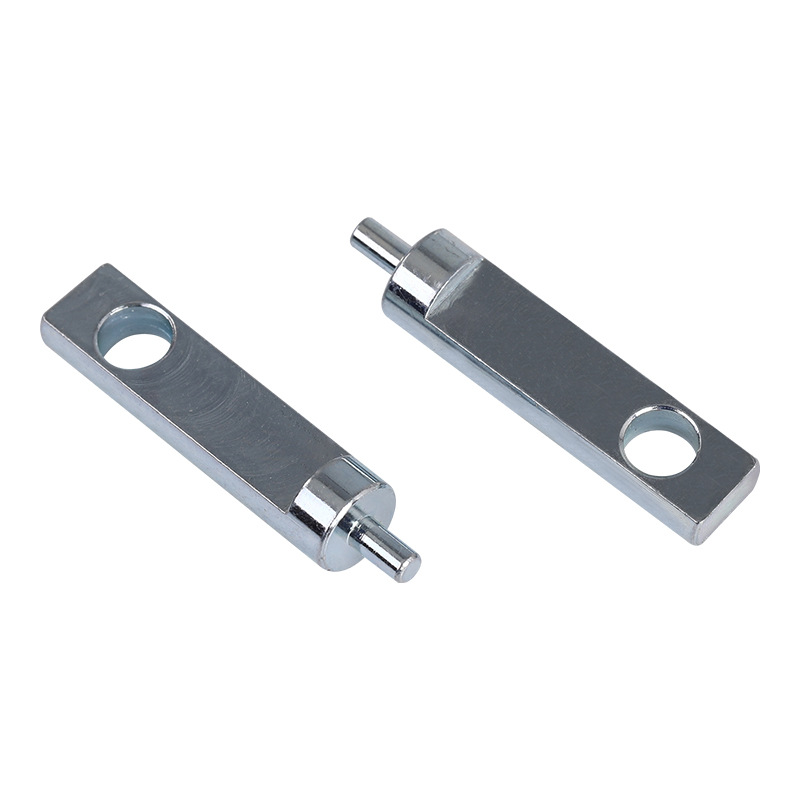
Key Benefits of 1045 Steel for Machined Parts
1045 steel delivers an exceptional combination of strength, machinability, and cost that makes it one of the most versatile materials in production machining. It’s not the easiest steel to cut, but it offers a value proposition few other grades can match across the full part lifecycle.
Strength, Cost, and Heat Treatability
The core appeal of 1045 is its strength-to-cost ratio. You get tensile strength in the 570–700 MPa range at a raw material cost far below alloy steels like 4140 or 4340. For parts that need to handle real mechanical loads — shafts, couplings, axles — that ratio matters enormously in production economics.
- Tensile strength: 570–700 MPa normalized; up to 900+ MPa after quench-and-temper
- Heat treatability: Responds well to through-hardening (quench and temper) and surface hardening (induction, flame, case hardening)
- Post-hardening hardness: Can reach 55–60 HRC surface hardness with induction hardening
- Toughness: Good impact resistance in the normalized condition, unlike higher-carbon grades that become brittle
- Weldability: Weldable with preheat (150–260°C) and post-weld heat treatment; not ideal for complex weldments but manageable
- Availability: Widely available as round bar, flat bar, and plate stock globally as of 2026
Industry analysts consistently note that 1045 occupies a sweet spot in mechanical engineering: strong enough for demanding applications, cheap enough for high-volume production, and predictable enough to machine reliably across multiple operations.
Applications Across Industries
1045 steel machining supports a wide range of industries. From experience working with automotive and industrial customers, the most common applications include:
- Automotive: Transmission shafts, axle components, gear blanks, and suspension pins
- Industrial machinery: Couplings, spindles, bushings, and keyway shafts
- Hydraulics: Cylinder rods and valve bodies (note the hydraulic cylinder bar stock referenced in practical machining forums)
- Fasteners: Studs, bolts, and threaded rods requiring moderate strength
- Agricultural equipment: PTO shafts, implement pins, and wear components
At MFG SOLUTION, we’ve found that 1045 is frequently specified by automotive Tier-1 suppliers and industrial OEMs who need IATF 16949-compliant documentation on their machined components. The material’s predictability makes it easier to maintain tight process control across high-volume production runs.
Common Challenges in 1045 Steel Machining
1045 steel machining presents specific challenges that catch shops off-guard, especially those accustomed to free-machining grades like 12L14. Recognizing these issues before they show up on your scrap pile is how experienced machinists protect their cycle times and tool budgets.
Chip Control and Built-Up Edge
The most common problem in 1045 machining is chip control. Unlike resulphurized free-machining steels, 1045 produces long, stringy, continuous chips that wrap around tooling, damage finished surfaces, and create safety hazards. This is a direct result of its ductility and lack of sulfide inclusions that act as chip-breakers in grades like 12L14.
- Problem: Long continuous chips wrapping around the tool or workpiece
- Solution: Use chip-breaking insert geometry, increase feed rate slightly, and apply high-pressure coolant directed at the cutting zone
Built-up edge (BUE) is the second major issue. At low cutting speeds, 1045’s medium-carbon steel tends to weld micro-particles onto the cutting edge, degrading surface finish and accelerating tool wear. BUE typically forms below 150 SFM with HSS tooling.
- Problem: Built-up edge at low cutting speeds
- Solution: Maintain cutting speeds above 200 SFM with carbide tooling; use coated inserts to reduce adhesion tendency
Pro Tip: If you’re seeing poor surface finish on 1045 turning operations, check your cutting speed first. BUE is the most common culprit — increasing speed by 20–30% often resolves the issue immediately without any tooling change.
Tolerance Holding and Thermal Growth
Holding tight tolerances on 1045 requires attention to thermal management. The material’s thermal conductivity is lower than aluminum, meaning heat builds up in the workpiece during extended cuts. For precision parts requiring tolerances tighter than ±0.001 in., thermal growth becomes a real concern.
- Use flood coolant consistently throughout the operation, not just intermittently
- Allow the workpiece to stabilize thermally before final inspection
- For parts with tolerance stackup requirements, machine critical features in a single setup to eliminate datum shift errors
- Consider stress-relief annealing before finish machining on parts with tight form tolerances
A common mistake we see in practice is applying heat treatment after machining to final dimensions. Quenching and tempering 1045 causes dimensional changes. Always rough-machine, heat treat, then finish-machine to final dimensions. Skipping that sequence is a reliable way to produce out-of-tolerance parts.
For complex parts requiring precise hole positioning alongside turned features, our CNC hole drilling technology guide covers how to maintain positional accuracy across multiple operations on medium-carbon steels.
Best Practices for 1045 Steel Machining in 2026
Getting consistent, high-quality results from 1045 steel machining in 2026 means combining the right process sequence, tooling strategy, and quality verification at each stage. These aren’t theoretical guidelines — they’re what production shops use to hit tolerances and protect tool life on real production runs.
Process Sequence and Setup Strategy
The order of operations matters as much as the cutting parameters. Follow this sequence for precision 1045 parts:
- Normalize or verify material condition: Confirm the stock is in normalized or hot-rolled condition (163–179 HB). Pre-hardened stock requires adjusted parameters and different tooling grades.
- Rough machine to 0.020–0.040 in. oversize: Remove bulk material at aggressive parameters; don’t chase finish at this stage.
- Stress relieve if required: For parts with tight form tolerances, stress relieve at 550–650°C before finishing to eliminate residual machining stresses.
- Heat treat (if specified): Quench and temper or induction harden before finish machining. Never heat treat after final dimensions are achieved.
- Finish machine to final dimensions: Use light cuts (0.005–0.020 in. DOC), sharp tooling, and consistent coolant. Verify dimensions with calibrated gauging.
- Inspect and document: Under ISO 9001:2015 and IATF 16949 frameworks, every critical dimension requires documented inspection records.
Coolant and Lubrication Strategy
Proper coolant application is non-negotiable for 1045 machining. Our team at MFG SOLUTION recommends semi-synthetic coolant at 6–8% concentration for most turning and milling operations, with high-pressure delivery (700–1,200 PSI) for deep-hole drilling and threading operations.
- Turning: Flood coolant directed at the insert/chip interface; high-pressure through-tool for deep grooves
- Milling: Flood or mist coolant; high-pressure through-spindle for slotting operations
- Drilling: Through-tool high-pressure coolant for holes deeper than 3× diameter — critical for chip evacuation
- Threading: Tapping oil or thread-cutting fluid; avoid water-based coolants alone for threading operations
For a deeper look at coolant selection across different operations and materials, our CNC coolants and lubricants guide covers concentration management, coolant types, and maintenance protocols in detail.
Pro Tip: Don’t switch between dry and wet cutting mid-operation on 1045. Thermal cycling from intermittent coolant application causes micro-cracking in carbide inserts. Either commit to full flood coolant or run dry with appropriate speed adjustments — never alternate.
For threaded features on 1045 parts, the combination of medium-carbon hardness and chip control challenges makes thread quality especially sensitive to process discipline. Our CNC threading services page explains how thread-milling compares to tapping for medium-carbon steels in terms of tolerance capability and tool life.
Frequently Asked Questions
1. What is the best way to machine 1045 steel?
The best approach to 1045 steel machining combines CVD-coated carbide inserts (ISO P20–P30 grade) with positive-rake chip-breaking geometry, cutting speeds of 300–600 SFM for turning, and consistent flood coolant application. For milling, any all-around PVD-coated carbide grade at 250–500 SFM works well. The critical factor most shops overlook is chip control: maintain adequate feed rate (0.004–0.010 IPR for turning) to break chips rather than letting them run continuously, and use high-pressure coolant delivery where possible to flush chips clear of the cutting zone.
2. Is 1045 carbon steel easy to machine?
1045 carbon steel is moderately easy to machine with the right tooling and parameters, carrying a machinability rating of approximately 57–65% relative to the free-machining baseline of AISI 12L14. It’s predictable and responds well to carbide tooling in its normalized or hot-rolled condition. The main challenge isn’t hardness — it’s chip control. The material’s ductility produces long, continuous chips that require chip-breaking insert geometry and adequate feed rates to manage. With proper setup, experienced shops run 1045 efficiently in high-volume production without significant difficulty.
3. Is 1045 free machining?
No, 1045 is not a free-machining steel. Free-machining grades like AISI 12L14 contain added sulfur (and sometimes lead or bismuth) that creates internal discontinuities, causing chips to break short and cleanly. AISI 1045 contains no such additions, so it produces long, stringy chips that require active chip-breaking strategies. The trade-off is worthwhile: 1045 is significantly stronger than free-machining grades, heat treatable, and far more suitable for structural and mechanical applications. Think of it as a working steel that requires proper technique rather than a shortcut material.
4. What tolerances can be held on 1045 steel machined parts?
With CNC turning and milling, tolerances of ±0.001 in. (±0.025 mm) are routinely achievable on 1045 steel in the normalized condition. Tighter tolerances down to ±0.0005 in. (±0.013 mm) are possible with proper thermal management, sharp tooling, and finish-grinding where required. Heat-treated 1045 parts can hold similar tolerances if finish machining follows heat treatment. For tolerance stackup analysis on multi-feature parts, careful datum selection and single-setup machining are the most effective strategies.
5. How does 1045 steel compare to 4140 for machined parts?
Both grades have similar machinability ratings (57–65% for 1045 vs. ~65% for 4140), but 4140 offers superior hardenability and higher through-hardened strength due to its chromium and molybdenum alloying. For parts that need maximum through-hardened strength or fatigue resistance, 4140 is the better choice. For applications where surface hardness via induction hardening is sufficient and cost matters, 1045 is typically 15–25% cheaper per kilogram and equally machinable. The decision usually comes down to the required hardness depth and the budget for raw material.
6. What is the international equivalent of AISI 1045 steel?
AISI 1045 has several recognized international equivalents used in global supply chains as of 2026. The most common are: DIN C45 (Germany/Europe), JIS S45C (Japan), BS 080M46 (UK), and GB 45 (China). These grades share nearly identical carbon and manganese content ranges, though minor variations in sulfur and phosphorus limits exist between standards. When sourcing 1045 steel machining services internationally, confirming the specific standard and material certification (mill cert) is essential to ensure compliance with your design specification.
Conclusion
1045 steel machining rewards shops and engineers who understand its specific behavior: medium-carbon ductility that demands chip-breaking discipline, predictable response to carbide tooling, and excellent heat treatability that makes it a genuine workhorse across automotive, industrial, and mechanical applications. Get the cutting parameters right, manage your coolant properly, and sequence your operations around heat treatment — and 1045 delivers consistent, cost-effective results at scale.
For procurement and engineering teams sourcing 1045 steel machined parts, the supplier you choose needs to demonstrate more than just machining capability. They need documented process control, calibrated inspection, and the certifications that stand up to audit. MFG SOLUTION machines precision parts up to 38mm diameter in 1045 and other medium-carbon steels under ISO 9001:2015, ISO 13485:2016, and IATF 16949 quality frameworks. You’ll have a quote within 8 hours and parts shipping within 3 days. That’s 1045 steel machining done right, on a timeline that actually works for production schedules.
Recommended Articles
Explore more from our content library: