
2026-09-05
A Guide to Forging Block Types from Open to Closed Die
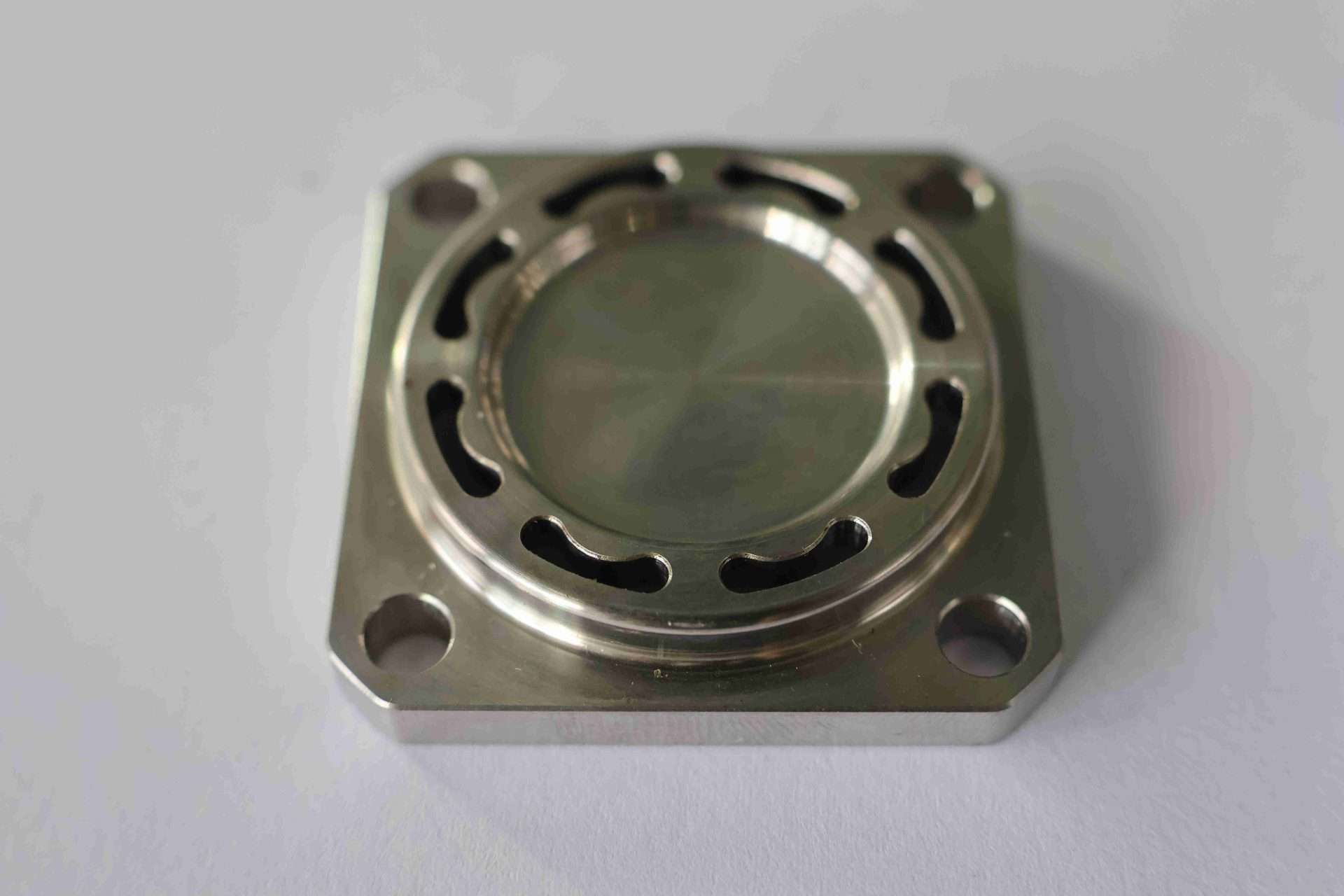
Understanding the main forging block types is essential for anyone selecting a manufacturing method or blacksmithing tool. Forging block types fall into two main industrial categories, open die and closed die, plus a range of specialized blacksmithing tools such as swage blocks and hardy blocks. Open die forging shapes metal between flat or simple dies, allowing large, flexible geometries. Closed die forging presses metal into a precision cavity for tighter tolerances and repeatable geometry. The right type depends on part complexity, material, production volume, and required dimensional accuracy.
What Are the Different Forging Block Types and How Do They Work?
The term “forging block” refers to two distinct objects: the metal workpiece shaped during industrial forging, and the tooling blocks used to support and form metal in a blacksmithing shop.
In industrial manufacturing, a forging block is the raw metal billet that gets shaped under pressure into a finished or near-finished component. In blacksmithing, a “block” is the tooling itself, a swage block, anvil block, or hardy block that the smith works against. Recognizing this distinction is the first step to understanding forging block types across disciplines.
Open Die and Closed Die: The Two Industrial Block Forging Categories
Open die forging works metal between dies that do not fully enclose the workpiece. The operator repositions the billet repeatedly under a press or hammer, shaping it incrementally. This method suits large, simple, or one-off geometries where a custom cavity die would be uneconomical.
Closed die forging, also called impression die forging, forces heated metal into a machined cavity that defines the part’s final shape. Because the cavity controls every surface, the process produces tighter dimensional tolerances and consistent geometry across high production volumes. It is the preferred method when a part design is fixed and quantities justify the tooling investment.
Swage Blocks, Hardy Tools, and Other Specialized Forging Block Types
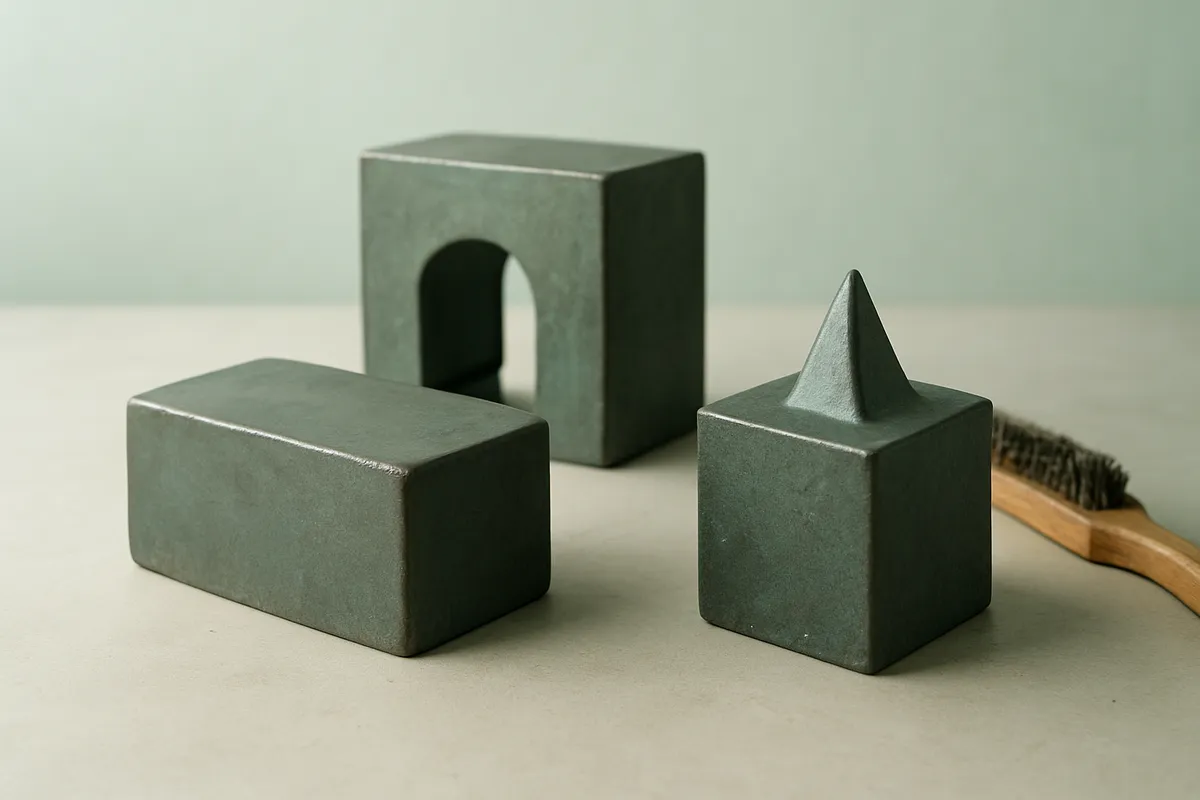
Swage blocks are cast iron or steel blocks fitted with shaped holes, grooves, and half-round channels along their faces and edges. A blacksmith uses them to form curves, shoulders, tapers, and bolt heads that a flat anvil surface cannot produce. Unlike a standard flat anvil block, a swage block acts as a multi-profile forming die in a single tool.
Hardy tools are square-shank accessories that seat directly into the hardy hole, the square socket, on an anvil or block. Individual hardy tools include hot cuts for severing stock, bending forks, and bottom swages. Each tool extends what a basic forging block setup can accomplish without requiring a separate dedicated fixture.
Beyond swage blocks and hardy tools, blacksmiths and industrial shops also work with several other specialized block types worth knowing:
- Anvil blocks: Solid steel or cast iron blocks used as the primary striking surface for hammer work, offering a flat face and a horn for curved forming.
- Mandrel blocks: Cylindrical or tapered blocks used to support hollow workpieces during forming, preventing collapse under hammer blows.
- V-blocks: Precision ground blocks with a V-shaped groove used to hold round stock securely during forging or machining setups.
- Bottom die blocks: The lower half of a closed die set, seated in the press bed and carrying the cavity geometry that shapes the underside of the forged part.
- Bolster blocks: Intermediate support blocks placed between the die and the press bed to adjust working height and distribute load evenly.
Industrial Block Forging vs. Traditional Blacksmithing: What Makes Them Different
Industrial block forging applies hydraulic or mechanical press forces measured in thousands of tons, targeting repeatable part geometry for sectors like oil and gas, mining, and heavy machinery. The workpiece is the block; the dies are the tooling.
Traditional blacksmithing inverts that relationship. The block, whether a swage block, anvil, or hardy block, is the tooling, and the smith manipulates a relatively small billet against it by hand or with a striker. Scale, force, and intent differ entirely, even though both disciplines use the word “block” to describe core equipment in the process.
Open Die vs. Closed Die Block Forging: Key Differences Explained
Open die forging suits large, variable geometries and low volumes; closed die forging locks in repeatable, complex shapes for high-volume production runs.
The two primary forging block types differ most sharply in geometry control. Open die forging shapes heated metal between flat or simple dies, leaving the workpiece free to move, which means near-unlimited size variation and custom cross-sections adjusted with each heat. Closed die forging presses metal into a precision-machined cavity, so every part exits the die with the same geometry. That repeatability is the point: flanges, gears, and structural components that must match tight dimensional tolerances across thousands of pieces are exactly what closed die handles best.
Tooling cost follows the same logic. Open die requires minimal dedicated tooling, which keeps setup costs low and lead times short, a practical fit for prototype runs or one-off custom blocks. Closed die demands precision die fabrication before a single part ships, a premium upfront investment that only pays off at sufficient production volume.
Grain flow improves over bar stock in both methods because the forging process aligns the metal’s grain structure along the part’s stress lines. Closed die forging produces more consistent grain orientation across a full production run, since every stroke follows the same die geometry. Open die can achieve excellent mechanical properties but requires skilled operator control to maintain uniformity across large or irregular shapes.
Material Options for Open Die Forged Blocks
Open die forging accommodates carbon steels, alloy steels, stainless grades, aluminum, titanium, and nickel alloys. The reason is straightforward: open die operations apply lower die pressures than closed die, which reduces thermal and mechanical stress on tooling. That makes it practical to work with reactive or high-strength alloys, materials that would accelerate die wear in a closed die setup.
Common Industrial Applications for Different Block Forging Methods
Open die forging is the standard choice for shafts, discs, cylinders, and custom one-off blocks used in energy, mining, and heavy machinery. Closed die forging serves flanges, gears, and high-volume structural components in automotive and aerospace supply chains. The decision between the two methods comes down to volume, geometry complexity, and how much tooling investment the production run can absorb.
To summarize the key application differences at a glance:
- Open die forging: Large shafts, pressure vessels, custom one-off blocks, prototype billets, and heavy mining components.
- Closed die forging: Automotive flanges, connecting rods, gears, aerospace structural brackets, and high-volume fasteners.
- Swage block forming: Decorative ironwork, tool handles, bolt heads, tapered tenons, and curved architectural elements.
- Hardy tool operations: Hot cutting, bending, punching, and bottom swaging in blacksmithing and small-shop metalwork.

How to Choose the Right Forging Block Type for Your Project
The right forging block type depends on four variables: part complexity, dimensional tolerance, production volume, and available tooling.
Part complexity drives the first decision. Simple, large, or irregular geometries work well with open die forging — the dies don’t enclose the workpiece, so the smith can reposition and work the metal incrementally. Closed die forging suits complex, near-net shapes where the cavity defines the final geometry precisely.
Tolerance requirements push the decision further. Open die processes typically produce looser dimensional tolerances, which means more post-forge machining. Closed die tooling holds tighter tolerances and reduces that downstream work, a real advantage when machining time is a cost driver.
Production volume is often the deciding factor. Open die forging is generally more budget-friendly for one-off or short-run blocks. Closed die carries a higher upfront tooling cost that becomes cost-effective only at scale, where that cost spreads across a large number of parts.
Which Forging Block Type Is Best for Beginners vs. Experienced Metalworkers
Beginners benefit most from a flat anvil block or basic swage block. These tools teach fundamental hammer technique and metal movement without requiring precision die geometry or high press tonnage.
Experienced smiths and industrial buyers evaluate die geometry, press tonnage, and material flow behavior. At the industrial level, where MFG SOLUTION applies cold forging and CNC mill and turn operations to precision parts up to 38mm diameter, the selection criteria shift entirely to tolerance class, cycle time, and material utilization.
For prototype development or materials that need incremental working, open die remains the correct starting point. When high-volume production and minimal post-forge machining are the goals, closed die is the appropriate choice.
Materials and Tools Required for Different Forging Block Types
Block material ranges from cast iron for blacksmithing swage blocks to alloy steel dies for industrial open-die and closed-die forging operations.
Cast iron suits blacksmithing swage blocks because it offers adequate surface hardness at lower cost. Industrial dies and hardy tools step up to tool steel, which resists wear under repeated impact. Open-die and closed-die tooling for heavy industrial work uses alloy steel, grades selected to survive the compressive loads and thermal cycling of production forging.
Why Blacksmiths Use Borax When Forging Metal
Borax acts as a flux during forge welding: it melts onto the metal surface, displaces oxygen, and prevents scale from forming between the two pieces being bonded. Without it, iron oxide scale acts as a barrier and the weld fails to consolidate properly. This matters most in swage block and anvil block workflows, where the smith is shaping and joining heated stock directly on the block face.
Ancillary tooling follows the block type. Blacksmithing setups require hammers, tongs, and hardy tools seated in the anvil’s hardy hole. Industrial forging blocks, whether open-die or closed-die, need hydraulic or mechanical presses, die sets, and manipulators to position large billets safely and consistently.
What Is the Hardest Metal to Forge and How Does It Affect Block Choice
Titanium and nickel superalloys sit at the difficult end of the forging spectrum. Both demand higher-grade die materials, tighter temperature windows, and slower working rates to avoid cracking. Mild steel, by contrast, is forgiving across most forging block types and tolerates a wider process range.
Alloy choice directly determines which block type and die material is appropriate, a principle that applies equally to precision components like 15-5 PH stainless parts or high-wear mining forgings, where matching die grade to workpiece alloy is a baseline engineering requirement.
How to Maintain and Extend the Life of Your Forging Blocks
Consistent inspection, surface care, and proper storage are the three practices that most directly extend the working life of any forging block.
All forging block types wear through the same three mechanisms: thermal cycling fatigue, impact deformation, and oxidation. Repeated heating and cooling creates micro-cracks in die surfaces over time. Sustained hammer or press loads gradually deform working faces. Scale and oxide buildup accelerate surface degradation by trapping heat and promoting pitting.
Factors That Affect the Durability and Lifespan of Forging Blocks
Inspection routines. After heavy use, examine working faces for cracks, mushrooming, or pitting. For industrial closed dies, dimensional inspection against your original tolerance specs determines whether a die needs re-machining or full retirement. Catching micro-cracking early prevents a small surface defect from propagating through the die body.
Surface care. On blacksmithing blocks, dress deformed edges by grinding or filing to restore flat working geometry. On closed industrial dies, apply a release compound or lubricant before each run to reduce friction and limit thermal shock at the die face.
Storage and handling. Keep all blocks dry — rust pitting on a working surface destroys dimensional accuracy fast. Store heavy industrial blocks on stable, load-rated surfaces to prevent warping or edge chipping from uneven support.
Material grade and heat treatment. The block’s own steel grade and hardness treatment determine how long it survives high-cycle production. Higher-grade tool steel with appropriate heat treatment outlasts cast iron in industrial applications by a significant margin, which justifies the premium cost over the full production run.
Frequently Asked Questions About Forging Block Types
Can you use a swage block as a substitute for an anvil?
A swage block can support some light forging tasks, but it is not a true anvil substitute. Swage blocks are designed for shaping, bending, and forming operations using their contoured holes and grooves, not for absorbing the repeated impact loads that an anvil handles. Using a swage block as a primary striking surface risks cracking the cast iron body, which is far less impact-resistant than a forged steel anvil.
What is the difference between a forging block and a forging die?
A forging block is a solid metal workpiece or support tool; a forging die is a shaped tool that applies force to form the workpiece. Dies are the active forming elements — they carry the cavity geometry that transfers to the finished part. Forging blocks, by contrast, serve as the raw material being shaped or as the backing mass that supports the operation. The two work together, but they serve opposite roles in the process.
How do I know when a forging block needs to be replaced or re-machined?
Replace or re-machine a forging block when you see surface cracking, measurable deformation, or dimensional drift beyond your part tolerance. In die block applications, worn cavity edges produce flash in unintended locations and cause part-to-part variation that your inspection records will flag. A block showing heat checking, a network of fine surface cracks from repeated thermal cycling, should be pulled from service immediately, as those cracks propagate under continued load.
Are forging blocks used in CNC machining workflows?
Yes, forged blocks are a common starting material for CNC machining, particularly when a part requires the grain structure and strength that casting cannot provide. A forged block is rough-shaped through the forging process, then finish-machined to final dimensions and tolerances on CNC equipment. At MFG SOLUTION, cold forging and CNC turning or mill-and-turn operations are often combined this way, producing parts up to 38mm in diameter that meet ISO 9001:2015 and IATF 16949 standards.
How do forging block types compare in terms of surface finish quality?
Closed die forging generally produces a better as-forged surface finish than open die, because the enclosed cavity controls all surfaces simultaneously and limits scale formation on exposed faces. Open die forgings typically require more post-forge surface dressing or machining to reach a comparable finish. Swage block forming falls between the two — the shaped grooves and holes produce consistent profiles on the worked surfaces, but areas not in contact with the block remain rough and require additional finishing work.
Conclusion
Matching the right forging block type to your application — open-die for large, structurally demanding shapes; closed-die for high-volume precision; swage blocks for forming support — directly affects part quality, tooling life, and downstream machining cost. Material selection matters just as much: tool steel die blocks and alloy workpiece blocks behave differently under load and heat, and confusing the two leads to premature failure.
If your parts start as forged blocks and require tight final tolerances, audit whether your current machining partner can handle both the forging input and the finish work under one certified quality system. Submit your part specifications to MFG SOLUTION for an 8-hour quote and see which production method, cold forging, CNC turning, or mill-and-turn, delivers the best cost-to-precision ratio for your geometry.
Recommended Articles
Explore more from our content library: