
2026-05-29
17-4 Stainless Steel Properties: The Complete Guide

| Key Insight | Explanation |
|---|---|
| Precipitation-hardening alloy | 17-4 PH achieves high strength through age-hardening heat treatment, not cold work, making it dimensionally stable after processing. |
| Composition drives performance | Approximately 17% chromium and 4% nickel give the alloy its designation and its corrosion resistance comparable to 304 stainless. |
| Heat treatment condition matters | Mechanical properties vary significantly between H900, H1025, and H1150 conditions, affecting tensile strength from ~1000 MPa to over 1300 MPa. |
| Machinability is favorable | In the annealed (Condition A) state, 17-4 PH machines more easily than in hardened conditions, reducing tool wear and cycle times. |
| Broad industry adoption | Used in aerospace, medical devices, automotive, and oil & gas for parts requiring strength, corrosion resistance, and tight tolerances. |
| UNS designation S17400 | Also known as Grade 630, 1.4542 (European), or AISI 630, giving engineers a consistent reference across global supply chains. |
Few alloys earn the title “workhorse” in precision manufacturing. 17 4 stainless steel properties make it exactly that. This precipitation-hardening martensitic stainless steel delivers a rare combination: tensile strengths exceeding 1300 MPa in peak-hardened condition, corrosion resistance comparable to 304 stainless, and a heat treatment process simple enough to perform in a standard furnace. Engineers across aerospace, medical devices, and automotive rely on it daily. In this guide, you’ll learn the full mechanical and physical property profile, how heat treatment conditions shift performance, where the alloy excels, where it struggles, and what machining best practices look like as of 2026.
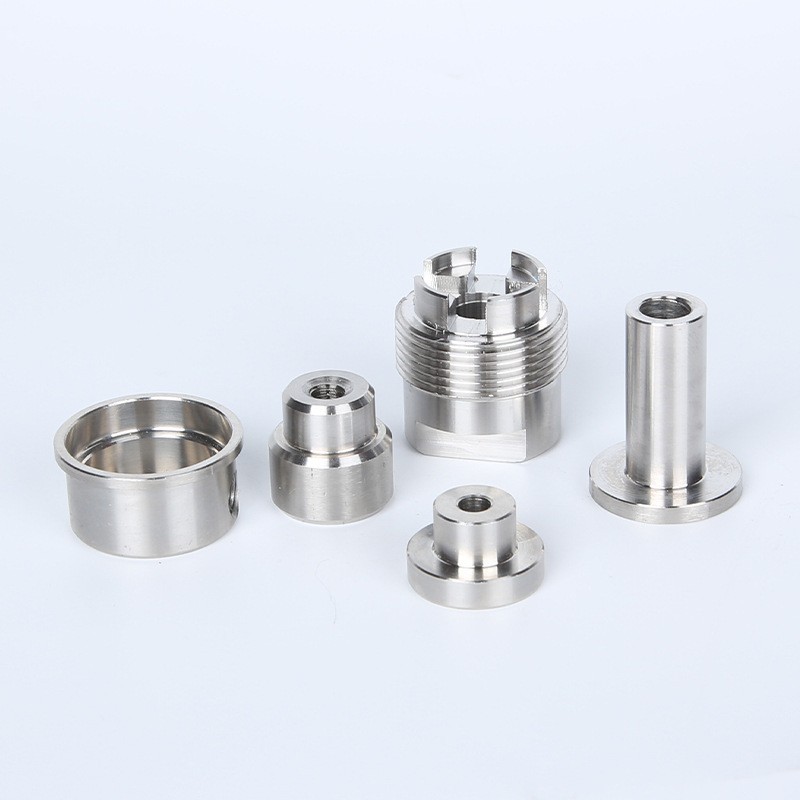
What Is 17-4 Stainless Steel?: 17 4 stainless steel properties
17-4 PH stainless steel is a precipitation-hardening martensitic alloy containing approximately 17% chromium and 4% nickel, hardened by a controlled aging heat treatment rather than cold work. It is designated UNS S17400, AISI Grade 630, and EN 1.4542 in European standards. Its defining characteristic is the ability to reach very high strength levels while retaining the corrosion resistance typical of austenitic stainless steels.
Composition and Designation
The “17-4” name comes directly from its nominal chemistry. According to Ryerson, the alloy contains approximately 17% chromium, 4% nickel, and 4% copper, with small additions of niobium (columbium) [1]. That copper and niobium content is critical: during aging, copper-rich precipitates form within the martensitic matrix, dramatically increasing hardness and strength without requiring complex processing.
The full nominal composition looks like this:
- Chromium: 15.5–17.5%
- Nickel: 3.0–5.0%
- Copper: 3.0–5.0%
- Niobium + Tantalum: 0.15–0.45%
- Carbon: 0.07% max
- Manganese: 1.00% max
- Silicon: 1.00% max
- Iron: balance
Why It’s Different from Standard Stainless Grades
Standard austenitic grades like 304 and 316 can’t be hardened by heat treatment. Their strength is fixed by chemistry and cold work. 17-4 PH breaks that rule. Research published in PMC (National Institutes of Health) confirms that 17-4 PH “boasts an impressive combination of high strength, exceptional ductility, ease of workability, and excellent corrosion resistance” [2]. That combination simply doesn’t exist in a standard 304 or 316 alloy.
It’s also worth noting what 17-4 PH is not: it isn’t a duplex stainless, and it isn’t a tool steel. Its microstructure is martensitic in the solution-annealed condition, which means it’s magnetic, unlike austenitic grades.
17-4 Stainless Steel Properties: Mechanical and Physical Data
The 17 4 stainless steel properties that engineers care most about are tensile strength, yield strength, hardness, and corrosion resistance, all of which vary significantly based on the heat treatment condition applied after solution annealing.
Mechanical Properties by Condition
The table below summarizes the key mechanical data across the most common heat treatment conditions, drawn from published data sheets [3][4]:
| Condition | Tensile Strength (MPa) | Yield Strength (MPa) | Elongation (%) | Hardness (HRC) |
|---|---|---|---|---|
| Condition A (annealed) | 1069 | 793 | 10 | 38 max |
| H900 | 1310 | 1170 | 10 | 40 min |
| H1025 | 1070 | 1000 | 12 | 35 min |
| H1075 | 1000 | 862 | 13 | 32 min |
| H1150 | 862 | 793 | 16 | 28 min |
The H900 condition (aged at approximately 900°F / 482°C) delivers peak strength but the lowest ductility. The H1150 condition sacrifices some strength in exchange for better toughness and ductility, making it popular for applications where impact resistance matters more than raw tensile load [5].
Physical Properties
Beyond mechanical data, the physical constants of 17-4 PH are relevant for design and manufacturing:
- Density: 7.78 g/cm³ (7780 kg/m³)
- Modulus of Elasticity: 197 GPa (28.6 × 10⁶ psi)
- Thermal Conductivity: 18.3 W/m·K at 20°C
- Coefficient of Thermal Expansion: 10.8 µm/m·°C (20–260°C)
- Electrical Resistivity: 0.77 µΩ·m
- Magnetic Permeability: Ferromagnetic (magnetic, unlike 304/316)
According to data published by Rolled Alloys, the density of 17-4 is 0.281 lb/in³, consistent with the 7780 kg/m³ figure above [3]. This is slightly lighter than many carbon steels, which is a practical advantage in weight-sensitive aerospace designs.
Pro Tip: Always confirm the heat treatment condition (H900, H1025, H1150, etc.) with your supplier before finalizing a design. The same alloy can have tensile strength ranging from 862 MPa to over 1310 MPa depending on condition, and assuming one when you need the other is a costly mistake.
Heat Treatment Conditions and How They Change Performance
Heat treatment is the defining variable in 17 4 stainless steel properties: the same base alloy can be transformed from a moderately hard, machinable bar stock into an ultra-high-strength component simply by controlling time and temperature during aging.
The Two-Step Process: Solution Anneal + Aging
The heat treatment process for 17-4 PH follows a clear two-stage sequence:
- Solution anneal (Condition A): Heat to approximately 1038°C (1900°F) and quench. This dissolves precipitates and creates a martensitic structure on cooling. The material is now in its most machinable state.
- Aging (precipitation hardening): Reheat to a specific aging temperature (e.g., 482°C for H900, or 621°C for H1150) and hold for a defined time. Copper-rich precipitates form within the martensite matrix, dramatically increasing hardness and strength.
The aging temperature designation (H900, H1025, H1075, H1150) refers directly to the Fahrenheit aging temperature. H900 means aged at 900°F; H1150 means aged at 1150°F. Higher aging temperatures produce softer, tougher conditions [6].
Research from Missouri University of Science and Technology notes that “the key to the properties of precipitation hardening stainless steels lies in heat treatment,” and that the niobium additions in 17-4 PH help stabilize the microstructure during aging [7].
Dimensional Stability After Heat Treatment
One practical concern is dimensional change. The Precision Machined Products Association (PMPA) has documented that 17-4 PH undergoes measurable dimensional contraction during the aging cycle, particularly in the H900 condition [8]. For tight-tolerance parts, this means machinists must account for shrinkage when machining in Condition A before aging.
In practice, the contraction is typically in the range of 0.0005 to 0.002 inches per inch, depending on section thickness and aging condition. For small precision parts under 38mm diameter, this is manageable with proper pre-aging stock allowances, but it must be planned deliberately. At MFG SOLUTION, we’ve found that machining critical features after aging (where geometry allows) eliminates this uncertainty entirely.
Pro Tip: For parts with tolerances tighter than ±0.01mm, machine to near-net shape in Condition A, age the part, then finish-machine the critical features. This approach eliminates heat-treatment distortion from your tolerance stack-up and is standard practice for precision aerospace components.
Key Benefits and Industry Applications
The 17 4 stainless steel properties that drive adoption across industries are the combination of high strength, corrosion resistance, and simple heat treatment, a trio that no other common stainless grade can fully replicate.
Advantages Over Competing Alloys
Comparing 17-4 PH against the most common alternatives highlights its niche clearly:
| Property | 17-4 PH (H900) | 304 Stainless | 316 Stainless | 4140 Alloy Steel |
|---|---|---|---|---|
| Tensile Strength | ~1310 MPa | ~515 MPa | ~515 MPa | ~1020 MPa |
| Corrosion Resistance | Excellent | Good | Very Good | Poor (needs coating) |
| Heat Treatable | Yes | No | No | Yes |
| Magnetic | Yes | No | No | Yes |
| Density (g/cm³) | 7.78 | 8.00 | 8.00 | 7.85 |
According to AZoM, Grade 17-4 is “the most widely used steel of the precipitation hardening grade steels” due precisely to this balance of properties [4]. For engineers who need more strength than 304 can offer but can’t accept the corrosion vulnerability of 4140 carbon steel, 17-4 PH is the logical choice.
Where 17-4 PH Is Used
The alloy’s application list is broad:
- Aerospace: Structural fasteners, shafts, gears, valve components, and bulkhead fittings where strength-to-weight ratio is critical
- Medical devices: Surgical instruments, orthopedic implant components, and dental hardware requiring both strength and biocompatibility
- Oil and gas: Valve stems, pump shafts, and downhole tool components exposed to corrosive fluids under high pressure
- Automotive: High-performance fasteners, fuel system components, and sensor housings requiring dimensional stability
- Food processing: Conveyor components and cutting tools where hygiene and wear resistance are both required
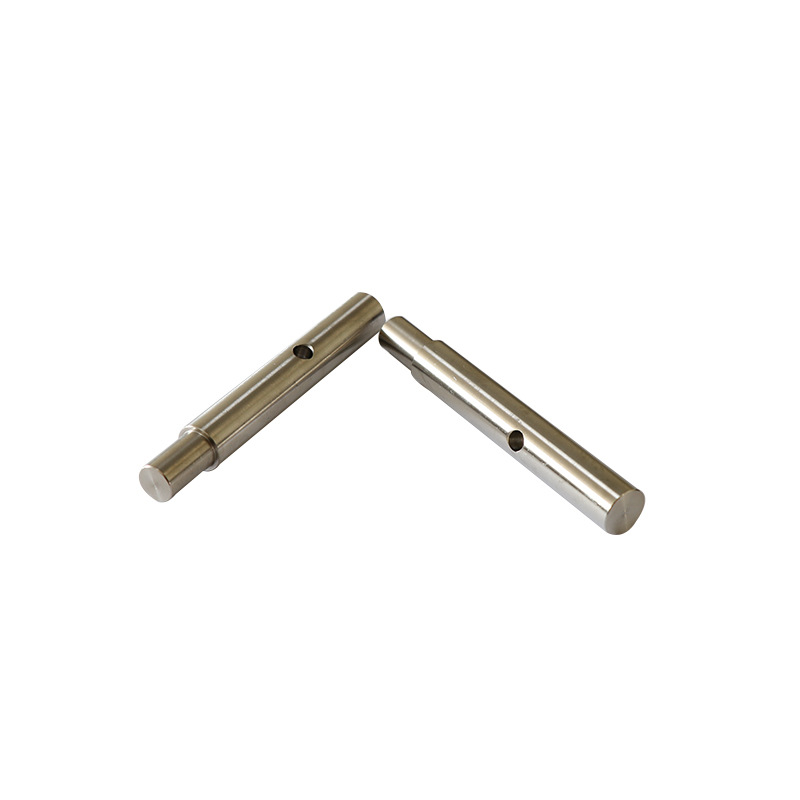
A MFG SOLUTION client in the medical device sector recently required 17-4 PH H1025 shafts at ±0.005mm diameter tolerance for a surgical tool assembly. Our Swiss lathe service, combined with post-aging finish grinding, delivered 5,000 pieces within spec and shipped within three days of order approval. That’s the kind of real-world application where 17 4 stainless steel properties directly determine whether a product works.
For teams exploring precision alloy machining options, resources like those found through engineering material databases can provide additional comparative data to support alloy selection decisions.
Common Challenges and Machining Considerations
Despite its advantages, 17 4 stainless steel properties present real machining challenges that catch unprepared shops off guard, particularly when working in hardened conditions.
Work Hardening and Tool Wear
17-4 PH work-hardens during cutting. Not as aggressively as austenitic grades like 304, but enough to cause problems if feeds and speeds aren’t managed correctly. Dwell time, repeated light cuts, and dull tooling all accelerate surface work hardening, which then degrades subsequent tool life rapidly.
Common mistakes include:
- Using feeds that are too light, causing rubbing rather than cutting
- Running worn tooling past its useful life to “save on inserts,” which actually increases scrap rates
- Failing to use cutting fluid consistently, especially in drilling and tapping operations
- Attempting to machine H900 condition parts with the same parameters used for Condition A stock
According to Progressive Alloy Steels, 17-4 PH in the hardened condition is significantly more challenging to machine than in the annealed state, and most precision shops prefer to do the bulk of their material removal in Condition A before aging [5].
Stress Corrosion Cracking Risk in H900
The H900 condition, while delivering the highest strength, is also the most susceptible to stress corrosion cracking (SCC) in chloride-containing environments. This is a documented limitation. Research published through INIS (International Nuclear Information System) notes that the tensile and compressive properties of 17-4 PH are influenced by temperature and strain rate, and that environmental factors compound these effects [9].
For marine or chemical processing applications, H1025 or H1150 conditions are generally preferred over H900, even at the cost of some tensile strength. This is a trade-off engineers must evaluate explicitly, not assume.
Pro Tip: If your application involves chloride exposure (saltwater, certain cleaning agents, or coastal environments), specify H1025 or H1150 condition rather than H900. The strength reduction is modest, but the improvement in stress corrosion cracking resistance is substantial and can prevent catastrophic field failures.
Best Practices for Machining 17-4 PH in 2026
As of 2026, the best machining practices for 17 4 stainless steel properties leverage both proven metallurgical principles and advances in CNC toolpath strategy, particularly for small, high-precision components under 38mm diameter.
Process Sequence and Tooling Selection
Our team at MFG SOLUTION recommends the following sequence for precision 17-4 PH components:
- Start in Condition A: Machine to near-net shape with generous stock allowances on critical features (typically 0.1–0.3mm per surface depending on part size).
- Age the part: Send to heat treatment or perform in-house aging at the specified condition. Document time, temperature, and quench method for traceability.
- Finish-machine critical features: Use carbide or coated carbide tooling with sharp edges. Apply flood coolant or high-pressure through-spindle coolant for drilling operations.
- Inspect to specification: Use CMM (coordinate measuring machine) or calibrated gauging for dimensional verification. Surface finish verification with profilometry where specified.
- Document and certify: For aerospace, medical, and automotive customers, provide material certificates, heat treatment records, and inspection reports per ISO 9001:2015 or IATF 16949 requirements.
Tooling and Speed Recommendations
For turning and Swiss lathe operations on 17-4 PH:
- Use carbide inserts with a TiAlN or AlTiN coating for hardened conditions
- Cutting speeds: 80–120 m/min in Condition A; 40–70 m/min in H900/H1025
- Feed rates: 0.05–0.15 mm/rev for finishing passes
- Drill operations: Use through-coolant drills at reduced feed to prevent work hardening at the drill tip
- Tapping: Use form taps (roll taps) where possible to avoid chip packing in blind holes
- Avoid interrupted cuts in hardened conditions where possible
The Aircraft Materials AMS 5604 data sheet for 17-4 PH confirms that the alloy’s machinability is rated at approximately 45% relative to free-machining 1212 steel, which aligns with practical shop experience [6]. Plan your cycle times accordingly.
Recent research on additively manufactured 17-4 PH, published in Virtual and Physical Prototyping, also highlights the alloy’s emergence in metal 3D printing applications, where its precipitation-hardening behavior enables post-print aging to achieve properties comparable to wrought material [10]. For high-volume precision parts, however, conventional CNC turning and Swiss lathe machining remain the most cost-effective production methods.
Sources & References
- Ryerson, “17-4 Stainless Steel: Properties, Applications, and Benefits,” 2024
- PMC / National Institutes of Health, “17-4 Precipitation-Hardening Stainless Steel: Soft-Tough Heat Treatment,” 2024
- Rolled Alloys, “Data Sheet: 17-4 Stainless,” 2023
- AZoM, “Stainless Steel – Grade 17-4 (UNS S17400),” 2023
- Progressive Alloy Steels Unlimited, “17-4 PH Stainless Steel,” 2024
- Aircraft Materials, “17-4PH Stainless Steel Sheet and Plate, AMS 5604,” 2024
- Missouri University of Science and Technology, “Role of Alloy Additions on Strengthening in 17-4 PH Stainless Steel,” 2012
- PMPA, “Dimensional Contraction of 17-4 PH Stainless Steel,” 2023
- INIS / IAEA, “Physical and Mechanical Properties of Cast 17-4 PH Stainless Steel,” 2022
- Virtual and Physical Prototyping, “Additively Manufactured 17-4 PH Stainless Steels for Fracture Applications,” 2024
Frequently Asked Questions
1. What are the main 17-4 stainless steel properties that make it popular in aerospace?
The 17 4 stainless steel properties most valued in aerospace are its high tensile strength (up to 1310 MPa in H900 condition), good corrosion resistance without a protective coating, and dimensional stability after heat treatment. Its relatively low density (7.78 g/cm³) compared to alloy steels also helps with weight savings in structural components like fasteners, shafts, and valve bodies.
2. What is the difference between 17-4 PH H900 and H1150 conditions?
H900 is aged at approximately 482°C (900°F) and delivers peak hardness (40+ HRC) and tensile strength (~1310 MPa) but lower toughness. H1150 is aged at approximately 621°C (1150°F), producing lower strength (~862 MPa) but significantly better ductility (16% elongation) and improved resistance to stress corrosion cracking. H1150 is preferred in environments with chloride exposure or where impact resistance is critical.
3. How does 17-4 stainless steel compare to 304 and 316?
17-4 PH significantly outperforms 304 and 316 in tensile strength (more than double in H900 condition) and can be heat treated to adjust properties. However, 304 and 316 are non-magnetic and offer slightly better corrosion resistance in certain environments, especially 316 in chloride-rich conditions. For applications needing both high strength and corrosion resistance, 17-4 PH is the superior choice; for purely corrosion-resistant, non-magnetic applications, 316 may be preferable.
4. What is the density of 17-4 PH stainless steel in kg/m³?
The density of 17-4 PH stainless steel is 7780 kg/m³ (7.78 g/cm³ or 0.281 lb/in³). This is slightly lower than standard austenitic grades like 304 and 316, which typically measure around 8000 kg/m³. The modest density advantage, combined with the alloy’s high strength, produces a favorable strength-to-weight ratio for aerospace and structural applications.
5. Is 17-4 PH stainless steel easy to machine?
In Condition A (annealed), 17-4 PH is reasonably machinable with a machinability rating of approximately 45% relative to free-machining 1212 steel. In hardened conditions (H900, H1025), machining becomes more challenging due to increased hardness and work-hardening tendency. Most precision shops machine the bulk of features in Condition A and finish-machine critical dimensions after aging to balance ease of cutting with final dimensional accuracy.
6. What is the UNS number and equivalent grade for 17-4 PH stainless steel?
17-4 PH stainless steel is designated UNS S17400 in the Unified Numbering System. Its AISI designation is Grade 630. In European standards, it corresponds to EN 1.4542. It is also sometimes referred to as ARMCO 17-4 PH, a trade name from the original developer. These designations are interchangeable for material specification and sourcing purposes across global supply chains.
7. Can 17-4 PH be used for medical device components?
Yes. 17-4 PH is widely used in medical devices, including surgical instruments, orthopedic components, and dental tools. Its combination of high strength, corrosion resistance, and the ability to achieve tight dimensional tolerances makes it suitable for precision medical parts. Manufacturers supplying medical device OEMs should ensure material traceability and process documentation per ISO 13485:2016 requirements, which govern medical device quality management systems.
8. What is the hardness of 17-4 H1150 in HRC?
In the H1150 condition, 17-4 PH stainless steel typically achieves a minimum hardness of approximately 28 HRC (Rockwell C scale). This is considerably softer than H900 (40+ HRC), reflecting the trade-off between hardness and toughness as aging temperature increases. H1150 is chosen when formability, weldability, or impact resistance is prioritized over maximum hardness.
This article covers wrought 17-4 PH bar, sheet, and plate in conventional heat treatment conditions. It does not address additive manufacturing (3D printed) 17-4 PH microstructures in detail, weld filler selection, or corrosion testing per specific ASTM standards, which are topics that warrant separate technical treatment.
Conclusion
The 17 4 stainless steel properties profile is genuinely exceptional: high strength adjustable through heat treatment, corrosion resistance comparable to standard austenitic grades, and a density that gives engineers a real strength-to-weight advantage. No single alloy is perfect for every application, but for demanding precision components where strength, corrosion resistance, and dimensional stability must coexist, 17-4 PH is hard to beat.
Choosing the right condition (H900 through H1150), planning your machining sequence around the heat treatment cycle, and selecting appropriate tooling are the three levers that determine whether you get a successful part or an expensive scrap pile. Results will vary based on part geometry, batch size, and specific environmental exposure, so always validate your condition selection against your actual service requirements.
At MFG SOLUTION, we machine 17-4 PH components daily using our Swiss lathe, CNC turning, and CNC mill and turn services. We quote within 8 hours and ship within 3 days, backed by ISO 9001:2015, ISO 13485:2016, and IATF 16949 certifications. If you’re sourcing precision small parts in 17-4 PH or any other high-performance alloy, our team of 60+ engineering professionals is ready to review your specifications and get your parts moving.
About the Author
Written by the Manufacturing – Precision Machining & CNC Services experts at MFG SOLUTION. Our team brings years of hands-on experience helping businesses with Manufacturing – Precision Machining & CNC Services, delivering practical guidance grounded in real-world results.
Recommended Articles
Explore more from our content library: