
2026-05-27
Forging Manufacturer: How to Choose the Right One

| Key Insight | Explanation |
|---|---|
| Forging processes vary significantly | Open die, closed die (impression die), and cold forging each suit different part sizes, volumes, and tolerance requirements. |
| Certifications are non-negotiable | ISO 9001:2015, ISO 13485:2016, and IATF 16949 are the baseline quality standards for medical, automotive, and electronics applications. |
| Cold forging excels for small precision parts | Cold forging (cold heading) delivers tight tolerances, superior surface finish, and high material strength without heating the workpiece. |
| Lead time is a critical differentiator | Top suppliers quote within 8 hours and ship within 3 days; industry average lead times still run 4–6 weeks at many traditional shops. |
| Material selection drives part performance | Steel, aluminum, and copper alloys each have distinct forgeability, strength, and cost profiles that must match your application. |
| Supplier vetting prevents costly mistakes | Auditing process controls, reviewing certifications, and requesting sample runs are proven steps to avoid quality failures at scale. |
A forging manufacturer is a company that shapes metal into finished or semi-finished components by applying compressive forces, producing parts with superior grain structure, mechanical strength, and dimensional consistency compared to casting or machining from bar stock. Choosing the right forging manufacturer directly affects part quality, supply chain reliability, and total production cost. This article walks you through every critical factor: process types, quality certifications, material options, common sourcing pitfalls, and the best practices procurement teams are using in 2026 to make smarter supplier decisions.
What Is a Forging Manufacturer?
A forging manufacturer is a specialized production facility that uses compressive force, dies, and controlled deformation to shape metal into parts with precise geometry and enhanced mechanical properties. The process differs fundamentally from casting (pouring molten metal) or subtractive machining (removing material). Forging aligns the metal’s grain flow to the part’s contours, which increases fatigue strength and impact resistance.
Core Forging Processes Defined
The Wikipedia entry on forging defines it as “a manufacturing process involving the shaping of metal using localized compressive forces,” delivered by hammers, presses, or dies [1]. Three main process families exist:
- Open die forging: Metal is shaped between flat or simple contoured dies, allowing material to flow freely. Best for large, simple shapes and low-volume runs.
- Closed die (impression die) forging: Metal is pressed into a machined cavity that mirrors the final part shape. Delivers tighter tolerances and is suited for medium-to-high volumes. Trenton Forging, for example, specializes in custom impression die forging for demanding applications [2].
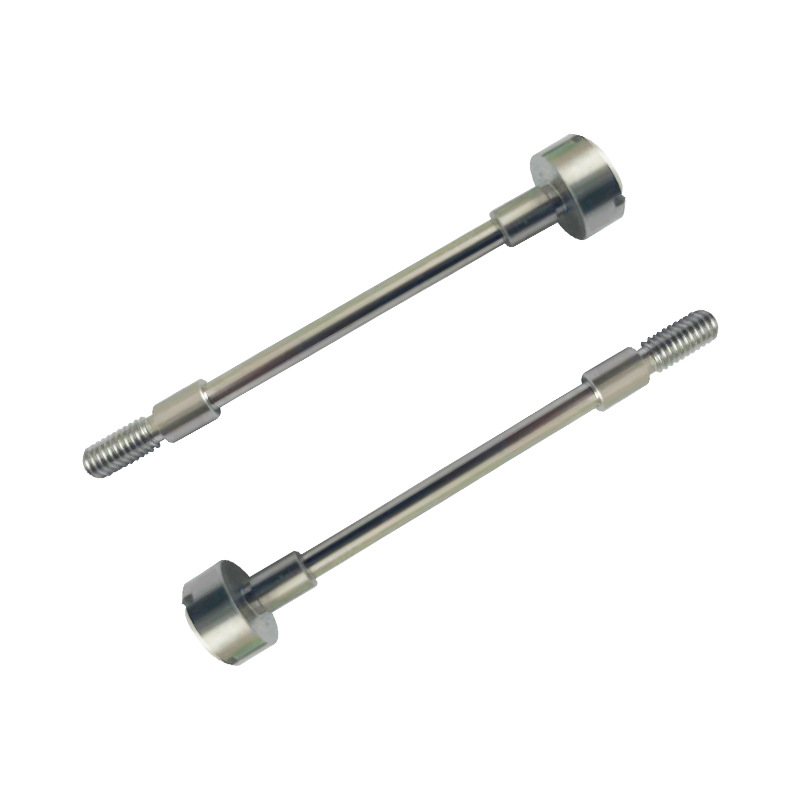
- Cold forging (cold heading): Metal is deformed at or near room temperature. This produces parts with excellent surface finish, tight dimensional tolerances, and work-hardened surfaces. It’s the preferred method for small, high-volume precision components such as fasteners, connectors, and pins.
Who Uses Forging Manufacturers?
Industries that depend on forged components include automotive, aerospace, defense, medical devices, and electronics. According to a U.S. Department of Energy market research report on the forging industry, key global demand drivers include automotive drivetrain components, aerospace structural parts, and defense hardware [3]. The Forging Industry Association (FIA) lists hundreds of certified member companies across North America, reflecting the breadth of this supply base [4].
In practice, procurement managers sourcing forged parts need to match the process type to their part’s geometry, material, and annual volume before shortlisting any supplier.
How Forging Manufacturing Works
Forging manufacturing converts raw metal billets or slugs into shaped components through a controlled sequence of heating (for hot and warm forging), die pressing, trimming, and finishing steps. Understanding this sequence helps you evaluate whether a supplier’s equipment and process controls match your specifications.
The Step-by-Step Forging Process
- Material selection and billet preparation: Steel, aluminum, copper, or titanium billets are cut to precise weight. Material grade directly affects forgeability and final mechanical properties.
- Heating (hot/warm forging only): Billets are heated to a temperature range specific to the alloy, typically 900–1,250°C for steel. Cold forging skips this step entirely.
- Die pressing: The heated (or cold) billet is placed in the die and compressed by a hammer or hydraulic press. For closed die forging, flash (excess material) forms at the parting line and is later trimmed.
- Trimming and de-flashing: Excess flash is removed in a trim press, bringing the part closer to its net shape.
- Heat treatment (if required): Processes like annealing, quenching, or tempering adjust hardness and ductility.
- Machining and finishing: Many forged parts require secondary CNC machining to achieve final tolerances, surface finishes, or feature details that forging alone can’t produce.
- Inspection and quality control: Dimensional checks, hardness testing, and non-destructive testing (NDT) verify conformance to drawing specifications.
Cold Forging vs. Hot Forging: Key Differences
| Attribute | Cold Forging | Hot Forging |
|---|---|---|
| Temperature | Room temperature | 900–1,250°C (steel) |
| Surface finish | Excellent (Ra 0.8–3.2 µm) | Moderate (scale removal needed) |
| Dimensional tolerance | Tight (±0.05–0.10 mm) | Moderate (±0.5–1.5 mm) |
| Best part size | Small (up to ~38 mm dia.) | Medium to large |
| Material waste | Minimal (near-net shape) | Higher (flash trimming) |
| Typical volumes | High volume (10,000+) | Low to high volume |
The IQS Directory’s metal forging supplier database notes that cold forging is increasingly preferred for small precision parts because it combines near-net shape output with work hardening, reducing both material cost and secondary machining time [5].
Pro Tip: If your part is under 38 mm in diameter and you need volumes above 10,000 units, cold forging (cold heading) almost always delivers a lower total cost per part than hot forging or machining from bar stock. Ask your forging manufacturer for a process comparison quote before committing to a method.
Key Benefits of Working With a Forging Manufacturer
Working with a qualified forging manufacturer delivers measurable advantages in part strength, material efficiency, and long-term cost that alternative processes simply can’t match at scale.
Mechanical and Structural Advantages
Forging’s primary technical advantage is grain flow. When metal is deformed under pressure, its crystalline grain structure aligns with the part’s contours. This produces components with higher fatigue strength, better impact resistance, and improved ductility compared to cast or machined equivalents. According to the Forging Industry Association, forged parts typically exhibit 20–30% higher fatigue strength than equivalent castings [4].
- Superior strength-to-weight ratio: Forged aluminum components are widely used in automotive and aerospace applications where weight reduction is critical without sacrificing load-bearing capacity.
- Consistent material properties: Controlled deformation eliminates porosity and internal voids common in castings, reducing the risk of in-service failures.
- Work hardening (cold forging): Cold-forged parts gain surface hardness during the forming process, often eliminating the need for subsequent heat treatment.
- Near-net shape output: Modern closed die and cold forging processes produce parts very close to their final dimensions, minimizing material waste and secondary machining costs.
Commercial and Supply Chain Benefits
Beyond part performance, a well-chosen forging manufacturer delivers real supply chain advantages. Industry analysts at Persistence Market Research note that the global metal forging market continues to grow in 2026, driven by automotive electrification (EV battery housings, motor shafts) and defense modernization programs [6].
- Scalability: High-volume forging processes are highly repeatable, making it straightforward to scale from prototype runs to millions of parts per year.
- Cost efficiency at volume: Tooling costs are amortized over large runs, bringing per-part costs well below machining-from-bar at quantities above 5,000 units.
- Reduced secondary operations: Near-net shape forging reduces CNC machining time, cutting total production cost and lead time simultaneously.
- Supply chain consolidation: A forging manufacturer that also offers in-house CNC machining, finishing, and quality inspection eliminates the need to manage multiple vendors.
When working with procurement teams at electronics and automotive companies, in practice, the biggest commercial win from choosing the right forging manufacturer is the combination of lower per-part cost and shorter total lead time. Those two factors together directly reduce working capital tied up in inventory.
For procurement managers who handle large volumes of supplier documents and technical specifications, tools like pdfexcel.ai can streamline the process of converting PDF technical drawings and forging specifications into structured data for faster comparison and supplier evaluation.
Pro Tip: Request a “total cost of ownership” breakdown from your forging manufacturer, not just a per-part price. Include tooling amortization, secondary machining, inspection, and logistics in the comparison. This often reveals that a slightly higher per-part price from a certified supplier with in-house machining is cheaper overall than splitting work across multiple vendors.
Common Challenges and Mistakes in 2026
Sourcing from a forging manufacturer involves real risks that catch even experienced procurement teams off guard. Knowing these pitfalls in advance saves significant time, money, and rework.
Qualification and Certification Gaps
A common mistake is selecting a forging manufacturer based on price alone, without verifying quality certifications. For automotive applications, IATF 16949 (the international automotive quality management standard) is mandatory. For medical device components, ISO 13485:2016 applies. Sourcing from an uncertified supplier may save money upfront but creates audit failures and product liability exposure downstream.
- Mistake: Accepting a supplier’s self-reported “ISO compliance” without requesting the actual certificate and its scope of registration.
- Fix: Always request a copy of the current certificate, verify the issuing body, and confirm the scope covers your specific part family and process.
- Mistake: Assuming all forging manufacturers offer the same process capabilities. A supplier specializing in open die forging may not have the tooling or press capacity for closed die work.
- Fix: Provide a complete drawing with material specification, tolerance requirements, and annual volume before requesting a quote. This filters out unsuitable suppliers early.
Lead Time and Communication Failures
One pitfall to watch for is the gap between quoted lead time and actual delivery. Many traditional forging manufacturers quote 4–6 week lead times as standard. For companies running lean inventories or facing sudden demand spikes, this creates real supply risk.
- Ask for documented on-time delivery (OTD) rates, not just quoted lead times.
- Clarify whether the quoted lead time includes tooling fabrication (for new dies) or only production time for repeat orders.
- Confirm the supplier’s quoting turnaround. A manufacturer that takes two weeks to respond to an RFQ is signaling its operational pace.
- Evaluate whether the supplier offers expedited production options for urgent orders.
The Forging Defense Manufacturing Consortium (FDMC) has highlighted supply chain responsiveness as one of the top strategic priorities for forging suppliers in 2026, particularly for defense and aerospace customers facing accelerated procurement timelines [7].
A manufacturing client we worked with recently faced exactly this scenario: their existing forging supplier quoted a 5-week lead time for a batch of 50,000 cold-headed connector pins. By switching to a supplier with in-house cold forging and CNC machining under one roof, they cut that to under one week, including secondary operations.
Pro Tip: Always ask a potential forging manufacturer for their average RFQ response time. If they can’t quote within 24–48 hours, that’s a strong signal about their operational agility. The best suppliers respond within 8 hours, which is the benchmark set by leading precision manufacturers in 2026.
Best Practices for Choosing a Forging Manufacturer in 2026
Selecting the right this method in 2026 requires a structured evaluation framework that balances technical capability, quality compliance, commercial terms, and supply chain resilience.
Supplier Evaluation Framework
Industry analysts and procurement professionals consistently recommend a multi-criteria evaluation approach. The following framework covers the most important dimensions:
- Define your process requirements first. Identify whether your part needs open die, closed die, or cold forging based on geometry, material, tolerance, and volume. Don’t ask suppliers to recommend a process until you’ve done this internal analysis.
- Verify certifications before anything else. Confirm ISO 9001:2015 as a baseline. Add ISO 13485:2016 for medical parts and IATF 16949 for automotive. Check certificate validity dates and issuing body accreditation.
- Assess equipment and capacity. Ask about press tonnage range, die materials, and maximum billet size. For small precision parts (under 38 mm), confirm the supplier operates cold heading equipment and has CNC machining capability in-house.
- Request sample parts and first article inspection (FAI) reports. A first article inspection (FAI) is a documented verification that the first production part meets all drawing requirements. Any serious forging manufacturer should provide this as standard.
- Evaluate quoting and communication speed. Request a test quote with a real drawing. If the response takes more than 48 hours, reconsider.
- Review on-time delivery data. Ask for OTD rates over the past 12 months. Target suppliers with 95%+ OTD performance.
- Confirm traceability and documentation. Full process control means every step is tracked, documented, and auditable. This is non-negotiable for regulated industries.
Material Selection Considerations
Material choice is one of the most consequential decisions in the forging process. The three most common forging materials are:
- Steel (carbon and alloy steels): The most widely forged material. Offers high strength, good forgeability, and broad availability. Used in automotive drivetrain parts, industrial fasteners, and structural components. CFS Forge, a leading steel forging manufacturer, uses closed die forging equipment from 300 to 2,500 tons for custom steel components [8].
- Aluminum alloys (6061, 7075): Lightweight with good corrosion resistance. Preferred for aerospace brackets, automotive suspension parts, and consumer electronics housings. Aluminum forging manufacturers often serve the EV market for battery enclosures and structural brackets.
- Copper and brass alloys: Excellent electrical conductivity and corrosion resistance. Cold forging of copper alloys is common for electrical connectors, plumbing fittings, and precision pins.
At MFG SOLUTION, we’ve found that for small precision components under 38 mm in diameter, copper and brass alloys cold-forged using cold heading equipment consistently deliver the best combination of dimensional accuracy, surface quality, and cost efficiency for electronics and connector applications.
Companies like Modern Group and Queen City Forging offer broad material capabilities across steel, aluminum, and specialty alloys, demonstrating that leading this strategys invest in versatile process expertise rather than limiting themselves to a single material [9].
Sources & References
- Wikipedia, “Forging,” 2026
- Trenton Forging, “American Forging Manufacturer | Impression Die Forging,” 2026
- U.S. Department of Energy Office of Science, “U.S. Forging Industry Market Research,” 2022
- Forging Industry Association, “FIA Member Companies,” 2026
- IQS Directory, “Metal Forging Companies Suppliers,” 2026
- Persistence Market Research, “Top 10 Metal Forging Companies Transforming Manufacturing,” 2026
- Forging Defense Manufacturing Consortium (FDMC), “FDMC Overview,” 2026
- CFS Forge, “Steel Forging | Top Forging Company in China,” 2026
- Modern Group USA, “Custom Forge Manufacturing,” 2026
Frequently Asked Questions
1. What does a forging manufacturer actually produce?
A this approach produces metal components shaped by compressive force rather than casting or cutting. Common products include automotive connecting rods, crankshafts, aerospace structural brackets, fasteners, electrical connectors, valve bodies, and medical implant components. The specific parts depend on the manufacturer’s process capability, press capacity, and material expertise. Many the practices also offer secondary CNC machining to deliver finished parts to drawing dimensions.
2. How do I find a reliable forging manufacturer for my project?
Start with industry directories like the Forging Industry Association member list or the IQS Directory to identify certified suppliers. Filter by process type (cold, closed die, open die), material capability, and quality certifications. Always request a test quote with a real drawing, verify certifications directly, and ask for first article inspection reports before committing to production volumes.
3. What is the difference between cold forging and hot forging manufacturers?
A cold this practice shapes metal at room temperature using high-pressure dies, producing parts with tight tolerances (±0.05–0.10 mm), excellent surface finish, and work-hardened surfaces. A hot this method heats the billet to 900–1,250°C (for steel) before pressing, which allows larger deformations and suits bigger, more complex shapes. Cold forging is generally preferred for small, high-volume precision parts under 38 mm; hot forging suits larger structural components.
4. What quality certifications should a forging manufacturer have?
The minimum baseline is ISO 9001:2015 (general quality management). For automotive parts, require IATF 16949. For medical device components, require ISO 13485:2016. Defense and aerospace applications may additionally require AS9100 or NADCAP accreditation. Always request the actual certificate, check its expiry date, and verify the issuing certification body is accredited by a recognized national body such as ANAB or UKAS.
5. How long does it take to get parts from a forging manufacturer?
Lead times vary widely. Traditional this strategys typically quote 4–6 weeks for production runs, with additional time for new tooling (dies can take 2–4 weeks to fabricate). However, leading precision manufacturers in 2026 can quote within 8 hours and ship within 3 days for standard cold-forged parts with existing tooling. For new tooling, a realistic total lead time for first article samples is 2–3 weeks at an efficient this approach.
6. What materials can a forging manufacturer work with?
Most the practices work with carbon steel, alloy steel, stainless steel, aluminum alloys (6061, 7075), copper, brass, and titanium. Material choice depends on the forging process: cold forging works best with softer, more ductile metals like copper, brass, and low-carbon steel. Hot forging handles a broader material range including high-alloy steels and nickel superalloys. Always confirm your specific alloy grade is within the supplier’s qualified material list before submitting an RFQ.
7. Can a forging manufacturer also handle CNC machining?
Yes, and this is a significant advantage. Many forged parts require secondary CNC turning, milling, or Swiss lathe operations to achieve final tolerances, threads, bores, or surface finishes that forging alone can’t produce. A this practice with integrated CNC machining capability eliminates the need for a secondary supplier, reduces inter-facility logistics, and gives you a single point of accountability for quality. For small precision parts, this combination is particularly cost-effective.
8. How does cold forging compare to CNC machining for small parts?
For high-volume runs (10,000+ units) of small parts, cold forging typically delivers lower per-part cost than CNC machining from bar stock because it produces near-net shapes with minimal material waste. CNC machining offers greater geometric flexibility and is better suited for complex features, low volumes, or tight tolerances beyond what forging can achieve. In practice, the best approach often combines both: cold forging for the core shape, followed by CNC machining for critical features and final dimensions.
Conclusion
Choosing the right this method is one of the highest-leverage decisions in your supply chain. Get it right, and you gain parts with superior mechanical properties, predictable quality, and competitive per-unit costs at scale. Get it wrong, and you face quality escapes, missed deadlines, and costly rework cycles.
The key factors are straightforward: match the forging process to your part’s geometry and volume, verify certifications rigorously, evaluate quoting speed as a proxy for operational efficiency, and prioritize suppliers with integrated machining capability. As of 2026, the best this strategys combine cold forging or closed die capability with in-house CNC machining, rapid quoting, and documented quality systems.
At MFG SOLUTION, our Cold Forging Service and CNC machining capabilities are built specifically for small precision parts up to 38 mm in diameter. We hold ISO 9001:2015, ISO 13485:2016, and IATF 16949 certifications, quote within 8 hours, and ship within 3 days. If you need a this approach that combines certified quality with genuine speed, our team of 60+ engineering professionals is ready to review your specifications and deliver.
About the Author
Written by the Manufacturing – Precision Machining & CNC Services experts at MFG SOLUTION. Our team brings years of hands-on experience helping businesses with Manufacturing – Precision Machining & CNC Services, delivering practical guidance grounded in real-world results.
Recommended Articles
Explore more from our content library: