
2026-08-28
5 Steps to Achieve Rapid Turnaround Machining Delivery
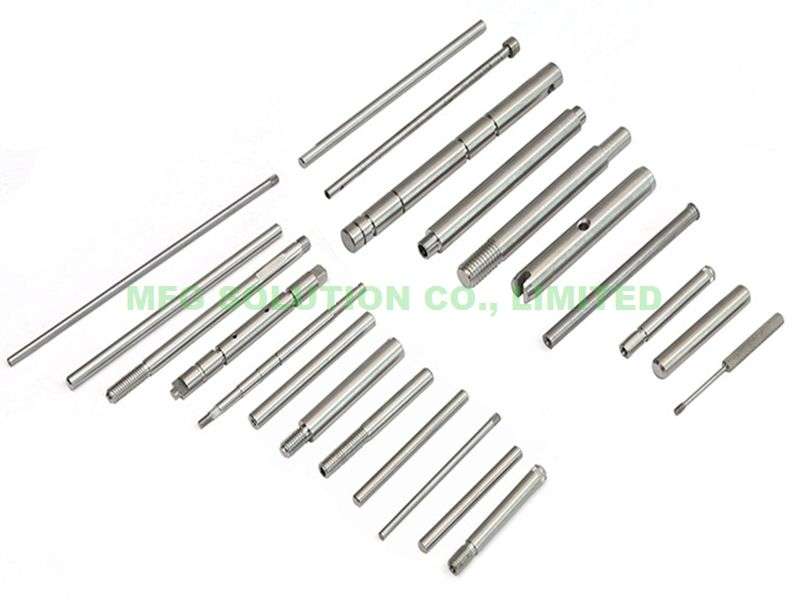
Rapid turnaround machining is a CNC manufacturing approach that compresses lead times from weeks to days, or hours, by combining pre-staged materials, automated tool changes, and simplifyd quoting workflows. Unlike traditional job-shop scheduling, it prioritizes throughput without sacrificing dimensional accuracy or surface finish. It suits engineers who need functional prototypes, replacement parts, or low-volume production runs on tight deadlines.

1. What Rapid Turnaround Machining Actually Means
Rapid turnaround machining compresses scheduling and workflow, not the cutting process itself, to deliver precision parts in days rather than weeks.
The same CNC equipment runs in both standard and rapid workflows. What changes is how work is organized around it: tooling is pre-staged, materials are pre-qualified, and quoting runs in parallel with programming rather than after it. The machine cuts no faster, the shop simply eliminates idle time between steps.
What Makes a Shop Genuinely ‘Rapid’ vs. Just Fast?
Conventional shops queue jobs sequentially, DFM review finishes, then fixturing is built, then material is ordered. Rapid-turnaround shops run those steps concurrently. A shop without a dedicated rapid queue cannot reliably deliver speed even if it operates the latest equipment, because fast machines sitting behind a standard job queue still wait.
This is the differentiator most suppliers miss: rapid turnaround is a scheduling discipline first, a machine capability second. Shops that conflate the two will overpromise and underdeliver.
How Automatic Tool Changers Compress Cycle Time
Automatic Tool Changers (ATCs) eliminate manual tool swaps between operations, cutting per-part cycle time and enabling unattended overnight runs. A job that requires eight tool changes manually might lose 20–40 minutes to operator intervention; an ATC executes those swaps in seconds. That difference compounds across a production batch.
2. How the Rapid CNC Machining Process Works
A rapid CNC machining order moves from CAD file to shipped part by running quoting, programming, and material staging simultaneously rather than one after another.
Digital intake is where the clock starts. A submitted CAD file triggers automated design-for-manufacturability (DFM) analysis and quote generation, collapsing what traditionally takes two to three days into hours. MFG SOLUTION, for example, returns quotes within 8 hours of specification submission, that speed is only possible because DFM review and pricing run as a single automated step, not sequential ones.
What Equipment and Capabilities Enable Rapid Turnaround?
The largest time savings occur when CAM programming runs in parallel with material staging. In a standard shop, programming begins after the quote is approved and material is confirmed. In a rapid workflow, both happen at the same time, so the machine is ready to cut the moment stock arrives on the floor.
Fixturing strategy matters equally. Modular or zero-point fixturing systems allow fast changeover between jobs without building custom fixtures from scratch, a step that can consume a full day in a traditional setup.
5-axis CNC machines reduce the number of setups required to machine complex geometry. Fewer setups mean fewer repositioning events, less handling time, and a shorter path from raw stock to finished part. Shops with in-house inspection, CMM measurement and surface profilometry, eliminate the delay of shipping parts to a third-party lab, which quietly adds two to four days to many orders that appear rapid on paper.
3. Best Materials for Rapid Turnaround Machining
Aluminum alloys 6061 and 7075 are the top choices for rapid turnaround projects because their high machinability ratings allow faster feed rates, lower tool wear, and shorter cycle times than most alternatives.
Both alloys cut cleanly at high speeds, produce manageable chips, and hold tight tolerances without requiring slow finishing passes. For most electronics and automotive brackets, housings, and structural components, 6061 is the default; 7075 is preferred where higher strength is required.
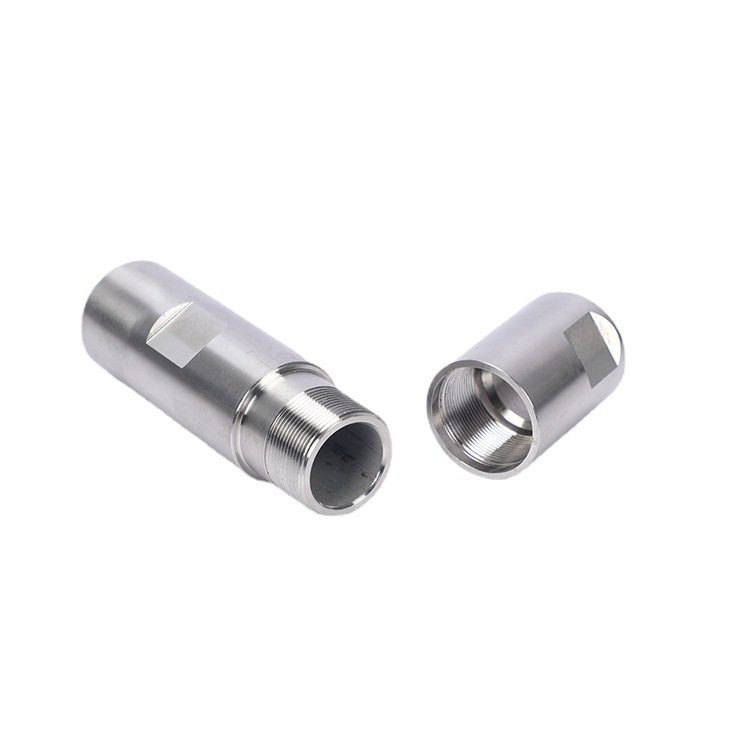
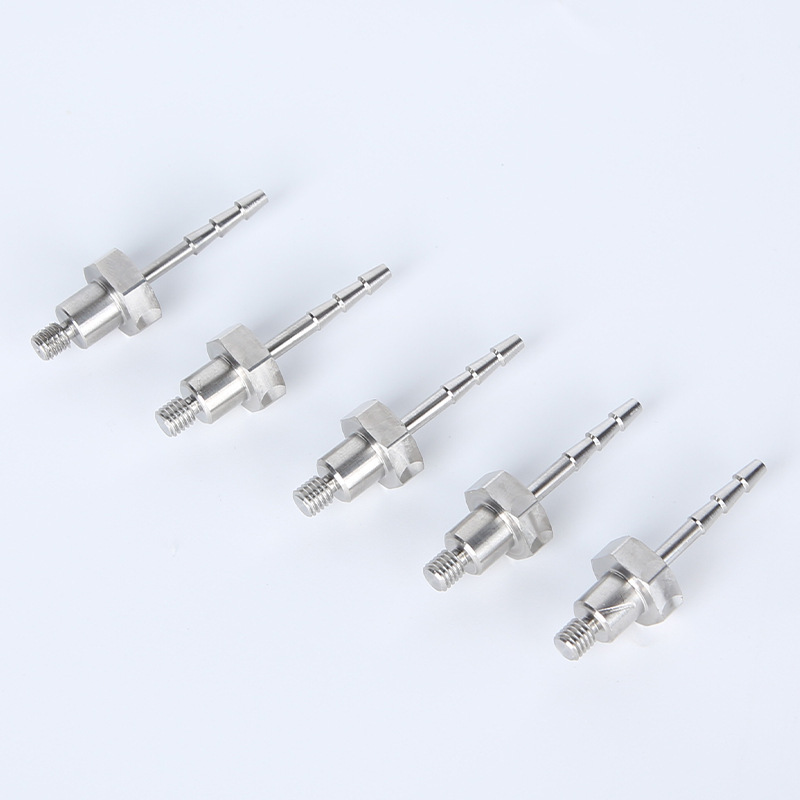
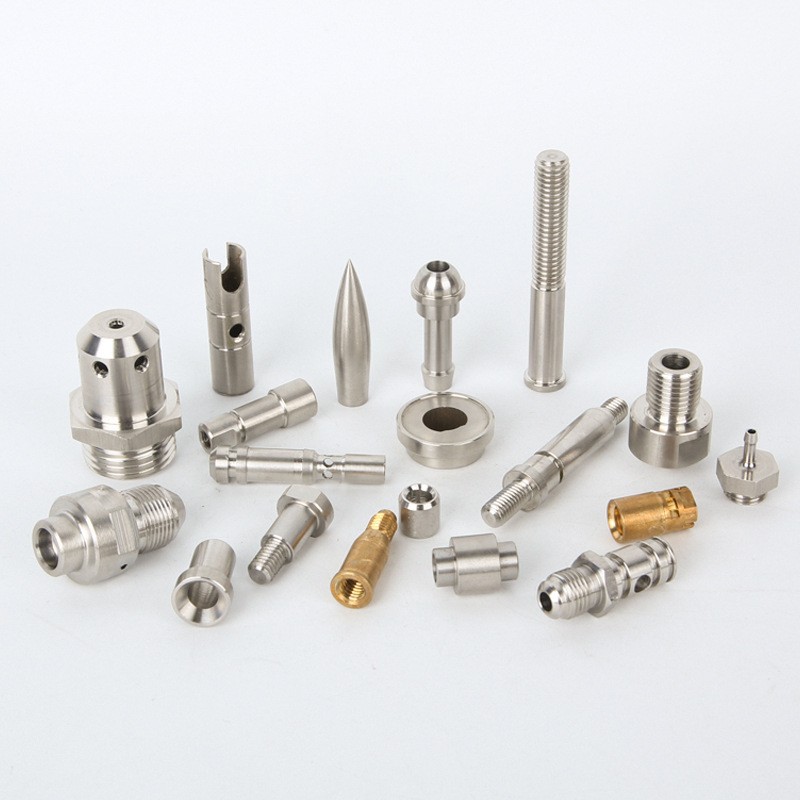
Brass and free-machining steels, 1018 and 1045, are strong mid-tier options. They machine predictably, hold surface finish well, and are widely stocked. For turned components in particular, 1045 steel offers a reliable balance of strength and machinability that suits high-volume rapid runs.
Which Materials Are Problematic for Rapid Turnaround Projects?
Titanium and hardened tool steels slow rapid projects significantly. Both require reduced feed rates, specialized tooling, and more frequent tool changes, each factor adds scheduling friction that compounds across a batch. If your design permits a material substitution, raise it with your machining partner before committing.
Plastics like PEEK and Delrin machine quickly, but thin-walled or unsupported features deflect under cutting forces. Without anticipating fixturing requirements at the DFM stage, setup time increases and the speed advantage disappears. For more information, see Thegoodcode.
The differentiator most suppliers don’t address: shops running pre-stocked material programs, holding common bar stock and plate on-site, eliminate procurement lead time entirely. Material procurement is often the single longest delay in a rapid order, and it’s invisible until it causes a missed ship date.
4. Real Turnaround Times and Quality Trade-Offs to Expect
Simple aluminum parts can ship in one to three days; complex multi-setup steel components typically need five to seven days even in a rapid workflow, and dimensional accuracy does not degrade either way.
Part complexity drives lead time more than any other variable. Simple prismatic geometry in aluminum, brackets, spacers, flanges, moves through a rapid queue in one to three days. Multi-setup parts with tight-tolerance bores, compound angles, or deep pockets in steel realistically require five to seven days, even at a shop structured for speed.
Dimensional tolerances do not loosen under rapid machining when the shop uses the same calibrated equipment it runs on standard jobs. The real trade-off is time for iterative process optimization on first-article runs. A standard job might run three trial pieces before production; a rapid order may run one. That requires more confidence in your DFM upfront.
Surface finish follows a similar pattern. Standard rapid runs typically deliver Ra 1.6–3.2 µm without additional operations. Mirror finishes or hard anodizing require post-processing that adds time, flag those requirements at quoting, not after the parts are cut.
The differentiator most buyers miss: first-article inspection (FAI) documentation is frequently skipped on rapid orders to save time. Request a dimensional report explicitly, even on fast-turn jobs. Skipping FAI to gain a day on delivery creates real risk of downstream assembly failures that cost far more time to resolve.
5. Design Optimization Techniques That Accelerate Machining
Designing parts to match standard tooling, wall thicknesses, and thread specifications cuts machining time and setup count without changing what the part does or the tolerances it holds.
Design Optimization Techniques That Reduce Machining Time While Maintaining Tolerances
Internal corner radii are one of the fastest wins. Size them to match standard end mill diameters, typically in 1/32″ or 1mm increments, and the shop uses on-hand tooling without a specialty order or an extra tool-change event. Corners that require a 3.2mm radius when the closest standard end mill is 4mm force either a tool order or a secondary operation.
Wall thickness matters for cycle time. Thin walls below roughly 0.8mm for metals require slower feed rates and additional support fixturing to prevent deflection. Designing to standard wall thicknesses removes that bottleneck entirely and lets the machine run at full programmed feed.
Deep cavities and high-aspect-ratio holes add cycle time through multiple depth passes and deflection management. Redesigning a deep pocket to a shallower feature, or converting a blind hole to a through-hole where function permits, directly reduces the number of passes the machine must make.
Thread specification is a small decision with a measurable impact. Standard UNC, UNF, or metric coarse threads use taps the shop already stocks. Specifying a non-standard thread pitch means a tool order, and that order can delay a rapid job by days.
The differentiator most DFM guides skip: part consolidation. Combining two or three assembled components into a single machinable part eliminates setups, reduces handling, and cuts assembly labor. MFG SOLUTION’s team of 60+ engineering professionals can evaluate consolidation opportunities during DFM review, and the delivery improvement from consolidating parts often exceeds what any individual geometry optimization achieves on its own.
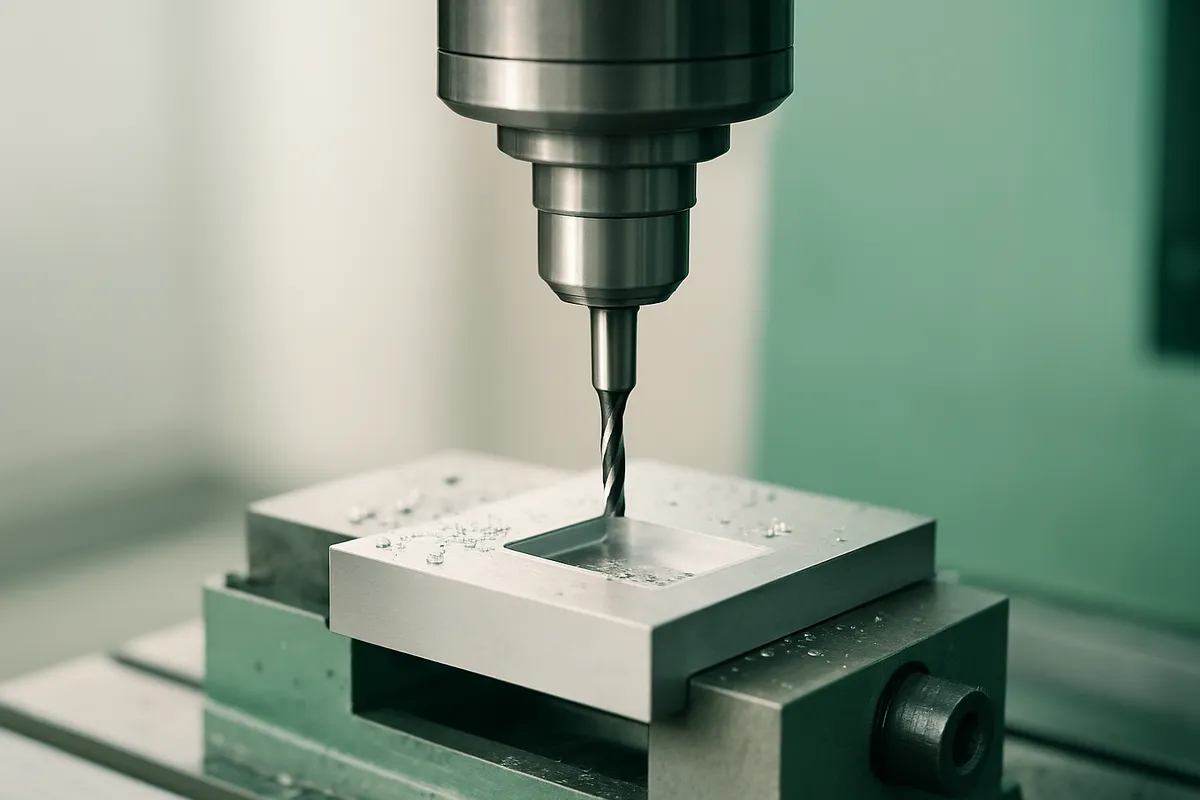
6. Cost Structure of Rapid Turnaround Machining
Rapid machining costs more than standard lead-time work because of three distinct levers: machine cycle time, setup time, and queue priority fees.
Machine cycle time and fixture setup are present in every machining order. What separates rapid work is the third lever, queue priority. When a shop bumps your job ahead of already-scheduled work, it absorbs the opportunity cost of displacing those jobs. That cost passes directly to you as an expedite fee. The premium is not arbitrary; it reflects real revenue the shop defers to serve your timeline.
Qualitative cost tiers break down predictably. Budget-friendly rapid options cover simple geometries in aluminum at moderate volumes, short cycle times, minimal setups. Mid-range applies to multi-setup parts in steel or brass where fixture changes add hours. Premium pricing applies to tight-tolerance, multi-axis work in exotic alloys with same-week delivery requirements.
The cost frame most buyers miss: rapid machining should be evaluated against the cost of delay, a stopped production line, a missed product launch window, or a lost customer contract. Against those figures, the expedite premium on a batch of precision parts is rarely the larger number. That is the actual business decision, not a line-item comparison against standard lead-time pricing.
7. Industries and Applications Where Rapid Machining Delivers the Most Value
How Rapid CNC Machining Is Used Across Different Industries
Rapid turnaround machining creates the greatest advantage in industries where a delay in physical parts directly stalls revenue, regulatory progress, or operational readiness.
- Prototype development: Engineers across electronics, automotive, and consumer products need functional metal prototypes to validate form, fit, and function before committing to production tooling. Rapid machining converts a CAD file into a testable part in days, not weeks, compressing design iteration cycles.
- Aerospace and defense MRO: A grounded aircraft or disabled field equipment cannot wait four to six weeks for replacement components. Rapid machining of certified replacement parts restores operational readiness on timelines that standard job shops cannot match.
- Medical device development: Regulatory submission schedules are fixed. A delay in physical samples pushes back clinical testing and, ultimately, market clearance. Rapid machining of surgical instruments and implant components, produced under ISO 13485:2016 controls, keeps development programs on schedule. MFG SOLUTION holds ISO 13485:2016 certification and machines medical components to those documented standards.
- Automotive tooling and jig repair: A broken fixture on a production line stops output immediately. Rapid replacement machining of jigs and fixtures directly protects throughput, every hour of downtime has a calculable cost.
- Bridge production: This is the window most suppliers ignore. After prototype approval but before high-volume production tooling is ready, rapid machining fulfills initial customer orders at low volume, generating revenue and meeting delivery commitments while permanent tooling is built. It is not a workaround; it is a deliberate production strategy.
8. Certifications and Quality Standards to Require from Rapid Machining Providers
How AS9100, ISO 13485, and IATF 16949 Compare for Rapid Machining Projects
Matching a supplier’s certifications to your part’s industry and criticality is as important as confirming their machine capacity, the wrong certification profile creates compliance exposure.
- ISO 9001:2015, the baseline: Covers documented quality management systems, process control, and corrective action procedures. Any serious rapid machining supplier should hold this as a minimum. Without it, there is no auditable framework governing how parts are made or how defects are resolved.
- IATF 16949 for automotive: Adds automotive-specific requirements including Advanced Product Quality Planning (APQP), Production Part Approval Process (PPAP), and control plans. Required if your parts feed into vehicle production or Tier 1 supplier programs. MFG SOLUTION holds IATF 16949 certification alongside ISO 9001:2015.
- AS9100 for aerospace and defense: Builds on ISO 9001 with configuration management, first-article inspection, and full traceability requirements. Non-negotiable for flight-critical or defense components where part history must be documented and retrievable.
- ISO 13485:2016 for medical devices: Governs design controls, risk management, and manufacturing environment conditions. Required for implantable or patient-contact components, and relevant even for non-implantable surgical instruments where sterility and traceability matter.
- Certification scope, the check most buyers skip: A shop can hold ISO 13485 for its inspection department while its Swiss turning operations sit outside the certified scope. Before placing an order, verify that the specific processes your part requires, 5-axis milling, Swiss turning, cold forging, are explicitly listed within the shop’s certified scope, not just their facility at large.
9. Common Mistakes That Slow Down CNC Machining
Most rapid machining delays originate on the buyer side, not the shop floor, incomplete information and late decisions cost more time than machine setup ever does.
- Incomplete or ambiguous drawings: Missing tolerances, unspecified surface finishes, or conflicting GD&T callouts force request-for-information cycles before machining can start. Each RFI round can add a full business day, more delay than the machining itself on a three-day job.
- Over-specifying tolerances: Applying tight tolerances to non-functional features forces slower feeds, additional inspection steps, and potential rework. Tolerance stackup analysis upstream, before drawings are finalized, prevents this and keeps cycle times predictable.
- Late material selection: Specifying an exotic alloy without first confirming supplier stock availability adds procurement lead time that no amount of shop efficiency can recover. Confirm material availability at the quoting stage, not after order approval.
- Ignoring coolant and lubrication requirements: Incorrect coolant selection for a given material causes accelerated tool wear and surface defects that trigger rework cycles. Matching coolant strategy to material at the programming stage prevents this, a detail that belongs in the process plan, not as an afterthought.
- Change orders mid-production: Even a minor engineering change after machining has started requires re-programming, potential fixture modification, and re-queuing behind other jobs. In practice, a single mid-run change order can double the effective lead time of an order, making pre-production design freeze the single highest-use action a buyer can take.
How to Choose the Right Rapid Turnaround Machining Partner
Selecting a rapid machining supplier comes down to five concrete checks, capability fit, certification scope, quoting speed, queue structure, and communication discipline.
- Match equipment to part geometry first: Confirm the shop operates the specific machine type your part demands, 5-axis CNC, Swiss lathe, mill-turn. A shop without the right equipment cannot be fast regardless of their stated lead times. MFG SOLUTION runs 5-axis CNC machines, 20 automatic lathes, and Swiss lathe capability for parts up to 38mm diameter.
- Verify certification scope, not just certification headlines: Cross-reference the supplier’s actual certificate documents against the processes and materials in your order. A headline certification that excludes your specific process offers no compliance protection.
- Use quoting speed as a workflow proxy: A shop that returns a detailed, accurate quote within eight hours has automated design-for-manufacturability review and pricing workflows. Shops that take two to three days to quote will not be faster once production starts. MFG SOLUTION returns quotes within eight hours of specification submission.
- Ask about dedicated rapid queues: Shops that mix expedited and standard orders in the same scheduling queue cannot guarantee priority. Confirm there is a separate scheduling lane for rapid work, without it, “rapid” is a marketing claim, not an operational commitment.
- Set communication expectations before you place the order: On a three-day job, a missed daily status update can mean a missed ship date. Require a named point of contact and a defined update cadence as part of the order agreement, not as a courtesy request after problems arise.
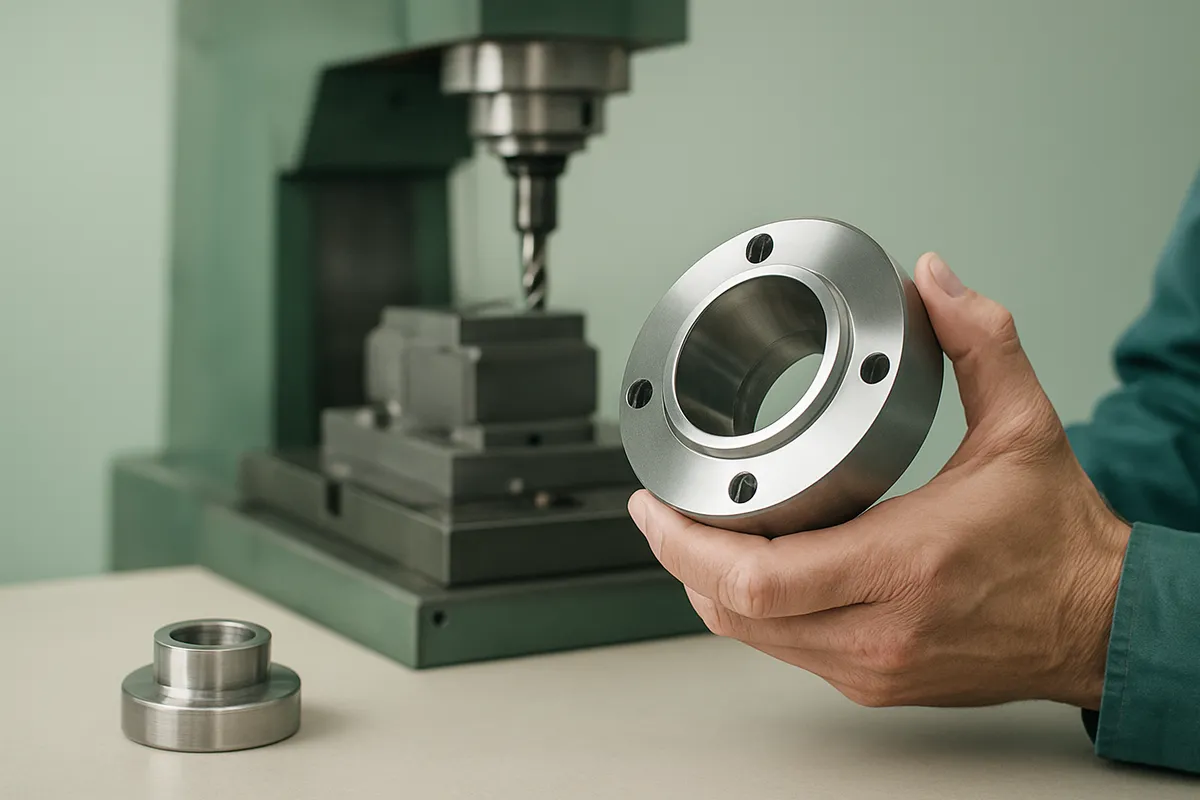
Frequently Asked Questions
Is rapid turnaround machining suitable for production runs or only for prototypes?
Rapid turnaround machining works for both prototypes and batch production runs. The process is designed for speed across the full manufacturing cycle, not just first-article samples. MFG SOLUTION, for example, ships batch production orders within 3 days of approval, covering parts up to 38mm diameter across CNC turning, Swiss lathe, and cold forging methods. The key constraint is part complexity and volume; very high-volume runs may require longer scheduling windows than a 3-day window allows.
How does AI and automation affect rapid CNC machining lead times?
Automation directly cuts lead time by reducing manual setup, tool path programming, and quoting delays. Automated quoting systems can return detailed pricing within hours rather than days, MFG SOLUTION’s 8-hour quote window is one example of this in practice. On the shop floor, automatic lathes and 5-axis CNC machines reduce operator intervention per part, which compresses cycle time without sacrificing dimensional accuracy.
What file formats should you submit to get the fastest quote on a rapid machining order?
Submit a 3D CAD file, STEP (.stp or.step) is the most universally accepted format for rapid quoting. IGES files are also widely supported. Pair the 3D file with a 2D drawing (PDF) that specifies tolerances, surface finish, and material, this eliminates back-and-forth clarification that adds hours or days to your quote cycle. Incomplete submissions are the most common cause of quoting delays.
Can rapid machining maintain the same tolerances as standard lead-time CNC work?
Yes, rapid turnaround machining produces the same dimensional tolerances as standard lead-time CNC work when run on equivalent equipment. Speed is gained through scheduling priority, automated programming, and reduced queue time, not by loosening process controls. Certified shops operating under ISO 9001:2015 or IATF 16949 apply identical inspection and documentation requirements regardless of turnaround speed, so tolerance and quality standards do not drop on expedited orders.
Conclusion
Rapid turnaround machining is a procurement decision as much as a technical one. The shops that consistently deliver in days, not weeks, combine the right equipment mix, certified process control, and a quoting system that eliminates delays before production even starts.
Three things to act on: confirm your supplier holds the certifications your industry requires (ISO 9001:2015 for general quality, ISO 13485:2016 for medical, IATF 16949 for automotive); submit complete STEP and PDF files the first time to avoid quote delays; and verify the shop’s stated turnaround covers your batch size, not just single prototypes.
If your parts are under 38mm in diameter, submit your specifications to MFG SOLUTION and benchmark their 8-hour quote against your current supplier’s response time.
Recommended Articles
Explore more from our content library: