
2026-08-21
How to Choose Between Swiss Machining vs CNC Turning for
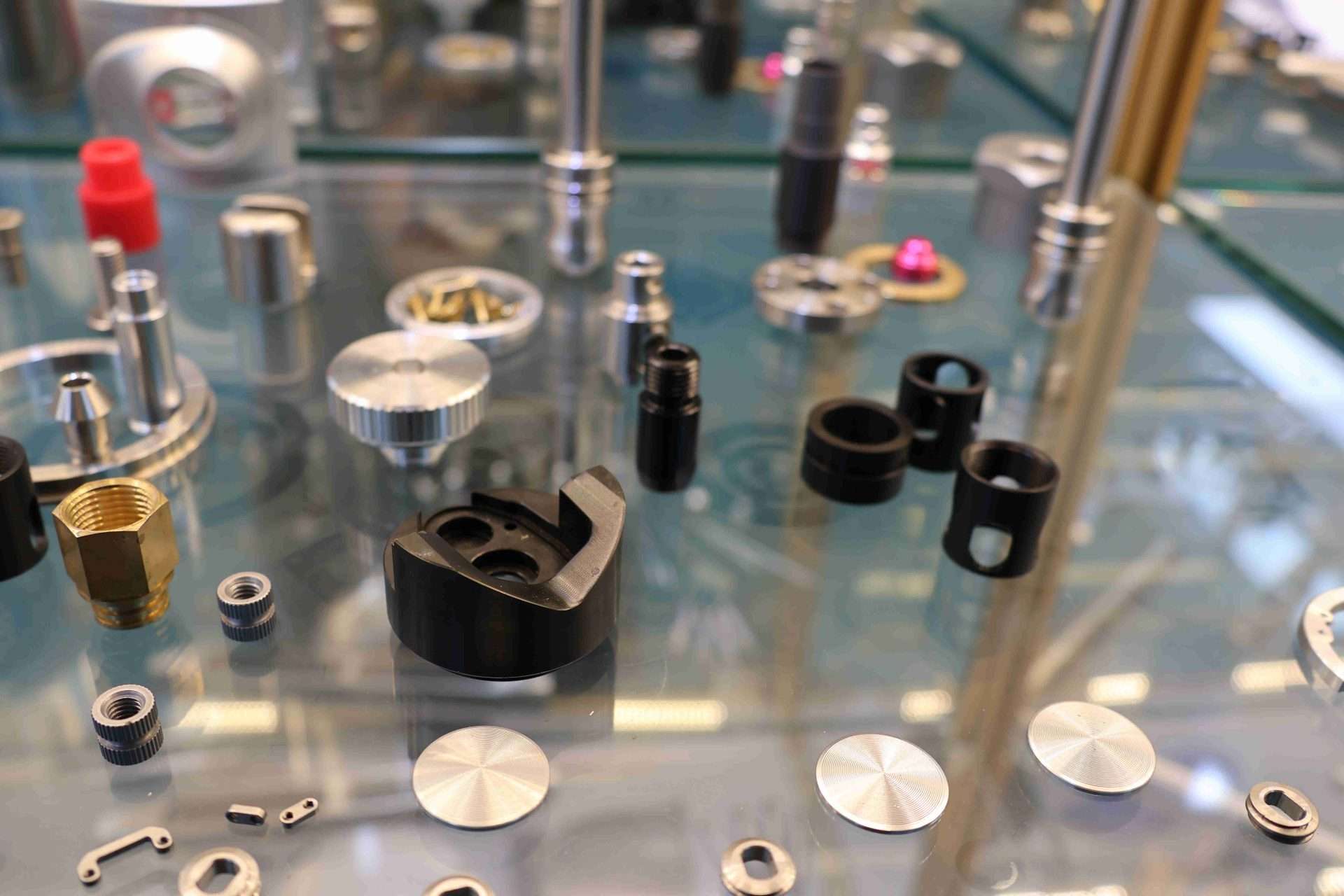
Understanding Swiss machining vs CNC turning is essential. Swiss machining and CNC turning both produce cylindrical parts on a lathe, but they differ fundamentally in how the workpiece is supported. Swiss machining uses a guide bushing that holds the bar stock close to the cutting tool, enabling tight tolerances on long, slender parts with diameters typically under 38mm. CNC turning lacks this support mechanism, making it better suited for shorter, larger-diameter parts at lower setup complexity.
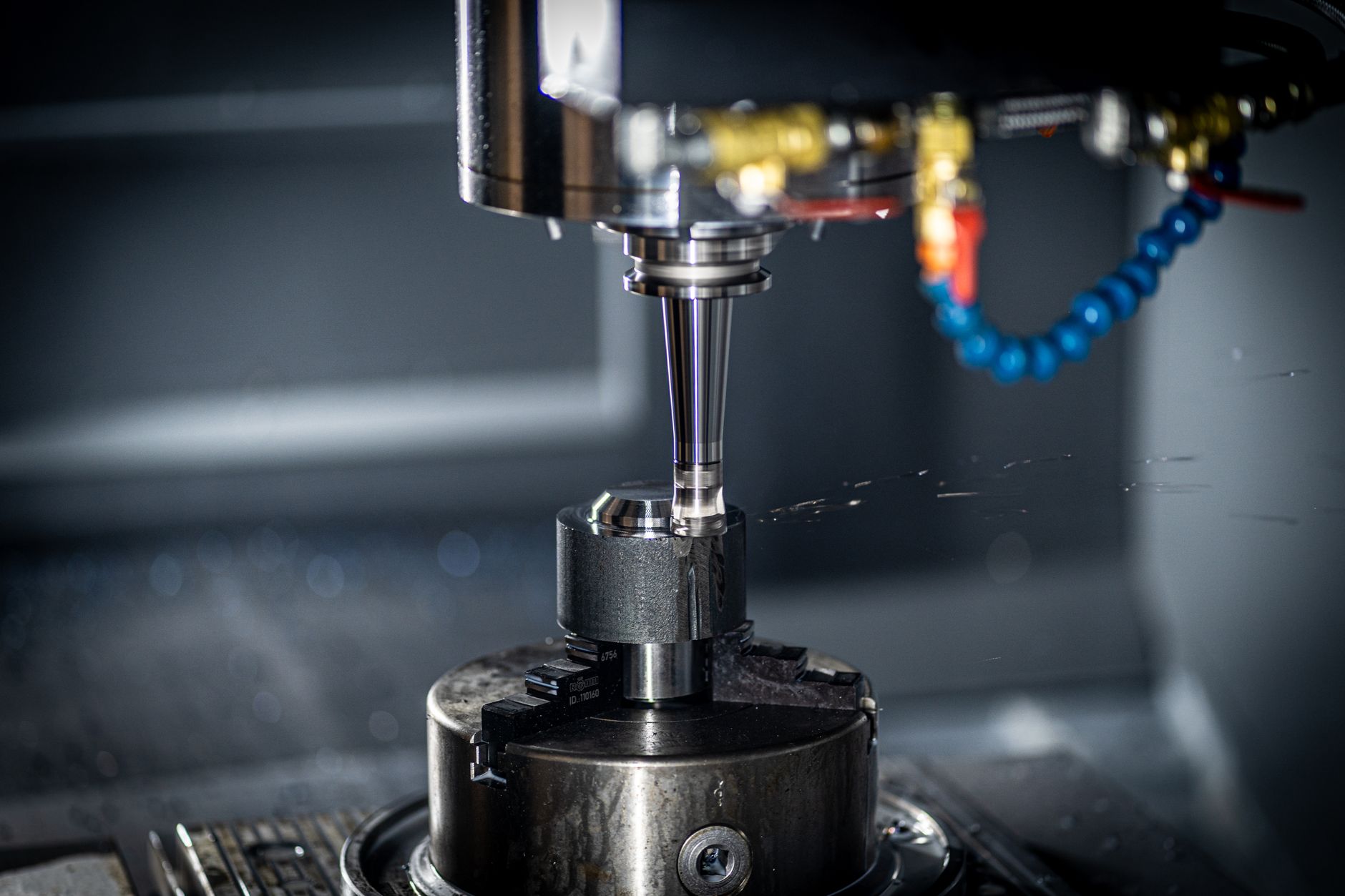
Swiss Machining vs CNC Turning: Key Differences Explained
The core mechanical difference between Swiss machining and CNC turning is how each process supports the workpiece during cutting.
In Swiss machining, the headstock slides along the Z-axis while a fixed guide bushing grips the bar stock within 1–2mm of the cutting tool. That proximity eliminates deflection, which is the primary reason Swiss machines hold tolerances as tight as ±0.001mm on slender parts. Conventional CNC turning uses a fixed headstock with a chuck, leaving the workpiece cantilevered — the further the cut from the chuck, the more the part can flex under tool pressure, which limits precision on long, thin geometries.
Part diameter is the clearest dividing line in the Swiss machining vs CNC turning decision. Swiss machining is optimized for parts up to approximately 38mm in diameter. CNC turning covers a much wider range, including large-diameter components that Swiss machines cannot physically accommodate.
According to Turntech Precision’s analysis of Swiss-type vs conventional CNC turning, the guide bushing is the single most consequential design difference between the two machine types, influencing everything from achievable tolerance to chip evacuation strategy.
“The guide bushing is what makes Swiss-type turning fundamentally different — it transforms a long, slender part from a deflection problem into a rigidly supported workpiece that can be cut with confidence.” — Turntech Precision Engineering Team, Swiss-Turning Specialists at Turntech Precision
Here is a quick-reference summary of the primary differences between the two processes:
- Workpiece support: Swiss uses a guide bushing within 1–2mm of the cut; CNC turning uses a chuck with unsupported overhang
- Diameter range: Swiss machining handles up to ~38mm; CNC turning covers a much broader range
- Tolerance capability: Swiss achieves ±0.001mm; CNC turning typically holds ±0.01mm–±0.025mm
- Surface finish: Swiss delivers Ra 0.4–0.8 µm; CNC turning produces Ra 1.6–3.2 µm
- Setup complexity: Swiss requires more configuration; CNC turning is faster to set up for simple parts
How do cycle times and machining speed compare between the two processes?
Swiss machines run milling, drilling, and turning operations simultaneously in a single setup. That concurrent processing cuts cycle times significantly compared to conventional CNC turning, which typically requires multiple setups to complete the same feature set. For high-volume, complex small parts, the time savings compound quickly across a production run. Industry data suggests that Swiss machining can reduce total cycle time by 30–50% on parts with five or more features compared to equivalent multi-setup CNC turning operations.
What surface finish quality and tolerance specifications can each method achieve?
Swiss machining routinely delivers a surface finish of Ra 0.4–0.8 µm without secondary operations. Standard CNC turning produces Ra 1.6–3.2 µm under comparable conditions, a finish that often requires additional grinding or polishing to meet medical or aerospace specifications.
On tolerance, the gap is equally significant. Swiss machining holds ±0.001mm on slender geometries; conventional CNC turning typically achieves ±0.01mm to ±0.025mm on the same part profiles. For components like surgical implants, fuel injection pins, or miniature connectors, that difference determines whether the process is viable at all.
Why Swiss Machining Is Called ‘Swiss’ and How the Guide Bushing Works
Swiss-type lathes trace directly to 19th-century Switzerland, where watchmakers needed a machine that could cut tiny, precise components from thin bar stock without the workpiece bending under tool pressure.
The Swiss watch industry demanded tolerances that conventional lathes couldn’t hold on slender parts. Engineers solved the problem with the guide bushing — a precision sleeve that grips the bar stock within 1–2mm of the cutting tool. That proximity eliminates workpiece deflection regardless of how long or thin the part is, which is the defining mechanical difference when comparing Swiss machining vs CNC turning. You can see this mechanism in action in this video overview of Swiss-type lathe operation, which illustrates how the bar feeds axially through the bushing during live cutting.
“Swiss-type lathes were born from necessity — the watch industry needed micron-level precision on parts so slender that conventional lathes simply couldn’t hold them without deflection. The guide bushing was the engineering answer to that problem.” — Manufacturing Engineering Reference, Precision Machining History and Practice
How does the guide bushing enable machining in segments and faster production?
In conventional CNC turning, the bar stock is clamped at the chuck and the full unsupported length flexes under cutting forces. Swiss machining works differently: the bar feeds axially through the guide bushing, and only a short segment protrudes into the cutting zone at any moment.
Each segment is machined at maximum rigidity before the bar advances. This approach allows multiple tools to cut simultaneously on different features — threading, drilling, grooving — without waiting for sequential tool changes. The result is faster cycle times on complex, small-diameter parts. For a detailed breakdown of how this differs from conventional turning, see The Clueless Machinist’s five key differences between Swiss-type and conventional CNC turning.
What coolant types and reversed offset techniques are specific to Swiss machining?
Coolant delivery in Swiss machining targets the guide bushing and cutting zone directly. High-pressure coolant is common because the confined cutting area traps chips quickly, and efficient evacuation protects both the bushing and the finished surface.
Swiss machines also apply a reversed offset technique — tool offsets run in the opposite direction compared to conventional turning. On very slender parts, material spring-back shifts the final dimension; reversing the offset pre-compensates for that movement, keeping the finished diameter within spec without a secondary pass.
When to Choose Swiss Machining Over CNC Turning for Your Production
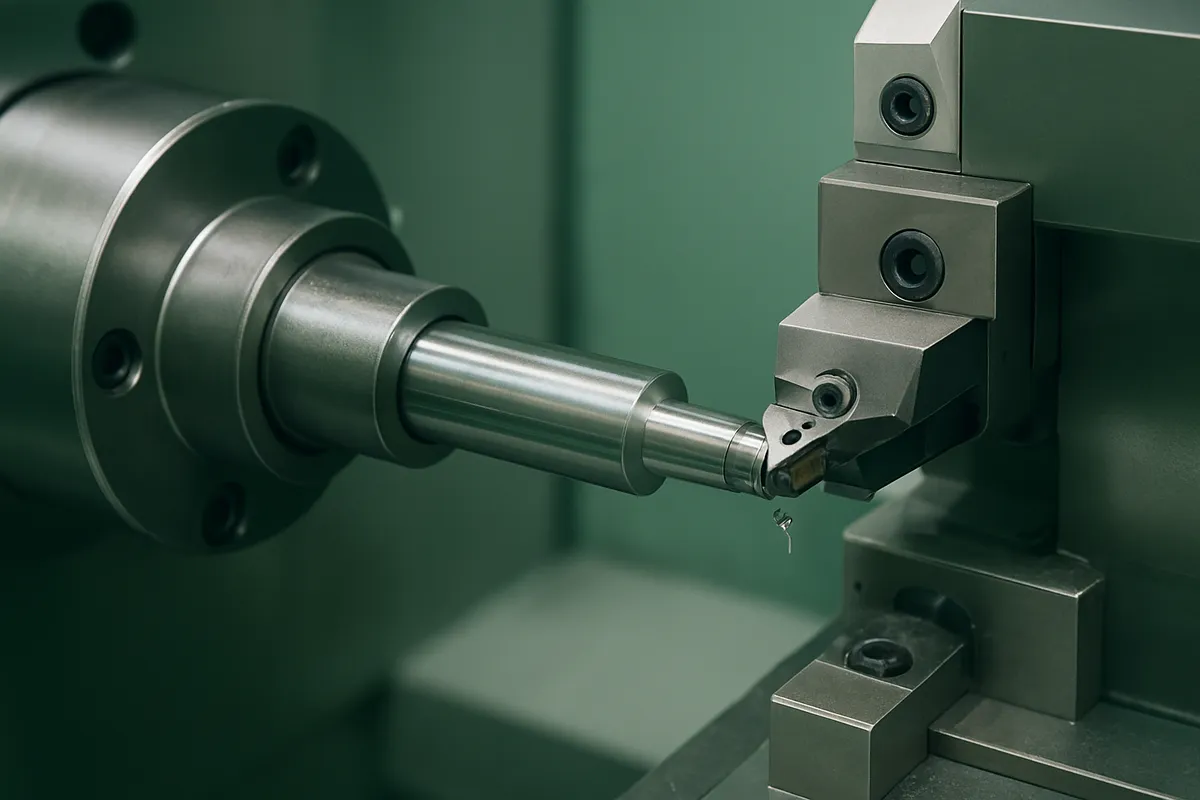
Swiss machining wins when your part is long, thin, complex, or demands surface integrity that standard CNC turning cannot reliably deliver.
The most reliable decision trigger is the length-to-diameter (L:D) ratio. Once a part’s L:D ratio exceeds 3:1, CNC turning introduces deflection as the cutting tool applies radial force to unsupported stock. Swiss machining eliminates that problem because the guide bushing supports the bar material directly at the cutting zone — the tool always cuts close to the support point, regardless of how long the part is.
Which materials work better with Swiss machining versus traditional CNC turning?
Swiss machining performs best with free-machining alloys, 303 stainless steel, brass, and aluminum 6061, along with titanium and medical-grade materials where surface finish and dimensional integrity are non-negotiable. The controlled cutting environment reduces heat buildup and tool pressure on these materials, which matters when a bone screw or fuel injector component cannot tolerate micro-burrs or surface stress.
CNC turning handles a broader material range, including large-diameter steel bar stock and cast iron, where the part geometry itself provides enough rigidity to resist deflection. For those applications, the added complexity of Swiss machining offers no practical advantage.
The following materials are among the most commonly specified for each process:
- Swiss machining preferred: 303 stainless steel, 17-4 PH stainless, brass C360, aluminum 6061, titanium Grade 5, PEEK, and Delrin
- CNC turning preferred: 1018 mild steel, 4140 alloy steel, cast iron, large-diameter aluminum bar, and general engineering plastics
- Both processes capable: 316 stainless steel, aluminum 7075, copper alloys, and most engineering polymers within the diameter range
At what production volume and part complexity does Swiss machining become the better choice?
In the Swiss machining vs CNC turning decision, volume is a real cost factor. Swiss machines carry higher setup complexity, so the economics shift at roughly 500 parts per run — below that threshold, CNC turning is typically more economical for simple or large-diameter parts.
Part complexity accelerates that crossover point. Components requiring simultaneous milling, cross-drilling, threading, and turning in a single setup are natural candidates for Swiss machining. Each additional CNC turning setup adds cost and introduces datum shift risk — small positional errors that compound across operations. Swiss machining completes those features in one pass, which is why medical device components (bone screws, cannulas), aerospace fasteners, electronics connectors, and automotive fuel system parts are almost exclusively produced this way. According to industry estimates, the global precision machining market — driven heavily by Swiss-type lathe adoption — exceeded $80 billion in 2023, reflecting the scale at which these processes operate across sectors.
MFG SOLUTION machines parts up to 38mm in diameter across both Swiss lathe and CNC turning platforms, which means the process selection is driven by your geometry and volume, not by equipment limitations. With 60+ engineering professionals reviewing each submission, the right process gets matched to your specs before production begins.
Costs, Setup Requirements, and Lead Times: Swiss Machining vs CNC Turning
Swiss machining carries higher upfront costs than CNC turning, but compresses lead time and per-part cost at volume, making each process economical in different conditions.
How Do Setup Costs and Tooling Requirements Differ Between Swiss and CNC Turning?
Swiss machining is a premium-tier process to set up. Guide bushing selection must match bar stock diameter precisely, bar feeder programming adds configuration time, and multi-axis tool staging requires careful sequencing before the first part runs. CNC turning, by contrast, uses standard chuck jaws and is largely tooling-agnostic — setup is faster and less complex for straightforward geometries, making it the budget-friendly option for low-volume runs or parts larger than 38mm where Swiss capability adds no value.
Tooling investment reflects this gap directly. Swiss machines require collet-style bar feeders and precision guide bushings tied to a specific bar stock diameter; swapping stock size means re-bushing the machine. CNC turning accepts a wider range of workholding without reconfiguration.
Lead time tells a different story. When comparing Swiss machining vs CNC turning on complex small parts, Swiss wins on throughput: its single-setup, multi-operation approach eliminates the secondary operations that extend CNC turning lead times on multi-feature parts. A CNC turned part requiring three setups may take longer to complete than a Swiss-machined equivalent run in one pass.
At high volumes, Swiss machining’s economics shift decisively. Unattended bar-feed operation and minimal operator intervention drive per-part cost down as batch size grows — a mid-range to premium upfront investment that pays back at scale. MFG SOLUTION’s 20 automatic lathes and Swiss lathe capability are structured exactly for this model: high-volume, small-diameter batch production where setup cost is amortized across thousands of parts.
“At high volumes, the Swiss lathe’s ability to run unattended with bar-feed automation fundamentally changes the per-part economics — what looks like a premium process at 100 parts becomes the lowest-cost option at 10,000.” — Precision Parts Manufacturing Industry Analysis, CNC Machining Economics and Process Selection
Where CNC Turning Falls Short and Swiss Machining Fills the Gap
CNC turning handles large, simple parts well, but for small-diameter, multi-feature components, Swiss machining consistently outperforms it on precision, finish, and cycle efficiency.
Why Is CNC Turning Less Efficient for Complex, Small-Diameter Parts?
The root problem is workpiece support. On a conventional CNC lathe, the part is clamped at one end and extends freely into the cutting zone. Once the length-to-diameter ratio exceeds 3:1, that cantilevered section deflects under cutting forces, producing taper, chatter, and dimensions outside tolerance that require rework. Swiss machining eliminates this by feeding bar stock through a guide bushing that supports the material within 1–2mm of the cutting tool, regardless of part length.
Multi-feature parts compound the problem further. Machining several features on a CNC lathe typically means re-chucking between operations. Each re-chucking event introduces a datum shift error, and those errors stack — a direct barrier for parts requiring ±0.005mm or tighter. Swiss machines complete most features in a single clamping, eliminating that stackup entirely.
Parts under 20mm diameter that combine milling, drilling, and turning create another inefficiency on conventional equipment. Each operation may require a separate machine or a mill-turn center, adding cost and handling time. Swiss machines integrate all three axes of motion in one setup.
Surface finish suffers too. Vibration on slender CNC-turned parts degrades Ra values and often forces a secondary polishing step. The guide bushing on a Swiss machine damps that vibration at the source, delivering finer finishes directly off the machine.
That said, comparing Swiss machining vs CNC turning is not a one-sided verdict. CNC turning remains the correct choice for parts above 38mm diameter, short chunky geometries, and low-complexity profiles where the capital cost of Swiss equipment is not justified. MFG SOLUTION manufactures parts up to 38mm in diameter across both methods, selecting the process that matches your geometry, tolerance, and volume rather than defaulting to one approach.
Frequently Asked Questions
Can Swiss machining and CNC turning use the same materials?
Yes, both processes work with the same broad range of metals and plastics, including stainless steel, aluminum, brass, titanium, and engineering polymers. The practical difference is bar stock diameter: Swiss machines typically require tighter diameter tolerances on incoming bar stock because the guide bushing fits closely around the material. For Swiss machining, free-machining alloys such as 303 stainless or 12L14 steel are preferred because they reduce tool wear at high spindle speeds.
What is the maximum part diameter for Swiss machining?
Most Swiss-type lathes max out at 32–38mm bar stock diameter. Beyond that range, conventional CNC turning centers handle the work more efficiently. MFG SOLUTION machines parts up to 38mm in diameter across both Swiss lathe and CNC turning operations, covering the full practical range for small precision components in electronics, automotive, and medical applications.
Is Swiss machining faster than CNC turning for complex small parts?
Swiss machining produces complex small parts faster than CNC turning because multiple tools cut simultaneously near the guide bushing, reducing cycle time per part. For a simple turned shaft with two features, a CNC lathe may be quicker to set up and run. The speed advantage of Swiss machining becomes clear on parts with 5 or more features, tight tolerances, and diameters under 25mm, where a single Swiss cycle replaces multiple CNC operations.
Do Swiss machines require special bar stock preparation?
Swiss machines require bar stock that is straight, round, and within tight diameter tolerances — typically within ±0.01mm of nominal — because the guide bushing supports the bar during cutting. Bent or out-of-round bar stock causes vibration, accelerates bushing wear, and degrades part accuracy. Most precision bar suppliers offer “Swiss-quality” or “turned and polished” stock specifically ground to meet these requirements, and sourcing it correctly is a non-negotiable setup step.
How does part length affect the choice between Swiss machining and CNC turning?
Part length is one of the most decisive factors in the Swiss machining vs CNC turning decision. As part length increases relative to diameter, CNC turning becomes progressively less capable due to workpiece deflection. Swiss machining has no effective length limitation within its diameter range because the guide bushing always supports the bar at the cutting point. Parts exceeding an L:D ratio of 3:1 — such as long shafts, pins, or cannulas — are almost always better suited to Swiss machining, regardless of feature complexity.
Conclusion
The right process comes down to three variables: part diameter, feature complexity, and production volume. Swiss machining wins on parts under 38mm with multiple features and tight tolerances, particularly in medical, automotive, and electronics applications where sub-0.01mm accuracy is non-negotiable. CNC turning is the better fit for larger diameters, simpler geometries, and shorter runs where setup cost matters more than cycle time.
If your parts fall in the 1–38mm range and require both turned and milled features, a mill-turn or Swiss lathe operation eliminates secondary setups entirely. Submit your part drawing to MFG SOLUTION — you’ll receive a process recommendation and a detailed quote within 8 hours, with production shipping in 3 days.
Recommended Articles
Explore more from our content library: