
2026-08-09
How to Source Precision Parts From Trusted Manufacturers

Precision parts manufacturing is the process of producing components to extremely tight dimensional tolerances—typically ±0.001″ or tighter—using methods such as CNC machining, Swiss turning, cold forging, metal injection molding (MIM), and die casting. It serves industries where part failure is not an option: aerospace, medical devices, automotive, and electronics. Choosing the right method depends on your volume, material, tolerance requirements, and cost targets.
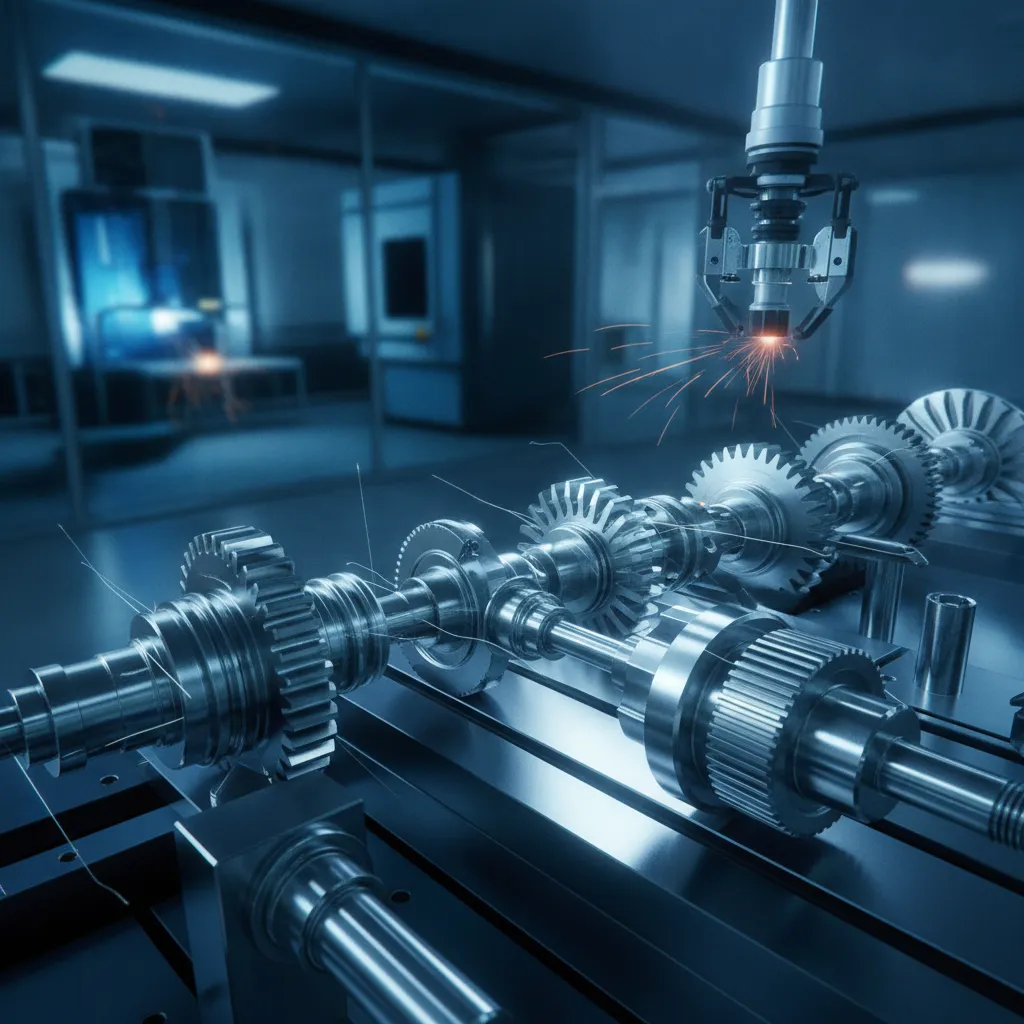
Understand Precision Parts Manufacturing: Core Principles and Tolerances
Precision parts manufacturing produces components to tolerances of ±0.001″ (25 µm) or tighter—five times stricter than the ±0.005″ typical of standard manufacturing.
That gap is not academic. A 5× difference in allowable variation directly affects whether mating parts fit, whether assemblies function under load, and how much scrap a production run generates. The tighter the tolerance, the more controlled every stage of machining must be.
What Core Principles Define Precision Manufacturing?
Four principles separate precision manufacturing from conventional machining:
- Dimensional accuracy: Every feature must hit its nominal dimension within the specified tolerance, measured and verified against calibrated reference standards.
- Repeatability: The same result must be achievable across an entire production run—not just on the first part. Consistency across 500 or 5,000 parts is what separates a capable process from a lucky one.
- Surface finish control: Ra (average roughness) values are specified alongside dimensional tolerances. A bore requiring Ra 0.8 µm demands different tooling and feed rates than one at Ra 3.2 µm.
- Traceability and documentation: Every step must be tracked, documented, and auditable for compliance. ISO 9001:2015, ISO 13485:2016, and IATF 16949 are the baseline frameworks that govern this process control—without them, a supplier’s quality claims are unverifiable.
How Do Precision Tolerances Compare to Standard Manufacturing?
Consider two real part types. A hydraulic valve spool requires a bore diameter held to ±0.0005″—any deviation causes internal leakage and pressure loss. A structural mounting bracket, by contrast, might accept ±0.010″ on its bolt-hole pattern with no functional consequence. The same machine shop cannot treat both parts the same way.
Tolerance stackup compounds this challenge across assemblies: small errors on individual components accumulate, and the final assembly can fall outside specification even when every individual part passes inspection. For a detailed breakdown of how to calculate and control stackup, see the Precision Tolerance Stackup: A Complete Guide on the MFG SOLUTION site.
Selecting a manufacturing partner certified to ISO 9001:2015, ISO 13485:2016, and IATF 16949 ensures that documentation, process control, and measurement traceability are already built into production—not retrofitted after a quality failure.
Compare the Main Precision Manufacturing Methods: Cost, Lead Time, and Volume
The right precision parts manufacturing method depends on your annual volume, part geometry, and how fast you need first articles in hand.
| Method | Best For | Tooling Cost | Per-Part Cost | Volume Sweet Spot |
|---|---|---|---|---|
| CNC Machining | Prototypes to mid-volume | ~$0 | $5–$200+ | 1–10,000 units |
| Swiss Turning | Small-diameter parts ≤38mm, high volume | Low | $0.50–$20 | 10,000–500,000+ units |
| Cold Forging | High-volume, strength-critical parts | $10K–$50K | Lowest at scale | 50,000+ units |
| MIM | Complex geometry, tight tolerances | Moderate | $1–$10 | 10,000–1,000,000 units |
| Die Casting | Non-ferrous metals, very high volume | $20K–$100K+ | Very low at scale | 100,000+ units |
Swiss lathe machining excels for parts up to 38mm diameter that require tight concentricity, see How to Implement Swiss Machining for Complex Small Parts for a full process breakdown. CNC machining typically produces surface finishes of Ra 0.8–3.2 µm; forged surfaces require secondary operations to reach comparable smoothness, details are covered on the surface finish CNC machining page.
Decision rule: If annual volume exceeds 50,000 units and your geometry is stable, cold forging or die casting typically beats CNC on per-part cost by 40–70%. Below 10,000 units, CNC wins on total cost because you carry no tooling investment.
Cost Difference Between CNC Machining, MIM, and Die Casting
CNC machining carries near-zero tooling cost, making it the lowest-risk entry point for new parts. MIM closes the gap at $1–$10 per part for complex geometries once mold costs are absorbed across volume. Die casting demands $20K–$100K+ upfront in tooling, a threshold that only makes financial sense past roughly 100,000 units per year.
MFG SOLUTION applies Swiss lathe and cold forging methods to parts up to 38mm diameter, selecting the process that delivers the lowest per-part cost at your target volume, without requiring you to manage separate tooling vendors.
How Lead Times Vary Between Precision Manufacturing Methods
CNC machining can deliver first articles in 3–5 days because it requires no dedicated tooling. Cold forging and die casting require 6–14 weeks of tooling fabrication before the first production parts ship, a timeline that can stall a product launch if not planned early.
MIM sits in the middle: mold lead times typically run 4–8 weeks. For teams under schedule pressure, CNC remains the fastest path from approved drawing to physical part, which is why MFG SOLUTION ships completed batches within 3 days of order approval for CNC-turned and Swiss-lathed components. For more information, see Viticulture De Precision En Medoc Guide Complet.
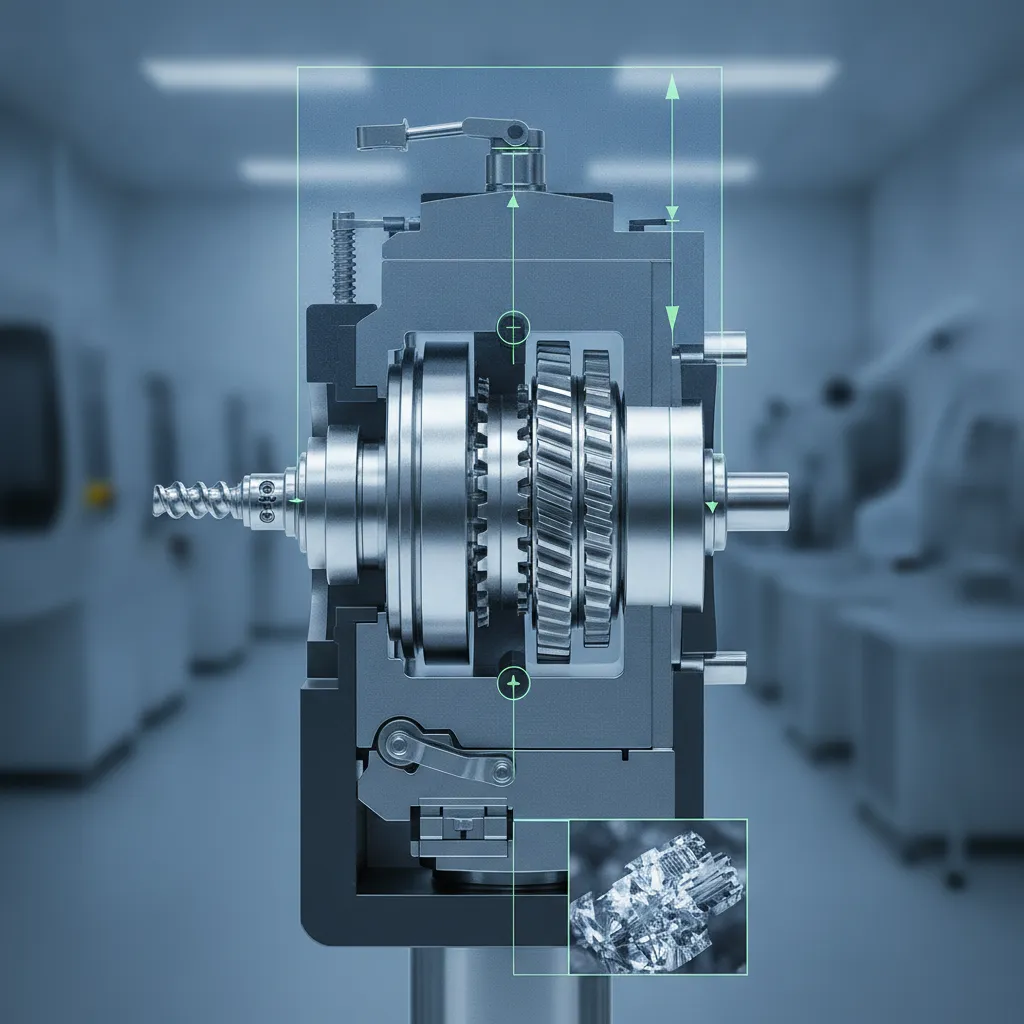
Identify Which Industries Rely on Precision Manufactured Parts
Aerospace, medical, automotive, and electronics manufacturers depend on precision parts manufacturing because their components fail catastrophically when tolerances slip.
Each industry sets its own certification floor. Aerospace and defense require AS9100D and Nadcap certifications; turbine blade tolerances are held to ±0.0003″, and a single out-of-spec part can ground an entire fleet. Zero-defect expectations at that scale drive premium per-part pricing that reflects the liability, not just the machining time.
Medical device manufacturers operate under ISO 13485:2016, the same standard MFG SOLUTION holds, and demand Ra ≤0.4 µm surface finishes on surgical instrument components and implantable device housings. Full material traceability to the raw stock heat number is mandatory, not optional, for FDA and CE compliance.
Automotive suppliers follow IATF 16949, which governs fuel injector nozzles, transmission gears, and ABS sensor housings. One Tier 1 supplier case study showed switching from standard machining to cold forging reduced per-part cost by 38% at 200,000 units per year, the kind of result MFG SOLUTION’s cold forging capability is built to replicate.
Electronics and semiconductor manufacturers need connector pins, heat sink housings, and encoder shafts held to ±0.001″ or better. Swiss turning dominates this segment for parts under 20mm diameter because the guide bushing keeps the workpiece rigid throughout the cut.
Real-World Precision Manufacturing Applications and Their ROI
The ROI case for tight tolerances is straightforward: scrap rates, warranty claims, and recall costs all drop when first-pass yield rises. For high-volume runs, the process selection matters as much as the machine. For turbine and valve body applications in power generation, see our Power Generation Forged Parts: A Complete Guide for a detailed breakdown of material and tolerance requirements specific to that segment.
Choose the Right Precision Manufacturing Vendor and Quality Certifications
Match certifications to your industry, demand operational proof points upfront, and reject any vendor who cannot produce material certs or in-house CMM data.
ISO 9001 vs AS9100D vs Nadcap: Which Certification Does Your Project Require?
ISO 9001:2015 is the baseline for any precision parts manufacturing supplier, it confirms a documented quality management system, but it does not address industry-specific risk. If your parts go into defense or commercial aerospace, you need AS9100D, which adds configuration management, risk-based thinking, and first-article inspection (FAI) requirements per AS9102. Vendors supplying Boeing, Lockheed Martin, or Airbus also need Nadcap accreditation for process-specific operations, heat treating, non-destructive testing, and welding, regardless of their ISO status. A shop can hold ISO 9001 and still be disqualified from an aerospace prime supply chain without Nadcap.
For medical device components, ISO 13485:2016 replaces ISO 9001 as the relevant standard. Automotive suppliers require IATF 16949. MFG SOLUTION holds all three, ISO 9001:2015, ISO 13485:2016, and IATF 16949, covering electronics, medical, and automotive production runs out of a single certified facility.
Material Selection Criteria for Precision Parts
Choose material based on the operating environment, not just machinability. Use 303 or 304 stainless steel where corrosion resistance is the priority, 6061-T6 aluminum for weight-critical assemblies, and 1045 steel turned parts where high tensile strength in turned geometries is required. Titanium Grade 5 (Ti-6Al-4V) delivers the best strength-to-weight ratio for medical implants and aerospace brackets, but it demands slower cutting speeds and rigid fixturing.
Demand these operational proof points from any vendor before placing an order:
- Quote turnaround within 8 hours, that benchmark is achievable and signals a shop with organized engineering capacity.
- FAI reports per AS9102 for the first production run.
- CMM inspection capability with documented measurement reports per operation.
- Material certifications (certificates of conformance) for every raw stock batch.
- Capacity specifics: 5-axis CNC availability for complex geometry, Swiss lathe spindle count, and confirmation that CNC threading and CNC boring are performed in-house.
Walk away from any vendor who quotes standard CNC work at lead times beyond 3 weeks without a tooling justification, cannot produce material certs on request, or lacks in-house CMM inspection, those gaps translate directly into rework costs and missed delivery windows.
Avoid Common Mistakes in Precision Parts Manufacturing
The five errors below account for the majority of cost overruns, delayed first articles, and failed supplier qualifications in precision parts manufacturing.
Over-Tolerancing Drawings
Specifying ±0.001″ on non-critical features adds 20–40% to machining cost with zero functional gain. Audit every tolerance on your drawing and tie each one to a specific assembly function, if you cannot name the function, loosen the tolerance.
Leaving Surface Finish Unspecified
A blank Ra field forces the shop to apply their default finish, which may be too rough for a sealing surface or unnecessarily smooth, and expensive, for a structural bracket. Always specify Ra explicitly for every functional surface.
Selecting Vendors on Unit Price Alone
A shop quoting 30% below market but lacking ISO 9001 documentation will cost more in rework, scrap, and re-qualification than it saves. Total cost of quality always exceeds unit price, verify certifications before you award the job. MFG SOLUTION holds ISO 9001:2015, ISO 13485:2016, and IATF 16949 certifications, with every production step tracked and auditable.
Skipping DFM Review Before Tooling
Internal radii smaller than the available end mill radius, blind holes deeper than 3× diameter without a specified drill point, and asymmetric parts without datum references are the three drawing errors that most often delay first articles by 2–4 weeks. Run a design-for-manufacturability check before cutting any tooling.
Mismatching Process to Production Volume
CNC machining 500,000 annual units of a simple geometry when cold forging would cut per-part cost by 50% is a common and expensive mismatch. The reverse error is equally costly: committing to forging tooling, often $30,000 or more, before the part geometry is stable locks in sunk cost on a design that may still change.
Frequently Asked Questions
How big is the precision parts manufacturing market and what is driving its growth?
The global precision machining market was valued at approximately $68 billion in 2023 and is projected to exceed $90 billion by 2030, driven by demand from medical devices, automotive electrification, and consumer electronics. Tighter component tolerances, miniaturization trends, and post-2020 supply chain reshoring are accelerating that growth. Manufacturers that hold ISO 9001:2015, ISO 13485:2016, and IATF 16949 certifications are best positioned to capture the higher-margin medical and automotive segments of this expanding market.
What is the typical lead time for precision manufactured parts from a qualified vendor?
Most qualified precision machining vendors quote lead times of 2–6 weeks for batch production runs; rapid-turnaround specialists can cut that to days. MFG SOLUTION, for example, returns quotes within 8 hours of specification submission and ships completed batches within 3 days of order approval. Achieving that speed requires pre-qualified tooling, dedicated CNC capacity, and a documented process control system, not just fast scheduling.
What does the future of precision manufacturing look like with automation and AI inspection?
Automated in-process inspection using machine vision and AI-driven defect detection is replacing manual CMM sampling on high-volume lines, cutting inspection cycle time by 40–60% in early adopter facilities. Lights-out CNC cells, where 5-axis machines run unattended overnight, are becoming standard for repeatable small-part geometries. The practical result for buyers is tighter Cpk values, faster first-article approval, and lower per-part cost as labor hours per unit fall.
How do CNC coolants and lubricants affect precision part quality and surface finish?
Coolant selection directly affects surface finish, dimensional accuracy, and tool life on precision CNC parts. Flood coolant controls heat at the cutting zone, reducing thermal expansion that causes dimensional drift on tight-tolerance features. Minimum quantity lubrication (MQL), applying a fine oil mist rather than flood coolant, is preferred for aluminum and certain medical-grade alloys where coolant contamination of surface pores is a rejection risk. Matching coolant type to material and operation is a process engineering decision, not a default setting.
Conclusion
Precision parts manufacturing rewards preparation: vendors who see your complete specifications, material callouts, and tolerance stack-up before quoting return accurate prices and realistic lead times. Choosing a partner certified to ISO 9001:2015, ISO 13485:2016, or IATF 16949, depending on your industry, removes the audit burden from your own quality team and keeps supplier qualification straightforward.
Match your manufacturing method to part geometry early. A Swiss lathe handles long, slender shafts far more cost-effectively than a CNC mill-turn cell would. Getting that decision right at the design stage cuts per-part cost without touching tolerances.
As a concrete next step, submit one current part drawing to MFG SOLUTION at mfg-solution.com and benchmark the 8-hour quote against your existing supplier’s last quoted price and lead time, the comparison will tell you exactly where you stand.
Recommended Articles
Explore more from our content library: