
2026-06-17
CNC Workholding Techniques & Fixtures Explained

| Key Insight | Explanation |
|---|---|
| Workholding directly affects part accuracy | Poor fixture design is one of the leading causes of dimensional error and scrap in CNC machining operations. |
| Multiple fixture types serve different needs | Vises, collet chucks, modular fixtures, vacuum chucks, and dedicated fixtures each suit specific part geometries, volumes, and tolerance requirements. |
| Rigidity is the top priority | Any movement during cutting translates directly into dimensional variation. Rigidity must be engineered into every fixture design. |
| 3-2-1 locating principle is the foundation | This industry-standard method constrains all six degrees of freedom using the minimum number of contact points, ensuring repeatable positioning. |
| Fixture choice impacts cycle time and cost | Multi-part setups using modular or tombstone fixtures can reduce non-cutting time by 30–50% on high-volume runs. |
| ISO standards govern fixture quality | ISO 9001:2015 and IATF 16949 require documented, validated fixturing processes for automotive and precision manufacturing applications. |
Understanding CNC workholding techniques fixtures is essential. CNC workholding techniques and fixtures are the methods and devices used to securely clamp, locate, and support a workpiece during CNC machining operations. The right fixture eliminates movement, ensures repeatable positioning, and directly determines whether your finished part meets tolerance. Without proper workholding, even the most advanced CNC machine will produce scrap. This guide covers every major fixture type, the engineering principles behind them, common mistakes that cost machinists time and money, and the best practices leading shops use in 2026 to maximize accuracy and throughput.
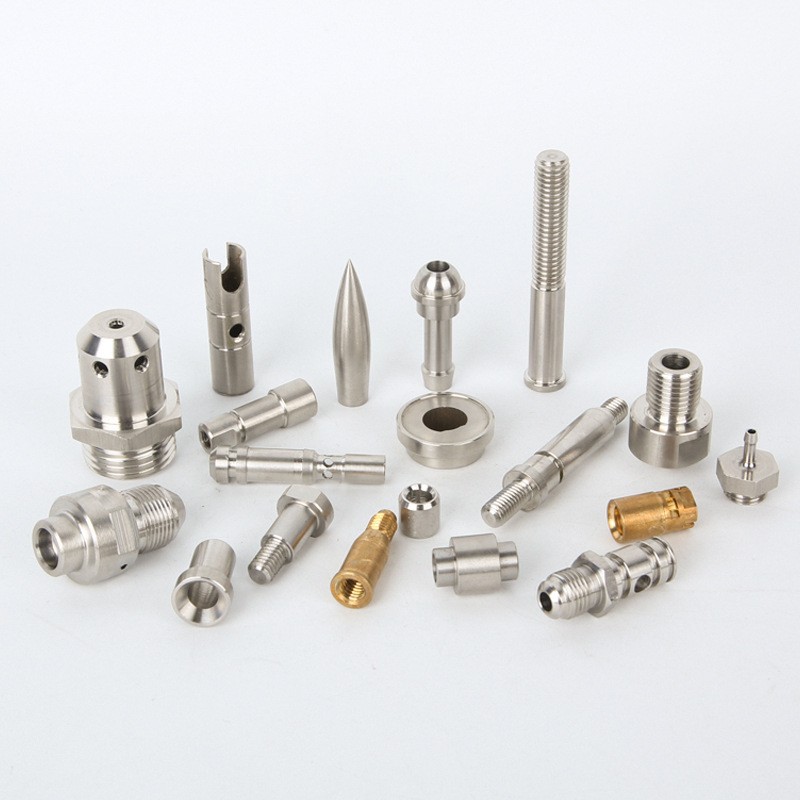
What Is CNC Workholding? Definition and Core Concepts: CNC workholding techniques fixtures
CNC workholding is the system of devices and methods that hold a raw workpiece rigidly in position while cutting tools remove material. It constrains all six degrees of freedom (three translational, three rotational) so the part doesn’t shift during machining. Without it, dimensional accuracy is impossible. This is particularly relevant for CNC workholding techniques fixtures.
The term covers a broad family of hardware: vises, chucks, collets, clamps, vacuum tables, magnetic chucks, and custom-engineered fixtures. Each device serves a specific combination of part geometry, material, batch size, and tolerance requirement. Choosing the wrong type is one of the most common (and costly) mistakes in precision machining.
Why Workholding Matters More Than Most Machinists Realize
According to Purdue University’s manufacturing resources, workholding is fundamental to CNC operations because “parts don’t just float in 3D space — something needs to grab onto them.” That sounds obvious. In practice, it’s where many shops underinvest.
Poor workholding causes:
- Dimensional variation and out-of-tolerance parts
- Surface finish defects from chatter and vibration
- Broken cutting tools from workpiece movement
- Scrapped parts and rework costs
- Operator safety hazards if a part ejects at speed
In high-precision applications, such as automotive connectors or medical device components, a fixture that allows even 0.01mm of movement can push a part outside its tolerance band entirely. That’s why ISO 9001:2015 and IATF 16949 require documented, validated fixturing processes as part of a compliant quality management system.
The Relationship Between Workholding and Tolerance
Industry analysts suggest that fixturing accounts for up to 40% of the total positioning error in a CNC machining system. The machine tool itself may hold micron-level repeatability, but a poorly designed fixture erases that advantage immediately. This is why leading precision shops treat fixture design as an engineering discipline, not an afterthought. When considering CNC workholding techniques fixtures, this point stands out.
Pro Tip: Before selecting a fixture type, define your tightest tolerance requirement first. Work backward from that number to determine the maximum allowable fixture deflection, then design or select a fixture that stays well within that limit under full cutting load.
Types of CNC Workholding Techniques and Fixtures
CNC workholding techniques and fixtures fall into several distinct categories, each optimized for different part shapes, production volumes, and precision requirements. Understanding the full range of options lets you match the right solution to each job.
Here is a comprehensive comparison of the most widely used fixture types as of 2026:
| Fixture / Method | Rigidity | Best For | Typical Tolerance Capability | Setup Time |
|---|---|---|---|---|
| Machine Vise | High | Prismatic parts, prototypes, low-to-mid volume | ±0.01–0.05mm | Low |
| Collet Chuck | Very High | Round bar stock, turned parts, Swiss lathe operations | ±0.005–0.02mm | Very Low |
| 3-Jaw Chuck | High | Cylindrical parts, turning operations | ±0.02–0.05mm | Low |
| Modular Fixture | Medium–High | Multi-part production, high-mix environments | ±0.01–0.03mm | Medium |
| Dedicated Fixture | Very High | High-volume production, complex geometries | ±0.005–0.015mm | Very Low (once built) |
| Vacuum Workholding | Low–Medium | Thin plates, sheet material, surface-finish parts | ±0.02–0.05mm | Low–Medium |
| Magnetic Workholding | Medium | Ferrous flat parts, grinding operations | ±0.01–0.03mm | Very Low |
| Tombstone / Pallet Fixture | High | Multi-face machining, 4-axis setups, batch runs | ±0.01–0.025mm | Medium (initial setup) |
Specialized Fixtures for Small Precision Parts
For parts under 38mm diameter, collet-based systems and Swiss-style guide bushings dominate. The guide bushing (a key component in Swiss lathe machining) supports the bar stock right at the cutting zone, virtually eliminating deflection. This is why Swiss lathe operations consistently achieve tighter tolerances than conventional turning for small-diameter work.
Soft jaws are another critical tool. Machinists machine soft jaws (usually aluminum) to match the exact profile of a part, distributing clamping force evenly and preventing distortion on thin-walled components. According to Autodesk’s Fusion 360 blog, soft jaws are among the top recommended fixturing methods for complex or irregular part geometries.
How CNC Workholding Fixtures Work: Principles and Mechanics
CNC workholding fixtures work by applying the 3-2-1 locating principle: three points define a primary plane, two points define a secondary plane, and one point defines a tertiary plane, together constraining all six degrees of freedom. This is the foundational engineering method behind virtually every well-designed fixture. For those exploring CNC workholding techniques fixtures, this matters.
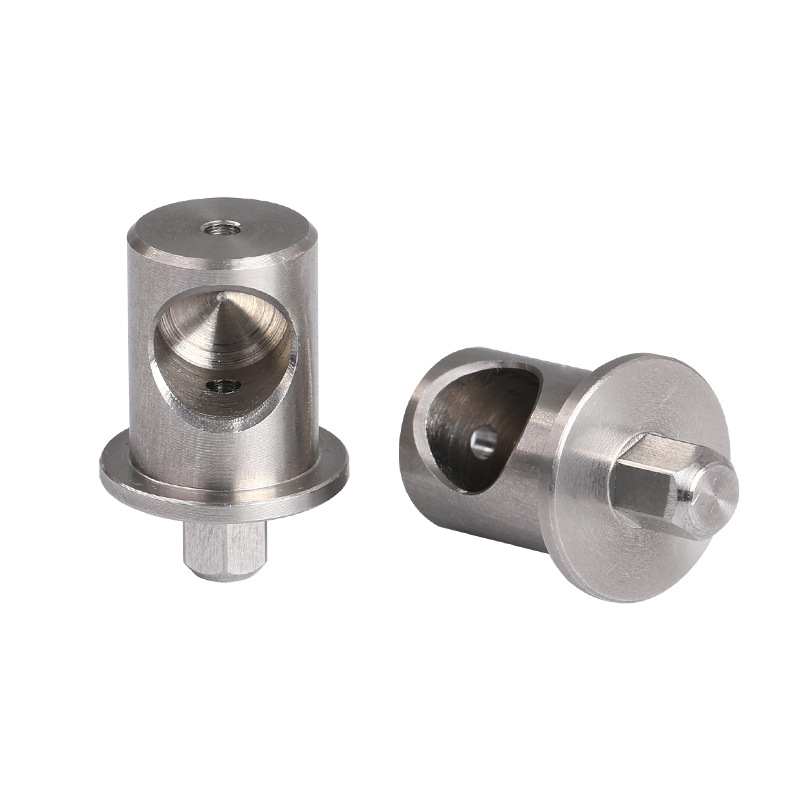
The 3-2-1 Locating Principle in Practice
Here’s how the 3-2-1 method works in a step-by-step fixture design sequence:
- Primary locators (3 points): Contact the largest flat surface of the part. These three points define the primary datum plane and prevent rocking.
- Secondary locators (2 points): Contact the next largest surface, perpendicular to the primary. These eliminate rotational freedom around the primary axis.
- Tertiary locator (1 point): Contacts the third surface, locking the final degree of translational freedom.
- Clamping: Applied after all locators are engaged, pushing the part against the locators without lifting it off the primary datum.
- Verification: Dial indicator checks confirm the part is seated correctly before the program runs.
The sequence matters. Clamping before full location is a common error that introduces positional error before the spindle even starts.
Clamping Force, Deflection, and Rigidity
Every fixture design involves a trade-off between clamping force and part deflection. Too little force, and the part moves under cutting loads. Too much force on a thin-walled part, and the fixture itself distorts the workpiece, creating out-of-round or warped features that only reveal themselves after unclamping.
Industry analysts at AdvancedManufacturing.org note that “several techniques popular for smaller workpieces include the use of vises and dovetail clamping, but both have specific limitations” — particularly for complex geometries where standard contact points don’t align with part features. In those cases, custom soft jaws or dedicated fixtures become necessary.
Pro Tip: For thin-walled parts, calculate the expected deflection under clamping force before cutting. A simple beam-deflection formula using wall thickness, material modulus, and clamp load can prevent distortion-related scrap. If the math shows more than 20% of your tolerance budget in deflection, redesign the fixture contact points.
Fixture material also affects rigidity. Steel fixtures are standard for high-force applications. Aluminum fixtures work well for lighter cuts and are faster to machine. Polymer or 3D-printed fixtures suit soft materials and light finishing passes, though they’re not appropriate for heavy roughing operations. This directly impacts CNC workholding techniques fixtures outcomes.
Common Challenges in CNC Workholding and How to Avoid Them
The most common CNC workholding challenges include inadequate rigidity, incorrect datum selection, over-clamping thin-walled parts, and poor chip clearance in fixture design. Each of these problems is preventable with the right engineering approach.
Mistakes That Cost Shops Time and Money
From experience working with precision machined parts across automotive, medical, and electronics applications, these are the fixturing errors that appear most often:
- Datum creep: Switching reference surfaces between operations without accounting for the shift. This compounds positional error across multiple setups.
- Insufficient chip clearance: Chips pack into fixture pockets, lifting the part off its locators. Always design chip escape channels into fixture bodies.
- Over-clamping thin walls: Applying standard clamping torque to a part with 0.5mm walls distorts the geometry. Use torque-limiting tools and soft jaw profiles.
- Ignoring thermal expansion: Fixtures and parts expand during cutting. For tight-tolerance work, account for the differential thermal expansion between the fixture material and the workpiece material.
- Under-sizing the fixture for the cutting forces: A fixture rated for finishing cuts will deflect under aggressive roughing. Match fixture rigidity to the heaviest cut in the program.
- No repeatability verification: Running production without periodically re-checking fixture positioning with a dial indicator or probe cycle invites drift to go undetected.
A Real-World Example: Medical Component Fixturing
A precision machining client recently faced a recurring problem with a stainless steel medical connector: the part was consistently 0.018mm out of position on the secondary bore, just outside the ISO 13485-compliant tolerance window. The root cause wasn’t the machine or the tool. It was a fixture with worn locating pins that had shifted 0.012mm from nominal. Replacing the pins and adding a probe-based fixture verification cycle at the start of each batch eliminated the defect entirely.
This is a textbook example of why fixture maintenance and verification belong in every quality management plan, not just fixture design.
Best Practices for CNC Workholding Techniques and Fixtures in 2026
The best CNC workholding practices in 2026 combine proven engineering principles with modern tooling, automation-ready fixture designs, and systematic verification protocols. Shops that follow these practices consistently hit tighter tolerances with less scrap and faster cycle times. This is particularly relevant for CNC workholding techniques fixtures.
Design Principles for High-Performance Fixtures
- Minimize setups: Every additional setup introduces positioning error. Design fixtures that allow as many operations as possible in a single clamping. Multi-face tombstone fixtures and 5-axis setups are the current standard for complex parts.
- Use kinematic locating: Kinematic mounts (three-point contact systems) provide repeatable positioning without over-constraining the part. They’re especially valuable in pallet-based automation systems.
- Design for chip management: Chips are the enemy of fixture accuracy. Angle locating surfaces to let chips fall away, add coolant flush ports, and avoid pockets where chips can accumulate.
- Standardize where possible: Modular fixture systems (such as Unilock or similar zero-point clamping systems) reduce setup time dramatically in high-mix environments by allowing repeatable pallet changes in under 30 seconds.
- Validate with simulation: Before cutting metal, simulate the fixture in CAM software to verify clearances, check for tool-fixture collisions, and confirm the clamping sequence doesn’t interfere with toolpaths.
Automation-Ready Workholding for 2026 Production
Zero-point clamping systems have become standard in automated CNC cells as of 2026. These systems use a grid of precision receivers on the machine table, allowing fixtures and pallets to be exchanged with sub-0.005mm repeatability. The result is near-zero setup time when switching between part families.
At MFG SOLUTION, we’ve found that zero-point pallet systems, combined with probe-based part verification cycles, reduce setup-related scrap by a measurable margin on high-volume small-part production runs. Our 5-axis CNC machines and 20 automatic lathes are configured to support rapid fixture changeover, which directly supports our 3-day ship commitment for precision parts up to 38mm diameter.
Pro Tip: If you’re running high-mix, low-volume work, invest in a modular fixture plate system before building dedicated fixtures. A good fixture plate with a known hole grid lets you locate parts repeatably without custom hardware for every job. The upfront cost is recovered in setup time savings within the first 20 jobs.
The TITANS of CNC Academy’s Advanced Workholding curriculum emphasizes the “Fixture Strip Technique” for running multiple parts simultaneously — a method that can cut per-part cycle time by 40–60% on suitable geometries. The principle: machine a strip of connected blanks in a single clamping, separating them only after all machining is complete.
Our team at MFG SOLUTION recommends this approach for any batch run over 500 pieces where part geometry allows it. Combined with Swiss lathe and automatic lathe operations, multi-part fixture strategies are central to how we deliver cost-effective pricing without sacrificing the precision that automotive and medical customers require.
Frequently Asked Questions
1. What is the difference between a fixture and a jig in CNC machining?
A fixture holds and locates a workpiece in a fixed, known position during machining. A jig does the same but also guides the cutting tool, typically using a drill bushing to direct a drill bit. In CNC machining, jigs are less common because the machine’s programmed toolpaths replace manual tool guidance. CNC workholding techniques fixtures are primarily about part location and clamping, not tool guidance.
2. Which workholding method is best for small cylindrical parts?
Collet chucks are the preferred workholding method for small cylindrical parts, particularly those under 38mm diameter. Collets grip the full circumference of the bar stock with very high concentricity, typically holding runout under 0.01mm. Swiss lathe operations take this further by supporting the bar stock in a guide bushing right at the cutting point, enabling extremely tight tolerances on long, slender parts. When considering CNC workholding techniques fixtures, this point stands out.
3. How do I choose between a modular fixture and a dedicated fixture?
Choose a modular fixture for high-mix, lower-volume production where you need flexibility to reconfigure between part families. Choose a dedicated fixture when you’re running high volumes of the same part and need maximum rigidity, minimum setup time, and the tightest possible tolerances. Dedicated fixtures cost more upfront but pay back quickly in cycle time savings and scrap reduction on runs above 1,000 pieces.
4. What causes chatter in CNC machining, and how does workholding fix it?
Chatter is a self-excited vibration between the cutting tool and workpiece, caused by insufficient rigidity somewhere in the machining system. Often, the weakest link is the fixture. Improving workholding rigidity by adding support points, reducing overhang, or switching to a stiffer fixture type directly reduces chatter. In practice, fixing a loose or worn fixture resolves chatter more often than adjusting spindle speed or feed rate.
5. Can vacuum workholding handle heavy cuts?
No. Vacuum workholding provides relatively low clamping force, typically 0.1 MPa (atmospheric pressure) at best. It’s suitable for light finishing passes on flat, thin parts where mechanical clamping would distort the workpiece. For heavy roughing cuts or parts with significant side loads, mechanical clamping methods (vises, clamps, or dedicated fixtures) are required. Using vacuum workholding for aggressive cuts risks part ejection, which is both a quality and safety issue.
6. What is a zero-point clamping system, and when should I use one?
A zero-point clamping system is a modular pallet interface that allows fixtures to be loaded onto a machine table with sub-0.005mm repeatability in under 30 seconds. The system uses precision receiver sockets machined into the table and matching studs on each fixture or pallet. Use zero-point systems when you run multiple part numbers on the same machine and need to minimize setup time between jobs. They’re standard in automated CNC cells as of 2026.
7. How does fixture design affect part tolerance in CNC workholding?
Fixture design affects part tolerance through three main mechanisms: locating accuracy (how precisely the fixture positions the part relative to the machine’s coordinate system), rigidity (how much the fixture deflects under cutting forces), and repeatability (how consistently the fixture positions the part across multiple loadings). CNC workholding techniques fixtures that are poorly designed on any of these three dimensions will produce parts with higher dimensional variation, regardless of machine tool accuracy.
8. Are 3D-printed fixtures suitable for CNC machining?
3D-printed fixtures are suitable for light-duty applications: soft material machining, light finishing passes, inspection fixtures, and prototyping. They’re not appropriate for heavy roughing cuts, high-temperature environments, or applications requiring sub-0.02mm positioning accuracy. According to Formlabs, 3D-printed jigs and fixtures can significantly reduce fixture lead time and cost for appropriate applications, but material properties must be matched carefully to the cutting forces involved. For those exploring CNC workholding techniques fixtures, this matters.
Conclusion
CNC workholding techniques and fixtures are not a secondary concern in precision machining. They are the foundation that every tolerance, surface finish, and cycle time target is built on. From the 3-2-1 locating principle to zero-point pallet systems, the right fixture choice determines whether your parts ship on time or go in the scrap bin.
The hierarchy is clear: start with your tightest tolerance, work backward to fixture rigidity requirements, then select the fixture type that delivers repeatable positioning at the lowest setup cost for your volume. For small cylindrical parts, collet and Swiss-style systems lead. For complex prismatic work, modular and dedicated fixtures take over. For high-mix automation, zero-point clamping is the 2026 standard.
At MFG SOLUTION, precision workholding is engineered into every production process. With ISO 9001:2015, ISO 13485:2016, and IATF 16949 certifications, 60+ engineering professionals, and 5-axis CNC machines configured for rapid fixture changeover, we deliver high-precision small parts up to 38mm diameter with quotes in 8 hours and shipment in 3 days. If you need parts that hit tolerance every time, on a timeline that actually works for your production schedule, contact MFG SOLUTION to get started.
Recommended Articles
Explore more from our content library: