
2026-06-13
CNC Machining Material Selection: A Complete Guide

| Key Insight | Explanation |
|---|---|
| Material choice drives part performance | The wrong material causes premature failure, poor tolerances, or excessive cost — even if machining is flawless. |
| Machinability rating matters | Higher machinability means faster cycle times, less tool wear, and lower per-part cost. Aluminum 6061 leads among metals. |
| Five core criteria guide selection | Mechanical properties, thermal resistance, corrosion resistance, machinability, and cost must all be balanced simultaneously. |
| Metals dominate, but plastics are growing | Aluminum, steel, and brass cover most applications. PEEK and Delrin are preferred engineering plastics for precision parts. |
| Industry standards shape material decisions | Medical, automotive, and aerospace sectors have mandatory material compliance requirements under ISO 13485, IATF 16949, and AS9100. |
| Check raw material before machining | Incoming material inspection (hardness, dimensions, certification) prevents scrap, rework, and compliance failures downstream. |
Material selection CNC machining is the process of choosing the right raw material for a part before any cutting begins, balancing mechanical properties, machinability, cost, and compliance requirements. Get it right, and you get precise, durable parts at optimal cost. Get it wrong, and you face scrap, rework, and missed deadlines. This guide covers every major material category, the criteria that drive smart choices, industry-specific requirements, and the mistakes that cost manufacturers real money.
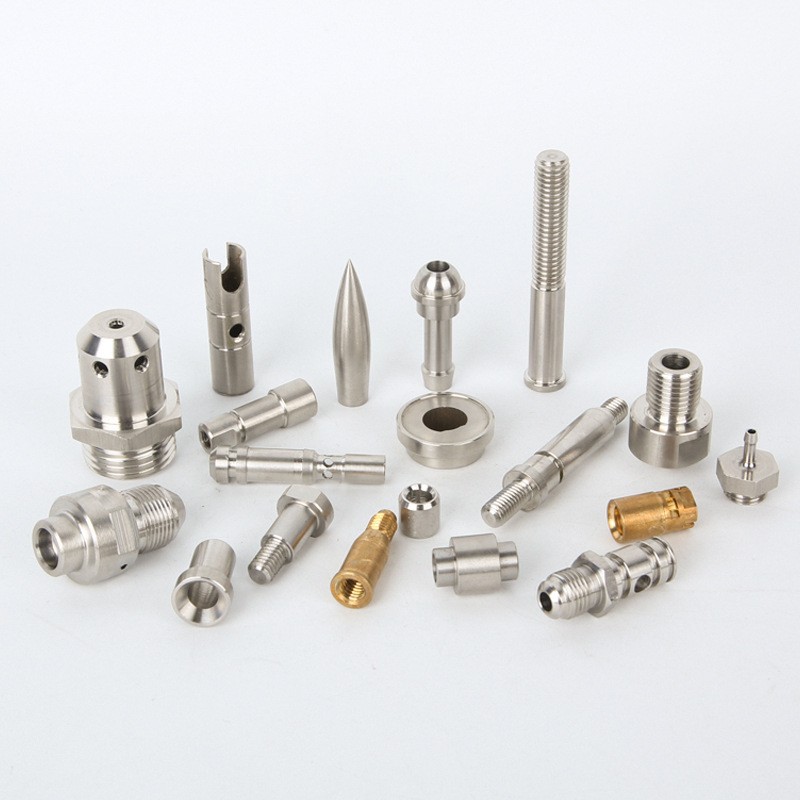
What Is Material Selection in CNC Machining?
Material selection in CNC machining is the systematic process of evaluating and choosing a raw material that meets a part’s functional, dimensional, and regulatory requirements while remaining cost-effective to machine. It directly affects tolerances, surface finish, tool life, and total production cost. This is particularly relevant for material selection CNC machining.
Think of it as the first engineering decision in any machining project. Every subsequent choice — cutting speed, tooling, fixturing, finishing — flows from what the part is made of. Industry analysts consistently note that material selection directly affects not only in-service performance, but also how efficiently parts machine, how well they hold tolerance, and what the final unit cost will be.
Why Material Selection Matters More Than Most Engineers Realize
A part that performs well in service but machines poorly drives up cycle times and tool costs. Conversely, a highly machinable material that can’t survive the operating environment creates field failures. The goal is finding the intersection of both.
- Dimensional accuracy: Harder materials hold tighter tolerances but require more precise machining setups.
- Surface finish: Material grain structure and hardness directly determine achievable Ra (surface roughness average) values.
- Tool wear: Abrasive or hard materials accelerate tool wear, increasing per-part cost significantly.
- Compliance: Regulated industries (medical, automotive, aerospace) restrict which materials are acceptable by standard.
- Total cost: Raw material price is only part of the equation. Machinability, scrap rate, and finishing requirements determine true cost.
The Scope of Material Options Available
CNC machining handles an exceptionally wide range of materials. The five main categories are metals, engineering plastics, composites, ceramics, and wood-based materials. Metals dominate production work. Plastics are growing fast in medical and electronics applications. Composites are used where weight and strength requirements are extreme.
As of 2026, over 100 distinct material grades are routinely available for CNC machining, though roughly a dozen account for the vast majority of production volume globally.
Common CNC Machining Materials: Metals and Plastics
The most common CNC machining materials are aluminum alloys, stainless steel, carbon steel, brass, copper, titanium, and engineering plastics including PEEK, Delrin (acetal), and nylon. Each has a distinct combination of machinability, strength, and cost that suits specific applications.
Metals: The Dominant Category
Metals are the backbone of CNC machining. Aluminum 6061 is by far the most widely used material in CNC machining globally, prized for its excellent machinability rating (around 300% relative to free-cutting brass), low density, and good corrosion resistance. Aluminum 7075 offers higher strength at a cost premium and slightly reduced machinability.
- Aluminum 6061: Best all-around choice for general machining. Lightweight, corrosion-resistant, easy to machine. Used extensively in electronics, automotive, and consumer products.
- Aluminum 7075: Higher tensile strength (up to 572 MPa). Preferred for aerospace and high-stress structural parts.
- 303 Stainless Steel: The most machinable stainless grade. Sulfur addition improves chip breaking. Good corrosion resistance for food, medical, and chemical applications.
- 316 Stainless Steel: Superior corrosion resistance due to molybdenum content. Mandatory for marine and implant-grade medical applications.
- 1018 Carbon Steel: Excellent machinability, low cost. Ideal for non-corrosive environments where strength and weldability matter.
- 4140 Alloy Steel: Higher strength and hardness than 1018. Used for shafts, gears, and structural components under load.
- Brass (C360): Outstanding machinability (the benchmark at 100% in most rating systems). Used for fittings, connectors, and precision instruments.
- Titanium Grade 5 (Ti-6Al-4V): Exceptional strength-to-weight ratio and biocompatibility. Challenging to machine but essential for aerospace and medical implants.
- Copper: Excellent electrical and thermal conductivity. Used for electrical contacts, heat sinks, and RF components.
Engineering Plastics: Precision Without Metal
Engineering plastics are the right call when you need electrical insulation, chemical resistance, or weight reduction. They’re not a compromise — in many applications, they’re the optimal choice. When considering material selection CNC machining, this point stands out.
- PEEK (Polyether Ether Ketone): High-performance thermoplastic with excellent mechanical strength, chemical resistance, and biocompatibility. Used in medical devices and aerospace.
- Delrin / Acetal (POM): Low friction, high stiffness, excellent dimensional stability. The go-to plastic for precision gears, bushings, and housings.
- Nylon (PA6, PA66): Good impact strength and wear resistance. Absorbs moisture, which can affect dimensional stability in tight-tolerance parts.
- Polycarbonate (PC): High impact resistance and optical clarity. Used for lenses, guards, and enclosures.
- PTFE (Teflon): Lowest coefficient of friction of any solid material. Excellent chemical resistance. Used for seals, bearings, and chemical-handling components.
- ABS: High impact strength, low heat conductivity, and low coefficient of friction. Cost-effective for general-purpose parts and prototypes.
- UHMW-PE: Ultra-high molecular weight polyethylene. Excellent abrasion resistance and impact strength at low cost.
| Material | Machinability | Tensile Strength | Typical Application | Relative Cost |
|---|---|---|---|---|
| Aluminum 6061 | Excellent | 310 MPa | Electronics, automotive | Low |
| Brass C360 | Excellent | 385 MPa | Fittings, connectors | Medium |
| 303 Stainless Steel | Good | 620 MPa | Medical, food equipment | Medium |
| 316 Stainless Steel | Moderate | 580 MPa | Marine, implants | Medium-High |
| Titanium Ti-6Al-4V | Difficult | 950 MPa | Aerospace, medical implants | High |
| PEEK | Good | 100 MPa | Medical devices, aerospace | High |
| Delrin (Acetal) | Excellent | 68 MPa | Gears, bushings, housings | Low-Medium |
How Material Selection CNC Machining Works: Key Criteria
Effective material selection CNC machining follows a structured evaluation process: define the part’s functional requirements first, then screen materials against mechanical, thermal, chemical, and machinability criteria before making a final cost-optimized decision.
The Five Core Evaluation Criteria
No single criterion wins in isolation. Every material decision involves trade-offs across these five dimensions:
- Mechanical properties: Tensile strength, yield strength, hardness, fatigue resistance, and impact toughness. Define the minimum acceptable values based on the part’s load conditions.
- Thermal properties: Operating temperature range, thermal expansion coefficient (CTE), and thermal conductivity. Parts in high-heat environments need materials that don’t warp or lose strength.
- Chemical and corrosion resistance: Exposure to moisture, acids, solvents, or salt environments eliminates many material options immediately.
- Machinability: How easily the material can be cut, drilled, and finished. Expressed as a percentage relative to free-cutting brass (100%). Higher machinability means lower cycle times and tool costs.
- Cost: Raw material price per kilogram, combined with machining time, tool wear, scrap rate, and finishing requirements. Total cost per part, not just material cost, drives the decision.
Pro Tip: Don’t evaluate material cost in isolation. A material that costs 30% more per kilogram but machines 50% faster often delivers a lower total part cost. Always calculate cost per finished part, not cost per raw kilogram.
The Material Selection Decision Framework
A practical framework used by experienced process engineers follows these steps:
- Define the operating environment (temperature, load, chemical exposure, regulatory requirements).
- Establish minimum mechanical property thresholds (tensile strength, hardness, fatigue life).
- Screen the full material list against those thresholds — eliminate anything that doesn’t qualify.
- Rank remaining candidates by machinability and total machined cost.
- Validate the top candidate against any industry-specific standards (ISO 13485 for medical, IATF 16949 for automotive).
- Confirm raw material availability and lead time before finalizing.
This framework aligns with the materials selection methodology outlined in engineering design literature and is consistent with the guidance published by university manufacturing programs for CNC machining projects.
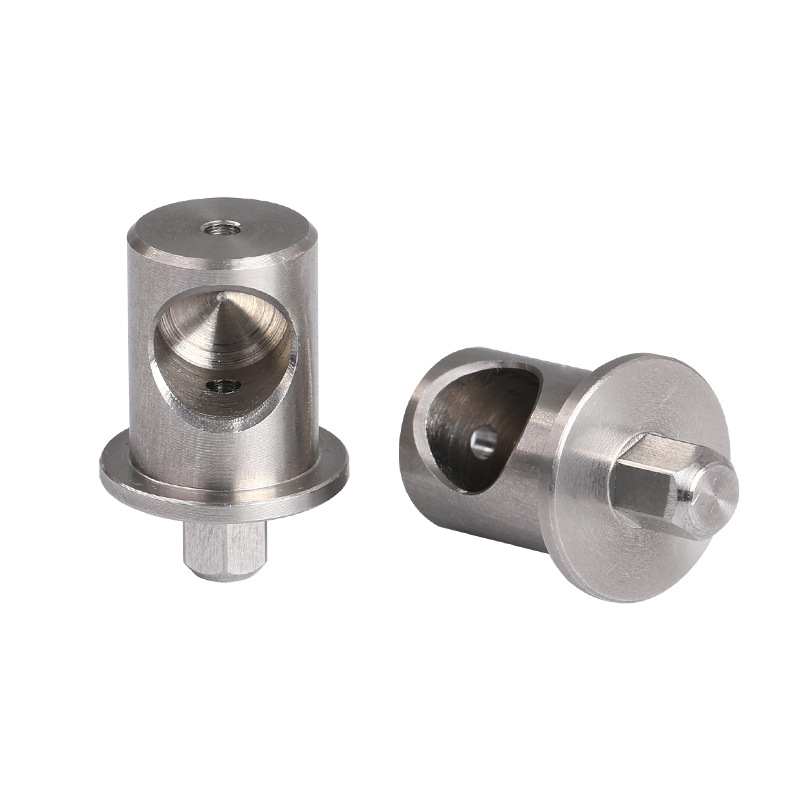
Material Selection by Industry Application
Material selection for CNC machining varies significantly by industry: medical devices require biocompatible, sterilizable materials like 316L stainless or PEEK; automotive parts demand high-strength alloys under IATF 16949; electronics favor aluminum and copper for conductivity and thermal management.
Medical Device Manufacturing
Medical parts face the strictest material requirements. Biocompatibility (per ISO 10993), sterilization compatibility, and corrosion resistance are non-negotiable. The wrong material choice in this sector isn’t just a quality failure — it’s a regulatory one.
- 316L Stainless Steel: The standard for surgical instruments and implantable devices. Low carbon content prevents sensitization during sterilization.
- Titanium Ti-6Al-4V ELI: Extra-low interstitial grade for implants. Superior biocompatibility and osseointegration properties.
- PEEK: Radiolucent (doesn’t show on X-rays), biocompatible, and strong enough for spinal implants and surgical tools.
- Aluminum 6061: Used for non-implantable device housings and diagnostic equipment components where weight matters.
At MFG SOLUTION, we’ve found that medical device clients increasingly specify 316L stainless and PEEK for small precision components under 38mm diameter, driven by tightening FDA and EU MDR compliance requirements as of 2026. Our ISO 13485:2016 certification ensures every step in the process is tracked and auditable.
Automotive and Electronics Applications
Automotive parts must survive vibration, thermal cycling, and long service lives. IATF 16949 governs the quality management system, but material selection itself follows application-specific engineering requirements. For those exploring material selection CNC machining, this matters.
- 4140 Alloy Steel: Shafts, gears, and fasteners that carry load under dynamic conditions.
- Aluminum 6061 / 7075: Brackets, housings, and structural components where weight reduction is a priority.
- Brass and Copper: Electrical connectors, sensor components, and fluid fittings where conductivity or corrosion resistance matters.
- Delrin and Nylon: Bushings, clips, and non-structural housings where weight and noise reduction are valued.
Electronics manufacturers typically prioritize aluminum and copper for thermal management. In one project we handled for an electronics OEM, switching from steel to aluminum 6061 for a connector housing reduced part weight by 65% and cycle time by 40%, with no compromise in dimensional accuracy.
Pro Tip: For automotive parts under IATF 16949, always request material test reports (MTRs) from your supplier confirming chemical composition and mechanical properties. This documentation is required for traceability audits and protects you if a field failure occurs.
Common Mistakes in CNC Material Selection
The most common mistakes in CNC material selection are over-specifying material grade (paying for properties you don’t need), ignoring machinability impact on total cost, and failing to check raw material certifications before production begins.
Over-Specification and Under-Specification
Over-specification is expensive. A precision machining client recently faced a 40% cost overrun because they specified 316 stainless steel for a housing component that had zero corrosion exposure. Switching to 303 stainless delivered identical performance at significantly lower machining cost.
Under-specification is dangerous. Using 1018 carbon steel in a salt-spray environment without protective coating leads to corrosion failures that are entirely preventable.
- Common mistake #1: Choosing titanium for weight reduction when aluminum 7075 achieves similar strength-to-weight at a fraction of the cost.
- Common mistake #2: Selecting 316 stainless where 303 would work — 316 is harder to machine and costs more per part.
- Common mistake #3: Picking a plastic for its low material cost without accounting for its lower dimensional stability and higher scrap rate in tight-tolerance applications.
- Common mistake #4: Ignoring the coefficient of thermal expansion (CTE) for parts assembled with dissimilar materials. Mismatched CTE causes stress and loosening over temperature cycles.
- Common mistake #5: Failing to verify raw material before starting a CNC operation. Incoming material inspection — checking hardness, dimensions, and material certificates — prevents scrap batches and compliance failures.
Skipping Raw Material Inspection
Industry analysts consistently flag raw material verification as a critical step that’s often skipped under deadline pressure. Material substitution by suppliers — receiving 304 stainless when you ordered 316, for example — is more common than most buyers expect.
A robust incoming inspection process should include:
- Review of the material test report (MTR) against the specified grade and heat number.
- Hardness testing (Rockwell or Brinell) to confirm the material meets specification.
- Dimensional check of bar stock or blank to confirm it matches the purchase order.
- XRF (X-ray fluorescence) spot-check for critical or high-value materials to verify chemical composition.
Our team at MFG SOLUTION recommends treating material verification as a non-negotiable first step in every production run, not an optional quality check. Every material we process is accompanied by documented certification, fully traceable under our ISO 9001:2015 quality management system. This directly impacts material selection CNC machining outcomes.
Best Practices for Material Selection in 2026
Best practices for material selection CNC machining in 2026 center on early collaboration between design engineers and manufacturing teams, digital material databases for rapid screening, and sustainability-aware choices that reduce waste without compromising performance.
Design for Manufacturability (DFM) Integration
The most effective material decisions happen early — ideally at the design stage, before toolpaths are programmed. Design for Manufacturability (DFM) is the methodology of designing parts so they’re efficient and cost-effective to produce. Material selection is a core component of DFM.
- Share material candidates with your machining partner before finalizing the design. Machinability constraints can inform geometry decisions.
- Consider standard stock sizes. Designing a part to be machined from standard bar stock diameters (e.g., 25mm, 30mm, 38mm) eliminates custom material procurement lead time.
- Account for finishing operations. Anodizing (for aluminum), passivation (for stainless), and plating (for steel) all have material-specific requirements and add to total cost.
- Use material databases (CES EduPack, MatWeb) to screen candidates systematically against your property requirements before committing to a grade.
Sustainability and Supply Chain Considerations in 2026
As of 2026, sustainability requirements are increasingly influencing material selection. EU regulations, customer sustainability commitments, and supply chain resilience concerns are all shaping what materials manufacturers specify.
- Recycled aluminum alloys: Recycled 6061 now meets the same mechanical specifications as virgin material for most applications, at lower embodied carbon.
- RoHS and REACH compliance: Electronic and automotive parts sold in the EU must use materials that comply with RoHS (restriction of hazardous substances) and REACH regulations. Certain lead-free brass alloys and cadmium-free platings are now standard.
- Near-term supply availability: Titanium and some specialty alloys have experienced supply volatility. Always confirm material lead times before finalizing specifications on a tight schedule.
- Machinability and waste reduction: Higher machinability materials generate less scrap and use less cutting fluid, reducing both cost and environmental impact.
Pro Tip: When sourcing small precision parts under 38mm diameter, specify your material grade and request a material test report (MTR) with every order. A certified supplier should provide this documentation automatically — if they don’t, that’s a red flag about their quality management system.
Frequently Asked Questions
1. What is material selection in CNC machining?
Material selection CNC machining is the process of evaluating and choosing a raw material that meets a part’s functional, dimensional, and regulatory requirements while remaining cost-effective to machine. It involves balancing mechanical properties, machinability, thermal resistance, corrosion resistance, and total cost per finished part.
2. What is the most commonly used material in CNC machining?
Aluminum 6061 is the most widely used material in CNC machining globally. It offers excellent machinability, good corrosion resistance, low density, and low cost. Brass C360 is the benchmark for machinability. Stainless steel grades 303 and 316 are the most common choices when corrosion resistance or regulatory compliance is required.
3. How do you choose the right material for a CNC machined part?
Start by defining the operating environment and minimum mechanical property requirements. Screen materials against those criteria, then rank the remaining candidates by machinability and total machined cost. Validate the top choice against any applicable industry standards (ISO 13485, IATF 16949, AS9100). Confirm raw material availability before finalizing.
4. Why is it important to check raw material before starting a CNC operation?
Incoming material inspection prevents scrap, rework, and compliance failures. Material substitution by suppliers (receiving 304 stainless when 316 was ordered, for example) is a real risk. Checking hardness, dimensions, and material certifications before machining begins ensures the finished part meets specification and protects traceability under ISO 9001:2015 quality systems.
5. What is machinability and why does it matter for material selection?
Machinability is a measure of how easily a material can be cut, drilled, and finished. It’s typically expressed as a percentage relative to free-cutting brass (100%). Higher machinability means faster cycle times, longer tool life, and lower per-part cost. Aluminum 6061 has a machinability rating of approximately 300%, while titanium alloys are typically below 30%, making them significantly more expensive to machine per part.
6. What materials are used for medical device CNC machining?
Medical device CNC machining typically uses 316L stainless steel, titanium Ti-6Al-4V ELI, PEEK, and aluminum 6061 for non-implantable components. Material choices must comply with ISO 10993 biocompatibility standards and be compatible with sterilization methods (autoclave, EtO, or gamma). Suppliers must operate under ISO 13485:2016 to ensure full process traceability. This is particularly relevant for material selection CNC machining.
7. Can wood be used in CNC machining?
Yes, CNC machines can cut wood effectively, typically using CNC routers rather than CNC lathes or mills. Wood CNC machining is common in furniture, signage, and architectural applications. However, wood is rarely used for precision engineering parts due to its dimensional instability with moisture changes, low strength, and inability to hold tight tolerances.
8. How does material selection affect CNC machining cost?
Material selection affects CNC machining cost through raw material price, cycle time (driven by machinability), tool wear rate, scrap rate, and finishing requirements. A material that costs more per kilogram but machines twice as fast can deliver a lower total part cost. Always calculate cost per finished part, accounting for all these factors, not just raw material price alone.
Conclusion
Smart material selection CNC machining is one of the highest-leverage decisions in any precision manufacturing project. Choose the right material and everything downstream — tolerances, surface finish, cycle time, cost, and compliance — becomes easier. Choose wrong and no amount of machining skill recovers the situation.
The fundamentals haven’t changed: define your operating requirements, screen against mechanical and chemical criteria, rank by machinability and total cost, and verify incoming material before you cut a single chip. What has changed as of 2026 is the increasing weight of sustainability requirements, regulatory compliance, and supply chain resilience in that decision.
MFG SOLUTION specializes in high-precision small machined parts up to 38mm diameter, using CNC Turning, Swiss Lathe, Cold Forging, Automatic Lathe, and CNC Mill & Turn services. Our 60+ engineering professionals work with you to select the right material for your application, backed by ISO 9001:2015, ISO 13485:2016, and IATF 16949 certifications that ensure every part is traceable, compliant, and built to spec. You’ll have a quote within 8 hours and your parts shipped within 3 days.
Recommended Articles
Explore more from our content library: