
2026-09-30
CNC Machining for Low-Volume Production: How to Balance Tooling, Tolerances, Materials and Cost
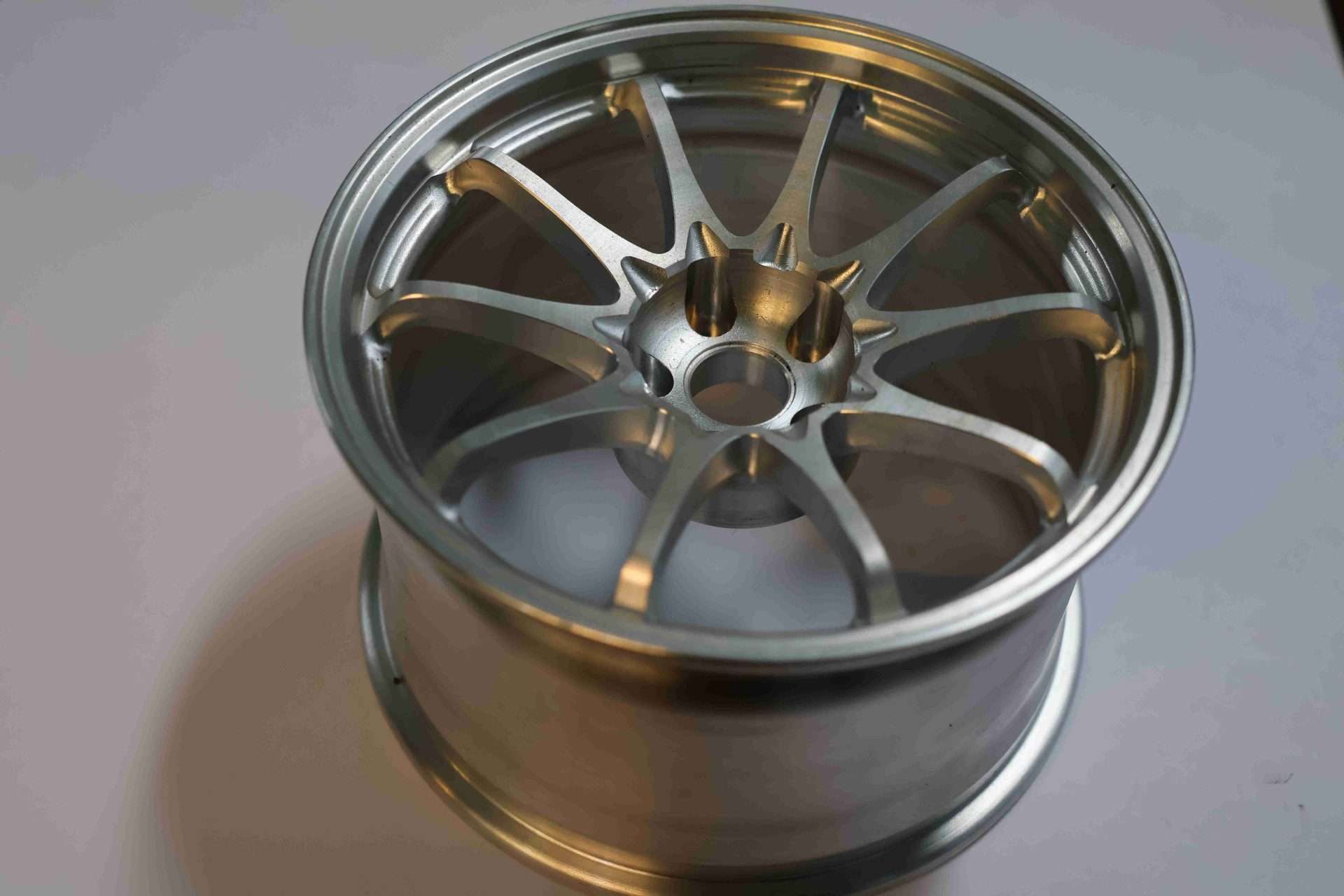

Low-volume production occupies an important position between prototyping and traditional mass production.
A company may need only 20, 50, 100, 500 or a few thousand custom metal parts, but those parts may still require production-grade materials, tight tolerances, reliable surface finishes and documented inspection.
This creates a different manufacturing challenge.
The objective is not simply to produce the lowest possible piece price.
Instead, engineers and purchasing teams need to balance:
- Part quantity
- Tooling requirements
- Material cost
- CNC machining time
- Setup cost
- Tolerances
- Surface requirements
- Inspection
- Secondary operations
- Lead time
- Future production volume
CNC machining is particularly useful for low-volume production because it does not require the dedicated molds and tooling associated with many traditional high-volume manufacturing processes.
MFG SOLUTION provides precision manufacturing solutions for prototypes and production, including CNC machining, CNC turning, Swiss turning, 5-axis machining, automatic lathe production, cold forging, precision casting and PCBA. Its manufacturing approach evaluates geometry, material, quantity and tolerance together before recommending a production route.
For low-volume projects, this engineering evaluation is especially important because the best manufacturing process is not always the one with the lowest theoretical unit price.
The right process is the one that provides the required quality and economics at the required production volume.
1. What Is Low-Volume CNC Production?
Low-volume production generally refers to manufacturing a relatively small quantity of identical or similar components.
There is no universal quantity threshold.
Depending on the industry, low-volume production could mean:
- 10 parts
- 25 parts
- 50 parts
- 100 parts
- 500 parts
- 1,000 parts
- Several thousand parts
The definition depends on the product, process and supplier.
For example, 1,000 CNC-machined aluminum housings may be considered low-volume compared with an injection-molded consumer product requiring hundreds of thousands of pieces.
The important characteristic is that the quantity is large enough to require repeatable production but small enough that dedicated tooling may not be economically attractive.
2. Why CNC Machining Works Well for Low-Volume Parts
CNC machining removes material directly from a solid workpiece.
The machine follows programmed toolpaths to create the required geometry.
Unlike processes that require dedicated molds, CNC machining can often begin production after:
- CAD review
- Process planning
- Tool selection
- Fixture preparation
- CNC programming
This makes CNC machining flexible when the design is still evolving.
For low-volume projects, this flexibility can be valuable because customers may need to:
- Validate a product
- Build pilot units
- Test a new design
- Produce replacement components
- Support a new machine
- Launch a new product
- Bridge the gap before mass production
The ability to modify the CAD model without creating a new mold can significantly reduce engineering risk.
3. Low Volume Does Not Mean Low Quality
One common misconception is that low-volume parts can use less rigorous quality requirements.
That is not necessarily true.
A batch of 50 precision components may require the same dimensional accuracy as a batch of 50,000 parts.
Quality requirements can include:
- Dimensional tolerances
- GD&T
- Surface roughness
- Material certification
- Hardness
- Surface treatment
- Thread inspection
- CMM inspection
- First Article Inspection
- Certificate of Conformance
MFG SOLUTION emphasizes documented quality and inspection as part of its precision manufacturing workflow. Its quality resources describe inspection, process control and documentation as important elements of production.
Therefore, production quantity should not automatically determine quality requirements.
The application determines the required quality.
4. How Quantity Changes CNC Machining Economics
Quantity affects CNC cost in several ways.
A simplified cost model can be considered as:
Total Cost = Setup + Programming + Tooling + Material + Machining + Inspection + Finishing + Packaging
Some of these costs are relatively fixed.
Others increase with every part.
For example, CNC programming may require a similar amount of engineering time whether the customer orders 20 parts or 200 parts.
If the programming cost is $300:
For 20 parts:
$300 ÷ 20 = $15 per part
For 300 parts:
$300 ÷ 300 = $1 per part
This is why increasing quantity can significantly reduce the effective setup cost per component.
Low-volume manufacturing therefore requires careful consideration of both fixed and variable costs.
5. Programming Cost in Low-Volume Production
CNC programming involves more than simply generating toolpaths.
The manufacturing engineer may need to determine:
- Workholding
- Tool selection
- Cutting strategy
- Tool sequence
- Datum structure
- Inspection points
- Multiple setups
- Collision avoidance
- Tool changes
- Production sequence
Complex parts may require substantial programming effort.
For a five-axis component, the programming strategy can be significantly different from a simple three-axis bracket.
This means a customer ordering only 10 complex components may still receive a relatively high engineering cost per part.
However, once the program has been validated, future batches can often be produced more efficiently.
6. Setup Cost and Workholding
Setup is another important factor.
A CNC machine needs to hold the workpiece accurately and repeatably.
Depending on the component, the setup may involve:
- Standard vise
- Soft jaws
- Custom fixture
- Collet
- Vacuum fixture
- Modular fixture
- Special locating system
For low-volume work, expensive dedicated fixtures may not be justified.
Instead, manufacturers may use flexible workholding methods.
For higher quantities, a dedicated fixture can become more attractive because the setup investment is spread across more parts.
The engineering decision should therefore consider expected lifetime volume, not only the first purchase order.
7. When Custom Fixtures Make Sense
Suppose a customer needs 20 complex aluminum components.
A custom fixture costing $1,000 would add:
$1,000 ÷ 20 = $50 per part
That may be difficult to justify.
Now consider an annual requirement of 2,000 parts.
The same fixture would contribute only:
$1,000 ÷ 2,000 = $0.50 per part
The economics are completely different.
Therefore, low-volume CNC production often favors:
- Standard fixtures
- Soft jaws
- Modular workholding
- Reusable locating systems
while larger production volumes can justify more dedicated tooling.
8. Material Selection for Low-Volume CNC Parts
Material selection directly affects machining cost.
Common CNC materials include:
Aluminum
Popular grades include:
- 6061
- 7075
- 6082
Aluminum is often selected for:
- Low weight
- Good machinability
- Corrosion resistance
- Structural applications
- Enclosures
- Fixtures
Stainless steel
Common grades include:
- 304
- 316
- 17-4PH
These materials are useful when corrosion resistance, strength or durability is important.
Carbon and alloy steel
Examples include:
- 1018
- 1045
- 4140
- 4340
These materials are commonly used for shafts, brackets, tooling and mechanical components.
Engineering plastics
Examples include:
- POM
- Nylon
- PEEK
- Polycarbonate
- PTFE
Material selection should always be based on the actual application rather than simply choosing the cheapest material.
MFG SOLUTION’s material library emphasizes evaluating grade, condition, geometry, finish and acceptance evidence together.
9. Material Cost vs Machining Cost
The cheapest raw material does not always produce the cheapest finished component.
Consider two materials:
Material A
Low material price but difficult to machine.
Material B
Higher material price but significantly faster to machine.
If Material B reduces machining time substantially, the final part may actually cost less.
A proper quotation therefore needs to consider:
Material + machining + tooling + finishing + inspection
rather than material price alone.
This is especially important for low-volume parts because setup and machining costs can dominate the total price.
10. How Part Geometry Affects Low-Volume Cost
Geometry is one of the strongest cost drivers in CNC machining.
A simple rectangular bracket may require:
- One setup
- Standard tooling
- Simple drilling
- Basic milling
A complex component may require:
- Multiple setups
- Specialized tools
- Deep cavity machining
- Small-diameter tools
- Five-axis positioning
- Tight tolerances
- Extensive inspection
The quantity may be identical, but the manufacturing cost can be dramatically different.
Therefore, when comparing quotations, purchasing teams should not compare unit prices without considering the engineering scope.
11. Three-Axis vs Five-Axis CNC for Low Volumes
Three-axis machining remains highly effective for many components.
It is often suitable for:
- Plates
- Brackets
- Blocks
- Housings
- Simple pockets
- Drilled components
Five-axis machining becomes more attractive when the part contains:
- Complex surfaces
- Angled features
- Multiple faces
- Deep cavities
- Difficult tool access
- Complex aerospace geometry
A five-axis machine may have a higher hourly cost.
However, it can reduce the number of setups.
For a complex low-volume component, fewer setups can sometimes offset the higher machine cost.
MFG SOLUTION provides 5-axis CNC machining for complex geometries where multiple-axis access can improve process efficiency and reduce setup requirements.
12. CNC Turning for Low-Volume Cylindrical Parts
For rotational components, CNC turning is often the appropriate manufacturing route.
Typical turned components include:
- Shafts
- Bushings
- Pins
- Spacers
- Sleeves
- Fittings
- Connectors
Turning can efficiently produce:
- External diameters
- Internal bores
- Grooves
- Threads
- Chamfers
- Tapers
For small-diameter, long or complex components, Swiss turning may provide additional process advantages.
The key is to match the machining method to the geometry.
13. When Swiss Turning Makes Sense
Swiss turning is particularly useful for small and slender components.
Applications can include:
- Precision pins
- Medical components
- Small shafts
- Connectors
- Instrument components
- Electronic hardware
The guide-bushing system supports the workpiece close to the cutting area.
This can help with:
- Long-to-diameter ratios
- Small diameters
- Multiple operations
- Tight tolerances
However, Swiss turning is not automatically the best option for every small part.
The decision depends on:
- Diameter
- Length
- Feature density
- Quantity
- Tolerance
- Material
- Production requirements
14. Tolerances and Low-Volume CNC Production
Tolerances are another major cost factor.
A part specified with:
±0.10 mm
requires a different manufacturing strategy from one specified with:
±0.01 mm
Tighter tolerances may require:
- More precise machines
- Better workholding
- Controlled temperature
- Additional finishing
- More frequent inspection
- CMM measurement
- More expensive tooling
This does not mean tight tolerances should be avoided.
It means they should be applied only where necessary.
MFG SOLUTION’s CNC accuracy guidance notes that achievable tolerances depend on the machining process, material and feature requirements.
15. Avoid Over-Specifying Tolerances
Over-tolerancing is a common source of unnecessary manufacturing cost.
Suppose a bracket only needs a hole position within ±0.10 mm.
Specifying ±0.01 mm may force the supplier to use:
- Additional setups
- Precision tooling
- More inspection
- More controlled machining
- Potential secondary operations
If the assembly does not require that accuracy, the additional cost provides little functional value.
The best drawing is not the one with the smallest tolerance.
It is the one with the correct tolerance.
16. Surface Finish Requirements
Surface finish should also be matched to function.
For example:
- General structural surface
- Sliding surface
- Sealing surface
- Cosmetic surface
- Bearing surface
may require very different surface conditions.
MFG SOLUTION already provides dedicated guidance on CNC surface finish and surface-finish specifications, including Ra and other roughness parameters.
Therefore, low-volume buyers should avoid specifying an unnecessarily fine finish simply because it looks better on a drawing.
If a surface only needs a normal machined finish, additional polishing may add cost without improving product performance.
17. Secondary Operations
CNC machining may be only one part of the manufacturing route.
Additional operations can include:
- Heat treatment
- Anodizing
- Plating
- Passivation
- Polishing
- Electropolishing
- Powder coating
- Deburring
- Laser marking
- Assembly
Each additional process contributes to:
- Cost
- Lead time
- Quality control
- Supplier coordination
For low-volume production, secondary operations can represent a significant proportion of the final price.
The quotation should therefore specify all required processes from the beginning.
18. Heat Treatment in Low-Volume Production
Heat treatment can be necessary when a component requires:
- Increased hardness
- Wear resistance
- Strength
- Fatigue resistance
- Dimensional stability
But heat treatment may also introduce additional logistics and machining requirements.
A typical route might be:
Rough machining → Heat treatment → Finish machining → Inspection
The correct sequence depends on the material and geometry.
This is particularly important for precision components where heat treatment may influence dimensions.
The previous MFG SOLUTION engineering guide on heat treatment discusses distortion, machining allowance, tolerances and post-treatment finishing in greater detail.
19. Surface Treatment and Low-Volume Orders
Surface treatments are often performed by specialized suppliers.
Examples include:
- Anodizing
- Hardcoat anodizing
- Plating
- Electropolishing
- Powder coating
For low-volume production, minimum processing charges can have a meaningful effect on total cost.
For example, if a finishing supplier charges a fixed setup or batch fee, ordering only 20 pieces may produce a higher finishing cost per part than ordering 500.
This should be considered when comparing quotations.
A good manufacturing partner should include the complete process route rather than quoting machining alone.
20. Inspection Cost for Low-Volume Parts
Inspection requirements can vary substantially.
Basic inspection may include:
- Calipers
- Micrometers
- Gauges
More complex projects may require:
- CMM
- Optical measurement
- Surface roughness testing
- Hardness testing
- Material verification
For critical components, a First Article Inspection may be appropriate.
The customer should specify which characteristics are critical.
Not every dimension needs the same inspection intensity.
This approach can maintain quality while controlling cost.
21. Prototype, Pilot Run and Production
Low-volume CNC production is often part of a larger product-development process.
A typical development cycle can be:
Prototype → Pilot Run → Low-Volume Production → Production Scale-Up
The prototype validates the design.
The pilot run validates the manufacturing process.
The low-volume stage confirms product-market requirements.
The later production stage optimizes cost and throughput.
CNC machining can support multiple stages because the same general process can be adapted as quantity increases.
This can reduce the need to completely redesign the component manufacturing strategy during early product development.
22. Designing Parts for Low-Volume CNC Manufacturing
Design for manufacturability remains important even when only a small number of components are required.
Useful principles include:
Use standard tool sizes
Avoid extremely small internal radii unless necessary.
Minimize unnecessary setups
Design features so they can be accessed from fewer orientations.
Use standard materials
Common grades are generally easier to source.
Use standard threads
Avoid custom threads unless the application requires them.
Avoid unnecessary deep pockets
Deep cavities can require long tools and slower cutting parameters.
Apply tight tolerances selectively
Only critical features should receive tight tolerances.
Define surface finish by function
Do not over-specify cosmetic or functional finishes.
These design decisions can reduce both machining time and quotation complexity.
23. How to Reduce Low-Volume CNC Costs
There are several practical ways to reduce cost without compromising functionality.
1. Simplify geometry
Every additional feature can add machining time.
2. Reduce setups
Combine features where possible.
3. Use standard materials
Standard materials can reduce sourcing delays and cost.
4. Avoid unnecessary tolerances
Tolerances should reflect functional requirements.
5. Use standard threads
Standard tooling is usually easier to source.
6. Optimize surface finishes
Specify the finish needed for the application.
7. Combine production batches
If possible, consolidate demand into larger batches.
8. Plan secondary processes early
This prevents unexpected finishing charges.
9. Provide complete CAD data
A complete engineering package reduces clarification time.
10. Discuss future volume
If today’s order is 100 parts but annual demand could reach 10,000, tell the manufacturer.
The future volume can influence process selection.
24. Why Future Volume Matters
Imagine a customer currently needs:
100 parts
but expects:
10,000 parts per year
The manufacturing strategy for the first 100 parts should ideally consider the future requirement.
For example:
Prototype:
CNC machining
Low volume:
CNC + optimized fixtures
Higher volume:
Automatic machining / Swiss turning / cold forging / precision casting
The best long-term strategy may therefore involve multiple manufacturing stages.
MFG SOLUTION provides CNC machining as well as cold forging, precision casting, automatic lathe and Swiss turning capabilities, allowing production routes to be evaluated as volume changes.
25. When CNC Is Better Than Injection Molding
For plastic components, low volume can make injection molding economically difficult because molds require upfront investment.
CNC machining can eliminate or reduce that tooling investment.
CNC may be appropriate when:
- Quantity is low
- Geometry is suitable
- Material requirements are demanding
- Design changes are expected
- Fast delivery is important
Injection molding becomes more attractive when:
- Quantity is high
- Geometry suits molding
- Cycle time needs to be minimized
- Tooling cost can be amortized over many parts
The correct choice depends on total lifetime volume rather than simply the first order.
26. When CNC Is Better Than Die Casting
A similar comparison applies to metal components.
Die casting can be highly efficient at high volumes.
However, tooling investment can be significant.
CNC machining can be more flexible for:
- Prototypes
- Low volumes
- Design changes
- High-precision features
- Small production runs
At larger quantities, die casting may become more competitive depending on geometry and material.
A hybrid strategy can also be considered:
Prototype with CNC → Validate → Move to casting for higher volume → CNC finish critical features
27. How to Request a Low-Volume CNC Quote
A complete RFQ should include:
- 2D drawing
- 3D CAD model
- Material
- Quantity
- Annual volume if available
- Tolerances
- Surface finish
- Heat treatment
- Coating
- Inspection requirements
- Packaging
- Delivery target
Also explain the application when possible.
The application helps the manufacturing engineer understand which characteristics are functionally important.
For example, a sealing bore may require tighter control than an external non-contact surface.
A mounting hole may require precise position while another hole may not.
This information can prevent unnecessary over-processing.
28. Why CAD Files Are Important
A 3D CAD model helps the manufacturer evaluate:
- Overall geometry
- Wall thickness
- Tool access
- Deep pockets
- Hole locations
- Internal radii
- Potential collisions
- Number of setups
The 2D drawing remains important because it defines:
- Tolerances
- Datums
- Surface finish
- Material
- Threads
- Special requirements
The strongest RFQ package therefore usually includes both.
29. Quality Control for Low-Volume Production
Low volume does not eliminate the need for process control.
A suitable quality plan may include:
First-piece inspection
Confirm the first component before running the batch.
In-process inspection
Measure critical characteristics during production.
Final inspection
Verify the completed parts.
Documentation
Provide the inspection report or certificates requested by the customer.
For repeat orders, previous production data can also be useful.
If a process has already demonstrated stable capability, future production can often be managed more efficiently.
30. Choosing the Right Manufacturing Partner
For low-volume CNC production, price is only one consideration.
A suitable supplier should be able to demonstrate:
- Engineering capability
- CNC machining experience
- Material knowledge
- Quality control
- Communication
- Secondary-process coordination
- Stable production
- Documentation
- International shipping experience
The supplier should also be able to explain why a particular manufacturing route is recommended.
If the quotation only provides a unit price without discussing process assumptions, it can be difficult to compare suppliers accurately.
31. Low-Volume CNC Production Checklist
Before releasing a project, review:
Engineering
- Is the CAD model complete?
- Is the drawing released?
- Are critical dimensions identified?
- Are tolerances appropriate?
Material
- Is the exact grade specified?
- Is the material condition defined?
- Is certification required?
Machining
- Number of setups?
- CNC milling or turning?
- 3-axis or 5-axis?
- Swiss turning?
- Automatic lathe?
Finishing
- Heat treatment?
- Anodizing?
- Plating?
- Polishing?
- Passivation?
Quality
- First article?
- CMM?
- Thread inspection?
- Material certificate?
- Surface finish measurement?
Production
- Prototype quantity?
- Current order quantity?
- Expected annual volume?
- Future production requirements?
Answering these questions early can significantly reduce production uncertainty.
FAQ: Low-Volume CNC Machining
1. What quantity is considered low-volume CNC production?
There is no universal definition. Depending on the industry, low-volume production can range from several dozen parts to several thousand parts.
2. Is CNC machining expensive for small quantities?
The unit price can be higher because programming and setup costs are spread over fewer parts. However, CNC can still be economical because it generally avoids expensive dedicated tooling.
3. Can CNC machining be used for prototypes and production?
Yes. CNC machining can support prototypes, pilot runs and low-to-medium production volumes, although the optimal process may change as quantity increases.
4. How can I reduce the cost of low-volume CNC parts?
Use standard materials, simplify geometry, reduce setups, avoid unnecessary tight tolerances, use standard threads and specify surface finishes according to actual functional requirements.
5. Should I use 3-axis or 5-axis CNC machining?
It depends on the geometry. Simple prismatic components may be well suited to 3-axis machining, while complex multi-face parts may benefit from five-axis machining.
6. Is a custom fixture necessary for low-volume CNC production?
Not always. Standard fixtures, soft jaws and modular workholding can often be more economical for small batches.
7. Should I tell the manufacturer about future production volume?
Yes. Expected annual demand can influence fixture design, machine selection, tooling strategy and whether CNC machining should later transition to another production process.
8. What information is needed for a low-volume CNC quotation?
A complete RFQ should include the CAD model, 2D drawing, material, quantity, tolerances, surface treatment, inspection requirements and delivery target. Expected annual volume is also useful.
Conclusion
Low-volume CNC machining is not simply a smaller version of mass production.
It requires a different balance between engineering effort, setup cost, material selection, machining time, inspection and future production requirements.
For a small quantity, flexibility may be more important than maximum automation.
For a larger batch, setup optimization and dedicated fixtures become more valuable.
For future high-volume production, the manufacturing route may eventually transition to automatic turning, cold forging, precision casting or another process.
The best manufacturing strategy therefore depends on the complete product lifecycle.
For engineers and purchasing teams, the most important considerations are:
Quantity + geometry + material + tolerance + finishing + quality + future volume
A well-prepared RFQ allows the manufacturer to evaluate these factors together and recommend a process that balances quality, lead time and total cost.
MFG SOLUTION supports prototype and production requirements across CNC machining, turning, Swiss turning, automatic lathe, five-axis machining and complementary manufacturing processes.
If you have a low-volume CNC project, providing the complete engineering package at the quotation stage can help the manufacturing team identify unnecessary costs, production risks and opportunities for process optimization.
Start Your Low-Volume CNC Project
Send MFG SOLUTION:
- 2D drawing
- 3D CAD model
- Material
- Quantity
- Annual demand if known
- Tolerances
- Surface finish
- Heat treatment
- Coating
- Inspection requirements
Our engineering team can review the part and evaluate the appropriate manufacturing route.
Get an Engineering Review and Quotation:
Contact the Manufacturing Team: