
Specify the real requirement
Grade, condition, geometry, finish and acceptance evidence should travel together in the MFG SOLUTION review.
Connect material to process
Use the guide to compare machinability, performance, availability and downstream operations before release.
Release measurable evidence
Inspection, certificates and traceability confirm the selected route on the actual part and revision.
1030 Steel
1030 steel is indeed highly regarded for its versatility and reliability in machining operations. Its balanced composition of carbon and other alloying elements makes it well-suited for a wide range of applications in various industries.
In cold forging, where the material needs to withstand high pressures and deformation without fracturing, 1030 steel’s strength and ductility make it a popular choice. Its ability to maintain dimensional stability under the extreme forces involved in cold forging is crucial for producing high-quality forged components.
Similarly, in CNC turning and Swiss lathe operations, 1030 steel’s machinability and strength come into play. Its relatively higher carbon content compared to lower carbon steels like 1018 allows for improved hardness and wear resistance, which can be advantageous in these machining processes. Additionally, its versatility means it can be efficiently turned, milled, drilled, and tapped to produce precision components with tight tolerances.

Get Your Parts Today!
We’ll quote for you within 8 hours, and ship within 3 days.
More information quote1030 Steel Datasheet (General Overview)
| Element | Percentage |
|---|---|
| Carbon (C) | 0.28 – 0.34% |
| Manganese (Mn) | 0.60 – 0.90% |
| Phosphorus (P) | 0.04% max |
| Sulfur (S) | 0.05% max |
Physical Properties:
- Density: ~7.85 g/cm³
- Melting Point: ~1425 – 1540°C
- Thermal Conductivity: ~51.9 W/(m·K)
- Electrical Conductivity: ~28 MS/m
- Specific Heat: ~486 J/(kg·K)
Mechanical Properties:
| Property | Value |
|---|---|
| Tensile Strength | ~430 MPa |
| Yield Strength | ~330 MPa |
| Elongation at Break | ~15% |
| Hardness (Brinell) | ~126 |
Heat Treatment:
- Can be heat-treated to achieve desired mechanical properties.
Machinability:
- Good machinability.
Weldability:
- Can be welded using conventional methods.
Equivalent Grades (approximate):
- ASTM A29/A29M: 1030
- ASTM A510/A510M: 1030
- ASTM A513/513M: 1030
- ASTM A576/A576M: 1030
- SAE J1397: 1030
- SAE J403: 1030
Applications:
1030 steel is often used in applications requiring moderate strength and good machinability. Common applications include shafts, gears, bolts, and other machine components.
Get Your Parts Today!
We’ll quote for you within 8 hours, and ship within 3 days.
More information quoteTypes of 1030 Steel
1030 steel is typically available in various forms to suit different manufacturing needs. Some common types/forms of 1030 steel include:
1030 Steel Bar:
Round bars: These are cylindrical bars of 1030 steel commonly used in applications such as shafts, fasteners, and machinery components.
Square bars: Square-shaped bars of 1030 steel are used for similar applications as round bars but may offer different machining characteristics.
1030 Steel Plate:
Plates of 1030 steel are flat, rectangular pieces of varying thicknesses. They are often used in structural applications, as well as for making machinery parts, gears, and base plates.
1030 Steel Sheet:
Sheets of 1030 steel are thinner than plates and are often used in applications where a thinner gauge is sufficient, such as automotive panels, appliance components, and stamped parts.
1030 Steel Wire:
Wire made from 1030 steel is used in applications requiring high tensile strength, such as springs, cables, and wire forms.


Get Your Parts Today!
We’ll quote for you within 8 hours, and ship within 3 days.
More information quoteWhat Types of Parts Should Consider 1030 Steel ?
1030 steel is a versatile material suitable for a wide range of applications across various industries. Parts that may benefit from the use of 1030 steel include:
Shafts and Axles: Components requiring good strength, toughness, and wear resistance, such as shafts and axles in automotive, machinery, and equipment applications.
Gears and Sprockets: Gears and sprockets in transmissions, power transmission systems, and industrial machinery benefit from 1030 steel’s strength, hardness, and fatigue resistance.
Fasteners: Bolts, screws, studs, and other fasteners used in construction, automotive, and machinery applications can be made from 1030 steel due to its good machinability and strength.
Forged Components: Cold forged components requiring high strength and ductility, such as crankshafts, connecting rods, and gear blanks, can be manufactured from 1030 steel.
Machine Components: Various machine components like spindles, couplings, tool holders, and base plates benefit from 1030 steel’s combination of strength, machinability, and dimensional stability.
Stamped and Formed Parts: Stamped and formed parts used in automotive body panels, appliance components, brackets, and hardware can be made from 1030 steel due to its formability and strength.
Springs and Wire Forms: Springs and wire forms requiring good tensile strength, durability, and fatigue resistance can be made from 1030 steel wire.
Structural Components: Structural components in construction, agricultural machinery, and industrial equipment, such as beams, columns, and frames, can be fabricated from 1030 steel plates and sections.
Tooling and Dies: Tooling and dies used in metalworking processes, such as cutting, punching, and forming, can be made from 1030 steel due to its wear resistance and machinability.
General Purpose Components: Various general-purpose components and machine parts requiring a balance of strength, machinability, and cost-effectiveness can benefit from the use of 1030 steel.
Get Your Parts Today!
We’ll quote for you within 8 hours, and ship within 3 days.
More information quote1030 Steel Surface Treatment

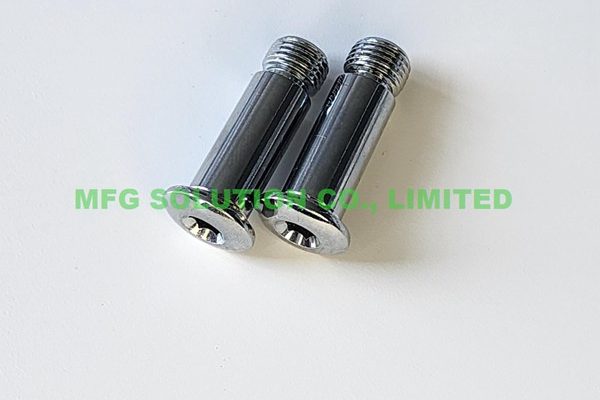

Surface treatments for 1030 steel can enhance its performance, durability, and aesthetics. Some common surface treatments for 1030 steel include:
Heat Treatment:
- Annealing: Heating the steel to a specific temperature and then slowly cooling it to relieve internal stresses and improve machinability.
- Normalizing: Heating the steel to a temperature above its critical transformation temperature and then cooling it in still air to refine the grain structure and improve strength and toughness.
- Quenching and Tempering: Heating the steel to a high temperature and then rapidly cooling it in a quenching medium, followed by tempering to achieve the desired combination of hardness and toughness.
Plating:
- Zinc Plating (Galvanizing): Applying a layer of zinc to the surface of the steel to provide corrosion resistance.
- Nickel Plating: Depositing a layer of nickel onto the steel surface for corrosion resistance, improved wear resistance, and decorative purposes.
- Chrome Plating: Electroplating a thin layer of chromium onto the steel surface to enhance corrosion resistance, hardness, and aesthetics.
Painting and Coating:
- Priming and Painting: Applying primer and paint to the steel surface for corrosion protection and aesthetic purposes.
- Powder Coating: Applying a dry powder to the steel surface, then curing it to form a durable and corrosion-resistant coating.
Conversion Coatings:
- Phosphating: Applying a phosphate conversion coating to the steel surface to improve corrosion resistance, paint adhesion, and lubricity.
- Black Oxide Coating: Producing a black oxide layer on the steel surface through a chemical reaction, providing mild corrosion resistance and an attractive black finish.
Surface Hardening:
- Carburizing: Introducing carbon into the surface layer of the steel by heating it in a carbon-rich environment, increasing surface hardness and wear resistance.
- Nitriding: Introducing nitrogen into the surface layer of the steel to form nitrides, improving surface hardness, wear resistance, and corrosion resistance.
Shot Peening:
- Bombarding the steel surface with small spherical media (shot) to induce compressive residual stresses, improving fatigue resistance and resistance to stress corrosion cracking.
Get Your Parts Today!
We’ll quote for you within 8 hours, and ship within 3 days.
More information quoteEquivalent or Similar Steel Grades to 1030 Steel
Here are equivalent or similar steel grades to 1030 steel in various international standards:
ISO: ISO 683-1: C30E, C30R; ISO 683-2: C30E2U, C30E4
European Standard (EN): EN 10083-2: C30, 1.0528; EN 10250-2: C30, 1.0528
British Standard (BS): BS 970: 080M30;BS 970: 080M32;BS 970: 060A78;BS 970: 070M20;BS 970: 070M26
German Standard (DIN):DIN EN 10083-2: C30, 1.0528;DIN EN 10250-2: C30, 1.0528
Japanese Standard (JIS):JIS G 4051: S30C;JIS G 4051: S33C
Chinese Standard (GB):GB/T 699: 30;GB/T 700: Q235A
1030 Steel VS 1045 Steel (CNC Turning, Swiss Lathe, Cold Forging)
When comparing 1030 steel and 1045 steel for machining processes like CNC turning, Swiss lathe operations, and cold forging, several factors come into play:
Composition:
- 1030 steel contains around 0.30% carbon, while 1045 steel contains approximately 0.45% carbon. This higher carbon content in 1045 steel contributes to increased hardness and strength compared to 1030 steel.
Machinability:
- 1030 steel generally has good machinability due to its lower carbon content, making it easier to cut, drill, and machine compared to 1045 steel.
- 1045 steel is still considered machinable but may require slower cutting speeds and more robust tooling compared to 1030 steel, especially in applications like CNC turning and Swiss lathe operations.
Strength:
- 1045 steel offers higher strength and hardness compared to 1030 steel due to its higher carbon content. This increased strength makes 1045 steel more suitable for applications requiring higher tensile strength and wear resistance, such as gears, shafts, and machinery components.
Surface Finish:
- Both steels can achieve good surface finishes when properly machined. However, 1030 steel may have a slight edge in achieving finer surface finishes due to its lower carbon content, which reduces the likelihood of tool wear and distortion during machining.
Cold Forging:
- Both 1030 steel and 1045 steel can be cold forged, but 1045 steel, with its higher carbon content and resultant higher strength, may be preferred for applications requiring greater durability and resistance to deformation during the cold forging process.
Cost:
- 1030 steel is generally less expensive than 1045 steel due to its lower alloy content. However, the cost difference may vary depending on factors such as availability, market conditions, and specific requirements of the application.
Get Your Parts Today!
We’ll quote for you within 8 hours, and ship within 3 days.
More information quoteWho we are?
Established in 2012, MFG SOLUTION has been devoted to manufacturing small, custom precision machined parts. Our services encompass CNC machining, 5-axis CNC machining, CNC turning, Swiss-type lathe machining, cold forging, compression molding, silicone molding, and sheet metal fabrication. With a robust infrastructure including 5 sets of 5-axis CNC machines, 16 sets of 3-axis CNC machines, 20 automatic lathes, 18 CNC turning machines, 42 sets of cold heading and thread rolling equipment, along with other specialized tools, we possess the capability to fulfill diverse industry requirements. Supported by a team of over 60 engineering and technical professionals, we cater to a wide range of industries, from bicycles to automotive and electronic components, ensuring tailored solutions. Additionally, we offer optimized production strategies aimed at cost reduction, shortened production times, and precise part manufacturing. At MFG SOLUTION, expect design optimization, cost efficiency, rapid delivery, top-notch quality parts, and 24/7 customer support.


