
2026-05-11
How to Source Custom Machined Parts That Deliver

| Key Insight | Explanation |
|---|---|
| Machining method drives cost | Choosing between CNC turning, Swiss lathe, cold forging, and mill & turn can shift unit costs significantly for small parts under 38mm. |
| Tolerances must be specified upfront | Tight tolerances (±0.005mm or finer) require specialized equipment and add cost; over-specifying tolerances is one of the most common sourcing mistakes. |
| Certifications protect you legally and operationally | ISO 9001:2015, ISO 13485:2016, and IATF 16949 certifications mean every step is tracked, documented, and auditable — critical for medical and automotive buyers. |
| Lead time is negotiable with the right partner | Some certified suppliers quote within 8 hours and ship within 3 days, which collapses the typical 4–6 week sourcing cycle dramatically. |
| Material choice affects machinability | Aluminum, brass, stainless steel, and titanium each behave differently under cutting. Material selection should happen before finalizing part geometry. |
| Batch size influences per-unit price | Higher volumes spread setup costs across more parts. Even modest production runs of 500–5,000 units can cut per-part costs by 30–50% versus prototyping rates. |
Sourcing custom machined parts doesn’t have to mean weeks of back-and-forth with suppliers, surprise quality failures, or blown budgets. Whether you’re a procurement manager at an automotive Tier-1 supplier or an engineering lead at a medical device startup, the path from a CAD file to a finished, certified component follows a clear process — if you know the steps. This guide walks you through exactly how to source precision machined parts efficiently, from writing your first specification to approving your first shipment. You’ll learn how to pick the right machining method, avoid the most expensive specification mistakes, and identify suppliers who can actually deliver on tight timelines. Plan for about 30 minutes to read through the full guide; applying it to your first real RFQ (Request for Quotation) takes a few hours.
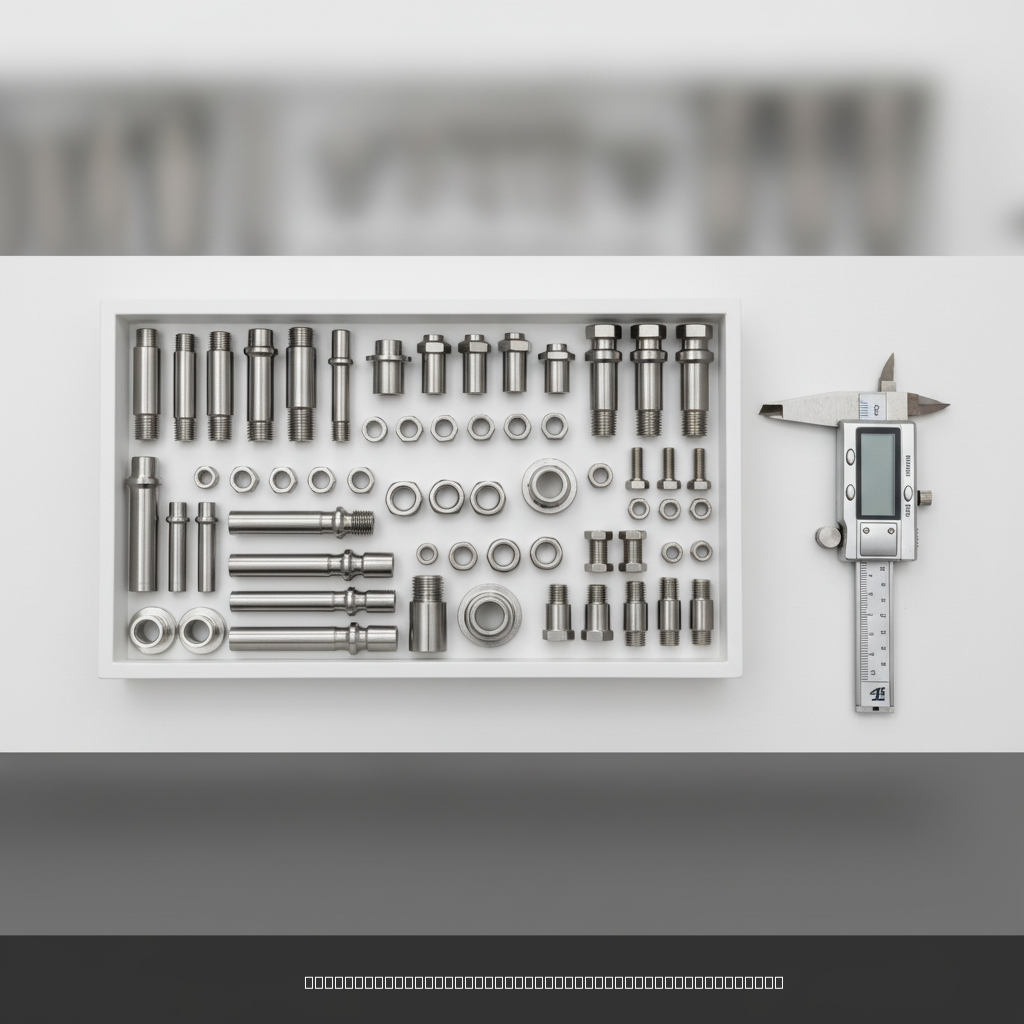
What Are Custom Machined Parts?
Custom machined parts are precision components manufactured to a buyer’s exact specifications using subtractive processes such as CNC turning, milling, or Swiss lathe machining. Unlike off-the-shelf hardware, every dimension, tolerance, material, and surface finish is defined by the customer’s engineering drawings or CAD files [1].
How Custom Machining Differs from Standard Manufacturing
Standard manufactured parts are produced in massive volumes to catalog dimensions. Custom machined parts, by contrast, are made to order. That means the supplier programs their CNC equipment specifically for your geometry, your tolerances, and your material. The result is a component that fits your assembly exactly, rather than a compromise.
According to NASA’s White Sands facility, precision CNC machined components and turned parts are manufactured from a wide range of materials including aluminum, brass, bronze, and carbon steel, demonstrating how broad the application space really is [1].
Who Uses Custom Machined Parts?
- Electronics manufacturers — connectors, housings, heat sinks, and precision fasteners
- Automotive suppliers — shafts, bushings, valve bodies, and sensor components
- Medical device companies — implant components, surgical instrument parts, and fluid-handling fittings
- Aerospace and defense — structural brackets, hydraulic fittings, and actuator parts
- Industrial equipment OEMs — gears, couplings, and precision housings
The concept of interchangeable parts, foundational to modern manufacturing, traces back to the 18th century — but today’s CNC-driven production achieves tolerances measured in microns rather than fractions of an inch [2].
What You’ll Need Before Requesting a Quote
Before contacting any supplier for custom machined parts, you need four core inputs ready: a dimensioned drawing or 3D CAD file, a material specification, a tolerance requirement, and a target quantity and delivery date.
Essential Documents and Information
- 2D drawing or 3D CAD file (STEP, IGES, or DXF formats are universally accepted)
- GD&T callouts (Geometric Dimensioning and Tolerancing) — GD&T is a standardized symbolic language that defines allowable variation in part geometry
- Material specification — grade, alloy, and any relevant ASTM or ISO material standards
- Surface finish requirements — Ra value in micrometers (e.g., Ra 0.8 µm for a smooth bearing surface)
- Quantity — prototype run (1–50 pieces) vs. production batch (500–50,000+ pieces)
- Delivery deadline — hard ship date or lead-time window
- Quality requirements — inspection reports, material certifications, or compliance with ISO 13485 for medical parts
Helpful Tools to Have Ready
- CAD software (SolidWorks, Fusion 360, or equivalent)
- Tolerance analysis spreadsheet or DFM (Design for Manufacturability) checklist
- Supplier qualification checklist referencing ISO 9001:2015 or IATF 16949 requirements
Pro Tip: Run a basic DFM review on your CAD file before sending it out. Eliminating unnecessary tight tolerances and undercuts at the design stage can cut your per-part cost by 15–25% without changing part function.
Step 1: Define Your Part Specifications
Defining part specifications is the single most important step in sourcing custom machined parts — vague drawings produce inaccurate quotes and costly rework.
How to Write a Clear Part Specification
- Start with the critical dimensions. Identify which dimensions directly affect fit, form, or function. These get your tightest tolerances. Everything else can be held to standard machining tolerances (typically ±0.1mm or ±0.005 inches).
- Apply GD&T callouts selectively. Don’t GD&T every feature. Focus on mating surfaces, bore diameters, and datum references where geometric accuracy matters.
- Specify surface finish only where needed. A general machined finish (Ra 3.2 µm) costs less than a ground or lapped finish (Ra 0.4 µm). Use the finest finish only on sealing surfaces or bearing journals.
- Call out thread standards explicitly. Specify metric (M6×1.0) or unified (1/4-20 UNC) threads by name. Don’t leave it to interpretation.
- Include a title block with revision control. Revision A, B, C tracking prevents suppliers from machining to an outdated drawing.
In practice, the most expensive specification mistake is over-tolerancing. A procurement manager at an automotive supplier once brought us a drawing where every dimension carried a ±0.01mm tolerance, including non-functional chamfers. Relaxing those to ±0.05mm dropped the quote by nearly 30% with zero impact on assembly performance.
Tolerance Reference Table
| Tolerance Class | Typical Range | Common Application | Relative Cost Impact |
|---|---|---|---|
| Standard CNC | ±0.1mm | Non-critical features, general structure | Baseline (lowest) |
| Precision CNC | ±0.025mm | Mating bores, shaft fits, threaded inserts | +20–35% |
| High Precision | ±0.005mm | Bearing seats, precision bores, medical implants | +50–100% |
| Ultra Precision | <±0.001mm | Optical components, aerospace actuators | +150%+ |
Step 2: Select the Right Machining Method
Selecting the right machining method for your custom machined parts directly determines achievable tolerances, surface finish, cycle time, and per-unit cost. No single process is best for every geometry.
Overview of Common Machining Methods
The SME (Society of Manufacturing Engineers) notes that CAD/CAM-driven toolpath optimization is now central to selecting the most efficient machining strategy for complex part geometries [3]. Here’s how the major methods compare for small precision parts:
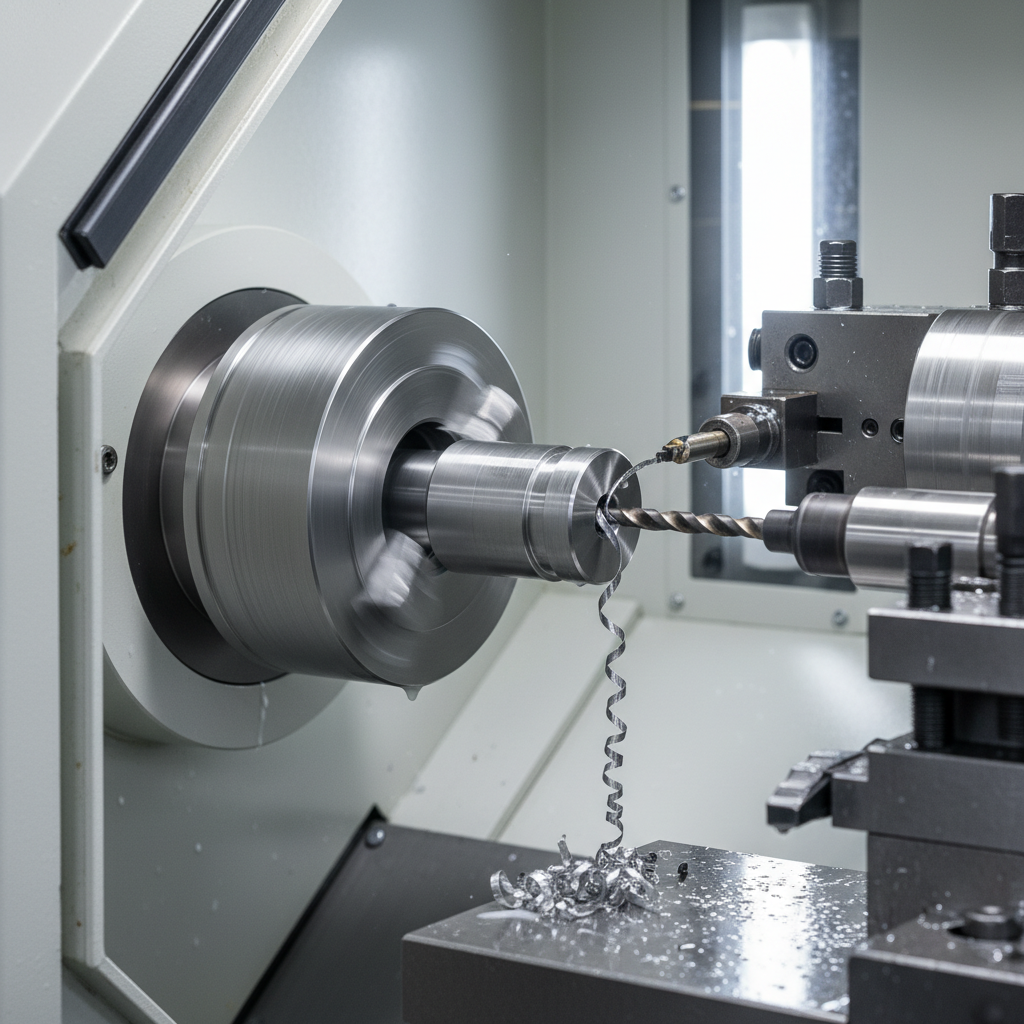
- CNC Turning — Rotates the workpiece against a stationary cutting tool. Ideal for cylindrical parts: shafts, pins, bushings, and threaded fasteners. High repeatability, fast cycle times for round geometries.
- Swiss Lathe Machining — A specialized turning process where the guide bushing supports the bar stock close to the cutting zone, enabling extremely tight tolerances on long, slender parts. The preferred method for small medical and electronics components under 32mm diameter.
- CNC Mill & Turn — Combines turning and milling in a single setup. Handles parts with off-axis features like cross-holes, flats, and keyways without secondary operations. Reduces setup time and cumulative tolerance stack-up.
- Automatic Lathe — High-speed bar-fed turning for simple geometries in very high volumes. Extremely cost-effective for screws, pins, and fittings produced in the tens of thousands.
- Cold Forging — A net-shape or near-net-shape process that compresses metal at room temperature. Produces superior grain structure and strength compared to machined-from-bar stock. Best for high-volume fasteners, connectors, and structural pins [4].
Method Selection Guide
| Method | Best For | Typical Tolerance | Volume Sweet Spot |
|---|---|---|---|
| CNC Turning | Shafts, pins, bushings | ±0.01–0.05mm | 50–50,000 pcs |
| Swiss Lathe | Long slender parts, medical components | ±0.005–0.01mm | 500–100,000 pcs |
| CNC Mill & Turn | Complex geometry, off-axis features | ±0.01–0.025mm | 50–10,000 pcs |
| Automatic Lathe | Simple turned parts, high volume | ±0.025–0.05mm | 10,000–1,000,000 pcs |
| Cold Forging | Fasteners, structural pins, connectors | ±0.05–0.1mm (near net shape) | 50,000+ pcs |
Step 3: Choose Your Material
Material selection for custom machined parts affects machinability, final mechanical properties, corrosion resistance, and total cost. Getting it wrong at this stage is expensive to fix after machining begins.
Common Materials and Their Trade-offs
- Aluminum (6061, 7075) — Excellent machinability, lightweight, good corrosion resistance. The default choice for electronics housings and aerospace brackets. 6061 is general-purpose; 7075 offers higher strength at a cost premium.
- Brass (C360) — Free-machining brass cuts faster than almost any other metal, making it cost-effective for high-volume turned parts like fittings and connectors. Naturally antimicrobial, which suits some medical applications.
- Stainless Steel (303, 304, 316) — Corrosion-resistant and strong, but harder to machine than aluminum or brass. 303 is the free-machining grade for turned parts; 316 is preferred for implant-adjacent medical components due to its molybdenum content.
- Titanium (Grade 2, Grade 5) — Exceptional strength-to-weight ratio and biocompatibility. Significantly harder to machine than steel, which adds cost. Reserved for aerospace and high-end medical applications where weight and biocompatibility are non-negotiable.
- Carbon Steel (1018, 4140) — Cost-effective and strong. Requires surface treatment (zinc plating, black oxide, or powder coat) to prevent corrosion. Common in automotive and industrial applications.
Pro Tip: If your part will be machined on a Swiss lathe in high volumes, specify a free-machining grade (like 303 stainless or C360 brass) over a standard grade. The difference in cycle time can reduce per-part cost by 10–20% on runs over 5,000 pieces.
Industry analysts note that material cost typically represents 30–60% of the total cost of a custom machined part, depending on the alloy and current commodity pricing. Locking in material specs early also lets suppliers quote more accurately and avoids mid-order substitutions [5].
Step 4: Evaluate and Qualify Suppliers
Evaluating suppliers for custom machined parts requires checking three things: technical capability, quality certifications, and responsiveness. A supplier who can’t quote within 24 hours rarely ships on time either.
Technical Capability Checklist
- Do they operate the specific machine type your part requires (Swiss lathe, 5-axis CNC, automatic lathe)?
- Can they hold your specified tolerances, verified by in-process measurement data?
- What is their maximum bar stock diameter? (Parts up to 38mm diameter cover the vast majority of small precision components.)
- Do they have sufficient engineering staff to review your drawing and flag DFM issues before cutting?
Quality Certification Requirements
Certifications aren’t just paperwork. They represent audited, documented process control that protects you from defective parts reaching your assembly line. As of 2026, the three most relevant certifications for precision machined components are:
- ISO 9001:2015 — The foundational quality management system standard. Every step is tracked, documented, and auditable for compliance. Required by most Fortune 500 procurement programs.
- ISO 13485:2016 — The medical device quality management standard. Mandatory for suppliers making components that enter regulated medical devices. Covers design control, traceability, and post-market requirements.
- IATF 16949 — The automotive quality management standard, built on ISO 9001 with additional requirements for production part approval (PPAP), statistical process control (SPC), and measurement system analysis (MSA).
At MFG SOLUTION, we’ve found that buyers who skip certification verification during supplier qualification are the same buyers dealing with quality escapes six months later. Certifications are the minimum bar, not a bonus feature.
Pro Tip: Request a copy of the supplier’s current ISO certificate and verify it against the issuing body’s registry. Certificates expire and can be suspended. A 60-second check protects you from a costly compliance failure.
Step 5: Submit Your RFQ and Review the Quote
Submitting a well-structured RFQ (Request for Quotation) for custom machined parts gets you accurate pricing faster and avoids the most common quoting misunderstandings.
What to Include in Your RFQ Package
- Upload your CAD file and 2D drawing. STEP files for 3D geometry, PDF for the dimensioned drawing with GD&T callouts.
- State your quantity and desired delivery date. Be specific: “500 pieces, ship by June 15” beats “some time next month.”
- List your quality requirements. Specify if you need a First Article Inspection (FAI) report, material certificates, or a Certificate of Conformance (CoC).
- Indicate your surface finish and secondary operations. Anodizing, plating, heat treatment, and passivation all affect lead time and cost.
- Ask for DFM feedback. A capable supplier will flag potential issues before quoting, not after your first batch arrives with problems.
Evaluating the Quote
Don’t evaluate quotes on unit price alone. Compare these factors side by side:
- Unit price at your target quantity
- Setup/tooling charge (amortized over the run)
- Lead time from order approval to ship
- Included quality documentation (FAI, CoC, SPC data)
- Payment terms and minimum order quantity
Online CNC machining platforms have compressed quoting timelines significantly. Services that previously required 5–7 business days for a quote now return pricing within hours for standard geometries [6]. When working with suppliers like those offering 8-hour quote turnarounds, you can realistically compare three to five suppliers in a single business day.
Step 6: Approve the Order and Track Production
Approving your order and actively tracking production of custom machined parts prevents the most common cause of late deliveries: problems discovered too late to fix before your deadline.
Order Approval Best Practices
- Confirm the drawing revision in the order confirmation. Mismatched revisions are the number-one cause of parts made to the wrong specification.
- Request a production schedule with milestones. For orders over 1,000 pieces, ask for a mid-production inspection checkpoint.
- Establish your acceptance criteria upfront. Define what constitutes a conforming part (dimensional, visual, and functional) before the supplier starts cutting.
- Arrange incoming inspection at your facility. Even with a trusted supplier, a sampling inspection on arrival catches packaging damage and shipping-related issues.
What Can Go Wrong at This Stage
A precision machining client once approved an order without confirming the surface finish specification on the purchase order. The supplier defaulted to a general machined finish (Ra 3.2 µm) when the drawing called for Ra 0.8 µm on the sealing face. The entire batch required rework. A one-line check on the PO would have prevented it.
Suppliers with full process control, meaning every step tracked, documented, and auditable, give you visibility into production status without requiring constant follow-up calls. This is what ISO 9001:2015 process documentation actually delivers in practice [7].
Common Mistakes to Avoid
Most sourcing failures for custom machined parts trace back to a handful of repeatable mistakes. Recognizing them early saves significant time and money.
Top Sourcing Pitfalls
- Over-tolerancing non-critical features. Applying tight tolerances across an entire drawing, rather than only to functional surfaces, inflates cost without improving part performance. Review every tolerance callout and ask: “Does this feature actually need to be this precise?”
- Skipping DFM review. Sending a drawing directly to production without a Design for Manufacturability review often results in undercuts, thin walls, or thread depths that are difficult or impossible to machine economically. Most capable suppliers offer DFM feedback at the quoting stage — use it.
- Choosing a supplier on price alone. The cheapest quote rarely accounts for scrap rate, rework, or the cost of a late delivery. A supplier with ISO certifications and documented process control costs slightly more per part but eliminates the hidden costs of quality failures [8].
- Ignoring material lead times. Exotic alloys like titanium Grade 5 or 17-4 PH stainless can have 4–8 week material lead times. If your delivery deadline doesn’t account for raw material procurement, your schedule is already broken before machining begins.
- Failing to specify secondary operations. Anodizing, passivation, heat treatment, and thread-locking inserts are often assumed to be included when they’re not. Every secondary operation should be explicitly called out in the drawing or purchase order.
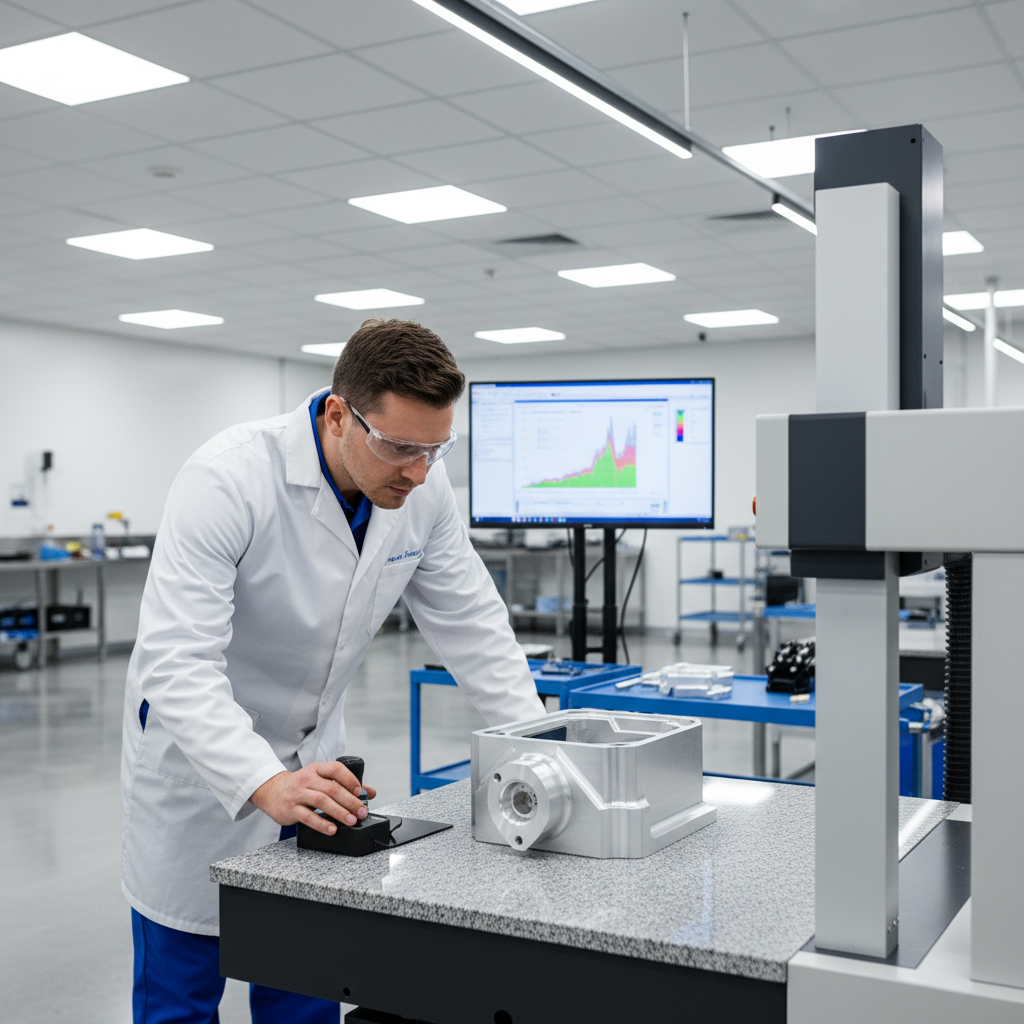
- Not requesting a First Article Inspection (FAI). On any new part or new supplier relationship, an FAI report (dimensional measurements on the first produced piece, compared to drawing requirements) is your proof that the supplier’s process is capable before you commit to a full production run.
A Note on What This Guide Doesn’t Cover
This guide focuses on the sourcing process for small precision parts up to 38mm diameter. It doesn’t cover large structural machining (frames, housings over 500mm), sheet metal fabrication, or additive manufacturing processes. Results will vary based on your specific part geometry, material, and volume requirements.
Sources & References
- NASA White Sands, “Custom CNC Machining,” 2026
- Wikipedia, “Interchangeable Parts,” 2026
- SME, “Achates Power: Custom Machining Center, CAD/CAM Toolpaths,” 2026
- SMFC, “Custom Machining & Fabrication Services,” 2026
- MW Components, “Custom Machined Parts & Manufacturing,” 2026
- Xometry, “Custom Online CNC Machining Services,” 2026
- CNC Fabrications, “Custom Machining Job Works,” 2026
- Fictiv, “Online CNC Machining Services,” 2026
Frequently Asked Questions
1. How much does custom machining cost?
Custom machined parts pricing depends on four variables: machining method, material, tolerance class, and batch size. As a baseline, CNC machining shop rates run $50–$150 per hour for standard turning and milling, but that figure alone is misleading. A simple brass fitting in a run of 5,000 pieces might cost $0.80 per part; a complex titanium medical component with tight tolerances at 100 pieces might run $85 per part. Setup charges, material costs (which can be 30–60% of total cost), secondary operations like anodizing or passivation, and required quality documentation (FAI reports, material certs) all add to the final price. The most reliable way to get an accurate number is to submit a complete drawing with your target quantity and let the supplier quote against your actual specification.
2. What is the highest-paid CNC machinist?
CNC machinist compensation varies significantly by specialization, industry, and geography. As of 2026, senior CNC machinists with 5-axis programming expertise in aerospace or medical device manufacturing typically earn $70,000–$110,000 annually in the United States. The highest compensation packages, sometimes exceeding $130,000–$150,000, go to CNC programmers and machinists at defense contractors, national laboratories, and specialized precision shops where security clearances or ultra-tight tolerance experience commands a premium. Machinists who cross into manufacturing engineering or process engineering roles often earn more, as their value shifts from operating equipment to optimizing production systems.
3. Will CNC machinists be replaced by AI?
AI and automation are changing CNC machining, but they’re not eliminating machinists, at least not in the near term. As of 2026, AI-assisted CAM software can generate optimized toolpaths faster than a human programmer, and robotic loading systems can run lights-out production on simple parts. However, setting up complex multi-axis jobs, diagnosing unexpected tool wear, interpreting ambiguous drawings, and managing first-article inspections still require experienced human judgment. The role is evolving: machinists who also understand CNC programming, metrology, and process optimization are in higher demand, not lower. The shops most at risk are those relying on low-skill, high-volume simple turning that can be fully automated, which is a small slice of the overall market for custom machined parts.
4. What materials can be used for custom machined parts?
The range is broad. Common metals include aluminum alloys (6061, 7075), brass (C360), stainless steel (303, 304, 316L), carbon steel (1018, 4140), titanium (Grade 2 and Grade 5), and copper. Engineering plastics like Delrin (acetal), PEEK, nylon, and PTFE are also frequently machined for lightweight or chemically resistant applications. Material selection should be driven by mechanical requirements, corrosion environment, regulatory constraints (FDA-grade materials for medical, RoHS compliance for electronics), and machinability, since harder materials increase cycle time and tooling wear, raising per-part cost.
5. How fast can I get custom machined parts delivered?
Turnaround time depends on part complexity, quantity, and supplier capacity. For simple geometries in common materials, some suppliers ship within 1–3 business days of order approval. More complex parts with multiple setups or secondary operations typically require 5–15 business days. The key variable is supplier readiness: a shop with your material in stock, the right machine available, and a clear drawing can move very fast. Our team at MFG SOLUTION delivers quotes within 8 hours of specification submission and ships approved orders within 3 days, which is meaningfully faster than the 4–6 week lead times common with traditional job shops.
6. What file formats do I need to submit for a CNC machining quote?
Most CNC machining suppliers accept STEP (.stp or .step) files for 3D geometry and PDF for 2D dimensioned drawings. IGES (.igs) is also widely supported. For simple 2D profiles, DXF files work well. Always submit both a 3D STEP file and a 2D PDF drawing with GD&T callouts, material specification, surface finish requirements, and any notes about critical dimensions. Relying solely on a 3D model without a 2D drawing leaves too much open to interpretation and is a common cause of first-article failures.
Sourcing custom machined parts efficiently comes down to preparation, process, and partner selection. Define your specifications precisely, choose the machining method that fits your geometry and volume, select materials that balance performance with machinability, and qualify suppliers against documented certifications rather than price alone. Submit complete RFQ packages, review quotes holistically, and track production actively from order approval to incoming inspection.
MFG SOLUTION specializes in exactly this: high-precision custom machined parts up to 38mm diameter, quoted within 8 hours and shipped within 3 days, backed by ISO 9001:2015, ISO 13485:2016, and IATF 16949 certifications. With 60+ engineering professionals and equipment including 5-axis CNC machines, 20 automatic lathes, and cold heading systems, we’re built to handle the volume and complexity that typical job shops can’t. If you have a drawing ready, submit it today and see exactly what your parts cost and when they’ll arrive.
About the Author
Written by the Manufacturing – Precision Machining & CNC Services experts at MFG SOLUTION. Our team brings years of hands-on experience helping businesses with Manufacturing – Precision Machining & CNC Services, delivering practical guidance grounded in real-world results.