
2026-09-22
How to Choose the Right Manufacturing Process for Precision Parts: CNC Machining, CNC Turning, Swiss Turning, Automatic Lathe, Cold Forging and Precision Casting
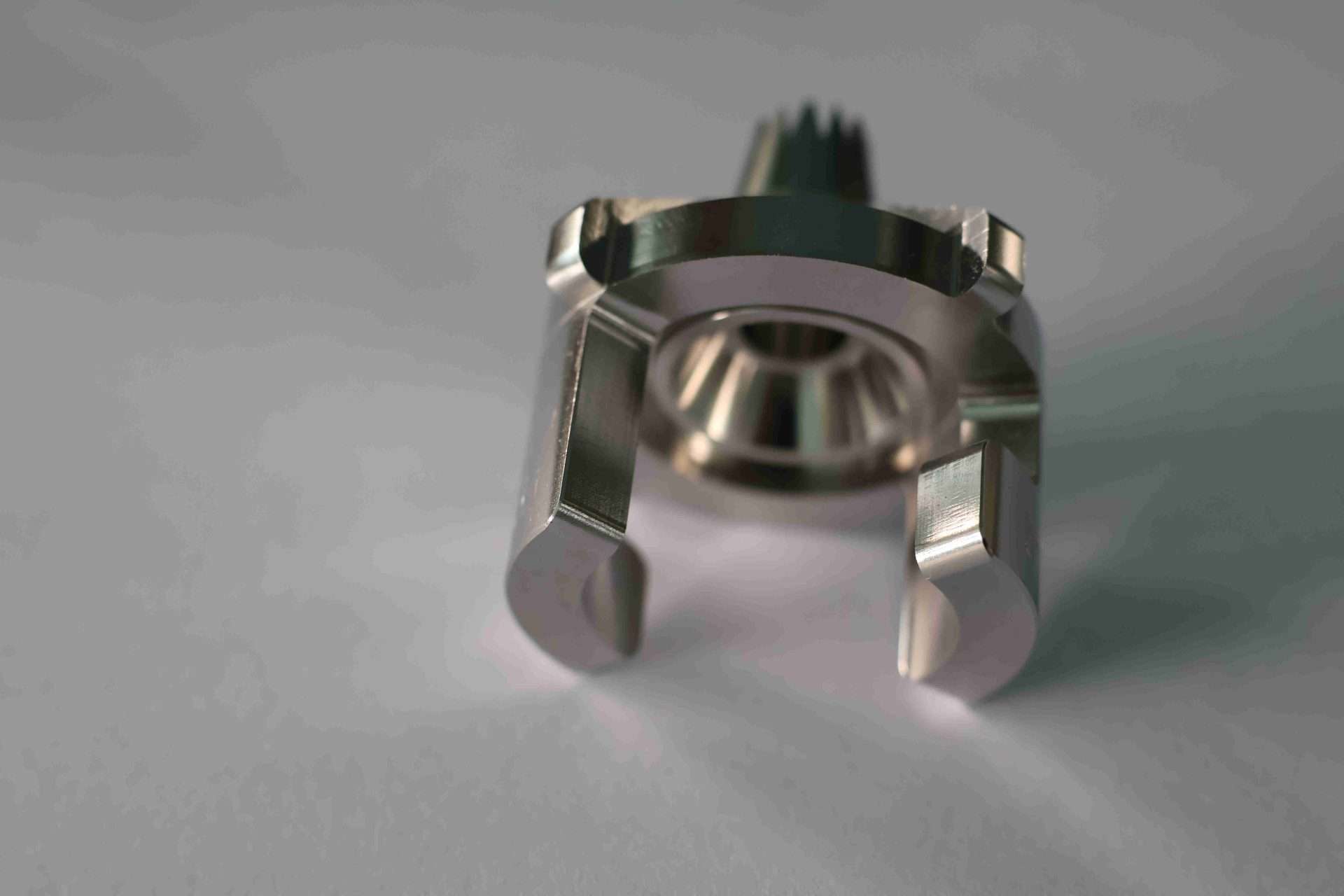
Choosing the right manufacturing process is one of the most important decisions in a precision-parts project.
A component may be technically manufacturable through CNC machining, CNC turning, Swiss turning, automatic lathe production, cold forging, precision casting, or a combination of several processes. However, the fact that a part can be produced by a process does not automatically mean that process is the right choice.
For engineers and purchasing teams, process selection affects far more than the machining operation itself. It can influence material utilization, tooling investment, production volume, dimensional control, surface finish, inspection requirements, lead time, scalability and total manufacturing cost.
For example, CNC machining can be an effective choice for prototypes and complex components because it provides considerable design flexibility without requiring dedicated forming tooling. A rotational component may be better suited to CNC turning. A small, slender component with multiple closely spaced features may benefit from Swiss turning. High-volume pins, shafts or fittings may justify automatic lathe production. For suitable high-volume components, cold forging can reduce material waste and machining time. Complex near-net-shape components may be candidates for precision casting followed by selective CNC machining.
The correct decision therefore starts with the part—not with a particular machine.
MFG SOLUTION approaches manufacturing process selection by reviewing geometry, material, quantity, tolerance, surface finish, secondary operations and inspection requirements together. The objective is to identify a production route that is technically appropriate and commercially practical for the actual application.
1. Why Manufacturing Process Selection Matters
Manufacturing process selection has a direct effect on the way a component moves from drawing to production.
A process can affect:
- Material utilization
- Production cycle time
- Tooling requirements
- Workholding requirements
- Dimensional consistency
- Surface quality
- Secondary operations
- Inspection requirements
- Production scalability
- Lead time
- Total cost per part
This is particularly important when a component moves from prototype to production.
A prototype quantity of 10 pieces may justify a flexible CNC machining route. The same component at 100,000 pieces per year may require a completely different engineering review.
At higher volumes, factors such as tooling amortization, material utilization, automated feeding, cycle time and process repeatability become increasingly important.
This is why purchasing teams should provide both the immediate order quantity and, whenever possible, expected annual demand.
The manufacturing process should support the complete commercial life of the part rather than only the first purchase order.
2. Start With Part Geometry
Geometry is normally the first major process-selection factor.
A part containing pockets, slots, bosses, drilled holes, milled surfaces and complex contours may be a good candidate for CNC machining.
A component dominated by diameters, shoulders, grooves, threads and axial bores may be more naturally suited to CNC turning.
Small-diameter, slender parts with multiple closely spaced features may benefit from Swiss turning because the workpiece can be supported close to the cutting area.
Parts with relatively simple rotational geometry and repeatable production requirements may be suitable for automatic lathe production.
Complex organic shapes, thin walls and difficult-to-machine external geometry may justify an evaluation of precision casting.
Suitable high-volume axisymmetric parts may also be candidates for cold forging.
MFG SOLUTION’s [manufacturing capability overview] provides a useful starting point for comparing these production routes.
The key principle is simple:
Geometry determines what processes are technically possible. Quantity determines which processes may be economically attractive.
3. CNC Machining for Flexible Precision Production
[CNC machining] is one of the most versatile manufacturing methods for custom precision parts.
The process removes material from metal or engineering plastic stock using computer-controlled cutting tools. Depending on the component, CNC machining may include milling, drilling, boring, tapping, reaming, contouring and other operations.
CNC machining is particularly useful when:
- The geometry is complex
- Production volume is low or medium
- Design changes are possible
- Multiple materials must be supported
- Tight dimensional requirements exist
- Dedicated tooling is difficult to justify
- Prototypes need to move quickly into production
One of the main advantages of CNC machining is flexibility.
A customer can provide a revised CAD model and drawing without necessarily requiring a new forming die. Engineering can review the revised geometry, adjust the process plan and create a new machining program.
This makes CNC machining particularly useful for prototypes, engineering validation parts, automation components, fixtures, equipment components, custom housings and specialized industrial hardware.
However, CNC machining should not automatically be assumed to be the lowest-cost process.
If a part contains a large amount of material that must be removed from billet and the annual production volume is very high, another process may provide better production economics.
4. When 5-Axis CNC Machining Should Be Considered
Not every machined part requires five-axis machining.
Simple prismatic components may be efficiently produced using three-axis machining.
However, additional axes can become valuable when the part contains multiple angled surfaces, complex contours, deep features or difficult tool-access requirements.
[5-axis CNC machining] can reduce repositioning for certain complex components and can provide better access to multiple surfaces.
Potential applications include:
- Complex brackets
- Aerospace components
- Impellers
- Tooling components
- Medical equipment parts
- Specialized automation components
- Complex housings
The important point is that five-axis machining should be selected because the geometry and manufacturing strategy justify it.
A supplier should not recommend a more complex process simply because the equipment is available.
The objective is to match machine capability with part requirements.
5. CNC Turning for Rotational Components
[CNC turning] is designed around rotational geometry.
The workpiece rotates while cutting tools create controlled diameters, shoulders, grooves, threads, tapers, bores and other features.
Typical turned components include:
- Shafts
- Bushings
- Pins
- Sleeves
- Spacers
- Connectors
- Fittings
- Threaded components
When most of the important features are arranged around a central axis, turning can provide a more direct manufacturing route than milling a cylindrical component from a rectangular billet.
Turning can also reduce unnecessary material removal.
For procurement teams, this is an important consideration during RFQ preparation. A component described simply as a “CNC machined part” may actually have several possible manufacturing routes.
The supplier should evaluate whether turning, milling or a mill-turn approach is appropriate for the complete geometry.
6. Swiss Turning for Small and Slender Components
[Swiss turning] is a specialized turning process commonly considered for small, slender and feature-dense components.
The workpiece can be supported close to the cutting area, which can help control deflection during machining.
This makes Swiss turning useful for components such as:
- Precision pins
- Small shafts
- Miniature connectors
- Medical components
- Instrumentation parts
- Small threaded components
- Electronic hardware
- Precision bushings
MFG SOLUTION currently lists more than 20 Swiss-type lathes and provides Swiss turning for small precision parts.
For procurement teams, part diameter and length-to-diameter ratio should therefore be considered early in supplier selection.
A general-purpose turning supplier and a supplier experienced in Swiss-type production may approach the same small component differently.
7. Automatic Lathe for Repeat Production
[Automatic lathe machining] is intended for repeat production of suitable rotational components where controlled cycle time and bar feeding are important.
Typical applications include:
- Pins
- Spacers
- Small shafts
- Threaded inserts
- Fittings
- Fastener components
- Small turned hardware
The economics become more relevant as production quantity increases.
For repeat production, automated feeding and controlled production cycles can reduce manual intervention and improve consistency.
However, annual quantity should not be considered alone.
Part diameter, geometry, material, tooling, tolerances, secondary operations and inspection requirements all affect the final production route.
A component with a complicated cross-feature may still require additional machining even when automatic turning is used as the primary process.
8. Cold Forging for Suitable High-Volume Parts
[Cold forging] uses controlled plastic deformation to form metal at or near room temperature.
Instead of removing most of the material from a solid billet, the process forms material into a near-net shape.
For suitable geometries and production volumes, this can provide benefits such as:
- Improved material utilization
- Reduced machining time
- High production rates
- Repeatable geometry
- Reduced material waste
Typical applications include:
- Screws
- Bolts
- Pins
- Rivets
- Studs
- Sleeves
- Near-net blanks
However, cold forging normally involves dedicated tooling.
That creates an important commercial consideration.
A tooling investment that is difficult to justify for a prototype order may become commercially reasonable for a large recurring production program.
MFG SOLUTION therefore evaluates geometry, material, quantity, tooling and downstream machining requirements before confirming cold-forging feasibility.
9. Precision Casting for Complex Near-Net Shapes
[Precision casting] can be useful when a component contains complex geometry that would require substantial machining if produced entirely from solid stock.
Investment casting can produce complex shapes, thin sections, internal contours and near-net geometries that may reduce the amount of subsequent CNC machining.
Typical applications include:
- Valve components
- Pump bodies
- Impellers
- Housings
- Brackets
- Levers
- Medical components
- Complex industrial hardware
MFG SOLUTION describes precision casting as a process for complex metal parts where near-net-shape geometry can reduce machining requirements.
A cast component may still require CNC machining on critical surfaces.
For example:
Precision casting → CNC machining → finishing → inspection
This hybrid route can combine the geometric flexibility of casting with the dimensional control of machining.
10. CNC Machining vs. Cold Forging
The decision between CNC machining and cold forging should not be reduced to a simple price comparison.
CNC machining may be more appropriate when:
- Quantity is low or medium
- Design changes are expected
- Complex features must be machined
- Dedicated tooling is not economical
- Prototype speed is important
- Multiple material options are required
Cold forging may be worth evaluating when:
- Annual volume is high
- Geometry is suitable for forming
- Material utilization is important
- Production repeatability matters
- Tooling can be amortized across sufficient production volume
A hybrid process can sometimes provide a better solution:
Cold forging → CNC turning → finishing → inspection
The forging operation establishes a near-net shape while CNC machining creates the critical dimensions and functional surfaces.
11. CNC Turning vs. Swiss Turning
The difference is primarily related to part geometry, size, support requirements and production strategy.
Conventional CNC turning is often appropriate for rotational parts with relatively larger diameters or simpler geometry.
Swiss turning becomes particularly useful when the part is:
- Small
- Slender
- Feature-dense
- Diameter-critical
- Thread-heavy
- Sensitive to deflection
The decision should be based on the submitted component rather than simply choosing the machine with the highest specification.
A manufacturing engineer should consider workholding, support, tool access, cycle time and inspection requirements before confirming the route.
12. Automatic Lathe vs. CNC Turning
Both processes can produce rotational parts, but their production economics may differ.
For repeat production, automatic lathe equipment can provide highly repeatable cycles for suitable geometries.
CNC turning may provide greater programming flexibility when the component has more complicated geometry or when quantities are lower.
A purchasing team should therefore provide:
- Prototype quantity
- Production batch size
- Annual demand
- Material
- Drawing revision
- Critical dimensions
- Surface finish
- Secondary processes
This information allows the supplier to compare the available routes instead of quoting the part through only one process.
13. Material Selection Can Change the Process
Material selection is closely connected to manufacturing process selection.
MFG SOLUTION’s [materials engineering library] covers metals and engineering plastics used across CNC machining, Swiss turning and cold forging.
Common material considerations include:
- Strength
- Hardness
- Corrosion resistance
- Machinability
- Weight
- Thermal performance
- Electrical properties
- Dimensional stability
- Surface treatment compatibility
- Availability
For example, aluminum alloys are widely used where low weight and machinability are important.
Stainless steels may be selected where corrosion resistance, strength or cleanability is required.
Brass can be attractive for precision fittings, connectors and components where machinability and conductivity matter.
Engineering plastics such as POM, nylon, PEEK and PTFE may be selected where weight, friction, chemical resistance or electrical insulation is important.
Material grade and condition should always be specified when they affect performance.
“Aluminum,” “stainless steel” or “plastic” alone may leave too many variables unresolved.
14. Surface Finishing Should Be Planned Before Production
Surface finishing can affect both performance and final dimensions.
Depending on the material and application, a component may require:
- Anodizing
- Hardcoat anodizing
- Powder coating
- Polishing
- Electropolishing
- Electroplating
- Nickel plating
- Zinc plating
- Passivation
The [surface finishing capabilities] should therefore be considered during the initial engineering review rather than added after machining is complete.
For example, if a coating adds measurable thickness to a surface, a critical mating feature may need to be machined differently before finishing.
The drawing should clearly identify whether a dimensional requirement applies before or after the surface treatment.
15. Tolerances Must Be Connected to Function
Process selection and tolerance selection are closely connected.
A very tight tolerance can require:
- Additional finishing operations
- More precise workholding
- Additional inspection
- More setup time
- Greater process control
- Increased scrap risk
That does not mean tight tolerances should be avoided.
It means they should be applied where the function of the component actually requires them.
The [ISO tolerance reference] can be used as a starting point for discussing general dimensional requirements.
For critical features, the drawing should clearly define:
- Datums
- Dimensional limits
- Geometric tolerances
- Surface roughness
- Thread requirements
- Critical-to-function features
The supplier can then determine whether the selected manufacturing process can reliably support the requirement.
16. Inspection Requirements Also Influence Process Selection
Inspection should be considered before production rather than after the parts have been manufactured.
Depending on the component, quality control may include:
- Material certificate verification
- First-article inspection
- In-process inspection
- Final dimensional inspection
- Thread inspection
- Surface finish inspection
- Visual inspection
- CMM measurement
- Traceability documentation
MFG SOLUTION states that inspection is selected according to drawing requirements and functional risk rather than using one generic inspection method for every part.
For regulated or highly controlled applications, documentation requirements can influence the supplier and production route just as much as machining capability.
17. Prototype and Mass Production May Use Different Processes
One of the most important manufacturing-planning principles is that prototype production and mass production do not always need to use the same process.
A typical development path might be:
Prototype → CNC machining
Pilot production → CNC machining / automatic turning
Mass production → cold forging + secondary machining
Another project may follow:
Prototype → CNC machining
Production → precision casting + CNC machining
This approach allows the engineering team to validate the design first and optimize production economics once demand becomes predictable.
The important point is to communicate expected future volume during the initial RFQ.
18. A Practical Process-Selection Checklist
Before asking a manufacturer to recommend a production route, prepare the following information.
Geometry
Provide the latest 3D CAD model.
Drawing
Include dimensions, tolerances, datums, threads and notes.
Material
Specify grade, temper, condition and heat treatment where applicable.
Quantity
Provide prototype quantity, production quantity and expected annual demand.
Finish
Define anodizing, plating, polishing, coating, passivation or other requirements.
Quality
Identify inspection reports, certificates, traceability and critical features.
Delivery
State target delivery requirements and whether the project is prototype, pilot or recurring production.
With these inputs, the engineering team can compare CNC machining, CNC turning, Swiss turning, automatic lathe, cold forging, precision casting or hybrid routes.
19. Why a Hybrid Manufacturing Route Can Be More Effective
A precision component does not always need to be produced using a single manufacturing process.
For example:
Cold forging → CNC turning → heat treatment → surface finishing → inspection
Another component might use:
Precision casting → CNC machining → polishing → inspection
A small precision component might use:
Bar stock → Swiss turning → deburring → cleaning → inspection
A complex aluminum component might use:
CNC machining → anodizing → dimensional inspection → packaging
Hybrid manufacturing allows each process to perform the task for which it is best suited.
The result can be a better balance between geometry, precision, production volume and manufacturing economics.
20. How MFG SOLUTION Evaluates a New Project
MFG SOLUTION reviews the manufacturing requirements as a complete system rather than selecting a process from a single drawing dimension.
The engineering review considers:
- Geometry
- Material
- Quantity
- Annual demand
- Tolerance
- Surface finish
- Tool access
- Workholding
- Secondary operations
- Inspection requirements
- Tooling investment
- Production risk
MFG SOLUTION currently provides CNC machining, CNC turning, Swiss turning, cold forging, automatic lathe machining, precision casting, surface finishing and PCBA-related manufacturing support.
Customers can submit CAD files through the [Online AI Quote] system for an initial manufacturing estimate. The website explains that the online estimate is a reference price and that final pricing is confirmed after engineering review.
For projects with complex geometry, unusual materials, demanding tolerances or significant production volume, direct engineering review is recommended.
21. What Should You Ask a Manufacturing Supplier?
Before selecting a production route, purchasing teams can ask:
1. Which process do you recommend and why?
The supplier should explain the relationship between geometry, volume and process economics.
2. Is there an alternative process?
Comparing two or more routes can reveal opportunities for cost or lead-time optimization.
3. What tooling investment is required?
This is particularly important for cold forging, casting and other tooling-dependent processes.
4. Which dimensions require special inspection?
This helps align manufacturing and quality requirements.
5. Does surface finishing affect critical dimensions?
This should be resolved before machining begins.
6. Can the same supplier support prototype and production?
A supplier capable of supporting process transitions can simplify future sourcing.
7. What information is required for a firm quotation?
The supplier should identify missing geometry, material, quality or commercial information before production planning.
Frequently Asked Questions
FAQ 1: What is the best manufacturing process for precision parts?
There is no single best process for every precision part. The appropriate route depends on geometry, material, quantity, tolerance, finish, tooling requirements and inspection needs.
FAQ 2: Is CNC machining suitable for prototypes?
Yes. CNC machining is often suitable for prototypes because it provides design flexibility without requiring dedicated forming tooling for every component.
FAQ 3: When should I consider Swiss turning?
Swiss turning should be evaluated for small, slender or feature-dense rotational components where workpiece support and controlled machining are important.
FAQ 4: When does cold forging make sense?
Cold forging can be considered for suitable geometries and repeat production volumes where tooling investment can be justified and material utilization is important.
FAQ 5: Is precision casting suitable for complex components?
Precision casting can be useful for complex near-net-shape components that would require substantial machining from solid stock. Critical surfaces can often receive secondary CNC machining.
FAQ 6: Should prototype and mass production use the same process?
Not necessarily. A prototype may be produced through CNC machining while a high-volume production version may use cold forging, automatic turning or precision casting with secondary machining.
FAQ 7: Does material affect manufacturing process selection?
Yes. Material affects machinability, forming behavior, tool wear, surface finish, heat treatment, corrosion resistance and production economics.
FAQ 8: What information should I send for a manufacturing process review?
Provide the 3D CAD model, controlled 2D drawing, material specification, quantity, annual demand, surface finish, tolerance requirements, inspection requirements and target delivery date.
Final Takeaway
Choosing a manufacturing process should be treated as an engineering decision rather than a simple purchasing decision.
CNC machining provides flexibility for complex and lower-volume components.
CNC turning is efficient for rotational parts.
Swiss turning can be valuable for small, slender and feature-dense components.
Automatic lathe production can support repeatable high-volume production of suitable parts.
Cold forging can provide efficient near-net forming when geometry and volume justify tooling.
Precision casting can reduce machining requirements for complex shapes.
In many cases, the most practical solution is not one process but a combination of processes.
The right manufacturing route depends on:
Geometry + Material + Quantity + Tolerance + Finish + Quality + Production Economics
At MFG SOLUTION, the engineering team reviews these factors together before confirming the manufacturing route, quotation and production plan.
Ready to Review Your Part?
Send your 3D CAD model, 2D drawing, material specification, quantity, expected annual demand, surface-finish requirements and inspection requirements to MFG SOLUTION.
The engineering team can review whether CNC machining, CNC turning, Swiss turning, automatic lathe production, cold forging, precision casting or a hybrid manufacturing route is appropriate for your project.
Submit your CAD file and request an engineering quotation today.