
2026-10-20
How to Choose the Right Manufacturing Process for Custom Precision Metal Parts
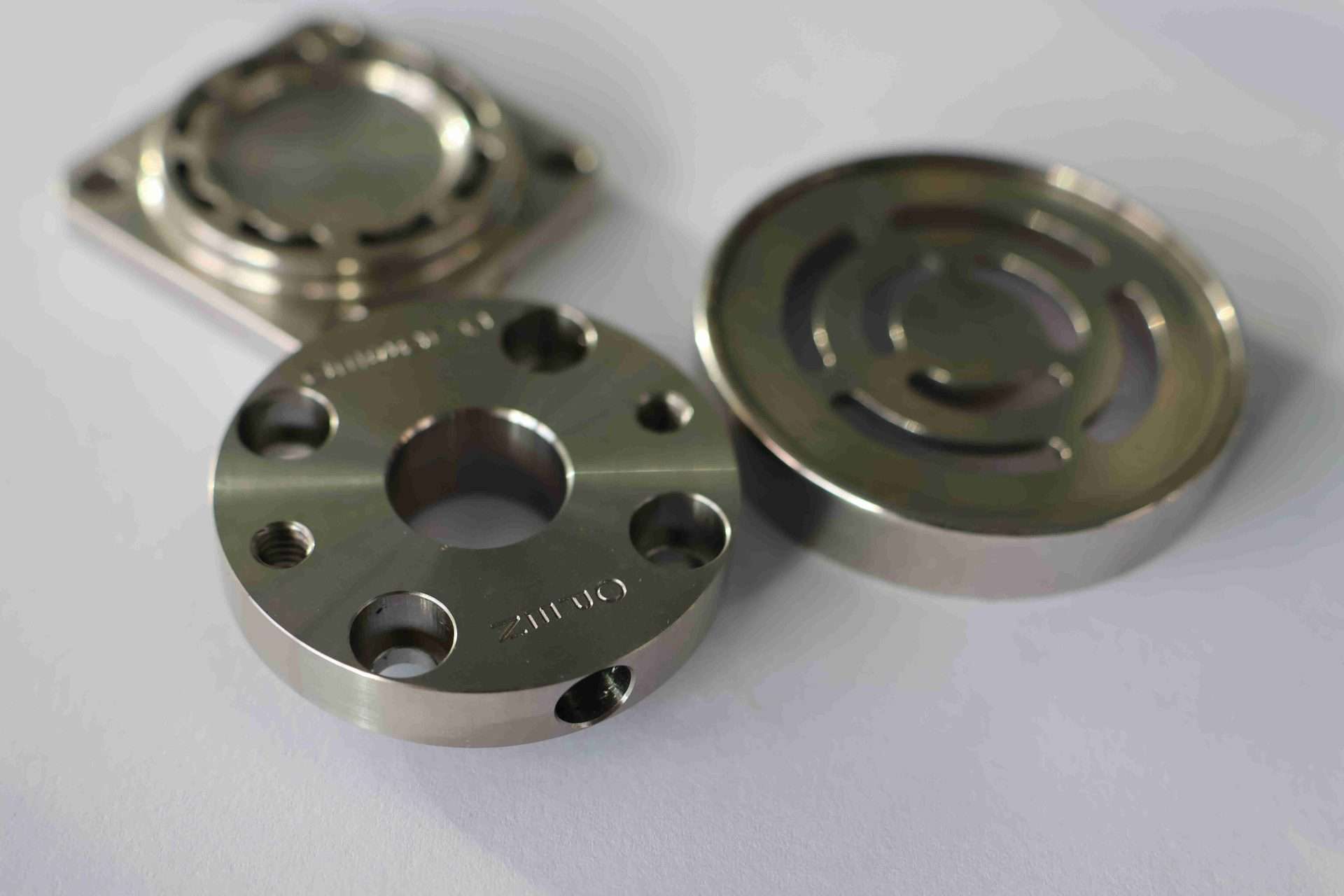

Choosing the right manufacturing process is one of the most important decisions in custom precision part production. The process affects dimensional accuracy, surface quality, material performance, production cost, lead time, and the ability to scale from prototypes to repeat orders.
A component that is economical to produce by CNC machining in a small batch may be better suited to cold forging when annual demand increases. A complex component with internal cavities may benefit from precision casting followed by finish machining. Slender parts with small diameters may be ideal candidates for Swiss turning, while electronic products requiring both mechanical components and circuit boards may need an integrated PCBA manufacturing solution.
The challenge is that no single manufacturing process is best for every part. Engineers and purchasing teams must evaluate part geometry, material, tolerances, order quantity, quality requirements, and total landed cost together.
At MFG SOLUTION, manufacturing decisions begin with understanding the part’s functional requirements and production objectives. Our capabilities include CNC machining, CNC turning, Swiss turning, cold forging, precision casting, surface finishing, and PCBA assembly. The objective is to identify a practical manufacturing route that balances performance, cost, and delivery rather than selecting a process based on unit price alone.
This guide explains how to compare common manufacturing methods, identify the factors that matter most, and prepare an effective RFQ for custom precision metal parts.
1. Start with the Function of the Component
Before comparing manufacturing processes, define what the part must do.
Two components with similar external dimensions can require completely different manufacturing strategies. A decorative aluminum cover, a precision valve component, a rotating shaft, and a load-bearing mechanical connector may all be made from metal, but their functional requirements differ significantly.
Begin by identifying the following characteristics.
Dimensional and geometric requirements
Determine which dimensions directly affect assembly, movement, sealing, alignment, or load transfer. These critical dimensions may require tighter tolerances than nonfunctional external surfaces.
For example, a shaft’s bearing seat may need controlled diameter, roundness, and surface finish. Its nonfunctional end face may not require the same level of precision.
Review the drawing’s dimensional tolerances, geometric dimensioning and tolerancing (GD&T), datum references, concentricity-related requirements, and inspection criteria before selecting a process.
Learn more about precision manufacturing considerations through the CNC precision machining services and ISO tolerance resources available from MFG SOLUTION.
Mechanical and environmental requirements
Consider operating temperature, vibration, corrosion, pressure, fatigue, wear, and contact with other components.
Stainless steel may be appropriate for corrosion resistance, while aluminum alloys may be preferred for lightweight structures. Brass can be suitable for selected fittings and threaded components. Material selection must still account for strength, machinability, surface treatment compatibility, and the operating environment.
Assembly and interface requirements
Identify threads, bearing seats, sealing surfaces, mounting holes, locating features, and mating interfaces.
A component with several precision interfaces may require secondary machining even when the main body is produced by casting or forging. These requirements should be considered at the beginning rather than discovered after tooling has been completed.
2. Compare the Main Manufacturing Processes
The most appropriate process depends on geometry, quantity, tolerance, material, and the cost of achieving the required features.
CNC machining: flexibility and geometric control
CNC machining removes material from a solid workpiece using programmed cutting tools. CNC milling is suitable for prismatic parts, pockets, slots, mounting surfaces, and complex multi-face features. CNC turning is commonly used for shafts, bushings, pins, threaded components, and rotational geometries.
Its major advantage is flexibility. Engineers can revise a CAD model or toolpath without necessarily redesigning dedicated forming dies. This makes CNC machining particularly useful for prototypes, low-to-medium production volumes, and parts with complex features that are difficult to form economically.
However, machining removes material that may become chips. Deep cavities, thin walls, difficult-to-cut alloys, and long cycle times can increase cost. Material waste and machining time become especially important when production volumes grow.
Explore CNC machining when a part requires flexible geometry, accurate machined interfaces, or design changes during development.
CNC turning: efficient production of rotational components
CNC turning is designed for components whose primary geometry is rotational. Typical examples include threaded fittings, shafts, spacers, bushings, pins, and selected valve components.
Turning can combine several operations, including facing, grooving, threading, drilling, and profiling. Depending on machine configuration, driven tooling may also produce cross-holes and other off-axis features.
The process is often efficient for parts with a dominant cylindrical shape. Nevertheless, components with many nonrotational features may require additional milling operations or a mill-turn machine.
Compare the geometry and feature requirements with the available CNC turning services before specifying a production route.
Swiss turning: small, slender, precision components
Swiss-type turning supports the manufacture of small-diameter and slender components. The guide bushing supports the workpiece close to the cutting zone, helping control deflection during machining.
Typical applications include precision pins, miniature shafts, medical components, electronic hardware, instrument parts, and complex small turned components.
Swiss turning is especially useful when a component combines small diameters with multiple turned features and demanding dimensional requirements. However, it is not automatically the cheapest option for every small part. Material diameter, feature complexity, machine setup, cycle time, and batch size all affect the economics.
For small, intricate rotational parts, review Swiss turning as a possible production method.
Cold forging: reducing machining requirements at scale
Cold forging forms metal under pressure without heating the workpiece to conventional hot-forging temperatures. Depending on the design and material, the process can create near-net-shape components with high repeatability and reduced material waste.
It is widely considered for suitable fasteners, pins, shafts, bushings, fittings, and other parts that can be formed from wire or bar stock.
Cold forging can reduce cycle time and raw-material consumption in repeat production. It may also improve material utilization compared with machining a similar geometry from solid stock.
The trade-off is the initial cost of tooling and the need to validate forming feasibility. Complicated geometries, demanding dimensional interfaces, or features that cannot be formed reliably may still require secondary machining.
Review cold forging services when the design has repeatable geometry and expected demand may justify dedicated tooling.
Precision casting: complex shapes and material efficiency
Precision casting can produce complex geometries that would require extensive machining if manufactured entirely from solid stock.
The process can be attractive for components with irregular external shapes, internal features, curved surfaces, or geometry that is difficult to achieve through conventional cutting operations.
Casting does not eliminate every machining requirement. Critical holes, threaded interfaces, bearing seats, sealing faces, and precision mounting features may still need finish machining.
Engineers should also evaluate material specifications, casting quality, dimensional variation, porosity risk, finishing requirements, and inspection plans.
Consider precision casting when the shape is complex and a near-net-shape process could reduce total manufacturing effort.
PCBA and integrated manufacturing
Not every custom manufacturing project ends with a metal component. Many industrial products combine machined housings, mounting brackets, connectors, wiring, circuit boards, and electronic assemblies.
When the project includes electronic controls, sensors, or other circuit-based functions, coordinating mechanical manufacturing with PCBA assembly can simplify supplier management and integration.
The key is to define which components require mechanical manufacturing, which require electronic assembly, and what functional or final-product testing is necessary.
Explore PCBA manufacturing and assembly when mechanical and electronic production requirements need to be coordinated.
3. Evaluate Production Volume Before Comparing Unit Prices
Production quantity is one of the strongest factors influencing process selection.
A process with a higher setup cost may deliver a lower unit cost when the order quantity is large enough. Conversely, a process with minimal tooling investment may be more economical for prototypes or small batches.
Prototype and low-volume production
For early development, CNC machining is often attractive because it allows engineers to test geometry, fit, and function without committing to dedicated forming tools.
The initial unit price may be higher, but the project avoids tooling investment before the design is proven.
This approach is particularly useful when drawings are still changing, functional testing is incomplete, or demand forecasts remain uncertain.
Medium-volume production
At medium volumes, compare CNC machining with alternative processes using realistic production data. A hybrid route may be more economical than either process used alone.
For example, a component may be cold forged into a near-net shape and then CNC machined to achieve precise holes, threads, or sealing surfaces.
The decision should account for tooling amortization, cycle time, inspection, scrap, finishing, and supplier coordination.
High-volume production
For repeat orders, processes such as cold forging may offer substantial savings when the component geometry is suitable.
However, the tooling investment must be spread across realistic demand rather than an optimistic forecast. Product life, annual usage, revision risk, and expected reorder frequency should all be considered.
A useful starting point is to calculate the estimated total cost for each candidate process:
Estimated total production cost = setup and tooling + recurring manufacturing cost + inspection and finishing + expected quality losses + logistics.
Then divide the result by the number of accepted parts to estimate the effective cost per usable component.
This calculation is more useful than comparing quoted unit prices without considering setup, rejected parts, or downstream processing.
4. Match Material Selection to the Manufacturing Route
Material choice affects tool life, forming behavior, cycle time, dimensional stability, corrosion resistance, and finishing cost.
Aluminum alloys
Aluminum alloys are widely used in lightweight mechanical structures, housings, fixtures, automation equipment, and thermal-management components.
CNC machining is suitable for many aluminum parts because it offers flexibility and can produce accurate interfaces. However, alloy selection matters. Different aluminum grades have different strength, machinability, corrosion behavior, and heat-treatment characteristics.
A material that is easy to machine may not provide the strength or surface performance required by the application.
Stainless steel
Stainless steel is commonly selected for corrosion resistance, cleanliness, and mechanical durability. Applications include fluid-handling equipment, food-processing machinery, instrumentation, and industrial components.
Machining performance varies by grade and condition. Work hardening, cutting heat, tool wear, and burr formation may affect cycle time and dimensional consistency.
For stainless steel parts, specify the exact grade whenever possible instead of using a generic material description.
Brass and copper alloys
Brass is used in suitable fittings, connectors, threaded components, and fluid-related hardware. Copper alloys may be selected for electrical or thermal performance.
Material selection should reflect the actual operating environment, required mechanical properties, applicable regulations, and compatibility with the chosen manufacturing process.
Carbon and alloy steels
Steel components may require additional operations such as heat treatment, grinding, plating, or protective coatings.
These operations can influence dimensions, hardness, residual stress, corrosion performance, and inspection requirements. Critical dimensions should therefore be evaluated against the complete process route, not just the initial machining operation.
For every material, confirm the grade, condition, certification requirements, and any restrictions on substitutions before production begins.
5. Understand Tolerance, Surface Finish, and Quality Requirements
A manufacturing process should be selected according to the tolerances the part actually needs.
Tighter tolerances generally increase production cost because they may require slower cutting conditions, additional finishing, more frequent measurement, controlled temperature, or specialized inspection equipment.
Specifying extremely tight tolerances on every dimension can make a component unnecessarily expensive without improving its function.
Separate critical and noncritical dimensions
Identify the dimensions that affect fit, motion, sealing, alignment, and structural performance.
These should receive clearly defined tolerances and suitable inspection methods. Other dimensions may be assigned standard tolerances where the design permits.
A clear drawing helps the supplier distinguish functional requirements from dimensions that do not need additional process control.
Specify surface finish by function
Surface finish is not simply a cosmetic requirement. It can influence friction, wear, sealing, corrosion, adhesion, and cleaning.
A sealing face may need a defined roughness range, while a hidden mounting surface may perform adequately with a less demanding finish.
If a part will be anodized, plated, polished, passivated, or otherwise treated, account for the finishing process when defining dimensions and surface requirements.
Establish a suitable inspection plan
Depending on risk and application, inspection may include dimensional measurement, CMM inspection, thread gauging, surface-roughness measurement, hardness testing, material verification, or documented first-article inspection.
The inspection plan should match the drawing and contractual requirements. A supplier should not assume that every project needs the same documentation package.
When quality records are important, specify the required inspection report, material certificate, certificate of conformity, traceability, and acceptance criteria in the RFQ.
6. Compare Total Cost Instead of Machining Price Alone
A low initial quote does not always produce the lowest overall project cost.
The full cost of a custom component can include raw material, tooling, machining, secondary operations, inspection, packaging, freight, import duties, rejected parts, and the administrative effort required to coordinate multiple suppliers.
Account for material utilization
For a machined component, compare the volume of raw material purchased with the amount retained in the finished part.
A complex part machined from a large billet may generate substantial scrap. If annual demand is high and the geometry permits, forging or casting may improve material utilization.
Material savings must still be balanced against tooling cost, forming feasibility, and secondary machining requirements.
Include finishing and secondary operations
A component may require deburring, heat treatment, grinding, anodizing, plating, passivation, or other finishing operations.
Each additional operation adds cost and can introduce handling, dimensional, or scheduling risks. Combining compatible operations through a coordinated supplier can reduce unnecessary transport and communication.
Evaluate delivery risk
A lower quotation may be less attractive if the production route depends on several suppliers, uncertain material availability, or lengthy tooling approval.
Compare the complete lead time, including material procurement, tooling, first-article approval, production, finishing, inspection, and shipment.
For repeat programs, consistent delivery and reliable quality may be more valuable than a small difference in the quoted unit price.
7. Use Design for Manufacturability to Reduce Cost
Design for manufacturability (DFM) means reviewing a component’s design before production to identify unnecessary complexity, manufacturing risks, and avoidable costs.
A useful DFM review considers the relationship between functional requirements and the process needed to achieve them.
Reduce unnecessary complexity
Deep narrow pockets, difficult internal corners, excessive thin walls, inaccessible features, and complicated setups can increase machining time.
Where the design permits, use practical tool-access dimensions, suitable corner radii, and consistent feature sizes. Avoid adding precision features that do not serve a clear functional purpose.
Review datum and setup strategy
A component that requires many separate setups may be more expensive than a design that allows several features to be machined in fewer operations.
Establishing clear datums and accessible inspection features can improve both production repeatability and measurement efficiency.
Design for the intended production volume
A design optimized for a machined prototype may not be optimal for a high-volume forged component.
When production demand increases, review whether the geometry can be adapted to a forming process while preserving the required interfaces and performance.
Changes should be evaluated jointly by design and manufacturing engineers so that cost improvements do not compromise the part’s function.
8. Prepare a Complete RFQ Package
The quality of the information in a request for quotation directly affects the quality of the supplier’s recommendation.
A complete RFQ should include:
- A current 2D engineering drawing with dimensions and tolerances.
- A 3D CAD model, preferably in a commonly supported neutral format such as STEP.
- Material grade and condition.
- Required quantity for the initial order and estimated annual demand.
- Surface finish, heat treatment, coating, and other post-processing requirements.
- Critical dimensions and any special inspection requirements.
- Material certification, traceability, or compliance requirements.
- Target delivery date and shipping destination.
- Packaging requirements and any special handling instructions.
If the design is still under development, indicate which features may change and which requirements are fixed. This allows the supplier to distinguish a prototype quotation from a production quotation.
It is also helpful to request alternative manufacturing routes where appropriate. For example, ask for a CNC-machined option for the initial batch and a forming-based option for higher annual volumes.
A supplier should explain the assumptions behind each recommendation, including tooling, secondary machining, inspection, and expected production constraints.
9. A Practical Process-Selection Framework
Use the following questions to narrow down the options before requesting a detailed quotation.
Choose CNC machining when:
- The design is complex or still changing.
- The quantity is relatively low or moderate.
- Several precision features must be machined directly.
- Dedicated forming tooling is not yet economically justified.
Choose CNC turning or Swiss turning when:
- The component is primarily rotational.
- Diameter, concentricity, threads, or turned surfaces are important.
- The part’s dimensions and feature complexity suit the selected machine.
Consider cold forging when:
- The component has formable geometry.
- Repeat production volume is sufficient to justify tooling.
- Material utilization and cycle-time reduction can improve total cost.
- Secondary machining can be minimized or controlled.
Consider precision casting when:
- The geometry is complex.
- A near-net shape can reduce material removal.
- Casting quality and post-machining requirements can be validated.
Consider an integrated manufacturing route when:
- The project combines several manufacturing processes.
- Mechanical parts must be coordinated with PCBA or final assembly.
- Supplier consolidation can improve communication and delivery control.
These are starting points rather than absolute rules. A detailed engineering review may identify a hybrid process that provides a better balance of cost, precision, and production efficiency.
10. Why Manufacturing Engineering Should Be Involved Early
Manufacturing engineering should not be limited to checking whether a drawing can be produced. Early involvement helps identify the most economical process route before purchasing commitments are made.
A practical engineering review should examine the drawing, material, tolerances, quantity, surface finish, inspection plan, and intended application together.
The result should be a clear explanation of the proposed manufacturing process, critical risks, tooling requirements, secondary operations, and assumptions affecting cost or delivery.
For projects that may scale from prototypes to repeat production, the review should also consider whether the initial process remains suitable at higher volumes.
MFG SOLUTION supports custom manufacturing projects through CNC machining, CNC turning, Swiss turning, cold forging, precision casting, surface finishing, and PCBA assembly. The appropriate combination depends on the component and its production objectives.
Conclusion
Selecting the right manufacturing process for custom precision metal parts requires more than comparing machining methods or unit prices. The decision must account for functional requirements, geometry, material, tolerance, production volume, finishing, quality documentation, and delivery.
CNC machining provides flexibility for complex parts and changing designs. CNC turning and Swiss turning suit appropriate rotational components. Cold forging may improve economics for repeatable high-volume parts, while precision casting can reduce material removal for suitable complex shapes. Integrated manufacturing can also simplify projects that combine mechanical and electronic components.
The best route is the one that consistently produces conforming parts at an appropriate total cost and supports the project’s long-term production requirements.
If you are evaluating a new component or looking to improve an existing supply chain, submit your drawing, material specification, quantity, and quality requirements for an engineering review.
Frequently Asked Questions
1. Which manufacturing process is best for custom precision metal parts?
There is no universal best process. CNC machining is often suitable for flexible designs and low-to-medium quantities, while cold forging or precision casting may be attractive for suitable geometries and larger production volumes. The choice depends on material, geometry, tolerances, quantity, and total cost.
2. Is CNC machining suitable for high-volume production?
Yes, depending on part geometry, cycle time, machine utilization, and required tolerances. However, a forming process may be more economical for certain repeatable components when tooling costs can be amortized across sufficient volume.
3. When should I consider cold forging instead of CNC machining?
Consider cold forging when the part has suitable formable geometry, repeat demand, and an opportunity to reduce material waste or cycle time. Confirm tooling cost, forming feasibility, secondary machining, and total production volume before deciding.
4. Does precision casting eliminate CNC machining?
Not necessarily. Casting can produce complex near-net shapes, but critical holes, threads, sealing surfaces, and precision interfaces may require subsequent machining.
5. How do tolerances affect manufacturing cost?
Tighter tolerances may require slower machining, additional finishing, more inspection, and better process control. Applying tight tolerances only to functionally critical dimensions can help control cost without compromising performance.
6. What files should I provide for a custom part quotation?
Provide a dimensioned 2D drawing, a 3D CAD model when available, material and finishing requirements, quantities, delivery expectations, and inspection requirements. STEP is commonly used for neutral 3D CAD exchange, while the drawing should remain the reference for dimensions and tolerances.
7. Can one supplier manage multiple manufacturing processes?
Yes, where the supplier has the required capabilities and quality controls or can coordinate qualified partners. A coordinated route can simplify communication and logistics, but the manufacturing scope and responsibility for quality should be clearly defined.
8. How can I reduce the cost of custom precision components?
Review the design for manufacturability, eliminate unnecessary tolerances, optimize material utilization, select a process suited to the expected volume, consolidate compatible operations, and provide complete RFQ information. Compare total cost rather than unit price alone.
Request an Engineering Review and Quote
Have a custom precision component that needs a cost-effective manufacturing solution?
Send your 2D drawing, 3D CAD file, material specification, order quantity, and required delivery date to MFG SOLUTION. Our team can review the manufacturing requirements and evaluate suitable process options.
Email: great@mfg-solution.com
Website: https://mfg-solution.com/
Request a quote: https://mfg-solution.com/contact/
Next step: Share your drawing and production requirements to begin the engineering review.