
2026-10-08
CNC Machining for Pump and Valve Components: Sealing Surfaces, Materials, Tolerances and Inspection
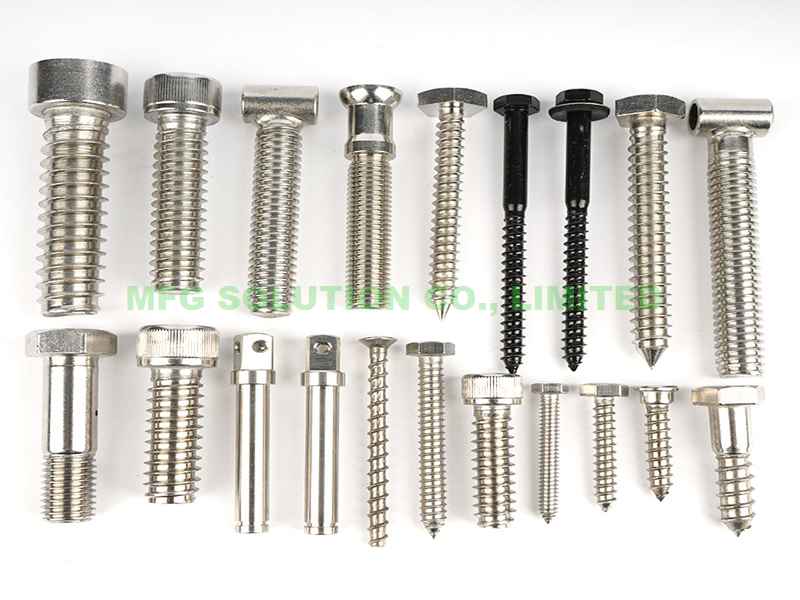

Pump and valve components may look like relatively simple mechanical parts, but their manufacturing requirements can be much more demanding than their appearance suggests.
A valve body may need accurately positioned ports, threaded connections, sealing surfaces and internal passages. A pump shaft may require controlled diameter, concentricity, surface finish and bearing fits. A fitting may need reliable threads and sealing interfaces. A manifold may combine multiple ports, cross-holes and complex internal passages in a single component.
For engineers and procurement teams, choosing a CNC manufacturing supplier for these components therefore requires more than checking whether the supplier owns CNC machines.
The supplier needs to understand how material, geometry, tolerances, sealing surfaces, threads, inspection and production volume interact.
This guide explains how CNC machining is used for pump and valve components, which features deserve the most attention, how to select materials, when turning or milling is appropriate, and what buyers should include in an RFQ.
1. Why Pump and Valve Components Require Precision Machining
Pump and valve components often operate in environments where a small dimensional error can affect sealing, flow, pressure control or service life.
Typical CNC-machined components include:
- Valve bodies
- Valve stems
- Valve seats
- Pump shafts
- Pump housings
- Bushings
- Fittings
- Adapters
- Manifolds
- Plugs
- Connectors
- Flanges
- Actuator components
These parts can contain several different functional features.
A valve body may require multiple intersecting ports, threads and sealing faces.
A shaft may contain several diameters, shoulders, grooves and bearing seats.
A fitting may require an accurate thread combined with a sealing surface.
Because these features interact during assembly and operation, the manufacturing process should be planned around the part’s functional requirements rather than treating every dimension equally.
MFG SOLUTION’s CNC machining capability supports prismatic, contoured and rotational components with drilled, milled, bored, threaded and precision mating features, making it suitable for many pump and valve components.
2. Start With the Fluid and Operating Environment
Before selecting a material or machining process, understand what the component will be exposed to.
Important questions include:
- What fluid passes through the component?
- What pressure will it experience?
- What temperature range is expected?
- Is the environment corrosive?
- Is the component exposed to chemicals?
- Will it operate continuously?
- Does it need to meet a specific industry standard?
- Will the part be cleaned or sterilized?
The answer can change the material selection significantly.
A brass fitting for general industrial service has very different requirements from a stainless-steel valve component used with corrosive media.
Similarly, a pump shaft operating under high mechanical load may require a different material and surface treatment from a lightweight aluminum housing.
Material selection should therefore begin with the operating environment rather than machining convenience alone.
3. Sealing Surfaces Are Often More Important Than General Dimensions
One of the most important areas in pump and valve machining is the sealing interface.
A component may use:
- O-rings
- Flat gaskets
- Metal seals
- Tapered threads
- Parallel threads
- Mechanical seals
- Press-fit sealing surfaces
The sealing surface must work correctly with its mating component.
For an O-ring groove, for example, groove width, depth, diameter, surface condition and edge geometry can all affect sealing performance.
For a gasket face, flatness and surface finish may be more important than a general external dimension.
For a threaded fitting, the thread form and sealing interface must be considered together.
This is why drawings should clearly identify functional sealing surfaces rather than simply applying one general tolerance to the entire component.
4. Valve Bodies Often Combine Multiple Machining Operations
A valve body can require several machining operations in one component.
Typical features include:
- Internal bores
- Cross-drilled passages
- Threaded ports
- Counterbores
- Sealing faces
- Mounting holes
- Valve-seat interfaces
- Actuator mounting features
The manufacturing route may therefore combine milling, drilling, boring, tapping and deburring.
The challenge is maintaining the relationship between these features.
For example, two intersecting ports may need to connect correctly inside the body.
A threaded port may need to reach a specific internal passage.
A valve seat may need to align with the stem or plug.
The process plan should therefore establish suitable datums and minimize unnecessary repositioning.
5. Pump Shafts Require Different Priorities
Pump shafts are rotational components, so CNC turning is often an important part of the manufacturing route.
Depending on the design, a shaft may include:
- Bearing journals
- Seal diameters
- Keyways
- Threads
- Shoulders
- Grooves
- Retaining-ring features
- Impeller mounting surfaces
Diameter alone does not determine shaft quality.
Concentricity, runout, straightness, surface finish and the relationship between multiple journals may be critical.
A shaft can measure correctly at each individual diameter and still create problems if the diameters are not properly aligned with one another.
This is why inspection should consider the complete functional relationship between shaft features.
6. When CNC Turning Is the Better Process
CNC turning is generally well suited to rotational pump and valve components.
Typical examples include:
- Valve stems
- Pump shafts
- Plugs
- Bushings
- Sleeves
- Threaded fittings
- Adapters
- Rotating sealing components
Turning can efficiently produce cylindrical surfaces, shoulders, grooves and threads.
When the part is predominantly rotational, starting with CNC turning rather than milling from a rectangular block can reduce machining time and material waste.
For components requiring additional cross-holes, flats or milled features, live tooling or secondary milling operations may be incorporated depending on the equipment and geometry.
7. When Swiss Turning Makes More Sense
Small valve components, fittings, pins, stems and other slender parts can become difficult to control when their diameter is small relative to their length.
Swiss turning uses guide-bushing support close to the cutting zone, which helps control deflection and vibration.
It can be attractive for:
- Small valve stems
- Precision pins
- Miniature fittings
- Small shafts
- Bushings
- Connector components
- Small threaded parts
The decision should still consider diameter, length, feature density, material and production quantity.
MFG SOLUTION’s Swiss turning capability is specifically positioned for small, slender and feature-dense rotational components.
8. Brass Is Common for Many Valve and Fitting Components
Brass is widely used in fittings, adapters and certain valve components because it offers good machinability and useful corrosion resistance.
C36000 brass is particularly attractive when machining productivity matters.
Its free-machining characteristics help produce clean chips, stable dimensions and efficient cycle times.
Typical applications include:
- Valve parts
- Fittings
- Couplings
- Adapters
- Bushings
- Inserts
- Industrial hardware
MFG SOLUTION’s C36000 resource specifically identifies valve parts and industrial-equipment components among its common applications.
However, material selection should still account for the fluid, regulatory requirements and actual service environment.
A material that machines efficiently may not automatically be appropriate for the application.
9. Stainless Steel for Corrosive or Demanding Environments
Stainless steel is frequently selected for pump and valve components when corrosion resistance and durability are important.
Common grades include:
- 304
- 316
- 17-4PH
- 410
The grades are not interchangeable.
304 is widely used for general corrosion resistance.
316 provides improved resistance to chloride-containing environments.
17-4PH can provide higher strength with useful corrosion resistance.
410 can be selected when hardness and wear resistance are important.
For example, MFG SOLUTION’s material resources describe 17-4PH as suitable for demanding industrial environments where strength and corrosion resistance are both important.
The correct grade should therefore be selected from actual operating conditions.
10. 17-4PH Can Be Useful for High-Strength Components
17-4PH stainless steel is a precipitation-hardening stainless grade that can achieve high strength through heat treatment.
It may be suitable for:
- High-load valve components
- Pump shafts
- Actuator parts
- Industrial mechanical components
- High-strength fittings
Machining is commonly performed in a suitable solution-treated condition before final heat treatment.
The process plan should account for dimensional changes associated with heat treatment.
MFG SOLUTION’s 17-4PH guidance specifically notes the importance of machining condition, heat-treatment planning and allowances for post-treatment finishing.
This is particularly important when the final component contains close-fitting surfaces.
11. Threads Need to Be Treated as Functional Features
Threads are among the most common features in pump and valve components.
Possible requirements include:
- Metric threads
- Unified threads
- BSP threads
- NPT threads
- Internal threads
- External threads
- Fine threads
- Coarse threads
The drawing should clearly identify the thread standard, nominal size, pitch or TPI, depth and any required tolerance or gauge.
For sealing applications, the thread standard is particularly important.
A supplier should not assume that two similarly sized threads are interchangeable.
Thread inspection may involve:
- GO/NO-GO gauges
- Thread plug gauges
- Thread ring gauges
- Optical inspection
- Functional assembly checks
Thread quality should be verified according to the actual application.
12. Internal Passages Require Careful Planning
Pump and valve components frequently contain internal fluid passages.
These passages can be created through:
- Drilling
- Boring
- Cross-drilling
- Intersecting holes
- Machining from multiple faces
- Casting followed by CNC finishing
The challenge is not simply producing the holes.
The passages need to connect correctly without creating unnecessary restrictions, burrs or contamination.
Deep internal passages may require appropriate tooling and coolant strategies.
After machining, the component may also need thorough cleaning to remove chips and cutting debris.
For fluid-handling components, cleanliness can be just as important as dimensional accuracy.
13. Burr Control Matters for Fluid Components
Burrs can create serious problems in pump and valve components.
A loose burr can:
- Enter a fluid passage
- Damage a seal
- Restrict flow
- Contaminate downstream equipment
- Interfere with assembly
- Become a particle source
Internal intersections are particularly prone to burr formation.
Therefore, deburring should be treated as a defined manufacturing operation rather than an informal final step.
The drawing or purchase specification should identify critical edges, passages and cleanliness requirements when necessary.
14. Surface Finish Can Affect Sealing and Flow
Surface finish is not only a cosmetic requirement.
For pump and valve components, surface condition can affect:
- Sealing
- Friction
- Wear
- Leakage
- Flow behavior
- Corrosion
- Cleanability
For example, a sealing face may require a smoother surface than a non-functional external face.
A shaft journal may need a controlled finish to work correctly with a bearing or seal.
MFG SOLUTION’s CNC surface-finish guidance explains that surface finish can directly influence friction, wear, sealing capability and dimensional fit.
The correct Ra requirement should therefore be connected to the actual function of the surface.
15. Flatness and Perpendicularity Can Affect Assembly
A pump housing or valve mounting surface may need to mate with another component.
In these situations, flatness and perpendicularity may be more important than a simple linear dimension.
For example, a mounting face that is dimensionally correct but not sufficiently flat can create:
- Uneven gasket compression
- Housing distortion
- Misalignment
- Leakage
- Assembly difficulty
Geometric tolerances should therefore be applied where they control a functional relationship.
MFG SOLUTION’s tolerance resources explain how geometric controls and datum systems help define how a part must sit and function.
16. Datum Structure Should Follow the Assembly
A pump or valve component should be located during machining based on the same functional references used in the assembly.
For example:
Primary datum → main mounting face
Secondary datum → side locating surface
Tertiary datum → locating hole or feature
This approach can help maintain the relationship between ports, mounting holes, bores and sealing faces.
Changing the reference structure unnecessarily between machining operations can increase positional variation.
For complex parts, the manufacturing engineer should review the drawing’s datum structure before selecting workholding and setup sequence.
17. Workholding Can Affect Pump and Valve Accuracy
A rigid fixture is essential when machining thin walls, long shafts or irregular valve bodies.
The fixture needs to:
- Locate the component repeatably
- Support it against cutting forces
- Avoid distorting thin sections
- Provide tool access
- Maintain the intended datum relationship
MFG SOLUTION’s workholding guidance emphasizes that fixture selection depends on geometry, production volume and machining operation, and that poor workholding can directly contribute to dimensional errors.
For pump and valve components, this is especially important because multiple features may need to maintain their relationship across different machining operations.
18. Choose Between Machining From Bar, Forging and Casting
Not every pump or valve component should be machined completely from solid stock.
For prototypes or low quantities, machining from bar or billet can be flexible.
For higher volumes, a near-net-shape process may reduce material waste and machining time.
Possible routes include:
Bar/Billet → CNC machining
Forged blank → CNC machining
Cast blank → CNC machining
Cold-forged blank → CNC finishing
The best option depends on geometry, quantity, material, tooling cost and required mechanical properties.
For high-volume small components, cold forging can improve material utilization and reduce subsequent machining.
For complex geometries, precision casting can provide a near-net shape before controlled machining and inspection.
19. Production Volume Changes the Economics
A pump manufacturer may require 10 prototype housings today and 10,000 fittings next year.
The same manufacturing route may not be optimal for both quantities.
Prototype
CNC machining usually provides flexibility with low dedicated-tooling requirements.
Small Batch
Standard fixtures and optimized CNC programming can improve efficiency.
Medium Volume
Multi-part fixtures and process standardization can reduce cycle time.
High Volume
Automatic lathe, Swiss turning, cold forging or other dedicated production methods may become more economical depending on the part.
MFG SOLUTION’s automatic lathe capability is designed around repeat production of suitable rotational components where stable bar feeding and controlled cycle time are important.
20. Inspection Should Focus on Functional Risk
Not every dimension needs the same inspection method.
For pump and valve components, critical characteristics may include:
- Bore diameter
- Shaft diameter
- Thread size
- Port location
- Sealing-face flatness
- Surface roughness
- Concentricity
- Runout
- Perpendicularity
- Internal passage dimensions
Depending on the feature, inspection may use:
- Micrometers
- Bore gauges
- Pin gauges
- Thread gauges
- Height gauges
- Optical systems
- CMM
- Surface roughness instruments
The inspection plan should be matched to the drawing and functional risk.
MFG SOLUTION’s quality system describes incoming material verification, first-article review, in-process checks, final dimensional inspection and requested reports as possible controls.
21. First Article Inspection Is Valuable for New Valve and Pump Parts
A first production part provides an opportunity to confirm that the manufacturing process correctly interprets the drawing.
An FAI can verify:
- Material
- Critical dimensions
- Threads
- Port positions
- Sealing surfaces
- Surface treatment
- Surface finish
- Functional interfaces
This is particularly valuable when a component contains many intersecting features.
A problem found during first-article inspection is much easier to correct than a problem discovered after a large production batch has been completed.
22. Cleanliness Should Be Defined When Necessary
Fluid-handling components may require specific cleanliness requirements.
Depending on the application, this can include:
- Removal of machining chips
- Removal of cutting-fluid residue
- Removal of abrasive particles
- Internal passage cleaning
- Drying
- Protective packaging
The required cleanliness level should be defined in the purchase specification when it is critical.
Otherwise, different suppliers may interpret “clean” differently.
For sensitive pump, valve, hydraulic or pneumatic components, cleanliness should be treated as a measurable production requirement whenever possible.
23. Surface Treatment Needs to Be Planned Around Final Dimensions
Some pump and valve components may require:
- Passivation
- Electropolishing
- Plating
- Anodizing
- Polishing
- Powder coating
- Other protective finishes
The treatment can affect dimensions.
For example, coating thickness may change:
- Thread fit
- Bore size
- Shaft diameter
- Sealing surfaces
- Contact points
MFG SOLUTION’s CNC machining service specifically notes that finishing should be planned with final dimensions in mind, including coating thickness, masking and contact areas.
Therefore, the drawing should clearly identify which dimensions apply before and after finishing.
24. How to Prepare an RFQ for Pump or Valve Components
A complete RFQ should include:
Technical information
- 3D CAD model
- 2D drawing
- Material grade
- Heat treatment
- Surface treatment
- Thread standard
- Tolerances
- GD&T
- Surface finish
- Cleanliness requirements
Commercial information
- Prototype quantity
- Batch quantity
- Annual demand
- Target delivery
- Packaging requirements
Quality information
- Inspection report
- FAI
- Material certificate
- CoC
- Traceability
- Special-process certificates
Providing these details allows the manufacturer to evaluate the entire process instead of quoting based only on the CAD geometry.
25. Common Sourcing Mistakes
Mistake 1: Specifying only “stainless steel”
304, 316, 17-4PH and 410 have different properties and costs.
Mistake 2: Ignoring sealing surfaces
A component can meet general dimensions and still leak.
Mistake 3: Treating every hole equally
Functional ports and mounting holes may have very different requirements.
Mistake 4: Forgetting internal burrs
Burrs inside fluid passages can become contamination or flow problems.
Mistake 5: Choosing the process only by prototype cost
A process that is economical for 20 pieces may not be economical for 20,000 pieces.
Mistake 6: Leaving cleanliness undefined
Different suppliers may interpret the same wording differently.
Mistake 7: Adding surface treatment after dimensional planning
Coating or finishing can change critical interfaces.
26. A Practical Pump and Valve CNC Machining Checklist
Before sending a component for quotation, confirm:
- Fluid and operating environment defined
- Material grade specified
- Heat treatment specified if required
- Critical sealing surfaces identified
- Threads fully specified
- Internal passages clearly defined
- Critical bores identified
- Datums established
- GD&T applied where function requires it
- Surface finish requirements identified
- Deburring requirements defined
- Cleanliness requirements defined
- Surface treatment specified
- Final dimensions after treatment clarified
- Prototype quantity provided
- Production quantity provided
- Annual demand provided
- Inspection requirements provided
- Material certificates identified
- Packaging requirements defined
Frequently Asked Questions
1. What CNC process is best for valve components?
It depends on geometry. CNC milling is suitable for many valve bodies and mounting components, while CNC turning is often appropriate for stems, plugs, fittings and rotational components. Complex components may combine several processes.
2. What material is best for pump components?
There is no universal answer. Stainless steel can be suitable for corrosive environments, brass is useful for many fittings and valve applications, while alloy steels may be appropriate for high-load shafts. Material selection should be based on fluid compatibility, temperature, pressure, mechanical load and regulatory requirements.
3. Why are sealing surfaces important?
Sealing surfaces directly affect leakage performance. Flatness, surface finish, geometry and dimensional accuracy can all influence how effectively a gasket, O-ring, mechanical seal or mating surface performs.
4. Should valve bodies be machined from solid material?
Not always. For prototypes and low volumes, machining from billet can be flexible. For higher volumes or complex shapes, casting or forging followed by CNC machining may reduce material waste and machining time.
5. Is brass suitable for valve parts?
Certain brass grades are widely used for valve parts, fittings and adapters. C36000 is particularly attractive for machining productivity, but the final grade should be selected according to the application and applicable regulations.
6. When is Swiss turning useful for pump or valve components?
Swiss turning is useful for small, slender and feature-dense rotational components such as small stems, pins, shafts and fittings, particularly when production volume and dimensional repeatability justify the process.
7. What inspection should be used for precision valve components?
The inspection method depends on the feature. Thread gauges may be used for threads, bore gauges for internal diameters, micrometers for shafts, CMMs for complex geometric relationships, and surface roughness instruments for critical sealing or sliding surfaces.
8. What information should be included in a CNC pump or valve RFQ?
Provide the CAD model, controlled drawing, material grade, quantity, annual demand, tolerances, threads, surface finish, surface treatment, cleanliness requirements and inspection documentation requirements.
Conclusion
Pump and valve components require a manufacturing strategy that connects the part’s geometry with its actual operating function.
A valve body is not simply a block with holes.
A pump shaft is not simply a turned cylinder.
A fitting is not simply a threaded component.
Each part contains functional relationships involving sealing, flow, alignment, pressure, movement, wear and assembly.
The most reliable manufacturing approach begins by identifying those relationships and then selecting the appropriate material, machining process, workholding method, inspection plan and finishing route.
For low-volume projects, CNC machining can provide the flexibility required for prototypes and custom components. As production volume increases, CNC turning, Swiss turning, automatic lathe production, cold forging or precision casting may provide a more economical route depending on the geometry.
For engineers and procurement teams, the key is to evaluate the complete manufacturing route, not simply the unit machining price.
If you are sourcing custom pump parts, valve components, fittings, shafts, manifolds, housings or other industrial fluid-handling components, provide the CAD model, drawing, material, quantity and inspection requirements for an engineering review.
MFG SOLUTION can evaluate the geometry, material, production volume, tolerances, finishing and quality requirements to determine an appropriate manufacturing route and quotation.
Send your drawing and start an engineering review for your next pump or valve component project.