
2025-12-12
A Complete Guide to CNC Precision Metal Machining
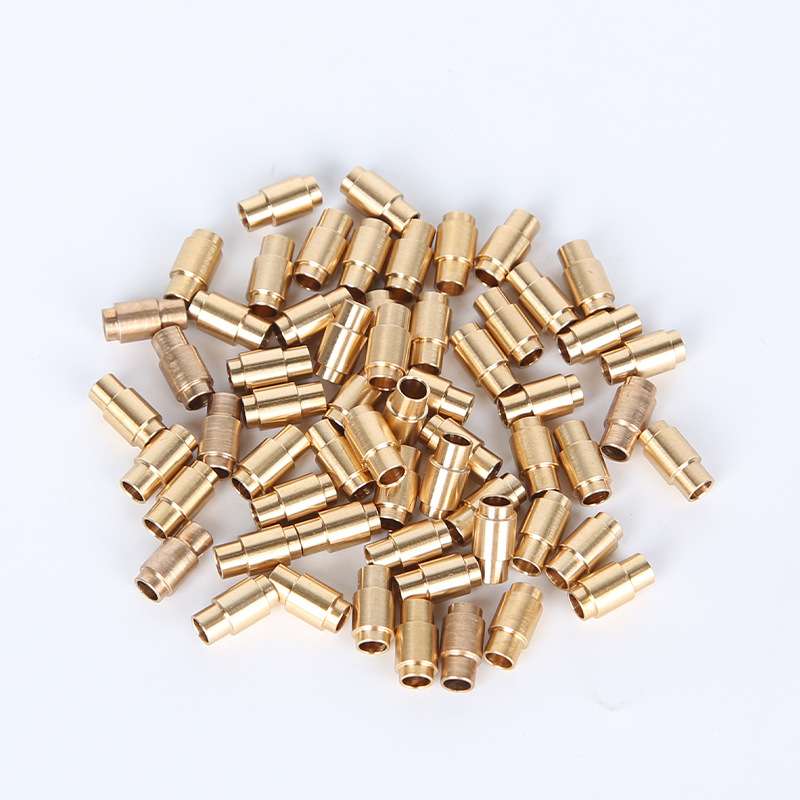
A Complete Guide to CNC Precision Metal Machining
Precision Machining: Enabling Engineering Performance and Operational Reliability
CNC precision metal machining has become the backbone of modern manufacturing, powering components that deliver performance, safety, and repeatability at scale. Micron-tolerance part fabrication distinguishes top aerospace, automotive & industrial solutions.
Today’s complex products demand parts that are lighter, stronger, and more reliable than ever before.CNC precision machining turns innovative designs real with multi-axis motion, cutting & quality control.
Core Challenges Across High-Demand Sectors
Different industries bring distinct engineering pressures:
- Aerospace: Structural integrity under fluctuating load, thermal extremes, and vibration is critical for flight safety. CNC machining ensures components like aircraft frames, turbine parts, and supports meet exacting tolerance requirements while achieving weight optimization.
- Automotive: Powertrain, transmission, and chassis components must deliver consistent performance under vibration, heat, and continuous use, so precision machining reduces friction, improves dynamic balance, and supports tighter assembly tolerances to meet this demand.
- Industrial Equipment: Machinery components such as bearings, gear sets, and hydraulic manifolds demand high dimensional accuracy to maintain performance under continuous load and variable operating environments.
- Medical Devices: Precision is a matter of safety. Surgical tools, implants, and orthotics require flawless geometry, surface integrity, and biocompatibility to meet stringent medical standards.
Across these sectors, CNC precision machining provides the repeatability and control needed to transform engineering requirements into reliable, functional components.
Materials and Precision Machining Strategies
Success in CNC precision metal machining relies on understanding both material behavior and machining dynamics:
- Aluminum Alloys: Common in aerospace and automotive due to their strength-to-weight ratio. High-speed CNC milling with optimized feed rates and toolpaths produces smooth surfaces with rapid material removal.
- Titanium: Used for its high strength and corrosion resistance. Advanced machining strategies—like variable feed control and specialized tooling—prevent heat buildup and work hardening.
- Stainless Steel: Corrosion-resistant, durable; multi-pass machining ensures surface/dimensional quality.
- Hardened Steels and Inconel: High-stress, high-temperature parts often use these materials, demanding adaptive cutting strategies to manage tool wear and maintain precise tolerances.
Complementary finishing boosts part properties, protection & performance for functional demands.
Practical Case Studies
Aerospace Fuel System Component
A major OEM needed precision machining for aerospace fuel system housings, and tight tolerance control (±0.005 mm) and surface finish requirements were met because synchronously optimized 5-axis machining was used. Adaptive toolpath algorithms reduced cycle time while maintaining dimensional fidelity, minimizing post-processing adjustments.
Automotive Differential Housing
An electric vehicle supplier sought improved vibration control through concentric machining of differential housings, **and** multi-axis CNC milling—combined with in-process probing and automated feedback control—delivered precise results: this approach assured concentricity within 0.003 mm, **so** noise and dynamic balance in the final assembly were significantly improved.
Industrial Valve Body Production
Heavy machinery manufacturers required rugged valve bodies with complex internal channels, and precision CNC machining—followed by stress relief and surface finishing—delivered the solution; so this process ensured flatness and gap tolerances stable enough to maintain hydraulic efficiency across extended service intervals.
These real-world applications demonstrate how precision machining directly contributes to performance, repeatability, and product success.
Manufacturing Trends and Technology Integration
CNC precision metal machining is evolving through innovation and digital transformation:
- AI-Driven Machining Intelligence: Machine learning models guide predictive parameter adjustments, tool wear compensation, and optimization of cutting conditions for both quality and throughput.
- Hybrid Manufacturing Platforms: Additive metal deposition integrated with CNC finishing enables complex internal features and topology-optimized structures not feasible with traditional methods alone.
- Smart Factory Connectivity: IoT sensors and data analytics enable real-time performance tracking, predictive maintenance, and process optimization across manufacturing networks.
- Sustainable Machining Practices: Energy-efficient toolpaths, recyclable coolants, and waste-minimizing strategies reduce environmental impact while cutting operational costs.
- Precision Miniaturization: As product designs shrink in size but increase in function, machine control systems and micro-machining techniques deliver reliable, small-scale components with sub-micron accuracy.
These advancements allow manufacturers to deliver precise, durable, and cost-effective parts while meeting the evolving demands of aerospace, automotive, and industrial applications.
Partnering with MFG SOLUTION CO., LIMITED
At MFG SOLUTION CO., LIMITED, we specialize in CNC precision metal machining for applications where accuracy, reliability, and performance are critical. Our capabilities include:
- Multi-axis CNC milling, turning, and high-precision grinding
- Material expertise across aluminum, titanium, stainless, and superalloys
- Project management from rapid prototyping to high-volume production
- In-process inspection and final verification with coordinate measuring systems (CMM)
We partner with experts to deliver compliant components, optimizing cost & delivery. Our approach focuses on precision, quality, and technical partnership.
Conclusion
CNC precision metal machining continues to define the standards for accuracy, reliability, and performance in aerospace, automotive, medical, and industrial manufacturing—and because it integrates material expertise, advanced machining strategies, and cutting-edge technologies, manufacturers can turn complex designs into high-performing products that excel in demanding environments. So precision, consistency, and innovation remain at the heart of CNC machining, making it an indispensable driver of modern engineering excellence.