
2026-05-15
Machining Lead Times: Complete 2026 Guide

| Key Insight | Explanation |
|---|---|
| Machining lead times vary widely | Simple parts can ship in 1–3 days; complex high-volume orders can take 4–6 weeks depending on geometry, material, and shop capacity. |
| Part complexity is the #1 driver | Tight tolerances, multi-axis setups, and exotic materials each add time. Simplifying design is the fastest way to cut lead time. |
| Lead time ≠ machining time | Actual cutting time is often a small fraction of total lead time. Quoting, programming, setup, queue, inspection, and shipping all add up. |
| Certifications affect scheduling priority | ISO 9001:2015, ISO 13485:2016, and IATF 16949 certified shops run structured production schedules that reduce unplanned delays. |
| Design-for-manufacturability shortens timelines | DFM (Design for Manufacturability) reviews catch tolerance stack-ups and unnecessary features before production starts, preventing rework cycles. |
| Rapid suppliers can quote and ship in days | Specialized contract manufacturers with dedicated capacity can provide quotes within 8 hours and ship small precision parts within 3 days. |
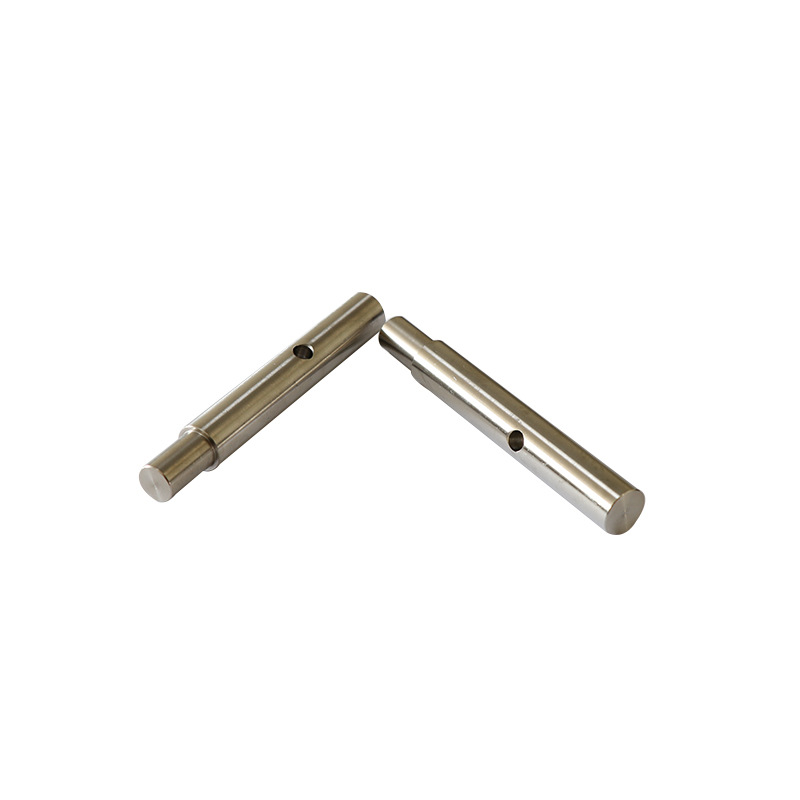
You need 5,000 small stainless steel connectors in a week. Your current supplier just told you the machining lead times are four weeks minimum. That gap between what you need and what you’re getting is one of the most common pain points in precision manufacturing, and it has real consequences: delayed product launches, broken supply chains, and unhappy customers downstream. This guide breaks down exactly what drives machining lead times, how to benchmark them, and what you can do right now to compress them without sacrificing quality or compliance.
What Is Machining Lead Time?
Machining lead time is the total elapsed time from order placement to the moment finished parts are ready for shipment, including every step: quoting, programming, material procurement, setup, cutting, inspection, and packaging.
A Precise Definition
Most people assume lead time equals machining time. It doesn’t. According to research published by 3ERP, actual cutting time is often a relatively small fraction of total lead time [1]. The larger time consumers are queue time (waiting for a machine to become available), setup time (fixturing, tooling, program verification), and post-processing steps like deburring, surface finishing, and quality inspection.
In practice, machining lead times break down into five distinct phases:
- Quoting and order review: DFM (Design for Manufacturability) analysis, tolerance review, material confirmation
- Material procurement: Sourcing raw stock, bar stock, or blanks if not in inventory
- Production scheduling and setup: CNC programming, fixture design, tool selection, first-article setup
- Machining and in-process inspection: Actual cutting operations and dimensional checks at key stages
- Final inspection, packaging, and shipping: CMM (Coordinate Measuring Machine) verification, documentation, and dispatch
Why Lead Time Matters Beyond Scheduling
Machining lead times affect far more than your production calendar. They determine how much safety stock you need to carry, how quickly you can respond to design changes, and whether you can hit market windows for new product launches. According to the Precision Machining Products Association (PMPA), 94% of surveyed shops as of recent industry data expect lead times to remain stable or decrease, signaling increasing competitive pressure on suppliers to deliver faster [2].
For medical device makers, automotive Tier-1 suppliers, and electronics manufacturers, lead time isn’t just a logistics metric. It’s a compliance factor. Regulated industries require documented production timelines as part of ISO 13485:2016 and IATF 16949 quality management systems, meaning your supplier’s ability to commit to a realistic lead time is itself a quality signal.
Pro Tip: When evaluating a new machining supplier, ask them to break down their quoted lead time into its component phases. A supplier who can’t tell you how long material procurement versus setup versus inspection takes is a supplier who doesn’t fully control their own process.
Factors That Affect Machining Lead Times
Machining lead times are driven by a combination of part-specific variables and supplier-side capacity factors, and understanding both sides gives you real leverage when negotiating timelines.
Part-Side Variables
According to Cheetah Precision, part complexity is the single biggest driver of extended machining lead times [3]. Here’s what that means in practice:
- Geometric complexity: Parts requiring 5-axis CNC operations, deep internal cavities, or compound angles need more setups and longer programming time
- Tolerance requirements: Tolerances tighter than ±0.01mm (±0.0004 in.) require slower feeds, more inspection steps, and potentially temperature-controlled environments
- Material machinability: Titanium, Inconel, and hardened tool steels cut 3–5x slower than aluminum or brass, directly extending cycle time
- Surface finish specifications: Requirements below Ra 0.8 µm typically require additional finishing operations like honing, lapping, or polishing
- Number of operations: Each additional machining operation (turning, milling, drilling, threading) adds setup time and scheduling complexity
Supplier-Side Capacity Variables
Even a simple part can have a long lead time if the supplier’s shop floor is at capacity. Research from FM Machine highlights that queue time, not machining time, is typically the dominant component of total lead time at busy shops [4]. Key supplier-side factors include:
- Machine availability: How many CNC machines are dedicated to your order type, and what’s the current utilization rate
- Operator skill and staffing: Shops with 60+ engineering professionals can parallel-process orders that smaller shops must sequence
- Raw material inventory: Suppliers who stock common bar stock diameters (particularly in the under-38mm range) eliminate procurement delays entirely
- Programming automation: CAM (Computer-Aided Manufacturing) software and proven post-processors reduce program verification time from days to hours
- Quality system maturity: ISO 9001:2015-certified shops run structured first-article inspection (FAI) processes that catch errors before full production, preventing costly rework
Industry analysts suggest that shops with dedicated Swiss lathe and automatic lathe capacity for small-diameter parts (under 38mm) consistently outperform general-purpose job shops on lead time because the machines are purpose-matched to the work. This is a meaningful advantage for buyers sourcing high-volume small precision components.
For context on how design decisions ripple into scheduling, Fictiv’s engineering team notes that reducing the number of setups required is one of the most impactful design changes a buyer can make to shorten machining lead times [5].
Machining Lead Times Benchmarks for 2026
Standard machining lead times range from 1–3 days for simple small parts at specialized shops to 6 weeks or more for complex, high-volume production runs at general-purpose facilities, as of 2026.
Lead Time by Order Type and Complexity
The table below provides a comprehensive benchmark that goes well beyond the standard chart you’ll find most places. It factors in part complexity, quantity, and supplier type, giving you a realistic planning range rather than a best-case scenario.
| Order Type | Quantity | Part Complexity | General Job Shop | Specialized Rapid Supplier |
|---|---|---|---|---|
| Simple prototype | 1–5 pcs | Low (2-axis, standard tolerances) | 5–7 business days | 1–3 days |
| Complex prototype | 1–5 pcs | High (5-axis, tight tolerances) | 7–10 business days | 3–5 days |
| Small production run | 10–50 pcs | Low–Medium | 2–3 weeks | 3–7 days |
| Medium production run | 50–500 pcs | Medium | 3–4 weeks | 5–10 days |
| Large production run | 500+ pcs | Low–Medium | 4–6 weeks | 2–3 weeks |
| High-volume repeat order | 1,000+ pcs | Low (established program) | 3–5 weeks | 1–2 weeks |
Data aligned with benchmarks from casting-china.org and Sharma Technocast [6][7]. Results will vary based on material, finishing requirements, and supplier-specific capacity at the time of order.
How to Calculate Your Own Lead Time
A practical machining lead time formula breaks the total into additive components:
- Quote and DFM review time: Typically 4–24 hours at modern shops with digital quoting systems
- Material procurement time: 0 days (if in stock) to 5–10 business days (if special order)
- Production queue time: Varies by shop utilization; can be 0–10 days
- Setup time: 2–8 hours per operation, multiplied by number of setups
- Cycle time per part × quantity: Actual cutting time, calculated from feeds, speeds, and tool paths
- Inspection time: First-article inspection (FAI) plus statistical sampling for production runs
- Shipping transit time: 1–5 days domestic; 3–7 days international air freight
Research from MIT’s engineering department confirms that production planning methods that minimize queue time and WIP (Work in Progress) levels produce the most reliable lead time reductions, regardless of the machining technology used [8].
Pro Tip: Always ask your supplier to quote lead time with and without material procurement. If they stock your material, you can sometimes cut 5–10 business days off the total immediately. At MFG SOLUTION, we’ve found that maintaining a broad inventory of bar stock in common diameters under 38mm eliminates procurement delays for the vast majority of customer orders.
Common Challenges and Mistakes That Inflate Lead Times
The most common reasons machining lead times run over schedule aren’t mysterious: they’re predictable, recurring problems that buyers and suppliers both contribute to, and most of them are preventable.
Buyer-Side Mistakes
A procurement manager at an electronics manufacturer recently faced a 3-week delay on a batch of 200 connector housings. The root cause wasn’t shop capacity. It was an incomplete drawing package submitted at order placement, which triggered a back-and-forth DFM review that consumed 8 business days before a single chip was cut. This is one of the most common patterns in precision machining.
- Incomplete or ambiguous drawings: Missing tolerances, undefined surface finishes, or conflicting GD&T (Geometric Dimensioning and Tolerancing) callouts force engineers to stop and ask questions before programming can begin
- Over-specification of tolerances: Calling out ±0.005mm on features that functionally only need ±0.05mm adds inspection time and slows cycle time with no quality benefit
- Late material selection: Changing from aluminum 6061 to titanium Grade 5 after quoting restarts the entire material procurement and programming cycle
- Unrealistic quantity changes: Doubling an order quantity after production has started disrupts scheduling for every other job in the shop’s queue
Supplier-Side Pitfalls
From the supplier side, the machinist community’s own candid discussions reveal that small customers frequently get deprioritized when larger, more profitable jobs arrive [9]. This is a real and documented dynamic in job shop scheduling.
- Overbooking capacity: Shops that quote aggressive lead times to win business without accounting for current queue depth consistently miss delivery dates
- Poor production planning: Shops without formal MRP (Material Requirements Planning) or ERP systems frequently lose track of job status and miss scheduling dependencies
- Tooling failures: Unplanned tool breakage on exotic materials can halt a job for 24–48 hours if replacement tooling isn’t in stock
- Inspection bottlenecks: A single CMM shared across multiple production lines creates inspection queues that delay final release even when parts are fully machined
One pitfall to watch for specifically: suppliers who give a single lead time number without distinguishing between “parts complete” and “parts shipped.” Transit time can add 3–7 days to international orders, and conflating the two creates false expectations on both sides.
The National Tooling and Machining Association (NTMA) notes that make-to-order manufacturing inherently carries scheduling uncertainty, and the best mitigation is a supplier with transparent production tracking and proactive communication protocols [10].
Best Practices for Reducing Machining Lead Times in 2026
Cutting machining lead times without sacrificing quality requires action on both sides of the buyer-supplier relationship, and the most effective strategies address the biggest time consumers first: queue time, setup time, and drawing ambiguity.
Design and Specification Strategies
The fastest path to shorter lead times starts at the design stage, before any RFQ (Request for Quotation) is submitted. Our team at MFG SOLUTION recommends these DFM principles for buyers who consistently need fast turnaround:
- Minimize the number of setups: Design parts that can be completed in one or two machine setups. Each additional setup adds hours of preparation and scheduling complexity [5]
- Use standard tolerances where possible: Reserve tight tolerances (below ±0.01mm) for truly critical features. Standard tolerances of ±0.05–0.1mm machine faster and inspect faster
- Specify common materials: Aluminum 6061/7075, brass C360, and stainless 303/304 are stocked by most precision shops. Exotic alloys add material lead time
- Avoid unnecessary surface finish requirements: Ra 1.6 µm (as-machined) is adequate for many functional surfaces. Requiring Ra 0.4 µm adds polishing operations and days of lead time
- Submit complete drawing packages: Include all GD&T callouts, material certifications required, surface finish maps, and thread specifications in the initial submission
Supplier Selection and Relationship Strategies
Choosing the right supplier structure matters as much as design optimization. For small precision parts under 38mm diameter, specialized contract manufacturers running Swiss lathe, CNC turning, and automatic lathe equipment in parallel offer structural lead time advantages over general-purpose job shops.
- Prioritize suppliers with dedicated capacity for your part type: A shop with 20 automatic lathes dedicated to small-diameter turning will always outpace a general shop fitting your job between larger work
- Verify ISO certifications: ISO 9001:2015 certification signals structured production scheduling. ISO 13485:2016 and IATF 16949 signal documented process control that prevents rework-driven delays
- Establish blanket orders: Pre-approved repeat orders with fixed schedules allow suppliers to pre-position material and reserve machine time, cutting reactive lead times dramatically
- Use suppliers with fast quoting: A supplier who can quote within 8 hours signals that they have engineering capacity and digital processes to handle your order without administrative delays
- Leverage multi-method suppliers: Partners who can select between CNC turning, Swiss lathe, cold forging, and automatic lathe operations for each job will always find the fastest process path for your specific geometry
For further context on how material and process selection interact with design for custom precision work, the Steel Founders’ Society of America provides useful case studies on how early process selection decisions compress or extend total project lead time [11].
It’s also worth considering how workspace and workflow design affects turnaround in adjacent manufacturing contexts. For example, custom fabrication projects like the Table En Mortex Jean Gallet demonstrate how material specification and process selection early in a project directly determine production timeline, a principle that applies equally to precision machined components.
Pro Tip: If you’re regularly ordering the same part families, ask your supplier about a Kanban-style replenishment arrangement. By triggering production when your inventory hits a defined minimum, you replace reactive rush orders with planned production cycles, often cutting effective lead time by 40–60% compared to ad-hoc ordering.
According to Focused On Machining’s production planning team, accurate lead time quoting requires suppliers to assess both internal capacity constraints and external variables like material availability simultaneously, and buyers who provide complete specifications upfront enable far more accurate and shorter commitments [12].
Sources & References
- 3ERP, “CNC Machining Lead Times: Cycle Time Definition and Formulas,” 2024
- PMPA, “Precision Machining Industry Lead Time and Outlook,” 2026
- Cheetah Precision, “What Factors Affect Lead Times in Precision Machining?” 2024
- FM Machine, “Understanding Lead Times in Precision Manufacturing,” 2024
- Fictiv, “10 Design Tips for Reducing CNC Lead Times,” 2024
- Casting China, “How Long Does it Take to Deliver CNC Machined Parts?” 2024
- Sharma Technocast, “How Long Does Precision Machining Take? Lead Time Explained,” 2024
- MIT DSpace, “Developing an Improved Production Planning Method for a Machining Facility,” 2011
- Reddit r/Machinists, “A question from an engineer: why are machine shops always late?” 2018
- NTMA, “What Are the Limits to Make-to-Order Manufacturing?” 2023
- Steel Founders’ Society of America, “Reduce Lead Time,” 2022
- Focused On Machining, “Quoting Precision Machining Lead Times,” 2023
Frequently Asked Questions
1. What is lead time in machining?
Machining lead time is the total elapsed time from when an order is placed to when finished parts are ready for shipment, covering every step including quoting, material procurement, CNC programming, setup, cutting, inspection, and packaging. It’s not just cutting time. Queue time, setup, and inspection often account for the majority of total lead time, which is why a 2-hour machining cycle can still carry a 2-week lead time at a busy shop.
2. How do you calculate lead time in manufacturing?
The most accurate method is to sum all component phases: quote review time + material procurement time + production queue time + setup time + (cycle time per part × quantity) + inspection time + shipping transit time. Simply subtracting order date from delivery date gives you the observed lead time, but breaking it into components tells you where time is actually being lost and which phases can be compressed. For precision machining, reducing queue time and eliminating drawing ambiguity typically yield the biggest gains.
3. What is a typical CNC machining lead time?
Typical CNC the practice range from 1–3 days for simple small parts at specialized rapid-turnaround suppliers, to 4–6 weeks for complex, high-volume production runs at general-purpose job shops. As of 2026, the industry benchmark for small precision parts (under 38mm diameter) at optimized contract manufacturers is 3–10 business days for production quantities up to 500 pieces. Part complexity, material availability, and shop queue depth are the three biggest variables.
4. How can I reduce machining lead times without increasing cost?
The most cost-neutral way to cut this practice is to improve your drawing packages and reduce unnecessary tolerance specifications. Submitting complete, unambiguous drawings eliminates DFM review back-and-forth, which can consume 3–8 business days. Choosing standard materials your supplier stocks removes procurement delay. Designing parts to require fewer setups reduces programming and fixturing time. None of these changes cost more money; they just require upfront engineering attention.
5. Do certifications like ISO 9001 affect machining lead times?
Yes, but in a positive way. ISO 9001:2015-certified shops run structured production scheduling and documented first-article inspection (FAI) processes that reduce unplanned rework, which is one of the most common causes of unexpected lead time extension. ISO 13485:2016 and IATF 16949 certifications add traceability requirements, but they also enforce process discipline that prevents the ad-hoc scheduling decisions that cause delays. In practice, certified shops are more reliable on lead time commitments than non-certified shops, not slower.
6. What’s the difference between cycle time and lead time in machining?
Cycle time (also called machining time) is the time a machine is actively cutting a single part, from first tool engagement to last operation. Lead time is the total elapsed calendar time from order to shipment, which includes cycle time plus all non-cutting phases: queue, setup, inspection, and shipping. A part with a 4-minute cycle time can still carry a 5-day lead time if the shop has a full queue and requires a 2-hour setup. Understanding this distinction helps buyers identify which lever to pull when trying to reduce total delivery time.
Conclusion
this method are one of the most controllable variables in precision manufacturing, but only if you understand what’s actually driving them. Cutting time is rarely the bottleneck. Queue time, drawing ambiguity, material procurement, and inspection are where most days get lost. Buyers who submit complete specifications, choose standard materials, design for minimal setups, and partner with suppliers who have dedicated capacity and mature quality systems will consistently see shorter, more predictable this strategy than buyers who treat lead time as the supplier’s problem to solve.
As of 2026, the gap between high-performing specialized contract manufacturers and general job shops has widened. Shops with 60+ engineers, 5-axis CNC machines, 20 automatic lathes, and ISO 9001:2015, ISO 13485:2016, and IATF 16949 certifications are delivering small precision parts in 3 days or less, while undifferentiated shops still quote 4–6 weeks on comparable work. That gap represents real competitive advantage for buyers who choose their manufacturing partners carefully.
MFG SOLUTION specializes in exactly this space: high-precision small machined parts up to 38mm diameter, with quotes within 8 hours and shipment within 3 days. If your current supplier’s this approach are holding your production back, that’s a solvable problem.
About the Author
Written by the Manufacturing – Precision Machining & CNC Services experts at MFG SOLUTION. Our team brings years of hands-on experience helping businesses with Manufacturing – Precision Machining & CNC Services, delivering practical guidance grounded in real-world results.
Recommended Articles
Explore more from our content library: